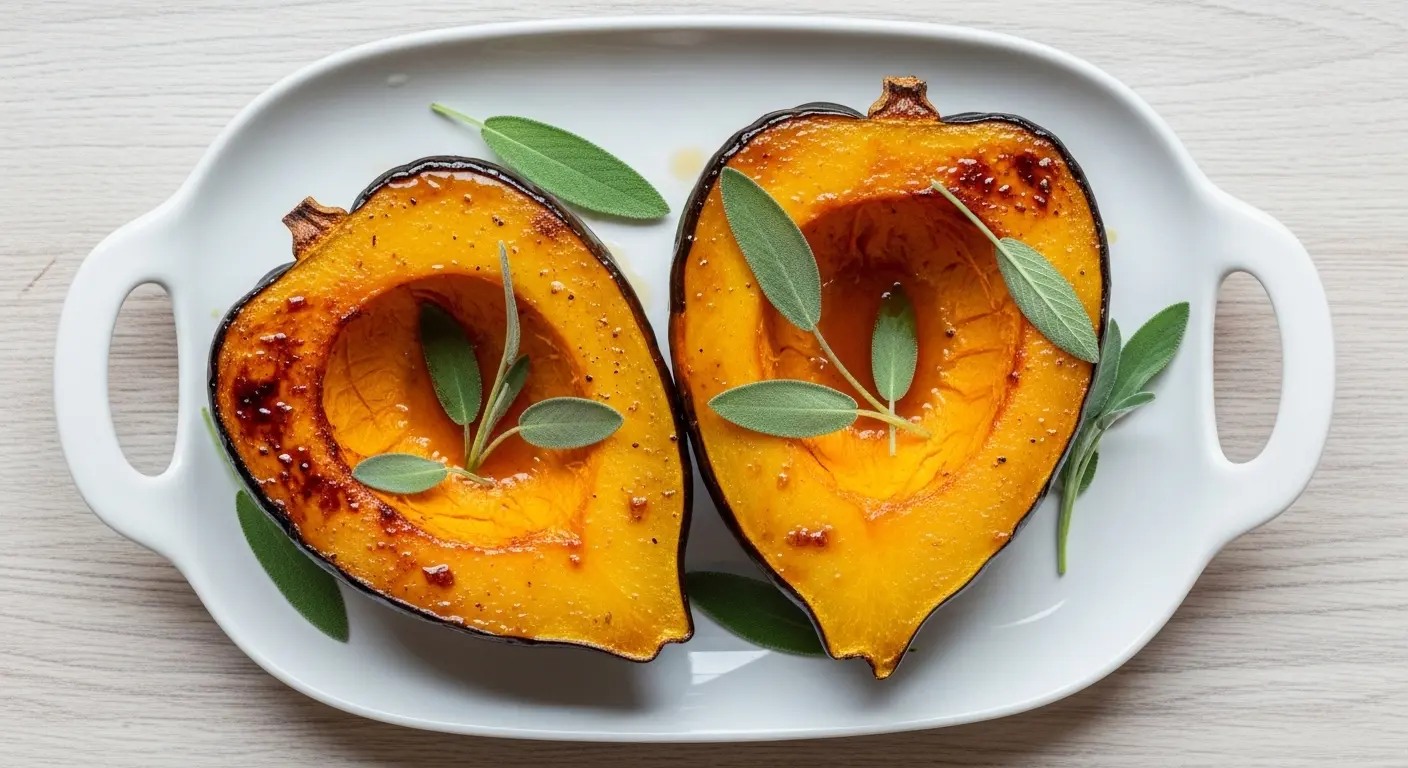
Roasted acorn squash recipe delivers sweet, nutty flavors with tender, caramelized flesh that melts in your mouth. This simple side dish transforms humble winter squash into something special with just a few ingredients and minimal effort.
The beauty of acorn squash lies in its versatility and natural sweetness. Unlike its brighter cousins like butternut squash, acorn squash has a more subtle, earthy flavor that pairs beautifully with both sweet and savory toppings.
When roasted properly, the edges caramelize to create a delightful contrast with the creamy interior. The best part? You don’t need to peel it. The skin becomes tender enough to eat once roasted, saving you precious prep time.
This recipe works equally well for busy weeknight dinners and holiday gatherings. The warm autumn spices and maple glaze make it feel festive, while the straightforward method keeps it approachable for any skill level.
I’ve tested this recipe countless times to find the perfect balance of seasonings and roasting time. The result is consistently delicious, with golden-brown edges and fork-tender flesh every single time.
This squash casserole recipe offers another delicious way to enjoy winter squash.
Why You’ll Love This Roasted Acorn Squash Recipe
This roasted acorn squash recipe stands out for its simplicity and incredible flavor. The natural sweetness of the squash shines through without being overpowering.
The caramelized edges add a depth of flavor that elevates this humble vegetable to something truly special. Plus, the skin becomes perfectly tender, so there’s no need for tedious peeling.
Here’s what makes this recipe a winner:
- Quick prep time: Just 10 minutes to get everything ready for the oven
- Minimal ingredients: You likely have everything on hand already
- Naturally gluten-free and vegetarian: Perfect for various dietary needs
- Beautiful presentation: The distinctive ridged shape looks stunning on any table
- Versatile flavor profile: Works with both sweet and savory meals
- Nutrient-dense: Packed with vitamins A and C, fiber, and potassium
Another favorite is this roasted carrot soup recipe that highlights the natural sweetness of roasted vegetables.
Ingredients
This recipe uses simple, wholesome ingredients that let the natural flavor of the acorn squash shine. Each component plays an important role in creating the perfect balance of sweet and savory.
The olive oil helps the squash caramelize while keeping it moist, while the maple syrup enhances the squash’s natural sweetness without making it cloying. Butter adds richness and helps achieve those golden-brown edges everyone loves.
- 2 medium acorn squash (about 1.5-2 pounds each)
- 3 tablespoons olive oil
- 2 tablespoons unsalted butter, melted
- 2 tablespoons pure maple syrup
- 1 teaspoon sea salt
- ½ teaspoon black pepper
- ½ teaspoon ground cinnamon (optional)
- Fresh sage leaves, chopped (optional, for garnish)
Kitchen Equipment Needed
Having the right tools makes preparing this recipe much easier and safer. A sharp chef’s knife is essential for cutting through the tough exterior of the squash.
The parchment paper prevents sticking and makes cleanup a breeze. A sturdy baking sheet ensures even heat distribution for perfect caramelization.
- Sharp chef’s knife
- Large cutting board
- Rimmed baking sheet
- Parchment paper or silicone baking mat
- Large spoon for scooping seeds
- Pastry brush or basting brush
- Small mixing bowl
Recommended Products for This Recipe
Based on my experience making this recipe countless times, these products will help you achieve the best results and make the process easier.
1. Nordic Ware Natural Aluminum Commercial Baker’s Half Sheet
This heavy-duty baking sheet distributes heat evenly, ensuring your acorn squash roasts perfectly without hot spots or burnt edges. The rimmed design prevents any maple syrup glaze from dripping into your oven. It’s a workhorse that will serve you well for years.
2. Wusthof Classic 8-Inch Chef’s Knife
Cutting through acorn squash requires a truly sharp, sturdy knife. This professional-grade blade makes the job safe and effortless, slicing through the tough skin cleanly without slipping. The balanced weight and comfortable grip give you full control.
3. Organic Pure Maple Syrup Grade A
Using authentic maple syrup makes a noticeable difference in flavor. The complex sweetness and subtle caramel notes enhance the squash’s natural taste without overwhelming it. Grade A amber syrup offers the perfect balance of richness and clarity.
4. Silpat Premium Non-Stick Silicone Baking Mat
This reusable baking mat eliminates the need for parchment paper and ensures nothing sticks to your pan. The squash releases effortlessly, with all those caramelized bits intact. It’s an eco-friendly investment that pays for itself quickly.
You might also enjoy: Roasted Cauliflower Soup Recipe
Step-by-Step Instructions
Follow these detailed instructions to achieve perfectly roasted acorn squash with caramelized edges and tender, sweet flesh. Taking your time with the prep ensures even cooking and the best texture.
1. Preheat and Prepare
- Preheat your oven to 400°F (200°C)
- Line a large rimmed baking sheet with parchment paper or a silicone baking mat
- This temperature is ideal for caramelizing the natural sugars while ensuring the flesh becomes fork-tender
- Setting up your workspace before cutting the squash makes the process smoother and safer
2. Cut the Squash
- Rinse the acorn squash under cool water and pat completely dry with a clean kitchen towel
- Place the squash on a stable cutting board
- Using a sharp chef’s knife, carefully slice about ¼ inch off the bottom of the squash to create a flat, stable base
- Stand the squash upright on the flat end
- Cut straight down through the center from the stem end to the base, creating two equal halves
- If the squash is very hard, microwave it whole for 1-2 minutes to soften slightly before cutting
- Apply steady, firm pressure and let the knife do the work rather than forcing it
3. Remove Seeds and Prep
- Use a large spoon to scoop out all the seeds and stringy pulp from the center of each squash half
- Scrape thoroughly to remove all the fibrous strands for the best texture
- Save the seeds if you’d like to roast them separately as a snack (toss with olive oil and salt, roast at 325°F for 10 minutes)
- For slice presentation, place each half cut-side down and slice into ½-inch to 1-inch thick half-moon pieces
- For the classic halved presentation, keep the squash in two pieces
4. Season the Squash
- In a small bowl, whisk together the melted butter, olive oil, and maple syrup until well combined
- Place the squash halves or slices on the prepared baking sheet, cut side up
- Using a pastry brush, generously brush the butter-oil-maple mixture over all the cut surfaces of the squash
- Make sure to coat the edges well, as these will caramelize beautifully
- Sprinkle evenly with sea salt, black pepper, and cinnamon (if using)
- Use your hands to gently rub the seasonings into the flesh, ensuring even distribution
5. Roast the Squash
- Place the baking sheet in the preheated oven on the center rack
- Roast for 40-50 minutes if using halves, or 25-35 minutes if using slices
- The squash is done when a fork easily pierces through the thickest part of the flesh
- For extra caramelization, start roasting cut-side down for the first 25 minutes, then flip and continue roasting cut-side up for the remaining time
- The edges should be golden brown and slightly caramelized, while the flesh should be tender and easily scooped with a spoon
- Keep an eye on the squash during the last 10 minutes to prevent over-browning
6. Finish and Serve
- Remove the baking sheet from the oven and let the squash cool for 5 minutes
- If desired, brush with additional maple syrup for extra sweetness and shine
- Garnish with fresh chopped sage leaves for an elegant touch
- For sliced squash, transfer to a serving platter and arrange in an overlapping pattern
- For halved squash, you can cut each half into smaller wedges for easier serving
- Serve immediately while still warm for the best flavor and texture
Another favorite: Curried Cauliflower Soup Recipe
Tips for Success
These tried-and-true tips will help you achieve perfect roasted acorn squash every time. Small details make a big difference in the final result.
- Choose the right squash: Look for acorn squash that feels heavy for its size with smooth, matte (not shiny) skin. It should be mostly dark green with perhaps one or two small orange patches. Avoid squash with soft spots or excessive orange coloring, which indicates over-ripeness.
- Get a flat base: Cutting a small slice off the bottom prevents the squash from rolling around while you’re trying to halve it, making the process much safer.
- Don’t skip the butter: While olive oil alone works, adding butter creates superior caramelization and adds a rich, nutty flavor that complements the squash perfectly.
- Room temperature matters: If your squash has been stored in a cool place, let it sit at room temperature for 30 minutes before roasting. This promotes more even cooking.
- Check for doneness properly: Insert a fork into the thickest part of the flesh. It should slide in easily with little resistance. Undercooked squash will be firm and difficult to pierce.
- Watch the timing: Squash size varies significantly. Smaller squash may be done in 35 minutes, while larger ones might need the full 50 minutes or more.
- Prevent burning: If the edges start browning too quickly, tent loosely with aluminum foil for the remaining cooking time.
Read Also: Carrot Soup Recipe
Serving Suggestions
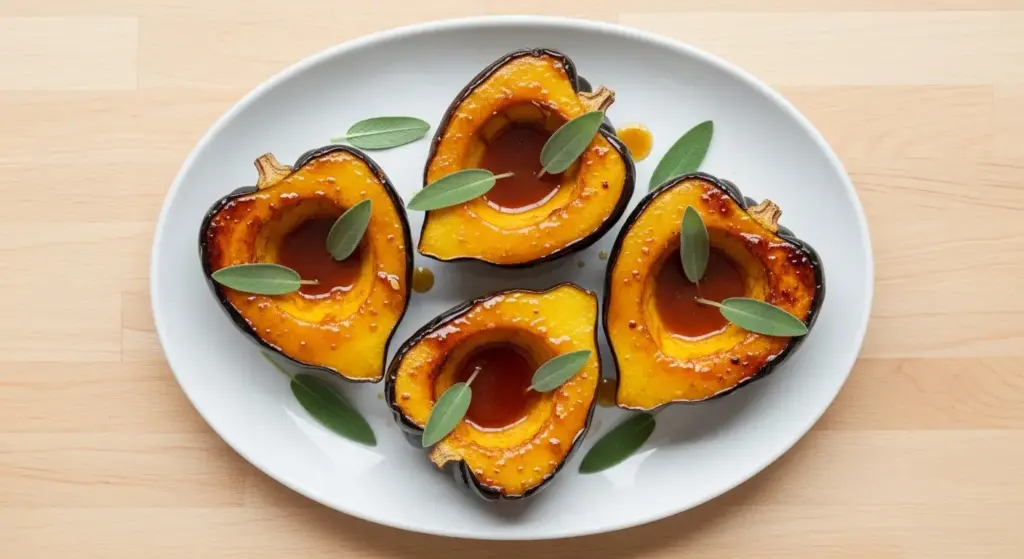
Roasted acorn squash pairs beautifully with a wide range of main courses and can even stand alone as a light meal. Its subtle sweetness and nutty flavor complement both rich and light dishes.
The squash works particularly well with proteins that have bold, savory seasonings, as the sweetness provides a nice contrast. It also makes an excellent addition to grain bowls and salads.
Here are some delicious ways to serve your roasted acorn squash:
- Alongside roasted chicken or turkey for a classic fall dinner
- With air fryer salmon for a healthy, balanced meal
- Next to pork chops or tenderloin for a comforting weeknight dinner
- As part of a Thanksgiving spread with cranberry sauce and stuffing
- Topped with quinoa, chickpeas, and a tahini drizzle for a vegetarian main dish
- With air fryer chicken thighs for a complete dinner
- In a fall harvest bowl with wild rice, roasted Brussels sprouts, and pecans
- Alongside beef roast or steak for a hearty winter meal
Variations to Try
Once you’ve mastered the basic recipe, these creative variations let you customize the flavors to match your preferences or the season. Each variation brings something unique to the table.
- Savory herb version: Skip the maple syrup and cinnamon. Instead, toss with olive oil, minced garlic, fresh thyme, rosemary, and a sprinkle of grated Parmesan cheese before roasting.
- Spiced brown sugar: Replace maple syrup with brown sugar and add nutmeg, ginger, and allspice for a warm, spice-forward version.
- Balsamic glaze: Drizzle with balsamic reduction and top with crumbled goat cheese and candied walnuts after roasting.
- Asian-inspired: Brush with a mixture of sesame oil, soy sauce, rice vinegar, and a touch of honey. Garnish with sesame seeds and sliced scallions.
- Stuffed acorn squash: Use the roasted halves as edible bowls. Fill with a mixture of wild rice, dried cranberries, pecans, and sausage for a complete meal.
- Maple pecan: After roasting, top with toasted pecans and an extra drizzle of warm maple syrup for an indulgent side dish.
- Chili-lime: Season with chili powder, cumin, and lime zest before roasting. Finish with fresh cilantro and a squeeze of lime juice.
This corn casserole recipe offers another delicious side dish option for fall gatherings.
Storage and Reheating
Proper storage keeps your roasted acorn squash fresh and delicious for several days. The squash actually holds up quite well to refrigeration, making it perfect for meal prep.
- Refrigerator storage: Allow the roasted squash to cool completely to room temperature. Transfer to an airtight container and refrigerate for up to 4 days. Keep the skin on to help maintain the shape and texture.
- Freezing (not recommended): While you can freeze roasted acorn squash for up to 2 months, the texture changes considerably. The flesh becomes watery and mushy when thawed. If you do freeze it, use it in pureed soups or mashed dishes rather than as a standalone side.
- Reheating in the oven: Place squash pieces in a baking dish with a tablespoon of water or broth in the bottom. Cover loosely with foil and reheat at 350°F for 15-20 minutes until warmed through. This method preserves the texture best.
- Reheating in the microwave: Place squash in a microwave-safe dish, cover with a damp paper towel, and heat in 30-second intervals until warm. Be careful not to overheat, as this can make it mushy.
- Using leftovers: Chop leftover roasted squash and add to grain bowls, salads, or breakfast hash for a quick nutritious addition.
Read Also: Healthy Broccoli Soup Recipe
Nutritional Facts
Per serving (½ of one medium acorn squash):
- Calories: 180
- Total Fat: 8g
- Saturated Fat: 3g
- Cholesterol: 8mg
- Sodium: 295mg
- Total Carbohydrates: 28g
- Dietary Fiber: 3g
- Sugars: 10g
- Protein: 2g
- Vitamin A: 20% DV
- Vitamin C: 35% DV
- Calcium: 8% DV
- Iron: 10% DV
- Potassium: 896mg
Nutritional information is calculated automatically and should be considered an estimate. Values may vary based on specific ingredients and portion sizes used.
You might also enjoy: Cream of Broccoli Soup Recipe
Health Benefits of Key Ingredients
Roasted acorn squash isn’t just delicious—it’s packed with nutrients that support overall health and wellness. Each serving delivers a powerful combination of vitamins, minerals, and beneficial plant compounds.
The natural sugars in acorn squash provide quick energy, while the fiber helps maintain steady blood sugar levels and supports digestive health. The beautiful orange flesh indicates high levels of beta-carotene, which the body converts to vitamin A.
Here’s what makes acorn squash a nutritional powerhouse:
- High in vitamin A: Essential for healthy vision, immune function, and skin health
- Rich in vitamin C: Supports immune system function and collagen production
- Good source of potassium: Helps regulate blood pressure and supports heart health
- Contains magnesium: Important for bone health, energy production, and muscle function
- Packed with antioxidants: Beta-carotene and other carotenoids help protect cells from damage
- High in fiber: Promotes digestive health and helps you feel satisfied longer
- Low in calories: Despite its naturally sweet taste, acorn squash is relatively low in calories
- Contains B vitamins: Thiamine and B6 support energy metabolism and brain function
Another healthy option is this spinach soup recipe.
Frequently Asked Questions
1. Do I need to peel acorn squash before roasting?
No, you don’t need to peel acorn squash before roasting. The skin becomes tender and completely edible once roasted, saving you significant prep time. The skin also helps the squash hold its shape during cooking and adds a pleasant texture contrast.
2. How can I tell when my acorn squash is perfectly roasted?
Insert a fork into the thickest part of the flesh. It should slide in easily with minimal resistance. The edges should be golden brown and slightly caramelized, and the flesh should be tender enough to scoop with a spoon.
3. Can I roast acorn squash ahead of time for a dinner party?
Yes, you can roast acorn squash up to 2 days ahead. Store it in an airtight container in the refrigerator and reheat gently in the oven before serving. However, for the best flavor and texture, roasting fresh the day of serving is ideal.
4. Why is my acorn squash hard to cut?
Acorn squash has a very tough exterior. If you’re struggling to cut it, try microwaving the whole squash for 1-2 minutes to soften it slightly. This makes cutting much easier and safer without affecting the final texture.
5. Can I make this recipe without maple syrup?
Absolutely. You can substitute honey, brown sugar, or agave nectar for the maple syrup. For a completely savory version, omit the sweetener entirely and use additional herbs and spices like garlic, thyme, and rosemary.
Read Also: Broccoli Soup Recipe
Final Thoughts
This roasted acorn squash recipe proves that simple ingredients and straightforward techniques can create something truly special. The caramelized edges, tender flesh, and perfect balance of sweet and savory make it a dish you’ll return to again and again.
From weeknight dinners to holiday feasts, this versatile side dish fits seamlessly into any meal. I hope this recipe becomes a staple in your kitchen and brings warmth and comfort to your table.
Give this roasted acorn squash a try, and don’t forget to share your results in the comments below. I’d love to hear how it turned out for you and any creative variations you discover!
Recommended:
- Chicken Vegetable Soup Recipe
- Celery Soup Recipe
- Cream of Mushroom Soup Recipe
- Mushroom Soup Recipe Without Cream
- Hungarian Mushroom Soup Recipe
- Chicken Mushroom Soup Recipe
- Potato Casserole Recipe
- Chicken Casserole Recipe
- Corn Soup Recipe
- Chicken Tinola Recipe