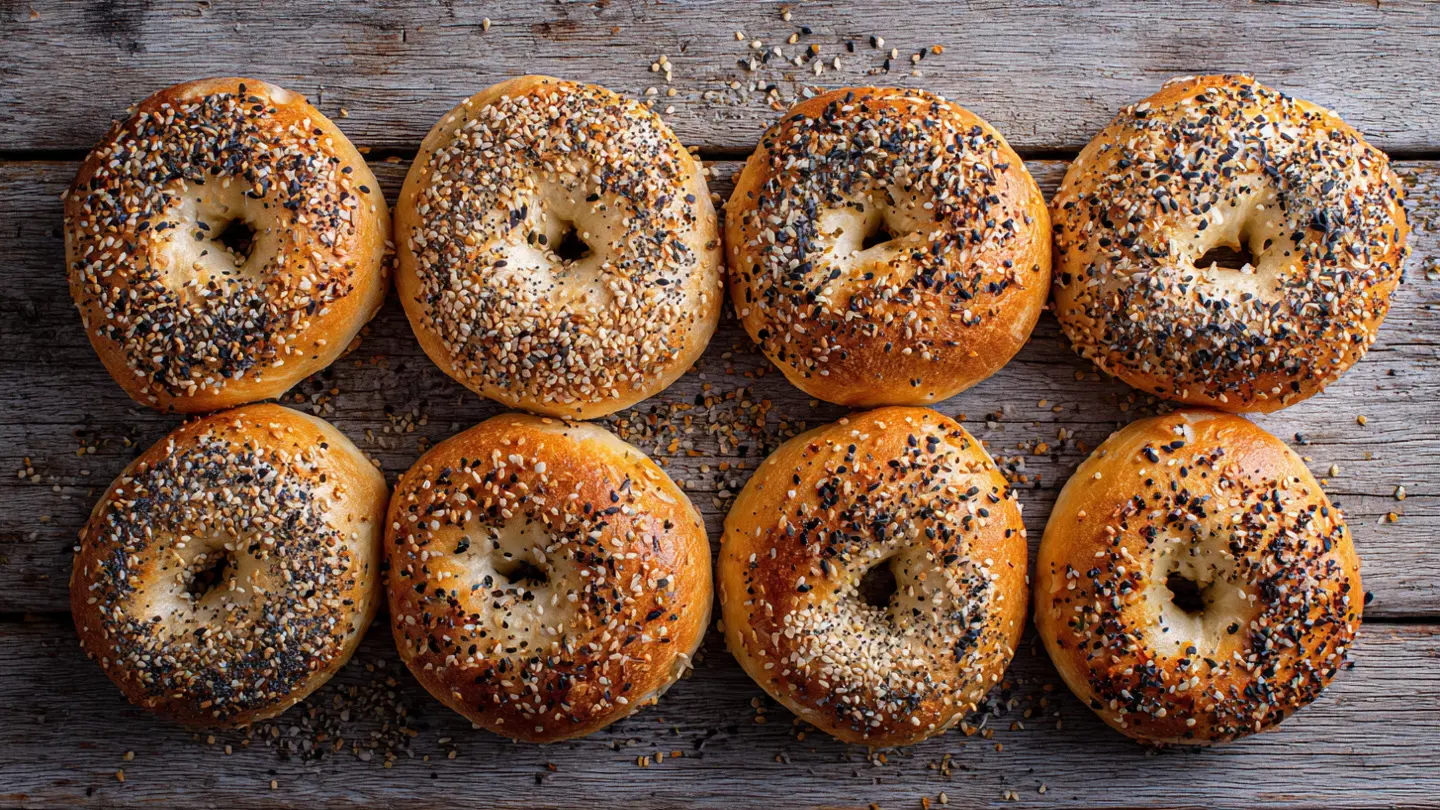
Nothing beats the smell of freshly baked bagels filling your kitchen on a lazy Sunday morning. Making your own homemade bagel recipe at home is easier than you think, and the results are absolutely worth the effort.
These golden-brown beauties feature a perfectly chewy interior and a delightfully crisp crust that rivals anything you’d find at your local bagel shop. The secret lies in the traditional boiling technique that gives bagels their signature dense, satisfying texture.
You’ll need just a handful of basic ingredients, most of which you probably already have in your pantry. With a bit of patience and some simple techniques, you’ll be pulling warm, fresh bagels out of your oven in just a couple of hours.
The best part? You can customize these bagels with your favorite toppings, from classic everything seasoning to sesame seeds, poppy seeds, or even cinnamon sugar. Once you master this recipe, you’ll never want to buy store-bought bagels again.
This pairs wonderfully with air fryer egg bites for a complete breakfast spread.
Why You’ll Love This Homemade Bagel Recipe
This homemade bagel recipe delivers authentic New York-style bagels with that perfect dense, chewy texture you crave. The bread flour creates a sturdy structure while the boiling step gives each bagel its characteristic shiny, golden crust.
You’ll save money compared to buying from expensive bagel shops, and you control exactly what goes into your food. No preservatives or questionable additives, just simple, wholesome ingredients.
These bagels are incredibly versatile and can be enjoyed plain, toasted with cream cheese, or transformed into breakfast sandwiches. The dough is forgiving enough for beginners yet produces professional-quality results.
- Authentic texture: Dense and chewy interior with a crisp, golden exterior
- Budget-friendly: Costs a fraction of what you’d pay at a bakery
- Customizable: Add any toppings you love, from savory to sweet
- No special equipment needed: Just basic kitchen tools
- Makes 8 large bagels: Perfect for meal prep or feeding a crowd
- Freezer-friendly: Make a big batch and freeze for quick breakfasts
You might also enjoy: Classic French Toast Recipe
Ingredients
Here’s everything you’ll need to make this homemade bagel recipe. The ingredient list is straightforward, with bread flour being the most important component for achieving that signature chewy texture.
- 4 cups (520g) bread flour, plus more for dusting
- 1 tablespoon (8g) active dry yeast
- 1 tablespoon (12g) granulated sugar
- 1 ½ teaspoons (9g) salt
- 1 ½ cups (360ml) warm water (100-110°F/38-43°C)
- 1 tablespoon (15ml) honey or barley malt syrup, for boiling
- 1 tablespoon (14g) baking soda, for boiling
- 1 large egg, beaten (optional, for egg wash)
- Toppings of choice: everything bagel seasoning, sesame seeds, poppy seeds, coarse salt, or cinnamon sugar
Read Also: Buttermilk Pancake Recipe
Kitchen Equipment Needed
You won’t need any fancy equipment to make these bagels. Most of these items are standard kitchen essentials that you likely already own.
- Stand mixer with dough hook (or mix by hand)
- Large mixing bowl
- Kitchen scale (recommended for accuracy)
- Clean kitchen towel or plastic wrap
- Large pot or Dutch oven for boiling
- Slotted spoon or spider strainer
- Baking sheets (2)
- Parchment paper or silicone baking mats
- Pastry brush (if using egg wash)
- Wire cooling rack
Another favorite: Easy Waffle Recipe
Recommended Products for This Recipe
These recommended products will help you achieve bakery-quality results and make the bagel-making process even easier.
1. King Arthur Bread Flour
This high-protein flour is specifically formulated for bread making and delivers superior texture in homemade bagels. The consistent protein content ensures your bagels will have that perfect chewy bite every single time.
2. KitchenAid Stand Mixer with Dough Hook
While you can knead bagel dough by hand, a stand mixer makes the process effortless and ensures proper gluten development. The powerful motor handles stiff dough with ease, giving you perfectly smooth and elastic bagel dough in just 7-9 minutes.
3. Everything Bagel Seasoning
This classic topping blend features sesame seeds, poppy seeds, dried garlic, dried onion, and salt for authentic bagel shop flavor. One jar goes a long way and elevates your homemade bagels to professional quality.
4. Half Sheet Baking Pans
Commercial-grade sheet pans distribute heat evenly and won’t warp in high temperatures. Invest in quality baking sheets and they’ll last for years while giving you perfectly baked bagels every time.
This technique works wonderfully in easy pizza dough recipe as well.
Step-by-Step Instructions
Follow these detailed instructions to make perfect bagels from scratch. Each step is important for achieving that authentic bagel texture and flavor.
1. Activate the Yeast
- Pour the warm water (100-110°F/38-43°C) into a small bowl
- Add the sugar and active dry yeast
- Stir gently to combine
- Let the mixture sit for 5-10 minutes until it becomes foamy and bubbly
- If the yeast doesn’t foam, it may be expired; start over with fresh yeast
2. Mix the Bagel Dough
- In the bowl of your stand mixer fitted with the dough hook, combine the bread flour and salt
- Pour in the activated yeast mixture
- Mix on low speed for 1-2 minutes until the ingredients start to come together
- Increase to medium-low speed and knead for 7-9 minutes until the dough is smooth, elastic, and pulls away from the sides of the bowl
- The dough should be firm and slightly tacky but not sticky
- If the dough seems too dry, add water 1 tablespoon at a time; if too wet, add flour 1 tablespoon at a time
3. First Rise
- Lightly oil a large bowl with vegetable oil or cooking spray
- Shape the dough into a ball and place it in the oiled bowl
- Turn the dough to coat all sides with oil
- Cover the bowl with a damp kitchen towel or plastic wrap
- Let the dough rise in a warm, draft-free place for 60-90 minutes until it doubles in size
- A good spot is inside your oven (turned off) with the light on
4. Divide and Shape the Dough
- Punch down the risen dough to release the air
- Turn the dough out onto a lightly floured surface
- Divide the dough into 8 equal pieces (each piece should weigh approximately 115g)
- Roll each piece into a smooth ball by cupping your hand over the dough and moving it in circular motions on an unfloured surface
- Cover the dough balls with a damp towel and let them rest for 10 minutes
5. Form the Bagel Shapes
- Take one dough ball and poke your index finger straight through the center
- Insert both index fingers into the hole and gently rotate and stretch the dough to widen the hole to about 2 inches in diameter
- The hole should be fairly large as it will shrink during boiling and baking
- Place the shaped bagel on a parchment-lined baking sheet
- Repeat with the remaining dough balls
- Cover the shaped bagels loosely with plastic wrap or a damp towel and let them rest for 10 minutes
6. Prepare for Boiling
- Fill your large pot or Dutch oven with about 3 quarts of water
- Bring the water to a boil over high heat
- Add the honey (or barley malt syrup) and baking soda
- Reduce heat to maintain a gentle boil
- Preheat your oven to 425°F (220°C)
- Line two baking sheets with parchment paper or silicone baking mats
7. Boil the Bagels
- Gently lower 2-3 bagels into the boiling water using a slotted spoon (don’t overcrowd)
- Boil for 30-60 seconds on the first side
- Flip each bagel using the slotted spoon
- Boil for another 30-60 seconds on the second side
- The longer you boil, the chewier and shinier the crust will be
- Remove the bagels with the slotted spoon and let excess water drip off
- Place the boiled bagels on the prepared baking sheets
- Repeat with the remaining bagels
8. Add Toppings and Bake
- If using an egg wash, brush the top of each bagel with beaten egg
- Immediately sprinkle your chosen toppings over the bagels while the egg wash is still wet
- Alternatively, you can dip the wet bagels directly into a plate of toppings after boiling
- Place the baking sheets in the preheated oven
- Bake for 20-25 minutes until the bagels are golden brown
- Rotate the baking sheets halfway through for even browning
- The internal temperature should reach about 200°F (93°C)
9. Cool and Serve
- Remove the bagels from the oven
- Transfer them immediately to a wire cooling rack
- Let the bagels cool for at least 10 minutes before slicing
- Slice horizontally and serve warm with your favorite spreads
For a lighter option, try: Cloud Eggs Recipe
Tips for Success
These expert tips will help you achieve bakery-quality bagels every single time you bake. Pay attention to these details for the best results.
- Use bread flour: The higher protein content is essential for achieving the proper chewy texture; all-purpose flour will produce softer, less authentic bagels
- Check water temperature: Water that’s too hot will kill the yeast, while water that’s too cold won’t activate it properly; aim for 100-110°F (38-43°C)
- Don’t skip the boiling step: This is what makes a bagel a bagel, creating that signature shiny crust and dense interior
- Make the holes large: Shape holes to about 2 inches in diameter as they’ll shrink significantly during boiling and baking
- Work quickly when boiling: The bagels will start to rise as they sit, so boil them as soon as possible after shaping
- Try the float test: If you want to proof your bagels longer, place a shaped bagel in a bowl of water; if it floats, it’s ready to boil
- Rotate baking sheets: This ensures even browning on all bagels
- Cool before slicing: Hot bagels are difficult to slice cleanly; wait at least 10 minutes for the best results
- Toast day-old bagels: Bagels are best fresh, but toasting revives their texture beautifully on day two or three
Read Also: Belgian Waffle Recipe
Serving Suggestions
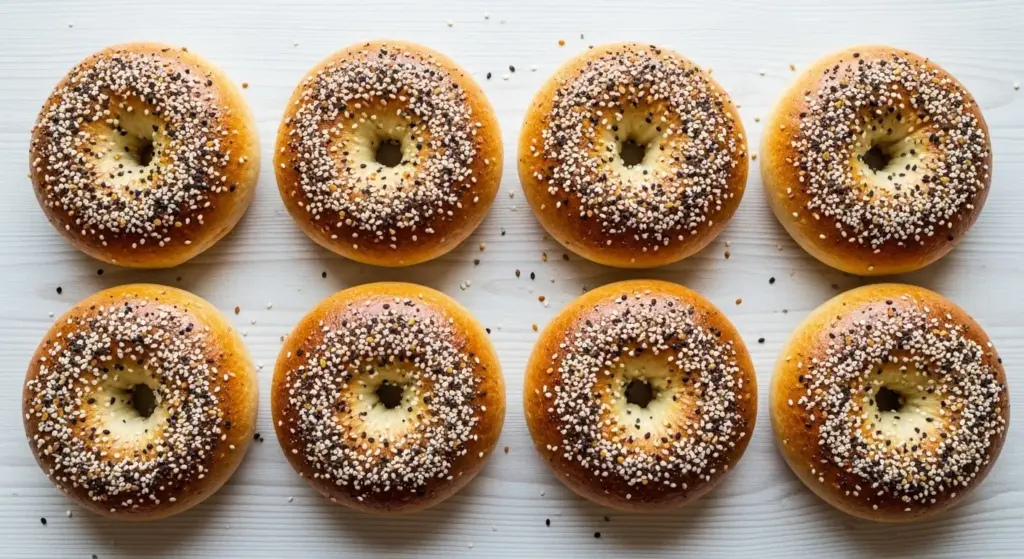
These homemade bagels are incredibly versatile and can be enjoyed in countless ways. Here are some delicious serving ideas to get you started.
The classic schmear of cream cheese never gets old, but you can elevate your bagel game with flavored cream cheeses like scallion, vegetable, or strawberry. For a traditional New York experience, top your bagel with cream cheese, smoked salmon, capers, thinly sliced red onion, and fresh dill.
Transform your bagels into hearty breakfast sandwiches by filling them with scrambled eggs, crispy bacon or sausage, and melted cheese. The dense texture holds up beautifully to generous fillings without falling apart.
- Classic schmear: Cream cheese, butter, or jam
- Lox and cream cheese: Smoked salmon, cream cheese, capers, red onion, and dill
- Breakfast sandwich: Air Fryer Egg Cups, bacon, and cheddar cheese
- Avocado toast: Mashed avocado, everything bagel seasoning, cherry tomatoes, and a fried egg
- Pizza bagels: Marinara sauce, mozzarella cheese, and pepperoni
- Tuna or chicken salad: Classic Egg Salad works great too
- Peanut butter and banana: A sweet and satisfying option
- Turkey and Swiss: Deli turkey, Swiss cheese, lettuce, tomato, and mustard
You might also enjoy: Breakfast Casserole Recipe
Variations to Try
Once you’ve mastered the basic recipe, experiment with these fun variations to create your own signature bagels. Each variation adds unique flavors while maintaining that perfect bagel texture.
- Cinnamon raisin bagels: Knead 2/3 cup raisins into the dough during the final minutes of mixing; roll the shaped bagels in cinnamon-sugar before baking
- Whole wheat bagels: Replace half of the bread flour with whole wheat flour for a heartier, nuttier flavor
- Blueberry bagels: Gently fold 3/4 cup fresh or frozen blueberries into the dough after kneading; be careful not to overmix
- Jalapeño cheddar bagels: Mix 1/2 cup shredded cheddar cheese and 2 diced jalapeños into the dough
- Asiago cheese bagels: Top boiled bagels with shredded Asiago cheese before baking
- Onion bagels: Sprinkle generously with dried minced onion after applying egg wash
- Garlic bagels: Mix 2 teaspoons garlic powder into the dough and top with dried minced garlic
- Chocolate chip bagels: Knead 3/4 cup mini chocolate chips into the dough for a sweet breakfast treat
- Pretzel bagels: Skip the honey in the boiling water and use only baking soda, then top with coarse salt
- Multi-grain bagels: Add 1/4 cup of mixed seeds (sunflower, flax, sesame) to the dough and sprinkle more on top
Another favorite: Old Fashioned Pancake Recipe
Storage and Reheating
Proper storage keeps your homemade bagels fresh and delicious for days. Follow these guidelines to maintain the best texture and flavor.
- Room temperature: Store bagels in a paper bag or bread box for up to 2 days at room temperature
- Refrigerator: Avoid refrigerating bagels as this accelerates staling and makes them tough
- Freezer: Slice bagels in half, wrap individually in plastic wrap or aluminum foil, then place in a freezer bag; freeze for up to 3 months
- Thawing: Remove from freezer and let thaw at room temperature for 1-2 hours, or toast directly from frozen
- Toasting: Refresh day-old or frozen bagels by toasting them until crispy and warm
- Microwave: To soften a refrigerated or stale bagel, wrap in a damp paper towel and microwave for 15-20 seconds
- Oven warming: Wrap bagels in foil and warm in a 350°F (175°C) oven for 5-7 minutes to restore freshness
The same cheese blend works great in baked ziti recipe too.
Nutritional Facts
Here’s the approximate nutritional information for one plain bagel from this recipe (without toppings).
Per Serving (1 bagel):
- Calories: 210
- Total Fat: 1g
- Saturated Fat: 0g
- Cholesterol: 0mg (without egg wash)
- Sodium: 440mg
- Total Carbohydrates: 43g
- Dietary Fiber: 2g
- Sugars: 2g
- Protein: 7g
Note: Nutritional values are approximate and will vary based on exact ingredients used and portion sizes. Adding toppings, spreads, or fillings will change the nutritional profile.
Read Also: Easy French Toast Recipe
Health Benefits of Key Ingredients
While bagels are often considered an indulgent breakfast choice, the ingredients in this homemade version offer several nutritional benefits when enjoyed as part of a balanced diet.
Bread flour provides a good source of complex carbohydrates, which give you sustained energy throughout the morning. Unlike refined white bread, the protein in bread flour helps you feel fuller for longer.
The yeast used in this recipe contains B vitamins, particularly B12 and folate, which support energy metabolism and red blood cell formation. Active dry yeast also provides small amounts of protein and minerals like selenium and chromium.
- Bread flour: Provides energy, B vitamins, iron, and protein for muscle maintenance
- Yeast: Contains B vitamins, particularly B12, plus selenium for antioxidant support
- Whole grains (if using whole wheat variation): Adds fiber for digestive health and helps regulate blood sugar
- Minimal added sugar: Unlike store-bought bagels, this recipe uses just 1 tablespoon of sugar for the entire batch
- No preservatives: You control exactly what goes into your bagels, avoiding artificial additives
- Customizable toppings: Add nutrient-dense seeds like sesame, poppy, or flax for extra minerals and healthy fats
For a lighter option, try: Healthy Chicken Salad Recipe
Frequently Asked Questions
1. Can I make bagels without a stand mixer?
Absolutely! You can mix and knead the dough by hand. Combine the ingredients in a large bowl using a wooden spoon until a shaggy dough forms. Turn the dough onto a lightly floured surface and knead vigorously for 10-12 minutes until smooth and elastic.
The dough will be quite stiff, so it requires more effort than softer bread doughs. Your arm might get tired, but the result will be just as delicious as using a mixer.
2. Why do bagels need to be boiled?
Boiling bagels is the essential step that distinguishes them from other bread products. The hot water bath gelatinizes the starches on the surface of the dough, creating that characteristic shiny, chewy crust.
Boiling also sets the shape and prevents the bagels from rising too much in the oven, which maintains their dense, satisfying interior texture. Without this step, you’d end up with round bread rolls instead of authentic bagels.
3. Can I make the dough ahead of time?
Yes, you can prepare bagel dough in advance using a cold fermentation method. After the first rise, punch down the dough, divide and shape it into bagels, then place them on a baking sheet.
Cover tightly with plastic wrap and refrigerate for up to 24 hours. When ready to bake, remove from the refrigerator, let sit at room temperature for 30 minutes, then proceed with boiling and baking.
4. What’s the difference between bread flour and all-purpose flour?
Bread flour contains about 12-14% protein, while all-purpose flour has 10-12% protein. This higher protein content develops more gluten during kneading, which creates the chewy, dense texture that’s essential for authentic bagels.
If you only have all-purpose flour, you can still make bagels, but they’ll be slightly softer and less chewy than those made with bread flour. For best results, stick with bread flour.
5. How do I know when my bagels are fully baked?
Properly baked bagels should be deep golden brown on top and sound hollow when tapped on the bottom. The internal temperature should reach about 200°F (93°C) when measured with an instant-read thermometer.
If the tops are browning too quickly but the bagels aren’t fully baked, tent them loosely with aluminum foil for the last 5 minutes of baking. This allows them to finish cooking without over-browning.
You might also enjoy: Easy Hummus Recipe
Final Thoughts
Making your own homemade bagel recipe truly is a rewarding experience that transforms your weekend mornings into something special. The process might seem involved at first, but once you get the hang of it, you’ll find yourself making fresh bagels regularly.
There’s something incredibly satisfying about pulling warm, golden bagels from your oven, knowing you created them from scratch with simple ingredients. The aroma alone is worth the effort, and the taste far surpasses anything you can buy at the store.
I’d love to hear how your bagels turn out! Share your creations in the comments below, and let me know which toppings became your favorite. Happy baking!
Recommended:
- Easy Granola Recipe
- Homemade Granola Recipe
- French Toast Casserole Recipe
- Breakfast Potatoes Recipe
- Classic Hummus Recipe
- Easy Pesto Recipe
- Kodiak Pancake Recipe
- Gluten Free Pancake Recipe
- German Pancake Recipe
- Ihop Pancake Recipe