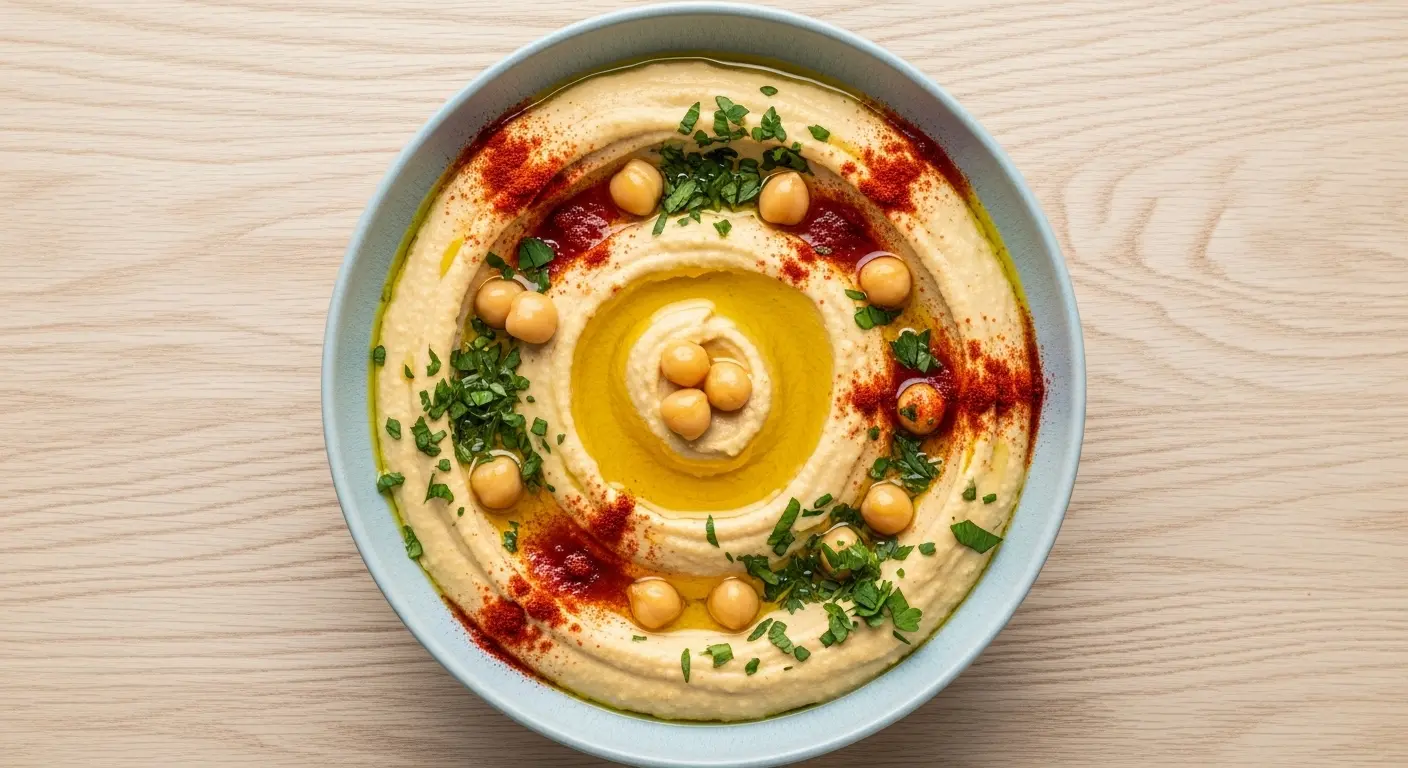
Creamy, smooth, and utterly satisfying, this classic hummus recipe brings the authentic flavors of the Middle East straight to your kitchen. Made with simple ingredients like chickpeas, tahini, lemon juice, and garlic, this homemade version puts store-bought options to shame.
Making hummus from scratch is easier than you might think. The secret lies in a few simple techniques that transform ordinary ingredients into a velvety dip with rich, nutty undertones and a bright, tangy finish.
This recipe uses the traditional method that yields restaurant-quality results every single time. You’ll discover why cooking the chickpeas just a bit longer creates that ultra-smooth texture, and how properly blending the tahini first makes all the difference.
Serve this with warm pita bread, fresh vegetables, or use it as a spread in sandwiches and wraps. Once you taste homemade hummus made this way, you’ll never go back to the pre-packaged stuff.
Another favorite: Easy Hummus Recipe
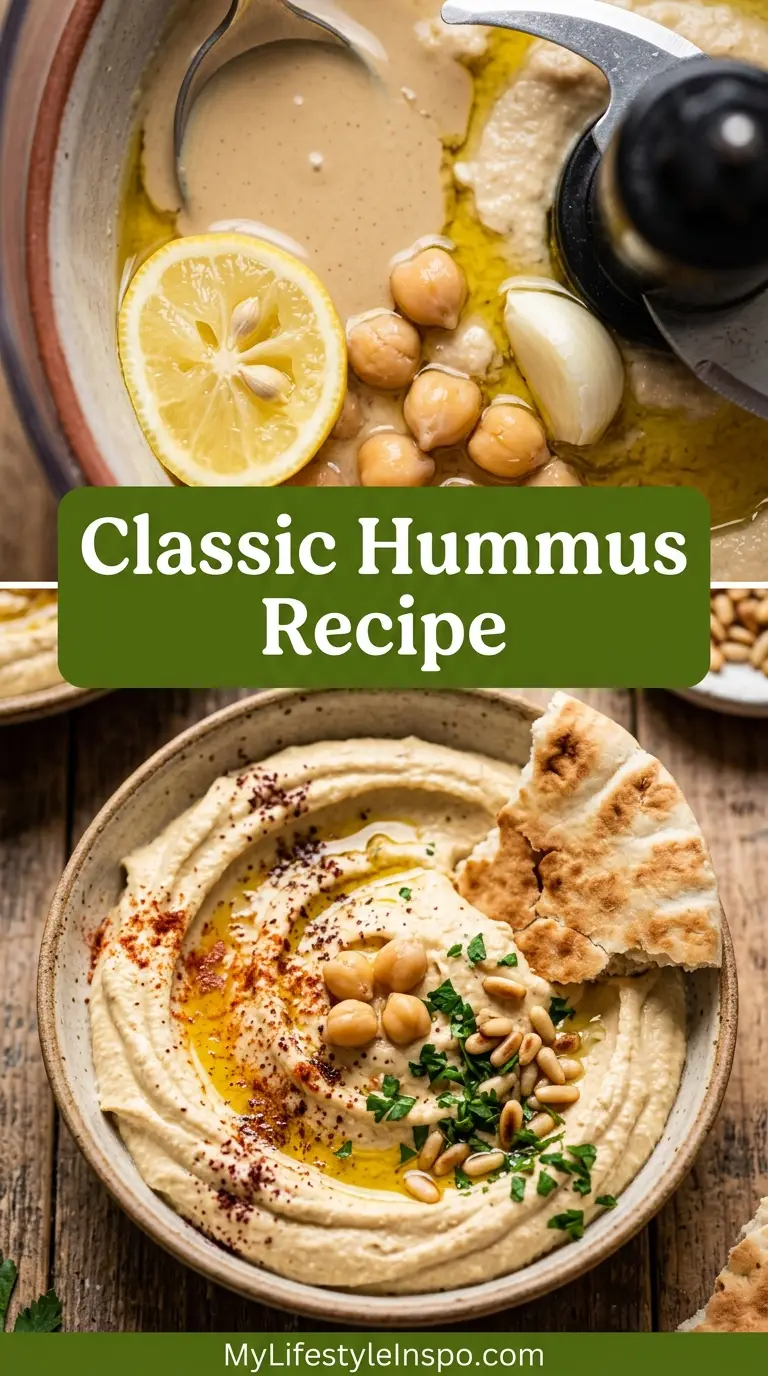
Why You’ll Love This Classic Hummus Recipe
This hummus delivers everything you want in a Mediterranean dip. The texture is impossibly smooth and creamy, while the flavor profile balances nutty tahini with bright lemon and mellow garlic.
Making it at home means you control exactly what goes into your bowl. No preservatives, no mystery ingredients, just pure, wholesome goodness that tastes better than anything you can buy at the store.
- Ultra-creamy texture – Cooking the chickpeas until they’re very soft, almost falling apart, creates that restaurant-style smoothness you crave
- Authentic flavor – Traditional ingredients and proper technique give you the real deal, not a watered-down version
- Quick and easy – From start to finish, you’ll have perfect hummus in about 30 minutes
- Healthier option – Control the oil, salt, and ingredients to make it exactly how you like it
- Budget-friendly – Costs a fraction of store-bought premium hummus brands
- Endlessly versatile – Use it as a dip, spread, or base for countless variations
Ingredients
The beauty of hummus lies in its simplicity. Every ingredient serves a specific purpose in creating that signature creamy texture and complex flavor profile that makes this dip so addictive.
Quality matters here, especially with the tahini. Look for a brand that’s smooth and pourable, not grainy or separated. Fresh lemon juice makes a huge difference over bottled versions, bringing brightness that complements the nutty richness.
- 1 can (15 oz/425g) chickpeas – Also called garbanzo beans; canned saves time but you can use dried chickpeas cooked until very soft
- ½ teaspoon baking soda – Helps soften the chickpeas and loosen their skins for ultra-smooth texture
- ⅓ cup (80ml) tahini – Sesame seed paste; use a high-quality brand for the best flavor
- 3 tablespoons (45ml) fresh lemon juice – From about 1 large lemon; freshly squeezed is essential
- 1 small garlic clove – Peeled; use fresh garlic, not jarred
- ½ teaspoon salt – Or to taste
- ¼ teaspoon ground cumin – Adds warmth and depth
- 2 tablespoons (30ml) extra-virgin olive oil – Plus more for drizzling
- 5-6 tablespoons (75-90ml) ice-cold water – Helps achieve that light, fluffy texture
Optional Garnishes:
- Extra-virgin olive oil for drizzling
- Paprika or sumac
- Fresh parsley, chopped
- Whole chickpeas
You might also enjoy: Classic Guacamole Recipe
Kitchen Equipment Needed
Having the right tools makes the process smoother and ensures you achieve that restaurant-quality texture. While a food processor is the traditional choice, a high-powered blender can also work beautifully.
The key is having something powerful enough to break down the chickpeas completely and blend everything until it’s silky smooth. A weak blender or processor will leave you with chunky, grainy hummus instead of the creamy dip you’re aiming for.
- Food processor or high-powered blender – For blending everything to silky perfection
- Medium saucepan – For cooking the chickpeas
- Colander – To drain the chickpeas
- Measuring cups and spoons – For accurate measurements
- Rubber spatula – For scraping down the sides of the processor
- Serving bowl – For presenting your beautiful hummus
Recommended Products for This Recipe
These carefully selected products will help you achieve the best possible results with your hummus. Quality ingredients and reliable equipment make all the difference in creating that ultra-creamy texture.
1. Soom Tahini
This premium tahini is made from Ethiopian sesame seeds and has a wonderfully smooth, creamy texture with no bitterness. It blends seamlessly into hummus and provides that authentic, rich nutty flavor that makes homemade versions taste so much better than store-bought.
2. Cuisinart 14-Cup Food Processor
This powerful food processor has the capacity and motor strength to blend chickpeas into silky-smooth hummus in minutes. The large bowl means you can easily double the recipe, and the sharp blades create that professional texture home cooks crave.
3. California Olive Ranch Extra Virgin Olive Oil
A fruity, high-quality olive oil elevates the flavor of hummus significantly. This California-made oil has a mild, pleasant taste that enhances rather than overpowers the other ingredients, perfect for both blending in and drizzling on top.
Read Also: Easy Pesto Recipe
Step-by-Step Instructions
Follow these detailed instructions carefully to achieve that signature creamy, smooth texture. Each step builds on the previous one, and skipping any could affect your final results.
1. Prepare the Chickpeas
- Drain the canned chickpeas in a colander, reserving about ½ cup (120ml) of the liquid from the can
- Place the drained chickpeas in a medium saucepan and add the baking soda
- Cover the chickpeas with fresh water by about 2 inches (5cm)
- Bring the mixture to a boil over high heat
- Once boiling, reduce the heat slightly to maintain a steady, vigorous simmer
- Cook for 20 minutes, stirring occasionally and skimming off any skins that float to the surface
- The chickpeas should look bloated and very soft, with most of their skins loosened or fallen off
- Drain the chickpeas in the colander and rinse briefly with cool water
2. Blend the Tahini and Lemon Juice
- Add the tahini and fresh lemon juice to the bowl of your food processor
- Process for about 1 minute without stopping
- Stop the processor and scrape down the sides and bottom of the bowl with a rubber spatula
- Process for another 30 seconds
- The mixture should look lighter in color, thicker, and almost whipped in texture
- This step is crucial as it creates the foundation for ultra-creamy hummus
3. Add the Aromatics
- Add the garlic clove, salt, and ground cumin to the tahini mixture
- Process for 30 seconds to 1 minute until the garlic is completely broken down and incorporated
- Scrape down the sides of the bowl again to ensure everything is evenly mixed
4. Add the Chickpeas in Batches
- Add about half of the cooked, drained chickpeas to the food processor
- Process for 1 minute, stopping once to scrape down the sides
- Add the remaining chickpeas
- Process for 1 to 2 minutes, or until the mixture is thick and quite smooth
- Don’t worry if it seems too thick at this point, you’ll be adding liquid next
5. Incorporate the Olive Oil and Water
- With the food processor running, slowly drizzle in the 2 tablespoons of olive oil through the feed tube
- Scrape down the sides of the bowl
- Add 5 tablespoons of ice-cold water, one tablespoon at a time, processing for about 30 seconds between each addition
- The hummus should transform into a smooth, creamy, light, and fluffy consistency
- If it’s still too thick for your liking, add the remaining tablespoon of water and process again
- Continue processing for an additional 1-2 minutes to ensure maximum smoothness
6. Taste and Adjust
- Stop the processor and taste the hummus
- Add more salt if needed, starting with just a pinch
- If you want more lemon brightness, add an extra teaspoon of lemon juice
- For a stronger garlic flavor, add another small clove of minced raw garlic
- Process briefly after each adjustment to incorporate evenly
7. Serve
- Transfer the hummus to a serving bowl using a rubber spatula
- Use the back of a spoon to create a shallow well or swirl pattern in the center
- Drizzle generously with extra-virgin olive oil
- Sprinkle with paprika, sumac, or za’atar if desired
- Garnish with fresh chopped parsley and a few whole chickpeas
- Serve immediately with warm pita bread, fresh vegetables, or crackers
For a lighter option, try: Healthy Chicken Salad Recipe
Tips for Success
Mastering hummus comes down to understanding a few key techniques. These tips ensure you get that perfectly smooth, creamy texture every time you make it.
- Cook the chickpeas longer than you think – Overcooking them until they’re practically falling apart creates that ultra-smooth texture; they should feel very soft when pressed between your fingers
- Whip the tahini first – Blending just the tahini and lemon juice before adding anything else makes the hummus incredibly smooth and creamy; this step is non-negotiable for the best results
- Use ice-cold water – Cold water helps create a lighter, fluffier texture similar to freshly churned ice cream; room temperature water won’t give you the same effect
- Don’t rush the blending – Let the food processor run for 4-5 minutes total; patience here pays off with silky-smooth hummus
- Remove chickpea skins – While cooking loosens most skins, removing any that remain before blending creates an even smoother final product
- Choose quality tahini – Look for tahini made from Ethiopian sesame seeds; it has the smoothest texture and least bitter flavor
- Add water gradually – Start with less water and add more as needed; it’s easier to thin hummus than to thicken it
- Let it rest – Refrigerate for at least 2 hours before serving to allow flavors to meld together
- Bring to room temperature – Take hummus out of the refrigerator 15-20 minutes before serving for the best texture and flavor
Serving Suggestions
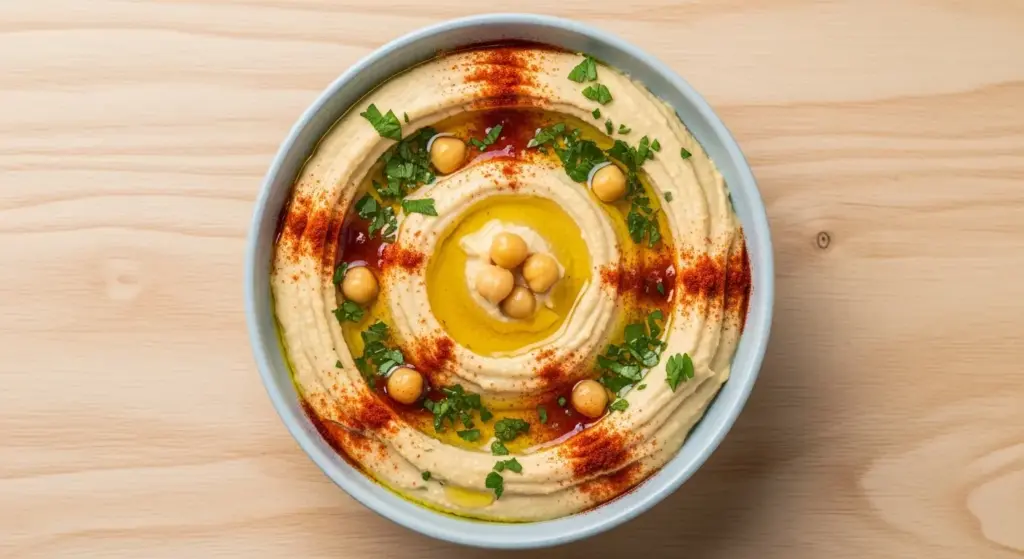
This versatile dip shines in countless ways beyond the traditional veggie platter. Think of it as a blank canvas for creating delicious meals and snacks throughout the day.
- Spread it thick on Classic Bruschetta for an unexpected twist on the Italian appetizer
- Use as a creamy base for Mediterranean Lentil Soup, swirled on top just before serving
- Layer it in wraps with grilled vegetables and Creamy Coleslaw for satisfying lunch bowls
- Serve alongside Classic Deviled Eggs as part of an impressive appetizer spread
- Dollop it on Baked Ziti for a Mediterranean-inspired pasta dish
- Pair with warm pita bread, crispy pita chips, or fresh vegetables like carrots, cucumbers, bell peppers, and cherry tomatoes
- Create a hummus bowl topped with roasted chickpeas, diced cucumbers, tomatoes, olives, and a drizzle of olive oil
- Use as a sandwich spread instead of mayonnaise for extra flavor and nutrition
Read Also: Easy Guacamole Recipe
Variations to Try
Once you’ve mastered the classic version, experiment with these flavor variations to keep things interesting. Each one adds a unique twist while maintaining that signature creamy texture.
- Roasted Red Pepper Hummus – Blend in ¾ cup (175ml) drained roasted red peppers from a jar for a sweet, smoky flavor and beautiful coral color
- Roasted Garlic Hummus – Replace the raw garlic with 1-2 heads of roasted garlic for a mellow, sweet garlic flavor
- Beet Hummus – Add 1 medium roasted or boiled beet for a stunning magenta color and earthy sweetness
- Spicy Hummus – Stir in 2 tablespoons harissa paste, 1 tablespoon hot sauce, or ¼ teaspoon cayenne pepper for a spicy kick
- Pine Nut Hummus – Toast ¼ cup (35g) pine nuts and blend them in, then garnish with extra toasted pine nuts
- Sun-Dried Tomato Hummus – Blend in ¾ cup (100g) oil-packed sun-dried tomatoes (rinsed and drained) for intense tomato flavor
- Herb Hummus – Add ¾ cup (20g) fresh herbs like parsley, cilantro, or basil for a bright, fresh variation
- Lemon-Dill Hummus – Increase lemon juice to ¼ cup (60ml) and add 2 tablespoons fresh chopped dill
- Black Bean Hummus – Substitute black beans for half the chickpeas for a protein-packed variation
- Edamame Hummus – Replace chickpeas with cooked edamame for a vibrant green, protein-rich dip
Another favorite: Classic Egg Salad Recipe
Storage and Reheating
Proper storage keeps your hummus fresh and delicious for days. Following these guidelines ensures you can enjoy it throughout the week without any loss of quality.
- Refrigeration – Transfer hummus to an airtight container and smooth the top; pour a thin layer of olive oil over the surface to prevent drying, then seal and refrigerate for up to 5-7 days
- Freezing – Portion hummus into freezer-safe containers, leaving ½ inch (1cm) headspace for expansion; freeze for up to 4 months; thaw overnight in the refrigerator before serving
- Bring to room temperature – Remove hummus from the refrigerator 15-20 minutes before serving to soften and bring out the best flavor
- Refresh the texture – If hummus seems thick after refrigeration, stir in 1-2 tablespoons of cold water, lemon juice, or olive oil to restore creaminess
- Avoid leaving at room temperature – Don’t leave hummus out for more than 2 hours at room temperature to prevent bacterial growth
- Layer with olive oil – Before sealing, drizzle olive oil on top to create a protective barrier against air exposure
- Use clean utensils – Always use a clean spoon when scooping to prevent contamination and extend shelf life
Nutritional Facts
Serving Size: ¼ cup (60g)
Servings per Recipe: 8
- Calories: 110
- Total Fat: 7g
- Saturated Fat: 1g
- Trans Fat: 0g
- Cholesterol: 0mg
- Sodium: 190mg
- Total Carbohydrates: 10g
- Dietary Fiber: 3g
- Total Sugars: 1g
- Added Sugars: 0g
- Protein: 4g
- Vitamin D: 0mcg (0% DV)
- Calcium: 30mg (2% DV)
- Iron: 1.5mg (8% DV)
- Potassium: 120mg (3% DV)
Percent Daily Values are based on a 2,000 calorie diet.
You might also enjoy: Easy Nachos Recipe
Health Benefits of Key Ingredients
This simple dip packs a powerful nutritional punch. Each ingredient contributes specific health benefits that make hummus a smart choice for anyone looking to eat well.
- Chickpeas – Excellent source of plant-based protein and dietary fiber; support digestive health and help stabilize blood sugar levels; rich in folate, iron, and magnesium
- Tahini – Provides heart-healthy fats, calcium, and essential minerals like copper and manganese; contains sesamin and sesamolin, compounds with antioxidant properties
- Olive oil – Rich in monounsaturated fats that support heart health; contains powerful antioxidants and anti-inflammatory compounds
- Lemon juice – High in vitamin C, which supports immune function; aids in iron absorption from the chickpeas
- Garlic – Contains allicin, a compound with potential antibacterial and antiviral properties; may support cardiovascular health
- Cumin – Contains antioxidants and may aid digestion; adds flavor without sodium
Read Also: Loaded Nachos Recipe
Frequently Asked Questions
1. Can I Make Hummus Without Tahini?
Yes, though tahini provides the authentic nutty flavor and creamy texture. If you need to skip it due to allergies, substitute with an equal amount of smooth almond butter, cashew butter, or sunflower seed butter.
You can also replace tahini with extra olive oil, using about ½ cup total, though the flavor won’t be quite as rich and nutty. The texture will still be creamy but slightly different from traditional hummus.
2. Why Is My Hummus Grainy Instead of Smooth?
Graininess usually comes from undercooked chickpeas or not blending long enough. Make sure to cook the chickpeas until they’re very soft, almost mushy.
Then, let your food processor run for 4-5 minutes total. Removing the chickpea skins before blending also helps create an ultra-smooth texture.
3. Can I Use Dried Chickpeas Instead of Canned?
Absolutely, and many people prefer the flavor and texture. Soak 1 cup dried chickpeas overnight in plenty of water.
Drain, then cook in fresh water for 1-2 hours until very soft. Using dried chickpeas gives you more control over the final texture.
4. How Can I Make My Hummus Creamier?
The key to creamy hummus is blending the tahini and lemon juice first before adding anything else. This creates a smooth base.
Also, add ice-cold water gradually while blending and let the food processor run for several minutes. High-quality, smooth tahini makes a huge difference too.
5. What’s the Best Way to Serve Hummus?
Spread hummus in a shallow bowl and create a well in the center with the back of a spoon. Drizzle generously with olive oil and sprinkle with paprika or sumac.
Add fresh parsley and a few whole chickpeas for garnish. Serve with warm pita bread, fresh vegetables, or pita chips.
For a complete meal, try: Classic Chicken Pot Pie Recipe
Classic Hummus

Equipment
- Food processor - 14-cup capacity recommended
- High-powered blender - (optional) alternative to food processor
- Medium saucepan
- Colander
- Measuring cups
- Measuring spoons
- Rubber spatula
- Serving bowl
Ingredients
- 15 oz chickpeas - 425g can, also called garbanzo beans
- 0.5 teaspoon baking soda
- 0.33 cup tahini - 80ml, sesame seed paste, high-quality brand
- 3 tablespoons lemon juice - 45ml, freshly squeezed from about 1 large lemon
- 1 small garlic clove - peeled, fresh not jarred
- 0.5 teaspoon salt - or to taste
- 0.25 teaspoon ground cumin
- 2 tablespoons extra-virgin olive oil - 30ml, plus more for drizzling
- 5 tablespoons ice-cold water - 75-90ml
Optional Garnishes
- extra-virgin olive oil - for drizzling
- paprika - or sumac
- fresh parsley - chopped
- whole chickpeas
Instructions
- Drain canned chickpeas in a colander, reserving ½ cup of the liquid. Place drained chickpeas in a medium saucepan with baking soda and cover with fresh water by 2 inches. Bring to a boil, then reduce to a vigorous simmer for 20 minutes until chickpeas are very soft and bloated. Drain and rinse briefly with cool water.
- Add tahini and fresh lemon juice to the food processor bowl. Process for about 1 minute without stopping, scrape down sides, then process another 30 seconds until the mixture looks lighter, thicker, and almost whipped.
- Add garlic clove, salt, and ground cumin to the tahini mixture. Process for 30 seconds to 1 minute until garlic is completely broken down and incorporated. Scrape down sides to ensure even mixing.
- Add half the cooked, drained chickpeas and process for 1 minute. Add remaining chickpeas and process 1-2 minutes until thick and quite smooth.
- With the processor running, slowly drizzle in olive oil through the feed tube. Scrape down sides. Add 5 tablespoons of ice-cold water one tablespoon at a time, processing 30 seconds between each addition. Continue processing 1-2 minutes for maximum smoothness.
- Stop and taste the hummus. Add more salt, lemon juice, or minced garlic if desired. Process briefly after each adjustment.
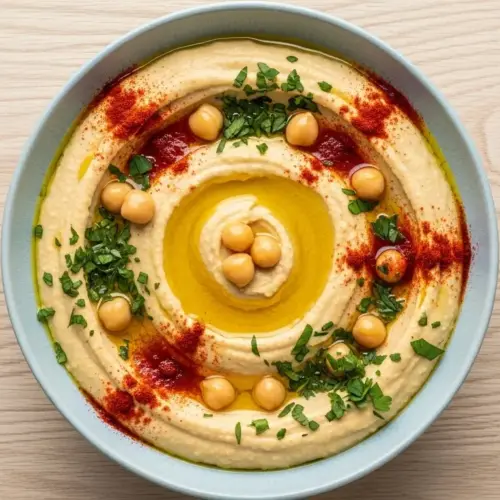
- Transfer hummus to a serving bowl. Create a shallow well in the center with the back of a spoon. Drizzle generously with extra-virgin olive oil and sprinkle with paprika, sumac, or fresh chopped parsley. Garnish with whole chickpeas if desired. Serve immediately with warm pita bread, fresh vegetables, or crackers.
Notes
- Cook the chickpeas longer than you think until they’re practically falling apart for ultra-smooth texture.
- Whip the tahini and lemon juice together first before adding other ingredients – this is essential for creamy hummus.
- Use ice-cold water while blending to create a lighter, fluffier texture.
- Let the food processor run for 4-5 minutes total for silky-smooth results.
- Remove any remaining chickpea skins after cooking for an even smoother final product.
- Look for tahini made from Ethiopian sesame seeds for the smoothest texture and least bitter flavor.
- Refrigerate hummus for at least 2 hours before serving to allow flavors to meld together.
- Take hummus out of the refrigerator 15-20 minutes before serving for best texture and flavor.
- Store in airtight container with thin layer of olive oil on top in refrigerator for up to 5-7 days.
- Freeze hummus in freezer-safe containers for up to 4 months; thaw overnight in refrigerator.
Final Thoughts
This classic hummus recipe proves that the best flavors come from simple, quality ingredients and proper technique. With just a few pantry staples and about 30 minutes, you can create a dip that rivals anything from high-end restaurants or specialty stores.
The beauty of mastering this recipe is how it opens doors to endless variations and creative uses in your cooking. Once you experience the difference between homemade and store-bought, there’s no going back.
I’d love to hear how your hummus turns out! Share your results in the comments below, and let me know which variations you’re excited to try.
Recommended:
- Classic Bruschetta Recipe
- Strawberry Bruschetta Recipe
- Chicken Bruschetta Recipe
- Homemade Granola Recipe
- Easy Granola Recipe
- Mediterranean Lentil Soup Recipe
- Red Lentil Soup Recipe
- Mediterranean Fish Soup Recipe
- Baked Ziti Recipe
- Homemade Alfredo Sauce Recipe