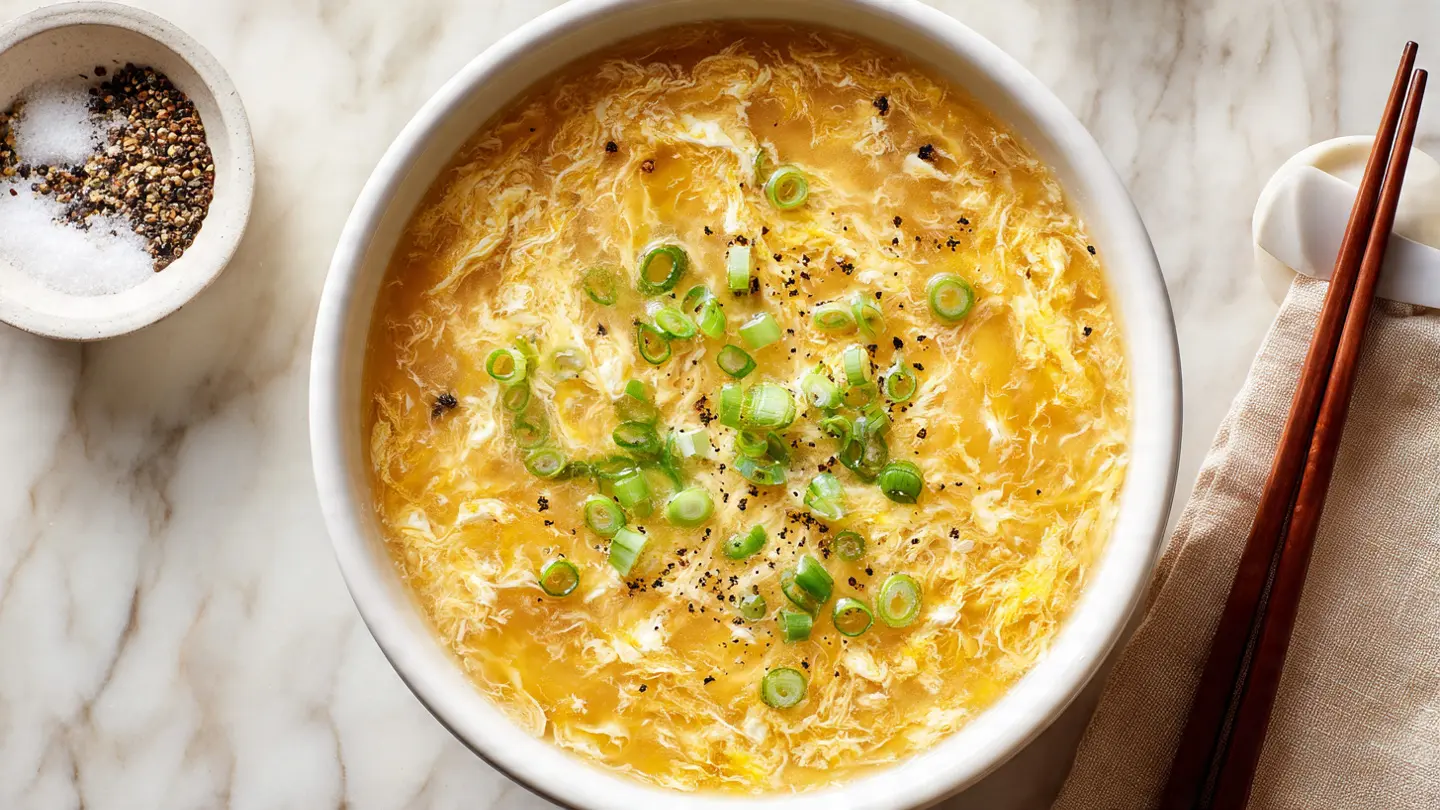
A steaming bowl of Chinese egg drop soup recipe is one of those magical dishes that feels deeply nourishing without demanding much of your time or pantry.
It’s the soup that shows up at practically every Chinese-American restaurant table, served in small porcelain bowls before the main event, and yet it’s surprisingly easy to recreate at home with just a handful of ingredients.
What makes this soup so special is the technique. Those gorgeous, wispy strands of egg are created by slowly drizzling beaten eggs into simmering broth, letting the heat cook them instantly into delicate ribbons.
The result is a silky, golden soup that’s light yet satisfying — exactly the kind of thing you want on a weeknight when you need something warm and quick.
This version follows the classic Chinese-American restaurant style: a golden chicken broth thickened just slightly with cornstarch, seasoned with soy sauce and white pepper, and finished with those iconic egg ribbons. It’s a recipe that delivers big on flavor with minimal effort.
If you love this soup, you’ll want to check out the Homemade Egg Drop Soup Recipe for an extra from-scratch take on this timeless dish.
Why You’ll Love This Chinese Egg Drop Soup Recipe
This soup is one of the most accessible and satisfying recipes you can have in your back pocket.
It comes together in under 15 minutes, uses pantry staples, and requires zero special cooking skills.
The flavor is deeply comforting — savory, subtly rich, and just a little bit umami-forward from the soy sauce and sesame oil.
That combination makes it endlessly craveable, whether you’re fighting off a cold or simply want something warm and simple.
Here’s why this recipe stands out:
- Incredibly fast: From stovetop to table in about 15 minutes
- Minimal ingredients: Just 8 core ingredients that you likely already have
- Restaurant-quality results: The cornstarch slurry and slow egg-drizzle technique give you those perfect silky ribbons every time
- Naturally gluten-free option: Easy to adapt with tamari instead of soy sauce
- Endlessly customizable: Add corn, tofu, mushrooms, or chicken to make it your own
You might also enjoy: Chicken Egg Drop Soup Recipe
Ingredients
This recipe is beautifully simple. The key to the best egg drop soup is using a good quality broth, because it forms the entire base of the flavor. Every ingredient in this list is used in the cooking process, so nothing goes to waste.
- 4 cups (950 ml) chicken broth (low-sodium preferred)
- 3 large eggs
- 2 tablespoons (16 g) cornstarch
- 3 tablespoons (45 ml) cold water (for the cornstarch slurry)
- 1 tablespoon (15 ml) soy sauce (or tamari for gluten-free)
- 1 teaspoon (5 ml) toasted sesame oil
- ½ teaspoon (1 g) ground white pepper
- ½ teaspoon (2.5 g) granulated sugar (optional, balances the saltiness)
- 2 stalks green onions (scallions), thinly sliced (for garnish)
- Salt to taste
Read Also: Easy Egg Drop Soup Recipe
Kitchen Equipment Needed
You don’t need any special equipment for this recipe. A handful of basic kitchen tools is all it takes to get those restaurant-quality ribbons of egg.
- Medium saucepan (2-3 quart capacity)
- Fine mesh strainer (optional, for straining the eggs for extra silky ribbons)
- Small mixing bowl (for the cornstarch slurry)
- Whisk or fork (for beating eggs)
- Ladle or large spoon (for stirring the broth)
- Measuring cups and spoons
- Knife and cutting board (for green onions)
This pairs really well as a starter before a comforting bowl of Udon Noodle Soup.
Recommended Products for This Recipe
These are products chosen for quality and performance that will genuinely improve the results of this recipe.
1. Toasted Sesame Oil
A high-quality toasted sesame oil makes a significant difference in the depth of flavor in this soup. The nutty, aromatic quality of pure toasted sesame oil adds that unmistakable restaurant-style finish that lighter sesame oils simply cannot match. Just a small drizzle at the end is all you need.
2. Low-Sodium Chicken Broth Cartons
Since the broth is the star of this recipe, using a high-quality, low-sodium chicken broth lets you control the salt level and build a cleaner, more rounded flavor. Look for brands with simple, natural ingredients and no added MSG. This gives you the cleanest base for those delicate egg ribbons to shine.
3. Japanese-Style Soup Bowls
Serving egg drop soup in a proper bowl makes the whole experience feel special. Japanese-style ceramic soup bowls retain heat well and make the presentation look beautiful, bringing that authentic Asian restaurant feel to your table at home.
4. OXO Good Grips Fine Mesh Strainer
Pouring your beaten eggs through a fine mesh strainer before adding them to the broth is the professional trick for extra-thin, delicate egg ribbons. The OXO Good Grips strainer is sturdy, easy to hold over a pot, and catches the chalaza (those thick white strings in eggs) that can make the ribbons look chunky.
For a twist on the classic, try making the Corn Egg Drop Soup Recipe — creamy corn blended with silky egg ribbons is absolutely delicious.
Step-by-Step Instructions
1. Prepare Your Cornstarch Slurry
- In a small bowl, combine 2 tablespoons (16 g) of cornstarch with 3 tablespoons (45 ml) of cold water.
- Whisk together until the cornstarch is fully dissolved and no lumps remain. The mixture should look like thin, milky water.
- Set this slurry aside near the stove. It will settle as it sits, so you’ll need to give it a quick stir again right before adding it to the soup.
- This slurry is what gives the soup its signature slightly-thickened, silky consistency — without it, the broth stays thin and the egg won’t ribbon as beautifully.
2. Beat the Eggs
- Crack 3 large eggs into a small bowl or liquid measuring cup with a pour spout (the pour spout is helpful for drizzling).
- Beat the eggs thoroughly with a fork or whisk until the yolks and whites are fully combined and uniform in color.
- For the most delicate, feathery egg ribbons, pour the beaten eggs through a fine mesh strainer into your pouring vessel. This removes any thick chalaza and ensures the eggs flow in a very thin, even stream.
- Set the eggs aside.
3. Heat the Broth and Season It
- Pour 4 cups (950 ml) of chicken broth into a medium saucepan over medium-high heat.
- Add 1 tablespoon (15 ml) of soy sauce, ½ teaspoon (1 g) of ground white pepper, and the ½ teaspoon (2.5 g) of sugar if using.
- Stir to combine, then bring the broth to a rolling boil. You’ll see large bubbles actively breaking the surface.
- Once boiling, taste the broth and adjust the seasoning. Add a small pinch of salt if needed, keeping in mind that the soy sauce already adds saltiness.
4. Add the Cornstarch Slurry
- Give your cornstarch slurry a quick stir to recombine any settled starch.
- While stirring the boiling broth in a circular motion, slowly pour the cornstarch slurry into the pot in a steady stream.
- Stir continuously for about 30 seconds as the broth thickens. The broth will go from clear to slightly glossy and opaque.
- Reduce the heat to medium so the broth is at a gentle but steady simmer — not a rolling boil. This is crucial for the next step.
- Why this matters: If the broth is boiling too aggressively when you add the eggs, they’ll cook too fast and clump. A gentle simmer gives you those beautiful, wispy ribbons.
5. Create the Egg Ribbons
- Use a chopstick, fork, or the handle of a spoon to stir the simmering broth in a slow, steady circular motion.
- While the broth is swirling gently, hold your bowl or measuring cup of beaten egg about 8-10 inches (20-25 cm) above the pot.
- Slowly and steadily drizzle the egg in a thin, steady stream into the moving broth. The egg should cook almost instantly into wispy ribbons as it hits the hot liquid.
- If you want thicker egg strands (like some restaurants do), drizzle the egg more quickly in a back-and-forth motion. For the thinnest, most delicate ribbons, drizzle slowly with the broth stirring.
- Do not stir vigorously once the egg is added — let the ribbons set for about 10 seconds before giving the soup a gentle stir.
6. Finish and Serve
- Remove the pot from heat and drizzle in 1 teaspoon (5 ml) of toasted sesame oil. Stir gently to incorporate.
- Ladle the soup into bowls immediately.
- Garnish with sliced green onions and an optional extra crack of white pepper on top.
- Serve immediately — egg drop soup is best enjoyed fresh and hot.
Read Also: Wonton Egg Drop Soup Recipe
Tips for Success
These tips are the difference between a good egg drop soup and a truly great one. Small adjustments in technique make a big difference in the final texture.
- Use white pepper, not black: White pepper has a distinctly different, slightly floral, more pungent heat that is classic in Chinese cooking. Black pepper will make the soup taste noticeably different.
- Control your drizzle speed: The slower you drizzle the egg, the more delicate and feathery the ribbons. A fast pour creates large, rubbery egg chunks.
- Strain your eggs: Pouring beaten eggs through a fine mesh strainer before adding them to the soup removes the chalaza and gives you the silkiest possible ribbons.
- Don’t boil after adding eggs: Once the eggs are in, keep the heat low. High heat after this point toughens the egg proteins and ruins the texture.
- Use a spout for control: A liquid measuring cup or a bowl with a spout gives you much better control over your egg stream than a wide bowl.
- Season the broth well: The broth should taste slightly over-seasoned on its own because the eggs will dilute the flavor slightly once added.
This technique works beautifully in Hot and Sour Soup as well — the egg-drizzle method is the same.
Serving Suggestions
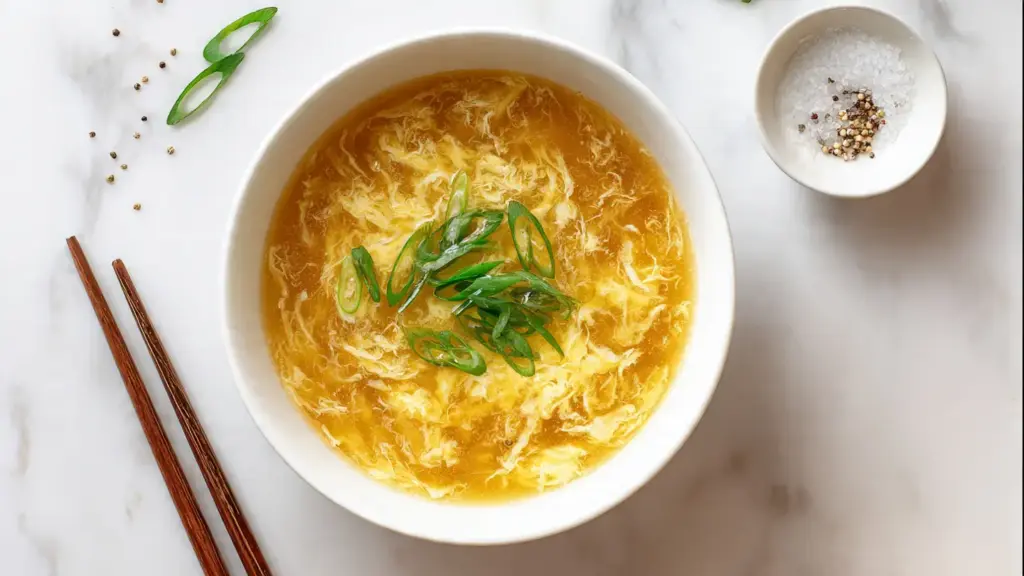
Egg drop soup is incredibly versatile and works as both a starter and a light meal on its own.
It’s the perfect pairing alongside takeout-inspired Chinese-American dishes, making any dinner feel like a restaurant experience at home.
- Serve it alongside Chicken Fried Rice for a classic combination
- Pair it with Easy Orange Chicken and steamed jasmine rice for a full takeout-style spread
- Serve with Chicken Lettuce Wraps as a light, satisfying lunch
- Add a side of Chinese Dumplings for a hearty, crowd-pleasing meal
- Pair with a simple Easy Fried Rice for a budget-friendly weeknight dinner
Another favorite: Tom Yum Soup Recipe
Variations to Try
Once you’ve mastered the basic recipe, it’s easy to riff on it with different add-ins and flavor profiles. The base technique stays the same — just adjust the ingredients to suit your mood.
- Corn egg drop soup: Add ½ cup (75 g) of canned or frozen corn kernels to the broth while heating. This is a beloved variation popular in Chinese-American restaurants — try the full Corn Egg Drop Soup Recipe.
- Chicken egg drop soup: Add ½ cup (75 g) of shredded cooked chicken to the broth before thickening for a heartier, protein-rich bowl.
- Tofu egg drop soup: Add cubed silken tofu to the broth for a vegetarian protein boost. The soft tofu pairs beautifully with the egg ribbons.
- Mushroom egg drop soup: Add thinly sliced shiitake or enoki mushrooms during the heating stage for an earthy, umami-rich twist.
- Tomato egg drop soup: A popular Chinese home-style variation — add diced fresh or canned tomatoes to the broth before thickening, and the bright acidity of the tomato pairs surprisingly well with the egg.
- Keto egg drop soup: Skip the cornstarch and use xanthan gum as a thickener, or simply enjoy the thinner broth. Check out the full Keto Egg Drop Soup Recipe for exact ratios.
Read Also: Authentic Egg Drop Soup Recipe
Storage and Reheating
Egg drop soup is best eaten fresh the day it’s made, but leftovers can absolutely be saved and enjoyed the next day with just a bit of attention to reheating.
- Refrigerator: Store cooled soup in an airtight container for up to 3 days. Note that the cornstarch-thickened broth may become a bit gloopy once cooled — this is normal.
- Freezer: Egg drop soup does not freeze well. The egg ribbons turn rubbery and the texture becomes unpleasant after thawing. It’s best to make only what you’ll eat.
- Reheating on the stovetop: Pour the soup into a saucepan and heat over medium-low, stirring gently. Add a splash of chicken broth (about ¼ cup / 60 ml) to thin the soup back out if it has become too thick.
- Reheating in the microwave: Microwave in a microwave-safe bowl in 60-second intervals, stirring between each interval, until heated through. Add a splash of broth as needed.
- Avoid boiling when reheating: Bringing the leftover soup to a full boil toughens the egg ribbons. Gentle, low heat is the way to go.
For another soup you can make ahead easily, try Chicken Rice Soup.
Nutritional Facts
The following nutritional information is an approximate estimate per serving, based on 4 servings. This may vary depending on the specific brands and types of ingredients you use.
| Nutrient | Per Serving |
|---|---|
| Calories | ~85 kcal |
| Total Fat | 4.5 g |
| Saturated Fat | 1.2 g |
| Cholesterol | 140 mg |
| Sodium | 680 mg (with low-sodium broth) |
| Total Carbohydrates | 4 g |
| Dietary Fiber | 0 g |
| Sugars | 0.5 g |
| Protein | 6 g |
These values are approximate and for informational purposes only.
You might also enjoy: Miso Soup Recipe
Health Benefits of Key Ingredients
This simple soup is surprisingly nutritious, especially when you consider how few ingredients it takes to make it.
Eggs, broth, and a few aromatics come together to create a meal that nourishes from the inside out.
- Eggs are an outstanding source of high-quality complete protein, providing all nine essential amino acids. They’re also rich in choline, a nutrient that supports brain health and liver function.
- Chicken broth is hydrating and contains minerals like phosphorus, potassium, and magnesium. Homemade or quality store-bought broth can contribute collagen and gelatin, which support joint and gut health.
- Sesame oil contains antioxidants like sesamol and sesamin, and provides healthy monounsaturated and polyunsaturated fats. It’s anti-inflammatory when used as a finishing oil rather than cooked at high heat.
- Green onions (scallions) are a good source of vitamins K and C, and contain antioxidant compounds that support immune function. They also add flavor with virtually no calories.
- White pepper has antimicrobial properties and contains piperine, which has been studied for its potential to enhance nutrient absorption.
Read Also: Vegetarian Egg Drop Soup Recipe
Frequently Asked Questions
1. Why is my egg drop soup not ribbony?
The most common reason is that the broth is boiling too aggressively when you add the eggs.
A rolling boil breaks the eggs apart into tiny fragments instead of cooking them into long ribbons. Reduce the heat to a gentle simmer before adding the egg, and stir the broth in a slow circular motion as you drizzle.
2. Can I use vegetable broth instead of chicken broth?
Absolutely. Vegetable broth works very well in this recipe and makes the soup completely vegetarian.
Choose a vegetable broth with a golden, savory flavor profile rather than one that’s heavily green-vegetable-forward, as the latter can taste a bit grassy in this application.
3. What does the cornstarch do in egg drop soup?
The cornstarch slurry gently thickens the broth, giving it that signature silky, slightly glossy texture.
It also helps the egg ribbons form more cleanly and hold their shape, rather than dissolving into the broth. If you prefer a thinner soup, you can reduce the cornstarch to 1 tablespoon, or see the Egg Drop Soup Recipe Without Cornstarch for an alternative approach.
4. Can I add protein like chicken or shrimp to this soup?
Yes! Shredded cooked chicken, small peeled shrimp, or cubed silken tofu all work beautifully in this soup.
Add proteins that are already fully cooked directly to the hot broth before you add the cornstarch slurry. If using raw shrimp, add them to the simmering broth and cook until pink before proceeding.
5. Why does the soup look cloudy?
Egg drop soup is naturally somewhat cloudy due to the cornstarch thickener and the egg proteins dispersed through the broth.
If your soup is unusually cloudy or murky, it could be because the eggs were added to broth that was too hot and broke apart, or because the soup was stirred too vigorously after adding the egg. The flavor won’t be affected — it’s purely an aesthetic issue.
For a heartier Asian-inspired bowl, check out the P.F. Chang’s Egg Drop Soup Recipe for a restaurant copycat version.
Final Thoughts
This Chinese egg drop soup recipe is one of those rare dishes that rewards you far beyond the effort it requires.
In just 15 minutes and with ingredients you probably already have at home, you can have a warm, deeply comforting bowl of silky, restaurant-quality soup on your table.
Whether you’re serving it as a starter to a bigger Chinese-inspired meal or enjoying it on its own as a quick, nourishing snack, this recipe never disappoints.
The key techniques — the cornstarch slurry for that glossy broth, the slow egg drizzle into a gently simmering liquid, and the finishing touch of sesame oil — are small details that make all the difference.
Try it tonight, and don’t be surprised when it becomes your new weeknight staple.
If you make this recipe, leave a comment below and let me know how it turned out! I’d love to hear if you added your own twist.
Recommended:
- Best Egg Drop Soup Recipe
- Egg Drop Soup Recipe for One
- Chinese Fish Soup Recipe
- Chinese Chicken Salad Recipe
- Easy Mongolian Beef Recipe
- Panda Express Orange Chicken Recipe
- Easy Pad Thai Recipe
- Chicken Rice Soup Recipe
- Hoisin Sauce Recipe
- Congee Recipe