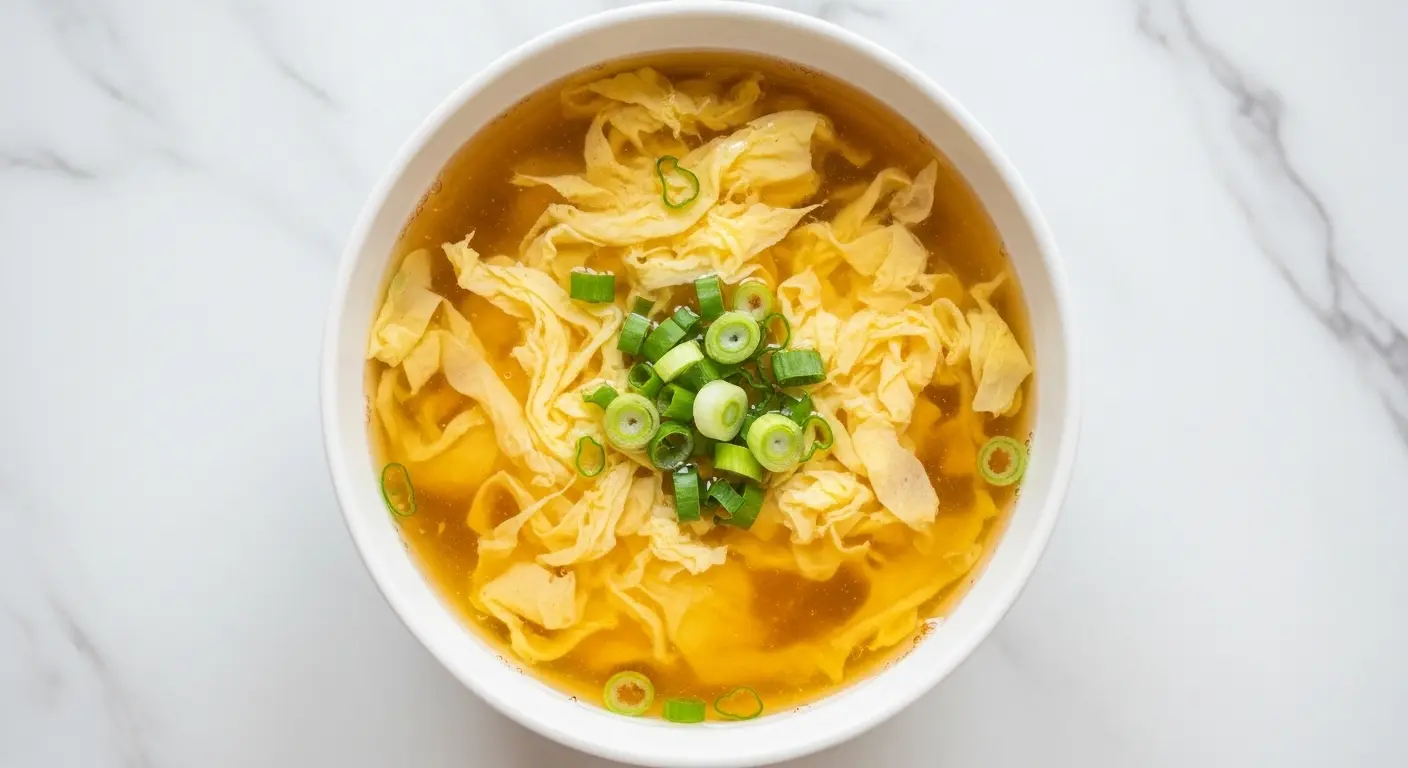
If you’ve ever craved that warm, silky bowl of soup from your favorite Chinese restaurant, this best egg drop soup recipe is exactly what you need.
It’s incredibly simple to make, comes together in under 15 minutes, and uses just a handful of pantry staples you likely already have on hand.
The secret is all in the technique: a well-seasoned broth, a steady hand when pouring the eggs, and a touch of cornstarch to create that beautifully thick, glossy consistency that makes every spoonful feel luxurious.
Once you make it at home, you’ll wonder why you ever ordered it for delivery.
This classic soup has roots in Chinese cuisine and has become one of the most beloved comfort soups around the world. It’s light yet satisfying, endlessly customizable, and works equally well as a starter or a cozy standalone meal.
You might also love: Wonton Egg Drop Soup
Why You’ll Love This Best Egg Drop Soup Recipe
This recipe is everything you want in a weeknight soup: fast, flavorful, and foolproof.
Even if you’ve never made Chinese-inspired soups before, you’ll nail this one on your very first try.
The ingredient list is short and budget-friendly, which means you don’t need to plan a special grocery run.
Most of what you need is probably already sitting in your pantry or fridge right now.
The broth is deeply savory, with just the right balance of soy sauce and sesame oil adding warmth and depth without overpowering the delicate egg ribbons.
Those ribbons, by the way, are one of the most satisfying things to make in the kitchen: pour the beaten eggs in a slow, steady stream while stirring the hot broth, and they cook almost instantly into beautiful, wispy strands.
It’s also naturally gluten-free when you use tamari instead of soy sauce, making it a great option for guests with dietary restrictions.
Whether you serve it before a big stir fry or enjoy it solo with a side of rice, this soup delivers every single time.
- Ready in just 10 to 15 minutes from start to finish
- Uses simple, affordable ingredients you likely already own
- Silky, restaurant-quality broth with minimal effort
- Naturally light and low in calories
- Easy to customize with add-ins like corn, tofu, or mushrooms
- Gluten-free adaptable with a simple swap
Another favorite: Easy Egg Drop Soup Recipe
Ingredients
You only need a small handful of ingredients to make this recipe shine. The quality of your chicken broth matters more here than in most soups since it’s the backbone of the dish, so use a good one.
- 4 cups (960 ml) chicken broth or chicken stock, low sodium preferred
- 3 large eggs
- 2 tablespoons (16 g) cornstarch
- 3 tablespoons (45 ml) cold water (for the cornstarch slurry)
- 1 tablespoon (15 ml) soy sauce (or tamari for gluten-free)
- 1 teaspoon (5 ml) toasted sesame oil
- 1/2 teaspoon ground white pepper
- 1/2 teaspoon ground ginger (or 1 teaspoon freshly grated ginger)
- 1/2 teaspoon garlic powder
- 1/2 teaspoon sugar
- 1/4 teaspoon turmeric (optional, for the golden color)
- 2 green onions, thinly sliced (for garnish)
- Salt to taste
Read Also: Corn Egg Drop Soup Recipe
Kitchen Equipment Needed
Fortunately, you don’t need any specialty equipment for this recipe. A few basic kitchen tools are all it takes to pull off a silky, restaurant-worthy bowl.
- Medium saucepan or pot (at least 2-quart capacity)
- Fine mesh strainer (optional, for a super-smooth broth)
- Small mixing bowl or measuring cup with a pour spout
- Whisk or fork (for beating eggs)
- Ladle or large spoon
- Wooden spoon or chopsticks (for stirring while pouring eggs)
- Measuring cups and spoons
- Kitchen scale (optional, for precise measurements)
This technique works beautifully in soups like Miso Soup too, if you enjoy simple, broth-based Asian soups.
Recommended Products for This Recipe
Here are a few products I genuinely recommend for making this recipe as easy and delicious as possible. These are selected based on quality, performance, and how much of a difference they actually make in the finished dish.
1. Organic Low-Sodium Chicken Broth
A great broth is the foundation of egg drop soup, and using a high-quality, low-sodium option gives you full control over the final salt level. Look for one made with real chicken and vegetables for the best depth of flavor.
2. Premium Toasted Sesame Oil
That finishing drizzle of sesame oil is what gives the soup its signature, nutty restaurant-style aroma. A good toasted sesame oil smells deeply fragrant and rich, which makes a noticeable difference compared to generic versions.
3. High-Quality Saucepan
A heavy-bottomed saucepan distributes heat evenly and helps prevent the broth from scorching, which is important when you’re working at a steady simmer. Stainless steel or enameled options are especially easy to clean.
4. Pour Spout Measuring Cup
Pouring the egg mixture in a slow, thin stream is the key to creating those wispy, delicate ribbons. A measuring cup with a long pour spout gives you the level of control that makes all the difference.
Read Also: Tomato Egg Drop Soup Recipe
Step-by-Step Instructions
1. Prepare the Cornstarch Slurry
- In a small bowl, combine 2 tablespoons (16 g) of cornstarch with 3 tablespoons (45 ml) of cold water.
- Whisk them together until completely smooth with no lumps remaining. This is your thickening slurry.
- Set this aside close to the stove, as you’ll be adding it to the hot broth quickly.
- Cold water is essential here: hot water will cause the cornstarch to clump immediately, making it impossible to whisk into a smooth slurry.
2. Beat the Eggs
- Crack 3 large eggs into a small bowl or a measuring cup with a pour spout.
- Beat the eggs with a fork or whisk until the yolks and whites are fully combined into a uniform, pale yellow mixture.
- Make sure there are no streaks of white left: a well-beaten egg creates more even, silky ribbons in the soup.
- Set the beaten eggs aside near the stove.
3. Heat the Broth and Add Seasonings
- Pour 4 cups (960 ml) of chicken broth into a medium saucepan and set it over medium-high heat.
- Add the soy sauce (1 tablespoon / 15 ml), ground white pepper (1/2 teaspoon), ground ginger (1/2 teaspoon), garlic powder (1/2 teaspoon), and sugar (1/2 teaspoon).
- If you’re using turmeric for a golden color, add the 1/4 teaspoon now as well.
- Stir everything together and bring the broth to a gentle boil, about 3 to 4 minutes.
- Taste the broth at this point and adjust the seasoning if needed, adding salt gradually.
4. Add the Cornstarch Slurry
- Give the cornstarch slurry another quick stir to make sure it hasn’t settled at the bottom.
- Slowly pour the slurry into the hot broth while stirring constantly with your spoon.
- Continue stirring for about 1 to 2 minutes until the broth thickens slightly. It should coat the back of a spoon and have a glossy, silky appearance.
- Reduce the heat to medium-low once the broth is thickened, so it’s at a steady, gentle simmer but not a rolling boil.
5. Create the Egg Ribbons
- This is the most satisfying step, and it’s easier than it looks.
- Hold the bowl of beaten eggs in one hand and a wooden spoon or chopstick in the other.
- Begin stirring the broth in a slow, circular motion to create a gentle whirlpool.
- With the other hand, slowly drizzle the beaten eggs into the moving broth in a thin, steady stream. The thinner the stream, the more delicate and wispy your egg ribbons will be.
- As you pour, keep stirring slowly and continuously. The eggs will cook almost instantly on contact with the hot broth, forming those signature silky strands.
- If you prefer thicker, chunkier egg pieces, pour the eggs more quickly and stop stirring. If you want wispy, thin ribbons, pour very slowly and keep the broth moving.
- Once all the eggs have been added, stop stirring and let the soup sit undisturbed for about 30 seconds to allow the eggs to fully set.
6. Finish with Sesame Oil and Garnish
- Drizzle 1 teaspoon (5 ml) of toasted sesame oil over the soup and stir gently to incorporate it.
- Taste the soup one final time and adjust salt or white pepper if needed.
- Ladle the soup into bowls and top each serving with thinly sliced green onions.
- Serve immediately while hot. Egg drop soup is best enjoyed fresh, as the egg ribbons can become rubbery if reheated.
You might also enjoy: Homemade Egg Drop Soup Recipe
Tips for Success
Getting egg drop soup right is mostly about technique, and these tips will make sure yours turns out silky and perfect every time.
- Use a measuring cup with a pour spout when adding the eggs. The spout gives you precise control over the flow, making it far easier to create thin ribbons than pouring from a bowl.
- Keep the broth at a gentle simmer, not a full rolling boil, when you add the eggs. A boil that’s too vigorous will break up the egg strands before they have a chance to set, making the soup murky and chunky instead of silky.
- Always stir the cornstarch slurry right before adding it to the broth. Cornstarch settles to the bottom within seconds, so if you don’t stir it, you’ll pour mostly water and your soup won’t thicken properly.
- Season gradually. Chicken broth can vary widely in saltiness depending on the brand. Start with less salt and taste as you go, since soy sauce also adds sodium.
- Don’t skip the sesame oil. It’s a finishing touch that adds a nutty, toasty aroma that makes the soup taste genuinely restaurant-quality. Add it at the very end to preserve its fragrance.
- For an extra silky texture, whisk 1 tablespoon of cold water into the beaten eggs before pouring. The small amount of extra liquid helps them flow more easily into thin ribbons.
Read Also: Authentic Egg Drop Soup Recipe
Serving Suggestions
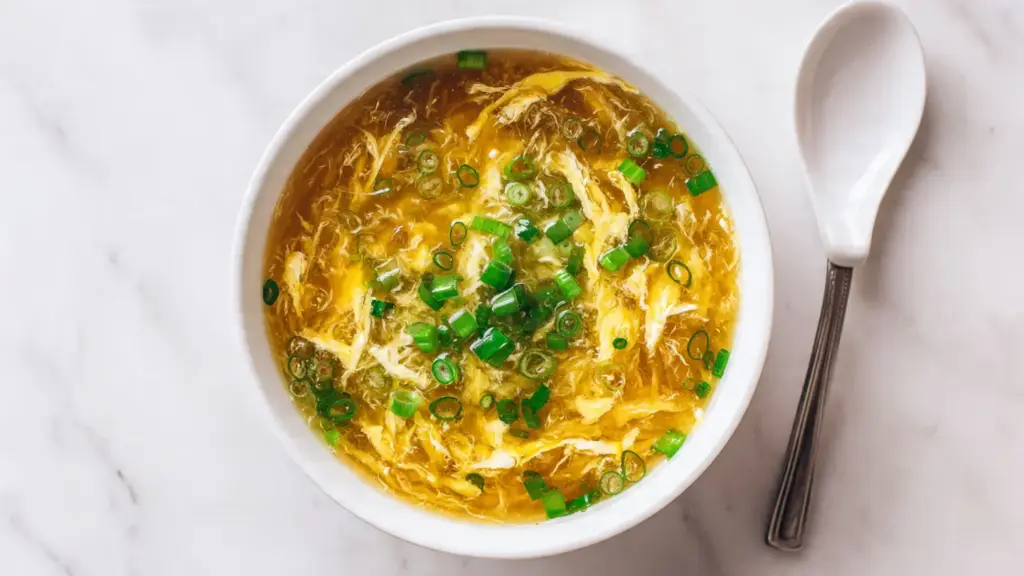
Egg drop soup is wonderfully versatile and pairs with a wide range of dishes, from quick weeknight dinners to full spreads of Chinese-inspired favorites.
It’s rich enough to stand alone as a light meal but mild enough to complement bold main courses without competing with them.
- Serve alongside Chicken Fried Rice for a classic Chinese-American takeout-style dinner at home
- Pair it with steamed dumplings or Chinese Dumplings for a fully satisfying meal
- Offer it as a starter before a main of Easy Orange Chicken or Easy Pad Thai
- Serve it with a side of steamed jasmine rice for a simple, comforting meal on a cold night
- Add a small egg roll or wonton on the side to round out the meal
- Ladle it into small cups for an easy, elegant first course at a dinner party
Read Also: Hot and Sour Soup Recipe
Variations to Try
One of the best things about this recipe is how easily it adapts to different tastes and what you have in the fridge.
- Corn Egg Drop Soup: Add half a cup of canned or frozen corn to the broth before adding the cornstarch slurry. Sweet corn adds a lovely flavor contrast and turns the soup into a heartier meal. It’s also known as a variation popular in Chinese-American restaurants. Check out the full Corn Egg Drop Soup version.
- Chicken Egg Drop Soup: Stir in shredded rotisserie chicken or leftover poached chicken right before adding the eggs for a protein-packed version. It turns a light soup into a filling main course. Try the full Chicken Egg Drop Soup recipe.
- Keto Egg Drop Soup: Skip the cornstarch and use xanthan gum instead, or simply leave the soup thin and unthickened. It’s still deeply flavorful and fits into a low-carb lifestyle. Try the Keto Egg Drop Soup.
- Vegetarian Egg Drop Soup: Swap the chicken broth for a rich vegetable broth. Add sliced mushrooms, baby spinach, or soft tofu for extra substance. Visit the Vegetarian Egg Drop Soup for a dedicated guide.
- Egg Drop Soup for One: Scale the recipe down to a single serving in minutes. Head to Egg Drop Soup Recipe for One for the exact proportions.
- Tomato Egg Drop Soup: A popular Chinese home-cooking variation where diced tomatoes are added to the broth, giving it a sweet-tangy twist and beautiful color.
You might also enjoy: P.F. Chang’s Egg Drop Soup Recipe
Storage and Reheating
Egg drop soup is at its very best served fresh, but you can absolutely store leftovers and enjoy them the next day with just a little care.
- Refrigerator: Allow the soup to cool to room temperature before transferring it to an airtight container. Store in the fridge for up to 3 days.
- Freezer: Egg drop soup does not freeze well. The egg ribbons become rubbery and the texture of the thickened broth changes significantly after freezing and thawing. It’s best enjoyed fresh or refrigerated.
- Reheating on the stovetop: Pour the soup into a small saucepan and heat it over medium-low heat, stirring gently. Do not let it come to a full boil, as this will toughen the egg ribbons.
- Reheating in the microwave: Transfer the soup to a microwave-safe bowl and heat in 60-second intervals, stirring between each, until warmed through.
- Note on texture: The egg ribbons will be slightly softer after reheating compared to when the soup was first made. Adding a small pinch of white pepper and a fresh drizzle of sesame oil right before serving revives the flavor beautifully.
Read Also: Chinese Egg Drop Soup Recipe
Nutritional Facts
The following values are estimates per serving, based on a recipe that yields 4 servings. Exact nutrition will vary based on the specific broth and ingredients you use.
| Nutrient | Amount Per Serving |
|---|---|
| Calories | ~80 kcal |
| Total Fat | 4 g |
| Saturated Fat | 1 g |
| Cholesterol | 140 mg |
| Sodium | 620 mg |
| Total Carbohydrates | 5 g |
| Dietary Fiber | 0 g |
| Sugars | 1 g |
| Protein | 7 g |
This soup is naturally low in calories and carbohydrates, making it a great option for lighter eating without sacrificing flavor or satisfaction.
Another favorite: Egg Drop Soup Without Cornstarch
Health Benefits of Key Ingredients
Beyond being delicious, this soup is actually quite nutritious. The key ingredients each bring meaningful benefits to the bowl.
This is the kind of meal that feels indulgent but genuinely nourishes your body, making it an ideal choice when you want something comforting that doesn’t leave you feeling heavy.
- Eggs are an excellent source of high-quality complete protein, containing all essential amino acids. They also provide choline, which supports brain health, along with vitamins D, B12, and selenium.
- Chicken broth offers minerals like potassium and phosphorus, and when made from bones, it contributes collagen that supports joint and gut health. Even store-bought broth provides a hydrating, mineral-rich base.
- Sesame oil contains healthy unsaturated fats and antioxidants, including sesamol and sesamin, which have anti-inflammatory properties. A little goes a long way, making it both flavorful and beneficial.
- Ginger is well known for its anti-nausea and anti-inflammatory effects. It also supports digestion, making it a particularly comforting addition when you’re not feeling your best.
- Green onions provide vitamin K, vitamin C, and small amounts of folate. They also add a fresh, bright flavor that balances the richness of the broth.
- Turmeric (when used) contains curcumin, a compound with powerful antioxidant and anti-inflammatory properties. Even a small amount adds a golden glow and a subtle health boost.
You might also enjoy: Tom Yum Soup
Frequently Asked Questions
1. Why is my egg drop soup cloudy instead of clear?
Cloudy egg drop soup usually happens for one of two reasons. Either the broth was boiling too vigorously when the eggs were added, which breaks them up into small, murky bits, or the eggs were beaten too foamy before being poured in. For a cleaner, clearer result, make sure the broth is at a gentle simmer, not a full boil, and pour the eggs in a slow, steady stream while stirring gently.
2. Can I make egg drop soup without cornstarch?
You can absolutely make it without cornstarch. The soup will be thinner and more broth-like, but it will still taste wonderful. Simply skip the cornstarch slurry step and proceed with the rest of the recipe. Some people actually prefer the lighter, less viscous texture. See the Egg Drop Soup Without Cornstarch version for specific guidance.
3. How do I get the egg ribbons to be thin and wispy instead of chunky?
The key is to pour the beaten eggs in a very slow, thin stream while the broth is gently moving. Using a measuring cup with a pour spout (rather than pouring directly from a bowl) gives you far more control. The slower and thinner the stream, the more delicate the ribbons will be. Also make sure the broth is simmering, not boiling: high heat sets the eggs too quickly and creates bigger, chunkier pieces.
4. Can I use water instead of chicken broth?
Technically, yes, but the flavor will be significantly weaker. Chicken broth is what gives egg drop soup its savory depth. If you need to stretch your broth, you can use a mix of half broth and half water, and add a little extra soy sauce and seasoning to compensate. For the best results, always use full-strength broth.
5. Is egg drop soup gluten-free?
The base recipe is gluten-free as long as you use tamari instead of regular soy sauce. Regular soy sauce contains wheat. Tamari is made with little to no wheat and tastes very similar, so it’s an easy and seamless swap. Always check your broth label as well, since some brands add gluten-containing ingredients.
Final Thoughts
This best egg drop soup recipe is one of those dishes that always surprises people with how quickly and easily it comes together.
In less than 15 minutes, you can have a bowl of warm, silky, deeply savory soup that tastes like it came straight from a restaurant kitchen.
It’s the kind of recipe that earns a permanent spot in your weekly rotation once you try it.
Give it a go this week and make it your own: add corn, swap in ginger-forward broth, or keep it classic. However you make it, it’s going to be delicious.
If you try this recipe, I’d love to hear how it turned out! Drop a comment below and share your experience, or tag us if you post a photo.
Recommended:
- Vegetarian Egg Drop Soup
- Chicken Egg Drop Soup
- Keto Egg Drop Soup
- Egg Drop Soup Recipe for One
- Miso Soup
- Hot and Sour Soup
- Tom Yum Soup
- Udon Noodle Soup
- Chicken Rice Soup
- Pho