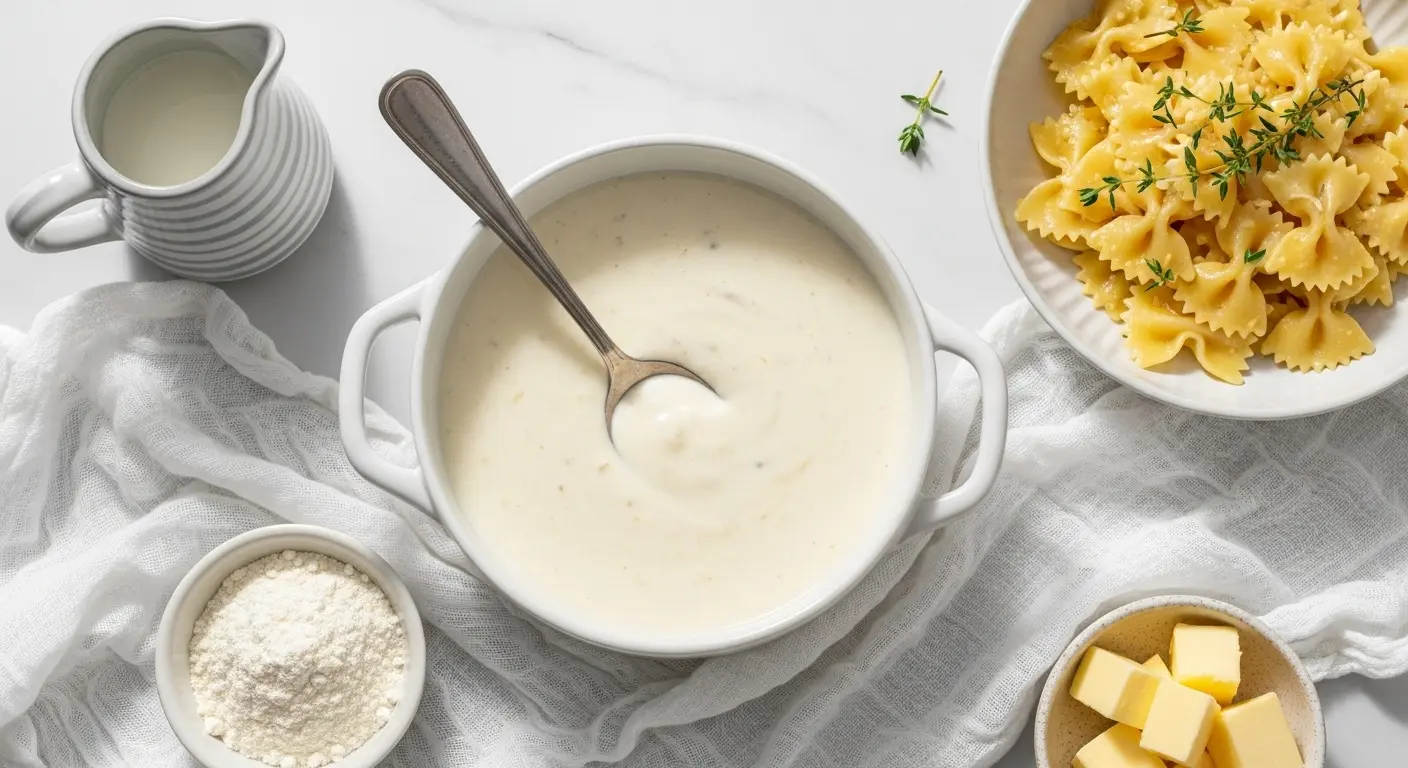
If you’ve ever wondered what makes lasagna so creamy, mac and cheese so velvety, or French gratins so irresistibly rich, the answer is bechamel sauce.
This classic French white sauce is one of the five “mother sauces” in traditional cooking, and once you master this bechamel sauce recipe, you’ll understand why it’s been a kitchen staple for centuries.
I first learned to make bechamel from my grandmother, who used it in everything from her legendary moussaka to simple weeknight pasta dishes. She’d stand at the stove, wooden spoon in hand, whisking patiently while explaining that good bechamel is all about patience and the right technique.
The beauty of bechamel lies in its simplicity. With just three basic ingredients—butter, flour, and milk—you can create a silky, luxurious sauce that transforms ordinary dishes into something special.
What makes this sauce so magical is its versatility. You can keep it simple for a classic preparation, or dress it up with cheese, herbs, or spices to match whatever dish you’re making.
Once you nail down the technique, you’ll find yourself reaching for this recipe again and again. It’s forgiving enough for beginners but elegant enough to impress dinner guests.
Why You’ll Love This Bechamel Sauce Recipe
This bechamel sauce is incredibly versatile and works as a base for countless dishes. From creamy pasta bakes to vegetable gratins, it elevates everything it touches with its smooth, rich texture.
The recipe uses pantry staples you probably already have on hand. No hunting down specialty ingredients or making emergency grocery runs—just butter, flour, and milk.
It comes together in about 15 minutes from start to finish. Even on busy weeknights, you can whip up a batch without breaking a sweat.
The technique is straightforward and forgiving. Unlike finicky sauces that break or curdle at the slightest misstep, bechamel is remarkably resilient when you follow a few simple guidelines.
Here’s what makes this recipe special:
- Silky smooth texture with no lumps
- Rich, creamy flavor that’s never heavy
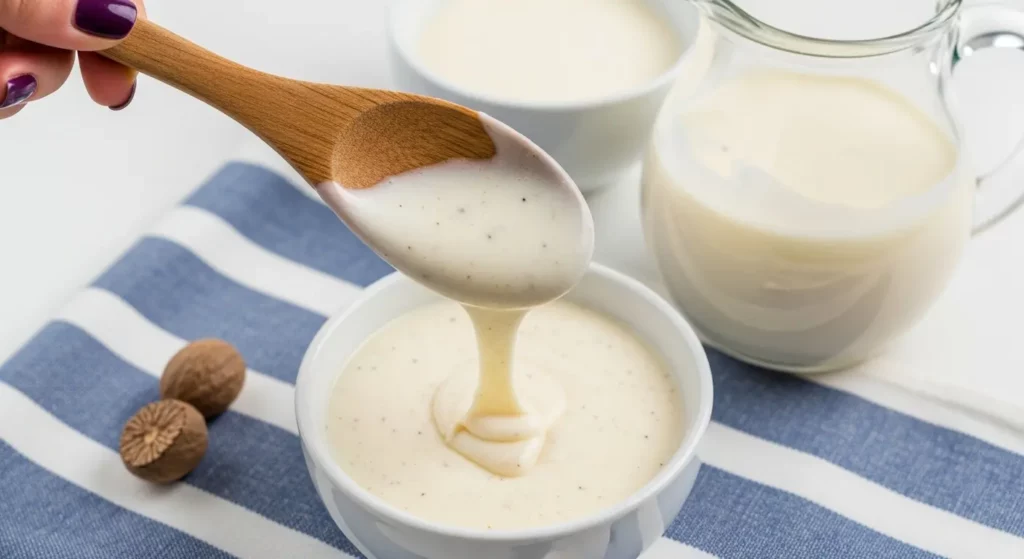
- Perfect consistency that coats the back of a spoon
- Adaptable to countless flavor variations
- Foolproof method that works every single time
You might also enjoy: Creamy Tomato Soup Recipe
Ingredients
The simplicity of bechamel is part of its charm. You’ll need just three essential ingredients to create this luxurious sauce, plus a pinch of seasoning to enhance the flavors.
- 4 tablespoons (56g) unsalted butter
- 1/4 cup (30g) all-purpose flour
- 3 cups (720ml) whole milk, warmed
- 1/2 teaspoon salt
- 1/4 teaspoon white pepper
- Pinch of ground nutmeg (optional but traditional)
Kitchen Equipment Needed
Having the right tools makes preparing bechamel much easier. The good news is you probably already own everything you need.
- Heavy-bottomed saucepan (2-3 quart capacity)
- Wire whisk
- Wooden spoon
- Measuring cups and spoons
- Small bowl or measuring cup for warming milk
Recommended Products for This Recipe
After making countless batches of bechamel over the years, I’ve found that certain products make the process smoother and the results even better. These are my personal recommendations that have proven themselves in my kitchen time and time again.
1. Le Creuset Enameled Cast Iron Saucepan
This saucepan distributes heat so evenly that you’ll never have to worry about hot spots causing your roux to burn. The enameled interior makes cleanup incredibly easy, even after making multiple batches. It’s a serious investment, but it’ll last you decades.
2. OXO Good Grips Balloon Whisk
The balloon shape of this whisk is perfect for incorporating air and preventing lumps in your bechamel. The comfortable grip means your hand won’t cramp up during all that whisking. I’ve had mine for five years and it still works like new.
3. Nielsen-Massey Pure Vanilla Extract with Madagascar Bourbon Vanilla Beans
While not traditional for savory bechamel, having high-quality vanilla extract on hand opens up possibilities for sweet bechamel variations for desserts. The depth of flavor is incomparable to imitation vanilla. It’s one of those ingredients that makes a noticeable difference.
4. Microplane Premium Classic Zester
For grating fresh nutmeg (which makes a world of difference compared to pre-ground), this zester is unbeatable. The ultra-sharp blades make quick work of whole nutmeg, and it’s perfect for zesting citrus when you want to add brightness to your bechamel. It’s one of those tools you’ll wonder how you lived without.
Another favorite: Alfredo Sauce Recipe with Cream Cheese
Step-by-Step Instructions
Making bechamel is all about taking your time and building layers of flavor. Follow these detailed steps and you’ll have perfect sauce every single time.
1. Warm the Milk
- Pour the milk into a microwave-safe bowl or small saucepan
- Heat until warm to the touch but not hot (about 100-110°F or 38-43°C)
- Keep the milk warm while you prepare the roux—cold milk will seize up when added to hot butter and flour
2. Make the Roux
- Melt the butter in your heavy-bottomed saucepan over medium heat
- Once the butter is completely melted and starts to foam slightly, add the flour all at once
- Whisk constantly for 2-3 minutes until the mixture becomes smooth and paste-like
- The roux should bubble gently and turn a light golden color—this cooks out the raw flour taste
- Don’t rush this step; raw flour will make your sauce taste chalky
3. Add the Milk Gradually
- Reduce heat to medium-low to prevent the sauce from cooking too quickly
- Add about 1/4 cup of the warm milk to the roux while whisking vigorously
- The mixture will thicken immediately and may look lumpy at first—keep whisking until smooth
- Add another 1/4 cup of milk and whisk until completely incorporated
- Continue adding milk in small increments, whisking thoroughly between each addition
- Once you’ve added about half the milk and the mixture is smooth, you can add the remaining milk more quickly
Read Also: Homemade Tartar Sauce Recipe
4. Season and Simmer
- Add the salt, white pepper, and nutmeg (if using) to the sauce
- Increase heat slightly to bring the sauce to a gentle simmer
- Continue whisking frequently, especially around the edges and bottom of the pan where the sauce tends to stick
- Let the sauce simmer for 8-10 minutes, stirring every 30 seconds or so
- The sauce is done when it’s thick enough to coat the back of a spoon and doesn’t run off immediately
5. Check for Consistency
- Draw your whisk or spoon through the sauce—it should leave a clear trail that slowly fills back in
- If the sauce seems too thick, whisk in a tablespoon or two of additional warm milk
- If it’s too thin, continue simmering for a few more minutes while whisking
- Remove from heat once you’ve achieved the desired consistency
6. Strain if Needed
- For an ultra-smooth sauce, pour it through a fine-mesh strainer into a clean bowl
- Use a spatula to press the sauce through the strainer, removing any small lumps
- This step is optional but recommended if you’re using the bechamel for a refined dish
This pairs beautifully with my Italian Meatballs Recipe for a comforting Italian feast.
Tips for Success
These tried-and-true tips will help you avoid common pitfalls and create perfect bechamel every time. I’ve learned most of these through trial and error over the years.
Preventing lumps: Always warm your milk before adding it to the roux. Cold milk hitting hot roux is the number one cause of lumpy bechamel. Whisk constantly and add the milk gradually at first.
Choosing the right heat: Medium to medium-low heat is your friend. Too high and your roux will burn before developing flavor; too low and your sauce will take forever to thicken.
The importance of whisking: Don’t stop whisking, especially in the early stages. Those first additions of milk need constant attention to create a smooth emulsion.
Testing consistency: The sauce will continue to thicken slightly as it cools. Aim for a consistency that’s just slightly thinner than what you ultimately want.
Using the right milk: Whole milk creates the richest, most luxurious bechamel. You can use 2% milk in a pinch, but the sauce won’t be quite as creamy.
Additional helpful tips:
- Keep a clean, damp cloth nearby to wipe down the sides of your pan and prevent dried sauce from falling into your bechamel
- If lumps do form, an immersion blender can save the day
- Make sure your butter doesn’t brown when melting—if it does, start over
- The sauce will thicken more as it sits, so make it just before you need it when possible
- Trust your instincts on seasoning—taste and adjust before using
Serving Suggestions
Bechamel sauce is the foundation for so many beloved dishes. Here are some of my favorite ways to use it, from classic preparations to creative applications.
Classic bechamel is essential for authentic lasagna, creating those luscious creamy layers between pasta sheets. It’s also the base for traditional French croque monsieur sandwiches and Greek moussaka.
Perfect pairings and uses:
- Drizzle over steamed vegetables like cauliflower, broccoli, or asparagus
- Layer into Lasagna with Cottage Cheese for extra creaminess
- Use as the sauce base for homemade mac and cheese
- Spread on Easy Garlic Bread before toasting for an elevated appetizer
- Pour over poached eggs for eggs Benedict variations
- Mix with cooked pasta and vegetables for a quick weeknight dinner
- Use as a base for pot pies instead of cream of chicken soup
- Create creamy casseroles with chicken, turkey, or seafood
- Make croquettes by thickening the bechamel further and mixing with proteins
For a lighter option, try: Roasted Butternut Squash Soup Recipe
Variations to Try
The basic bechamel is just the beginning. These variations add different flavors and create entirely new sauces from the same foundation.
Mornay Sauce (cheese sauce): After making your bechamel, stir in 1 cup of grated Gruyère or sharp cheddar cheese until melted and smooth. This creates the perfect sauce for mac and cheese or vegetable gratins.
Popular variations:
- Mustard Bechamel: Whisk in 2 tablespoons of Dijon mustard for a tangy sauce that’s perfect with ham or pork
- Herb-Infused: Add fresh thyme, bay leaves, or parsley to the milk while warming, then strain before using
- Garlic Bechamel: Sauté 3-4 minced garlic cloves in the butter before adding flour
- Lemon Bechamel: Add the zest and juice of one lemon for a bright sauce that pairs beautifully with fish
- Onion Soubise: Sauté finely diced onions until soft, then blend them into your finished bechamel
- Curry Bechamel: Stir in 1-2 teaspoons of curry powder with the flour for an Indian-inspired twist
- Truffle Bechamel: Finish with a drizzle of truffle oil for an elegant, earthy flavor
Storage and Reheating
Proper storage ensures you can make bechamel ahead of time and always have some ready when inspiration strikes. Follow these guidelines for best results.
Storage instructions: Transfer cooled bechamel to an airtight container and press plastic wrap directly onto the surface to prevent a skin from forming. Refrigerate for up to 4 days or freeze for up to 3 months.
How to store and reheat:
- For refrigerated sauce: Reheat gently in a saucepan over low heat, whisking constantly and adding milk a tablespoon at a time if needed to restore consistency
- For frozen sauce: Thaw overnight in the refrigerator, then reheat as above
- Microwave method: Heat in 30-second intervals, whisking between each interval
- Prevent skin formation by stirring every time you open the refrigerator to check it
- If sauce breaks or looks grainy after reheating, whisk in a tablespoon of cold butter to bring it back together
- Add a splash of warm milk or cream if the sauce has thickened too much during storage
- Never boil reheated bechamel—gentle heat preserves the silky texture
Read Also: Easy Crockpot Mac and Cheese Recipe
Nutritional Facts
Per serving (approximately 1/2 cup):
- Calories: 145
- Total Fat: 10g
- Saturated Fat: 6g
- Cholesterol: 30mg
- Sodium: 240mg
- Total Carbohydrates: 9g
- Protein: 5g
- Calcium: 15% DV
- Vitamin A: 10% DV
Note: Nutritional values are approximate and will vary based on specific ingredients used. This recipe makes about 3 cups of sauce, yielding 6 servings.
Health Benefits of Key Ingredients
While bechamel is an indulgent sauce, its simple ingredients do offer some nutritional benefits. Understanding what’s in your food helps you make informed choices about when and how to enjoy it.
Milk provides calcium and vitamin D for strong bones and teeth, plus protein for muscle maintenance. Butter contains vitamins A, E, and K2, which support various body functions from vision to blood clotting.
Nutritional highlights:
- Whole milk delivers complete proteins containing all essential amino acids
- Butter provides conjugated linoleic acid (CLA), which some studies suggest may have health benefits
- Nutmeg contains antioxidants and has been traditionally used to aid digestion
- The combination creates a good source of energy from both fats and carbohydrates
- Using quality ingredients means getting more nutrients per serving
This sauce works wonderfully in Classic Stuffed Bell Peppers Recipe as a creamy topping.
Frequently Asked Questions
1. Why did my bechamel sauce turn out lumpy?
Lumps usually form when cold milk hits hot roux too quickly. The key is warming your milk first and adding it gradually while whisking constantly. If lumps do form, keep whisking vigorously—many will dissolve with persistent stirring.
For stubborn lumps, strain the sauce through a fine-mesh sieve or blend briefly with an immersion blender.
2. Can I make bechamel sauce ahead of time?
Absolutely! Bechamel actually holds up quite well when made in advance. Store it in an airtight container with plastic wrap pressed directly against the surface to prevent skin formation.
It’ll keep in the refrigerator for 3-4 days or in the freezer for up to 3 months. Reheat gently over low heat, whisking frequently and adding a splash of milk if it’s too thick.
3. What’s the difference between bechamel and Alfredo sauce?
Bechamel is a French mother sauce made with butter, flour, and milk, while Alfredo sauce is Italian and made with butter, cream, and Parmesan cheese. Bechamel has a lighter, more delicate flavor and is typically used as a component in other dishes. Alfredo is richer, cheesier, and usually served directly over pasta as the star of the dish.
4. Can I use skim milk or plant-based milk alternatives?
You can, but the results will differ from traditional bechamel. Skim milk produces a thinner, less creamy sauce without the rich mouthfeel that whole milk provides. Plant-based milks like oat, almond, or soy work reasonably well, though they each impart their own subtle flavor. Oat milk is probably the closest substitute in terms of creaminess and neutral taste.
5. How thick should bechamel sauce be?
The ideal thickness depends on how you’re using it. For lasagna or moussaka, you want a sauce that coats the back of a spoon but still flows easily. For croquettes or soufflés, it should be much thicker—almost paste-like.
A good test is drawing your finger across the back of the spoon—the line should hold for a few seconds before slowly filling back in.
Final Thoughts
Mastering this bechamel sauce recipe opens up a whole world of cooking possibilities. From comforting casseroles to elegant gratins, you’ll find yourself using this classic French sauce more often than you ever imagined.
The beauty of bechamel is that it’s both humble and sophisticated. It transforms simple ingredients into something special without requiring fancy techniques or hard-to-find components. Once you’ve made it a few times, the process becomes second nature.
I hope this recipe becomes as much of a staple in your kitchen as it is in mine. Give it a try this week and see how it elevates your everyday cooking. I’d love to hear about your experiences making bechamel—drop a comment below and let me know how it turned out or share your favorite way to use it!
Recommended:
- Easy Meatballs Recipe
- Homemade Belgian Waffle Recipe
- Classic Shrimp Scampi Recipe
- Braised Short Ribs Recipe
- Authentic Philly Cheese Steak Recipe
- Easy Mongolian Beef Recipe
- Cheesy Garlic Bread Recipe
- Easy Pad Thai Recipe
- Moist Chocolate Cake Recipe
- Easy Chocolate Cake Recipe