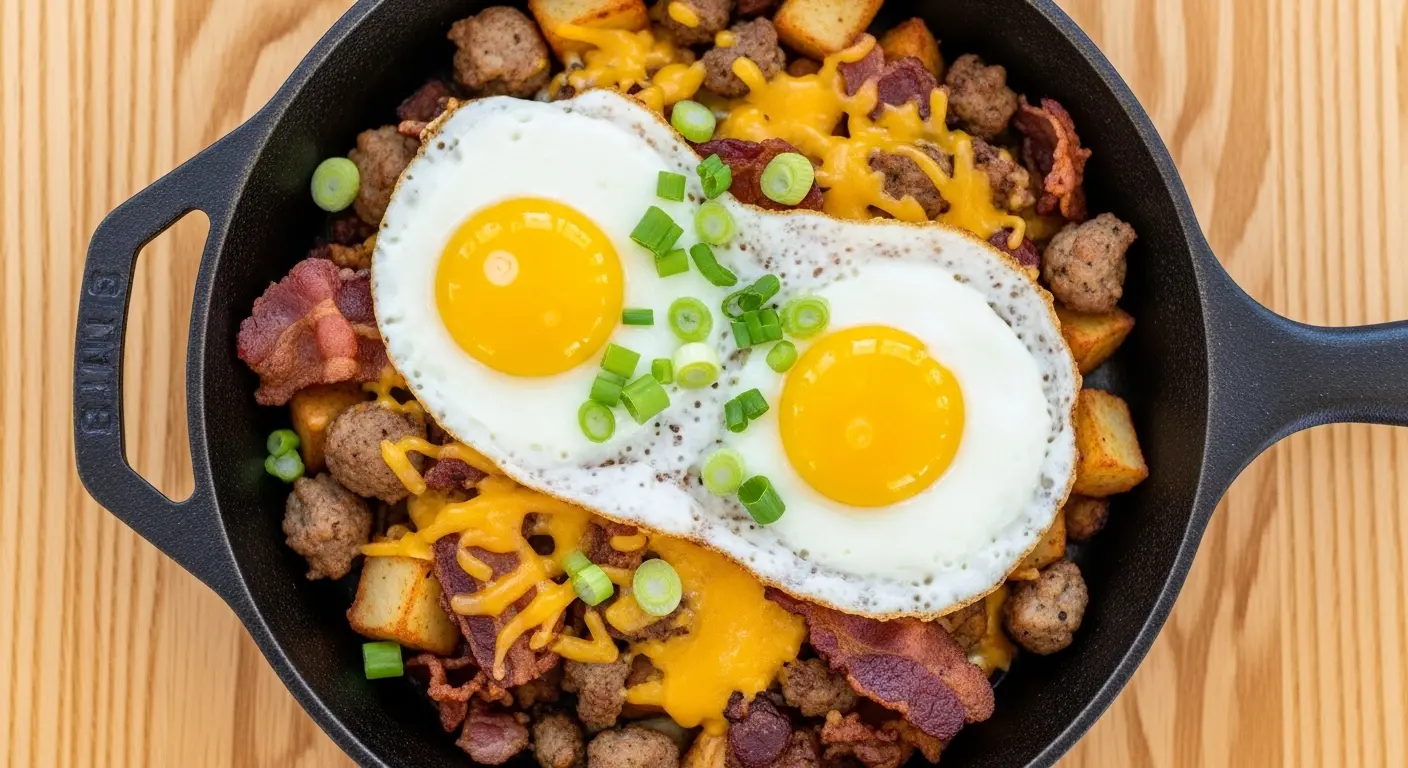
If you’re looking for a breakfast that actually keeps you full and satisfied, this loaded breakfast skillet recipe delivers on every level.
It’s packed with crispy potatoes, smoky bacon, savory sausage, eggs cooked right in the pan, and a generous blanket of melted cheddar cheese, all made in a single skillet in under 35 minutes.
This is the kind of breakfast that turns an ordinary morning into something worth getting out of bed for.
It’s hearty, endlessly customizable, and absolutely perfect for a lazy weekend brunch, a holiday morning, or anytime you want a big, satisfying meal with minimal cleanup.
If you love skillet recipes for breakfast, you’ll also enjoy this classic Breakfast Skillet Recipe that follows a similar one-pan approach.
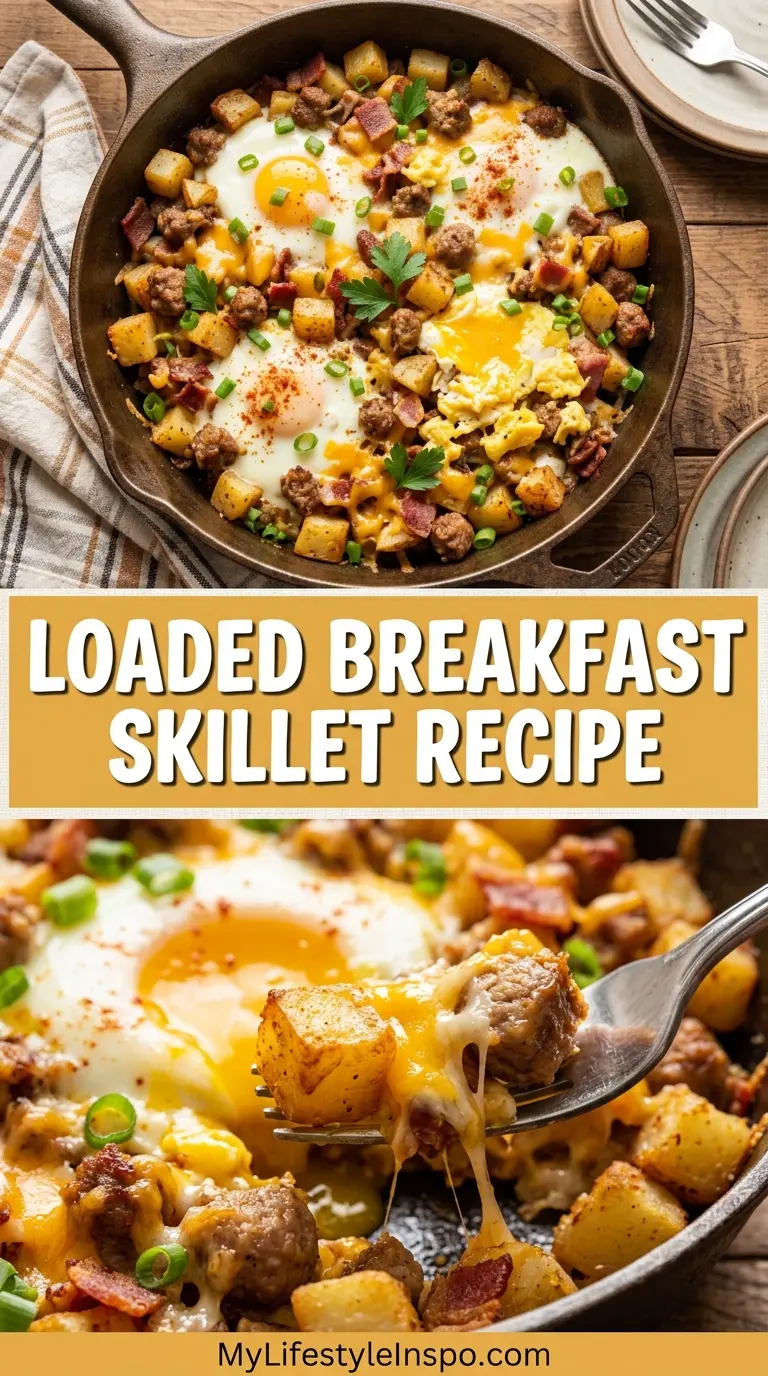
Why You’ll Love This Loaded Breakfast Skillet Recipe
This recipe hits all the right notes for a morning meal that truly delivers.
It’s a complete, protein-packed breakfast made entirely in one pan, which means you get maximum flavor with minimal dishes to wash afterward.
The combination of bacon grease and butter used to cook the potatoes creates an incredibly savory base that infuses every layer of the dish with rich, smoky depth.
Eggs cooked directly in the skillet absorb all those flavors from underneath, making them far more flavorful than eggs cooked separately.
Here’s why this recipe will become a staple in your home:
- One-pan meal: Everything cooks in a single skillet, making prep and cleanup fast and easy.
- Ready in 35 minutes: Fast enough for a weekday, impressive enough for a weekend brunch spread.
- Fully customizable: Swap proteins, add more veggies, or change up the cheese to suit your family’s preferences.
- Crowd-pleasing: It feeds four generously, and the recipe scales up easily for a bigger group.
- Kid-friendly: The cheesy, savory combination is almost universally loved by picky eaters.
- Great for leftovers: Reheats beautifully and can even be turned into breakfast burritos the next day.
Another skillet favorite that pairs well with a big breakfast spread is this Cowboy Skillet Recipe, which brings a similar hearty, rustic energy to the table.
Ingredients
This loaded breakfast skillet uses simple, everyday ingredients that come together into something genuinely special. Russet potatoes are the best choice here because they crisp up beautifully and hold their shape during cooking. Using both bacon and sausage gives the skillet a layered, complex meat flavor that neither protein achieves alone.
- 3 strips bacon, chopped into 1-inch (2.5 cm) pieces
- 6 oz (170 g) bulk breakfast sausage (pork)
- 2 medium russet potatoes (about 1 lb / 450 g total), peeled and diced into ½-inch (1.25 cm) cubes
- 1 small yellow onion, diced
- 1 red bell pepper, diced
- 1 green bell pepper, diced
- 2 cloves garlic, minced
- ½ tsp smoked paprika
- ½ tsp garlic powder
- ½ tsp onion powder
- ½ tsp salt, plus more to taste
- ¼ tsp black pepper, plus more to taste
- 1 tbsp unsalted butter
- 4 large eggs
- 1 cup (115 g) shredded sharp cheddar cheese
- 2 green onions, thinly sliced (for garnish)
- Hot sauce, for serving (optional)
You might also enjoy: Taco Skillet Recipe
Kitchen Equipment Needed
Having the right equipment makes this recipe much easier to execute cleanly and efficiently. A cast iron skillet is the top choice for this dish because it retains heat exceptionally well, gives the potatoes a superior crispy crust, and distributes heat evenly across the entire cooking surface.
- 12-inch cast iron skillet (preferred) or a large oven-safe nonstick skillet
- Cutting board
- Sharp chef’s knife
- Wooden spoon or silicone spatula
- Measuring spoons
- Paper towels
- Lid or large baking sheet (to cover the skillet when cooking eggs)
- Slotted spoon
Read Also: Egg Skillet Recipe
Recommended Products for This Recipe
These are products I recommend based on quality and performance, specifically chosen to help you get the best results from this loaded breakfast skillet recipe.
1. Lodge 12-Inch Cast Iron Skillet
A quality cast iron skillet is the single most important piece of equipment for this recipe. It gives you those beautifully golden, crispy potato edges that a nonstick pan simply cannot replicate. Cast iron also goes from stovetop to oven seamlessly, giving you more flexibility in how you finish the eggs.
2. Bob Evans Original Pork Sausage Roll
Using a quality bulk breakfast sausage makes a noticeable difference in this recipe. Bob Evans Original has the right fat content and seasoning to brown beautifully and add rich flavor to every bite of the skillet without being overpowering or greasy.
3. McCormick Smoked Paprika
Smoked paprika is what gives this dish a subtle, campfire-like depth that regular paprika cannot provide. A high-quality smoked paprika like McCormick’s elevates the potatoes and sausage without adding heat, making it a key background flavor in this recipe.
4. Tillamook Sharp Cheddar Shredded Cheese
Freshly shredded or quality pre-shredded sharp cheddar melts into a gooey, golden layer that pulls the whole skillet together. Tillamook’s sharp cheddar has a bold, tangy flavor that stands up beautifully to the smokiness of the bacon and sausage.
5. OXO Good Grips Wooden Spoon
A sturdy wooden spoon is essential for stirring and scraping up the flavorful browned bits from the bottom of your cast iron as you cook. OXO’s version is comfortable to hold, heat-resistant, and durable enough to use in a hot cast iron skillet every day.
This also pairs perfectly with the technique used in this Mexican Beef and Rice Skillet Recipe.
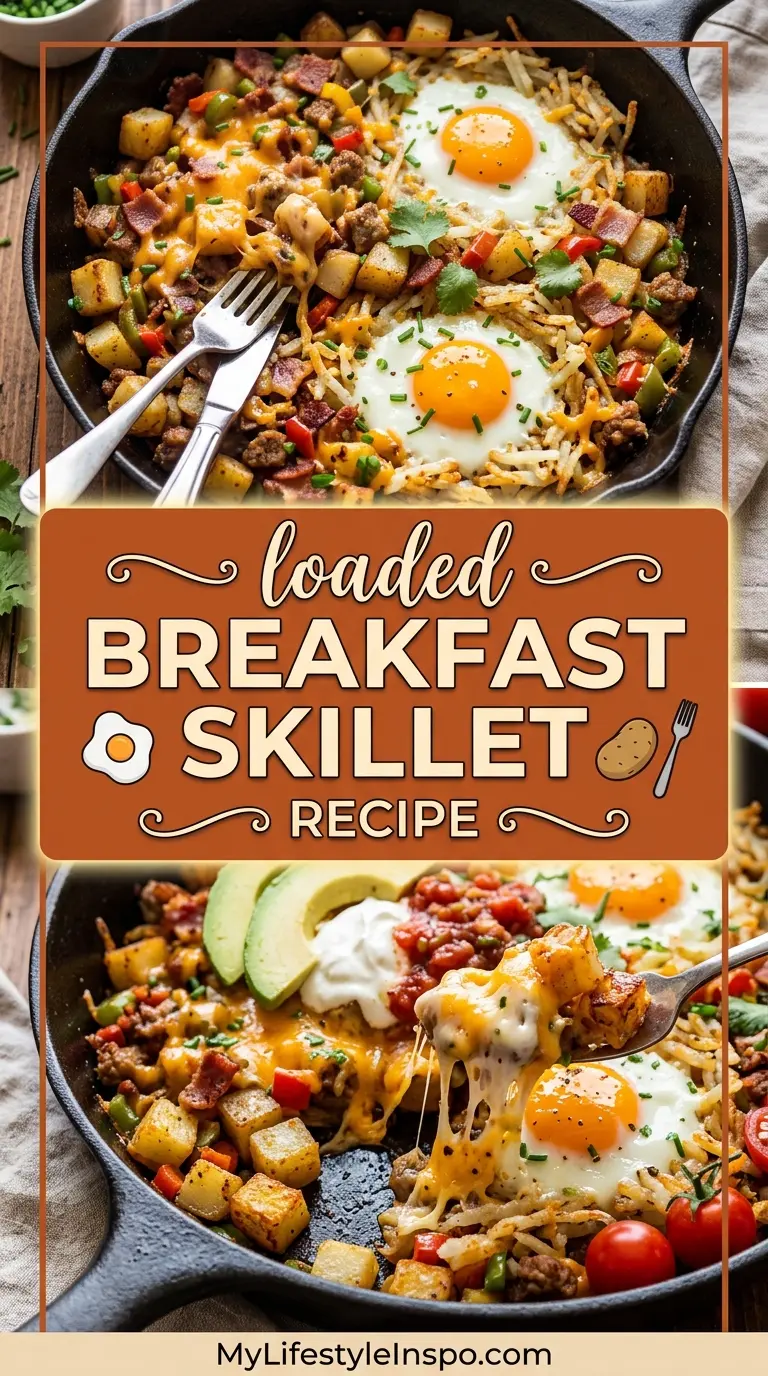
Step-by-Step Instructions
Step 1: Prep Your Ingredients
- Peel the russet potatoes and dice them into ½-inch (1.25 cm) cubes. Uniform sizing is critical here because unevenly cut potatoes cook at different rates, and you want them all tender at the same time.
- Dice the yellow onion into small pieces, roughly ¼ inch (6 mm).
- Dice both bell peppers into similar ¼-inch (6 mm) pieces.
- Mince the garlic cloves finely. If you have a garlic press, now is the time to use it.
- Slice the green onions thinly and set aside. These are your garnish, so keep them separate.
- Chop the bacon strips into 1-inch (2.5 cm) pieces. Smaller pieces render faster and get crispier throughout the skillet.
- In a small bowl, combine the smoked paprika, garlic powder, onion powder, salt, and black pepper. Set this spice blend aside so it’s ready to add all at once.
Step 2: Cook the Bacon
- Place your cast iron skillet over medium heat and allow it to preheat for about 2 minutes. This ensures even cooking from the start.
- Add the chopped bacon pieces in a single layer to the skillet. Do not crowd them or they will steam rather than crisp.
- Cook the bacon, stirring occasionally, for about 5 to 6 minutes, until the pieces are crispy and deeply golden brown.
- Use a slotted spoon to transfer the crispy bacon to a paper towel-lined plate. Leave all of the bacon drippings in the skillet. Those drippings are pure flavor and are essential for cooking the potatoes.
Step 3: Brown the Sausage
- Increase the heat slightly to medium-high. Add the bulk breakfast sausage to the skillet directly into the bacon drippings.
- Break the sausage apart into small, bite-sized crumbles using your wooden spoon or spatula. You want pieces roughly ½ inch (1.25 cm) in size so they distribute evenly throughout the skillet.
- Cook the sausage for about 5 to 7 minutes, stirring occasionally, until it is deeply browned and cooked through with no pink remaining.
- Transfer the cooked sausage to the same plate as the bacon, using the slotted spoon. Leave the drippings in the skillet. You should have a generous layer of fat in the pan from both the bacon and sausage. If there seems to be an excessive amount (more than 3 tablespoons), drain a little off, but do not drain it all.
Step 4: Cook the Potatoes
- Keep the heat at medium-high. Add the butter to the skillet and let it melt into the existing drippings. This combination of butter and rendered fat creates an incredibly flavorful cooking base for the potatoes.
- Add the diced potatoes to the skillet in a single even layer. Sprinkle the prepared spice blend (smoked paprika, garlic powder, onion powder, salt, and pepper) evenly over the top.
- Let the potatoes cook undisturbed for 3 to 4 minutes to develop a golden crust on the bottom. Resist the urge to stir too frequently; movement prevents browning.
- Stir the potatoes, then let them cook undisturbed again for another 3 to 4 minutes. Continue this pattern of cooking and occasional stirring for a total of 12 to 15 minutes, until the potatoes are golden brown on the outside and tender when pierced with a fork.
- If the potatoes start to stick or the bottom of the pan gets too dark, reduce the heat to medium.
Step 5: Add the Vegetables
- Push the cooked potatoes to the outer edges of the skillet to create space in the center.
- Add the diced onion and both bell peppers to the center of the skillet.
- Cook the vegetables, stirring them in the center without disturbing the potatoes, for about 4 to 5 minutes, until the onion is translucent and the peppers are slightly softened but still have a little bite.
- Add the minced garlic to the vegetables and stir everything together. Cook for 1 more minute until fragrant. Be careful not to burn the garlic; it goes from golden to bitter very quickly.
- Stir everything in the skillet together now, combining the potatoes, onion, peppers, and garlic into an even mixture.
Step 6: Add the Bacon and Sausage Back In
- Return the cooked bacon and sausage to the skillet.
- Stir everything together thoroughly so the meats are evenly distributed throughout the potato and vegetable mixture.
- Taste the mixture and adjust the seasoning with additional salt and pepper if needed. The bacon and sausage contribute salt, so taste before adding more.
Step 7: Create Wells and Cook the Eggs
- Reduce the heat to medium-low. This is important because eggs cook best over gentle heat, and you want the whites to set without the yolks cooking through completely.
- Use a spoon to create 4 wells (indentations) in the skillet mixture, spacing them evenly across the pan.
- Crack one egg carefully into each well. If you’re nervous about shell fragments, crack each egg into a small bowl first, then gently pour it into the well.
- Sprinkle the shredded cheddar cheese evenly over the entire surface of the skillet, including over and around the eggs.
- Cover the skillet with a lid or a large baking sheet. This traps steam and helps the egg whites set completely while keeping the yolks at your desired doneness.
- Cook for 3 to 5 minutes, checking frequently. For runny yolks, remove the skillet at 3 minutes. For fully set yolks, cook for the full 5 minutes.
Step 8: Garnish and Serve
- Remove the lid carefully, as steam will escape.
- Sprinkle the sliced green onions evenly over the top of the skillet.
- Serve the skillet directly at the table family-style, or scoop individual portions onto plates.
- Offer hot sauce on the side for those who like a little heat.
Read Also: Stuffed Pepper Skillet Recipe
Tips for Success
Small technique adjustments can make a big difference in how this recipe turns out, especially when it comes to the potatoes and eggs. Getting the potatoes crispy is the most common challenge, and it comes down almost entirely to patience and heat control.
- Don’t skip drying the potatoes: After dicing, pat the potato cubes dry with paper towels. Excess moisture is the main reason potatoes steam instead of crisping in the skillet.
- Use a preheated pan: Always allow the cast iron to preheat before adding any fat or ingredients. A properly hot pan is the foundation of good browning.
- Resist over-stirring: Stir the potatoes as little as possible. Every time you move them, you interrupt the crust-forming process. Let them sit and develop color.
- Keep the heat consistent: Medium-high heat for the potatoes, dropping down to medium-low for the eggs. Eggs cooked on high heat turn rubbery and are difficult to control.
- Cover the skillet for the eggs: The lid or baking sheet traps steam, which sets the whites from above and gives you perfectly cooked eggs without flipping.
- Season in layers: Season the potatoes when they go in, and taste again before serving. Building seasoning in stages produces a more balanced final flavor.
- Use room-temperature eggs: Cold eggs crack into a hot skillet and spread too quickly. Let your eggs sit out for 10 minutes before using them.
You might also enjoy: Cheeseburger Skillet Recipe
Serving Suggestions
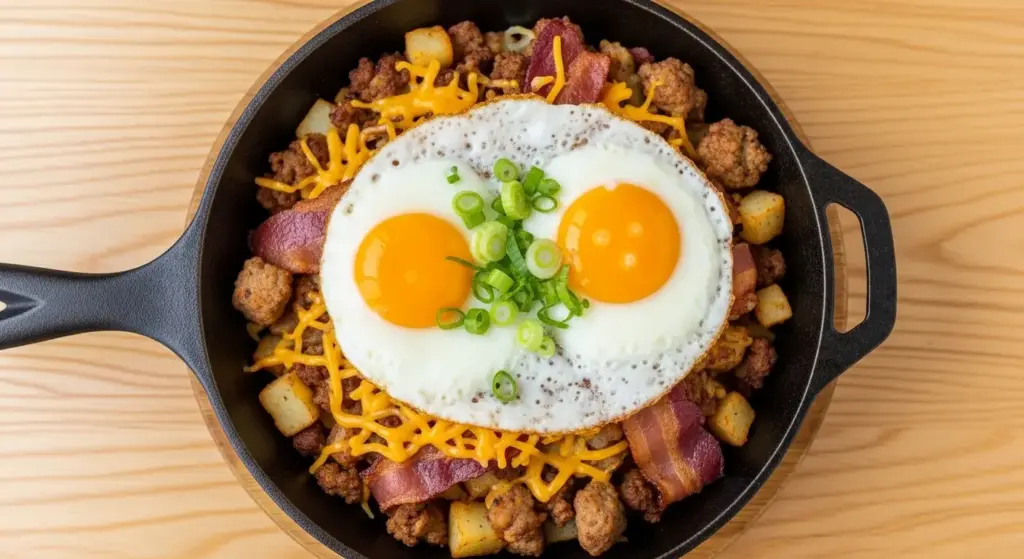
This loaded breakfast skillet is a complete meal on its own, but it pairs beautifully with a variety of sides and accompaniments to round out a full brunch spread.
It works especially well with bread for scooping, something cool and creamy on the side, or a bright, fresh accompaniment to balance the richness of the dish.
- Serve with warm Buttermilk Biscuits for the ultimate Southern-style breakfast experience.
- A side of Fresh Fruit Salad adds brightness and freshness that balances the richness of the skillet beautifully.
- Pair with Easy French Toast for a full sweet-and-savory brunch spread.
- Serve with a dollop of sour cream or salsa on top for a Tex-Mex twist.
- Add a side of Avocado Toast for a fresh, creamy complement to the skillet.
- Warm flour or corn tortillas on the side turn this skillet into a DIY breakfast taco bar for a crowd.
Read Also: Scrambled Eggs Recipe
Variations to Try
One of the best things about this recipe is how easily it adapts to whatever you have on hand or whatever flavors you’re in the mood for. The core technique stays the same; just swap or add ingredients to create an entirely different dish.
- Vegetarian version: Skip the bacon and sausage entirely. Cook the potatoes in olive oil and butter, and add mushrooms, spinach, and diced tomatoes for a hearty meat-free skillet.
- Tex-Mex style: Add a can of drained black beans, swap cheddar for pepper jack cheese, and top with fresh salsa, sliced jalapeños, and cilantro.
- Southwest version: Add diced green chiles and a pinch of cumin and chili powder to the spice blend, then top with crumbled queso fresco.
- Chorizo skillet: Replace the pork breakfast sausage with Mexican chorizo for a deeply spiced, slightly smoky flavor profile that’s absolutely delicious.
- Ham and cheese: Swap out the bacon and sausage for diced leftover ham. It’s a great way to use up holiday leftovers.
- Extra veggie-loaded: Add diced zucchini, mushrooms, or cherry tomatoes along with the bell peppers to sneak in more vegetables.
- Sweet potato version: Replace half of the russet potatoes with peeled and diced sweet potatoes for a slightly sweeter, more nutritious twist.
Another skillet variation worth trying is this Turkey Skillet Recipe, which uses a similar one-pan method with a leaner protein.
Storage and Reheating
This loaded breakfast skillet stores and reheats well, making it an excellent recipe to make ahead for busy mornings or to repurpose as breakfast burritos the next day. Store any leftovers promptly after the dish has cooled slightly.
- Refrigerator: Transfer leftovers to an airtight container and refrigerate for up to 3 days. The potatoes may soften slightly but will still taste great.
- Freezer: This recipe is best enjoyed fresh or refrigerated. The eggs do not freeze well and tend to become rubbery when thawed, so freezing is not recommended.
- Stovetop reheating (best method): Reheat in a skillet over medium heat with a small drizzle of oil or butter. Stir occasionally for about 3 to 4 minutes until warmed through. This method restores some of the original crispiness to the potatoes.
- Microwave reheating: Transfer a portion to a microwave-safe plate and heat in 45-second intervals, stirring between intervals, until hot throughout. This is faster but will result in softer potatoes.
- Breakfast burritos: Scoop leftovers into warm flour tortillas with extra cheese, salsa, and sour cream for an entirely new meal the next day.
Read Also: Breakfast Casserole Recipe
Nutritional Facts
The following nutritional information is based on one serving (1/4 of the full recipe). Values are approximate and will vary depending on specific brands and ingredient substitutions used.
| Nutrient | Per Serving |
|---|---|
| Calories | ~490 kcal |
| Total Fat | 28 g |
| Saturated Fat | 11 g |
| Cholesterol | 270 mg |
| Sodium | 620 mg |
| Total Carbohydrates | 33 g |
| Dietary Fiber | 4 g |
| Total Sugars | 4 g |
| Protein | 28 g |
| Calcium | 250 mg |
| Iron | 3 mg |
| Potassium | 980 mg |
| Vitamin C | 55 mg |
| Vitamin A | 1600 IU |
Note: Nutritional values are estimates and may vary based on the exact ingredients and brands you use. This recipe is high in protein, making it an excellent choice for an energizing morning meal.
This recipe also pairs well with lighter options like this Egg Bake Recipe for days when you want something a little less indulgent.
Health Benefits of Key Ingredients
While this loaded breakfast skillet is certainly indulgent, several of its key ingredients provide meaningful nutritional value that supports energy, muscle function, and overall wellness.
The combination of protein from eggs, sausage, and cheese alongside the complex carbohydrates in potatoes makes this a genuinely balanced, sustaining breakfast that powers you through a busy morning.
- Eggs: A nutritional powerhouse, eggs provide high-quality complete protein, all nine essential amino acids, and important nutrients including vitamin D, B12, choline, and selenium. They are one of the most bioavailable sources of protein available.
- Potatoes: Often unfairly maligned, potatoes are an excellent source of potassium, vitamin C, and vitamin B6. They also contain resistant starch that supports gut health and provides lasting energy.
- Bell peppers: Red and green bell peppers are among the richest food sources of vitamin C, providing well over 100% of the daily recommended intake per serving. They also contain antioxidants including beta-carotene and quercetin.
- Cheddar cheese: Provides calcium, phosphorus, and fat-soluble vitamins including A, D, and K2, all of which support bone density and immune function.
- Onion and garlic: Both contain powerful anti-inflammatory and antimicrobial compounds. Garlic in particular is rich in allicin, which supports cardiovascular health and immune function.
For more egg-forward breakfast inspiration, check out this Cloud Eggs Recipe for a lighter, creative option.
Frequently Asked Questions
1. Can I use frozen diced potatoes instead of fresh?
Yes, frozen diced potatoes or frozen hash browns work well in this recipe and can save significant prep time.
Add them directly from frozen to the skillet with the hot drippings and spread them out in an even layer. They may release a little extra moisture initially, so cook them a couple of minutes longer than you would fresh potatoes to ensure they get golden and crispy.
2. How do I keep the eggs from overcooking?
The key is reducing the heat to medium-low before adding the eggs and watching them closely once covered.
For runny yolks, pull the skillet off the heat at the 3-minute mark and allow carry-over cooking to gently finish the whites. If you prefer fully set yolks, cook for the full 5 minutes but check every 30 seconds after the 4-minute mark.
3. Can I make this recipe ahead of time?
You can prep most of the components in advance to make morning assembly very fast.
Dice the potatoes and store them submerged in cold water in the fridge the night before (drain and pat dry before cooking). Pre-dice the peppers and onion and store in an airtight container. Cook the bacon and sausage and refrigerate until morning. The morning of, simply reheat the meats, cook the potatoes and vegetables, combine everything, and add the eggs fresh.
4. What can I use instead of a cast iron skillet?
Any large, oven-safe skillet with a lid will work for this recipe.
A stainless steel skillet or a heavy-bottomed nonstick skillet are both good alternatives. Just keep in mind that cast iron retains heat better, which helps get the potatoes extra crispy. If using nonstick, increase the heat slightly and use a little extra fat to encourage browning.
5. Is this recipe gluten-free?
Yes, this loaded breakfast skillet is naturally gluten-free as written.
All of the core ingredients, eggs, potatoes, meats, vegetables, and cheese, do not contain gluten. Just make sure to verify that your specific breakfast sausage brand is gluten-free, as some brands include fillers or additives that contain gluten.
Read Also: Egg Bites Recipe
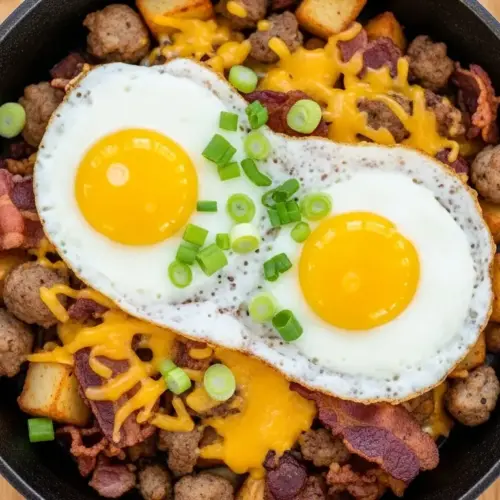
Loaded Breakfast Skillet

Equipment
- 12-inch cast iron skillet - preferred, or large oven-safe nonstick skillet
- Cutting board
- Sharp chef's knife
- Wooden spoon or silicone spatula
- Measuring spoons
- Paper towels
- Lid or large baking sheet - to cover the skillet when cooking eggs
- Slotted spoon
Ingredients
- 3 strips bacon - chopped into 1-inch (2.5 cm) pieces
- 6 oz bulk breakfast sausage - 170g, pork
- 2 medium russet potatoes - about 1 lb or 450g total, peeled and diced into ½-inch (1.25 cm) cubes
- 1 small yellow onion - diced
- 1 red bell pepper - diced
- 1 green bell pepper - diced
- 2 cloves garlic - minced
- ½ tsp smoked paprika
- ½ tsp garlic powder
- ½ tsp onion powder
- ½ tsp salt - plus more to taste
- ¼ tsp black pepper - plus more to taste
- 1 tbsp unsalted butter
- 4 large eggs - room temperature preferred
- 1 cup shredded sharp cheddar cheese - 115g
- 2 green onions - thinly sliced (for garnish)
- hot sauce - for serving (optional)
Instructions
- Prep all ingredients: dice potatoes, onion, bell peppers; mince garlic; chop bacon; combine spices in a small bowl.
- Cook chopped bacon in a preheated cast iron skillet over medium heat for 5-6 minutes until crispy. Transfer to a plate and reserve drippings in the pan.
- Brown the breakfast sausage over medium-high heat for 5-7 minutes until deeply browned and cooked through. Transfer to the plate with bacon, leaving drippings in the skillet.
- Add butter to the skillet, then add diced potatoes in a single even layer. Sprinkle with the spice blend and cook for 12-15 minutes, stirring occasionally, until golden and tender.
- Push potatoes to the edges and cook onion and bell peppers in the center for 4-5 minutes until softened. Add garlic and cook for 1 minute more, then stir everything together.
- Return the cooked bacon and sausage to the skillet and stir thoroughly. Taste and adjust seasoning with salt and pepper as needed.
- Reduce heat to medium-low, create 4 wells in the mixture, and crack one egg into each well. Sprinkle cheese evenly over the top, cover, and cook for 3-5 minutes to desired yolk doneness.
- Remove the lid, garnish with sliced green onions, and serve directly from the skillet with hot sauce on the side.
Notes
- Pat diced potatoes dry with paper towels before cooking to remove excess moisture and ensure crispiness.
- Resist the urge to over-stir the potatoes—let them sit and develop a golden crust between stirs.
- For runny yolks, cook the eggs for 3 minutes covered; for fully set yolks, cook for the full 5 minutes.
- Use room-temperature eggs for more even cooking and better texture in the skillet.
- Vegetarian variation: omit bacon and sausage, cook potatoes in olive oil and butter, and add mushrooms, spinach, and tomatoes.
- Tex-Mex variation: add black beans, use pepper jack cheese, and top with salsa, jalapeños, and cilantro.
- Refrigerate leftovers in an airtight container for up to 3 days—reheat in a skillet for best results.
- Freezing is not recommended as eggs can become rubbery when thawed.
- Turn leftovers into breakfast burritos by scooping into warm tortillas with extra cheese and salsa.
- Dice potatoes uniformly to ensure even cooking—irregularly cut pieces will cook at different rates.
Final Thoughts
This loaded breakfast skillet recipe is the kind of meal that earns a permanent place in your regular rotation.
It’s endlessly flexible, deeply satisfying, and genuinely easy to pull together even on a busy morning.
Once you’ve made it the first time and seen how quickly everything comes together in one pan, you’ll find yourself reaching for it again and again.
Give it a try this weekend, and make it your own with your favorite proteins, veggies, or cheese combinations.
If you make this recipe, leave a comment below and let me know how it turned out! I love hearing what variations you tried and what your family thought.
Recommended:
- Breakfast Potatoes Recipe
- French Toast Casserole Recipe
- Air Fryer Egg Cups Recipe
- Air Fryer Cloud Eggs Recipe
- Quiche Lorraine Recipe
- Sausage Gravy Recipe
- Enchilada Skillet Recipe
- Chicken Skillet Recipe
- Mexican Skillet Recipe
- Egg Roll in a Bowl Recipe