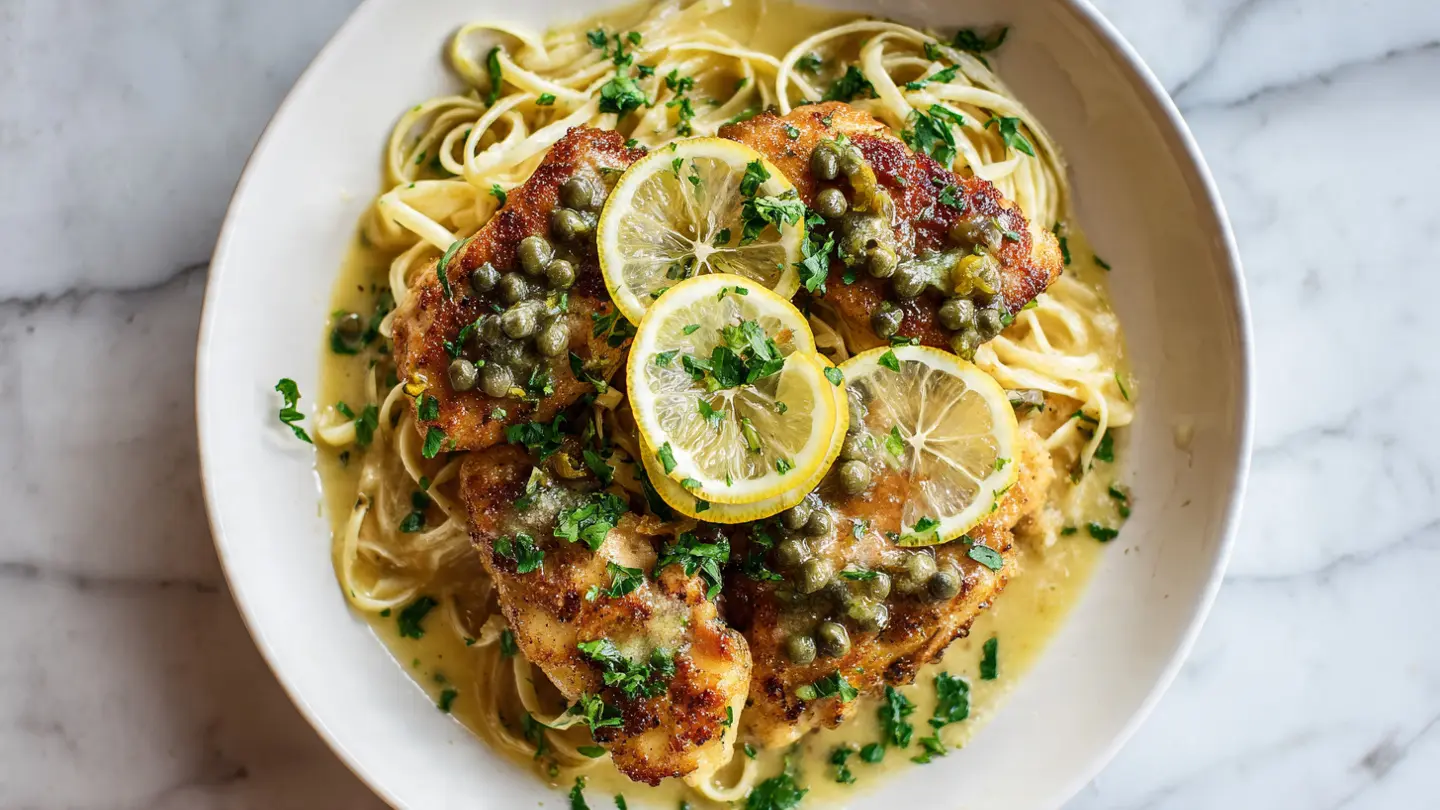
If you’ve been searching for the perfect chicken piccata recipe with pasta, you’ve landed in the right place. This dish brings together golden, pan-fried chicken cutlets and a bright, briny lemon-caper sauce that gets spooned generously over a bed of silky linguine or spaghetti.
It’s the kind of meal that feels restaurant-worthy but comes together in about 30 minutes on a weeknight.
What makes this dish so satisfying is the balance of flavors. The lemon juice gives the sauce its signature tang, the capers add a punch of brininess, and the butter ties everything together into a velvety, glossy finish.
Toss in al dente pasta, and you have a complete, comforting dinner that never gets old.
Craving more lemon chicken dishes? You might also love this Authentic Italian Chicken Piccata for a more traditional, pasta-free version of the classic.
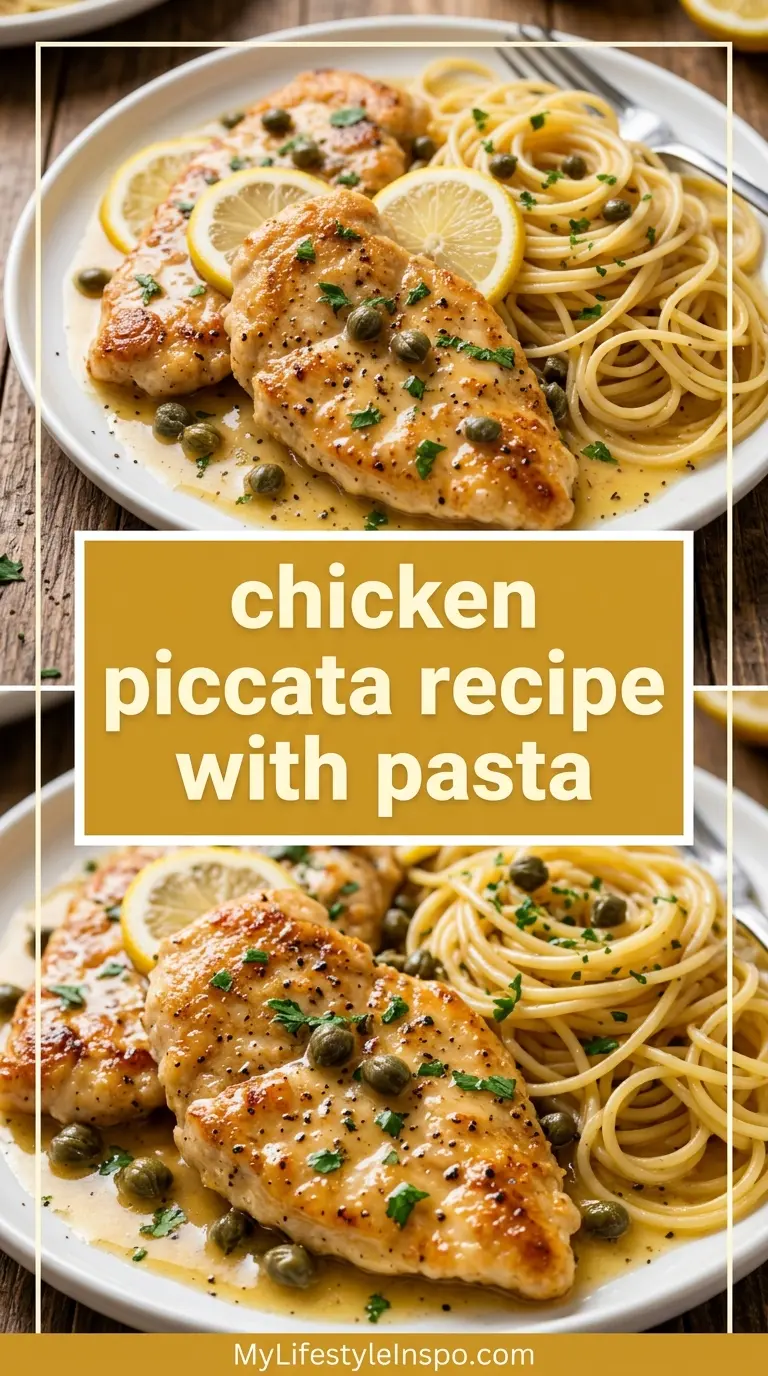
Why You’ll Love This Chicken Piccata Recipe With Pasta
This recipe hits all the marks for a truly satisfying weeknight dinner.
The sauce alone is a reason to make it. It’s light yet intensely flavorful, with a glossy, buttery finish that clings beautifully to pasta.
Thin chicken cutlets cook in just a few minutes per side, so you’re never standing over the stove for long. The whole dish, including boiling the pasta, can be on the table in under 35 minutes.
It’s also incredibly versatile. You can serve the chicken sliced over the pasta, or plate it whole alongside a generous scoop of noodles.
Leftovers reheat well, making it a great option for meal prepping ahead of a busy week.
- The lemon-caper sauce is bright and buttery without being heavy
- Thin, golden chicken cutlets cook quickly and stay juicy
- Uses pantry staples you likely already have on hand
- The pasta soaks up every drop of the savory sauce
- A crowd-pleaser that works for family dinners and casual entertaining alike
- Easily scales up or down depending on how many people you’re feeding
You might also enjoy this Creamy Chicken Piccata if you love the idea of a richer, creamier take on the same classic dish.
Ingredients
This recipe relies on a short list of quality ingredients. Fresh lemon juice and good-quality butter are especially important here since they form the backbone of the sauce. Don’t substitute bottled lemon juice if you can help it.
- 2 large boneless, skinless chicken breasts (about 1.5 lbs / 680g), halved horizontally to make 4 thin cutlets
- Salt and freshly ground black pepper, to taste
- ½ cup (65g) all-purpose flour, for dredging
- 3 tablespoons (45ml) olive oil, divided
- 3 tablespoons (42g) unsalted butter, divided
- 4 cloves garlic, minced
- ½ cup (120ml) dry white wine
- ¾ cup (180ml) low-sodium chicken broth
- ¼ cup (60ml) fresh lemon juice (from about 2 lemons)
- 3 tablespoons capers, drained and rinsed
- 2 tablespoons fresh flat-leaf parsley, chopped
- 12 oz (340g) linguine or spaghetti
- Reserved pasta cooking water (about ¼ cup / 60ml), as needed
Read Also: White Wine Chicken Piccata Recipe
Kitchen Equipment Needed
Having the right tools makes this recipe much smoother, especially when you’re managing both the pasta pot and the skillet at the same time.
- Large pot for boiling pasta
- Large stainless steel or cast iron skillet (12 inches / 30cm) for the chicken and sauce
- Shallow dish or plate for dredging the chicken in flour
- Meat mallet or rolling pin for pounding the chicken
- Tongs for flipping the chicken
- Wooden spoon or silicone spatula for the sauce
- Sharp knife and cutting board
- Colander for draining pasta
- Microplane or fine grater for zesting lemons
- Ladle or measuring cups for portioning pasta water
You might also love making Classic Shrimp Scampi using this same skillet setup for a similar lemon-butter pan sauce experience.
Recommended Products for This Recipe
These are a few products that can genuinely upgrade your chicken piccata game, based on quality and real cooking performance.
1. All-Clad Stainless Steel Skillet
A quality stainless steel skillet is essential for building a proper fond when searing the chicken, which is what gives your sauce that deep, savory base. A flimsy pan won’t hold heat evenly and will make it harder to get that gorgeous golden crust on each cutlet. This is one investment that pays off with every recipe you make.
2. Non-Pareil Capers in Brine
Non-pareil capers are the smallest variety and have the most concentrated, briny flavor. They’re the gold standard for piccata sauce, and using a high-quality brand makes a noticeable difference in the final dish. Look for ones packed in brine rather than salt for better flavor control.
3. De Cecco Linguine
Not all dried pasta is created equal, and De Cecco is widely considered one of the best for holding up to pan sauces like this one. Its slightly rough texture grips the lemon-butter sauce beautifully so every bite is coated and flavorful. It’s a small upgrade that makes a big difference.
4. OXO Good Grips Meat Tenderizer
Pounding your chicken cutlets to an even thickness is one of the most important steps in this recipe. An OXO meat mallet makes this task quick and easy without tearing the meat. Evenly thick cutlets cook at the same rate, which means no dry edges and no undercooked centers.
5. Microplane Premium Zester
Fresh lemon zest added at the end of cooking can brighten the entire dish. A Microplane zester makes it effortless and produces fine, feathery zest that incorporates into the sauce rather than sitting on top. It’s one of those kitchen tools you’ll reach for constantly once you have it.
Another Italian-inspired chicken dish worth bookmarking: Chicken Marsala Recipe
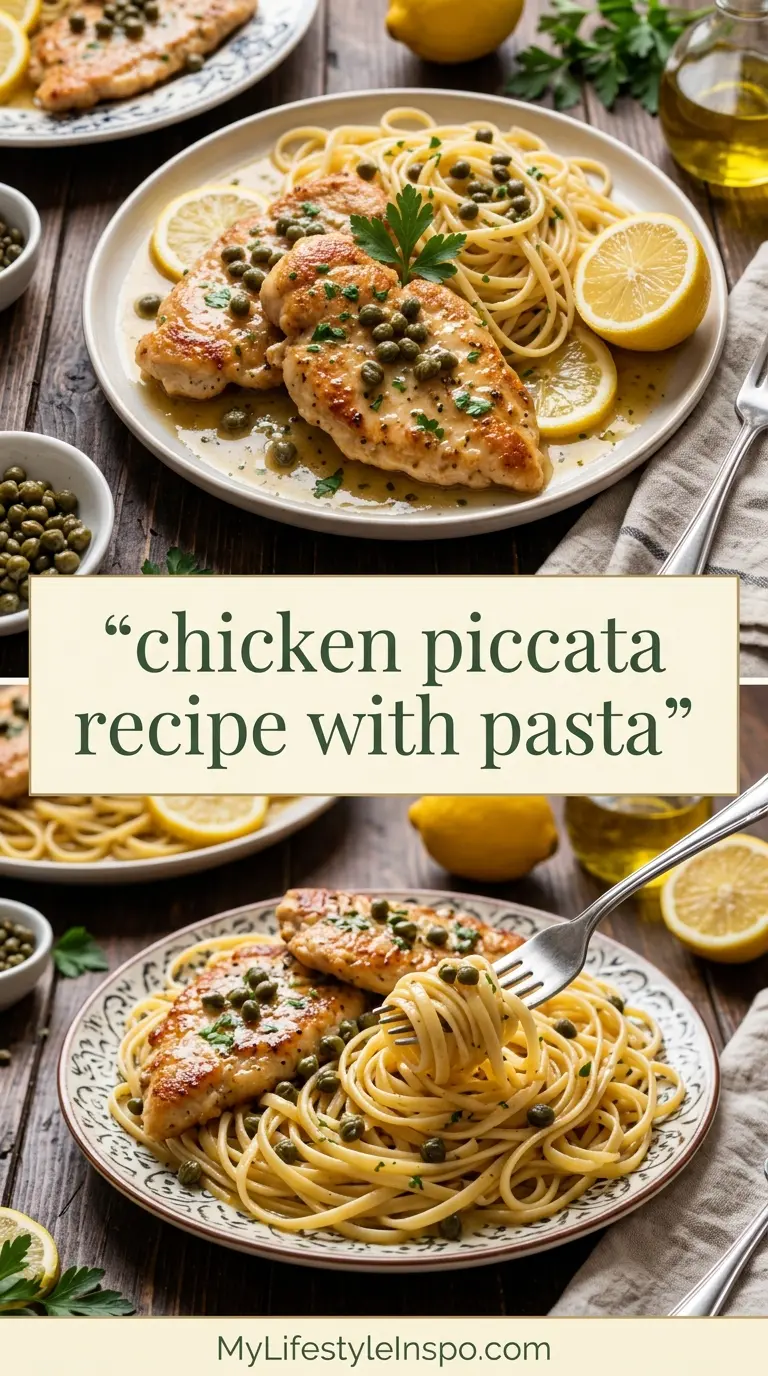
Step-by-Step Instructions
1. Bring a Large Pot of Water to a Boil
- Fill a large pot with water and place it over high heat.
- Add a generous pinch of salt (about 1 tablespoon / 15g) once it reaches a full boil. Well-salted pasta water seasons the pasta from the inside out and is one of the simplest ways to improve the overall flavor of the dish.
- Set the pot aside, ready to add the pasta once the chicken is cooking.
2. Prepare the Chicken Cutlets
- Place the chicken breasts on a cutting board and hold each one flat with your palm.
- Using a sharp knife, slice each breast in half horizontally to create two thinner cutlets. You should end up with 4 cutlets total.
- Place the cutlets between two sheets of plastic wrap or in a zip-lock bag.
- Use a meat mallet or the bottom of a heavy pan to pound them gently to an even ¼-inch (6mm) thickness. Even thickness is critical for quick, uniform cooking and keeping the chicken juicy.
- Season both sides generously with salt and freshly ground black pepper.
3. Dredge the Chicken in Flour
- Pour the all-purpose flour into a shallow dish or plate.
- Working with one cutlet at a time, press each piece into the flour, coating both sides evenly.
- Shake off any excess flour. A thin, even coating helps the chicken brown beautifully without creating a heavy crust.
- Set the dredged cutlets aside on a clean plate.
4. Cook the Pasta
- Once your water is boiling, add the linguine or spaghetti.
- Cook according to package instructions until just al dente, usually 8 to 10 minutes for linguine.
- Before draining, scoop out about ¼ cup (60ml) of the starchy pasta cooking water and set it aside. This liquid is liquid gold for loosening and enriching the sauce later.
- Drain the pasta in a colander and set it aside. Toss it with a tiny drizzle of olive oil to prevent sticking if it will sit for a few minutes.
5. Sear the Chicken
- Heat 2 tablespoons (30ml) of olive oil and 1 tablespoon (14g) of butter in your large skillet over medium-high heat.
- Once the butter melts and starts to foam, add the dredged chicken cutlets in a single layer. Do not crowd the pan. If needed, cook in two batches.
- Cook for 3 to 4 minutes per side until each cutlet is deeply golden brown and cooked through to an internal temperature of 165°F (74°C).
- Transfer the cooked chicken to a clean plate and cover loosely with foil to keep warm while you make the sauce.
6. Sauté the Garlic
- Reduce the heat to medium. The pan will still be hot from searing the chicken.
- Add the remaining 1 tablespoon (15ml) of olive oil to the pan.
- Add the minced garlic and cook for about 30 seconds, stirring constantly, until fragrant and just starting to turn golden. Be careful not to burn it, as burnt garlic will make the sauce taste bitter.
7. Deglaze With White Wine
- Pour in the dry white wine and stir the bottom of the pan with a wooden spoon to lift all the browned bits (the fond) that have stuck to the surface.
- Those caramelized bits are packed with flavor and are the secret to a deeply savory sauce.
- Let the wine simmer for about 2 minutes until it reduces by roughly half.
8. Build the Piccata Sauce
- Pour in the chicken broth and add the fresh lemon juice.
- Stir everything together and bring the liquid to a simmer.
- Cook for 3 to 4 minutes, stirring occasionally, until the sauce reduces slightly and concentrates in flavor.
- Add the drained capers and stir them into the sauce. Let everything simmer for another minute.
9. Finish the Sauce With Butter
- Remove the pan from the heat or reduce to very low.
- Add the remaining 2 tablespoons (28g) of cold butter to the pan, one tablespoon at a time, swirling the pan or stirring briskly as each piece melts.
- Adding cold butter off the heat creates a process called emulsification, which gives the sauce that glossy, restaurant-quality finish. If the butter is too hot, the sauce will break and look greasy instead of silky.
10. Add the Pasta to the Sauce
- Add the drained pasta directly to the skillet with the piccata sauce.
- Toss the pasta gently using tongs to coat every strand in the sauce.
- If the sauce seems too thick or the pasta is clumping, add a splash of the reserved pasta cooking water and toss again. The starchy water helps the sauce cling to the pasta and creates a creamier consistency.
11. Plate and Serve
- Divide the sauced pasta between serving plates or bowls.
- Return the chicken cutlets to the pan briefly to warm through in the sauce, or place them directly on top of the plated pasta.
- Spoon any extra sauce from the pan over the chicken and pasta.
- Garnish with freshly chopped parsley and, if desired, a few thin lemon slices for presentation.
- Serve immediately while the sauce is hot and glossy.
For another elegant Italian-American dinner that uses a similar searing and pan-sauce technique, check out this Chicken Cacciatore Recipe.
Tips for Success
A few small details make a big difference in how this dish turns out. Keep these tips in mind the first time you make it and you’ll get great results.
- Don’t skip pounding the chicken. Uneven thickness means the thick end will be undercooked when the thin end is already overdone. Spend an extra 2 minutes at the prep stage and your chicken will be consistently juicy every time.
- Use dry white wine. Pinot Grigio, Sauvignon Blanc, or even an unoaked Chardonnay work beautifully. Avoid cooking wine, which contains added salt and a flat flavor that can throw off the balance of the sauce.
- Don’t overcrowd the pan. Crowding causes the chicken to steam rather than sear. Work in batches if necessary to ensure every cutlet gets properly browned.
- Taste and adjust before serving. Every lemon is different. If the sauce tastes flat, add a little more lemon juice. If it tastes too sharp, a pinch of sugar or an extra pat of butter will balance it out.
- Reserve that pasta water. It sounds like a small thing, but the starchy cooking water is what helps bind the sauce to the pasta. Keep a cup handy just in case.
Read Also: The Best Easy Chicken Piccata Recipe
Serving Suggestions
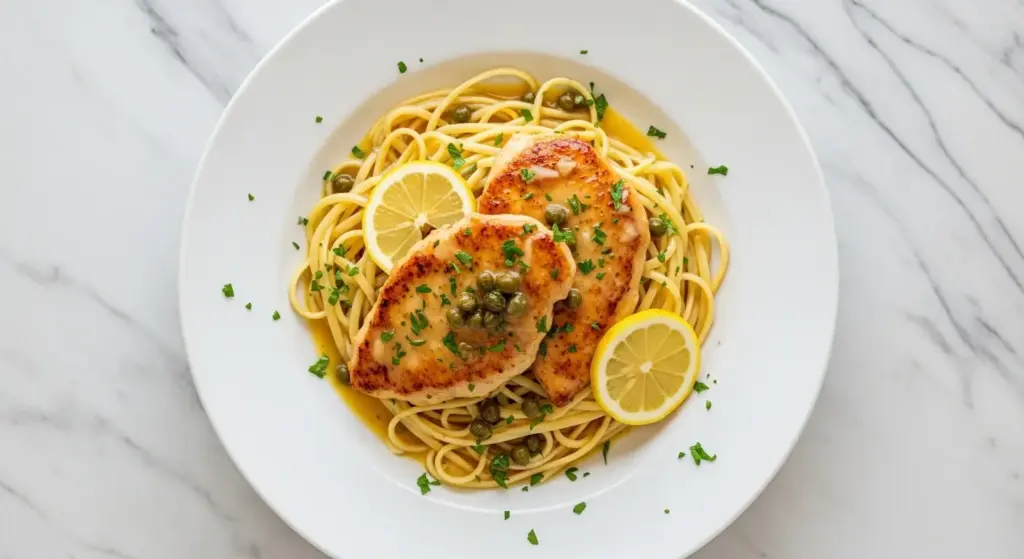
Chicken piccata with pasta is a complete meal on its own, but pairing it with the right sides takes the whole dinner up a notch.
A crisp green salad with a lemon vinaigrette is a natural fit, echoing the brightness of the piccata sauce without competing with it. A side of roasted vegetables also works beautifully here because the caramelized edges of the vegetables complement the briny, buttery flavors in the dish.
- A simple arugula salad dressed with olive oil, lemon, and shaved Parmesan
- Roasted Broccoli seasoned with garlic and a squeeze of lemon
- Cheesy Garlic Bread for soaking up the extra sauce
- A light Caesar salad to round out the Italian-American theme
- Garlic Mashed Potatoes if you want to skip the pasta and go all in on comfort food
For another pasta night option the whole family loves, this Baked Ziti is always a hit.
Variations to Try
Once you’ve made the classic version, you’ll have a reliable base to experiment with. These variations keep the dish fresh without straying too far from what makes it great.
- Make it gluten-free. Swap the all-purpose flour for a gluten-free 1:1 flour blend and cook your favorite gluten-free pasta. The rest of the recipe stays exactly the same. You can also check out this dedicated Gluten Free Chicken Piccata Recipe for more tips.
- Go creamy. Stir in ¼ cup (60ml) of heavy cream after adding the chicken broth for a richer, silkier sauce.
- Add artichoke hearts. Canned or jarred artichoke hearts, drained and quartered, are a classic addition that pairs beautifully with the lemon-caper sauce.
- Use chicken thighs. Boneless, skinless thighs work well here. They take a few extra minutes to cook but deliver a juicier result.
- Try it with shrimp. Swap the chicken for large shrimp that have been peeled and deveined. They cook in just 2 minutes per side and soak up the piccata sauce beautifully.
- Skip the pasta. Serve the chicken and sauce over Creamy Mashed Potatoes for a different but equally delicious presentation.
You might also love the Copycat Cheesecake Factory Chicken Piccata Recipe if you want that beloved restaurant version at home.
Storage and Reheating
This dish stores well, making it a great candidate for meal prep or planned leftovers.
Keep the pasta and chicken together or store them separately depending on your preference. Separating them slightly prolongs the quality of the pasta.
- Refrigerator: Store in an airtight container for up to 3 days.
- Freezer: The chicken can be frozen on its own for up to 2 months. The pasta is best made fresh, as it becomes mushy after freezing.
- Stovetop reheating: Warm the chicken and sauce in a skillet over medium-low heat, adding a splash of chicken broth or water to loosen the sauce. Add the pasta once the sauce is hot and toss to coat.
- Microwave reheating: Transfer a portion to a microwave-safe dish, add a small splash of water, and cover loosely. Heat in 60-second intervals, stirring between each, until hot throughout.
- Avoid overheating. The butter sauce can break if reheated too aggressively. Low and slow is the key to keeping it smooth and glossy.
Read Also: Healthy Chicken Piccata Recipe
Nutritional Facts
The following values are estimated per serving based on this recipe yielding 4 servings. Exact values will vary depending on the specific brands and ingredient quantities you use.
| Nutrient | Per Serving |
|---|---|
| Calories | approximately 620 kcal |
| Total Fat | 22g |
| Saturated Fat | 8g |
| Cholesterol | 115mg |
| Sodium | 590mg |
| Total Carbohydrates | 62g |
| Dietary Fiber | 3g |
| Total Sugars | 2g |
| Protein | 42g |
| Vitamin C | 18% DV |
| Iron | 15% DV |
This recipe is relatively high in lean protein and moderate in carbohydrates, making it a balanced and satisfying dinner option.
Another well-balanced Italian-American pasta dinner worth trying: Easy Lasagna Recipe
Health Benefits of Key Ingredients
Beyond tasting incredible, several of the core ingredients in this recipe offer real nutritional value that makes it a pretty smart dinner choice.
This dish leans on whole-food ingredients and avoids the heavy cream sauces that make many pasta recipes feel sluggish.
- Chicken breast is one of the best lean protein sources available. A single 4-ounce (113g) serving provides around 25 to 30 grams of protein with very little saturated fat, supporting muscle maintenance and keeping you full for longer.
- Lemon juice is rich in vitamin C and antioxidants. It also contains citric acid, which may support kidney health and aid in the absorption of iron from plant-based foods.
- Capers are low in calories but packed with flavonoids, which are plant-based antioxidants. They also provide a small amount of sodium naturally, meaning you don’t need to reach for the salt shaker as often.
- Olive oil is a cornerstone of the Mediterranean diet and is rich in monounsaturated fats that support heart health. Using it for the initial sear also helps create a beautiful crust on the chicken without excess saturated fat.
- Garlic has been studied extensively for its potential immune-boosting and anti-inflammatory properties. It also enhances the overall depth of flavor in the sauce without adding any calories worth counting.
For a lighter take on a similar dish, this Lemon Chicken Recipe is a great option to keep in your weekly rotation.
Frequently Asked Questions
1. Can I make chicken piccata without wine?
Yes, absolutely. If you’d rather not cook with alcohol, simply replace the white wine with an equal amount of extra chicken broth plus an additional squeeze of fresh lemon juice. The sauce will still be delicious. The wine adds a subtle layer of complexity, but the dish works beautifully without it.
2. What pasta works best with chicken piccata?
Linguine and spaghetti are the most common choices because their long, thin shape works well with a lighter pan sauce. Angel hair (capellini) is another good option if you prefer very thin noodles. Thicker pastas like pappardelle can work too, though they may overpower the delicate sauce. Avoid very short or tubular pastas for this particular dish.
3. How do I keep the chicken from getting soggy after adding it back to the sauce?
The key is to not let the chicken sit in the sauce for too long. Sear and set it aside, make the sauce and toss the pasta, then add the chicken back to the pan for just 60 to 90 seconds before serving. This warms it through without softening the crust. You can also plate the pasta first and lay the chicken on top, then spoon the sauce over everything.
4. Can I use chicken thighs instead of breasts?
Yes, boneless skinless chicken thighs work very well in this recipe. They are naturally more juicy and flavorful than breasts. They do take slightly longer to cook, around 5 to 6 minutes per side depending on thickness, and they should reach the same internal temperature of 165°F (74°C). Pound them to an even thickness just as you would the breasts.
5. Why is my piccata sauce breaking or looking greasy?
This usually happens when the butter is added to a pan that is too hot. Remove the pan from the heat entirely before adding the cold butter, and add it one tablespoon at a time while stirring or swirling constantly. If the sauce does break, you can try to bring it back by adding a tablespoon of cold water and stirring vigorously over very low heat.
Read Also: Copycat Ina Garten Chicken Piccata Recipe
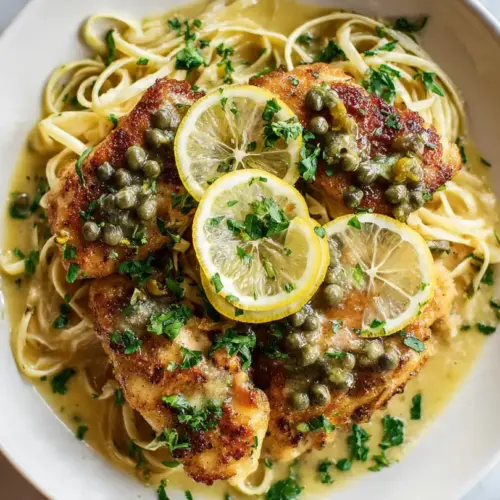
Chicken Piccata with Pasta

Equipment
- Large pot - for boiling pasta
- Large stainless steel or cast iron skillet - 12 inches / 30cm, for the chicken and sauce
- Shallow dish or plate - for dredging the chicken in flour
- Meat mallet or rolling pin - for pounding the chicken
- Tongs - for flipping the chicken
- Wooden spoon or silicone spatula - for the sauce
- Sharp knife and cutting board
- Colander - for draining pasta
- Microplane or fine grater - for zesting lemons
- Ladle or measuring cups - for portioning pasta water
Ingredients
- 2 large boneless, skinless chicken breasts - about 1.5 lbs / 680g, halved horizontally to make 4 thin cutlets
- Salt and freshly ground black pepper - to taste
- ½ cup all-purpose flour - 65g, for dredging
- 3 tablespoons olive oil - 45ml, divided
- 3 tablespoons unsalted butter - 42g, divided
- 4 cloves garlic - minced
- ½ cup dry white wine - 120ml
- ¾ cup low-sodium chicken broth - 180ml
- ¼ cup fresh lemon juice - 60ml, from about 2 lemons
- 3 tablespoons capers - drained and rinsed
- 2 tablespoons fresh flat-leaf parsley - chopped
- 12 oz linguine or spaghetti - 340g
- Pasta cooking water - about ¼ cup / 60ml, reserved, as needed
Instructions
- Bring a large pot of generously salted water to a boil for the pasta.
- Slice each chicken breast in half horizontally to create 4 thin cutlets. Pound to an even ¼-inch thickness between plastic wrap. Season with salt and pepper.
- Dredge each cutlet in flour, shaking off excess.
- Cook pasta according to package instructions until al dente. Reserve ¼ cup of starchy pasta water before draining.
- Heat 2 tablespoons olive oil and 1 tablespoon butter in a large skillet over medium-high heat. Sear chicken cutlets for 3-4 minutes per side until golden and cooked through. Transfer to a plate and cover loosely.
- Reduce heat to medium, add remaining olive oil and minced garlic. Cook for 30 seconds until fragrant.
- Pour in white wine and deglaze the pan, scraping up browned bits. Simmer for about 2 minutes until reduced by half.
- Add chicken broth and lemon juice. Simmer for 3-4 minutes until slightly reduced. Stir in capers.
- Remove pan from heat and whisk in remaining cold butter, one tablespoon at a time, until emulsified and glossy.
- Add drained pasta to the skillet and toss to coat in the sauce. Add reserved pasta water if needed to loosen.
- Plate the pasta and top with chicken cutlets. Spoon extra sauce over the top and garnish with chopped parsley and lemon slices if desired.
Notes
- Pound chicken evenly: Uneven thickness means the thick end will be undercooked when the thin end is already overdone. Spend an extra 2 minutes at the prep stage for consistently juicy results.
- Use dry white wine: Pinot Grigio, Sauvignon Blanc, or unoaked Chardonnay work beautifully. Avoid cooking wine, which contains added salt and flat flavor.
- Don’t overcrowd the pan: Crowding causes steaming instead of searing. Work in batches if necessary to ensure proper browning.
- Taste and adjust: Every lemon is different. If the sauce tastes flat, add more lemon juice. If too sharp, a pinch of sugar or extra butter balances it.
- Reserve that pasta water: The starchy water helps bind the sauce to the pasta and creates a creamier consistency. Keep it handy.
- Substitute for wine: Replace white wine with equal parts extra chicken broth plus an additional squeeze of lemon juice for a non-alcoholic version.
- Make it gluten-free: Swap all-purpose flour for a gluten-free 1:1 blend and use gluten-free pasta. The rest of the recipe stays the same.
- Creamy variation: Stir in ¼ cup (60ml) of heavy cream after adding the chicken broth for a richer, silkier sauce.
- Storage: Store in an airtight container in the refrigerator for up to 3 days. The chicken can be frozen on its own for up to 2 months, but pasta is best made fresh.
- Reheating: Warm chicken and sauce in a skillet over medium-low heat with a splash of broth. Add pasta once hot and toss to coat. Avoid overheating to prevent the butter sauce from breaking.
Final Thoughts
This chicken piccata recipe with pasta is one of those weeknight dinners that earns a permanent spot in your rotation.
It’s fast, flavorful, and made almost entirely from ingredients you probably already have. The lemon-caper sauce comes together in minutes and feels genuinely special every single time.
Give it a try on your next pasta night and see how quickly it becomes a household favorite. Drop a comment below to share how it turned out, or tag a friend who would love this recipe as much as you do!
Recommended:
- Copycat CPK Chicken Piccata Recipe
- Copycat Geoffrey Zakarian Chicken Piccata Recipe
- Copycat Giada Chicken Piccata Recipe
- Classic Chicken Parmesan Recipe
- Stuffed Shells Recipe
- Easy Pesto Recipe
- Pasta Fagioli Recipe
- Chicken Marsala Recipe
- Homemade Alfredo Sauce Recipe
- Spaghetti Sauce Recipe