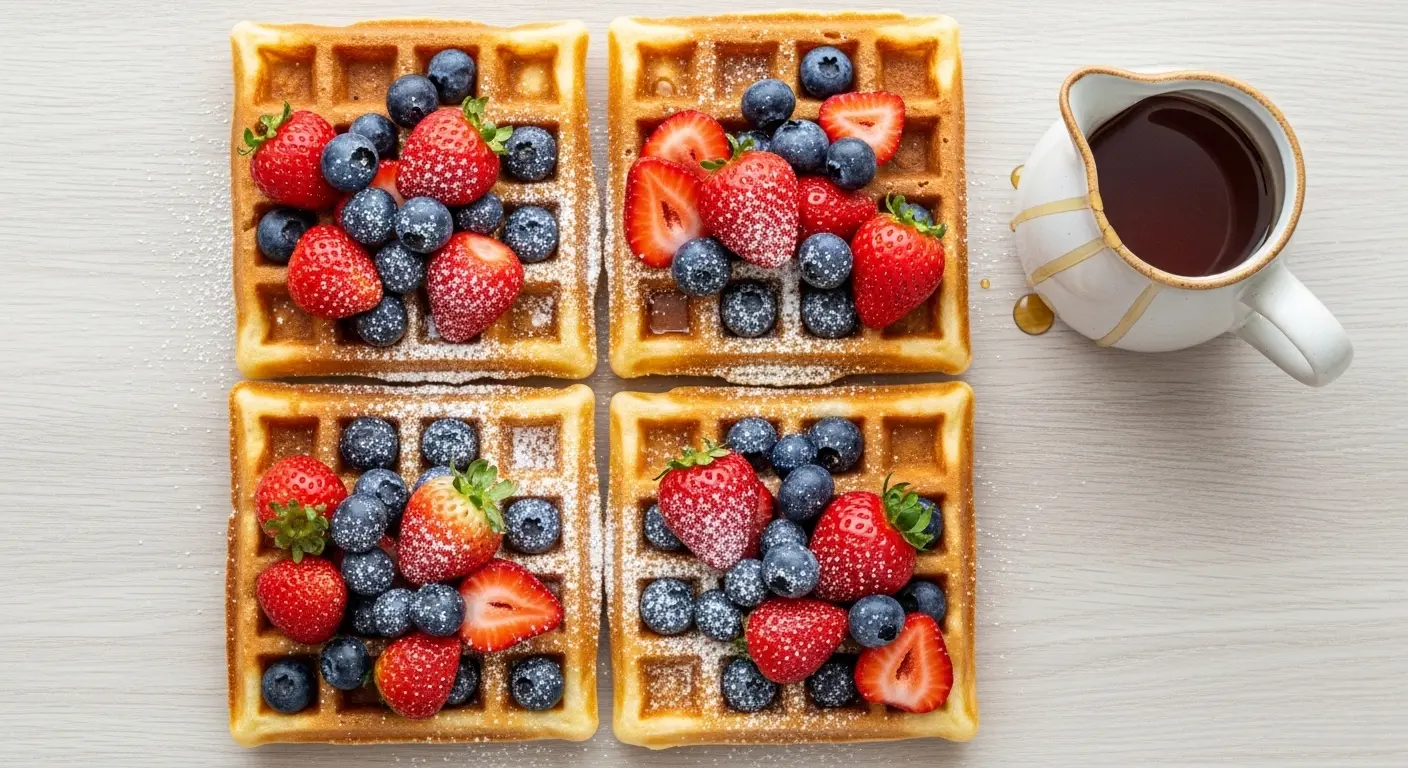
If you’ve been searching for the perfect homemade Belgian waffle recipe, you’ve landed in the right place. These waffles are everything a great Belgian waffle should be: thick, deeply pocketed, crispy on the outside, and pillowy soft on the inside.
The secret is in the batter technique. Beating egg whites separately and folding them in creates that signature airy texture you just can’t get from a basic pancake-style batter. Using a touch of vanilla, a bit of sugar, and enough fat in the form of melted butter means these waffles stay crispy for longer than most.
They’re perfect for a lazy weekend breakfast, a special brunch, or even dessert loaded with ice cream and hot fudge. Once you make them from scratch, you’ll never go back to the box mix.
If you love classic breakfast recipes, you might also enjoy this Belgian Waffle Recipe for a slightly different take on the same beloved dish.

Why You’ll Love This Homemade Belgian Waffle Recipe
This recipe is a guaranteed crowd-pleaser, and it’s easier to pull off than you might think.
The batter uses everyday pantry staples, so you’re unlikely to need a special grocery run. A few key techniques make a huge difference in the final texture and taste.
- Restaurant-quality results at home. The deep pockets hold toppings like maple syrup, whipped cream, and fresh berries perfectly.
- Crispy exterior, fluffy interior. Beating the egg whites separately is the trick that sets Belgian waffles apart from regular waffles.
- Customizable. The base batter is incredibly versatile, and you can add mix-ins or toppings to suit any taste.
- Make-ahead friendly. Leftover waffles freeze and reheat beautifully, making this recipe ideal for meal prep.
- Kid and adult approved. These waffles are universally loved and a guaranteed hit at any breakfast table.
You might also love this Easy Waffle Recipe if you want a quicker weekday version with fewer steps.
Ingredients
You’ll only need simple, wholesome ingredients for this recipe. The key is using full-fat dairy and fresh eggs for the best possible texture and flavor.
- 2 cups (240g) all-purpose flour
- 2 tablespoons (25g) granulated sugar
- 1 tablespoon baking powder
- 1/2 teaspoon salt
- 1 3/4 cups (415ml) whole milk, at room temperature
- 1/3 cup (75g) unsalted butter, melted and slightly cooled
- 2 large eggs, separated
- 2 teaspoons pure vanilla extract
- Non-stick cooking spray or additional melted butter, for greasing the waffle iron
This recipe also pairs wonderfully with a drizzle of homemade caramel sauce over the top.
Kitchen Equipment Needed
You don’t need a lot of fancy gear, but a quality Belgian waffle maker is non-negotiable for getting those signature deep pockets and thick waffles.
- Belgian waffle iron (a deeper, thicker iron than a standard waffle maker)
- Large mixing bowl (for the wet ingredients and batter)
- Medium mixing bowl (for dry ingredients)
- Hand mixer or stand mixer (for beating egg whites)
- Whisk
- Rubber spatula
- Liquid measuring cup
- Dry measuring cups and spoons
- Ladle or 1/2 cup measuring cup (for pouring batter)
- Wire cooling rack (to keep waffles crispy while you finish the batch)
Read Also: Cracker Barrel Pancake Recipe
Recommended Products for This Recipe
These are products I genuinely recommend based on quality and performance. Each one will help you get the best possible results from this recipe.
1. Cuisinart Belgian Waffle Maker
A dedicated Belgian waffle iron with deep grids is absolutely essential for getting those thick, pocketed waffles. A quality model heats evenly and signals when your waffles are perfectly done, which eliminates the guesswork. Look for one with adjustable temperature settings for full control.
2. Pure Vanilla Extract
Using real, pure vanilla extract instead of imitation makes a noticeable flavor difference in baked goods and waffle batter. The rich, warm aroma it adds to these waffles is one of the things that makes them taste so special. A good bottle goes a long way.
3. Silicone Pastry Brush
A silicone pastry brush makes it easy to grease the waffle iron evenly with butter, which prevents sticking and helps build that golden, crispy crust. It’s also heat-safe and easy to clean after use.
4. OXO Good Grips Batter Dispenser
A batter dispenser makes pouring the right amount of batter into the waffle iron much cleaner and more precise. It eliminates the drips and mess that come with ladling, and it ensures consistent waffle sizes every time.
This recipe pairs beautifully with scrambled eggs for a complete, satisfying breakfast spread.

Step-by-Step Instructions
1. Preheat Your Waffle Iron
- Turn on your Belgian waffle iron and allow it to preheat fully before adding any batter.
- Set the temperature to medium-high, or follow the manufacturer’s recommended setting for Belgian waffles.
- While it’s heating, grease the grids lightly with non-stick cooking spray or brush them with a thin coat of melted butter using a silicone pastry brush.
- A properly preheated and greased iron is essential for a crispy exterior and clean release. Skipping this step often results in waffles that stick or cook unevenly.
2. Mix the Dry Ingredients
- In a large mixing bowl, add 2 cups (240g) of all-purpose flour, 2 tablespoons (25g) of granulated sugar, 1 tablespoon of baking powder, and 1/2 teaspoon of salt.
- Whisk everything together until the dry ingredients are evenly combined.
- Set this bowl aside. Combining the dry ingredients first ensures even distribution of the baking powder and salt throughout the batter, which leads to more consistent rise and flavor.
3. Separate the Eggs
- Carefully crack both eggs and separate the yolks from the whites. Place the yolks in a medium bowl and the whites in a separate clean, grease-free bowl.
- It’s important that no yolk gets into the whites. Even a tiny amount of fat from the yolk will prevent the whites from whipping up properly.
- Set both bowls aside.
4. Mix the Wet Ingredients
- Into the bowl with the egg yolks, add 1 3/4 cups (415ml) of whole milk (at room temperature), 1/3 cup (75g) of melted and slightly cooled unsalted butter, and 2 teaspoons of pure vanilla extract.
- Whisk the wet ingredients together until they are fully combined and smooth.
- Using room temperature milk helps the melted butter incorporate more smoothly without seizing or clumping.
5. Combine Wet and Dry Ingredients
- Pour the wet ingredient mixture into the bowl with the dry ingredients.
- Using a whisk or rubber spatula, stir gently until just combined. A few small lumps in the batter are perfectly fine.
- Do not overmix. Overmixing develops the gluten in the flour, which leads to tough, dense waffles instead of light and fluffy ones.
- The batter should look slightly thick and a little lumpy at this stage. Set it aside.
6. Beat the Egg Whites
- Using a hand mixer or stand mixer fitted with the whisk attachment, beat the egg whites on medium speed until foamy, about 1 minute.
- Increase the speed to medium-high and continue beating until stiff peaks form. Stiff peaks mean that when you lift the beater out of the whites, the peak holds its shape and does not curl over.
- This step typically takes 2 to 3 minutes. The beaten egg whites are what give Belgian waffles their signature light, airy interior.
7. Fold the Egg Whites Into the Batter
- Using a rubber spatula, gently fold the beaten egg whites into the waffle batter in two additions.
- Add about half the egg whites first and fold them in with a gentle, scooping motion, going under the batter and over the top. Do not stir.
- Once the first half is mostly incorporated (a few streaks are fine), add the second half and fold again until just combined.
- Some white streaks are okay. The goal is to preserve as much air as possible, which means working gently and stopping before the batter is completely uniform.
8. Cook the Waffles
- Open the preheated, greased waffle iron. Pour the batter into the center of the lower grid, using a ladle or 1/2 cup measuring cup.
- The amount of batter will vary depending on the size of your waffle iron. Most Belgian waffle irons take about 3/4 cup (180ml) of batter per waffle. Check your manufacturer’s instructions for the ideal amount.
- Close the lid and cook the waffle for 4 to 5 minutes, or until the steam from the iron slows significantly and the waffle is golden brown.
- Resist the urge to open the iron too early. Opening it while the waffle is still cooking can cause it to split apart.
9. Keep Waffles Warm and Crispy
- As each waffle finishes, transfer it directly to a wire cooling rack set on a baking sheet.
- Place the baking sheet in an oven preheated to 200°F (95°C) to keep the finished waffles warm and crispy while you work through the rest of the batter.
- Avoid stacking waffles on top of each other, as the steam from a hot waffle sitting underneath will make the top one soggy.
10. Serve and Enjoy
- Remove the waffles from the oven and serve immediately with your favorite toppings.
- Classic toppings include fresh berries, maple syrup, whipped cream, butter, or a dusting of powdered sugar.
- For a more indulgent version, try topping with a scoop of vanilla ice cream and a drizzle of caramel or hot fudge sauce.
Read Also: Easy French Toast Recipe
Tips for Success
A few simple tips will take your waffles from good to absolutely perfect every time.
- Don’t skip the egg white step. It’s the single biggest difference between a standard waffle and a true Belgian-style waffle. It creates that light, airy crumb that makes these so special.
- Let the batter rest. If you have time, let the batter rest for 5 minutes before cooking. This allows the baking powder to start activating and the flour to fully hydrate.
- Grease the iron every time. Even non-stick waffle irons benefit from a light coating of butter or spray before every single waffle. This ensures a crispy crust and an easy release.
- Use room temperature milk and eggs. Cold dairy can cause the melted butter to solidify and clump in the batter. Letting your milk and eggs come to room temperature first makes for a smoother, more consistent batter.
- Don’t open the iron too early. Wait until the steam has mostly stopped before checking your waffle. Opening too early causes tearing.
- Use a wire rack, not a plate. Placing finished waffles on a flat plate traps steam underneath, making them go soft quickly. A wire rack keeps air circulating and the bottom crispy.
Another great morning option is this Pumpkin Pancake Recipe for cozy fall mornings.
Serving Suggestions
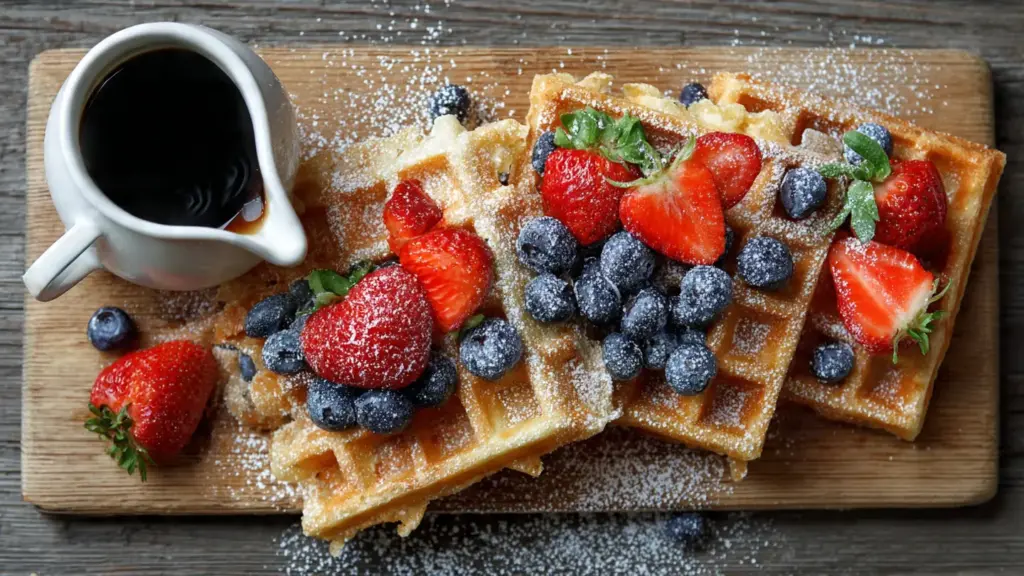
Belgian waffles are endlessly versatile. They work beautifully as a sweet breakfast or even as the base for creative savory dishes.
The deep pockets make them ideal for holding syrups, sauces, and toppings without everything sliding off. Here are some of the best ways to serve them:
- Classic maple syrup and butter. You really can’t go wrong with the timeless combination of real maple syrup and a generous pat of softened butter melting into the pockets.
- Fresh berries and whipped cream. Strawberries, blueberries, and raspberries add freshness and color. A dollop of freshly whipped cream makes it feel like a special occasion.
- Banana slices and honey butter. This combination is warm, rich, and absolutely delicious.
- Chicken and waffles. Pair your Belgian waffles with crispy fried chicken for the ultimate sweet and savory contrast.
- Ice cream sundae style. Top with vanilla ice cream, warm chocolate sauce, and crushed nuts for a dessert waffle that is absolutely irresistible.
- Savory style. Skip the sweet toppings and serve alongside a fried egg and a drizzle of hot sauce for a completely different but equally satisfying meal.
Read Also: Fruit Salad Recipe
Variations to Try
Once you’ve mastered the classic version, there are so many delicious directions you can take this batter.
The base recipe is a perfect canvas for added flavors, mix-ins, and dietary tweaks. Here are some ideas to inspire you:
- Blueberry Belgian Waffles. Gently fold 1 cup (150g) of fresh or frozen blueberries into the batter after adding the egg whites. The berries burst during cooking and add sweet, juicy pockets throughout.
- Chocolate Chip Belgian Waffles. Stir 1/2 cup (85g) of mini chocolate chips into the batter just before cooking. They melt slightly during cooking and make these waffles taste like dessert.
- Lemon Ricotta Belgian Waffles. Replace 1/2 cup of the milk with 1/2 cup of whole milk ricotta and add the zest of one lemon. This creates an incredibly tender, slightly tangy waffle.
- Buttermilk Belgian Waffles. Swap the whole milk for buttermilk and reduce the baking powder to 2 teaspoons. The buttermilk adds a pleasant tang and extra tenderness. If you love the tangy flavor, check out this Buttermilk Pancake Recipe for a similar vibe in pancake form.
- Cinnamon Spice Waffles. Add 1 teaspoon of ground cinnamon, 1/4 teaspoon of nutmeg, and 1/4 teaspoon of allspice to the dry ingredients for a warmly spiced batter perfect for fall mornings.
- Gluten-Free Belgian Waffles. Substitute the all-purpose flour with a 1:1 gluten-free flour blend. The texture may be slightly denser, but the results are still delicious.
Another favorite morning recipe: French Toast Casserole
Storage and Reheating
Belgian waffles store and reheat really well, which makes this a great recipe to make in a large batch.
Proper storage keeps them from getting soggy or stale so they taste almost as good the second time around.
- Refrigerator. Allow waffles to cool completely on a wire rack before storing. Place them in an airtight container or zip-top bag separated by layers of parchment paper. Store in the refrigerator for up to 3 days.
- Freezer. For longer storage, arrange cooled waffles in a single layer on a baking sheet and freeze for 1 to 2 hours until solid. Then transfer to a freezer-safe bag or container. They keep well in the freezer for up to 3 months.
- Reheating in the toaster. Pop a frozen or refrigerated waffle directly into the toaster on a medium setting. This is the best method for restoring crispiness.
- Reheating in the oven. Preheat your oven to 350°F (175°C) and place waffles on a wire rack over a baking sheet. Heat for 8 to 10 minutes for refrigerated waffles or 12 to 15 minutes for frozen ones.
- Avoid the microwave. Microwaving waffles makes them soft and rubbery. It works in a pinch, but the toaster or oven will always give a much better result.
This recipe also works beautifully as part of a big brunch spread alongside a Breakfast Casserole.
Nutritional Facts
The following nutritional information is per waffle (based on a yield of 4 large Belgian waffles from this recipe).
| Nutrient | Per Waffle |
|---|---|
| Calories | ~380 kcal |
| Total Fat | 15g |
| Saturated Fat | 9g |
| Cholesterol | 125mg |
| Sodium | 420mg |
| Total Carbohydrates | 51g |
| Dietary Fiber | 1g |
| Sugars | 8g |
| Protein | 10g |
Note: These are estimates and will vary based on specific brands of ingredients used and the size of your waffle iron. Toppings are not included in these calculations.
You might also enjoy this Easy Protein Pancakes Recipe if you’re looking for a higher-protein breakfast option.
Health Benefits of Key Ingredients
While Belgian waffles are definitely a treat, some of the key ingredients do bring real nutritional value to the table.
Eating a balanced version of this recipe alongside nutritious toppings can make it part of a wholesome morning meal.
- Eggs. Eggs are one of the most nutrient-dense foods available. They provide high-quality protein, essential amino acids, and important vitamins including B12, D, and choline, which supports brain health.
- Whole milk. Whole milk is a source of calcium, phosphorus, and vitamin D, all of which are important for bone health. It also provides fat-soluble vitamins A and K2 that help your body absorb other nutrients.
- Butter. While butter should be enjoyed in moderation, it contains fat-soluble vitamins A and E, as well as butyrate, a short-chain fatty acid that has been studied for its potential benefits for gut health.
- All-purpose flour. Flour provides carbohydrates, which are the body’s primary energy source. For a more nutritious option, you can replace up to half the all-purpose flour with whole wheat flour for added fiber.
- Vanilla extract. Pure vanilla extract contains trace amounts of antioxidants and has been used in traditional medicine for its calming properties. Beyond nutrition, it plays a major role in the warm, inviting flavor of these waffles.
For a different kind of morning comfort, you might also love this Baked Oatmeal Recipe packed with wholesome ingredients.
Frequently Asked Questions
1. What makes Belgian waffles different from regular waffles?
Belgian waffles are thicker and have much deeper pockets than standard American waffles. This is primarily because Belgian waffle irons have a deeper grid pattern. The batter is also different; most authentic Belgian waffle recipes use beaten egg whites, which creates a lighter, airier texture. Standard waffle recipes typically use whole eggs beaten together without separating.
2. Can I make the batter ahead of time?
You can prepare the dry and wet ingredient mixtures separately the night before and refrigerate them, but it’s best to beat and fold the egg whites fresh right before cooking. If you add the egg whites too early, they lose their airy structure and the batter deflates over time. Assembling the batter fresh, even if you prepped some components ahead, gives you the best results.
3. Why are my waffles not crispy?
The most common reason for soft or soggy waffles is excess moisture. This can happen if the iron wasn’t fully preheated, if the waffles were stacked while hot, or if the milk was too cold when added to the batter. Make sure your iron is fully preheated before adding batter, and always transfer finished waffles to a wire rack rather than a plate.
4. Can I use oil instead of butter in the batter?
Yes, you can substitute neutral-flavored oil such as vegetable or canola oil in the same quantity as the melted butter. Butter does give a richer flavor and helps with browning, so the taste will be slightly different. However, oil works well and actually results in a slightly crisper waffle because it doesn’t contain the water content that butter does.
5. How do I know when the waffle is done without opening the iron?
The most reliable indicator is the steam. When you first close the iron, a lot of steam will escape. As the waffle nears completion, the steam slows significantly. When the steam has mostly stopped, the waffle is typically done. Most Belgian waffle irons also have an indicator light or sound to let you know when the waffle is ready.
Another reader favorite: Classic French Toast
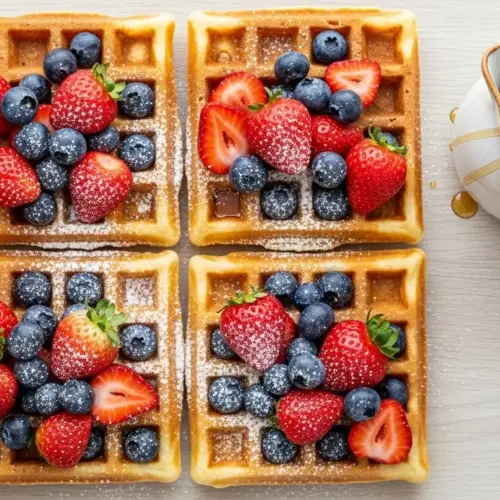
Homemade Belgian Waffles

Equipment
- Belgian waffle iron - deep-grid, thick iron for signature pockets
- Large mixing bowl
- Medium mixing bowl
- Hand mixer or stand mixer - for beating egg whites
- Whisk
- Rubber spatula
- Liquid measuring cup
- Dry measuring cups and spoons
- Ladle or 1/2 cup measuring cup - for pouring batter
- Wire cooling rack - to keep waffles crispy
- Baking sheet
- Silicone Pastry Brush - for greasing iron (optional)
- OXO Good Grips Batter Dispenser - for mess-free pouring (optional)
Ingredients
- 2 cups all-purpose flour - 240g
- 2 tablespoons granulated sugar - 25g
- 1 tablespoon baking powder
- 1/2 teaspoon salt
- 1 3/4 cups whole milk - 415ml, room temperature
- 1/3 cup unsalted butter - 75g, melted and slightly cooled
- 2 large eggs - separated
- 2 teaspoons pure vanilla extract
- non-stick cooking spray - or additional melted butter, for greasing waffle iron
Suggested Toppings
- maple syrup - real, for serving
- fresh berries - strawberries, blueberries, raspberries
- whipped cream - freshly made
- butter - softened
- powdered sugar - for dusting
- vanilla ice cream - for dessert waffles
- hot fudge sauce - for dessert waffles
Instructions
- Preheat your waffle iron to medium-high and grease grids with non-stick spray or melted butter.
- In a large bowl, whisk together flour, sugar, baking powder, and salt until evenly combined.
- Separate eggs, placing yolks in a medium bowl and whites in a clean grease-free bowl. Set both aside.
- To the yolks, add milk, melted butter, and vanilla. Whisk until smooth and fully combined.
- Pour wet mixture into dry ingredients and stir with a spatula until just combined. A few small lumps are fine. Do not overmix.
- Beat egg whites with a hand or stand mixer on medium until foamy, then increase to high and beat to stiff peaks, about 2-3 minutes.
- Gently fold half the beaten whites into the batter with a rubber spatula using a scooping motion. Fold in the second half until just combined; some streaks are fine.
- Pour about 3/4 cup batter into the center of the preheated waffle iron, close the lid, and cook for 4-5 minutes until steam slows and waffle is golden brown.
- Transfer finished waffles to a wire rack placed on a baking sheet and keep warm in a 200°F oven while cooking remaining batches.
- Serve immediately with your favorite toppings like maple syrup, berries, whipped cream, or butter.
Notes
- Egg whites are essential: Beating and folding them in is the single biggest difference between a standard waffle and a true Belgian-style waffle. It creates that light, airy crumb.
- Rest the batter: If you have time, let the batter rest for 5 minutes before cooking. This allows the baking powder to activate and the flour to hydrate.
- Grease every time: Even non-stick waffle irons benefit from a light coating of butter or spray before every waffle. This ensures a crispy crust and easy release.
- Room temperature dairy: Use room temperature milk and eggs. Cold dairy can cause the melted butter to solidify and clump in the batter.
- Don’t open too early: Wait until the steam has mostly stopped before checking your waffle. Opening too early causes tearing.
- Use a wire rack: Placing finished waffles on a flat plate traps steam and makes them go soft quickly. A wire rack keeps air circulating and the bottom crispy.
- Make-ahead: Cool completely, then store in an airtight container in the fridge for up to 3 days or freeze for up to 3 months.
- Reheating: The toaster is the best method to restore crispiness. The oven works too (350°F for 8-10 minutes). Avoid the microwave as it makes them rubbery.
- Variation – Blueberry: Gently fold 1 cup of fresh or frozen blueberries into the batter after adding egg whites.
- Variation – Chocolate Chip: Stir 1/2 cup of mini chocolate chips into the batter just before cooking.
Final Thoughts
This homemade Belgian waffle recipe is one of those recipes that genuinely earns a permanent spot in your breakfast rotation. It’s not complicated, but the technique makes all the difference.
Once you experience that combination of crispy edges, fluffy interior, and deep pockets ready to be loaded with your favorite toppings, Saturday mornings will never look the same.
Give this recipe a try this weekend and let us know how it goes in the comments below. We’d love to hear what toppings you chose and how your family reacted to their first bite!
Recommended:
- Easy Waffle Recipe
- Buttermilk Pancake Recipe
- Pumpkin Pancake Recipe
- Breakfast Potatoes
- Sausage Gravy
- Strawberry Sauce
- Easy Crepe Recipe
- Avocado Toast
- Breakfast Burrito
- Homemade Iced Coffee