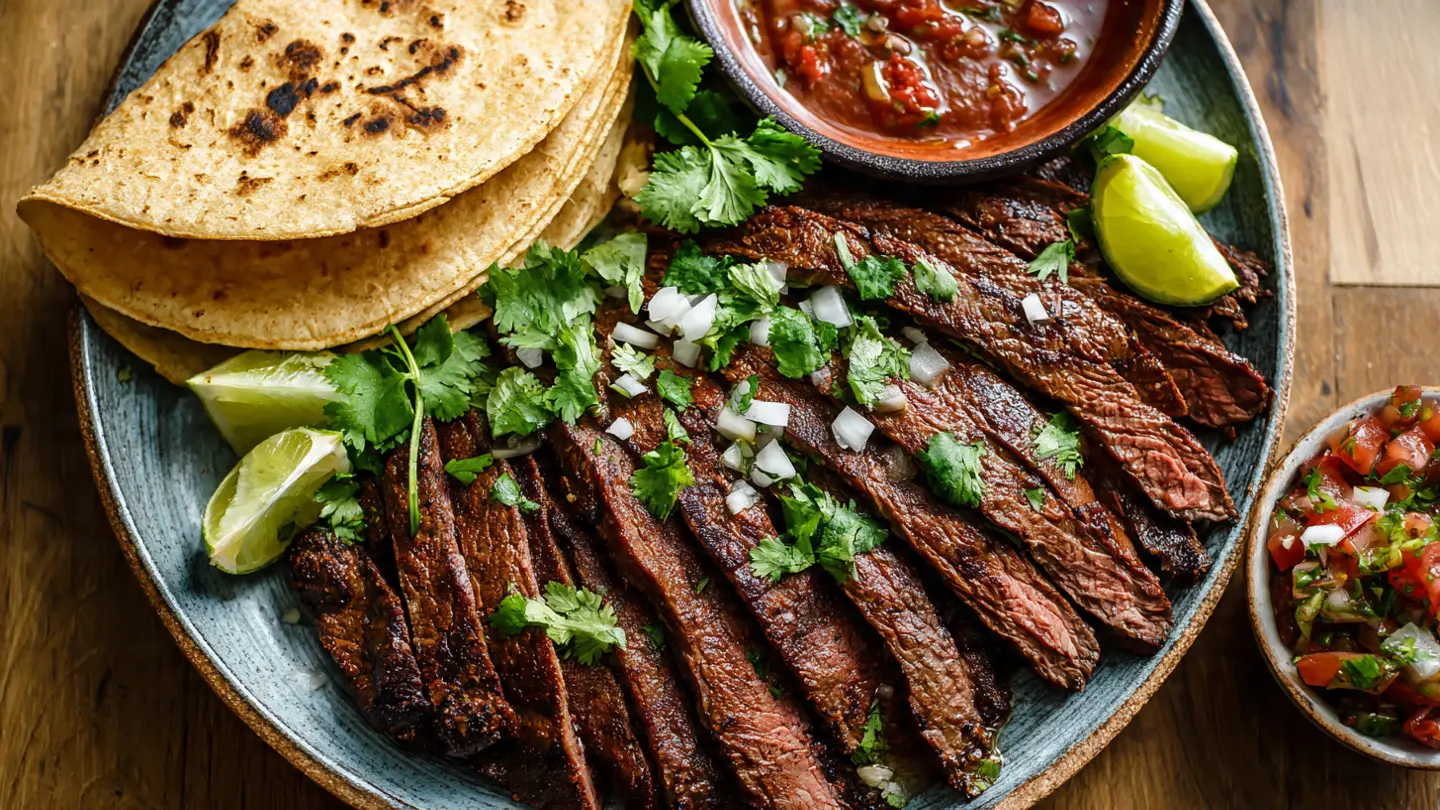
If you’ve been searching for an easy carne asada recipe that actually delivers on bold, smoky, citrusy flavor without requiring hours of prep, you’re in the right place.
Carne asada is one of those dishes that sounds fancy but is genuinely straightforward once you understand the basics: marinate the beef, grill it hot and fast, and slice it thin against the grain.
The result is tender, charred steak packed with flavor from fresh lime juice, garlic, cilantro, and warming spices.
This recipe is as close to the real thing as you can get at home, and it works beautifully for tacos, burritos, bowls, or just sliced on a plate with rice and beans.
Looking for other carne asada variations? Check out our Authentic Carne Asada Recipe for the most traditional version with deeper marinade notes.

Why You’ll Love This Easy Carne Asada Recipe
This recipe is one of those crowd-pleasers that never gets old.
The marinade does most of the work for you, infusing the steak with layers of citrus, spice, and savory depth in just 2 to 4 hours.
You don’t need any special equipment beyond a grill or cast iron skillet, and the ingredient list is simple enough that you probably have most of it on hand already.
It’s fast, flavorful, and endlessly versatile.
- Bold, authentic flavor from a citrus-and-spice marinade that tenderizes the meat while adding serious depth
- Quick to cook since thin cuts like flank or skirt steak grill in just 4 to 6 minutes per side
- Minimal cleanup with only one bowl for the marinade and a grill or skillet for cooking
- Incredibly versatile as it works in tacos, burritos, rice bowls, nachos, salads, and more
- Meal prep friendly because leftover carne asada reheats beautifully and keeps well in the fridge for up to 4 days
- Budget-friendly since flank and skirt steak are more affordable cuts that taste just as delicious when properly marinated
You might also enjoy: Carne Asada Tacos Recipe
Ingredients
The magic of carne asada is in the marinade. Fresh citrus juice is non-negotiable here because it tenderizes the meat and brightens the overall flavor in a way that bottled juice simply cannot replicate. Flank steak and skirt steak are the most traditional and widely used cuts because they’re thin enough to cook quickly and absorb the marinade deeply.
- 2 lbs (900g) flank steak or skirt steak
- 1/3 cup (80ml) fresh orange juice (about 1 large orange)
- 1/4 cup (60ml) fresh lime juice (about 2 large limes)
- 3 tablespoons (45ml) olive oil
- 4 cloves garlic, minced
- 1/4 cup (15g) fresh cilantro, finely chopped
- 1 teaspoon (5g) ground cumin
- 1 teaspoon (5g) chili powder
- 1/2 teaspoon (2g) smoked paprika
- 1/2 teaspoon (2g) dried oregano
- 1/2 teaspoon (2g) salt
- 1/4 teaspoon (1g) black pepper
- 1/4 teaspoon (1g) cayenne pepper (optional, for heat)
- 1 jalapeño, seeded and minced (optional)
- 2 tablespoons (30ml) soy sauce (adds umami depth)
- 1 tablespoon (15ml) white wine vinegar or apple cider vinegar
Read Also: Carne Asada Marinade Recipe
Kitchen Equipment Needed
Having the right tools makes the whole process smoother, especially when it comes to achieving that authentic sear on the steak. A very hot cooking surface is critical for proper carne asada because the char on the outside is a defining part of the dish’s flavor.
- Cast iron skillet or outdoor grill (gas or charcoal)
- Large zip-lock bag or shallow dish for marinating
- Mixing bowl and whisk
- Meat thermometer for checking doneness
- Sharp chef’s knife for slicing against the grain
- Cutting board
- Tongs for handling the steak on the grill
- Aluminum foil for resting the meat
Read Also: Classic Carne Asada Recipe
Recommended Products for This Recipe
These are products I genuinely recommend based on how much they improve your results when making carne asada at home.
1. Lodge Pre-Seasoned Cast Iron Skillet
If you’re not using an outdoor grill, a cast iron skillet is the best alternative for achieving that signature char on your carne asada. The skillet holds heat exceptionally well and distributes it evenly across the steak surface, giving you a beautiful sear. It also goes from stovetop to oven seamlessly if needed.
2. ThermoPro Instant Read Meat Thermometer
Knowing the internal temperature of your steak is the difference between perfectly juicy carne asada and overcooked meat. This thermometer gives you an accurate read in seconds so you never have to guess. It’s a small investment that protects every steak you cook.
3. Goya Sazon Seasoning
This popular Latin spice blend adds authentic color and flavor to the marinade and complements the citrus and cumin perfectly. Many traditional carne asada recipes include it as a flavor booster. Just a packet or two elevates the entire dish.
4. Miyabi Birchwood Chef’s Knife
Slicing carne asada thinly and cleanly against the grain is essential for tender results, and a sharp, quality knife makes all the difference. This knife holds its edge beautifully and glides through steak with minimal effort. It’s a worthy upgrade for anyone who cooks meat regularly.
This pairs wonderfully with our Mexican Carne Asada Recipe if you want to explore a regional variation with different spice combinations.

Step-by-Step Instructions
Step 1: Make the Marinade
- In a medium mixing bowl, combine the fresh orange juice, fresh lime juice, olive oil, soy sauce, and white wine vinegar.
- Whisk everything together until the oil is fully incorporated into the citrus mixture.
- Add the minced garlic, finely chopped cilantro, ground cumin, chili powder, smoked paprika, dried oregano, salt, black pepper, and cayenne pepper (if using).
- If you’re using jalapeño, add the minced jalapeño to the bowl at this stage.
- Whisk again until all the spices are evenly distributed throughout the marinade.
- Taste the marinade carefully. It should be tangy, savory, slightly smoky, and well-seasoned. Adjust salt or lime juice if needed.
Step 2: Prepare and Marinate the Steak
- Pat the flank steak or skirt steak completely dry with paper towels. Removing surface moisture helps the marinade penetrate more effectively and will also improve your sear later.
- If your steak is very thick (more than 3/4 inch / 2 cm), use a fork or a meat mallet to gently pierce or score the surface. This helps the marinade penetrate deeper into the meat fibers.
- Place the steak into a large zip-lock bag or a shallow glass or ceramic dish.
- Pour the entire marinade over the steak, making sure every surface of the meat is coated.
- If using a zip-lock bag, press out as much air as possible before sealing it. If using a dish, cover it tightly with plastic wrap.
- Refrigerate for a minimum of 2 hours and up to 8 hours. For the best flavor, aim for 4 hours. Avoid marinating longer than 8 hours as the acidic citrus can start to break down the meat texture too aggressively.
- Remove the steak from the refrigerator 30 minutes before cooking so it can come closer to room temperature. This promotes more even cooking.
Step 3: Preheat Your Grill or Skillet
- If using an outdoor grill, preheat it to high heat, around 450°F to 500°F (230°C to 260°C). You want the grates as hot as possible for that authentic char.
- If using a cast iron skillet, place it over high heat on the stovetop for 3 to 5 minutes until it is extremely hot. You can add a thin drizzle of olive oil (about 1 teaspoon) right before the steak goes in, but make sure it just begins to smoke before adding the meat.
- Clean and oil the grill grates if using an outdoor grill by folding a paper towel, dipping it in oil, and using tongs to rub it across the grates.
Step 4: Cook the Carne Asada
- Remove the steak from the marinade and use your hands or tongs to shake off any excess. Leaving a thin coating is fine, but large drips of marinade will burn on the grill and create bitterness.
- Place the steak directly onto the hot grill grates or into the hot cast iron skillet.
- Cook flank steak for 4 to 5 minutes per side for medium-rare (internal temperature of 130°F to 135°F / 54°C to 57°C). Skirt steak, being thinner, typically needs only 3 to 4 minutes per side.
- Resist the urge to move the steak around once it’s placed down. Let it sit undisturbed to develop a proper crust. You’ll know it’s ready to flip when it releases from the surface on its own with minimal sticking.
- Flip the steak only once during cooking.
- Use your meat thermometer to check the internal temperature. For medium-rare, pull the steak at 130°F (54°C). For medium, aim for 140°F to 145°F (60°C to 63°C). Traditional carne asada is often cooked slightly more than a steakhouse medium-rare, so 140°F is a common target.
- If using a cast iron skillet indoors, you may want to turn on your ventilation fan as the high heat will produce smoke.
Step 5: Rest the Steak
- Transfer the cooked steak to a clean cutting board and tent it loosely with aluminum foil.
- Allow the steak to rest for at least 5 to 10 minutes before slicing. This resting period is critical because it allows the juices to redistribute throughout the meat. Cutting too soon causes the juices to run out and leaves you with dry steak.
Step 6: Slice and Serve
- Identify the direction of the grain (the parallel lines or fibers running through the steak). For flank and skirt steak, this is usually very obvious.
- Using your sharp chef’s knife, slice the steak thinly at a 45-degree angle, cutting perpendicular (across) to the grain. This shortens the muscle fibers and is the single most important step for keeping carne asada tender.
- Aim for slices about 1/4 inch (6mm) thick.
- Arrange the sliced steak on a platter and garnish with fresh cilantro, sliced lime wedges, and diced white onion if desired.
- Serve immediately while hot.
You might also enjoy our Chipotle Carne Asada Recipe for a smoky, restaurant-style twist.
Tips for Success
Getting carne asada right comes down to a few key details that separate good from great. These tips come from common mistakes and the specific characteristics of thin, marinated beef.
- Don’t skip the resting time after cooking. Even 5 minutes makes a measurable difference in juiciness.
- Always slice against the grain. Flank and skirt steak have very prominent muscle fibers. Slicing with the grain produces chewy, tough bites. Slicing against the grain produces tender, easy-to-eat pieces.
- Use fresh citrus juice only. Bottled lime and orange juice lack the brightness and enzyme activity that makes fresh juice work so well in tenderizing and flavoring the meat.
- Get your cooking surface as hot as possible. A ripping hot grill or pan is what creates the characteristic char and caramelization on carne asada. Medium heat will produce gray, steamed-looking steak instead.
- Don’t over-marinate. Anything beyond 8 hours in a citrus-heavy marinade can make the exterior of the meat mealy and mushy due to the acid breaking down the proteins too aggressively.
- Choose the right cut. Flank steak and skirt steak are both ideal. Avoid very thick cuts like ribeye or sirloin for this preparation since they don’t absorb the marinade as effectively and take much longer to cook.
Read Also: Best Carne Asada Recipe
Serving Suggestions
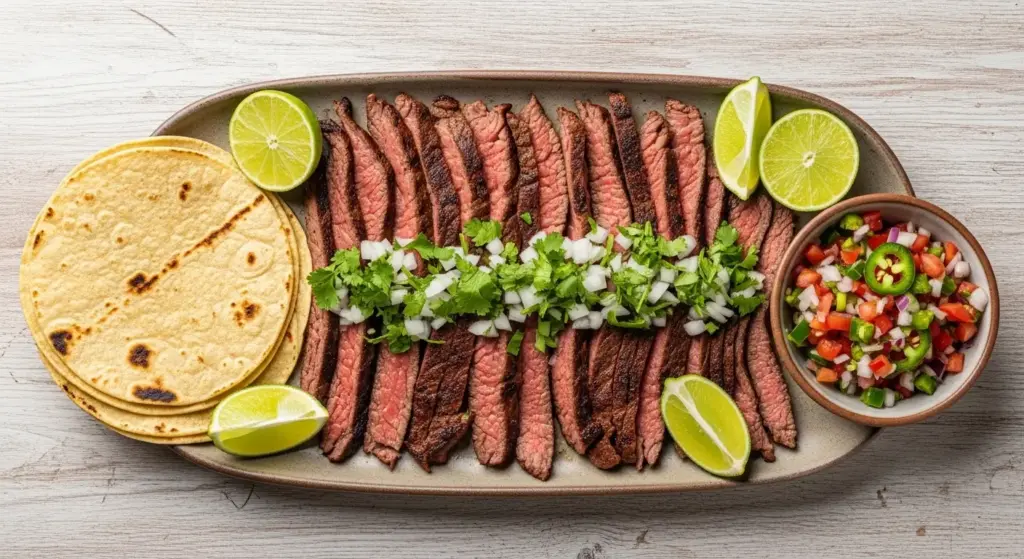
Carne asada is endlessly versatile and pairs well with just about everything in the Mexican and Tex-Mex flavor family.
A freshly made Pico de Gallo is one of the simplest and best accompaniments, adding brightness and a little texture contrast to the rich, smoky beef.
- Street tacos with warm corn tortillas, diced white onion, fresh cilantro, a squeeze of lime, and your choice of salsa
- Carne asada burritos stuffed with rice, black beans, sour cream, and guacamole
- Rice bowls over cilantro lime rice with pico de gallo, shredded cheese, and avocado slices
- Loaded Nachos topped with carne asada, melted cheese, jalapeños, and crema
- Quesadillas filled with carne asada and Oaxacan cheese on a hot griddle
- Salad bowls over chopped romaine with corn, black beans, cotija cheese, and a cilantro lime dressing
- Carne asada fries loaded over crispy fries with guacamole, sour cream, and pico de gallo
Variations to Try
Once you’ve mastered the base recipe, there are plenty of fun ways to put your own spin on carne asada. The core technique stays the same; what changes is the marinade profile or the cut of meat.
- Slow Cooker Carne Asada: Lower and slower cooking method for when you don’t have grill access or want fall-apart-tender results. Check out our Slow Cooker Carne Asada Recipe.
- Pork Carne Asada: Swap the beef for thin-cut pork shoulder or pork loin steaks using the same marinade. It’s a lighter variation with a slightly sweeter flavor. See the Pork Carne Asada Recipe.
- Spicier version: Double the cayenne pepper and add a full teaspoon of chipotle chili powder to the marinade for a seriously fiery kick.
- Beer marinade version: Replace 1/4 cup of the citrus juice with a light Mexican lager like Corona or Modelo for a subtly malty, complex flavor.
- King Taco Style: Inspired by the legendary Los Angeles taco chain, with an extra heavy garlic and cumin profile. See the King Taco Carne Asada Recipe.
- Achiote-spiced carne asada: Add 1 teaspoon of ground achiote (annatto) powder to the marinade for a deep reddish-orange color and an earthy, slightly peppery flavor that’s common in Yucatan-style preparations.
Read Also: Trader Joes Carne Asada Recipe
Storage and Reheating
Carne asada keeps beautifully as leftovers and actually gets even better as the flavors continue to develop in the fridge overnight. Proper storage preserves the moisture and texture so it doesn’t dry out.
- Store leftover sliced carne asada in an airtight container in the refrigerator for up to 4 days.
- For longer storage, freeze in a sealed freezer-safe bag or container for up to 3 months. Lay it flat before freezing for the most efficient storage and quickest thawing.
- To reheat from refrigerated, warm a skillet over medium heat with a splash of water or beef broth, add the sliced steak, and cover with a lid for 2 to 3 minutes. The steam helps re-moisten the meat.
- Avoid reheating in the microwave if possible, as it tends to dry out thin slices of steak very quickly. If you must use the microwave, cover the steak with a damp paper towel and heat in 20-second intervals at 50% power.
- Leftover carne asada also works extremely well in scrambled eggs, breakfast burritos, pasta, or chopped into a grain bowl straight from the fridge without reheating.
This pairs especially well with our Taco Seasoning Recipe if you want to make your own spice blend from scratch.
Nutritional Facts
The following nutritional information is an estimate based on one serving of approximately 4 oz (113g) of cooked carne asada, without tortillas or additional toppings.
| Nutrient | Per Serving (approx.) |
|---|---|
| Calories | 220 kcal |
| Protein | 28g |
| Total Fat | 11g |
| Saturated Fat | 3g |
| Carbohydrates | 3g |
| Sugar | 1g |
| Sodium | 380mg |
| Cholesterol | 75mg |
| Iron | 2.5mg |
Note: Values will vary depending on the specific cut of beef, exact marinade quantities absorbed, and cooking method used. Calorie counts do not include tortillas, rice, or accompaniments.
Another great high-protein main dish to try is our Chicken Fajita Recipe.
Health Benefits of Key Ingredients
Carne asada isn’t just delicious. Several of its core ingredients bring genuine nutritional benefits to the plate.
Beef is one of the richest dietary sources of complete protein, heme iron, zinc, and vitamin B12, all of which support energy production, immune function, and red blood cell formation.
- Lime juice and orange juice are excellent sources of vitamin C, which aids in iron absorption from the beef and supports a healthy immune system. The citric acid in fresh juice also acts as a natural tenderizer without adding excess sodium.
- Garlic contains allicin, a compound with well-documented antimicrobial and anti-inflammatory properties. It also contributes to cardiovascular health when consumed regularly.
- Fresh cilantro provides vitamin K, which plays a role in blood clotting and bone health, along with small amounts of antioxidants that help combat oxidative stress in the body.
- Cumin is rich in iron and has been studied for its digestive benefits. It also contains compounds that may support healthy blood sugar levels.
- Olive oil is a heart-healthy monounsaturated fat source that helps the body absorb fat-soluble vitamins from the other ingredients in the marinade.
- Jalapeño (optional) contains capsaicin, which has been linked to improved metabolism and natural anti-inflammatory effects.
For another protein-forward dish with plenty of fresh flavors, try our Mexican Beef and Rice Skillet Recipe.
Frequently Asked Questions
1. What cut of beef is best for carne asada?
Flank steak and skirt steak are the most traditional and most recommended cuts for carne asada. Both are relatively thin, absorb the marinade exceptionally well, and cook quickly over high heat. Skirt steak has a slightly bolder beef flavor and a more pronounced grain, while flank steak is a bit leaner and milder. Either works beautifully in this recipe.
2. How long should I marinate carne asada?
A minimum of 2 hours is needed for the marinade flavors to penetrate the meat. The sweet spot is 4 to 6 hours, which delivers maximum flavor without over-tenderizing. Avoid going beyond 8 hours because the citric acid in the orange and lime juice can begin to break down the outer texture of the meat and make it mushy.
3. Can I make carne asada without a grill?
Absolutely. A cast iron skillet or a heavy stainless steel skillet heated over very high heat on your stovetop produces excellent results. The key is getting the pan ripping hot before the steak goes in. You can also use a broiler set to high and position the steak 4 to 5 inches from the heat source, cooking for about 4 to 5 minutes per side.
4. How do I know when carne asada is done?
Use a meat thermometer for the most reliable result. For medium-rare, remove the steak at 130°F (54°C). For medium, aim for 140°F to 145°F (60°C to 63°C). Traditional carne asada is typically served at medium, with a slight bit of pink in the center. The exterior should have visible char marks and a dark, slightly crispy crust.
5. What do I do if my carne asada comes out tough?
The most common culprit is slicing with the grain instead of against it. Always cut perpendicular to the direction of the muscle fibers. Another common issue is overcooking. Flank and skirt steak become significantly tougher the more they cook past medium. If the marinade time was too short, the meat may also have lacked proper tenderization from the citrus acids.
Read Also: Birria Tacos Recipe

Easy Carne Asada

Equipment
- Outdoor grill or cast iron skillet - Heat to 450-500°F (230-260°C)
- Large zip-lock bag or shallow dish - For marinating
- Mixing bowl
- Whisk
- Meat thermometer - Instant-read recommended
- Sharp chef's knife - For slicing against the grain
- Cutting board
- Tongs - For handling the steak on the grill
- Aluminum foil - For resting the meat
Ingredients
- 2 lbs flank steak or skirt steak - 900g
- 1/3 cup fresh orange juice - 80ml, from about 1 large orange
- 1/4 cup fresh lime juice - 60ml, from about 2 large limes
- 3 tablespoons olive oil - 45ml
- 4 cloves garlic - minced
- 1/4 cup fresh cilantro - 15g, finely chopped
- 1 teaspoon ground cumin - 5g
- 1 teaspoon chili powder - 5g
- 1/2 teaspoon smoked paprika - 2g
- 1/2 teaspoon dried oregano - 2g
- 1/2 teaspoon salt - 2g
- 1/4 teaspoon black pepper - 1g
- 1/4 teaspoon cayenne pepper - 1g, optional for heat
- 1 jalapeño - seeded and minced, optional
- 2 tablespoons soy sauce - 30ml, adds umami depth
- 1 tablespoon white wine vinegar or apple cider vinegar - 15ml
For Serving
- warm corn or flour tortillas - for tacos or burritos
- diced white onion
- fresh cilantro - additional for garnish
- lime wedges
- salsa - your favorite variety
- guacamole
- sour cream or crema
Instructions
- Combine orange juice, lime juice, olive oil, soy sauce, vinegar, garlic, cilantro, cumin, chili powder, smoked paprika, oregano, salt, pepper, cayenne, and jalapeño in a bowl. Whisk until well combined.
- Pat steak dry, score if thick, then place in a zip-lock bag or dish with marinade. Refrigerate 2-8 hours (4 hours ideal). Remove from fridge 30 minutes before cooking.
- Preheat grill or cast iron skillet to 450-500°F (230-260°C). Oil grates or pan lightly right before cooking.
- Remove steak from marinade, shake off excess. Place on hot grill or skillet. Cook flank steak 4-5 minutes per side for medium-rare; skirt steak 3-4 minutes per side. Flip only once.
- Transfer to cutting board, tent with foil, and rest for 5-10 minutes before slicing.
- Slice thinly at a 45° angle against the grain. Serve immediately with tortillas, onions, cilantro, lime, salsa, guacamole, and sour cream if desired.
Notes
- For the best flavor, marinate for 4-6 hours. Don’t exceed 8 hours or the citrus will over-tenderize the meat and make it mushy.
- Always slice against the grain. Cutting perpendicular to the muscle fibers is the most important step for tender results.
- Use only fresh lime and orange juice. Bottled juice lacks the enzymes and bright flavor that make this marinade work.
- Get your cooking surface ripping hot for a proper char. Medium heat will result in gray, steamed-looking steak.
- For medium-rare, remove at 130°F (54°C). For medium (more traditional for carne asada), aim for 140-145°F (60-63°C).
- Store leftover sliced carne asada in an airtight container in the fridge for up to 4 days, or freeze for up to 3 months.
- To reheat, warm in a skillet over medium heat with a splash of water or broth, cover, and steam for 2-3 minutes.
- Try variations like adding beer, achiote powder, or extra chipotle chili for a different flavor profile.
Final Thoughts
This easy carne asada recipe proves that you don’t need a complicated process or a long list of obscure ingredients to get deeply flavorful, tender grilled beef on the table.
The combination of fresh citrus, garlic, cumin, and a seriously hot cooking surface does all the heavy lifting for you.
Whether you’re making tacos for a weeknight dinner or feeding a crowd at a backyard cookout, this recipe is one that will earn you genuine compliments every single time.
Give it a try, and once you’ve made it, come back and leave a comment below to let me know how it turned out. Did you make it into tacos? Burritos? A rice bowl? I’d love to hear your serving ideas too!
Recommended:
- Carne Asada Tacos Recipe
- Authentic Carne Asada Recipe
- Mexican Street Corn Recipe
- Easy Guacamole Recipe
- Classic Guacamole Recipe
- Fresh Salsa Recipe
- Easy Salsa Recipe
- Corn Tortilla Recipe
- Flour Tortilla Recipe
- Red Pozole Recipe