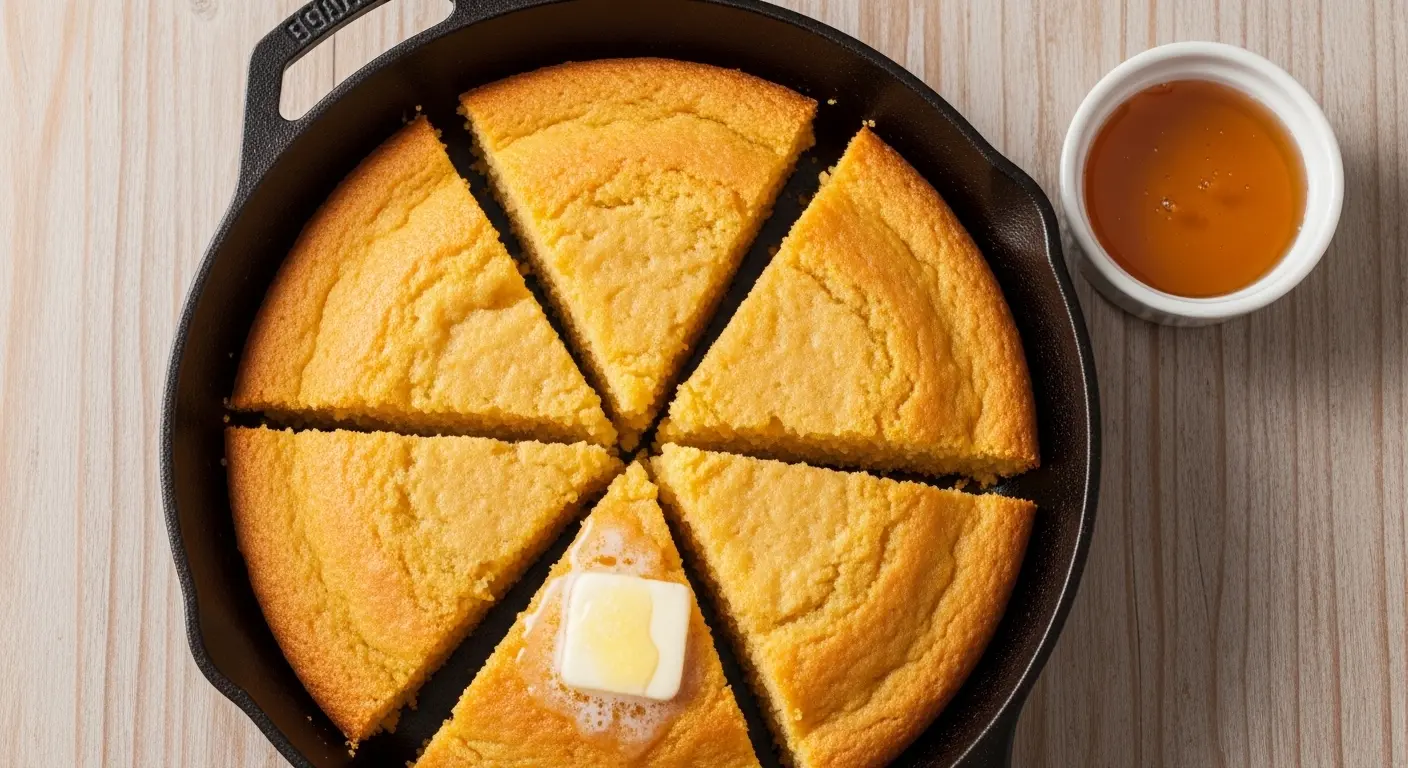
Few things in the kitchen smell as incredible as golden cornbread baking away in a cast iron skillet. If you have been searching for the perfect skillet cornbread recipe, you have come to the right place.
This classic Southern-style version delivers exactly what you want: a deeply golden, crispy crust on the bottom and edges, paired with a tender, moist crumb on the inside.
Skillet cornbread is one of those recipes that looks and tastes impressive, but it is actually surprisingly simple to pull off at home. The magic all comes down to one technique: preheating your cast iron skillet with butter before the batter ever touches it. That sizzle you hear the moment batter hits the hot pan is the secret to that irresistible crust.
This recipe uses buttermilk, which reacts with baking soda to create a lighter, fluffier texture than plain milk ever could. Combined with a balanced ratio of cornmeal to flour, you get cornbread that holds together beautifully when sliced but practically melts on your tongue.
If you love comfort food that comes together in under an hour, this is a recipe you will be making again and again. It pairs beautifully with chili, stews, soups, and so much more.
You might also enjoy: Sweet Cornbread Recipe

Why You’ll Love This Skillet Cornbread Recipe
This skillet cornbread recipe is a true Southern classic, and once you try it, you will understand why it has been a staple on dinner tables for generations. The cast iron skillet is not just a pan here; it is the star of the show, transforming a simple batter into something with a deep, buttery crust that you just cannot get any other way.
Everything about this recipe is designed to keep things easy without cutting corners on flavor. You only need a handful of pantry staples, and the hands-on time is minimal, so you can have hot cornbread on the table in about 35 minutes from start to finish.
The texture is absolutely perfect, with a golden crunch on the outside and a soft, pillowy interior that practically falls apart with a gentle fork. It is the kind of side dish that disappears from the table before anything else does.
- Comes together in roughly 35 minutes from start to finish
- Uses simple, everyday pantry ingredients
- The cast iron skillet creates an unbeatable crispy golden crust
- Works as a side dish, a breakfast accompaniment, or a snack on its own
- Tastes even better the next day, making it great for meal prep
This recipe also works wonderfully alongside our Jiffy Cornbread Recipe with Creamed Corn if you are looking for a quicker cornbread option on busy nights.
Ingredients
Choosing the right ingredients here makes all the difference. Yellow cornmeal gives your cornbread that classic warm color and earthy corn flavor, and buttermilk adds both tang and tenderness that you simply cannot replicate with regular milk. The butter does double duty in this recipe: some goes into the batter for moisture and richness, while the rest coats the hot skillet to create that signature golden crust.
- 1 1/2 cups (240g) yellow cornmeal
- 1/2 cup (60g) all-purpose flour
- 1 tablespoon (12g) granulated sugar
- 1 teaspoon (6g) baking powder
- 1/2 teaspoon (3g) baking soda
- 1/2 teaspoon (3g) salt
- 1 cup (240ml) buttermilk
- 1 large egg
- 1/4 cup (57g) unsalted butter, melted, plus 2 tablespoons (28g) unsalted butter for the skillet
Read Also: Corn Casserole Recipe
Kitchen Equipment Needed
Having the right tools on hand before you start makes this recipe flow smoothly from start to finish. A well-seasoned 10-inch cast iron skillet is the single most important piece of equipment here; it retains and distributes heat evenly, which is what gives the cornbread its signature crispy edges. Make sure your skillet is at least 10 inches across so the batter spreads to a good thickness.
- 10-inch cast iron skillet
- Large mixing bowl
- Medium mixing bowl
- Whisk
- Rubber spatula or wooden spoon
- Measuring cups and spoons
- Oven mitts or kitchen towels (the skillet will be very hot)
This recipe pairs wonderfully with a bowl of Chicken Stew, making it a cozy dinner all on its own.
Recommended Products for This Recipe
These are hand-picked products based on quality and performance that can genuinely make a difference when making this skillet cornbread.
1. Lodge 10-Inch Cast Iron Skillet
A properly seasoned cast iron skillet is the foundation of great skillet cornbread. Lodge skillets are incredibly durable, hold heat exceptionally well, and come pre-seasoned right out of the box, so you can start cooking immediately. This is an investment that will last you decades with minimal care.
2. Stone-Ground Yellow Cornmeal
Stone-ground cornmeal retains more of the corn’s natural oils and flavor compared to standard degerminated cornmeal. This makes for a more robust, nutty taste and a slightly coarser texture that holds up beautifully in skillet cornbread. It is a small upgrade that makes a noticeable difference in the final bite.
3. Quality Buttermilk
Full-fat cultured buttermilk is the gold standard for cornbread. The acidity in buttermilk reacts with baking soda to help the bread rise and stay tender, while the fat content adds moisture and richness. Look for full-fat buttermilk with live active cultures for the best results.
4. High-Quality Unsalted Butter
Butter is one of the key flavor drivers in this recipe, both in the batter and coating the skillet. Choosing a good-quality unsalted butter with a high butterfat content (82% or above) will give you a richer, more complex flavor and a crispier crust.
The same cast iron technique works beautifully in our Cookie Skillet Recipe if you are a fan of cooking desserts in a skillet too.
Step-by-Step Instructions
1. Preheat Your Oven and Gather Your Ingredients
- Set your oven rack to the center position and preheat your oven to 425 degrees Fahrenheit (220 degrees Celsius). A fully preheated oven is critical here because the cornbread needs consistent, strong heat to rise properly and develop a golden top.
- While the oven is heating, take all of your ingredients out of the fridge and pantry so everything is at arm’s reach. If your butter is cold, cut the 1/4 cup (57g) portion into small pieces and set it aside to soften slightly, or melt it in a small microwave-safe bowl in 15-second intervals until fully liquid.
- Line up your mixing bowls, whisk, and spatula on your counter.
2. Mix the Dry Ingredients
- In your large mixing bowl, add the cornmeal, flour, sugar, baking powder, and salt. Whisk everything together until the mixture is evenly combined and you do not see any clumps of baking powder or pockets of flour. This step usually takes about 20 to 30 seconds of whisking.
- Do not add the baking soda here. It goes in with the wet ingredients because it needs the acid in the buttermilk to activate properly. Adding it to the dry ingredients ahead of time will reduce its leavening power.
3. Combine the Wet Ingredients
- In your medium mixing bowl, crack the egg and beat it lightly with a fork or whisk until the yolk and white are just combined.
- Pour in the buttermilk and stir gently until the mixture is uniform in color and texture.
- Sprinkle in the baking soda and stir it into the buttermilk and egg mixture for about 10 seconds. You may notice a very slight fizz; that is a good sign that the baking soda is starting to react with the acid in the buttermilk.
- Add the melted 1/4 cup (57g) of butter to the wet ingredients and stir until just combined. The batter should look smooth and slightly thick at this point.
4. Combine Wet and Dry Ingredients
- Pour the wet ingredient mixture into the large bowl with the dry ingredients.
- Stir gently with a rubber spatula or wooden spoon, folding the mixture together in slow, deliberate strokes. Mix only until the dry ingredients are just moistened and you no longer see streaks of flour or dry cornmeal.
- It is completely fine if a few small lumps remain. Overmixing is one of the most common mistakes with cornbread; it develops the gluten in the flour and leads to a tough, dense texture instead of a tender crumb. Stop stirring the moment the batter comes together.
- Set the batter aside while you prepare the skillet in the next step.
5. Heat the Skillet with Butter
- Place your 10-inch cast iron skillet on the stovetop over medium heat. Add the remaining 2 tablespoons (28g) of butter to the skillet.
- Allow the butter to melt completely, swirling the pan gently so the melted butter coats the entire bottom and partway up the sides of the skillet. This takes about 1 to 2 minutes.
- You want the butter to be fully melted and hot but not browned or smoking. If you see the butter starting to darken or smoke, pull the skillet off the heat immediately and let it cool for 30 seconds before proceeding.
- The skillet needs to be genuinely hot when the batter goes in. This is the single most important step for achieving that signature crispy crust on the bottom and edges.
6. Pour in the Batter and Start Cooking on the Stovetop
- Carefully pour the batter into the hot, buttered skillet in an even layer. You should hear a distinct sizzle the moment the batter hits the pan; that sound means your skillet is hot enough and the crust is beginning to form immediately.
- If you do not hear a sizzle, the skillet was not hot enough. Do not worry; you can still proceed, but the bottom crust may not be quite as crispy.
- Use a rubber spatula to gently smooth the top of the batter into an even layer. Do not stir or mix the batter once it is in the skillet.
- Let the cornbread cook on the stovetop, undisturbed, for exactly 1 minute. This brief stint on direct heat gives the bottom an extra head start on developing that deep golden crust.
7. Bake in the Oven
- Using oven mitts, carefully transfer the skillet to the center rack of your preheated 425 degrees Fahrenheit (220 degrees Celsius) oven.
- Bake for 20 to 25 minutes, or until the top is golden brown and a toothpick inserted into the center of the cornbread comes out clean or with just a few moist crumbs attached. Avoid opening the oven door during the first 18 minutes, as this can cause the temperature to drop and the cornbread to fall.
- Keep in mind that the cast iron skillet will continue to hold heat after you remove it from the oven, so the cornbread will keep cooking slightly even after you pull it out. It is better to pull it a minute or two early than to risk overbaking it.
8. Cool Slightly and Serve
- Remove the skillet from the oven using oven mitts and set it on a heat-safe surface or trivet. The skillet will be extremely hot, so place it somewhere it will not damage your counter.
- Allow the cornbread to cool in the skillet for at least 5 to 10 minutes before slicing. Cutting into it too soon will make it crumbly and fall apart; giving it a few minutes to set makes for much cleaner slices.
- Slice into wedges directly in the skillet and serve warm. Top each slice with a generous pat of softened butter so it melts into the hot cornbread.
You might also enjoy: Breakfast Skillet Recipe
Tips for Success
Getting a truly great skillet cornbread comes down to a few key techniques. The most important one is making sure your skillet is hot before the batter goes in. A cold skillet will produce a pale, soft bottom instead of the golden, crispy crust you are going for. The second biggest tip is to resist the urge to overmix your batter; a few lumps are totally normal and actually a sign you are on the right track.
- Preheat your skillet properly. The butter should be melted and sizzling before you pour in the batter.
- Do not overmix. Stir only until the dry ingredients are moistened, and stop immediately after that.
- Use full-fat buttermilk for the most tender, flavorful cornbread. Low-fat buttermilk will work but will produce a slightly drier result.
- If you do not have buttermilk on hand, make a quick substitute by adding 1 tablespoon (15ml) of white vinegar or lemon juice to a measuring cup, then filling it to the 1-cup (240ml) line with whole milk. Let it sit for 5 minutes before using.
- Check for doneness with a toothpick at the 20-minute mark. The cornbread is done when the toothpick comes out clean or with just a few moist crumbs.
- Let the cornbread rest for at least 5 minutes after baking before slicing. This allows it to set and makes for cleaner cuts.
Our Buttermilk Biscuit Recipe uses the same buttermilk technique and is another fantastic addition to any Southern-inspired meal.
Serving Suggestions
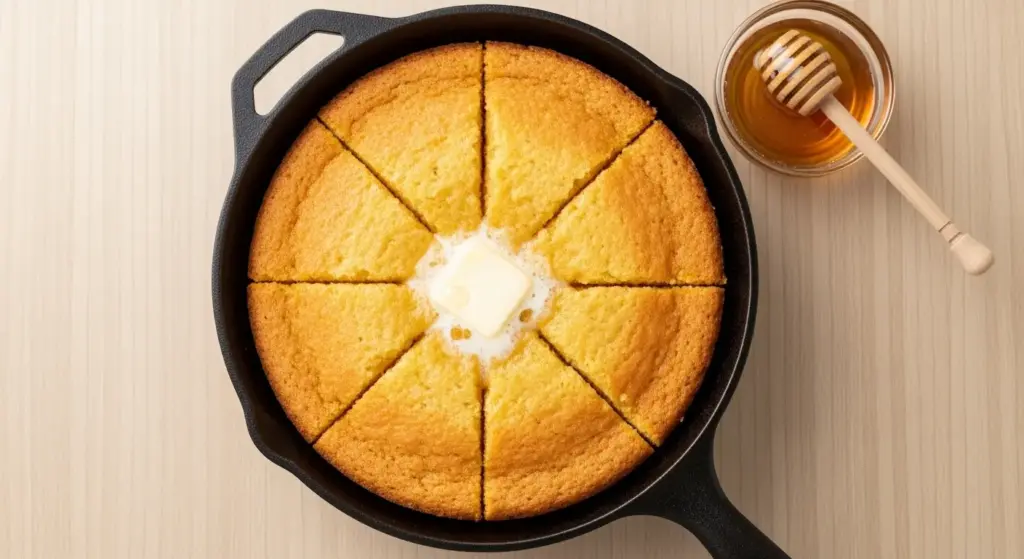
Skillet cornbread is one of the most versatile sides you can put on a dinner table. It shines brightest when served warm, sliced into wedges, and topped with a generous pat of melting butter. The slight sweetness and earthy flavor of the cornbread makes it a natural companion to bold, savory dishes like chili, stew, and braised meats.
- Slice into wedges and top with softened butter and a drizzle of Honey Butter for a simple, indulgent side
- Serve alongside a hearty bowl of Turkey Chili for a complete and comforting meal
- Pair with White Chicken Chili for a lighter but equally satisfying dinner
- Crumble into a bowl of Chicken Soup for added texture and flavor
- Serve alongside Collard Greens and Classic Red Beans and Rice for a traditional Southern spread
- Top with a warm pour of Sausage Gravy for a hearty breakfast or brunch
For a cozy dinner pairing, this cornbread is also a perfect match for our Slow Cooker Chili.
Variations to Try
Once you have mastered the classic version of this skillet cornbread, there are so many fun directions you can take it. These variations keep the same base recipe and skillet technique, so you already know the method works, and you can simply swap or add ingredients to change up the flavor profile.
- Jalapeño Cornbread: Fold in 2 to 3 tablespoons of diced fresh or pickled jalapeño peppers (seeds removed for less heat) right before pouring the batter into the skillet for a spicy kick.
- Cheddar Cornbread: Stir in 1/2 cup (50g) of shredded sharp cheddar cheese into the batter for a cheesy, savory twist that pairs beautifully with soups.
- Honey Cornbread: Replace the granulated sugar with 2 tablespoons (30ml) of honey and add it to the wet ingredients for a warmer, more floral sweetness.
- Bacon Cornbread: Mix in 1/2 cup (75g) of crumbled cooked bacon for a smoky, salty variation that is perfect for brunch.
- Brown Butter Cornbread: Instead of simply melting the butter for the skillet, cook it in the skillet until it turns golden and smells nutty, then swirl to coat before adding the batter. This adds a deep, caramelized flavor.
- Blueberry Cornbread: Gently fold 1/2 cup (75g) of fresh or frozen blueberries into the batter just before baking for a subtle burst of sweetness in every bite.
Read Also: Corn Pudding Recipe
Storage and Reheating
Skillet cornbread stores well and reheats beautifully, making it a great candidate for making ahead. The key to keeping it fresh is wrapping it tightly to prevent it from drying out, since cornbread can stale quickly when exposed to air. Proper storage makes all the difference between cornbread that tastes just as good the next day and cornbread that feels like it has been sitting out for hours.
- Room Temperature: Wrap the cornbread tightly in plastic wrap or aluminum foil and store at room temperature for up to 2 days. Keep it out of direct sunlight and away from heat sources.
- Refrigerator: For longer storage, wrap tightly and place in an airtight container in the refrigerator for up to 5 days.
- Freezer: Wrap individual slices in plastic wrap, then place them in a freezer-safe bag or container. Freeze for up to 3 months. Thaw overnight in the refrigerator before reheating.
- Reheating: The best way to reheat skillet cornbread is in a dry skillet over medium-low heat for 2 to 3 minutes per side, or in a preheated 350 degrees Fahrenheit (175 degrees Celsius) oven for 8 to 10 minutes. You can also microwave individual slices for 15 to 20 seconds, though this will soften the crust.
This cornbread also makes a wonderful base for Sausage Stuffing Recipe when you have leftover slices to use up.
Nutritional Facts
The nutritional information below is based on a recipe that yields 8 slices, with each slice representing one-eighth of the cornbread made in a 10-inch skillet. Keep in mind that these values are approximate and may vary slightly depending on the specific brands and sizes of ingredients you use.
| Nutrient | Per Slice (1/8 of recipe) |
|---|---|
| Calories | 210 kcal |
| Total Fat | 9g |
| Saturated Fat | 5g |
| Cholesterol | 50mg |
| Sodium | 310mg |
| Total Carbohydrates | 28g |
| Dietary Fiber | 2g |
| Sugars | 4g |
| Protein | 5g |
| Calcium | 70mg |
| Iron | 1.2mg |
You might also enjoy: Corn Souffle Recipe
Health Benefits of Key Ingredients
The ingredients in this skillet cornbread are more nutritious than you might expect, especially when you reach for whole-grain and full-fat versions. Cornmeal, the star of the recipe, is a naturally gluten-free grain packed with fiber, vitamins, and minerals that support digestive and heart health. Buttermilk, on the other hand, is a surprisingly healthy dairy option that brings probiotics, calcium, and protein to the table.
- Cornmeal: Rich in dietary fiber, which supports healthy digestion and helps you feel full and satisfied after a meal. It also contains manganese, magnesium, and B vitamins like thiamin and niacin, which play important roles in energy metabolism and brain function. Stone-ground whole-grain cornmeal retains even more of these nutrients than refined varieties.
- Buttermilk: A good source of calcium, which is essential for strong bones and teeth. Cultured buttermilk also contains live probiotics that support gut health and may aid in digestion. It is lower in fat than whole milk while still delivering meaningful amounts of protein and riboflavin.
- Eggs: Provide high-quality protein and essential amino acids that the body needs for muscle repair and tissue maintenance. Eggs are also an excellent source of choline, a nutrient that supports brain health and healthy cell function.
- Butter: Contains fat-soluble vitamins A, D, and K, which the body needs healthy fats to absorb properly. A moderate amount of butter in baking adds richness and flavor while also helping the body absorb other nutrients in the meal.
Our Easy Taco Soup Recipe is another comforting dish that pairs perfectly with a warm slice of this cornbread.
Frequently Asked Questions
1. Can I make skillet cornbread without buttermilk?
Absolutely. If you do not have buttermilk on hand, you can make a quick substitute by adding 1 tablespoon (15ml) of white vinegar or lemon juice to a liquid measuring cup, then filling it to the 1-cup (240ml) mark with whole milk. Stir gently and let it sit for about 5 minutes before using. The acid will cause the milk to thicken slightly and develop a tangy flavor that mimics buttermilk closely enough to work beautifully in this recipe.
2. Do I have to use a cast iron skillet?
A cast iron skillet gives you the best results by far, particularly when it comes to the crispy golden crust on the bottom and edges. That said, you can still make this recipe in a 9-inch round cake pan or an 8×8 inch square baking pan if that is what you have available. Just grease the pan well with butter and bake at the same temperature. The crust will not be quite as crisp, but the cornbread will still taste great.
3. Should I add sugar to my skillet cornbread?
This is one of the great debates in the cornbread world, and the answer really comes down to personal preference and regional tradition. Traditional Southern cornbread is often made with little to no sugar, while versions popular in the North and Midwest tend to be sweeter.
This recipe uses just 1 tablespoon (12g) of sugar, which adds a subtle sweetness without making the cornbread taste like cake. You can leave it out entirely for a more savory version or increase it to 2 tablespoons if you prefer a slightly sweeter bite.
4. Why does my cornbread come out dry?
A dry cornbread usually means one of two things: the batter was overmixed, or it was baked too long. Overmixing develops the gluten in the flour, making the texture tough and dry rather than tender.
Baking past the point of doneness also draws out too much moisture. To avoid both issues, mix your batter only until the dry ingredients are just moistened, and start checking for doneness with a toothpick at the 20-minute mark.
5. Can I make skillet cornbread ahead of time?
Yes, and it actually holds up quite well. You can bake the cornbread up to 2 days in advance and store it at room temperature wrapped tightly in foil or plastic wrap. For longer storage, wrap individual slices and freeze them for up to 3 months.
When you are ready to eat, reheat in a dry skillet over medium-low heat or in a 350 degrees Fahrenheit (175 degrees Celsius) oven until warmed through. This brings back most of the original texture and flavor.
Read Also: Breakfast Casserole Recipe
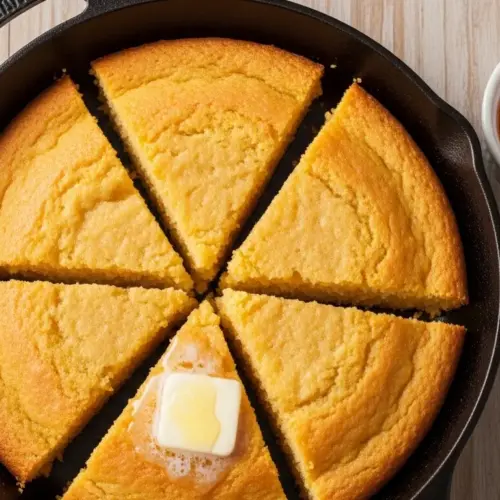
Skillet Cornbread

Equipment
- 10-inch cast iron skillet - Well-seasoned; at least 10 inches across for proper thickness
- Large mixing bowl
- Medium mixing bowl
- Whisk
- Rubber spatula or wooden spoon
- Measuring cups and spoons
- Oven mitts or kitchen towels - The skillet will be very hot
Ingredients
- 1 1/2 cups yellow cornmeal - 240g
- 1/2 cup all-purpose flour - 60g
- 1 tablespoon granulated sugar - 12g
- 1 teaspoon baking powder - 6g
- 1/2 teaspoon baking soda - 3g
- 1/2 teaspoon salt - 3g
- 1 cup buttermilk - 240ml; full-fat preferred
- 1 large egg
- 1/4 cup unsalted butter - 57g, melted (for batter)
- 2 tablespoons unsalted butter - 28g (for the skillet)
Instructions
- Preheat oven to 425°F (220°C) with rack in center position. Gather all ingredients and prepare equipment.
- In a large bowl, whisk together cornmeal, flour, sugar, baking powder, and salt until evenly combined.
- In a medium bowl, lightly beat the egg. Stir in buttermilk and baking soda until combined, then add melted butter.
- Pour wet ingredients into dry ingredients. Stir gently until just moistened; a few lumps are okay. Do not overmix.
- Place 10-inch cast iron skillet over medium heat on stovetop. Add 2 tablespoons butter and melt, swirling to coat bottom and sides. Heat until hot but not smoking.
- Pour batter into hot skillet; it should sizzle. Smooth top evenly with spatula. Cook on stovetop undisturbed for 1 minute.
- Transfer skillet to preheated oven. Bake 20-25 minutes until golden brown and toothpick inserted in center comes out clean or with moist crumbs.
- Remove skillet from oven using oven mitts. Cool cornbread in skillet for 5-10 minutes before slicing into wedges. Serve warm with softened butter.
Notes
- Preheat the skillet properly for the signature crispy golden crust; the batter should sizzle when added.
- Do not overmix the batter—stop as soon as dry ingredients are moistened to keep the crumb tender.
- Use full-fat buttermilk for the best tenderness and flavor. Substitute with 1 cup whole milk + 1 tbsp vinegar or lemon juice if needed; let sit 5 minutes.
- Bake just until done; the cast iron retains heat and continues cooking slightly after removal from oven.
- Let cornbread rest 5-10 minutes before slicing for cleaner cuts.
- Store at room temperature wrapped tightly for up to 2 days, in refrigerator up to 5 days, or freeze slices up to 3 months.
- Reheat in a dry skillet over medium-low heat or in 350°F oven for best texture.
- Variations: Add jalapeños, cheddar cheese, bacon, honey, or blueberries to the batter.
- This recipe works best in a well-seasoned 10-inch cast iron skillet; a cake pan can substitute but yields less crisp crust.
- Serve with chili, soups, stews, collard greens, or sausage gravy for classic pairings.
Final Thoughts
If you have been on the hunt for a skillet cornbread recipe that delivers on every level, this is the one to bookmark. Golden, crispy on the outside, tender and moist on the inside, and made with just a handful of simple ingredients, this cornbread is the kind of recipe that becomes a household staple once you try it.
Give it a go the next time you are planning a cozy dinner or need a warm side dish to round out your meal. We would absolutely love to hear how it turns out in your kitchen, so drop a comment below and let us know your favorite way to enjoy it.
Recommended:
- Chicken Skillet Recipe
- Taco Skillet Recipe
- Loaded Breakfast Skillet Recipe
- Egg Skillet Recipe
- Cowboy Skillet Recipe
- Enchilada Skillet Recipe
- Cheeseburger Skillet Recipe
- Stuffed Pepper Skillet Recipe
- Fried Cabbage Recipe
- Creamed Spinach Recipe