When November rolls around and the first hunting season closes, there’s always that exciting moment when fresh venison makes its way into my kitchen. Making a proper venison stew recipe transforms wild game into something extraordinary.
I won’t pretend this happened overnight. My first attempt at cooking venison ended up tough and gamey, sitting untouched on everyone’s plate. But after years of trial and error, I’ve cracked the code on what makes venison stew absolutely incredible.
The secret lies in understanding that venison isn’t beef. It’s leaner, more flavorful, and needs a gentle hand. When you get it right, though, you end up with meat so tender it falls apart at the touch of your fork, swimming in a rich, deeply savory broth that tastes like the woods in the best possible way.
This venison stew recipe has become my go-to method for sharing wild game with friends who claim they don’t like it. Every single time, they ask for seconds and want to know what my secret is.
There isn’t just one secret—it’s a combination of proper searing, the right cooking liquid, and enough patience to let everything meld together into something magical.
Why You’ll Love This Venison Stew Recipe
This dish turns even the toughest cuts of venison into fork-tender perfection while eliminating any gamey flavors that might put people off. The low and slow cooking method breaks down the meat beautifully, creating a stew that’s both rustic and refined.
Here’s what makes this recipe stand out:
- Incredibly tender meat that melts in your mouth after hours of gentle braising
- Deep, complex flavors from red wine, herbs, and properly caramelized vegetables
- Versatile and forgiving – works with any cut of venison from shoulder to round
- Perfect for meal prep since it actually tastes better the next day
- Nutritious and lean with all the protein benefits of wild game
- Impressive enough for company but easy enough for a weeknight dinner
Another favorite: Lamb Stew Recipe
Ingredients
This venison stew relies on quality ingredients that complement rather than mask the natural flavors of the meat. The combination creates a perfectly balanced dish that highlights what makes wild game special.
- 3 pounds venison shoulder or leg, cut into 2-inch cubes
- 3 tablespoons olive oil, divided
- 1 large onion, diced
- 4 cloves garlic, minced
- 3 tablespoons all-purpose flour
- 2 cups red wine (preferably Cabernet or Merlot)
- 3 cups beef stock
- 2 tablespoons tomato paste
- 2 bay leaves
- 3 sprigs fresh thyme
- 1 sprig fresh rosemary
- 4 large carrots, cut into 1-inch pieces
- 3 celery stalks, cut into 1-inch pieces
- 1 pound baby potatoes, halved
- 8 ounces cremini mushrooms, quartered
- 2 teaspoons salt
- 1 teaspoon black pepper
- 1 teaspoon Worcestershire sauce
Kitchen Equipment Needed
Having the right tools makes all the difference when you’re cooking a stew that needs several hours of attention. These pieces of equipment will set you up for success.
- Dutch oven or heavy-bottomed pot with lid (5-6 quart capacity)
- Sharp chef’s knife for cutting meat and vegetables
- Cutting board
- Wooden spoon for stirring
- Tongs for turning meat
- Measuring cups and spoons
- Ladle for serving
Recommended Products for This Recipe
After making this stew countless times, I’ve found a few products that genuinely make the process easier and improve the final result. These aren’t just nice-to-haves—they actually make a difference.
1. Le Creuset Enameled Cast Iron Dutch Oven
The heavy construction of this pot distributes heat so evenly that you’ll never have hot spots burning your stew. I’ve had mine for over a decade, and it still performs like new. The tight-fitting lid keeps all the moisture locked in during those long hours of braising.
2. Wild Venison Stew Meat
If you don’t hunt or don’t have venison in your freezer, high-quality frozen venison stew meat is the next best thing. Look for cuts that are already trimmed and cubed to save yourself prep time.
3. Better Than Bouillon Beef Base
This concentrated beef base adds incredible depth to the broth without taking up much pantry space. A little goes a long way, and it dissolves instantly into your cooking liquid.
4. Zwilling J.A. Henckels Chef’s Knife
Breaking down venison requires a truly sharp knife, and this one stays sharp through years of use. The balance and weight make cutting through tough connective tissue effortless.
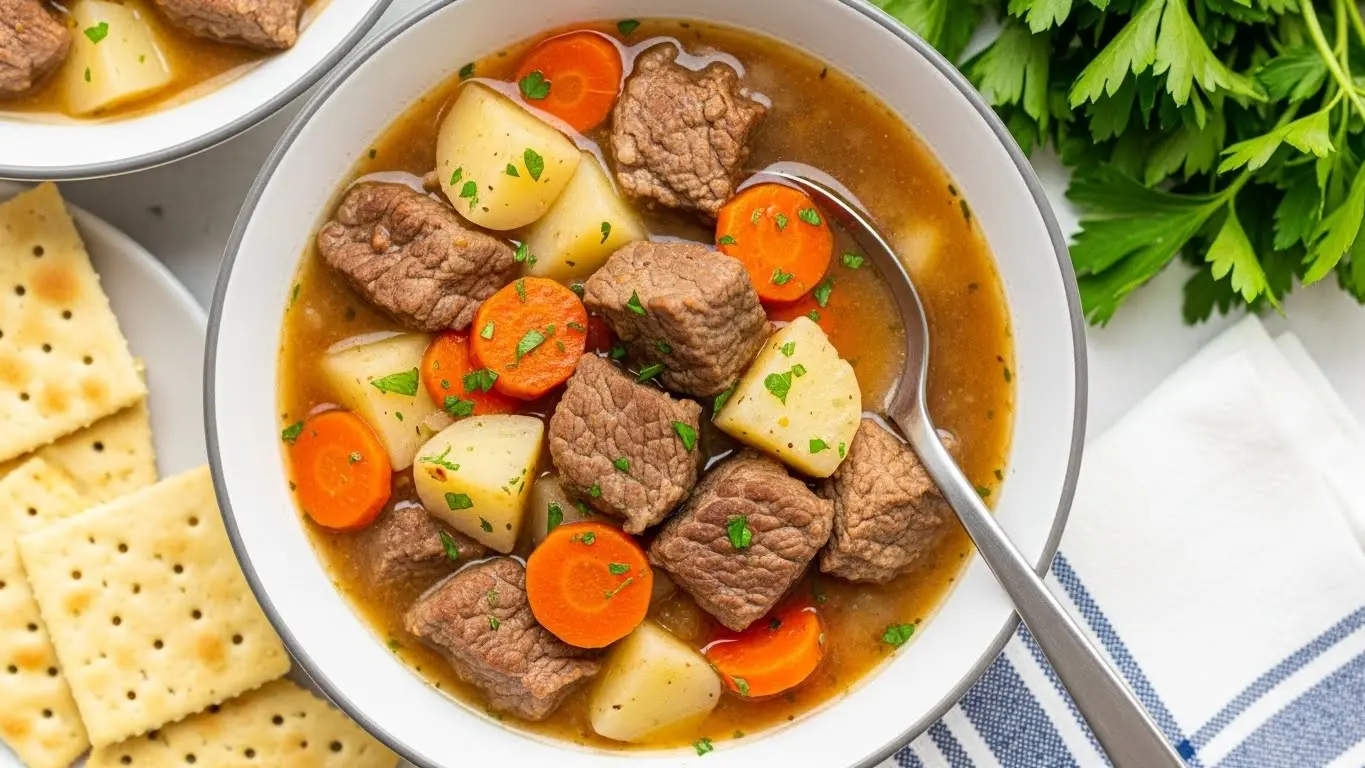
You might also enjoy: Irish Stew Recipe
Step-by-Step Instructions
Take your time with each step here, especially the initial searing. Rushing through these stages will cost you flavor in the final dish.
1. Prepare the Venison
- Pat the venison cubes completely dry with paper towels—this is crucial for getting a good sear
- Season all sides generously with salt and pepper
- Let the meat sit at room temperature for 20-30 minutes before cooking
- Remove any silver skin or excessive fat if your butcher hasn’t already done so
2. Sear the Meat
- Heat 2 tablespoons of olive oil in your Dutch oven over medium-high heat until it shimmers
- Working in batches to avoid crowding, add venison cubes in a single layer
- Sear each piece for 2-3 minutes per side until deeply browned
- Transfer browned meat to a plate and set aside
- Resist the urge to move the meat around—let it develop that dark crust
- Add more oil between batches if the pot looks dry
3. Build the Flavor Base
- Reduce heat to medium and add the remaining tablespoon of oil
- Add diced onions and cook for 5-7 minutes until softened and lightly golden
- Stir in minced garlic and cook for 1 minute until fragrant
- Sprinkle flour over the vegetables and stir constantly for 2 minutes to cook out the raw flour taste
- This flour mixture will help thicken your stew later
4. Deglaze and Add Liquids
- Pour in the red wine while scraping the bottom of the pot with your wooden spoon
- Make sure to get up all those browned bits stuck to the bottom—that’s pure flavor
- Let the wine simmer for 3-4 minutes to cook off some of the alcohol
- Stir in tomato paste until fully incorporated
- Add beef stock and Worcestershire sauce
- Return the seared venison and any accumulated juices to the pot
5. Add Herbs and Begin Braising
- Tie the bay leaves, thyme, and rosemary together with kitchen twine (or just toss them in loose)
- Submerge the herb bundle in the liquid
- Bring everything to a gentle boil, then immediately reduce to a bare simmer
- Cover the pot with the lid slightly ajar to allow some steam to escape
- Let it simmer for 1.5 hours, stirring occasionally to prevent sticking
6. Add the Vegetables
- After the initial braising period, add carrots, celery, and potatoes
- Stir everything together gently to distribute the vegetables
- Cover and continue simmering for another 45 minutes
- The vegetables should be fork-tender but not falling apart
- Check the meat for tenderness—it should be getting quite soft
7. Add Mushrooms and Final Simmer
- Stir in the quartered mushrooms
- Continue cooking uncovered for the final 15-20 minutes
- This allows the stew to thicken slightly and the mushrooms to absorb all those flavors
- The venison should now be fork-tender and practically falling apart
- If your stew seems too thin, simmer uncovered a bit longer to reduce the liquid
8. Final Adjustments
- Remove and discard the herb bundle
- Taste the stew and adjust seasoning with additional salt and pepper if needed
- If the stew tastes slightly flat, a splash of red wine vinegar can brighten everything up
- Let the stew rest off the heat for 10 minutes before serving
- This resting period allows the flavors to settle and the liquid to thicken slightly
This pairs beautifully with dinner rolls for soaking up all that incredible broth.
Tips for Success
These little tricks have saved me from stew disasters more times than I can count. Pay special attention to the ones about managing gamey flavors.
Removing gamey taste: If your venison has a strong wild flavor, soak the cubed meat in milk or buttermilk for 2-4 hours before cooking. The lactic acid helps neutralize those intense flavors. Pat completely dry before proceeding with the recipe.
Don’t skip the searing: That dark brown crust on the meat isn’t just for show—it’s where tons of flavor develops through the Maillard reaction. Take the time to do this right, working in batches so each piece has contact with the hot pan.
Control the heat: Venison can become tough if cooked at too high a temperature. Keep your stew at a gentle simmer where you see small bubbles breaking the surface occasionally, not a rolling boil.
Use the right wine: Choose a dry red wine you’d actually drink. The better the wine, the better your stew will taste. Avoid anything labeled “cooking wine” from the grocery store.
Timing matters for vegetables: Adding vegetables too early turns them into mush. Adding them too late means they’ll be crunchy. The staged approach in this recipe gets everything perfectly tender.
Let it rest: The stew tastes even better after sitting for 15-20 minutes off the heat, and it’s definitely best the next day after all the flavors have married together overnight.
Consistency check: If your stew is too thin after the final cooking time, mash one or two of the potato pieces against the side of the pot and stir it in. This natural thickener works without adding extra flour.
Serving Suggestions
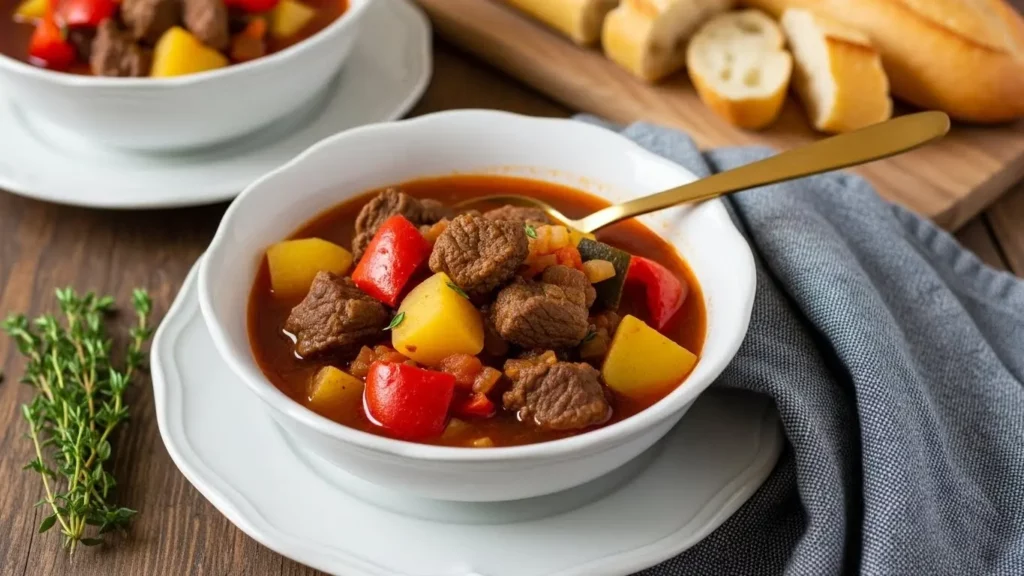
This hearty stew deserves accompaniments that can stand up to its rich, robust flavors while also providing textural contrast. Here are my favorite ways to serve it.
A crusty piece of homemade biscuits is perfect for mopping up every last drop of that savory broth. I also love serving this over creamy Smashed Potatoes Recipe for an extra comforting meal, though the stew already contains potatoes.
For a lighter accompaniment, try:
- Buttered egg noodles or sourdough focaccia on the side
- A crisp green salad with vinaigrette to cut through the richness
- Roasted Brussels sprouts or green beans for added vegetables
- Creamed spinach for a classic steakhouse-style presentation
- Pickled red onions or cornichons for a bright, acidic contrast
Read Also: Oyster Stew Recipe
Variations to Try
Once you’ve mastered the basic recipe, these variations let you customize the stew to your taste preferences or what you have available in your kitchen.
Beer braised version: Replace the red wine with a dark beer like stout or porter for a maltier, slightly sweeter flavor profile. This works especially well if you’re serving the stew at a casual gathering.
Spicy kick: Add 1-2 teaspoons of smoked paprika and a pinch of cayenne pepper when you add the other seasonings. Some diced chipotle peppers in adobo sauce also work wonderfully.
Root vegetable medley: Swap out some of the potatoes for parsnips, turnips, or rutabaga to add different flavors and textures to your stew.
Mediterranean style: Replace the thyme and rosemary with oregano and add kalamata olives and sun-dried tomatoes in the last 30 minutes of cooking.
Burgundy style: Follow the traditional beef bourguignon method by adding pearl onions and bacon lardons, finishing with a splash of cognac.
Slow cooker adaptation: After searing the meat and building the flavor base, transfer everything to a slow cooker and cook on low for 6-8 hours, adding vegetables in the last 2 hours.
Storage and Reheating
Properly stored venison stew actually improves with age as the flavors continue to develop. Here’s how to keep it fresh and delicious.
Refrigerator storage: Let the stew cool to room temperature, then transfer to airtight containers. It will keep in the refrigerator for up to 4 days. The stew will thicken considerably as it cools, which is completely normal.
Freezer storage: This stew freezes beautifully for up to 3 months. Portion it into freezer-safe containers, leaving about an inch of headspace for expansion. Label with the date so you remember when you made it.
Reheating instructions: For refrigerated stew, reheat gently on the stovetop over medium-low heat, stirring occasionally and adding a splash of beef stock or water if it’s too thick. From frozen, thaw overnight in the refrigerator before reheating, or use the defrost function on your microwave.
Storage tips:
- Remove the herb bundle before storing to prevent bitter flavors from developing
- Cool large batches quickly by dividing into smaller containers
- Skim any fat that solidifies on top before reheating
- Avoid repeated reheating—only warm what you plan to eat
- If freezing, slightly undercook the vegetables so they don’t turn mushy when reheated
Nutritional Facts
Per serving (based on 8 servings):
- Calories: 385
- Protein: 38g
- Carbohydrates: 24g
- Fat: 12g
- Saturated Fat: 3g
- Cholesterol: 115mg
- Sodium: 720mg
- Fiber: 4g
- Sugar: 6g
- Iron: 4.5mg
Note: Nutritional information is approximate and will vary based on specific ingredients and portion sizes used.
Health Benefits of Key Ingredients
Beyond tasting incredible, this venison stew packs some serious nutritional benefits that make it a smart choice for health-conscious eaters. Wild game offers advantages you won’t find in conventional meats.
Venison stands out as one of the leanest red meats available, containing significantly less fat than beef while delivering comparable amounts of high-quality protein. It’s naturally rich in iron, which supports healthy blood cell production, and provides substantial amounts of B vitamins that help convert food into energy.
Additional health benefits include:
- High in CLA: Conjugated linoleic acid found in wild game has been linked to improved metabolism and reduced inflammation
- Rich in zinc: Essential for immune function and wound healing
- Low in calories: Venison contains roughly 40% fewer calories than equivalent portions of beef
- Omega-3 fatty acids: Wild game contains better omega-3 to omega-6 ratios than grain-fed livestock
- Antioxidant vegetables: Carrots, celery, and mushrooms provide vitamins A and C along with various phytonutrients
- Free from antibiotics: Wild venison contains no added hormones or antibiotics commonly found in factory-farmed meat
- Heart-healthy: The low saturated fat content makes this stew a better choice for cardiovascular health
Another favorite: Chicken Stew Recipe
Frequently Asked Questions
1. Can I use beef instead of venison in this recipe?
Absolutely, though you’ll need to adjust the cooking approach slightly. Beef chuck or stew meat works perfectly with this recipe, but since beef typically has more marbling than venison, you might want to trim some excess fat before cooking.
The cooking time remains roughly the same, though beef may become tender slightly faster than venison. Keep in mind that you’ll lose some of that distinctive wild game flavor that makes this stew special.
2. How do I know when the venison is tender enough?
The meat is ready when you can easily pierce it with a fork and it begins to fall apart with gentle pressure. Venison should yield to a fork without any resistance and separate into tender shreds when pressed.
If the meat still feels firm or bounces back when you press it, it needs more cooking time. Remember that venison benefits from low and slow cooking—rushing this process will result in tough, chewy meat no matter how long you cook it at high heat.
3. Why does my venison stew taste gamey?
Several factors contribute to gamey flavors in venison stew. First, improper field dressing or delayed processing of the animal can cause off flavors. Second, cooking fat and silver skin can intensify gamey tastes, so trim these thoroughly before cooking.
The soaking method mentioned in the tips section helps tremendously, as does using aromatic vegetables, herbs, and red wine which naturally complement and balance the strong flavors. Finally, make sure you’re searing the meat properly—a good crust helps create complex flavors that mask any unwanted gamey notes.
4. Can I make this in a slow cooker or Instant Pot?
Yes to both, with slight modifications. For a slow cooker, complete steps 1-4 on the stovetop, then transfer everything to your slow cooker and cook on low for 6-8 hours, adding vegetables in the final 2 hours.
For an Instant Pot, sear the meat using the sauté function, then pressure cook on high for 35 minutes with a natural release. Add vegetables and cook on high pressure for an additional 5 minutes. Both methods produce excellent results, though I find the traditional stovetop method gives you more control over texture.
5. What’s the best cut of venison for stew?
Shoulder, neck, and shanks make the best stew meat because they contain more connective tissue that breaks down into gelatin during long cooking, creating that rich, silky texture. Round and rump roasts also work well when cut into chunks.
Avoid using backstrap or tenderloin—these premium cuts are too lean and tender for stewing and will become dry and tough. Save those for quick-cooking methods like grilling or pan-searing instead.
Final Thoughts
Making this venison stew recipe has become one of my favorite cold-weather rituals. There’s something deeply satisfying about transforming wild game into a meal that brings people together around the table.
The beauty of this stew lies in its simplicity—good ingredients, proper technique, and patience create something far greater than the sum of its parts. Once you’ve tasted venison prepared this way, tender and flavorful without any of that off-putting gaminess, you’ll understand why I make this recipe over and over throughout hunting season.
I’d love to hear how your venison stew turns out! Drop a comment below with any questions, variations you tried, or just to let me know you made it. And if this recipe helped you finally enjoy cooking with wild game, share it with your hunting buddies who might need some kitchen inspiration.
Recommended:
- Crockpot Beef Stew Recipe
- Brunswick Stew Recipe
- Beef Bourguignon Recipe
- Slow Cooker Pot Roast Recipe
- Mississippi Pot Roast Recipe
- Zuppa Toscana Recipe
- Vegetable Soup Recipe
- Turkey Chili Recipe
- Swedish Meatball Recipe
- Ham and Bean Soup Recipe