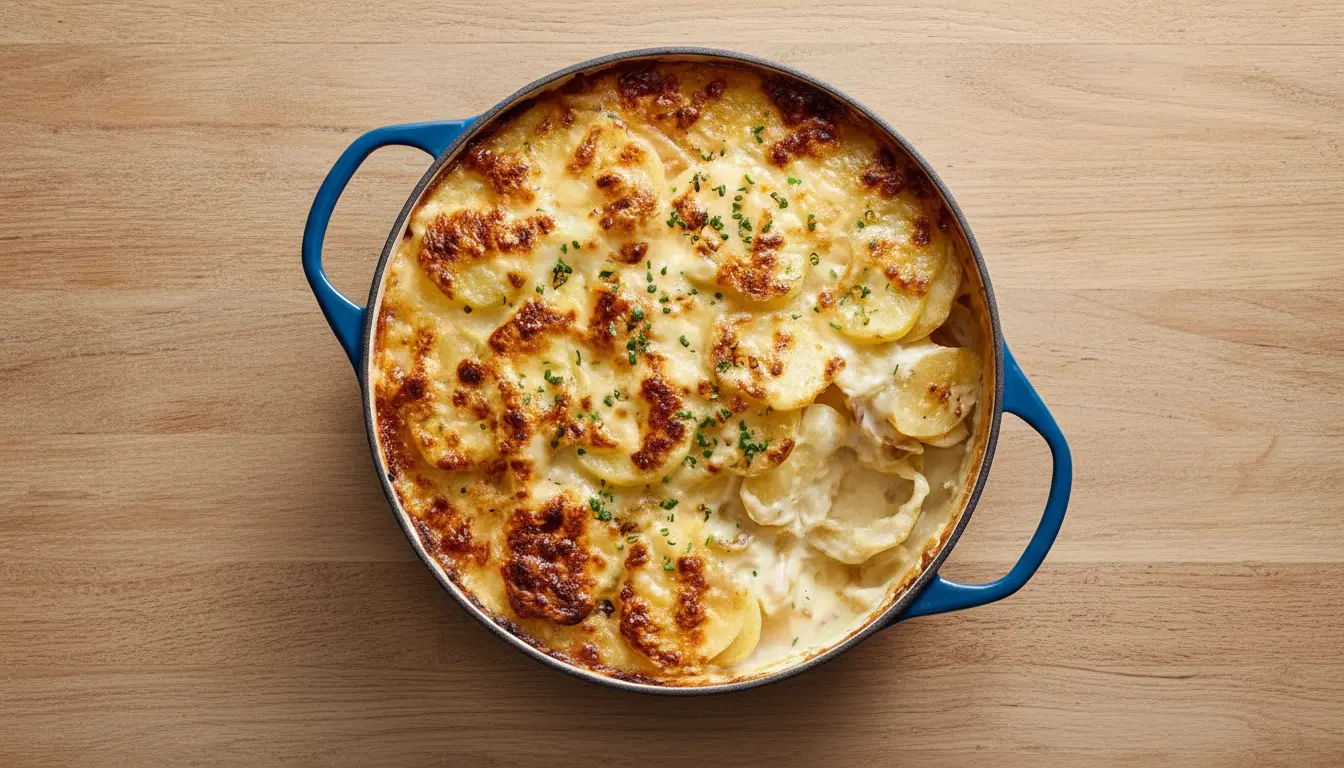
A great tartiflette recipe is the kind of dish that makes you feel like you are curled up in a cozy Alpine chalet, even if you are just standing in your own kitchen.
This classic French potato gratin from the Savoie region is layered with tender waxy potatoes, smoky lardons, sweet caramelized onions, a splash of dry white wine, and finished with a generous crown of melted Reblochon cheese that turns golden and bubbling in the oven.
It is rich, deeply savory, and incredibly satisfying.
The name “tartiflette” actually comes from “tartifla,” the old Savoyard dialect word for potato, and the dish has been warming up ski lodges and family tables in the French Alps for decades.
While it was famously popularized in the 1980s to celebrate Reblochon cheese, the recipe draws on a much older Alpine tradition of cooking potatoes and cheese together over an open fire.
The result is a dish that is both rustic and deeply comforting.
If you have ever dreamed of trying authentic French après-ski food at home, this is it.
This recipe walks you through every step, from choosing the right potatoes to achieving that perfect golden cheese crust on top.
You might also enjoy: Beef Bourguignon Recipe
Why You’ll Love This Tartiflette Recipe
This is comfort food elevated to an art form.
The layers of potato, bacon, and cheese create something that is far greater than the sum of its parts.
Here is why this dish is going to become a cold-weather staple in your home:
- Only a handful of ingredients. You need just six to eight core ingredients, most of which are easy to source.
- It feeds a crowd. A single baking dish generously serves four to six people, making it ideal for dinner parties or family gatherings.
- It is endlessly adaptable. No Reblochon? No problem. Brie, Camembert, or Gruyere all work beautifully as substitutes.
- The flavor is extraordinary. The combination of nutty, creamy cheese melted over smoky bacon and soft potatoes is deeply satisfying.
- It can be assembled ahead of time. You can build the whole dish a day in advance and simply bake it when needed.
- It looks impressive. That bubbling, golden cheese crust is a showstopper right out of the oven.
- Beginner-friendly. Despite the French origins, the technique is straightforward and forgiving.
Read Also: Au Gratin Potatoes Recipe
Ingredients
Here is everything you need to make a classic tartiflette at home. Waxy potatoes are essential here because they hold their shape during cooking, giving you beautiful, distinct layers rather than a mash. Reblochon is traditional, but the substitutes listed below produce a wonderful result.
- 2 lbs (900g) waxy potatoes (Yukon Gold or Charlotte variety), unpeeled
- 7 oz (200g) smoked bacon lardons (or thick-cut smoked bacon, cut into cubes)
- 2 medium yellow onions, thinly sliced
- 2 cloves garlic, finely minced
- ½ cup (120ml) dry white wine (such as Savoie Apremont, Chablis, or any dry white)
- ½ cup (120ml) crème fraîche (or heavy cream)
- 1 whole Reblochon cheese (approximately 17 oz / 480g), or a full wheel of Brie or Camembert as a substitute
- Salt and freshly ground black pepper, to taste
- 1 tablespoon olive oil or unsalted butter, for sautéing
Read Also: Scalloped Potatoes Recipe
Kitchen Equipment Needed
You do not need any special tools to make tartiflette, but having a solid baking dish will make a real difference in how evenly everything cooks and how beautifully the cheese browns on top.
- Large pot, for parboiling the potatoes
- Sharp chef’s knife and cutting board
- Large skillet or frying pan (10-12 inches)
- Enameled cast iron baking dish or ceramic gratin dish (approximately 9×13 inches / 23×33 cm)
- Colander, for draining the potatoes
- Wooden spoon or spatula
- Cheese knife or regular knife, for slicing the Reblochon
- Aluminum foil (optional, to loosely tent if the top browns too quickly)
- Oven mitts
- Kitchen timer
Another favorite: Potato Casserole Recipe
Recommended Products for This Recipe
These are products chosen based on quality and their ability to genuinely improve your tartiflette experience, from the star ingredient to the ideal baking vessel.
1. Reblochon Cheese (or Premium Substitute)
Reblochon is the non-negotiable soul of an authentic tartiflette. Its soft, washed rind and creamy, nutty interior melt into a golden, bubbling crown that no other cheese quite replicates. If you cannot source Reblochon locally, look for a high-quality imported Brie or Camembert as the closest alternative.
2. Le Creuset Enameled Cast Iron Baking Dish
Even heat distribution is critical for tartiflette. A heavy enameled cast iron dish ensures the potatoes cook through completely while giving the cheese an even, gorgeous browning on top. It also keeps the dish warm at the table for longer.
3. Crème Fraîche
Traditional tartiflette often calls for a spoonful of crème fraîche between the layers for extra richness. A quality crème fraîche has a slightly tangy flavor that beautifully balances the savory cheese and smoky bacon. It is worth keeping a tub on hand for recipes like this.
4. French Dry White Wine (Savoie or Chablis)
The wine you use to deglaze the pan becomes part of the dish’s flavor profile. A crisp, dry white from Savoie or a bottle of Chablis adds an authentic depth and a gentle acidity that cuts through the richness of the cheese.
5. Mandoline Slicer
Slicing potatoes into uniform rounds is key to even cooking. A mandoline slicer makes quick, consistent work of this task and takes the guesswork out of getting every slice the same thickness.
You might also enjoy: Twice Baked Potato Recipe
Step-by-Step Instructions
1. Parboil the Potatoes
- Place the whole, unpeeled potatoes in a large pot and cover them with cold, well-salted water.
- Bring the water to a boil over high heat, then reduce to a steady simmer.
- Cook the potatoes for 10 to 15 minutes, or until they are just tender when pierced with a knife but still hold their shape. They should not be fully cooked at this stage. You want them slightly firm in the center, as they will continue cooking in the oven.
- Drain the potatoes through a colander and set them aside to cool for about 10 to 15 minutes. Cooling them makes slicing much easier and prevents them from breaking apart.
- Once cool enough to handle, peel the potatoes (the skins should slip off easily) and slice them into rounds approximately ¼ inch (6mm) thick. Aim for consistent thickness so everything cooks at the same rate.
2. Cook the Bacon and Onions
- Place your large skillet over medium heat and add 1 tablespoon of olive oil or butter.
- Once the fat is hot and shimmering, add the 7 oz (200g) of smoked bacon lardons. Cook, stirring occasionally, for 4 to 5 minutes until the bacon has rendered its fat and is lightly golden but not fully crispy. You want some texture, but not hard, crunchy pieces.
- Add the thinly sliced onions to the pan. Stir them into the bacon fat and spread them out in an even layer.
- Cook the onions over medium-low heat, stirring every few minutes, for 10 to 12 minutes until they are soft, translucent, and lightly caramelized. Take your time here. This step builds the sweet, savory flavor base of the entire dish.
- Add the minced garlic and cook for an additional 1 to 2 minutes, stirring continuously so the garlic does not burn.
3. Deglaze with White Wine
- Pour the ½ cup (120ml) of dry white wine into the hot skillet. It will bubble and hiss immediately as it hits the pan.
- Use your wooden spoon to scrape up any browned bits stuck to the bottom of the pan. Those caramelized bits are pure flavor.
- Let the wine simmer for 2 to 3 minutes until it has reduced by about half and the strong smell of alcohol has mellowed. Remove the pan from the heat and set aside.
4. Prepare the Reblochon
- Remove the Reblochon (or your chosen substitute cheese) from its packaging.
- Using a cheese knife or regular knife, slice the cheese horizontally through the middle to create two thinner rounds. This maximizes the amount of melty cheese that covers the top of the dish.
- If using Brie or Camembert as a substitute, simply slice it into thick pieces or leave the wheel whole and halved in the same manner.
- Set the sliced cheese aside while you assemble the dish.
5. Assemble the Tartiflette
- Preheat your oven to 400°F (200°C) and position the rack in the center.
- Lightly grease the inside of your baking dish with a little butter or cooking spray.
- Arrange half of the sliced potatoes in an even layer across the bottom of the dish, overlapping them slightly like roof tiles. Season this layer with a pinch of salt and a few grinds of black pepper.
- Spoon half of the bacon and onion mixture evenly over the potato layer.
- Drop spoonfuls of the crème fraîche (½ cup / 120ml total) over the first layer, distributing it as evenly as possible.
- Add the remaining potato slices in another overlapping layer on top. Season again with salt and pepper.
- Spoon the remaining bacon and onion mixture over the second layer of potatoes.
- Now place the two halves of Reblochon cheese on top, rind side facing up. The rind helps the cheese melt slowly and evenly, and adds flavor to the dish. Press the cheese down gently so it sits flush with the potato layers.
6. Bake Until Golden and Bubbling
- Slide the assembled dish into the preheated oven and bake uncovered for 25 to 30 minutes.
- Check the dish at the 20-minute mark. You are looking for the cheese to be fully melted, golden brown on top, and the edges of the dish to be bubbling.
- If the top is browning faster than you would like before the potatoes are heated through, loosely tent the dish with aluminum foil for the remaining baking time.
- The tartiflette is ready when the cheese is deeply golden, the potatoes are piping hot all the way through, and the sides are actively bubbling.
7. Rest and Serve
- Remove the dish from the oven and allow it to rest at room temperature for at least 8 to 10 minutes before serving. This resting period is important. It allows the cheese to settle slightly so it does not run off the moment you cut into it, and it lets the layers firm up just enough for clean serving.
- Serve the tartiflette directly from the baking dish, using a large spoon to scoop generous portions. The cheese, now partially set, should still be beautifully gooey in the center.
The same layering technique works beautifully in a Cheesy Potatoes Recipe as well.
Tips for Success
A few key details separate a good tartiflette from a truly exceptional one. These tips come from understanding why each step matters, not just what to do.
- Use waxy potatoes, not starchy ones. Yukon Gold, Charlotte, or red potatoes hold their shape during parboiling and baking. Russet or Idaho potatoes will turn mealy and fall apart. Waxy varieties give you those beautiful, intact slices in the final dish.
- Do not overcook the potatoes when parboiling. They should be about 80% cooked. A fork should meet slight resistance in the center. They finish cooking in the oven, so starting them too soft leads to mush.
- Take your time with the onions. Rushing the caramelization step produces sharp, harsh onion flavor instead of the sweet, mellow base the dish needs. Low and slow is the rule here.
- Leave the Reblochon rind on. The rind helps the cheese melt evenly from the outside in and adds depth to the overall flavor. Do not be tempted to remove it.
- Do not skip the resting time after baking. Ten minutes of rest transforms the dish from a sloppy, runny result to something you can actually serve in clean, beautiful portions.
- Season each layer. Potatoes absorb seasoning as they bake. If you only season the top, the interior layers will taste flat. A pinch of salt and pepper on each potato layer makes a noticeable difference.
- Use a wine you would drink. The wine flavor concentrates as it cooks, so a dry white you enjoy drinking will give you a much better result than a cheap cooking wine.
Read Also: Loaded Potato Soup Recipe
Serving Suggestions
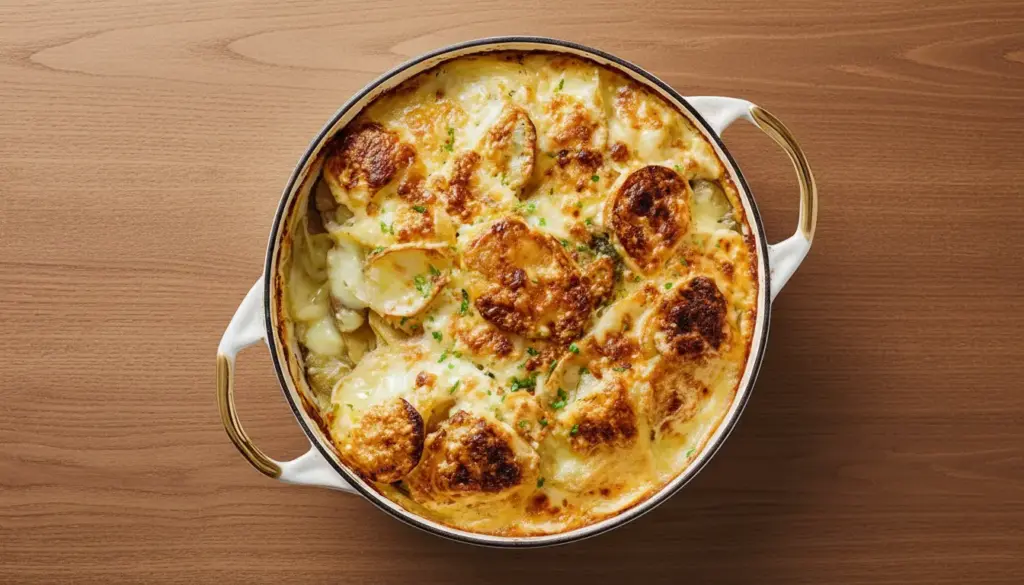
Tartiflette is rich and intensely flavored, so the best accompaniments are things that provide contrast, brightness, and freshness to balance the dish.
The classic French approach is simple and very effective at cutting through all that glorious cheese.
- A crisp green salad with a sharp Dijon mustard vinaigrette is the traditional partner. The acidity of the dressing cuts through the richness of the cheese and bacon beautifully.
- Cornichons (small French pickles) on the side add a welcome tanginess and crunch that offsets the creamy, heavy dish.
- A crusty baguette or sourdough bread is perfect for scooping up any melted cheese from the edges of the dish. A fresh Sourdough Focaccia works equally well on the side.
- Charcuterie, such as thinly sliced dried ham or saucisson sec, adds a French Alpine touch to the table.
- A dry white wine from the Savoie region, such as Apremont or Roussette, is the classic pairing and echoes the wine used in the recipe. A light Pinot Noir from Burgundy also works well.
- For a complete dinner party spread, start with a bowl of French Onion Beef Short Rib Soup before the tartiflette.
Variations to Try
The classic version is hard to beat, but there are some wonderful ways to put a personal spin on this dish while still honoring its Alpine roots.
- Vegetarian Tartiflette. Replace the bacon with 8 oz (225g) of sautéed mushrooms, such as cremini or porcini, and add a pinch of smoked paprika to recreate that smoky depth. Leeks or sliced zucchini can also be added for extra body.
- Tartiflette au Chèvre. Swap the Reblochon for a good-quality log of soft goat cheese (chèvre) for a tangier, more piquant flavor profile. This version pairs particularly well with thyme and rosemary.
- Raclette-style “Racliflette”. Use a wheel of raclette cheese in place of Reblochon for a slightly firmer, nuttier result with excellent melting properties. This is a popular variation within the Savoie region itself.
- Tartiflette with Leeks. Add one thinly sliced leek to the onion and bacon mixture for a gentler, more delicate sweetness that plays beautifully against the richness of the cheese.
- Individual Ramekins. For a dinner party presentation, assemble the tartiflette in individual enameled ramekins and bake for 15 to 20 minutes. Each guest gets their own perfectly portioned, golden-topped gratin.
- Added Cream Fraîche Layers. For an even richer version, add an additional spoonful of crème fraîche between every layer rather than just the middle. This creates a more sauce-like consistency in the finished dish.
This same layering and slow-baking approach is equally delicious in a Squash Casserole Recipe if you want something with a different seasonal twist.
Storage and Reheating
Tartiflette is at its absolute best served straight from the oven, but it does store and reheat well if you have leftovers.
- Refrigerator storage: Allow the tartiflette to cool completely, then cover the baking dish tightly with plastic wrap or transfer portions to an airtight container. Store in the refrigerator for up to 3 days.
- Freezing: Tartiflette can be frozen, though the texture of the potatoes may change slightly upon reheating. Freeze in an airtight container for up to 1 month. Thaw completely in the refrigerator overnight before reheating.
- Reheating in the oven: This is the recommended method. Cover the dish loosely with aluminum foil to prevent the top from over-browning, then warm in a 325°F (160°C) oven for 15 to 20 minutes until piping hot throughout. Remove the foil for the last 5 minutes to re-crisp the cheese top.
- Avoid the microwave: Reheating tartiflette in the microwave makes the potatoes watery and the cheese greasy and separated. The oven method is always worth the extra time.
- Make-ahead tip: You can assemble the entire dish up to 24 hours in advance, cover it, and refrigerate it unbaked. When ready to serve, add 10 extra minutes to the baking time since you are starting from cold.
You might also enjoy: Creamy Mashed Potatoes Recipe
Nutritional Facts
The following values are approximate and based on a serving size of one-sixth of the recipe, assuming 6 servings per dish.
| Nutrient | Per Serving (approx.) |
|---|---|
| Calories | 480 kcal |
| Total Fat | 28g |
| Saturated Fat | 16g |
| Cholesterol | 85mg |
| Sodium | 720mg |
| Total Carbohydrates | 38g |
| Dietary Fiber | 4g |
| Sugars | 4g |
| Protein | 21g |
| Calcium | 350mg |
Please note that nutritional values will vary depending on the specific brands, the cheese you use, and exact portion sizes. Using full-fat crème fraîche and a rich cheese like Reblochon will increase the fat and calorie content.
Read Also: Baked Potato Recipe
Health Benefits of Key Ingredients
While tartiflette is undeniably an indulgent dish, its core ingredients do come with some genuine nutritional value when enjoyed as part of a balanced diet.
Here is a closer look at what the key ingredients bring to the table beyond great flavor.
- Potatoes are a surprisingly good source of vitamin C, potassium, and vitamin B6. They provide complex carbohydrates for sustained energy, and when eaten with the skin on during parboiling, they offer a meaningful amount of dietary fiber.
- Reblochon and similar semi-soft cheeses are rich in calcium, which is essential for strong bones and teeth. Cheese also provides high-quality complete protein and fat-soluble vitamins like vitamin A and vitamin K2, which supports cardiovascular and bone health.
- Onions contain quercetin, a powerful antioxidant with anti-inflammatory properties. They also contribute prebiotic fiber that feeds beneficial gut bacteria, supporting digestive health.
- Garlic is one of the most studied foods in nutrition research. It contains allicin, a compound with documented antibacterial and antiviral properties. Regular consumption of garlic has also been linked to modest improvements in cardiovascular health markers.
- Dry white wine, used in small amounts to deglaze the pan, introduces resveratrol and other polyphenolic compounds that have antioxidant effects. Most of the alcohol cooks off during the deglazing process.
- Bacon and lardons provide a concentrated source of protein and essential B vitamins, particularly B12, which supports neurological function and red blood cell production.
For a lighter but equally comforting side, consider pairing your tartiflette dinner with a bowl of Roasted Carrot Soup.
Frequently Asked Questions
1. What is the best substitute for Reblochon cheese if I cannot find it?
The best substitutes are Brie or Camembert, which share Reblochon’s soft, creamy texture and excellent melting properties. Gruyere and raclette are also excellent choices if you prefer a firmer, nuttier cheese with slightly less moisture. In the US, where raw-milk Reblochon is not commercially available, high-quality Brie from a specialty cheese shop is the most widely recommended alternative by French chefs.
2. Do I have to parboil the potatoes before baking?
Yes, parboiling is an important step that should not be skipped. If you skip this step and layer raw potatoes into the dish, they will not cook through completely during the baking time. The result will be undercooked, slightly crunchy potatoes surrounded by overcooked, greasy cheese. Parboiling brings the potatoes to about 80% doneness so they finish perfectly in the oven.
3. Can I make tartiflette vegetarian?
Absolutely. Replace the bacon lardons with an equal amount of sautéed mushrooms, such as cremini or porcini, for a deeply savory, meat-free version. Adding a pinch of smoked paprika replicates some of the smokiness that bacon provides. Leeks are another great addition in place of or alongside the mushrooms, contributing a gentle sweetness to the vegetable base.
4. Can I assemble tartiflette ahead of time?
Yes, and it is actually a great option for entertaining. You can build the entire dish, cover it tightly, and refrigerate it for up to 24 hours before baking. When you are ready to cook, remove the dish from the refrigerator 20 minutes before it goes into the oven to take some of the chill off, then bake as directed but add 10 extra minutes to account for the cold start.
5. Why is my tartiflette watery after baking?
A watery tartiflette is usually caused by one of two things: potatoes that were not drained and dried thoroughly after parboiling, or too much crème fraîche. Make sure the potatoes are well drained and given time to steam dry in the colander before layering. Also, the quality and fat content of the cheese matters. A full-fat, room-temperature cheese will melt more smoothly than a cold, low-fat substitute.
Read Also: Potato Leek Soup Recipe
Final Thoughts
Tartiflette is one of those dishes that earns its reputation every single time it comes out of the oven.
The combination of golden, bubbling cheese, smoky bacon, and perfectly tender potatoes is something that is very difficult not to fall in love with at first bite.
It is the kind of recipe you will find yourself coming back to every winter, and probably a few other times throughout the year too.
Give this tartiflette recipe a try the next time you need something warm, deeply satisfying, and just a little bit special.
Once you taste that first gooey, cheesy spoonful, you will completely understand why the people of the French Alps have been celebrating this dish for decades.
If you make it, leave a comment below and let us know how it turned out. Sharing your variations, your cheese substitutes, and your serving ideas makes this community better for everyone. Bon appétit!
Recommended:
- Beef Bourguignon Recipe
- Quiche Lorraine Recipe
- Cheesy Garlic Bread Recipe
- Easy Ratatouille Recipe
- Garlic Mashed Potatoes Recipe
- Funeral Potatoes Recipe
- French Toast Casserole Recipe
- Crockpot Beef Stew Recipe
- Chicken Casserole Recipe
- Smashed Potatoes Recipe