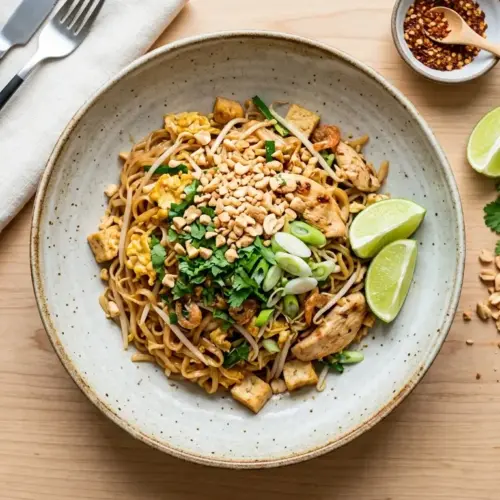
Chicken Pad Thai

This restaurant-quality Chicken Pad Thai Recipe delivers the iconic sweet-sour-savory street food experience in your own kitchen with a perfectly balanced tamarind, fish sauce, and palm sugar sauce that makes it impossible to go back to takeout.
Equipment
- Carbon steel wok (14-inch or larger) - or a large, heavy-bottomed skillet
- Large bowl - for soaking noodles
- Kitchen tongs - or wooden chopsticks for tossing
- Small mixing bowl - for sauce
- Cutting board
- Sharp knife
- Measuring spoons
- Measuring cups
- Spatula - or wok ladle
- Colander - for draining noodles
- Lime squeezer - optional but helpful
Ingredients
- 3 tablespoons tamarind paste - loose brown liquid variety, about 45 ml, not concentrate
- 3 tablespoons fish sauce - about 45 ml, Tiparos or Megachef brand recommended
- 2 tablespoons palm sugar - about 25 g, or light brown sugar as substitute
- 1 tablespoon oyster sauce - about 15 ml, optional, adds extra depth
- 8 oz dried flat rice noodles - about 225 g, 3 mm wide, labeled 'Pad Thai noodles'
- 1 lb boneless skinless chicken breast or thigh - about 450 g, thinly sliced
- 1 tablespoon soy sauce - about 15 ml, for marinating the chicken
- 1 teaspoon sesame oil - about 5 ml, for marinating
- 3 tablespoons vegetable oil - about 45 ml, divided
- 3 cloves garlic - minced
- 2 shallots - finely sliced
- 3 large eggs - lightly beaten
- 1 1/2 cups fresh bean sprouts - about 150 g
- 3 stalks green onions - scallions, cut into 1-inch (2.5 cm) pieces
- 1/2 cup firm tofu - about 50 g, cut into small cubes, optional but traditional
- 1/2 cup roasted unsalted peanuts - about 60 g, roughly chopped, for garnish
- 2 limes - cut into wedges, for serving
- fresh cilantro leaves - for garnish
- dried chili flakes or fresh Thai chilies - to taste, for garnish
Instructions
- Soak the dried flat rice noodles in lukewarm water for 20 to 25 minutes until pliable but still firm. Drain, rinse briefly with cold water, and toss with a few drops of oil if not using immediately.
- In a small bowl, combine the tamarind paste, fish sauce, palm sugar, and oyster sauce. Stir until the sugar is fully dissolved and taste to adjust the balance of sour, salty, and sweet.
- Thinly slice the chicken against the grain and marinate in soy sauce and sesame oil for at least 10 minutes at room temperature.
- Mince the garlic, slice the shallots, cut the green onions, cube the tofu if using, lightly beat the eggs, and measure out the bean sprouts and peanuts for garnish.
- Heat the wok over high heat until almost smoking. Add half the oil, then stir-fry the garlic and shallots for 30 seconds until fragrant. Add the marinated chicken in a single layer, let it sear for 1-2 minutes, then stir-fry until cooked through and golden. Push to one side.
- Add a splash more oil to the empty side of the wok, pour in the beaten eggs, and let them set for 20-30 seconds before scrambling until just cooked and still soft. Fold the eggs into the chicken mixture.
- Add the drained noodles to the wok and pour the Pad Thai sauce over them. Using tongs or chopsticks, toss everything together quickly for 2-3 minutes until the noodles are tender and have absorbed the sauce. Add water in small amounts if the noodles are sticking.
- Add the bean sprouts and the white bottoms of the green onions, toss for 30-45 seconds until just heated through, then remove from heat immediately to keep the sprouts crisp.
- Divide the Pad Thai between bowls and top generously with chopped peanuts, green onion tops, fresh cilantro, and chili flakes. Serve immediately with lime wedges on the side for squeezing over the noodles.
Notes
- Use lukewarm water, not boiling, to soak the noodles to prevent them from becoming mushy during the stir-fry.
- Cook in two separate batches if serving 4 or more people to avoid overcrowding the wok and steaming the noodles instead of stir-frying them.
- Taste the sauce before cooking and adjust the sweetness, saltiness, and sourness to your preference before it hits the heat.
- Have all ingredients prepped and within arm's reach before heating the wok, as the stir-fry cooks in under 10 minutes.
- Add water gradually (1-2 tablespoons at a time) if the noodles are sticking to the wok, which helps them cook through without burning.
- Substitute soy sauce or tamari for fish sauce to make a vegetarian or vegan version, though the flavor profile will be slightly different.
- Make the sauce up to two weeks in advance and store it in the refrigerator for quicker weeknight cooking.
- Pad Thai is best eaten immediately, as the noodles continue to absorb sauce and soften after cooking. Leftovers can be stored in the refrigerator for up to 3 days.
- For extra heat, add 1-2 teaspoons of sambal oelek or crushed Thai bird's eye chilies directly into the sauce.
- Reheat leftovers in a hot wok or skillet with a splash of water or oil for the best texture, and always refresh the garnishes after reheating.