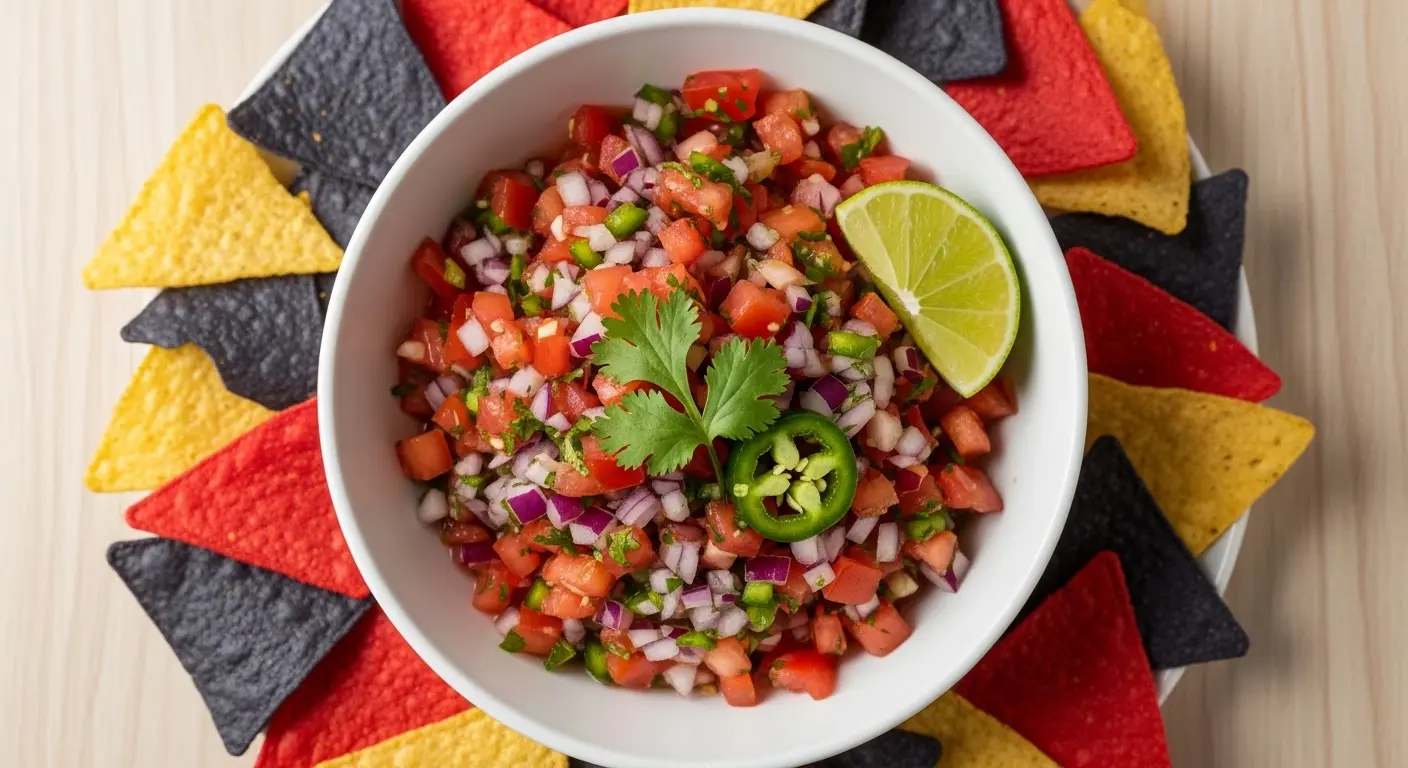
Nothing beats the vibrant flavor of homemade fresh salsa recipe made with ripe tomatoes, zesty lime, and aromatic cilantro. This quick and easy recipe delivers restaurant-quality salsa in just 10 minutes, with no cooking required.
Every bite bursts with garden-fresh taste that no jarred version can replicate.
The secret lies in using the right tomatoes and balancing the ingredients perfectly. Roma tomatoes work best because they have less water content and more flesh, creating a salsa that’s thick and chunky rather than watery.
The combination of fresh and simple ingredients creates layers of flavor that develop even more as the salsa chills in the refrigerator. The lime juice brightens everything while the jalapeño adds just the right amount of heat that you can adjust to your preference.
This versatile salsa works as a dip for tortilla chips, a topping for chicken tacos, or a flavorful addition to breakfast burritos and quesadillas.
Why You’ll Love This Fresh Salsa Recipe
This homemade salsa surpasses any store-bought version in both taste and freshness. Making it yourself means you control exactly how spicy or mild you want it, and you can adjust the garlic and onion levels to suit your preferences perfectly.
The texture is another major advantage. Food processor salsas give you that perfect chunky consistency that’s neither too smooth nor too roughly chopped, similar to what you’d get at your favorite Mexican restaurant.
Here’s what makes this recipe special:
- Ready in 10 minutes with minimal prep work
- Budget-friendly using simple, affordable ingredients
- Customizable heat level by adjusting jalapeños and seeds
- No cooking required making it perfect for hot summer days
- Stays fresh for up to a week in the refrigerator
- Versatile uses beyond just chips and dip
Read Also: Classic Guacamole Recipe
Ingredients
The key to exceptional fresh salsa is using ripe, quality produce at the peak of freshness. Each ingredient plays a specific role in creating the perfect balance of flavors.
- 5 medium Roma tomatoes (about 1.5 pounds / 680g), quartered
- 1/2 medium white onion (about 3/4 cup / 100g), roughly chopped
- 2 medium jalapeño peppers, stems removed (seeds removed for mild, kept for spicy)
- 3 cloves garlic, peeled
- 1/2 cup (20g) fresh cilantro leaves and tender stems, packed
- Juice of 2 limes (about 1/4 cup / 60ml)
- 1 teaspoon (6g) salt, or to taste
- 1/2 teaspoon (1g) ground cumin (optional)
- 1/4 teaspoon (0.5g) black pepper
Kitchen Equipment Needed
Having the right tools makes this recipe even easier and ensures the best texture for your salsa.
- Food processor or high-powered blender
- Sharp knife and cutting board
- Measuring cups and spoons
- Citrus juicer (optional but helpful)
- Airtight storage container
Recommended Products for This Recipe
These carefully selected products will help you create the best fresh salsa with superior flavor and consistency.
1. Cuisinart 14-Cup Food Processor
This food processor gives you complete control over texture, allowing you to pulse your salsa to the perfect chunky consistency. The large capacity handles this entire recipe in one batch, and the sharp blades chop ingredients evenly without turning them to mush.
2. OXO Good Grips Citrus Juicer
Fresh lime juice makes all the difference in salsa, and this hand-held juicer extracts maximum juice while straining out seeds. The ergonomic design requires less effort and the built-in bowl rim catches every drop.
3. Rubbermaid Brilliance Storage Containers
These airtight containers keep your salsa fresh for up to a week by preventing oxidation and odor transfer. The crystal-clear design lets you see exactly what’s inside, and they’re stain and odor resistant even with acidic tomatoes.
4. Wusthof Classic Paring Knife
A sharp paring knife makes quick work of removing jalapeño seeds and stems. This German-made knife holds its edge beautifully and gives you precise control when handling small peppers and garlic cloves.
You might also enjoy: Easy Guacamole Recipe
Step-by-Step Instructions
Follow these detailed steps to create perfectly balanced fresh salsa with ideal texture and flavor.
1. Prepare the Tomatoes
- Rinse the Roma tomatoes under cool water and pat them dry with a clean kitchen towel
- Remove the core from each tomato using a paring knife by cutting around the stem at a slight angle
- Quarter each tomato lengthwise, cutting from top to bottom
- If your tomatoes are particularly watery or seedy, you can gently squeeze out some of the excess seeds and liquid over the sink, though this is optional
2. Prep the Jalapeños
- Rinse the jalapeño peppers and remove the stems by cutting them off at the base
- For mild salsa, slice each jalapeño in half lengthwise and use a small spoon to scrape out all the seeds and white membranes (this is where most of the heat resides)
- For medium heat, remove only half the seeds
- For spicy salsa, leave all the seeds and membranes intact
- Roughly chop the jalapeños into 1-inch pieces
3. Prepare Remaining Vegetables
- Peel the white onion and cut it in half through the root end
- Take one half and roughly chop it into 1-inch chunks (save the other half for another use)
- Peel the garlic cloves by crushing them slightly with the flat side of your knife, which makes the skin easier to remove
- Rinse the fresh cilantro in cold water, then shake off excess moisture and roughly chop (no need to be precise as the food processor will handle the rest)
4. Combine Ingredients in Food Processor
- Add the quartered tomatoes to the bowl of your food processor first, as they’re the largest ingredient
- Add the chopped onion pieces on top of the tomatoes
- Drop in the garlic cloves
- Add the prepared jalapeño pieces
- Squeeze the fresh lime juice directly into the food processor, catching any seeds with your hand
- Sprinkle in the salt, cumin (if using), and black pepper
- Finally, add the chopped cilantro on top
5. Process to Desired Consistency
- Secure the lid on the food processor firmly
- Pulse the mixture 8-10 times using 1-second bursts, stopping to check the consistency after every few pulses
- Scrape down the sides of the bowl with a rubber spatula if needed to ensure even chopping
- Continue pulsing until you reach your desired texture (chunky is traditional, but you can make it smoother if preferred)
- Avoid over-processing or running the food processor continuously, as this will create a puree rather than salsa
6. Taste and Adjust
- Transfer a small spoonful of salsa to a bowl and taste it
- Add more salt if needed (salsa often needs more than you’d expect)
- If it’s too acidic, add a small pinch of sugar to balance the flavors
- If it’s not spicy enough, pulse in additional jalapeño or a pinch of cayenne pepper
- For more lime flavor, squeeze in a bit more fresh lime juice
7. Chill and Serve
- Transfer the salsa to an airtight container
- Refrigerate for at least 30 minutes before serving (1-2 hours is even better as this allows all the flavors to meld together)
- Give the salsa a good stir before serving, as liquid may settle at the bottom
- Serve chilled with homemade tortilla chips or your favorite Mexican dishes
Another favorite: Classic Hummus Recipe
Tips for Success
Follow these expert tips to ensure your fresh salsa turns out perfectly every time.
- Choose the right tomatoes: Roma or plum tomatoes have less water and more flesh, creating better texture. Avoid large beefsteak tomatoes which make watery salsa.
- Don’t skip the chilling time: Refrigeration for at least 30 minutes allows flavors to develop and blend. The salsa tastes significantly better after resting.
- Pulse, don’t puree: Use short bursts with your food processor rather than continuous blending. This creates chunky salsa instead of soup.
- Adjust consistency: If your salsa is too watery, drain some liquid through a fine-mesh strainer. If too thick, add 1-2 tablespoons of water or tomato liquid.
- Balance the flavors: Salsa should have brightness from lime, heat from jalapeño, and depth from garlic and cumin. Taste and adjust before chilling.
- Control the heat: Remember that most of the jalapeño’s heat comes from the seeds and white membranes. Remove them completely for mild salsa, or leave them in for serious spice.
- Use fresh lime juice: Bottled lime juice lacks the bright, fresh flavor that makes salsa taste restaurant-quality. Always juice fresh limes.
- Let vegetables come to room temperature: Cold tomatoes from the refrigerator can dull flavors. Use room temperature produce for best results.
Serving Suggestions
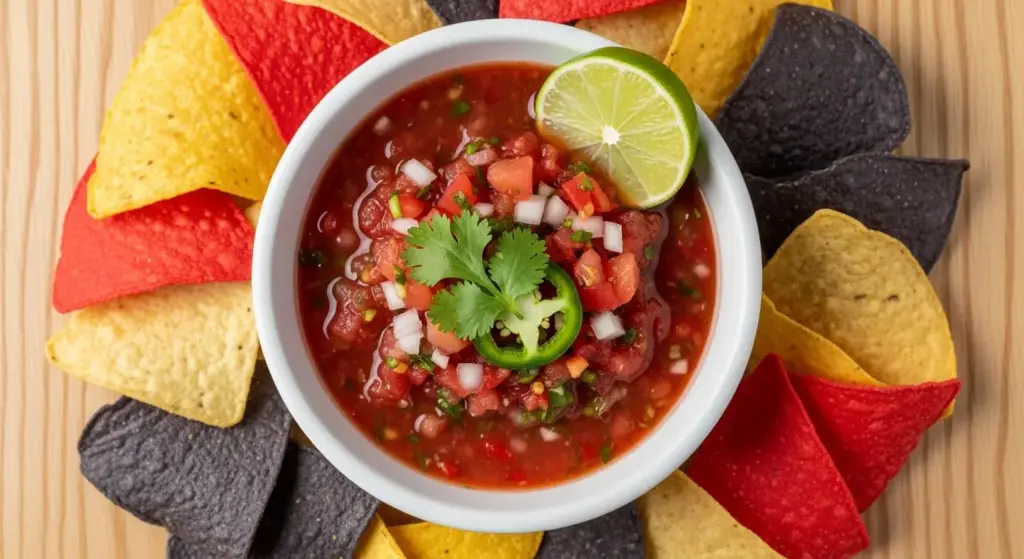
Fresh salsa is incredibly versatile and enhances countless dishes beyond the classic chips and dip combination.
Serve this salsa as a topping for grilled fish tacos or carne asada tacos, where its bright acidity cuts through rich proteins beautifully. It also works wonderfully spooned over chicken fajitas or mixed into burrito bowls for added flavor and moisture.
Here are more delicious ways to enjoy your fresh salsa:
- Spoon over scrambled eggs or breakfast burritos for a zesty morning kick
- Mix into cooked rice or quinoa for Mexican-inspired grain bowls
- Top black bean quesadillas or cheese quesadillas
- Layer into seven-layer dip for parties
- Use as a marinade for chicken or shrimp before grilling
- Stir into sour cream or Greek yogurt for an easy dip
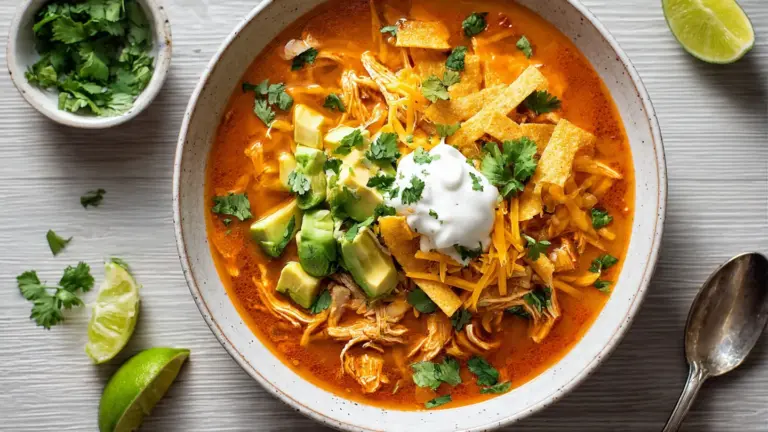
- Add to chicken tortilla soup as a fresh garnish
- Serve alongside nachos with cheese and jalapeños
This pairs beautifully with cilantro lime rice for a complete Mexican feast.
Variations to Try
Once you’ve mastered the basic recipe, experiment with these delicious variations to keep your salsa exciting.
- Roasted salsa: Char the tomatoes, jalapeños, onion, and garlic under the broiler for 10-15 minutes before blending. This creates deeper, smokier flavors.
- Fruit salsa: Add 1 cup diced mango, pineapple, or peaches for a sweet-and-savory twist that’s perfect with grilled fish or pork.
- Fire-roasted salsa: Use canned fire-roasted tomatoes instead of fresh for a smoky flavor without turning on the broiler.
- Corn salsa: Stir in 1 cup of fresh or grilled corn kernels and diced bell peppers for added texture and sweetness.
- Tomatillo salsa (salsa verde): Replace tomatoes with tomatillos and add 1 serrano pepper for an authentic green salsa.
- Chunky pico de gallo: Skip the food processor entirely and finely dice all ingredients by hand for a chunkier, fresher texture.
- Black bean salsa: Mix in 1 can of drained and rinsed black beans plus 1/4 cup diced bell pepper for a heartier version.
- Avocado salsa: Gently fold in 1 diced avocado just before serving for creamy richness.
- Chipotle salsa: Add 1-2 canned chipotle peppers in adobo sauce for smoky heat and depth.
Storage and Reheating
Proper storage keeps your fresh salsa tasting vibrant and delicious throughout the week.
- Refrigerator: Store in an airtight container in the refrigerator for up to 7 days. The flavors continue to develop and meld over the first 24 hours, so day-old salsa often tastes even better.
- Prevent browning: Press plastic wrap directly onto the surface of the salsa before sealing the container to minimize air exposure and oxidation.
- Drain excess liquid: Fresh salsa naturally releases liquid as it sits. Simply drain off excess liquid before serving or stir it back in if you prefer thinner salsa.
- Freezing: Freeze salsa in freezer-safe containers or bags for up to 3 months. The texture will be softer after thawing, making it better for cooked dishes than as a dip.
- Thawing: Thaw frozen salsa overnight in the refrigerator, then drain any excess liquid and stir well before using.
- Serving from refrigerator: Always give refrigerated salsa a good stir before serving, as ingredients may separate and liquid settles at the bottom.
Read Also: Comeback Sauce Recipe
Nutritional Facts
Per serving (1/4 cup / 60ml):
- Calories: 15
- Total Fat: 0g
- Saturated Fat: 0g
- Cholesterol: 0mg
- Sodium: 150mg
- Total Carbohydrates: 3g
- Dietary Fiber: 1g
- Sugars: 2g
- Protein: 1g
- Vitamin C: 15% DV
- Vitamin A: 8% DV
- Potassium: 120mg
Nutritional information is approximate and based on a recipe that yields approximately 12 servings (3 cups total). Values may vary depending on specific ingredients used.
Health Benefits of Key Ingredients
This fresh salsa isn’t just delicious; it’s packed with nutrients that support your overall health and wellbeing.
Tomatoes are rich in lycopene, a powerful antioxidant linked to reduced risk of heart disease and certain cancers. They’re also an excellent source of vitamin C, potassium, and folate while remaining very low in calories.
Here are more health benefits from the ingredients:
- Jalapeños: Contain capsaicin which may boost metabolism, reduce inflammation, and provide natural pain relief
- Cilantro: Offers vitamins A, C, and K, and may help remove heavy metals from the body through natural chelation
- Garlic: Contains allicin, which has antimicrobial properties and may support heart health by reducing blood pressure and cholesterol
- Lime juice: High in vitamin C to support immune function and enhance iron absorption from plant-based foods
- Onions: Rich in quercetin, an antioxidant that may reduce inflammation and support heart health
- Cumin: May aid digestion, provide iron, and has antimicrobial properties
This technique works wonderfully in tomato sauce recipe as well.
Frequently Asked Questions
1. Can I make fresh salsa without a food processor?
Yes, you can absolutely make salsa by hand. Finely dice all the ingredients with a sharp knife and combine them in a bowl. This creates pico de gallo, which has a chunkier texture than processed salsa but is equally delicious.
2. How do I make my salsa less watery?
Drain the salsa through a fine-mesh strainer to remove excess liquid, or use fewer tomatoes and more peppers and onions. Roma tomatoes are naturally less watery than other varieties, so they’re the best choice for thick salsa.
3. Why does my salsa taste bland?
Fresh salsa needs adequate salt to bring out all the flavors. Add salt gradually and taste as you go until the flavors pop. Also ensure you’re using fresh lime juice rather than bottled, and don’t skimp on the cilantro and garlic.
4. Can I use canned tomatoes instead of fresh?
You can use canned diced tomatoes or fire-roasted tomatoes for a different flavor profile. Drain them well before processing, and you may need to reduce or eliminate the added salt since canned tomatoes often contain sodium.
5. How long does homemade salsa last in the refrigerator?
Fresh salsa lasts 5-7 days when stored in an airtight container in the refrigerator. The acidity from the lime juice and tomatoes acts as a natural preservative. Discard if you notice any off odors, mold, or unusual texture.
Read Also: Vodka Sauce Recipe
Final Thoughts
Making fresh salsa at home is one of the easiest ways to elevate your meals with minimal effort and maximum flavor. Once you taste the difference between homemade and store-bought, you’ll never want to go back to jarred salsa again.
This recipe is endlessly adaptable, so don’t be afraid to experiment with ingredient ratios until you find your perfect balance. Try this fresh salsa recipe this week and discover just how simple it is to create restaurant-quality flavors in your own kitchen.
Recommended:
- Classic Bruschetta Recipe
- Chicken Bruschetta Recipe
- Strawberry Bruschetta Recipe
- Sunshine Sauce Recipe
- Creole Sauce Recipe
- Easy Pesto Recipe
- Easy Hummus Recipe
- Easy Nachos Recipe
- Loaded Nachos Recipe
- Classic Deviled Eggs Recipe