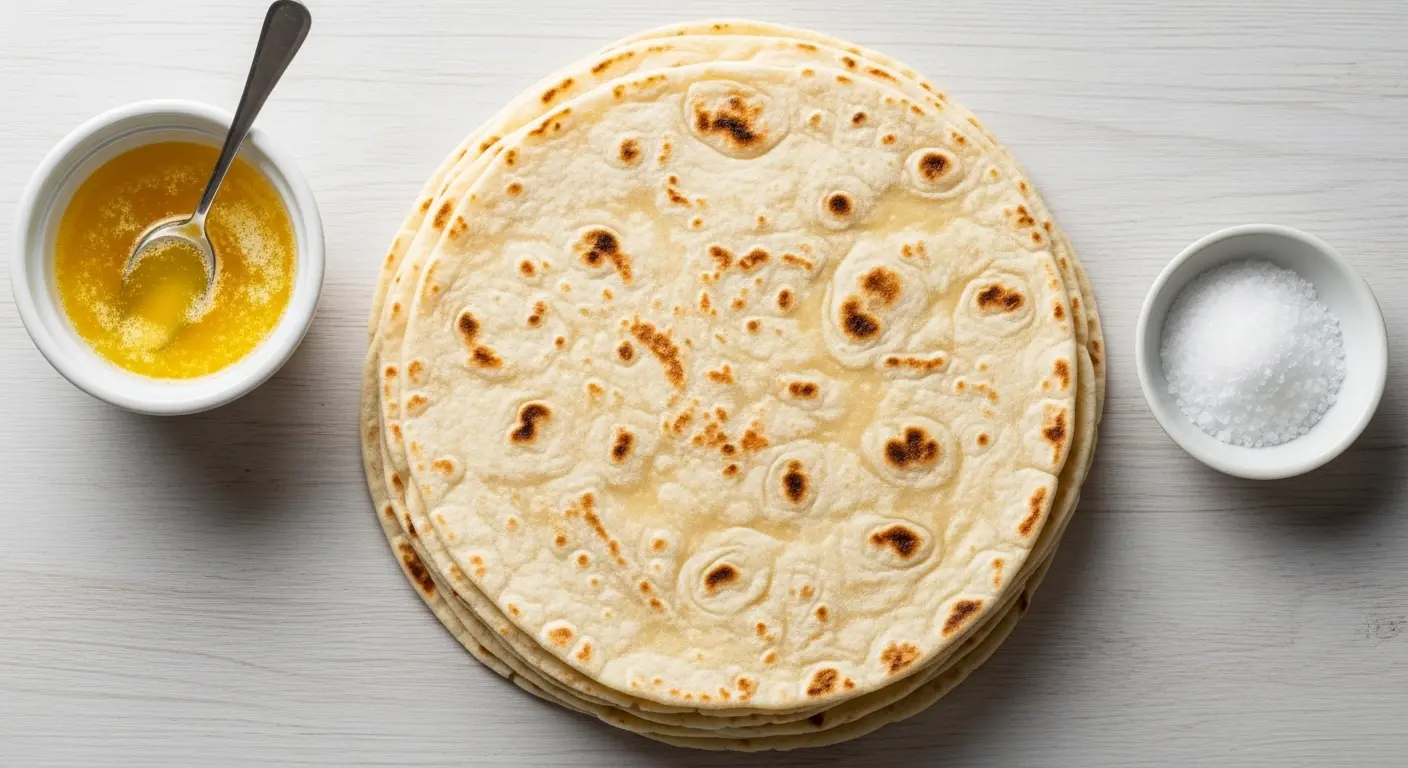
Homemade flour tortillas are one of those simple pleasures that transform everyday meals into something special. Once you taste a warm, soft flour tortilla recipe fresh off the griddle, you’ll understand why so many Mexican families in the northern states still make them from scratch.
These tender, pliable tortillas require just a handful of basic ingredients and about 30 minutes of your time. The dough comes together quickly, and rolling them out becomes easier with each one you make. What makes this flour tortilla recipe so special is the perfect balance of soft texture and slight chewiness that makes them ideal for tacos, burritos, quesadillas, or simply eating warm with butter.
Traditional flour tortillas have been a staple in northern Mexico for nearly 500 years. They differ from their corn tortilla cousins in texture and preparation, offering a mild, slightly sweet flavor that pairs beautifully with both savory and sweet fillings.
The secret to achieving that authentic texture lies in using hot water, which helps the fat blend smoothly with the flour and creates a pliable dough that’s easy to work with.
Making these delicious classic bruschetta to serve alongside your tortillas turns a simple meal into a feast.
Why You’ll Love This Flour Tortilla Recipe
This traditional flour tortilla recipe delivers the authentic taste and texture of northern Mexican tortillas without requiring any special equipment or hard-to-find ingredients. The hot water method ensures your tortillas stay soft and flexible even after cooling.
Most store-bought tortillas contain preservatives and lack the fresh, homemade flavor that makes these so irresistible. Making them from scratch means you control every ingredient and can adjust the thickness to your preference. The process is also quite forgiving for beginners, and the dough can be prepared ahead and refrigerated for up to 24 hours.
Here’s why this recipe wins every time:
- Simple ingredients: Just flour, fat, water, and salt
- Budget-friendly: Costs a fraction of store-bought versions
- Freezer-friendly: Make a big batch and freeze for later
- Versatile: Perfect for tacos, burritos, wraps, quesadillas, and more
- Customizable: Adjust the thickness and size to your liking
- No special equipment: Just a rolling pin and skillet
- Quick cooking: Each tortilla cooks in under 2 minutes
Another favorite: Easy Waffle Recipe
Ingredients
This authentic flour tortilla recipe uses ingredients that are likely already in your pantry. The quality of your fat makes the biggest difference in flavor and texture.
For 10-12 tortillas:
- 3 cups (385g) all-purpose flour, plus extra for dusting
- 1 teaspoon (6g) salt
- 5 tablespoons (70g) vegetable shortening, lard, or vegetable oil (see notes)
- 1 cup (240ml) hot water (as hot as you can handle with your hands)
- 1 teaspoon (4g) baking powder (optional, for extra puffiness)
Fat Options:
- Traditional: Lard creates the most authentic flavor and flaky texture
- Common alternative: Vegetable shortening provides similar texture with neutral flavor
- Modern option: Vegetable oil makes softer, thinner tortillas
- Butter option: Melted butter adds rich flavor but creates a slightly different texture
Kitchen Equipment Needed
You don’t need fancy tools to make perfect flour tortillas. A few basic kitchen items will get the job done beautifully.
- Large mixing bowl
- Fork or pastry blender
- Rolling pin
- Cast iron skillet or heavy griddle
- Clean kitchen towel or tortilla warmer
- Measuring cups and spoons
- Kitchen timer
Read Also: Classic French Toast Recipe
Recommended Products for This Recipe
These carefully selected products will help you achieve bakery-quality results at home and make the tortilla-making process easier and more enjoyable.
1. Lodge Cast Iron Griddle
A cast iron griddle provides even heat distribution that prevents hot spots and ensures your tortillas cook uniformly with beautiful brown spots. The flat surface allows you to cook multiple tortillas at once, speeding up the process considerably. Cast iron also retains heat beautifully, maintaining consistent temperature throughout cooking.
2. French Rolling Pin
A French style rolling pin without handles gives you better control and feel for the dough, making it easier to roll out perfectly thin, even tortillas. The tapered design helps create uniform circles and the smooth wood surface prevents sticking. Professional bakers prefer this style for flatbreads because it provides superior tactile feedback.
3. Insulated Tortilla Warmer
An insulated tortilla warmer keeps your freshly made tortillas warm and pliable for serving. The steam created inside softens the tortillas and prevents them from drying out or becoming brittle. This is essential for maintaining that fresh-off-the-griddle texture throughout your meal.
4. Organic Vegetable Shortening
High-quality organic vegetable shortening creates tender, flaky tortillas with excellent texture. Organic options contain no trans fats or hydrogenated oils, making them a healthier choice. The neutral flavor allows the subtle wheat taste to shine through while providing the pliability that makes tortillas easy to fold and wrap.
You might also enjoy: Belgian Waffle Recipe
Step-by-Step Instructions
Follow these detailed instructions for perfect flour tortillas every single time. Take your time with the first few, and you’ll quickly develop a rhythm that makes the process feel effortless.
1. Mix the Dry Ingredients and Fat
- Place the all-purpose flour, salt, and baking powder (if using) in a large mixing bowl
- Whisk the dry ingredients together until evenly combined
- Add the vegetable shortening, lard, or oil to the flour mixture
- Use a fork, pastry blender, or your fingertips to work the fat into the flour
- Continue mixing until the mixture resembles coarse crumbs or wet sand
- The fat should be evenly distributed with no large chunks remaining
- This process should take about 2-3 minutes
- Proper incorporation of fat is crucial for tender, flaky tortillas
2. Add Hot Water and Form the Dough
- Heat water until it’s hot but not boiling (about 110-120°F/43-49°C)
- The water should be as hot as you can comfortably handle
- Pour about three-quarters of the hot water over the flour mixture
- Stir with a fork or wooden spoon until a shaggy dough begins to form
- Check the consistency and add more water a tablespoon at a time if needed
- The dough should hold together but not be sticky or wet
- Once the dough comes together, turn it out onto a lightly floured work surface
- If it feels too dry and crumbly, add a bit more water
3. Knead the Dough
- Knead the dough for 2-3 minutes until smooth and elastic
- Use the heel of your hand to push the dough away from you
- Fold it back over itself and rotate a quarter turn
- Repeat this pushing, folding, and turning motion
- The dough should become smoother and more cohesive with each knead
- Don’t over-knead or the tortillas will be tough
- The finished dough should be soft, smooth, and slightly tacky but not sticky
- If the dough sticks to your hands, lightly dust with flour
4. Rest the Dough
- Shape the kneaded dough into a smooth ball
- Place the dough ball in a clean bowl
- Cover the bowl with a damp kitchen towel or plastic wrap
- Let the dough rest at room temperature for at least 30 minutes
- This resting period allows the gluten to relax, making rolling easier
- The dough can rest for up to 2 hours at room temperature
- For advance preparation, refrigerate the dough for up to 24 hours
- If refrigerated, bring to room temperature before rolling (about 30 minutes)
5. Divide and Shape the Dough
- Turn the rested dough onto a lightly floured surface
- Divide the dough into 10-12 equal portions using a knife or bench scraper
- For 8-inch tortillas, divide into 10 pieces
- For smaller 6-inch tortillas, divide into 12 pieces
- Roll each portion between your palms to form a smooth ball
- Place the dough balls on a plate or tray
- Cover them with a damp towel to prevent drying
- Let the dough balls rest for 10 more minutes before rolling
6. Roll Out the Tortillas
- Heat your cast iron skillet or griddle over medium to medium-high heat while you roll
- Lightly flour your work surface and rolling pin
- Take one dough ball and flatten it slightly with your palm
- Starting from the center, roll away from you with gentle, even pressure
- Rotate the dough a quarter turn after each roll
- Continue rolling and rotating until you have a circle about 6-8 inches in diameter
- The tortilla should be quite thin, about 1/8 inch (3mm) thick or thinner
- Don’t worry if they’re not perfectly round at first
- Add minimal flour to prevent sticking, as too much makes them dry
- Stack rolled tortillas between sheets of parchment if making several at once
7. Cook the Tortillas
- Test your skillet by sprinkling a few drops of water on it
- The water should sizzle and evaporate immediately when the pan is ready
- Carefully place a rolled tortilla onto the hot, dry skillet
- You should see small bubbles forming across the surface within 15-20 seconds
- Cook for 30-45 seconds until light brown spots appear on the bottom
- Use a thin spatula or your fingers to flip the tortilla
- Cook the second side for another 30-45 seconds
- The tortilla should puff up slightly, which is a good sign
- Look for golden brown spots but avoid burning or overcooking
- Don’t press down on the tortilla while cooking
8. Keep Warm and Serve
- Remove the cooked tortilla from the skillet
- Immediately place it in a clean kitchen towel or tortilla warmer
- Fold the towel over the tortilla to keep it warm and soft
- Stack subsequent tortillas on top of each other in the towel
- The steam from the hot tortillas helps keep them pliable
- Continue rolling and cooking the remaining dough balls
- Keep the stack wrapped until ready to serve
- Serve warm for the best texture and flavor
- The first tortilla is traditionally eaten immediately with butter
This pairs beautifully with classic guacamole for a complete Mexican feast.
Tips for Success
These professional tips ensure your flour tortillas turn out perfectly soft, tender, and pliable every single time. Pay special attention to these details for the best results.
Key techniques for perfect tortillas:
- Use hot water: Water temperature directly affects texture. Hot water (not boiling) creates softer, more pliable tortillas by helping the fat incorporate smoothly into the flour. Cold water results in tougher, less tender tortillas.
- Don’t skip the rest: Resting the dough allows the gluten to relax, making the tortillas much easier to roll out thin without springing back. Skipping this step results in tortillas that shrink back and resist rolling.
- Roll thin: Thinner tortillas are more pliable and authentic. Aim for translucency when you hold them up to the light. Thick tortillas become stiff and don’t fold well.
- Control the heat: Medium to medium-high heat is ideal. If your skillet is too hot, the tortillas will burn before cooking through. Too cool, and they’ll become tough and chewy.
- Work quickly: Once you start cooking, maintain your rhythm. Roll out the next tortilla while one is cooking to keep the process efficient.
- Keep them covered: Always keep uncooked dough balls and cooked tortillas covered to prevent drying. Exposed dough develops a skin that creates tough spots.
- Steam them: The towel-wrapping method allows tortillas to steam each other, which keeps them soft and pliable even as they cool.
- Don’t overwork: Handle the dough gently and roll with light pressure. Overworking develops too much gluten, resulting in tough, chewy tortillas.
For a lighter option, try: Healthy Chicken Salad Recipe
Serving Suggestions
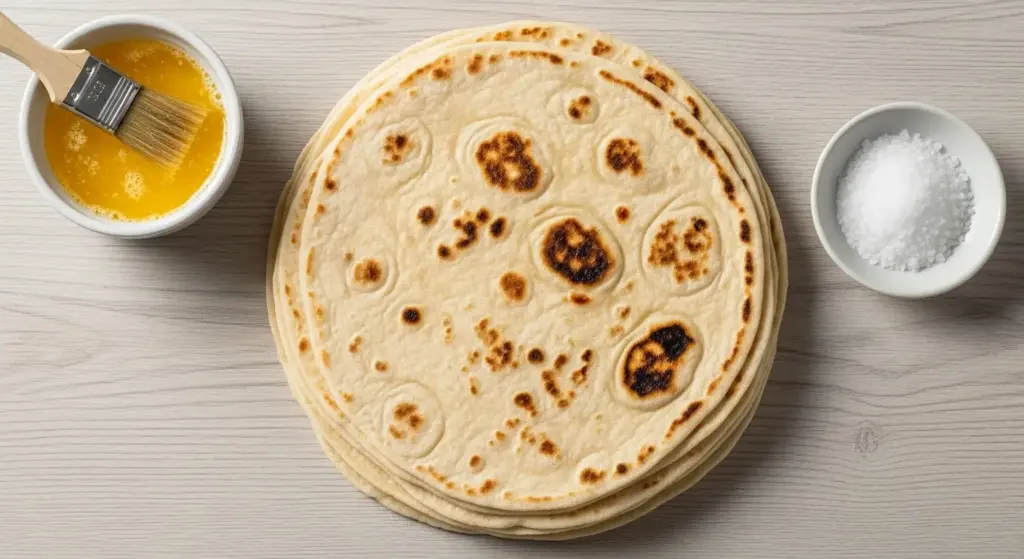
Flour tortillas are incredibly versatile and can transform simple ingredients into satisfying meals. Their mild flavor makes them the perfect canvas for both traditional and creative fillings.
Popular ways to enjoy flour tortillas:
- Classic tacos: Fill with seasoned ground beef, shredded chicken, carnitas, or fish with fresh toppings like lettuce, tomatoes, cheese, and salsa
- Burritos: Stuff with rice, beans, meat, cheese, and your favorite toppings, then wrap tightly for a handheld meal
- Quesadillas: Fill with cheese and fold in half, cooking until golden and crispy on both sides
- Fajitas: Load with grilled peppers, onions, and your choice of protein
- Breakfast wraps: Fill with scrambled eggs, bacon, cheese, and hash browns for a hearty morning meal
- Enchiladas: Roll filled tortillas, cover with sauce and cheese, then bake until bubbly
- Tortilla chips: Cut into triangles, brush with oil, and bake until crispy
- Simple snack: Warm and spread with butter, honey, or cinnamon sugar
- Wraps and roll-ups: Use as sandwich wraps with deli meats, veggies, and spreads
- Tortilla pizzas: Top with sauce, cheese, and toppings, then bake for a quick dinner
Read Also: Easy Guacamole Recipe
Variations to Try
Once you’ve mastered the basic flour tortilla recipe, experiment with these delicious variations to add new flavors and textures to your homemade tortillas.
Flavor and texture variations:
- Whole wheat tortillas: Replace half the all-purpose flour with whole wheat flour for added fiber and a nutty flavor. Add an extra tablespoon of water as whole wheat absorbs more liquid.
- Herb tortillas: Add 2 tablespoons of fresh chopped herbs like cilantro, parsley, or chives to the dough for savory flavor.
- Garlic tortillas: Mix in 1-2 teaspoons of garlic powder or roasted garlic paste for aromatic tortillas perfect with Italian dishes.
- Spinach tortillas: Blend 1/2 cup cooked spinach with the water before adding to the flour for green, nutrient-packed tortillas.
- Whole grain: Use a combination of whole wheat, spelt, or other whole grain flours for heartier tortillas.
- Butter tortillas: Replace the shortening with melted butter for a rich, buttery flavor (note: these will have a slightly different texture).
- Oil-based: Use olive oil or avocado oil instead of solid fat for softer, thinner tortillas.
- Sweet tortillas: Add 2 tablespoons of sugar and a teaspoon of cinnamon for dessert tortillas perfect with fruit or sweet fillings.
Another favorite: Easy Hummus Recipe
Storage and Reheating
Proper storage keeps your homemade flour tortillas fresh and pliable for days. Follow these methods to maintain that just-made texture and flavor.
How to store flour tortillas:
- Room temperature: Stack cooled tortillas and wrap tightly in plastic wrap or place in a resealable bag. Store at room temperature for up to 2 days. Make sure they’re completely cool before wrapping to prevent condensation.
- Refrigeration: Wrap tortillas tightly and refrigerate for up to 1 week. Bring to room temperature before serving, or reheat to restore softness.
- Freezing: Place parchment paper between each tortilla to prevent sticking. Stack and wrap tightly in plastic wrap, then place in a freezer bag. Freeze for up to 3 months. Thaw overnight in the refrigerator.
- Reheating in skillet: Heat a dry skillet over medium heat and warm each tortilla for 15-20 seconds per side until pliable.
- Reheating in microwave: Stack up to 5 tortillas wrapped in a damp paper towel. Microwave on high for 30-45 seconds until warm and soft.
- Reheating in oven: Wrap a stack of tortillas in aluminum foil and heat at 350°F (175°C) for 10-15 minutes.
- Steam reheating: Hold tortillas one at a time over steam from boiling water for a few seconds on each side to restore moisture and softness.
You might also enjoy: Classic Egg Salad Recipe
Nutritional Facts
Per tortilla (based on 12 tortillas):
- Calories: 165
- Total Fat: 6g
- Saturated Fat: 1.5g
- Trans Fat: 0g
- Cholesterol: 0mg
- Sodium: 195mg
- Total Carbohydrates: 24g
- Dietary Fiber: 1g
- Sugars: 0g
- Protein: 4g
Note: Nutritional information varies depending on the type of fat used and exact portion sizes. These values are estimates based on vegetable shortening.
Health Benefits of Key Ingredients
While flour tortillas are primarily enjoyed for their taste and versatility, they do provide several nutritional benefits when made from quality ingredients. Understanding what goes into your homemade tortillas helps you make informed dietary choices.
All-purpose flour provides energy through carbohydrates and contains small amounts of protein, iron, and B vitamins. When enriched, it offers additional nutrients like folic acid which supports cell growth and function. Making tortillas at home allows you to control the quality of flour used.
Healthy fats from vegetable shortening, lard, or oil help your body absorb fat-soluble vitamins and provide essential fatty acids. Using high-quality fats without trans fats or artificial additives makes these tortillas a better choice than many commercial versions. Traditional lard contains oleic acid, the same heart-healthy fat found in olive oil.
Key nutritional advantages:
- Energy source: Complex carbohydrates provide sustained energy throughout the day
- Customizable: Control sodium levels and choose organic or whole grain flour options
- No preservatives: Homemade tortillas avoid the chemical preservatives found in store-bought versions
- Portion control: Make smaller or larger tortillas to fit your dietary needs
- Fiber option: Add whole wheat flour to increase dietary fiber content
- Protein addition: Combine with beans, meat, or cheese for complete protein meals
- Calcium: Pair with dairy fillings to increase calcium intake
For a lighter option, try: Easy Pesto Recipe
Frequently Asked Questions
1. Can I make flour tortillas without lard or shortening?
Yes, you can substitute vegetable oil, olive oil, or melted butter for lard or shortening. Use about 1/3 cup of oil instead of the solid fat. Oil-based tortillas tend to be thinner and softer but may not have quite the same flaky texture as those made with solid fat.
2. Why are my flour tortillas tough and chewy?
Tough tortillas usually result from overworking the dough, adding too much flour, or cooking them too long. Make sure to knead only until smooth, use minimal flour when rolling, and cook each side for just 30-45 seconds. Proper resting time also helps relax the gluten for tender results.
3. Do I need baking powder in flour tortillas?
Baking powder is optional in flour tortilla recipes. Some prefer adding it for extra puffiness and lighter texture, while traditional recipes often omit it. If you choose to include it, use just 1 teaspoon for the batch as too much creates overly fluffy tortillas that lack the proper texture.
4. How do I keep homemade flour tortillas from getting hard?
Keep tortillas soft by wrapping them in a towel or tortilla warmer immediately after cooking, which allows them to steam each other. Store completely cooled tortillas in an airtight container or resealable bag. Avoid overcooking, as this removes moisture and makes them stiff.
5. Can I freeze homemade flour tortillas?
Absolutely! Freezing is an excellent way to preserve homemade tortillas. Place parchment paper between each tortilla to prevent sticking, wrap the stack tightly in plastic wrap, then seal in a freezer bag. They’ll stay fresh for up to 3 months and can be thawed overnight in the refrigerator or reheated directly from frozen.
Read Also: Classic Hummus Recipe
Final Thoughts
Making homemade flour tortillas is a rewarding kitchen skill that connects you to centuries of Mexican culinary tradition. The soft, warm tortillas you create will elevate any meal from ordinary to extraordinary.
With just four basic ingredients and about 30 minutes, you can produce tortillas that surpass anything available at the grocery store. The process becomes faster and more intuitive with practice, and soon you’ll be rolling out perfectly round tortillas like a pro.
Give this flour tortilla recipe a try and experience the difference that fresh, homemade tortillas make. Share your results in the comments below and let us know what delicious fillings you wrapped inside!
Recommended:
- Easy Granola Recipe
- Homemade Granola Recipe
- Basic Crepe Recipe
- Easy Orange Chicken Recipe
- Sweet Cornbread Recipe
- Skillet Cornbread Recipe
- Easy Tiramisu Recipe
- Classic Tiramisu Recipe
- Fried Cabbage Recipe
- Sauteed Cabbage Recipe