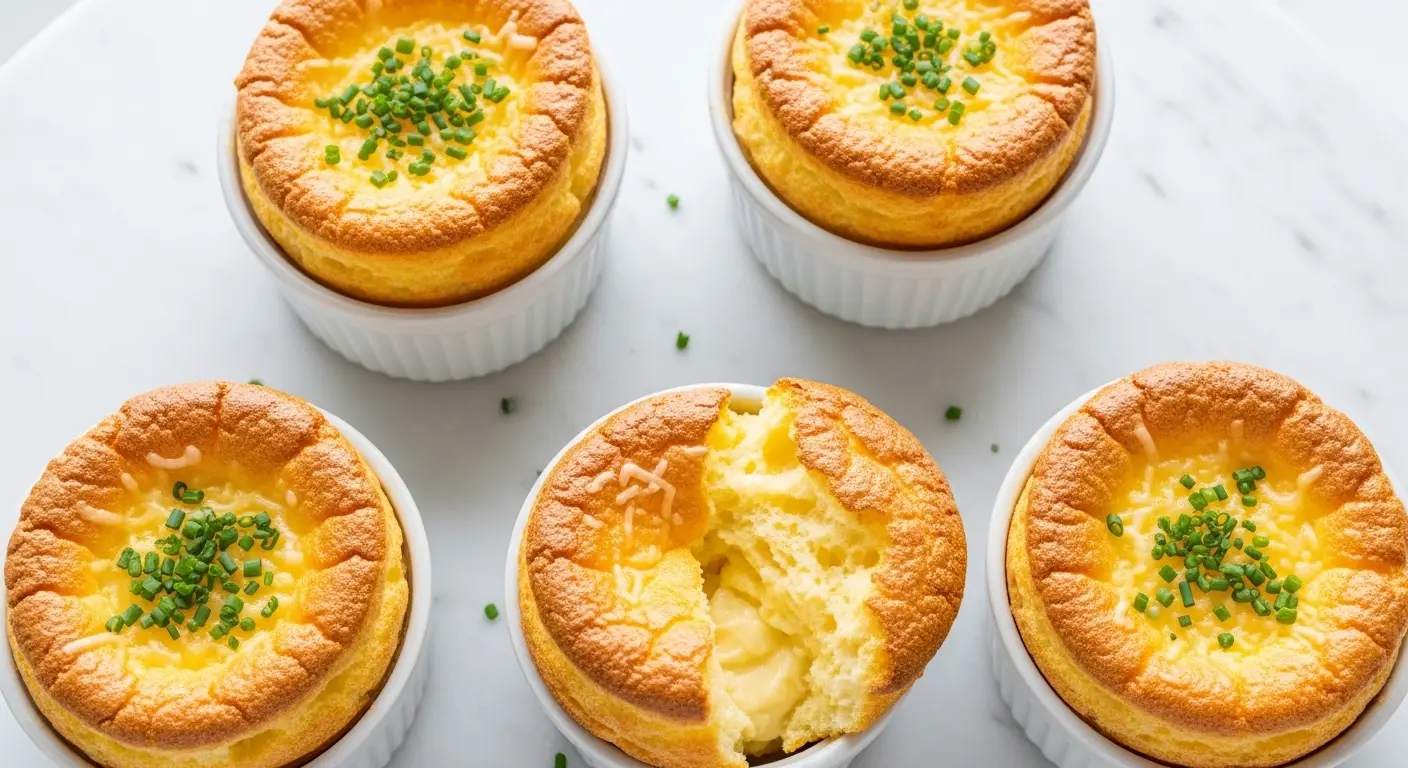
If you’ve been putting off trying an egg souffle recipe because it sounds intimidating, today is the day that changes. A classic egg souffle is one of those French dishes that looks like it came straight from a fancy restaurant kitchen but is actually very achievable at home with the right technique. The secret is understanding a few key steps: making a smooth bechamel base, separating your eggs properly, and whipping those whites to just the right consistency before gently folding everything together.
The result? A dish that is golden and puffed on top, creamy and custardy in the center, and absolutely unlike anything else on the breakfast or brunch table.
This recipe walks you through the classic, French-inspired version of a savory egg souffle, baked in individual ramekins for an elegant presentation. It uses a simple white sauce (bechamel) as the base, enriched with egg yolks and gruyere cheese, then lightened with whipped egg whites. It’s a dish that rewards attention and patience, and once you nail it, you’ll want to make it again and again.
Why You’ll Love This Egg Souffle Recipe
This egg souffle recipe ticks every box for a showstopping brunch dish.
It’s an impressive presentation that actually requires minimal specialty ingredients. Most of what you need is already in your kitchen.
The texture is truly one of a kind. The combination of a rich bechamel base and airy whipped egg whites creates something that is simultaneously light and satisfying.
It’s a versatile recipe at its core. Once you master the base technique, you can customize it endlessly with different cheeses, herbs, and add-ins.
The individual ramekin format makes portioning effortless. Every guest gets their own perfectly puffed souffle, which is as fun to serve as it is to eat.
It’s naturally gluten-forward but also easy to adapt. A simple swap to a cup-for-cup gluten-free flour works beautifully without any other adjustments needed.
- Impressive enough for special occasions like Mother’s Day, Easter brunch, or holiday mornings
- Ready in under an hour from start to finish
- Uses simple, accessible ingredients
- Customizable with your favorite cheeses and herbs
- Individual ramekins make serving and presentation effortless
Another classic egg dish that’s great for entertaining is Cloud Eggs, which uses a similar whipped egg white technique for a stunning visual effect.
Ingredients
Making an egg souffle doesn’t require a long shopping list. The magic is in the method, not in an overwhelming number of components. Using good quality eggs and a flavorful cheese like gruyere makes a real difference in the final flavor. Cold eggs are actually easier to separate cleanly, so take them straight from the fridge.
- 6 large eggs, cold (separated into yolks and whites)
- 2 tablespoons (30g) unsalted butter, plus extra for greasing
- 2 tablespoons (16g) all-purpose flour
- 3/4 cup (180ml) whole milk, warmed
- 1/2 teaspoon fine salt
- 1/4 teaspoon freshly ground black pepper
- Pinch of freshly grated nutmeg
- 1/4 teaspoon cream of tartar
- 3/4 cup (75g) gruyere cheese, freshly grated (plus 2 tbsp extra for topping)
- 2 tablespoons freshly grated parmesan cheese (for coating the ramekins)
- 1 tablespoon fresh chives, finely chopped (optional but recommended)
You might also enjoy: Starbucks Egg Bites Recipe
Kitchen Equipment Needed
The right tools make this recipe significantly easier. A stand mixer or hand mixer with a whisk attachment is the most important piece of equipment here, as hand-whipping egg whites to stiff peaks is genuinely difficult. The right size ramekins also matter, since using dishes that are too large will result in a souffle that doesn’t rise dramatically above the rim.
- Electric hand mixer or stand mixer with whisk attachment
- 4 individual souffle ramekins (6-ounce / 180ml capacity)
- Small saucepan
- Silicone spatula or large rubber spatula
- Whisk
- Two large mixing bowls
- Baking sheet
- Pastry brush or small brush for buttering ramekins
- Measuring cups and spoons
- Box grater
Read Also: Quiche Lorraine Recipe
Recommended Products for This Recipe
These are a few products that genuinely improve the process and results when making an egg souffle at home. Each one is recommended based on quality and how much of a difference it makes in the recipe.
1. Emile Henry Ceramic Ramekins (Set of 4)
These ceramic ramekins distribute heat evenly, which is essential for a consistently risen souffle. The straight sides help the souffle climb upward during baking rather than spreading outward. They are durable, oven-safe to high temperatures, and easy to clean.
2. KitchenAid Hand Mixer
Achieving stiff, glossy egg white peaks manually is extremely difficult. A quality hand mixer gets your whites to the perfect consistency in under 3 minutes, which is a huge factor in whether your souffle rises dramatically or barely lifts. The KitchenAid is reliable, powerful, and widely loved for exactly this kind of task.
3. Bellino Freshly Grated Parmesan
Pre-grated parmesan in the canister has a dry, powdery texture that doesn’t cling to the sides of ramekins properly. Using a genuine wedge of parmesan you grate yourself creates a fine, sticky coating that helps the souffle climb. It also melts more beautifully into the base.
4. GruyAre Cheese (Imported)
Imported gruyere is noticeably more flavorful than domestic alternatives. Its nutty, slightly sweet flavor pairs perfectly with eggs and nutmeg, making it the go-to cheese for a classic French-style egg souffle. Using a good quality gruyere elevates this dish from good to exceptional.
5. OXO Good Grips Silicone Spatula
Folding egg whites into a heavier base requires a wide, flexible spatula that lets you use a true folding motion without deflating the air you worked so hard to build. This OXO spatula is heat-safe, flexible, and the ideal size for this task.
This technique is also used in our Bechamel Sauce Recipe if you’d like to get comfortable with making a smooth white sauce before tackling the souffle.
Step-by-Step Instructions
Step 1: Prepare Your Equipment and Preheat the Oven
- Preheat your oven to 375°F (190°C). Give the oven at least 20 minutes to fully come to temperature. A hot oven is essential for a good rise.
- Place a baking sheet on the center rack of the oven while it preheats. Starting the ramekins on a hot surface helps kick-start the lift from the bottom.
- Using a pastry brush, generously coat the inside of each ramekin with softened butter, brushing in vertical strokes up the sides. This vertical motion encourages the souffle to climb upward. Make sure every part of the interior is covered, including the rim.
- Add 1 tablespoon of freshly grated parmesan cheese to one ramekin and tilt and rotate it to coat the buttered surfaces evenly. Tap out the excess into the next ramekin and repeat until all four are coated. This parmesan coating creates a grip for the rising batter.
- Place the prepared ramekins in the refrigerator to keep them cold while you prepare the batter.
Step 2: Separate the Eggs
- Remove your eggs from the refrigerator. Cold eggs separate more cleanly than room temperature eggs.
- Crack one egg at a time over a small bowl first, passing the yolk carefully between the two shell halves and letting the white fall into the bowl below. Once you are satisfied that no yolk has broken into the white, transfer the white to your large mixing bowl. Add the yolk to a separate medium bowl. Repeat with all 6 eggs.
- This one-by-one method is important: if a yolk accidentally breaks into the whites, that single portion is ruined but the rest is saved. Any fat from egg yolk will prevent the whites from whipping properly.
- Set both bowls aside. The egg whites can stay at room temperature for up to 30 minutes before whipping. Room temperature whites actually whip up to a slightly greater volume, so this step is a good one.
Step 3: Make the Bechamel Base
- Melt 2 tablespoons (30g) of butter in a small saucepan over medium-low heat. Don’t let the butter brown.
- Once the butter is melted and the foam has subsided, add 2 tablespoons (16g) of all-purpose flour all at once. Whisk constantly and cook the mixture for about 1 to 2 minutes. This step, called making a roux, cooks out the raw flour taste. The mixture should look like a thick, smooth paste and smell slightly nutty but should not turn brown.
- Reduce the heat to low. Gradually add the 3/4 cup (180ml) of warm whole milk, a small splash at a time, whisking constantly after each addition to prevent lumps. If you add the milk too quickly, you will get a lumpy sauce that is very difficult to fix.
- Once all the milk has been incorporated, increase the heat back to medium and whisk continuously until the sauce thickens and just begins to bubble. This should take about 3 to 4 minutes. The final sauce should be thick enough to coat the back of a spoon.
- Remove the saucepan from the heat. Season the sauce with 1/2 teaspoon salt, 1/4 teaspoon black pepper, and a pinch of freshly grated nutmeg. Stir to combine. The nutmeg adds a warm, subtle depth that is classic in French egg preparations.
Step 4: Incorporate the Egg Yolks and Cheese
- Let the bechamel sauce cool for just 2 to 3 minutes. It should be warm but not steaming hot. Adding the yolks to a sauce that is too hot will scramble them.
- Whisk 1 egg yolk into the warm bechamel, mixing thoroughly until fully incorporated. Repeat with each remaining yolk, whisking well after each addition.
- Add 3/4 cup (75g) of freshly grated gruyere cheese and 1 tablespoon of chopped fresh chives (if using) to the egg yolk mixture. Stir until the cheese is melted and the mixture is smooth and glossy. This is your souffle base. Set it aside at room temperature.
Step 5: Whip the Egg Whites
- Add 1/4 teaspoon of cream of tartar to your bowl of egg whites. The cream of tartar stabilizes the egg whites, helping them hold their volume for longer and creating a stronger foam. This gives you a little extra time to fold and pour before the whites begin to deflate.
- Using your electric hand mixer or stand mixer with a whisk attachment, beat the egg whites on medium speed for about 1 minute until frothy, then increase to high speed.
- Continue beating on high speed until the whites reach stiff peaks. Stiff peaks means when you lift the beater out of the bowl, the whites hold their shape and stand up straight without drooping over. The whites should look glossy and white, not dry or clumped. If they look dry and clumpy, they are over-beaten and unfortunately need to be started again. This entire process takes about 3 to 5 minutes.
Step 6: Fold the Egg Whites Into the Base
- This is the most critical step. Do it gently and do not rush it.
- First, add about 1/4 of the beaten egg whites to the egg yolk and cheese base. Stir this first portion in firmly with a spatula. Don’t worry about being gentle at this stage. This lightens the heavier base mixture, making it easier to fold in the rest of the whites without deflating them.
- Add the remaining egg whites to the bowl. Using a large silicone spatula, fold them in using a gentle, deliberate motion: cut down through the center of the bowl, sweep along the bottom, then bring the spatula up and over the top. Rotate the bowl slightly after each fold and repeat.
- Fold just until no large streaks of white remain. It is perfectly fine to have a few small streaks. Over-folding deflates the air you built into the whites, which will result in a less dramatic rise. The entire folding process should take no more than 12 to 15 gentle folds.
Step 7: Fill the Ramekins and Bake
- Remove the prepared ramekins from the refrigerator. Retrieve the preheated baking sheet from the oven.
- Divide the souffle batter evenly among the four ramekins, filling each one to about 3/4 full. Do not fill them all the way to the rim, as the souffle needs room to rise.
- Run a clean thumb or the tip of a butter knife around the inside edge of each ramekin, pressing gently to create a slight channel between the batter and the dish wall. This “top hat” technique encourages the souffle to rise in a domed, attractive shape.
- Sprinkle the reserved 2 tablespoons of grated gruyere evenly over the tops of the four souffles.
- Place the filled ramekins on the preheated baking sheet in the oven. Do not open the oven door during baking. Even a small draft or temperature drop can cause the souffles to collapse.
- Bake for 20 to 25 minutes, until the souffles are puffed well above the rim of the ramekins, the tops are deep golden brown, and the center jiggles very slightly when you gently shake the baking sheet. A fully set souffle will feel firm on top but still have a soft, creamy center.
- Serve immediately directly from the oven. Souffles begin to deflate within minutes of coming out of the oven, so have your table set and your guests ready before you open the oven door.
Read Also: Egg Bake Recipe
Tips for Success
A successful egg souffle comes down to a few non-negotiable techniques. Understanding these before you start makes everything feel much more manageable.
- Keep fat away from your egg whites. Even a tiny trace of egg yolk or grease in the bowl will prevent the whites from whipping properly. Wipe your mixing bowl with a paper towel dampened with a little white vinegar before adding the whites.
- Don’t skip the cream of tartar. It stabilizes the foam and gives you a longer window to work before the whites start to deflate.
- Use room temperature eggs for whipping. While cold eggs separate more cleanly, allow the whites to sit at room temperature for 20 to 30 minutes before whipping for maximum volume.
- Warm your milk before adding it to the roux. Cold milk added to a hot roux creates lumps. Warming the milk (microwave for 45 seconds) prevents this entirely.
- Fold, don’t stir. The folding motion preserves the air in the whites. Stirring deflates it.
- Trust the process and don’t open the oven. Resist the urge to peek. Even a brief drop in temperature during the first 15 minutes can prevent a proper rise.
- Prepare everything in advance. Have your ramekins prepped, your base made, and your table set before you start whipping the whites.
You might also enjoy: Air Fryer Egg Bites Recipe
Serving Suggestions

An egg souffle is elegant on its own, but pairing it with the right accompaniments creates a genuinely memorable brunch or light dinner.
A simple green salad with a bright vinaigrette is one of the best companions. The acidity cuts through the richness of the souffle beautifully.
Crusty bread or warm toast alongside makes it more filling without overpowering the delicate flavor of the souffle itself.
- Fresh fruit salad for a light, refreshing contrast
- Avocado Toast for a casual weekend brunch spread
- Roasted asparagus or sauteed mushrooms for a more dinner-appropriate pairing
- Classic Deviled Eggs as a starter if you’re serving the souffle as a main course at brunch
- A glass of sparkling water with lemon or a mimosa for a celebratory brunch table
- Simple green salad with Dijon vinaigrette
Variations to Try
The classic gruyere and chive version in this recipe is a wonderful starting point. Once you are comfortable with the base technique, the possibilities are genuinely endless.
The key to successful add-ins is making sure they are small, finely cut, and pre-cooked if necessary. Large chunks of dense ingredients can weigh down the batter and prevent a good rise.
- Cheese Swap: Use sharp cheddar, fontina, or a combination of swiss and parmesan in place of gruyere for a different flavor profile
- Ham and Cheddar: Stir in 3 tablespoons of finely diced cooked ham along with cheddar cheese for a heartier, crowd-pleasing version
- Spinach and Feta: Add 2 tablespoons of finely chopped, squeezed-dry cooked spinach and crumbled feta for a Mediterranean twist
- Chocolate Souffle Recipe: Use this same base technique for a decadent dessert souffle by swapping the savory ingredients for dark chocolate and a touch of vanilla
- Carrot Souffle: A slightly sweet, vegetable-forward take that works wonderfully as a side dish
- Herb Lover’s Version: Add fresh tarragon, flat-leaf parsley, and a small amount of Dijon mustard to the bechamel for an intensely herby, aromatic souffle
Storage and Reheating
A souffle is very much a “serve immediately” dish, and this is a firm rule. The light, airy texture comes entirely from the air trapped in the whipped egg whites, and that air escapes as the souffle cools. Reheating a fallen souffle is possible but the texture will be fundamentally different from a freshly baked one.
That said, the bechamel base can be made up to a day ahead and refrigerated. Separate and store the egg whites and yolks separately in the fridge. When ready to bake, bring the base to room temperature, whip the whites, and assemble.
- Fridge: Leftovers can be stored in the ramekins, covered with plastic wrap, for up to 2 days in the refrigerator. The texture will be denser and more custardy after storage, which is still delicious.
- Reheating: Reheat in a 300°F (150°C) oven for 8 to 10 minutes. Do not use the microwave, as it will make the texture rubbery.
- Freezing: Freezing is not recommended, as the egg whites do not freeze and thaw well and the texture becomes unpleasant.
- Make ahead tip: Prep the bechamel base and grate the cheese up to 24 hours ahead. Store the base tightly covered in the refrigerator and bring to room temperature before assembling.
Read Also: Egg Bites Recipe
Nutritional Facts
The following nutritional information is an estimate for one individual egg souffle (one ramekin), based on the standard recipe above.
| Nutrient | Amount Per Serving |
|---|---|
| Calories | ~285 kcal |
| Protein | 18g |
| Total Fat | 20g |
| Saturated Fat | 10g |
| Carbohydrates | 7g |
| Fiber | 0g |
| Sugar | 2g |
| Sodium | 420mg |
| Calcium | 280mg |
| Iron | 1.5mg |
Nutritional values are estimates and will vary depending on specific ingredients and portion sizes used.
This pairs wonderfully as part of a balanced brunch alongside Shakshuka for a globally inspired egg-forward spread.
Health Benefits of Key Ingredients
The ingredients in a classic egg souffle aren’t just delicious; they also bring some meaningful nutritional benefits to the table.
Whole eggs are one of the most complete protein sources available, containing all nine essential amino acids. They are also rich in choline, B vitamins, and vitamin D.
Gruyere cheese provides a substantial dose of calcium and phosphorus, both important for bone health. It’s also relatively high in protein for a dairy product.
- Eggs: High in protein and rich in choline, which supports brain health and liver function. The yolks contain lutein and zeaxanthin, two antioxidants associated with eye health.
- Whole milk: Contributes calcium, vitamin D, and vitamin B12. Using whole milk rather than skim gives the bechamel a richer, more stable texture.
- Gruyere cheese: A source of complete protein and calcium, with a more concentrated flavor that means a little goes a long way.
- Nutmeg: Contains small amounts of antioxidants and has been traditionally associated with anti-inflammatory properties.
- Chives: A member of the allium family, chives bring vitamins K and C as well as compounds associated with cardiovascular health.
For another nutrient-dense egg dish, check out our Scrambled Eggs Recipe for tips on getting the creamiest, most perfectly cooked scrambled eggs every time.
Frequently Asked Questions
1. Why did my egg souffle not rise?
The most common reason a souffle doesn’t rise is under-beaten egg whites. The whites need to reach true stiff peaks, not just soft peaks, to provide enough structure and lift during baking.
Opening the oven door during baking is another major culprit. Even a brief drop in temperature can cause the souffle to collapse before it has time to set.
2. Can I make egg souffle ahead of time?
You can make the bechamel base and grate the cheese up to one day ahead, storing them separately in the refrigerator. The egg whites must be whipped and folded in fresh, right before baking.
Assembled souffles cannot be refrigerated and baked later. The air in the whipped whites begins to escape almost immediately after folding, so baking should happen as quickly as possible after assembly.
3. What size ramekins do I need for this recipe?
This recipe is designed for 6-ounce (180ml) ramekins. Using smaller ramekins will cause the batter to overflow, while using larger ones will result in a souffle that doesn’t rise dramatically above the rim.
If you only have a larger casserole dish, the recipe can be baked in a single 6-cup (1.5-liter) souffle dish. Increase the baking time to 35 to 40 minutes.
4. My egg whites won’t whip up properly. What went wrong?
Almost always, this is caused by a small amount of fat contaminating the whites. Even a trace of egg yolk or grease from the bowl will prevent proper whipping.
Start fresh with a clean bowl wiped down with a little vinegar or lemon juice. Re-separate new eggs, being very careful not to let any yolk drop into the whites, and try again.
5. Can I make a dairy-free egg souffle?
Yes, with some adaptations. Replace the butter with a good quality dairy-free butter (such as Miyoko’s or Vegan Kerrygold), use unsweetened oat milk or full-fat coconut milk in place of whole milk, and substitute a dairy-free cheese that melts well.
The texture may be slightly different from the classic version, but the overall method remains the same. The bechamel will still thicken and the whites will still whip properly.
Read Also: Air Fryer Quiche Recipe
Final Thoughts
Making an egg souffle recipe at home for the first time is one of those kitchen milestones that genuinely builds your confidence as a cook. Once you understand the logic behind why each step matters, it stops feeling scary and starts feeling like a deeply satisfying skill.
The combination of a rich, cheesy bechamel base and perfectly whipped egg whites creates something truly special: a dish that is light yet indulgent, simple in ingredients yet complex in technique.
Give this recipe a try for your next weekend brunch or special occasion breakfast, and don’t be discouraged if the first attempt isn’t perfect. Every souffle you make will be better than the last.
If you try this recipe, I’d love to hear how it went! Drop a comment below with your results, any variations you tried, or questions about the process. And if you loved it, share it with a friend who needs a little French cooking inspiration in their life.
Recommended:
- Chocolate Souffle Recipe
- Corn Souffle Recipe
- Cloud Eggs Recipe
- Air Fryer Cloud Eggs Recipe
- Dutch Baby Recipe
- Breakfast Casserole Recipe
- Hollandaise Sauce Recipe
- Quiche Lorraine Recipe
- Easy Egg Salad Recipe
- Baked Oatmeal Recipe