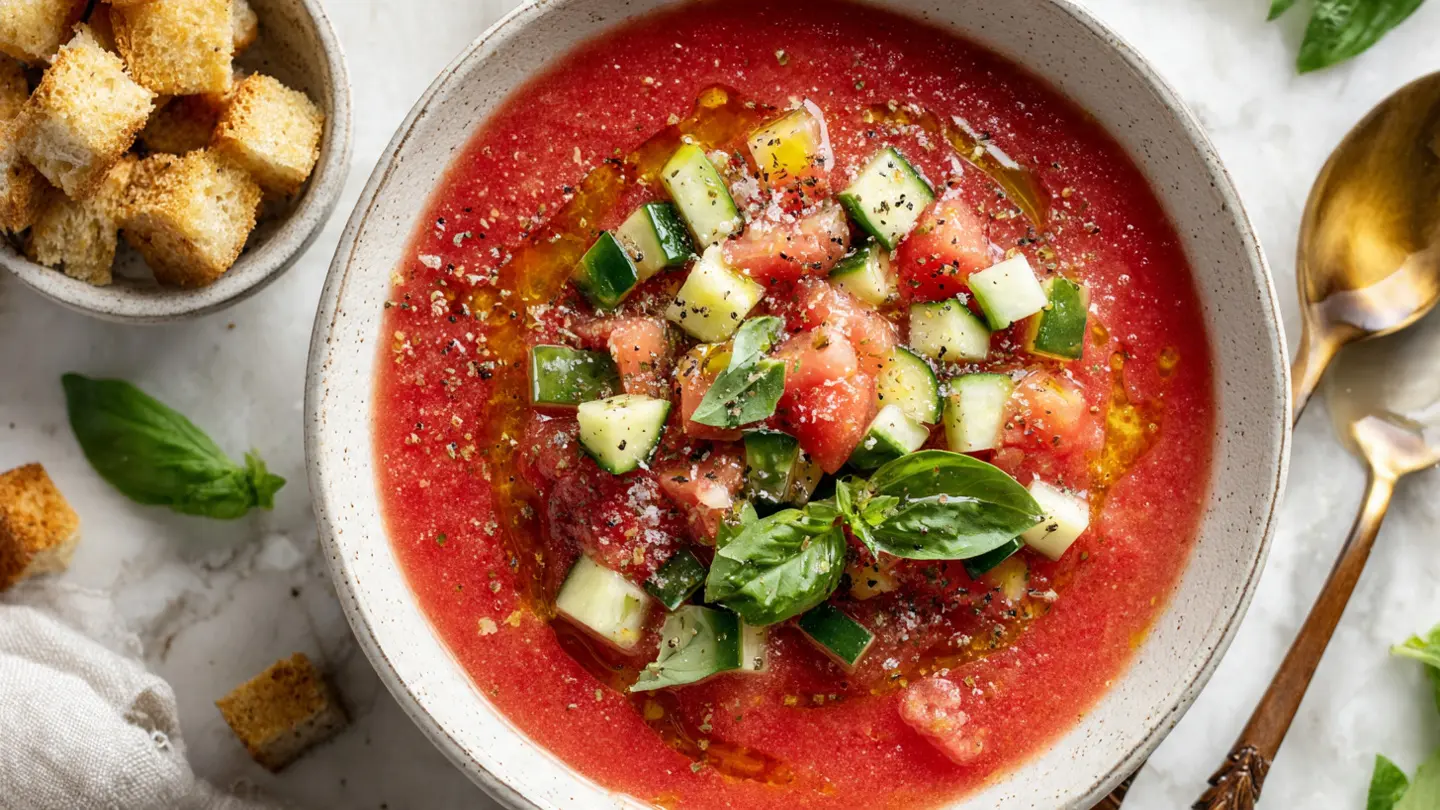
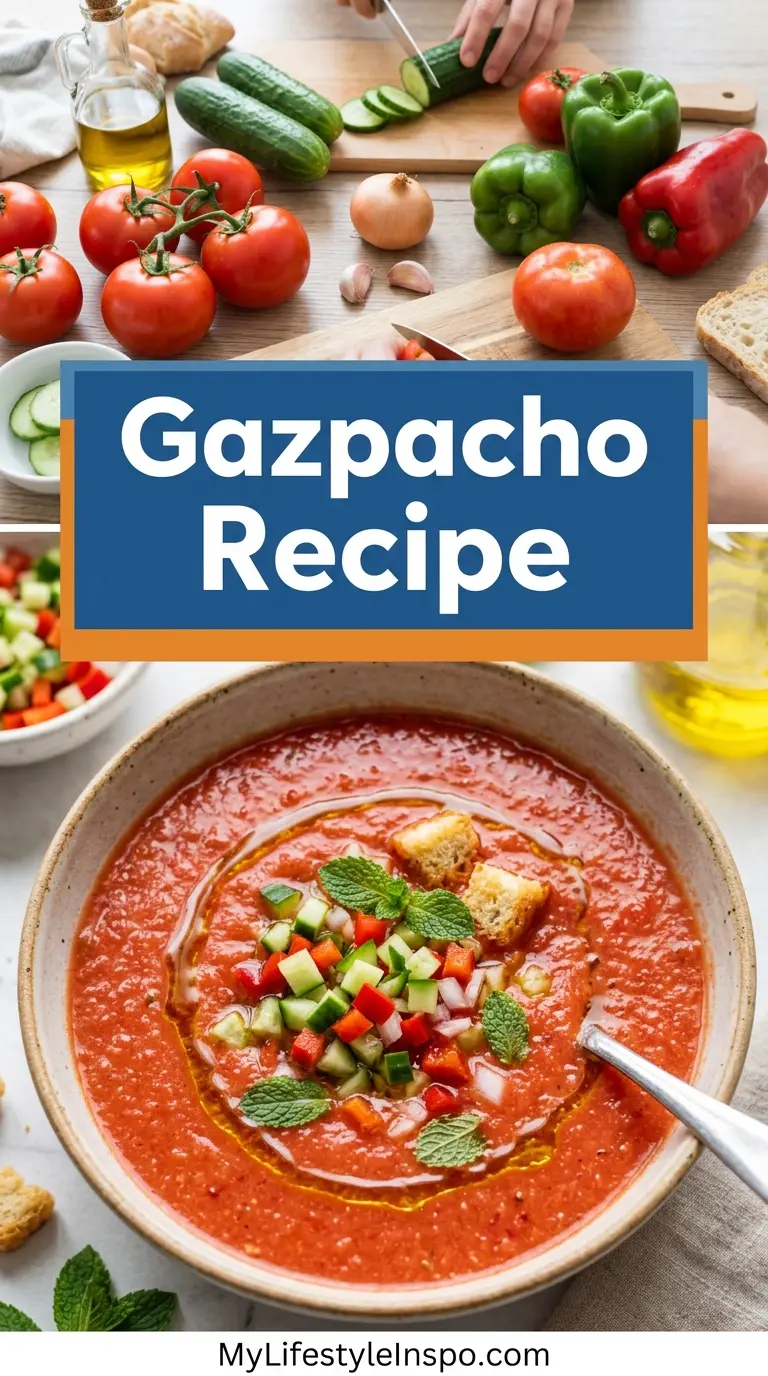
A great gazpacho recipe is one of those rare dishes that asks almost nothing of you and rewards you with something spectacular. No stove, no oven, no sweating over a hot pan. Just ripe summer tomatoes, a handful of fresh vegetables, a good blender, and a little patience while it chills. This is traditional Andalusian-style gazpacho, the kind that’s been made in southern Spain for centuries, and once you taste it ice-cold on a sweltering day, you’ll understand exactly why it has lasted this long.
The secret to a truly great gazpacho is in the quality of your tomatoes. Since this soup is raw and uncooked, every ingredient shows up fully in the final bowl. Ripe, juicy, peak-season tomatoes are non-negotiable here. The better your tomatoes, the more vibrant, complex, and deeply flavored your gazpacho will be.
Sherry vinegar is another ingredient worth seeking out. It’s the traditional choice in Andalusia and adds a gentle, nutty tang that red wine vinegar simply can’t replicate. A small amount goes a long way, and it brings a brightness that ties the whole soup together.
This recipe follows the classic Andalusian formula: tomatoes, cucumber, green bell pepper, garlic, day-old bread for body, extra virgin olive oil, sherry vinegar, and a pinch of cumin. It’s blended smooth, chilled properly, and served with a drizzle of olive oil and your choice of simple garnishes. No shortcuts, no gimmicks, just the real thing.
If you love cold, refreshing soups as much as I do, you’ll also want to check out this Cucumber Gazpacho for another cool, no-cook option perfect for hot days.
Why You’ll Love This Gazpacho Recipe
This is the kind of soup that makes summer cooking feel effortless.
It comes together in under 20 minutes of active prep time, and the blender does most of the work.
Everything is raw and uncooked, which means you preserve the full nutritional power of every single vegetable.
It’s naturally vegan, dairy-free, and can easily be made gluten-free by leaving out the bread.
The flavor actually deepens and improves the longer it sits in the fridge, making it one of the best make-ahead recipes around.
It works as a starter, a light lunch, a quick snack, or even a chilled drink poured straight from the blender into a tall glass.
The recipe is also endlessly customizable, from the level of garlic heat to the texture of the final soup.
- Zero cooking required – perfect for hot summer days when you don’t want to turn on the stove
- Ready to serve in a few hours – quick prep followed by a relaxing chill time in the fridge
- Naturally healthy – packed with vitamins, antioxidants, and heart-healthy olive oil
- Vegan and gluten-free friendly – works for nearly any dietary need
- Budget-friendly – made entirely from fresh produce and pantry staples
- Meal-prep gold – stays fresh in the fridge for up to 5 days and gets better with time
You might also enjoy: Watermelon Gazpacho
Ingredients
The key here is simplicity and quality. With so few ingredients going in raw, each one matters. Use the ripest, most flavorful tomatoes you can find, and don’t skimp on the olive oil.
- 2 lbs (900g) ripe roma tomatoes, cored and roughly chopped
- 1 medium English cucumber (about 8 inches / 20cm), peeled and roughly chopped
- 1 medium green bell pepper, seeded and roughly chopped
- 1 small red onion, peeled and quartered
- 2 garlic cloves, peeled
- 2 slices day-old white bread (about 2 oz / 55g), crusts removed, torn into chunks
- 3 tablespoons (45ml) extra virgin olive oil, plus more for drizzling
- 2 tablespoons (30ml) sherry vinegar (or red wine vinegar as a substitute)
- 1/2 teaspoon ground cumin
- 3/4 teaspoon fine sea salt, plus more to taste
- 1/4 teaspoon freshly ground black pepper
- 1/2 cup (120ml) ice-cold water, plus more as needed
For garnish (optional but recommended):
- Diced cucumber and tomato
- Drizzle of extra virgin olive oil
- Homemade or store-bought croutons
- Fresh basil or chives
- Freshly cracked black pepper
Read Also: White Gazpacho Recipe
Kitchen Equipment Needed
You don’t need any fancy equipment to make a great gazpacho, but a powerful blender makes a noticeable difference in the final texture.
- High-powered blender or food processor (a high-speed blender gives the smoothest results)
- Large mixing bowl
- Chef’s knife and cutting board
- Measuring cups and spoons
- Fine-mesh strainer (optional, for an ultra-silky smooth result)
- Ladle or large spoon
- Airtight glass storage container or large mason jar for chilling and storing
- Serving bowls or glasses
Recommended Products for This Recipe
These are products I genuinely recommend based on quality and performance. Each one makes a real difference when preparing this recipe.
1. Vitamix Professional-Grade Blender
A powerful blender is the single most important piece of equipment for smooth, creamy gazpacho. The Vitamix breaks down tomato skins, bread, and vegetables completely, delivering a restaurant-quality texture in seconds. It’s an investment that will serve you well across hundreds of recipes for years to come.
2. Aged Sherry Vinegar
The vinegar you use in gazpacho matters enormously. Aged sherry vinegar from Jerez, Spain has a complex, slightly nutty flavor that budget wine vinegars simply cannot replicate. Just a couple of tablespoons transforms the whole soup.
3. Spanish Extra Virgin Olive Oil
Since olive oil is one of the primary flavors in this soup, using a quality Spanish extra virgin olive oil elevates the whole dish. Look for cold-pressed varieties with a rich, fruity flavor. It’s also used for the final drizzle, where the flavor really shines.
4. Large Glass Mason Jars with Lids
Chilling and storing your gazpacho in a wide-mouth glass jar is ideal. Glass doesn’t absorb flavors or odors, the soup is easy to shake and stir before serving, and the jars are perfect for pouring gazpacho into glasses. A set of 32-oz jars is just right for this recipe.
Read Also: Easy Ratatouille Recipe
Step-by-Step Instructions
Step 1: Soak the Bread
- Tear the day-old bread into rough chunks and place them in a small bowl.
- Pour enough cold water over the bread to fully submerge it.
- Let the bread soak for 5 minutes until it is completely saturated and soft.
- After soaking, pick up the bread and squeeze out as much water as possible with your hands. You want the bread moist but not dripping.
- Set the squeezed bread aside. This soaked bread will act as a natural thickener, giving the gazpacho a silkier, creamier texture without making it heavy.
Step 2: Prep the Vegetables
- Core the roma tomatoes by cutting out the tough white center with a small paring knife. Then roughly chop them into 1 to 2-inch (2.5 to 5cm) pieces. There is no need to peel the tomatoes.
- Peel the English cucumber and roughly chop it into 1 to 2-inch (2.5 to 5cm) chunks.
- Slice the green bell pepper in half, remove the seeds and white membrane, and roughly chop it into similar-sized pieces.
- Quarter the red onion.
- Peel the garlic cloves and leave them whole.
- None of the vegetables need to be cut finely since everything goes into the blender. Rough, rustic cuts are perfectly fine.
Step 3: Blend the First Half
- Place half of the chopped tomatoes, cucumber, green pepper, and the red onion into the blender.
- Add both garlic cloves, the squeezed bread, the ground cumin, sea salt, black pepper, the 3 tablespoons of extra virgin olive oil, and the sherry vinegar.
- Pour in the ice-cold water.
- Secure the blender lid and blend on high speed for at least 60 seconds until the mixture is completely smooth and creamy.
- At this stage, the base should look like a thick, rust-colored puree. If it seems too thick to blend, add an additional tablespoon or two of cold water to help it move.
Step 4: Add the Remaining Vegetables
- Add the remaining half of your chopped tomatoes, cucumber, and green pepper to the blender with the smooth base.
- Blend again for another 30 to 60 seconds on high.
- This two-stage blending technique gives the soup a smooth, creamy foundation while still preserving some tiny bits of vegetable texture, which adds character and depth to every spoonful.
- If you prefer your gazpacho completely smooth, blend everything together for a full 2 minutes on the highest speed setting.
Step 5: Strain (Optional)
- If you prefer an ultra-silky, restaurant-smooth gazpacho, pour it through a fine-mesh strainer set over a large bowl.
- Use a ladle or large spoon to press the mixture through the strainer, extracting all the liquid while leaving the skins and seeds behind.
- This step is completely optional. Many home cooks skip it, and the result is still delicious with a bit more texture.
- Discard the solids left in the strainer.
Step 6: Taste and Adjust
- Taste the gazpacho carefully before chilling.
- If it needs more brightness, add another teaspoon of sherry vinegar.
- If it tastes flat, add more salt a pinch at a time.
- If the garlic flavor is too sharp, don’t worry. It will mellow significantly during the chilling time.
- If the gazpacho is thicker than you’d like, thin it with a small amount of additional cold water and stir to combine.
Step 7: Chill the Gazpacho
- Transfer the gazpacho to a large airtight container, glass jar, or covered bowl.
- Refrigerate for at least 2 hours, and ideally for 4 hours or even overnight.
- This resting time is non-negotiable for the best flavor. The ingredients meld together, the garlic mellows, the vinegar softens, and the soup transforms from a blended mix into a deeply complex and cohesive cold soup.
- The longer it chills, the better it tastes.
Step 8: Garnish and Serve
- When ready to serve, give the gazpacho a good stir or shake since it may have separated slightly during chilling. This is perfectly normal.
- Ladle the cold soup into bowls or pour it into chilled glasses.
- Drizzle generously with extra virgin olive oil.
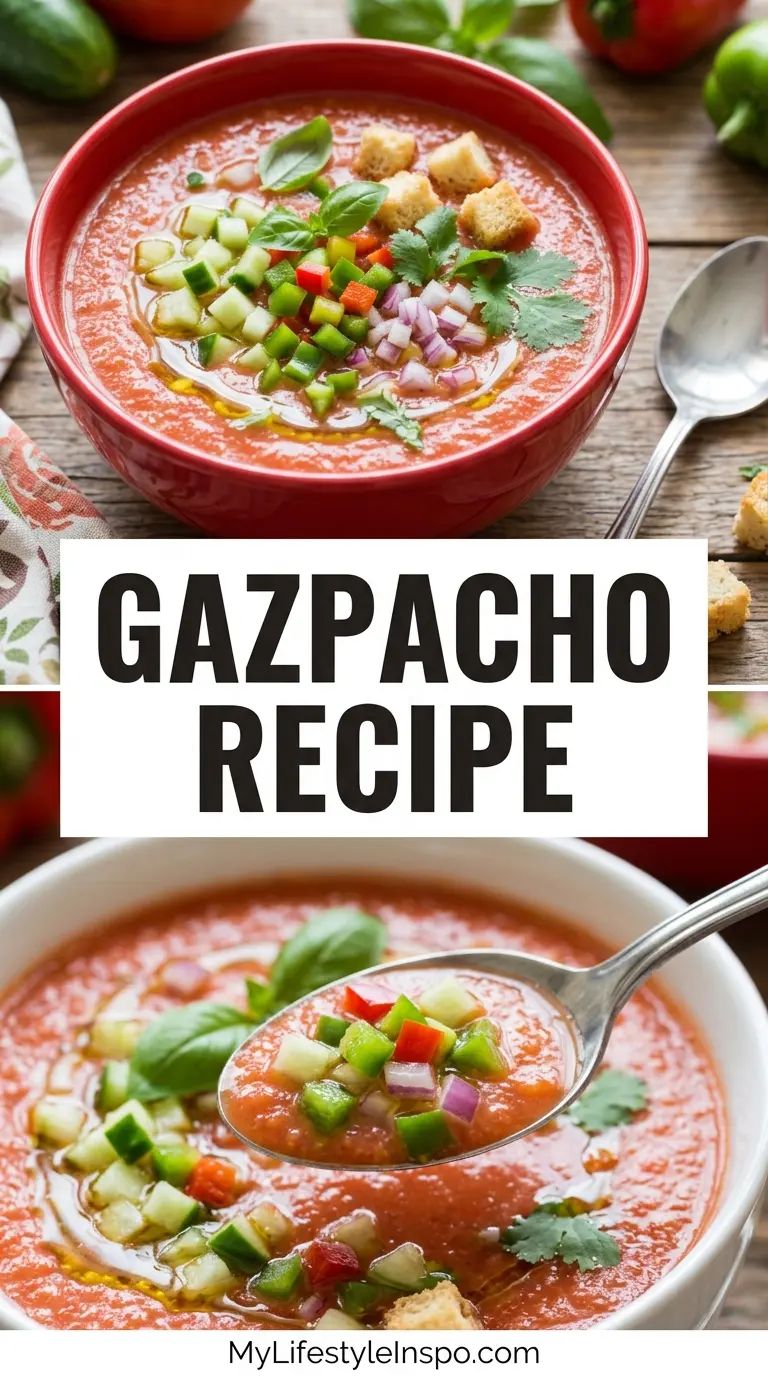
- Add your choice of garnishes: finely diced cucumber, diced fresh tomato, homemade croutons, a scatter of fresh basil or chives, and a few cracks of black pepper.
- Serve immediately while the soup is as cold as possible.
This pairs beautifully with Classic Bruschetta for a complete light summer starter spread.
Tips for Success
A few smart techniques will take your gazpacho from good to exceptional.
- Use summer-ripe tomatoes. The quality of the tomatoes is everything in this recipe. Seek out locally grown, vine-ripened tomatoes from a farmers market or your garden if at all possible. Out-of-season tomatoes produce a soup that is watery and lacking in depth.
- Don’t skip the bread. It might seem like an unusual addition to a vegetable soup, but soaked and squeezed white bread acts as an emulsifier, helping the olive oil and vegetables blend together into a creamy, cohesive soup with real body.
- Chill long enough. Two hours is the minimum, but overnight is truly ideal. The flavor difference between freshly blended gazpacho and one that has rested overnight in the fridge is dramatic.
- Use cold water and cold ingredients. Starting with cold ingredients helps keep the soup cool and the color bright. If your vegetables are at room temperature, add a few extra ice cubes to the water before blending.
- Drizzle the olive oil last. Adding good quality olive oil as a garnish at the very end, rather than only blending it in, gives you a bright pop of fruity, grassy flavor on the surface that makes the soup feel elegant and restaurant-quality.
- Taste after chilling, not just before. The salt and vinegar levels can change slightly as the soup rests. Always taste again just before serving and adjust if needed.
For another cold, flavor-forward dish, you might love: Easy Salsa Recipe
Serving Suggestions
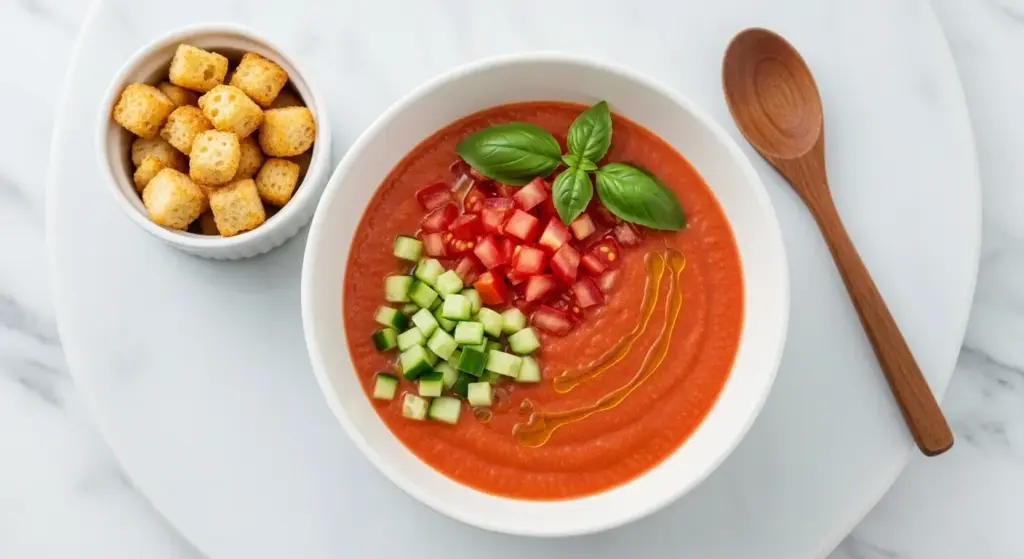
Gazpacho is incredibly versatile and works well in a variety of settings, from a simple weeknight appetizer to an impressive dinner party starter.
Cold gazpacho is spectacular served alongside crusty bread or grilled sourdough, which can be used for dunking into the soup. The bread soaks up the bright, tangy liquid beautifully.
For a complete summer meal, serve small bowls of gazpacho as a first course before grilled fish, roasted vegetables, or a Spanish-style tapas spread with Classic Deviled Eggs and olives.
- Serve in small glasses as a passed appetizer or cocktail-hour drink
- Pair with Classic Hummus and warm pita for a Mediterranean mezze spread
- Spoon over creamy avocado halves for a beautiful and satisfying light lunch
- Use as a chilled sauce spooned alongside grilled chicken or baked fish
- Serve at brunch alongside a simple egg dish for a refreshing, savory starter
- Pour into small shot glasses for an elegant party appetizer that requires zero fuss
Variations to Try
Once you’ve mastered the classic version, gazpacho opens up into a whole world of creative cold soups.
The classic recipe is just the beginning. Each variation below is worth exploring when you’re ready to branch out.
- Watermelon Gazpacho: Swap half the tomatoes for seedless watermelon for a sweeter, more refreshing version that is spectacular in midsummer heat.
- Cucumber Gazpacho: Make the base primarily from cucumber with a small amount of tomato, garlic, and Greek yogurt for a paler, creamier, and slightly more delicate soup.
- White Gazpacho (Ajoblanco): A completely different but equally traditional Spanish cold soup made from blanched almonds, stale bread, garlic, olive oil, and vinegar with a topping of sweet green grapes.
- Spicy Gazpacho: Add a small fresh jalapeño or a few dashes of hot sauce to the blender for a gazpacho with real kick.
- Roasted Tomato Gazpacho: Roast the tomatoes and bell pepper in the oven first for a deeper, smokier, more complex flavor base before blending.
- Green Gazpacho: Replace the red tomatoes with tomatillos, green pepper, cucumber, avocado, and fresh herbs like parsley and basil for a vibrant emerald-colored soup.
You might also enjoy: Fresh Salsa Recipe
Storage and Reheating
Gazpacho is one of the best make-ahead dishes in existence because it genuinely gets better with time.
Store it properly and it will reward you with excellent flavor for several days.
- Refrigerator: Store the gazpacho in a sealed airtight container or glass jar in the refrigerator for up to 4 to 5 days. The flavor continues to develop over time, and many people think day-two or day-three gazpacho is the best.
- Freezer: Gazpacho can be frozen in individual airtight containers for up to 3 months. Thaw it overnight in the refrigerator, then stir or shake well before serving. The texture may change very slightly after freezing, but the flavor remains excellent.
- Before serving from the fridge: Always stir or shake the container vigorously, as the soup will naturally separate as it sits. A quick stir restores it to its original consistency.
- Do not reheat: Gazpacho is meant to be served cold. Heating it would fundamentally change its texture and defeat the purpose of the dish entirely.
- Garnishes: Store any garnishes separately in small containers and add them just before serving so they stay fresh and don’t go soggy.
Read Also: Pico de Gallo Recipe
Nutritional Facts
(Per serving, based on 4 servings, without optional garnishes)
| Nutrient | Amount |
|---|---|
| Calories | 165 kcal |
| Total Fat | 11g |
| Saturated Fat | 1.5g |
| Carbohydrates | 15g |
| Dietary Fiber | 3g |
| Sugars | 7g |
| Protein | 3g |
| Sodium | 420mg |
| Vitamin C | 60% DV |
| Vitamin A | 30% DV |
| Potassium | 580mg |
Nutritional values are estimates and will vary based on specific ingredients and exact quantities used.
Another light, nutritious option you might love: Easy Acai Bowl Recipe
Health Benefits of Key Ingredients
Gazpacho is one of those rare dishes where everything that makes it taste incredible also happens to be genuinely good for you.
Every ingredient in this bowl is working hard for your health in some meaningful way.
- Tomatoes are one of the richest sources of lycopene, a powerful antioxidant linked to reduced risk of heart disease and certain cancers. Raw tomatoes retain higher levels of Vitamin C than cooked ones, making gazpacho an especially nutritious way to enjoy them.
- Extra virgin olive oil is a cornerstone of the Mediterranean diet. It is rich in heart-healthy monounsaturated fats, polyphenols, and oleocanthal, a natural compound with anti-inflammatory properties similar to ibuprofen.
- Cucumber is a hydrating vegetable with a high water content, making it excellent for hot summer days. It contains Vitamin K, potassium, and antioxidants that support skin health and hydration.
- Garlic contains allicin, a sulfur compound that has well-documented antimicrobial and immune-boosting properties. Regular consumption of garlic is associated with improved cardiovascular health and lower blood pressure.
- Bell pepper is an exceptional source of Vitamin C, containing even more per gram than citrus fruit. Green bell peppers are also rich in Vitamin B6, which supports brain health and metabolism.
For another antioxidant-rich dish to add to your routine: Spinach Soup Recipe
Frequently Asked Questions
1. What is gazpacho exactly?
Gazpacho is a traditional cold soup from Andalusia in southern Spain. It is made by blending raw vegetables, most commonly tomatoes, cucumber, bell pepper, garlic, and onion, with olive oil, vinegar, and bread. It is always served chilled and is most popular during summer when fresh tomatoes are at their peak.
2. Can I make gazpacho without bread?
Yes, you can leave out the bread if you prefer or if you need the soup to be gluten-free. The bread is traditionally used to add body and a creamier texture to the finished soup. Without it, the gazpacho will be slightly thinner and more liquid, but still delicious. Some cooks add a small amount of avocado instead to achieve a similar creamy consistency.
3. How long does gazpacho need to chill before serving?
At minimum, gazpacho should chill in the refrigerator for 2 hours before serving. For the best possible flavor, chill it for at least 4 hours or overnight. The resting time allows the flavors to meld together, the garlic to mellow, and the overall soup to become more cohesive and balanced than it tastes immediately after blending.
4. My gazpacho is too thin. How do I fix it?
If your gazpacho is thinner than you’d like, there are a few easy fixes. You can add more soaked bread to the blender and re-blend until it reaches your desired consistency. Alternatively, adding a quarter of a ripe avocado will thicken the soup naturally while adding a mild creaminess. Also make sure you are fully squeezing the soaked bread before adding it, as excess water from the bread can make the soup looser.
5. Can I freeze gazpacho?
Yes, gazpacho freezes quite well. Pour it into individual airtight freezer containers or ice cube trays for easy portioning. It will keep in the freezer for up to 3 months. Thaw overnight in the refrigerator and give it a vigorous stir or shake before serving, as it may separate slightly. Add any garnishes fresh after thawing, not before freezing.
For another satisfying summer dish to try next, check out this Avocado Toast Recipe
Classic Andalusian Gazpacho

Equipment
- High-powered blender - Vitamix or similar high-speed blender recommended for smoothest texture
- Chef’s knife
- Cutting board
- Measuring cups and spoons
- Fine-mesh strainer - optional, for ultra-silky smooth result
- Large mixing bowl
- Airtight glass storage container - large mason jar or container for chilling and storing
- Small bowl - for soaking bread
Ingredients
- 2 lbs roma tomatoes - 900g, cored and roughly chopped, ripe and peak-season
- 1 English cucumber - about 8 inches/20cm, peeled and roughly chopped
- 1 green bell pepper - medium, seeded and roughly chopped
- 1 red onion - small, peeled and quartered
- 2 garlic cloves - peeled
- 2 slices day-old white bread - about 2 oz/55g, crusts removed, torn into chunks
- 3 tablespoons extra virgin olive oil - 45ml, plus more for drizzling, preferably Spanish
- 2 tablespoons sherry vinegar - 30ml, or red wine vinegar as substitute
- 1/2 teaspoon ground cumin
- 3/4 teaspoon fine sea salt - plus more to taste
- 1/4 teaspoon black pepper - freshly ground
- 1/2 cup ice-cold water - 120ml, plus more as needed
For Garnish (Optional)
- diced cucumber - for garnish
- diced tomato - for garnish
- extra virgin olive oil - drizzle
- croutons - homemade or store-bought
- fresh basil or chives - for garnish
- black pepper - freshly cracked for garnish
Instructions
- Soak the torn bread chunks in cold water for 5 minutes until saturated. Squeeze out as much water as possible and set aside.
- Core and roughly chop the tomatoes, peel and chop the cucumber, seed and chop the bell pepper, quarter the onion, and peel the garlic cloves.
- Place half the tomatoes, cucumber, pepper, onion, both garlic cloves, squeezed bread, cumin, salt, pepper, olive oil, sherry vinegar, and ice-cold water into the blender. Blend on high for 60 seconds until completely smooth.
- Add the remaining half of the tomatoes, cucumber, and green pepper to the blender with the smooth base. Blend again for 30-60 seconds on high.
- For an ultra-silky texture, pour through a fine-mesh strainer set over a bowl, pressing with a ladle to extract all the liquid. Discard the solids.
- Taste the gazpacho and adjust seasoning with additional salt, sherry vinegar, or water to achieve desired flavor and consistency.
- Transfer to an airtight container and refrigerate for at least 2 hours, preferably 4 hours or overnight for best flavor development.
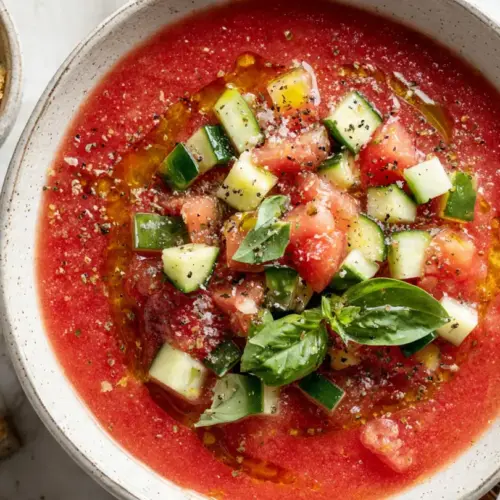
- Stir or shake well before serving. Ladle into bowls or glasses, drizzle generously with olive oil, and garnish with diced cucumber, tomato, croutons, fresh herbs, and cracked black pepper.
Notes
- Use the ripest, most flavorful tomatoes you can find – this is the most important factor in achieving a vibrant, complex gazpacho.
- Don’t skip the bread – it acts as an emulsifier that helps the olive oil and vegetables blend into a creamy, cohesive soup with real body.
- Chilling for at least 2 hours is essential, but overnight is ideal for the flavors to meld and mellow.
- Use cold water and cold ingredients to keep the soup cool and the color bright while blending.
- Always taste and adjust seasoning after chilling, as the salt and vinegar levels can shift as the soup rests.
- For a gluten-free version, simply omit the bread – the soup will be slightly thinner but still delicious.
- Store in an airtight container in the refrigerator for up to 5 days – the flavor deepens and improves with time.
- This gazpacho can be frozen in individual containers for up to 3 months. Thaw overnight in the fridge and stir well before serving.
- Serve as a starter, light lunch, or even as a chilled drink in a tall glass – it’s endlessly versatile.
- For variations, try swapping half the tomatoes with watermelon, making a green version with tomatillos, or adding a pinch of hot pepper for heat.
Final Thoughts
A great gazpacho recipe is one of the simplest and most rewarding things you can make in summer.
A blender, a handful of ripe vegetables, a little patience while it chills, and you have something genuinely special.
This classic Andalusian version is the one I return to every single summer without fail.
Once you taste it properly ice-cold with a drizzle of good olive oil and a shower of fresh garnishes, you’ll understand why it has been a staple of Spanish cooking for centuries.
Give it a try this weekend when summer tomatoes are at their sweetest and most abundant.
I’d love to hear how it turns out! Leave a comment below with your experience, any tweaks you made, or your favorite garnishes. And if you enjoyed this recipe, please share it with a friend who loves fresh, no-cook summer cooking.
Recommended:
- White Gazpacho Recipe
- Watermelon Gazpacho Recipe
- Cucumber Gazpacho Recipe
- Easy Tomato Soup Recipe
- Creamy Tomato Soup Recipe
- Celery Soup Recipe
- Zucchini Soup Recipe
- Corn Soup Recipe
- Easy Guacamole Recipe
- Tzatziki Sauce Recipe