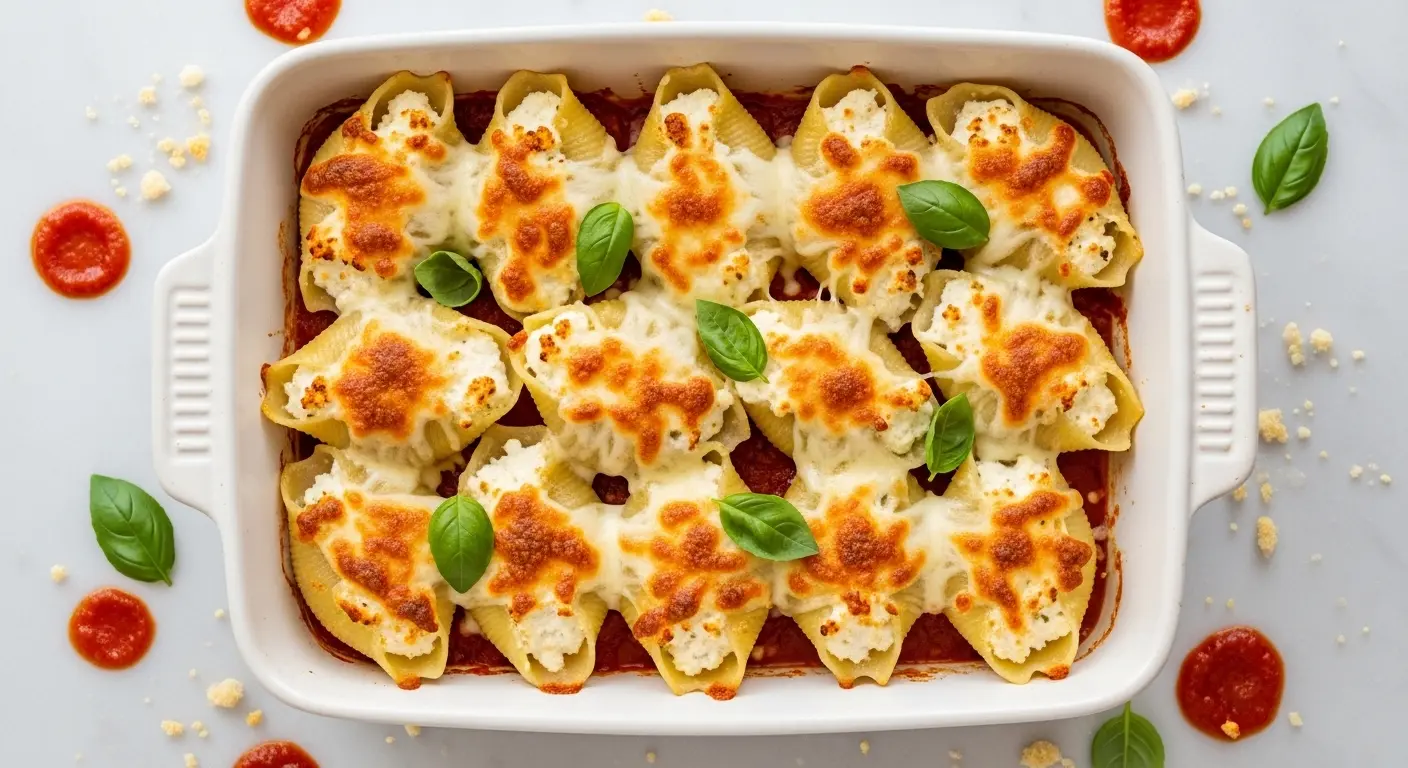
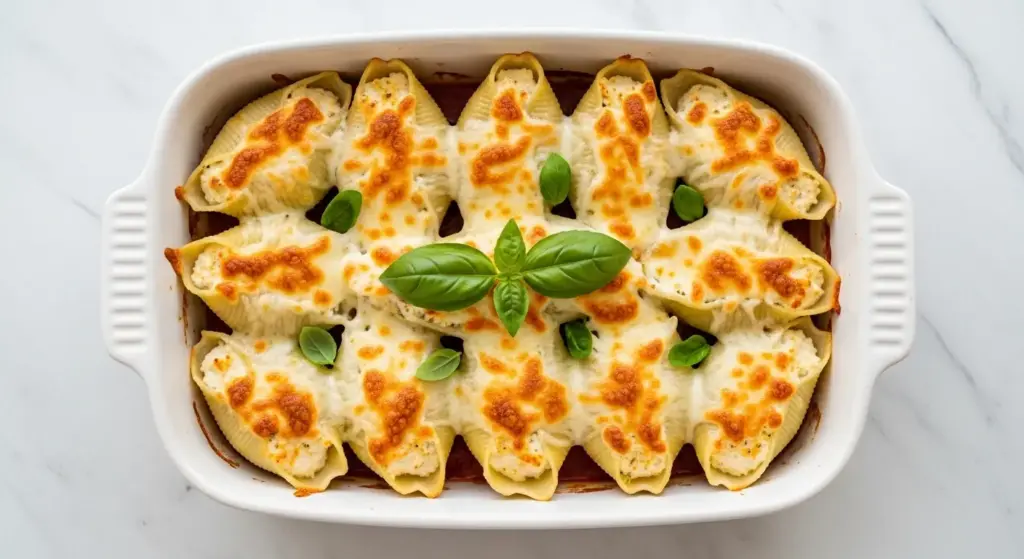
This stuffed shells recipe is one of those dinners that earns a permanent spot in your weekly rotation. Giant pasta shells packed with a creamy, seasoned ricotta filling, blanketed in marinara sauce, and topped with a golden, bubbling layer of mozzarella — it’s pure Italian-American comfort food at its finest.
What makes this dish so satisfying isn’t just the flavors (though those are incredible). It’s the way the shells hold all that cheesy filling together, soaking up the marinara as they bake. Every forkful delivers pasta, rich ricotta, savory herbs, and melted cheese all at once.
This is also one of the most forgiving baked pasta dishes you can make. You can prep it a day ahead, freeze it for later, or customize the filling with your favorite ingredients. Once you know the basics, you’ll find yourself making it for weeknight dinners, potlucks, and holiday tables alike.
A few technique notes before you start: use whole-milk ricotta for the creamiest filling — part-skim works but can turn watery. Cook the shells just to al dente, since they’ll continue cooking in the oven. And don’t skip letting the baked shells rest for 5 minutes before serving. That short rest helps everything set so your shells don’t fall apart on the plate.
If you love hearty, cheesy Italian baked pasta, you might also want to try this Baked Ziti for another easy weeknight favorite.
Why You’ll Love This Stuffed Shells Recipe
This recipe checks every box for a satisfying, crowd-pleasing dinner.
The filling is rich and creamy without being heavy, thanks to the balance of ricotta, mozzarella, and Parmesan. The three-cheese combo gives you layers of flavor that taste far more complex than the ingredient list suggests.
It comes together with pantry staples and simple prep. There’s no fancy technique involved — just cook the pasta, mix the filling, stuff the shells, and bake.
The shells hold up beautifully in the oven, giving you a structured bite rather than the looser texture of baked ziti or lasagna. That’s part of what makes this dish so fun to eat.
It’s also incredibly meal-prep friendly. You can assemble the whole dish the night before, refrigerate it, and pop it straight into the oven when you’re ready to eat.
Here’s a quick summary of why this recipe works so well:
- Uses whole-milk ricotta for the creamiest, most flavorful filling
- A three-cheese blend (ricotta, mozzarella, Parmesan) creates incredible depth of flavor
- Marinara sauce keeps the shells moist and flavorful as they bake
- Freezer-friendly, so you can make a double batch and save one for later
- Easily customizable with meat, spinach, or different cheeses
Another reader favorite in the same comfort food category is this Lasagna Recipe with Ricotta — if you love layered, cheesy Italian bakes, it’s a must-try.
Ingredients
The classic stuffed shells filling is a simple, well-seasoned ricotta mixture. Here’s what you’ll need to make it just right:
- Jumbo pasta shells: 12 oz (340g), about 30–35 shells (cook a few extra since some may tear)
- Whole-milk ricotta cheese: 15 oz (425g) — whole-milk gives the best creamy texture
- Shredded mozzarella cheese: 2 cups (225g), divided — use a block and shred it yourself for better melt
- Freshly grated Parmesan cheese: 1/2 cup (50g), divided
- Eggs: 2 large, lightly beaten — helps bind the filling so it holds its shape
- Garlic: 3 cloves, minced
- Fresh flat-leaf parsley: 1/4 cup (15g), finely chopped
- Dried Italian seasoning: 1 teaspoon
- Kosher salt: 1 teaspoon, plus more for pasta water
- Black pepper: 1/2 teaspoon, freshly ground
- Marinara sauce: 24 oz (680g), store-bought or homemade — use your favorite brand
- Fresh basil leaves: for garnish (optional but highly recommended)
For a homemade marinara that takes this dish to the next level, try this Marinara Sauce Recipe.
Kitchen Equipment Needed
You don’t need anything fancy to make this recipe. Here’s what you’ll want to have on hand:
- Large pot: for boiling the pasta shells
- 9×13 inch baking dish: a deep dish is key to hold all the shells and sauce
- Large mixing bowl: for combining the ricotta filling
- Colander: for draining the cooked shells
- Small spoon or small cookie scoop: for filling the shells — a small spoon works great and gives you control
- Aluminum foil: to cover the dish while it bakes, keeping moisture in
- Box grater or microplane: for grating fresh Parmesan — pre-grated Parmesan doesn’t melt as smoothly
- Knife and cutting board: for mincing garlic and chopping parsley
- Measuring cups and spoons
Read Also: Squash Casserole Recipe
Recommended Products for This Recipe
These are products I genuinely recommend based on quality and how much of a difference they make in the final dish.
1. Le Creuset Enameled Cast Iron Rectangular Baking Dish
A high-quality baking dish distributes heat evenly, which helps your stuffed shells cook uniformly without the edges drying out before the center is done. The enameled surface also makes cleanup much easier when cheese gets baked onto the sides. This is one kitchen investment that will serve you well for years of baked pasta dishes.
2. Whole Milk Ricotta Cheese
If your grocery store only carries part-skim ricotta, it’s worth seeking out a whole-milk version online or at a specialty store. The higher fat content in whole-milk ricotta creates a noticeably creamier, richer filling that doesn’t turn watery in the oven.
3. OXO Good Grips Cookie Scoop (Small)
Filling pasta shells with a spoon can get messy and time-consuming. A small cookie scoop makes the process much faster and gives you consistent, neatly filled shells every time. It’s one of those small tools that makes a big difference.
4. Microplane Premium Classic Zester Grater
Freshly grated Parmesan is not the same as the stuff in the green can. A microplane produces ultra-fine, fluffy Parmesan that melts perfectly into the filling and creates a golden, crispy topping. It’s also great for zesting lemons if you try any citrusy pasta variations.
5. Rao’s Homemade Marinara Sauce
If you’re using store-bought marinara, Rao’s is widely considered the best option for baked pasta dishes. It’s made with high-quality tomatoes, olive oil, and no added sugar, which gives it a balanced, restaurant-quality flavor that really shines in this recipe.
You might also enjoy: Italian Meatballs Recipe — these pair perfectly alongside stuffed shells for a full Italian feast.
Step-by-Step Instructions
1. Preheat the Oven and Prepare Your Baking Dish
- Preheat your oven to 375°F (190°C). This temperature gives you enough heat to warm everything through and melt the cheese into a golden, bubbly topping without burning the pasta edges.
- Lightly grease your 9×13 inch (23x33cm) baking dish with a drizzle of olive oil or cooking spray. This helps prevent sticking and makes serving easier.
- Spread about 1 cup (240ml) of marinara sauce evenly across the bottom of the baking dish. This sauce layer serves two purposes: it prevents the shells from sticking to the dish and keeps the bottoms of the shells moist as they bake.
2. Cook the Pasta Shells
- Bring a large pot of water to a rolling boil. Use plenty of water — at least 4 quarts (3.8 liters) — so the large shells have room to move and cook evenly.
- Add a generous amount of kosher salt to the boiling water. The water should taste pleasantly salty, which is the main opportunity to season the pasta itself.
- Add the 12 oz (340g) of jumbo pasta shells and cook for 2 minutes less than the package directions, or until just al dente. The shells will continue to cook in the oven, so undercooking them slightly prevents them from getting mushy.
- Drain the shells in a colander, then spread them out on a clean baking sheet or large plate in a single layer. This prevents them from sticking together as they cool.
- Let the shells cool for about 5–10 minutes before filling them. They’re easier to handle and fill when they’re not piping hot.
3. Make the Ricotta Filling
- In a large mixing bowl, combine the 15 oz (425g) of whole-milk ricotta, 1 1/2 cups (170g) of the shredded mozzarella (reserve the remaining 1/2 cup for topping), and 1/4 cup (25g) of the grated Parmesan (reserve the remaining 1/4 cup for topping).
- Add the 2 lightly beaten eggs to the cheese mixture. The eggs help bind the filling, keeping it from sliding out of the shells when you serve them.
- Add the 3 minced garlic cloves, the 1/4 cup (15g) of chopped fresh parsley, 1 teaspoon of dried Italian seasoning, 1 teaspoon of kosher salt, and 1/2 teaspoon of freshly ground black pepper.
- Stir everything together with a fork or spatula until thoroughly combined and smooth. Taste the filling — it should be well-seasoned and savory. Adjust with a little more salt and pepper if needed.
4. Fill the Shells
- Hold each cooked shell gently in one hand, open side up. Use a small spoon or a small cookie scoop to fill each shell generously with the ricotta mixture.
- Fill each shell until it’s packed but not overflowing — about 1.5 to 2 tablespoons (22–30g) of filling per shell, depending on the size.
- Place each filled shell snugly in the prepared baking dish, open side up, on top of the marinara sauce layer. Arrange them in even rows. It’s okay if they’re touching each other — they’ll hold each other in place.
- Continue filling and arranging until all the filling is used or the dish is full.
5. Add the Remaining Sauce and Cheese Topping
- Spoon the remaining marinara sauce (about 1 1/2 to 2 cups / 360–480ml) evenly over the top of the stuffed shells. Make sure to get sauce in between the shells as well, not just on top, so every shell stays moist during baking.
- Sprinkle the reserved 1/2 cup (55g) of shredded mozzarella evenly over the top.
- Follow with the reserved 1/4 cup (25g) of freshly grated Parmesan. This combination creates that irresistible golden, lightly crispy cheese crust.
6. Bake the Stuffed Shells
- Cover the baking dish tightly with aluminum foil. The foil traps steam during the first portion of baking, which keeps the shells from drying out and ensures the filling heats all the way through evenly.
- Place the covered dish in the preheated 375°F (190°C) oven and bake for 25 minutes.
- After 25 minutes, carefully remove the foil. The sauce should be bubbling around the edges.
- Return the dish to the oven, uncovered, and bake for an additional 10–15 minutes, until the cheese on top is melted, golden, and beginning to develop some lightly browned spots.
- Total baking time: approximately 35–40 minutes.
7. Rest, Garnish, and Serve
- Remove the baking dish from the oven and let it rest on a wire rack or trivet for 5 minutes before serving. This resting time lets the filling firm up slightly so the shells hold together when you transfer them to plates.
- Tear or chiffonade a few fresh basil leaves and scatter them over the top for a bright, fresh contrast to the rich, cheesy dish.
- Serve immediately with extra marinara sauce on the side and warm garlic bread for the full Italian-American experience.
Read Also: Easy Lasagna Recipe
Tips for Success
A few simple tips make all the difference between good stuffed shells and absolutely great ones:
- Always cook extra shells. Jumbo shells are fragile and some will tear. Cook 5–6 more than you think you need so you always have enough undamaged shells to fill.
- Don’t rinse the pasta. After draining, resist the urge to rinse the shells with cold water. Rinsing removes the surface starch that helps sauce cling to the pasta.
- Use freshly shredded mozzarella. Pre-shredded mozzarella is coated in anti-caking agents that prevent it from melting smoothly. Shredding a block yourself takes only a couple of extra minutes and gives you much better melt and flavor.
- Season the filling well. Ricotta on its own is fairly mild, so don’t be shy with the salt, pepper, and garlic. A well-seasoned filling is the difference between a dish that tastes great and one that falls flat.
- Taste the filling before stuffing. Since the eggs are already incorporated, take a small taste to check the seasoning and adjust before you fill all the shells.
- Cover tightly with foil. A loose foil cover lets too much steam escape, which can dry out the tops of the shells.
For another comforting baked pasta variation, this Baked Spaghetti Recipe with Ricotta Cheese uses a similar filling and is just as satisfying.
Serving Suggestions
Stuffed shells are filling and rich, so simple sides work best. Here’s what pairs beautifully:
Classic side dishes and accompaniments that complement the flavors:
- Garlic Bread — a non-negotiable alongside any baked pasta dish
- Broccoli Salad — the tangy dressing cuts through the richness of the cheese filling
- A simple green salad with balsamic vinaigrette for something light and fresh
- Creamed Spinach — adds an extra layer of indulgence for special occasions
- Roasted Broccoli — easy to make while the shells bake, and the slight char adds a nice contrast
- A glass of Chianti or Sangiovese for the adults at the table
Another favorite: Italian Wedding Soup as a starter before bringing out the stuffed shells for a proper Italian-inspired spread.
Variations to Try
The classic ricotta filling is hard to beat, but stuffed shells are wonderfully adaptable. Here are some popular variations worth exploring:
- Meat stuffed shells: Brown 1/2 lb (225g) of Italian sausage (casings removed) or ground beef with a little garlic and fennel seeds. Drain the fat, let it cool slightly, then mix it into the ricotta filling before stuffing. The savory meat adds another layer of richness.
- Spinach stuffed shells: Add 1 cup (30g) of defrosted, thoroughly squeezed frozen spinach to the ricotta filling. This is the most popular variation and a great way to sneak in vegetables. Squeeze the spinach until it’s completely dry or it will water down the filling.
- Chicken stuffed shells: Use 1 cup of finely shredded rotisserie chicken in place of some of the ricotta. Pairs especially well with a white sauce or vodka sauce instead of marinara.
- Vodka sauce shells: Swap the marinara for a vodka sauce — the creamy, slightly spicy tomato base gives this dish a completely different, deeply satisfying flavor profile.
- Vegan stuffed shells: Replace the ricotta with a cashew ricotta (blended soaked cashews with lemon, nutritional yeast, and garlic) and use a good vegan mozzarella. It’s surprisingly delicious.
Read Also: Classic Stuffed Bell Peppers Recipe
Storage and Reheating
Stuffed shells store and reheat exceptionally well, making them ideal for meal prep:
- Refrigerator: Store leftover shells in an airtight container for up to 4 days. The flavors actually deepen overnight, so leftovers are often even better the next day.
- Freezer (unbaked): Assemble the shells in the baking dish up to the point of baking, cover tightly with plastic wrap and then foil, and freeze for up to 3 months. Thaw in the refrigerator overnight before baking.
- Freezer (baked): Allow fully baked shells to cool completely, then portion into freezer-safe containers and freeze for up to 3 months.
- Reheating from refrigerator: Place portions in an oven-safe dish, cover with foil, and reheat at 350°F (175°C) for 15–20 minutes. You can also microwave individual portions with a splash of water added to maintain moisture.
- Reheating from frozen (unbaked): Bake directly from frozen at 375°F (190°C), covered, for 60–75 minutes, then uncover for the final 15 minutes.
- Reheating from frozen (baked): Thaw overnight in the refrigerator, then reheat covered at 350°F (175°C) for 20–25 minutes.
This Pasta Fagioli Recipe is another great make-ahead Italian classic that stores and reheats just as well.
Nutritional Facts
The following values are estimates per serving, based on 6 servings from one 9×13 dish of stuffed shells with ricotta and marinara sauce.
| Nutrient | Per Serving |
|---|---|
| Calories | ~490 kcal |
| Total Fat | 22g |
| Saturated Fat | 12g |
| Cholesterol | 105mg |
| Sodium | 820mg |
| Total Carbohydrates | 48g |
| Dietary Fiber | 3g |
| Total Sugars | 7g |
| Protein | 25g |
| Calcium | 380mg |
| Iron | 3mg |
Note: Nutritional values will vary based on the specific brands of marinara and ricotta used, as well as portion size. Using a lower-sodium marinara sauce is an easy way to reduce the sodium content significantly.
Read Also: Homemade Alfredo Sauce Recipe
Health Benefits of Key Ingredients
While stuffed shells are certainly comfort food, the main ingredients do bring some genuine nutritional value to the table.
Here’s a look at what the key ingredients contribute:
- Ricotta cheese is a good source of protein and calcium, supporting bone health and muscle maintenance. It also provides whey protein, which is easily digested.
- Mozzarella delivers calcium, phosphorus, and a meaningful amount of protein per serving. Fresh mozzarella also contains probiotics that may support gut health.
- Parmesan cheese is one of the most calcium-dense foods available. Even the small amount used here contributes meaningfully to your daily calcium needs, and its intense flavor means a little goes a long way.
- Garlic contains allicin and other sulfur compounds that have been studied for their potential cardiovascular and immune-supporting benefits. Mincing garlic and letting it sit for a few minutes before adding it to the filling activates more of these compounds.
- Parsley is rich in vitamin K, vitamin C, and folate. It’s more than just a garnish — fresh parsley adds real nutritional value to the filling.
- Tomatoes (from marinara sauce) are an excellent source of lycopene, a powerful antioxidant associated with heart health and reduced inflammation. Cooking tomatoes actually increases the bioavailability of lycopene.
- Whole-milk dairy provides fat-soluble vitamins A, D, E, and K2, as well as conjugated linoleic acid (CLA), which some research suggests may support metabolic health.
Another Italian-inspired dish that pairs nutrient-dense vegetables with pasta is this Zuppa Toscana Recipe.
Frequently Asked Questions
1. Can I make stuffed shells ahead of time?
Yes, and this is actually one of the best things about this recipe. You can assemble the entire dish — shells filled, sauce on top, cheese added — cover tightly with plastic wrap or foil, and refrigerate for up to 24 hours before baking. When you’re ready, remove it from the refrigerator 30 minutes before baking to take the chill off, then bake as directed. You may need to add 5–10 extra minutes of covered baking time if it goes in cold.
2. Can I use cottage cheese instead of ricotta?
You can, and many home cooks actually prefer this swap for a tangier, lighter filling. Use small-curd cottage cheese and drain it well through a fine mesh sieve or cheesecloth to remove excess moisture before mixing it with the other filling ingredients. The texture will be slightly different but the flavor is delicious and it has a bit more protein per serving.
3. Why are my stuffed shells watery?
Watery stuffed shells are usually caused by one of two things: using part-skim or low-fat ricotta, which releases more liquid during baking, or underdrained spinach if you’re using the spinach variation. To prevent this, always use whole-milk ricotta and make sure to drain any spinach or other vegetables as thoroughly as possible before adding them to the filling.
4. How many stuffed shells per person?
For a main course, plan on 4–5 stuffed shells per person when served alongside a salad and garlic bread. If you’re serving it as a standalone dish without sides, 6–7 shells per person is more appropriate. The filling is rich, so most people find 4–5 shells quite satisfying as part of a complete meal.
5. Can I freeze stuffed shells before baking?
Absolutely. Stuffed shells freeze beautifully before baking. Assemble the dish completely, cover with a layer of plastic wrap pressed against the surface, then cover with foil. Freeze for up to 3 months. When you’re ready to cook, thaw in the refrigerator overnight and then bake as directed, adding 5–10 extra minutes of covered baking time. This makes stuffed shells a fantastic dish to batch cook and freeze in portions.
Read Also: Tuna Noodle Casserole Recipe
Final Thoughts
This stuffed shells recipe is the kind of dish that genuinely makes people happy. It’s everything you want from a baked pasta dinner — rich, cheesy, saucy, and deeply satisfying — and it’s accessible enough that anyone can pull it off on a weeknight.
Whether you keep it classic with the three-cheese ricotta filling or try one of the variations, the result is going to be delicious. The beauty of this recipe is that the fundamentals are so solid, there’s really not much that can go wrong.
Give this recipe a try and let me know how it turns out in the comments below! Did you stick with the classic filling or try one of the variations? I’d love to hear what your family thought.
Recommended:
- Baked Ziti Recipe
- Classic Lasagna with Ricotta Recipe
- Spaghetti Sauce Recipe
- Easy Meatballs Recipe
- Classic Chicken Parmesan Recipe
- San Giorgio Lasagna Recipe
- Lasagna Soup Recipe
- Stuffed Acorn Squash Recipes
- Homemade Ravioli Recipe
- Chicken Piccata Recipe with Pasta