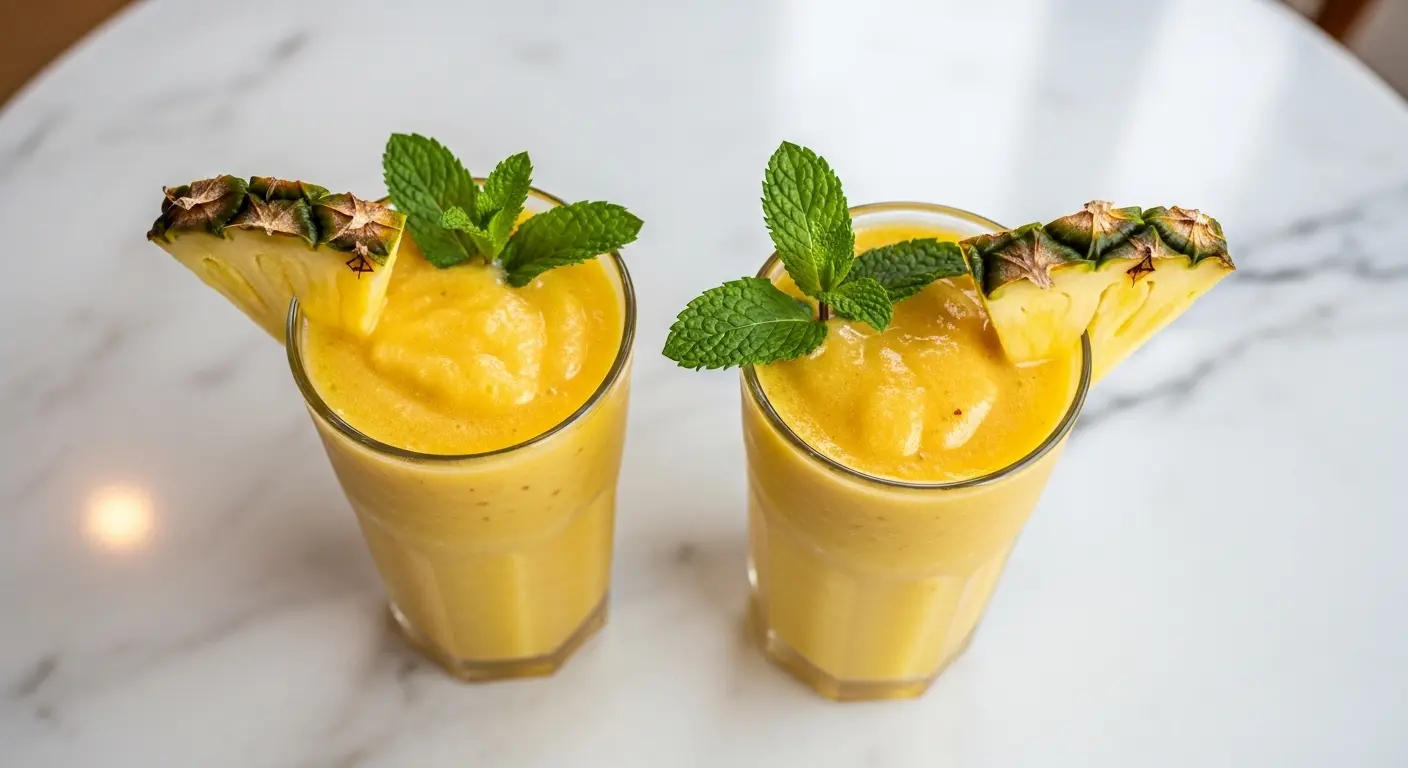
If you’re craving something cold, tropical, and absolutely bursting with sunshine in a glass, this pineapple smoothie recipe is exactly what you need.
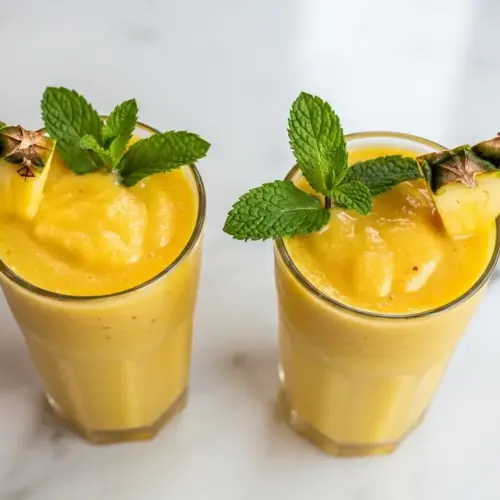
It comes together in just five minutes with a handful of simple ingredients, and the result is this thick, velvety, bright yellow smoothie that tastes like a vacation.
What makes this recipe stand out is the combination of frozen pineapple chunks with creamy coconut milk and a touch of banana for natural sweetness and body. The frozen fruit does all the heavy lifting here, giving you that thick, frosty texture without a single ice cube.
Fresh pineapple has its place, but for smoothies, frozen is the way to go. It blends into a silkier consistency, keeps everything ice-cold, and the freezing process actually concentrates the natural sugars, so the flavor is more intense.
Whether you’re making this for a quick breakfast, a post-workout refresher, or just an afternoon treat, this smoothie delivers every single time.
For a fun variation, you might also love this Papaya Smoothie for another taste of the tropics.
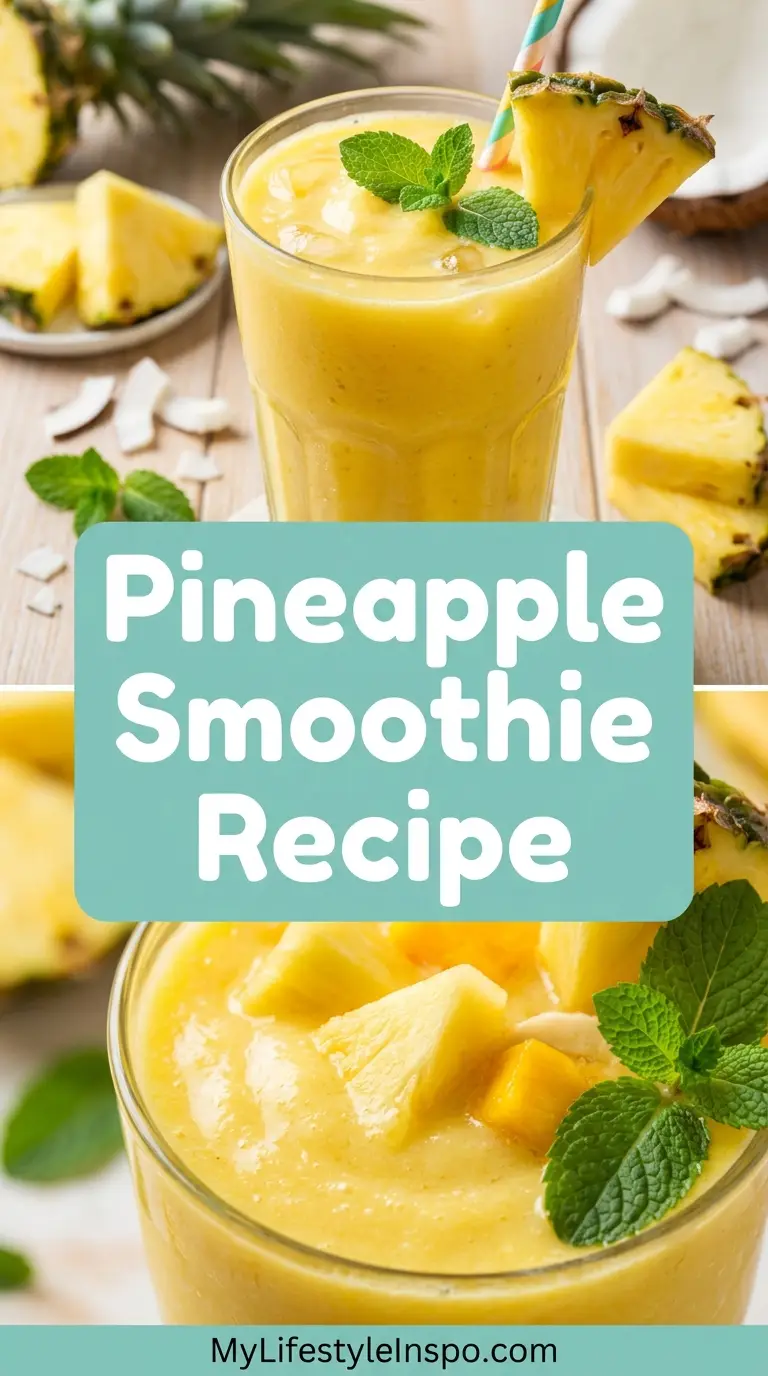
Why You’ll Love This Pineapple Smoothie Recipe
This smoothie is the kind of recipe that earns a permanent spot in your routine.
It’s naturally sweetened with fruit, so you’re not relying on added sugar to make it taste good. The pineapple, banana, and coconut milk are all doing real work here.
It’s also incredibly versatile. You can make it thicker for a smoothie bowl, thinner for a drinkable breakfast, or spike it with protein powder for a post-gym recovery drink.
The prep is absolutely minimal. If you keep frozen pineapple in your freezer (which I highly recommend), you’re literally 5 minutes away from this at any moment.
Kids love it too. It’s bright, sweet, and tropical without being too overpowering, making it a crowd-pleaser across all ages.
Here’s why this recipe is a keeper:
- 5-minute prep with no cooking required
- Naturally sweetened with fruit and no added sugar needed
- Dairy-free and vegan-friendly using coconut milk
- Thick and creamy texture thanks to frozen fruit and banana
- Packed with vitamin C and digestive-supporting bromelain from pineapple
- Easily customizable with protein powder, greens, or different liquid bases
- Kid-approved flavor that works for the whole family
You might also love this Dragon Fruit Smoothie for another vibrant, tropical treat.
Ingredients
For this pineapple smoothie recipe, you only need a few ingredients, but each one matters. Using frozen pineapple gives you the best texture, and full-fat coconut milk makes it taste rich and tropical without any dairy.
- 2 cups (300g) frozen pineapple chunks
- 1 medium ripe banana (fresh or frozen; frozen makes it extra thick)
- 3/4 cup (180ml) full-fat coconut milk (canned or from a carton)
- 1/4 cup (60ml) pineapple juice (optional, for extra flavor and thinner consistency)
- 1/2 cup (120ml) plain Greek yogurt (optional, for a creamier, protein-rich version)
- 1 tablespoon honey or agave (optional, only if you want extra sweetness)
- 1/2 teaspoon vanilla extract (optional, but adds depth)
- Pinch of ground turmeric (optional, for anti-inflammatory benefits and a golden color boost)
- Fresh pineapple slices and mint, for garnish
For the best results, use very ripe bananas. The riper the banana, the sweeter and creamier your smoothie will be.
You might also enjoy making this Green Smoothie as another nutrient-packed option for your morning routine.
Kitchen Equipment Needed
You don’t need much for this recipe, but having a powerful blender makes a real difference in achieving that silky-smooth, lump-free texture.
- High-powered blender (such as a Vitamix or Ninja; this is the most important tool)
- Measuring cups and spoons
- Can opener (if using canned coconut milk)
- Tall glasses for serving
- Reusable smoothie straws for a fun, eco-friendly touch
- Small spatula or tamper to push ingredients toward the blades if needed
- Smoothie bowl if you want to make a thicker pineapple smoothie bowl version
A good blender is truly worth the investment for smoothies. If you’re using a standard blender, let the frozen pineapple sit out for about 2 minutes before blending so it softens slightly and is easier on the motor.
Read Also: Easy Acai Bowl Recipe
Recommended Products for This Recipe
These are products I genuinely recommend based on quality and performance, chosen specifically to help you make the best version of this smoothie.
1. Vitamix 5200 Blender
A high-powered blender is the single most important tool for making smoothies with a perfectly silky texture. The Vitamix 5200 crushes frozen fruit effortlessly and produces a consistently smooth result with no fibrous chunks. It’s a long-term investment that will serve you well for years of daily smoothie making.
2. Thai Kitchen Full Fat Coconut Milk
The quality of your coconut milk makes a noticeable difference in the richness and tropical flavor of this smoothie. Thai Kitchen’s full-fat canned coconut milk is thick, creamy, and has a clean, authentic coconut flavor that elevates the final result. It’s widely available and consistently reliable.
3. Dole Frozen Pineapple Chunks
Having a bag of frozen pineapple in your freezer means you can make this smoothie anytime. Dole’s frozen pineapple chunks are consistently sweet, properly trimmed, and freeze beautifully without excess ice crystals. They’re a great pantry staple for smoothies, salsas, and tropical recipes.
4. Ninja Professional Blender
If you’re looking for a more budget-friendly option without sacrificing power, the Ninja Professional is a fantastic choice. It handles frozen fruit exceptionally well and has a wide pitcher that makes cleanup easy. For everyday smoothie making, it’s a brilliant value.
5. Bamboo Fiber Smoothie Cups with Lids
These reusable smoothie cups are perfect for taking your pineapple smoothie on the go. They’re insulated to keep your drink cold longer, BPA-free, and much more environmentally friendly than disposable cups. A small upgrade that makes your smoothie routine feel more intentional.
Another favorite: Watermelon Smoothie
Step-by-Step Instructions
1. Gather and Measure Your Ingredients
- Remove the frozen pineapple chunks from the freezer and measure out 2 cups (300g).
- Peel the banana and break it into a few pieces. If you’re using a frozen banana, you can add it straight from the freezer.
- Measure out 3/4 cup (180ml) of coconut milk. If you’re using canned coconut milk, shake the can well before opening it, as the cream tends to separate to the top. Stir it together before measuring.
- If you’re using optional add-ins like Greek yogurt, honey, vanilla extract, or pineapple juice, have them measured and ready to go before you start blending.
2. Add Liquids to the Blender First
- Pour the coconut milk into the blender first. This is an important technique: adding liquids at the bottom helps the blades engage properly and get everything moving from the start.
- If you’re using pineapple juice, add it in at this stage as well.
- If you’re adding Greek yogurt for extra creaminess and protein, spoon it in on top of the liquid.
3. Add the Banana and Optional Ingredients
- Add the banana pieces on top of the liquids.
- If you’re using honey or agave for extra sweetness, drizzle it in now so it blends evenly throughout.
- Add the vanilla extract if using.
- Add the pinch of turmeric if you’d like that anti-inflammatory golden boost. A tiny pinch (less than 1/4 teaspoon) is all you need. Too much can make the flavor slightly bitter.
4. Add the Frozen Pineapple Last
- Add the frozen pineapple chunks on top of everything. Layering the frozen fruit on top is intentional: the liquid and softer ingredients at the bottom help the blender pull everything down into the blades without getting stuck.
- If your blender has a tamper tool, have it nearby in case you need to push the ingredients down during blending.
5. Blend Until Completely Smooth
- Secure the blender lid tightly. Start blending on low speed for about 10 seconds to get everything moving and break down the larger chunks.
- Gradually increase to high speed and blend for a full 45 to 60 seconds until the smoothie is completely smooth with no chunks remaining.
- If the blender is struggling or the mixture is too thick to blend, turn it off and add an extra splash of coconut milk or pineapple juice, then blend again. Add liquid in small increments: a tablespoon or two at a time so you don’t accidentally over-thin it.
- If you want it thicker (for a smoothie bowl), add slightly less liquid than the recipe calls for.
6. Taste and Adjust
- Remove the lid and taste the smoothie with a spoon.
- If it needs more sweetness, add a small drizzle of honey and blend for another 5 seconds.
- If it’s too thick for your preference, add a little more coconut milk and blend briefly.
- If the pineapple flavor feels too sharp or acidic, a tiny extra splash of pineapple juice and a little more banana can help round it out.
7. Pour and Garnish
- Pour the smoothie into your tall glass or smoothie cup.
- Garnish with a fresh pineapple slice on the rim of the glass, a sprig of fresh mint, or a light sprinkle of shredded coconut for visual appeal and extra tropical flavor.
- Serve immediately for the best texture. Smoothies made with frozen fruit start to separate and lose their thick consistency as they warm up.
This smoothie is also delicious blended with a handful of fresh spinach if you want to sneak in some greens without affecting the flavor much. The pineapple is strong enough to mask the taste while the spinach adds iron and folate.
Read Also: Passion Fruit Smoothie Recipe
Tips for Success
Getting the best pineapple smoothie comes down to a few key techniques that are easy to follow once you know them.
- Always use frozen pineapple, not fresh, for the thickest, coldest, most velvety texture. Fresh pineapple blended with ice produces a grainier result.
- Ripe bananas are non-negotiable. Underripe bananas taste starchy and bland. Look for bananas with plenty of brown spots on the peel for maximum sweetness.
- Don’t over-add liquid. It’s tempting to add more coconut milk when the blender struggles, but add just a tablespoon at a time. Too much liquid will give you a thin, watery smoothie.
- Blend on high for at least 45 seconds. Under-blended smoothies leave fibrous stringy bits from the pineapple. Going long on the blend ensures everything is completely broken down.
- Chill your glass beforehand by placing it in the freezer for 5 minutes. This keeps your smoothie cold longer.
- Add protein powder last, after you’ve blended the base ingredients. This prevents clumping and ensures it incorporates evenly.
- For a thicker smoothie bowl, reduce the liquid to 1/2 cup (120ml) and blend. Pour into a bowl and top with granola, fresh fruit, and coconut flakes.
For a heartier morning option, pair this smoothie with Easy Overnight Oats for a complete, balanced breakfast.
Serving Suggestions
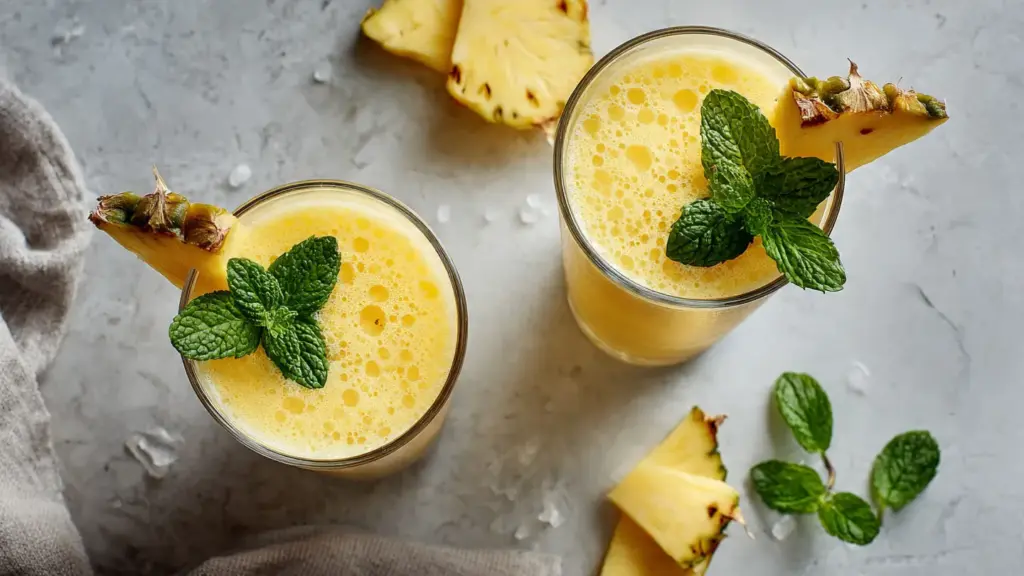
This pineapple smoothie is wonderful on its own, but it also pairs beautifully with a number of breakfast and brunch favorites.
Serve it alongside a plate of warm Air Fryer French Toast for a sweet, satisfying brunch spread that comes together quickly.
Here are some great ways to serve and enjoy this smoothie:
- As a smoothie bowl: Reduce the liquid slightly, pour into a wide bowl, and top with fresh mango, kiwi, toasted coconut flakes, and Easy Granola for crunch.
- Alongside Cracker Barrel Pancakes for a tropical-meets-comfort breakfast.
- As a post-workout drink by adding a scoop of vanilla protein powder before blending.
- Served in a hollowed-out pineapple half for a festive, Instagram-worthy presentation at brunch parties.
- Paired with Avocado Toast for a balanced breakfast with healthy fats and carbohydrates.
- As a kid-friendly afternoon snack, served in small cups with a fun straw.
- Frozen into popsicles: Pour the smoothie mixture into popsicle molds and freeze overnight for tropical fruit popsicles that kids absolutely love.
Variations to Try
Once you’ve nailed the base recipe, this pineapple smoothie is incredibly easy to customize. Here are some of the most popular and delicious variations.
- Pineapple Mango Smoothie: Replace half the frozen pineapple with frozen mango chunks. The combination of these two tropical fruits is absolutely gorgeous.
- Pineapple Banana Smoothie: Double the banana and reduce the pineapple slightly for a creamier, sweeter, more banana-forward flavor.
- Pineapple Coconut Smoothie: Use full-fat canned coconut cream instead of coconut milk for an ultra-rich, pina colada-style smoothie.
- Pineapple Green Smoothie: Add 1 to 2 cups of fresh baby spinach or kale. The pineapple completely dominates the flavor while the greens add serious nutritional value.
- Pineapple Ginger Smoothie: Add 1/2 teaspoon of freshly grated ginger root. This adds a warming, slightly spicy kick that pairs brilliantly with the sweet pineapple.
- Pineapple Protein Smoothie: Blend in a scoop of vanilla protein powder for a post-workout recovery drink with around 25 to 30g of protein per serving.
- Pineapple Turmeric Smoothie: Use a full 1/2 teaspoon of ground turmeric and a pinch of black pepper. The black pepper actually improves the body’s absorption of the turmeric’s active compounds.
You might also love the Strawberry Banana Blueberry Smoothie as another vibrant fruit blend to add to your rotation.
Storage and Reheating
Smoothies are always best enjoyed immediately after blending, but if you need to prep ahead, there are some great options.
- Refrigerator: Pour any leftover smoothie into an airtight jar or sealed container and refrigerate for up to 24 hours. Before drinking, give it a vigorous shake or quick re-blend, as separation is completely normal.
- Freezer (smoothie packs): Combine all the solid ingredients (frozen pineapple, banana, any add-ins) into a zip-lock bag and freeze. When ready to blend, just dump the pack into your blender, add the coconut milk, and blend. This is a fantastic meal-prep strategy for busy mornings.
- Frozen smoothie cubes: Pour leftover smoothie into an ice cube tray and freeze. Add the frozen cubes to your next batch of smoothie for extra thickness and flavor with no waste.
- Do not heat: This is a cold smoothie and is not meant to be reheated. If it has thickened too much in the fridge, add a splash of cold coconut milk and stir or blend to loosen.
Read Also: Yogurt Smoothie Recipe
Nutritional Facts
The following values are approximate for one serving (roughly 1.5 cups / 360ml) made with coconut milk and no optional add-ins. Values will vary based on the specific brands and quantities used.
| Nutrient | Per Serving |
|---|---|
| Calories | ~260 kcal |
| Carbohydrates | ~40g |
| Sugars | ~28g (all natural, from fruit) |
| Fat | ~10g |
| Saturated Fat | ~8g (from coconut milk) |
| Protein | ~2g |
| Fiber | ~3g |
| Vitamin C | ~80% Daily Value |
| Potassium | ~15% Daily Value |
| Manganese | ~35% Daily Value |
Adding Greek yogurt brings the protein up to approximately 10 to 12g per serving. Adding a scoop of protein powder can push that to 25 to 30g, making it a much more substantial meal replacement.
For another satisfying and nutritious breakfast, check out this Baked Oatmeal Recipe.
Health Benefits of Key Ingredients
This smoothie isn’t just delicious, it’s also genuinely nourishing thanks to its key ingredients.
Each ingredient in this recipe was chosen for both flavor and function, making this one of those recipes where taste and nutrition go hand in hand.
Here’s a closer look at what each main ingredient brings to the table:
- Pineapple: Rich in vitamin C, manganese, and bromelain, a natural enzyme that supports digestion, reduces inflammation, and may help with muscle soreness after exercise. One cup of pineapple provides more than 100% of your daily recommended vitamin C.
- Banana: A fantastic source of potassium, which supports heart health and muscle function. Ripe bananas also contain pectin and resistant starch, which help you feel full longer and support gut health.
- Coconut milk: Contains medium-chain triglycerides (MCTs), a form of fat that the body uses quickly for energy rather than storing. It also adds lauric acid, which has antimicrobial properties.
- Greek yogurt (optional): When included, provides probiotics for gut health, plus calcium and high-quality protein to make the smoothie more filling.
- Ginger (optional): A powerful anti-inflammatory and digestive aid. Even a small amount adds measurable benefits for nausea relief and digestive comfort.
- Turmeric (optional): Contains curcumin, one of the most studied anti-inflammatory compounds in nutrition. Pairing with black pepper boosts its bioavailability significantly.
This Banana Protein Smoothie is another excellent option if you want to maximize the nutritional protein content of your morning drink.
Frequently Asked Questions
1. Can I use fresh pineapple instead of frozen?
You can, but the texture will be noticeably different. Fresh pineapple doesn’t create the same thick, frosty consistency that frozen pineapple does, so your smoothie will be thinner and less cold.
If fresh pineapple is all you have, add 1 cup of ice cubes to compensate. Just be aware that ice can dilute the flavor slightly as it melts.
2. What can I use instead of coconut milk?
Any milk or milk alternative works well in this recipe. Almond milk, oat milk, regular dairy milk, and cashew milk all blend beautifully with pineapple.
Coconut milk is recommended because it reinforces the tropical flavor, but the smoothie will still taste great with your preferred liquid base.
3. Is this smoothie suitable for a vegan or dairy-free diet?
Yes, as written with coconut milk and no Greek yogurt, this smoothie is completely vegan, dairy-free, and gluten-free.
Just be sure to skip the honey and use agave syrup or maple syrup as your sweetener if you’re strictly vegan.
4. Why does my smoothie taste too tart or acidic?
Pineapple has natural acidity, and some batches are more tart than others depending on the ripeness at time of freezing. Adding a little extra ripe banana is the easiest way to balance out tartness.
You can also add a small drizzle of honey or half a tablespoon of agave syrup. A tiny pinch of salt can also round out sharp acidity in fruit-based smoothies.
5. Can I make this smoothie ahead of time for meal prep?
The best way to meal-prep this smoothie is to make “smoothie packs.” Portion the frozen pineapple and banana into individual zip-lock bags and freeze.
Each morning, dump one pack into the blender with your coconut milk and blend fresh. This gives you the best texture and flavor in about 90 seconds.
Read Also: Peach Smoothie Recipe With Yogurt
Pineapple Smoothie

Equipment
- High-powered blender - such as Vitamix or Ninja
- Measuring cups
- Measuring spoons
- Can opener
- Tall glasses - for serving
- Reusable smoothie straws - optional, for an eco-friendly touch
- Small spatula or tamper - optional, to push ingredients toward blades
- Smoothie bowl - optional, for thicker smoothie bowl version
Ingredients
- 2 cups frozen pineapple chunks - 300g
- 1 medium ripe banana - fresh or frozen; frozen makes it extra thick
- 3/4 cup full-fat coconut milk - 180ml, canned or from a carton
- 1/4 cup pineapple juice - 60ml, optional, for extra flavor and thinner consistency
- 1/2 cup plain Greek yogurt - 120ml, optional, for a creamier, protein-rich version
- 1 tablespoon honey - or agave, optional, only if you want extra sweetness
- 1/2 teaspoon vanilla extract - optional, but adds depth
- ground turmeric - a pinch, optional, for anti-inflammatory benefits and a golden color boost
For Garnish
- fresh pineapple slices
- fresh mint
Instructions
- Gather and measure all ingredients. Remove frozen pineapple from freezer, peel and break banana into pieces, and measure coconut milk (shake canned milk well before opening).
- Pour coconut milk into the blender first, followed by pineapple juice and Greek yogurt if using. This helps the blades engage properly from the start.
- Add banana pieces on top of the liquids, then add honey, vanilla extract, and turmeric if using.
- Add frozen pineapple chunks on top of everything. Layering frozen fruit on top helps the blender pull ingredients down into the blades without getting stuck.
- Blend on low speed for 10 seconds to get everything moving, then gradually increase to high speed and blend for 45 to 60 seconds until completely smooth and creamy.
- Taste and adjust consistency or sweetness. Add more coconut milk if too thick, or more honey if extra sweetness is desired. Blend briefly after adjustments.
- Pour into tall glasses and garnish with fresh pineapple slices and mint. Serve immediately for the best texture and flavor.
Notes
- Always use frozen pineapple: For the thickest, coldest, most velvety texture. Fresh pineapple blended with ice produces a grainier result.
- Use ripe bananas: Look for bananas with plenty of brown spots on the peel for maximum sweetness and creaminess. Underripe bananas taste starchy and bland.
- Don’t over-add liquid: Add coconut milk just a tablespoon at a time if the blender struggles. Too much liquid will give you a thin, watery smoothie.
- Blend on high for at least 45 seconds: This ensures all fibrous pineapple bits are completely broken down and the texture is silky smooth.
- Chill your glass beforehand: Place glasses in the freezer for 5 minutes to keep your smoothie cold longer.
- For a smoothie bowl: Reduce liquid to 1/2 cup (120ml) and blend. Pour into a bowl and top with granola, fresh fruit, and coconut flakes.
- Make-ahead smoothie packs: Combine frozen pineapple and banana in zip-lock bags and freeze. When ready, dump the pack in the blender with coconut milk and blend fresh.
- Refrigerator storage: Store leftovers in an airtight jar for up to 24 hours. Shake or re-blend before drinking as separation is normal.
- Add protein powder last: After blending the base ingredients, add protein powder and blend again to prevent clumping and ensure even incorporation.
- Balance tartness: If your smoothie tastes too acidic, add extra ripe banana or a small drizzle of honey to balance it out.
Final Thoughts
This pineapple smoothie recipe is one of those recipes that earns a permanent spot in your regular rotation.
It’s fast, it’s fresh, it’s naturally sweet, and it genuinely tastes like you’re somewhere warm and tropical even if you’re standing in your kitchen at 7am in the middle of February.
The simplicity is the whole point. A few quality ingredients, a good blender, and two minutes of your time are all it takes.
Give it a try this week and see how quickly it becomes your go-to morning blend. If you make it, leave a comment below and let me know how it turned out, or share a photo on Instagram and tag me. I love seeing your creations!
Recommended:
- Avocado Smoothie
- Mango Smoothie Recipe Without Yogurt
- Blueberry Smoothie Recipe Without Yogurt
- Strawberry Smoothie Recipe Without Milk
- Chocolate Peanut Butter Banana Smoothie
- Banana Mango Smoothie
- Peanut Butter Jelly Smoothie
- Strawberry and Blackberry Smoothie
- Chia Banana Boost Tropical Smoothie
- Classic Pina Colada