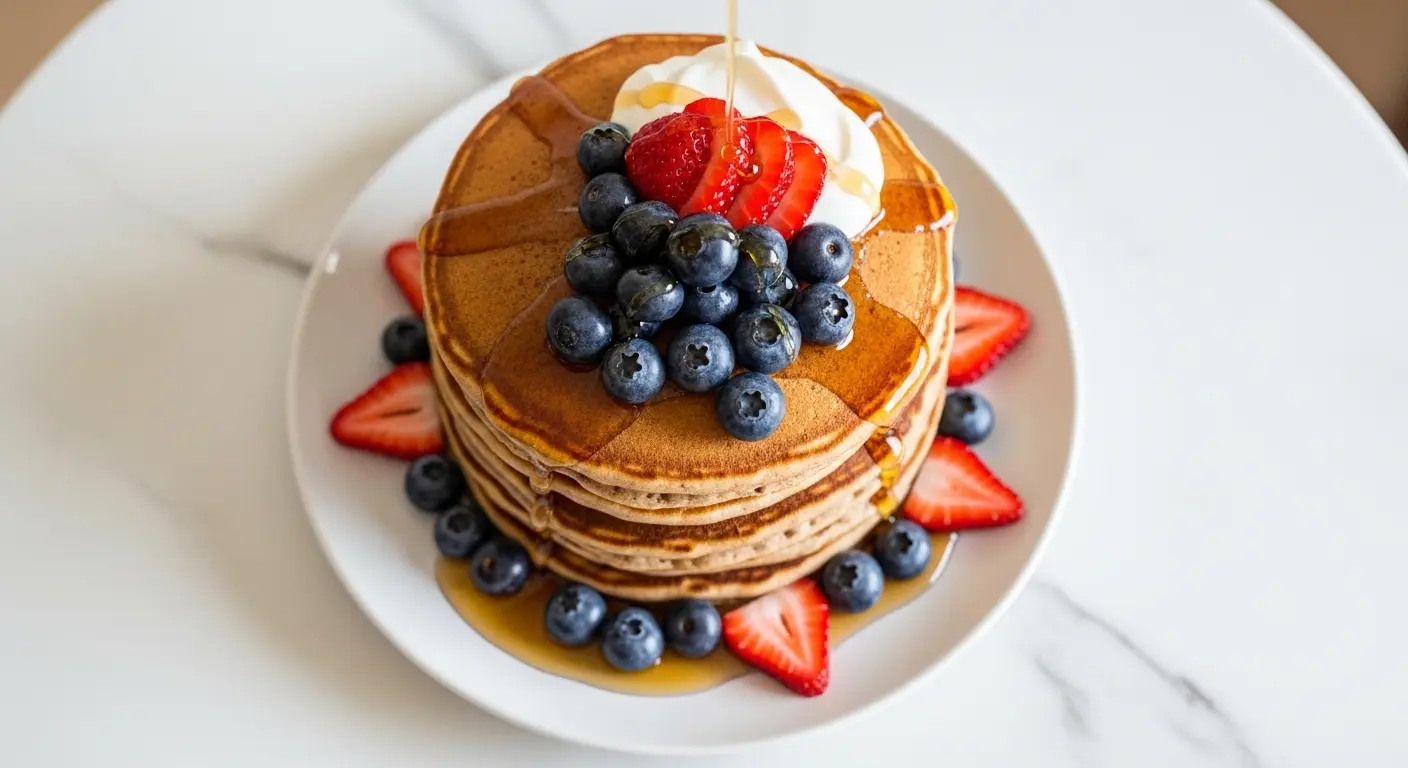
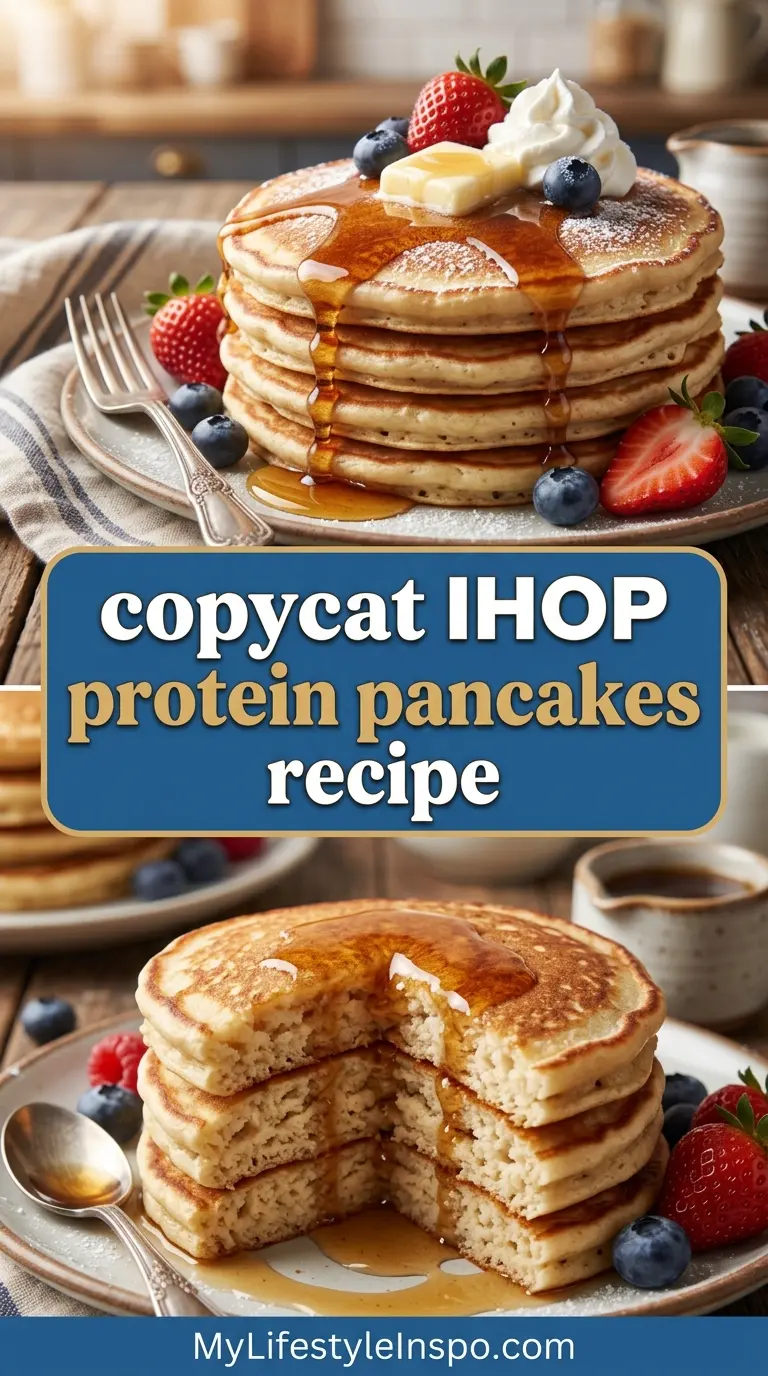
If you’ve ever sat down at IHOP and ordered their protein pancakes, you know how satisfying it feels to start the day with something that’s both indulgent and genuinely good for you. This copycat IHOP protein pancakes recipe nails that same fluffy, golden stack you love from the restaurant, but you can make it in your own kitchen for a fraction of the cost.
IHOP’s protein pancakes are built around a buttermilk-style base with added protein powder and cottage cheese blended right in. The result is a pancake that’s remarkably light on the inside, golden and slightly crisp on the edges, and packed with enough protein to keep you full for hours.
What makes this version special is that it doesn’t sacrifice texture for nutrition. A lot of homemade high-protein pancakes end up rubbery or dense, but this recipe gets the ratios just right so they’re still soft and fluffy.
Once you try making these at home, you’ll wonder why you ever paid restaurant prices for them.
If you’re a fan of restaurant-style pancakes, you’ll also love this IHOP Pancake Recipe for the classic original version.
Why You’ll Love This Copycat IHOP Protein Pancakes Recipe
This recipe delivers everything you want from a weekend breakfast without leaving you feeling weighed down afterward.
Each pancake is genuinely high in protein, thanks to the combination of vanilla protein powder and cottage cheese working together in the batter.
The cottage cheese blends completely smooth when mixed, so you won’t taste it at all but you’ll get all of its protein and creaminess.
These pancakes are also incredibly quick to make. From start to finish, you’re looking at about 25 minutes total.
They’re flexible too. You can customize the protein powder flavor, add mix-ins, and top them however you like without the recipe falling apart.
- High protein content from a combination of cottage cheese and protein powder
- Fluffy, soft texture that rivals the restaurant version
- Ready in under 30 minutes from start to finish
- Easy to customize with different protein powder flavors or toppings
- Made with simple, everyday ingredients
- A much more affordable alternative to dining out
- Great for meal prep since they reheat beautifully
For another delicious breakfast stack, check out this Cracker Barrel Pancake Recipe for a Southern-style twist.
Ingredients
Getting the ingredient balance right is what makes this recipe work. The combination of cottage cheese and protein powder adds protein without making the batter too thick, while the buttermilk and egg whites keep things tender and airy.
- 1 cup (240 ml) full-fat cottage cheese
- 1 scoop (about 30 g / 1 oz) vanilla protein powder
- 2 large eggs
- 2 large egg whites
- 1/2 cup (60 g) all-purpose flour
- 1 tsp baking powder
- 1/4 tsp baking soda
- 1 tbsp granulated sugar
- 1/4 tsp salt
- 1 tsp vanilla extract
- 2 tbsp unsalted butter, melted (plus extra for the pan)
- 1/4 cup (60 ml) milk (whole or 2%)
You might also enjoy: Buttermilk Pancake Recipe
Kitchen Equipment Needed
You don’t need any fancy equipment for this recipe. A good blender and a non-stick skillet or griddle are really the two key players here.
- Blender or food processor (to fully smooth out the cottage cheese)
- Large mixing bowl
- Non-stick electric griddle or large non-stick skillet
- Whisk
- Measuring cups and spoons
- Flexible silicone spatula
- Ladle or 1/4-cup measuring cup (for portioning batter)
- Small bowl (for melting butter)
Read Also: Easy Waffle Recipe
Recommended Products for This Recipe
These are a few products that genuinely make a difference when preparing this recipe at home. Each one was selected based on quality and how much it improves the final result.
1. Vanilla Whey Protein Powder
A high-quality vanilla protein powder makes a noticeable difference in both flavor and texture. Look for one that mixes smoothly without clumping, as it will blend into the batter much more evenly. Whey-based formulas tend to work best in pancake batter compared to plant-based options, which can add a slightly gritty texture.
2. Non-Stick Electric Griddle
An electric griddle gives you a large, evenly heated surface so you can cook multiple pancakes at once without worrying about hot spots. This is especially helpful with protein pancakes, which need steady, moderate heat to cook through without burning on the outside. A griddle with adjustable temperature control is ideal.
3. High-Powered Blender
Blending the cottage cheese completely smooth is one of the most important steps in this recipe. A high-powered blender makes this effortless and ensures no lumps end up in your batter. It also comes in handy for smoothies, sauces, and soups.
4. Flexible Silicone Spatula Set
Flipping protein pancakes requires a wide, flexible spatula that can slide cleanly underneath without tearing the pancake. Silicone spatulas are heat-safe and won’t scratch non-stick surfaces, making them a must-have for this recipe.
For another fun morning option, try this Belgian Waffle Recipe when you want to mix up your breakfast routine.
Step-by-Step Instructions
1. Blend the Cottage Cheese Until Smooth
- Add 1 cup (240 ml) of full-fat cottage cheese to your blender or food processor.
- Blend on medium-high speed for about 30 to 45 seconds, until the cottage cheese is completely smooth with no visible curds remaining.
- This step is critical. If you skip it, the batter will have a lumpy, uneven texture and the pancakes won’t be as fluffy.
- Scrape down the sides of the blender with a spatula if needed, then blend for another 10 seconds to make sure everything is fully smooth.
- Transfer the blended cottage cheese to a large mixing bowl and set aside.
2. Combine the Wet Ingredients
- Crack 2 large eggs into the bowl with the blended cottage cheese.
- Add 2 large egg whites as well. Using extra egg whites gives the batter more protein and helps create a lighter, airier pancake.
- Add 1 tsp vanilla extract to the bowl.
- Add 2 tbsp of melted (but not hot) unsalted butter. Make sure it has cooled slightly before adding it so it doesn’t scramble the eggs.
- Pour in 1/4 cup (60 ml) of milk.
- Whisk all of the wet ingredients together until fully combined and the mixture looks uniform.
3. Mix the Dry Ingredients
- In a separate small bowl, combine 1/2 cup (60 g) all-purpose flour, 1 scoop (about 30 g) vanilla protein powder, 1 tsp baking powder, 1/4 tsp baking soda, 1 tbsp granulated sugar, and 1/4 tsp salt.
- Whisk the dry ingredients together briefly to distribute the baking powder and soda evenly throughout the flour mixture.
- Evenly distributing the leavening agents now prevents any one bite from tasting soapy or uneven.
4. Combine Wet and Dry Ingredients
- Pour the dry ingredient mixture directly into the bowl of wet ingredients.
- Using a whisk or rubber spatula, gently stir the batter just until the dry ingredients are incorporated.
- Do not overmix. Overmixing develops the gluten in the flour, which makes pancakes tough and chewy rather than tender and fluffy.
- A few small lumps in the batter are completely fine and actually preferred. Stop mixing as soon as you no longer see any large streaks of dry flour.
- Let the batter rest for 3 to 5 minutes while the pan heats up. This rest time allows the baking powder to begin activating and gives you fluffier pancakes.
5. Preheat and Grease the Pan
- Place your non-stick skillet or electric griddle over medium heat. If using a stovetop skillet, allow it to preheat for about 2 to 3 minutes.
- Add a small pat of butter (about 1/2 tsp) to the pan and allow it to melt, swirling to coat the surface evenly.
- Test the heat by sprinkling a few drops of water on the pan. If they sizzle and evaporate immediately, the pan is ready.
- The right temperature is key with protein pancakes. Too high and the outside will brown before the center cooks through; too low and they’ll spread flat without getting fluffy.
6. Cook the Pancakes
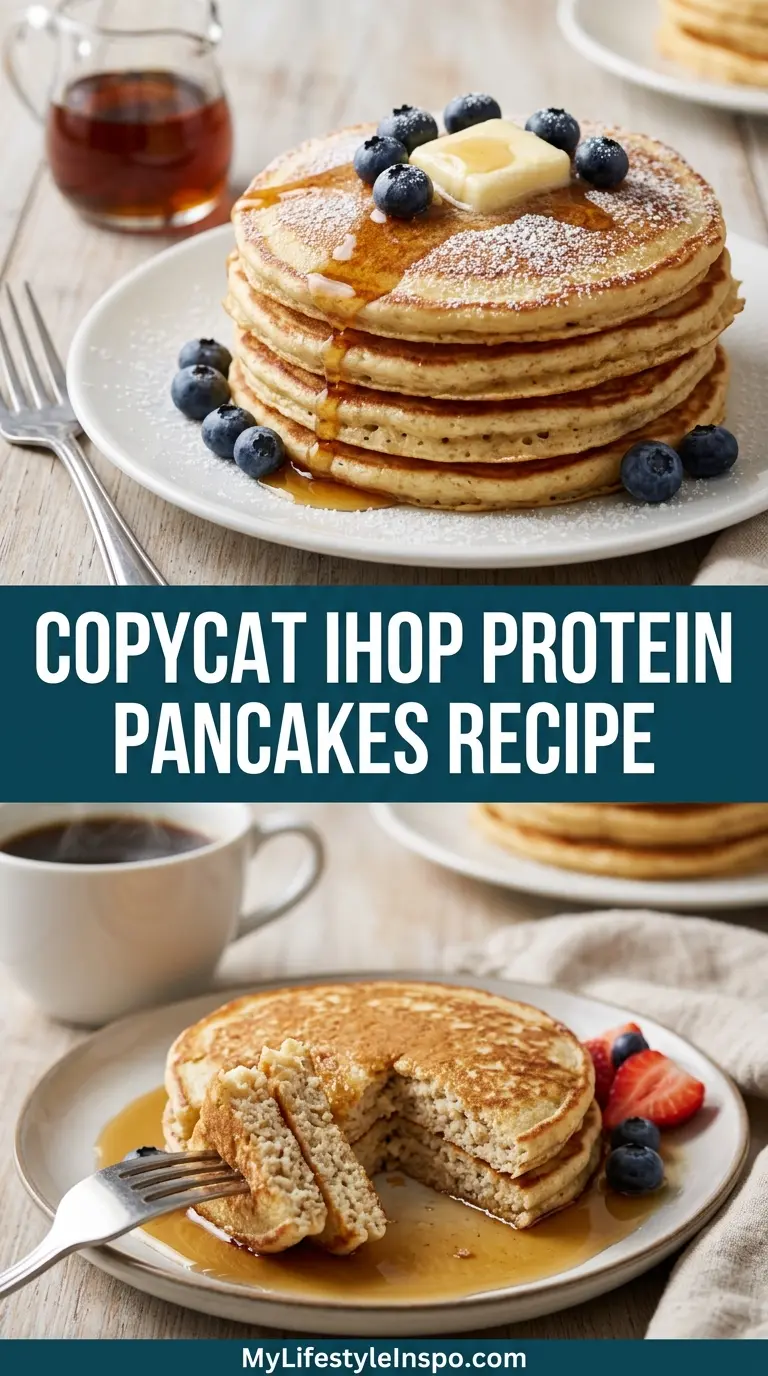
- Using a 1/4-cup measuring cup or ladle, pour the batter onto the heated pan. This size creates pancakes similar to IHOP’s standard protein pancakes.
- Space pancakes at least 2 inches apart to allow for spreading.
- Cook on the first side for about 2 to 3 minutes, until bubbles begin forming on the surface and the edges start to look set and slightly matte rather than wet and shiny.
- When you see those bubbles and dry edges, the pancake is ready to flip. Flipping too early is the most common mistake, and it leads to pancakes that fall apart.
- Slide your flexible spatula gently but confidently underneath the pancake in one smooth motion and flip it over.
7. Finish Cooking and Keep Warm
- Cook on the second side for 1 to 2 minutes, until golden brown. The second side cooks faster than the first.
- Transfer the finished pancakes to a plate. To keep them warm while you cook the remaining batches, place them in a 200°F (93°C) oven on a baking sheet.
- Add a fresh small pat of butter between each batch to maintain a lightly greased surface.
- Repeat with the remaining batter until all pancakes are cooked.
8. Serve and Enjoy
- Stack the pancakes on a plate, layering them as you go for that classic restaurant-style presentation.
- Add your desired toppings just before serving so the pancakes stay crispy on the outside.
- Serve immediately for the best texture.
This recipe pairs beautifully alongside scrambled eggs for a complete high-protein breakfast spread.
Tips for Success
Small details make a big difference when it comes to getting these pancakes just right. Here are the most important things to keep in mind throughout the cooking process.
- Blend the cottage cheese fully. Any remaining lumps will create an uneven batter that produces dense spots in your pancakes.
- Don’t overmix the batter. Stir just until no dry flour streaks remain. A lumpy batter is not a problem.
- Rest the batter. Even just 3 to 5 minutes of rest allows the leavening agents to activate and the gluten to relax.
- Use medium heat, not high. Protein pancakes are more sensitive to heat than regular pancakes. High heat will brown them too fast before the center sets.
- Watch for bubbles before flipping. Bubbles across the surface and matte, slightly set edges are the reliable sign that it’s time to flip.
- Use a wide spatula. A narrow spatula makes flipping tricky and increases the chance of tearing the pancake.
- Keep portions consistent. Using a measuring cup for each pancake ensures they all cook at the same rate.
For another impressive breakfast the whole family will love, check out this French Toast Casserole Recipe.
Serving Suggestions
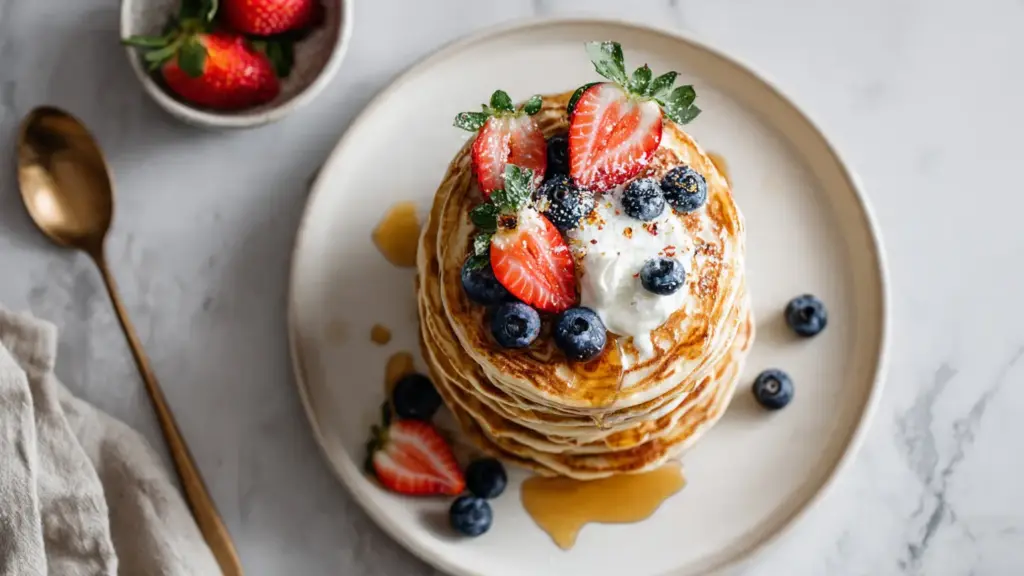
These protein pancakes are incredibly versatile and pair well with both sweet and savory accompaniments.
You can keep things simple and classic with maple syrup and fresh berries, or go all out with a full breakfast spread. Either way, the high protein content of the pancakes balances nicely with any sides you choose.
- Fresh sliced strawberries, blueberries, or bananas piled on top
- A drizzle of pure maple syrup or strawberry sauce for natural sweetness
- A light dusting of powdered sugar for a classic IHOP look
- A dollop of Greek yogurt instead of whipped cream for even more protein
- A side of crispy turkey bacon or regular bacon
- A simple fruit salad on the side for a refreshing contrast
- Nut butter drizzled over the top for healthy fats and added protein
- A small scoop of cottage cheese on the side with honey for a protein-forward plate
You might also enjoy: Breakfast Potatoes Recipe
Variations to Try
Once you’ve nailed the base recipe, it’s easy and fun to customize these pancakes in different directions. The batter is forgiving and works well with a variety of mix-ins and swaps.
- Chocolate protein pancakes: Swap the vanilla protein powder for chocolate-flavored protein powder and add 1 tbsp unsweetened cocoa powder to the dry ingredients.
- Blueberry protein pancakes: Fold 1/2 cup fresh or frozen blueberries into the finished batter just before cooking.
- Banana protein pancakes: Mash one ripe banana and stir it into the wet ingredients before combining with the dry.
- Cinnamon roll style: Add 1 tsp cinnamon and a pinch of nutmeg to the dry ingredients and top the finished stack with a simple glaze made from powdered sugar and milk.
- Peanut butter protein pancakes: Stir 2 tbsp natural peanut butter into the wet ingredients for a nutty, rich variation.
- Gluten-free version: Substitute a 1:1 gluten-free flour blend for the all-purpose flour. The texture will be slightly denser but still delicious.
- Higher protein boost: Add an extra scoop of protein powder and a splash more milk to keep the batter from getting too thick.
For a cozy fall morning variation, try this Pumpkin Pancake Recipe using a similar fluffy base.
Storage and Reheating
These protein pancakes store extremely well, making them a great candidate for weekend meal prep.
Cook a full batch on Sunday and you’ll have easy, high-protein breakfasts ready throughout the week without any morning effort.
- Refrigerator: Allow pancakes to cool completely, then stack them with parchment paper between each pancake to prevent sticking. Store in an airtight container or zip-top bag in the refrigerator for up to 4 days.
- Freezer: For longer storage, arrange cooled pancakes in a single layer on a baking sheet and freeze for about 1 hour until solid. Transfer to a freezer-safe bag and freeze for up to 2 months.
- Reheating from the fridge: Place pancakes in a toaster or toaster oven for 1 to 2 minutes for the best texture. You can also warm them in a non-stick skillet over medium-low heat for about 1 minute per side.
- Reheating from frozen: Reheat directly from frozen in a toaster or 350°F (175°C) oven for 3 to 5 minutes. No need to thaw first.
- Avoid the microwave when possible: Microwaving makes the pancakes soft and slightly rubbery. A toaster or skillet preserves their texture much better.
Read Also: Easy French Toast Recipe
Nutritional Facts
The nutritional values below are approximate and based on one serving of 2 medium pancakes made with the recipe as written. Actual values will vary depending on the specific protein powder you use and any toppings added.
| Nutrient | Per Serving (2 Pancakes) |
|---|---|
| Calories | ~280 kcal |
| Protein | ~28 g |
| Total Fat | ~9 g |
| Saturated Fat | ~4 g |
| Carbohydrates | ~22 g |
| Dietary Fiber | ~0.5 g |
| Sugars | ~5 g |
| Sodium | ~390 mg |
| Cholesterol | ~130 mg |
These pancakes deliver approximately 28 grams of protein per serving, which is significantly higher than traditional pancakes that typically contain only 5 to 7 grams per serving of the same size.
The majority of that protein comes from four sources working together: cottage cheese, protein powder, whole eggs, and egg whites. This combination provides both fast-digesting whey protein and slower-digesting casein, which helps sustain fullness longer.
Another great high-protein breakfast option is these Air Fryer Egg Bites for a portable meal prep breakfast.
Health Benefits of Key Ingredients
The ingredients in this recipe aren’t just functional for cooking purposes. Several of them offer meaningful nutritional benefits worth knowing about.
Cottage cheese, protein powder, eggs, and egg whites each contribute something valuable beyond just protein content.
- Cottage cheese is rich in casein protein, which digests slowly and supports sustained satiety. It’s also a good source of calcium, phosphorus, and B vitamins.
- Vanilla protein powder provides a concentrated source of complete protein with all essential amino acids. Whey-based versions also contain immunoglobulins that support immune function.
- Eggs are one of the most nutrient-dense foods available. They provide high-quality protein, choline for brain health, and fat-soluble vitamins including A, D, E, and K.
- Egg whites are virtually pure protein with minimal fat and calories, making them an efficient way to boost the protein content without significantly affecting the texture.
- All-purpose flour provides carbohydrates for immediate energy. You can swap in whole wheat flour for more fiber and a slightly denser texture.
- Milk adds calcium, vitamin D, and additional protein to the batter.
For another nutritious morning option, try making this Easy Granola Recipe to serve alongside your pancakes.
Frequently Asked Questions
1. Can I use plant-based protein powder instead of whey?
You can, but the results will differ slightly. Plant-based protein powders (like pea or brown rice protein) tend to absorb more liquid and can make the batter thicker or produce a slightly denser pancake. If you use a plant-based powder, add an extra 2 to 3 tablespoons of milk to the batter to compensate. The flavor will also vary depending on the protein powder brand you choose.
2. Why are my protein pancakes coming out rubbery?
Rubbery protein pancakes are almost always caused by one of two things: overmixing the batter or cooking at too high a temperature. Overmixing develops the gluten in the flour and toughens the pancakes. High heat causes the exterior to set and firm up before the inside has a chance to cook through gently, resulting in a chewy, dense texture. Mix just until the dry ingredients are incorporated and keep the heat at medium.
3. Can I make these pancakes without protein powder?
Yes. If you don’t have protein powder, you can simply leave it out and increase the flour to 3/4 cup (90 g). The pancakes will still be higher in protein than average because of the cottage cheese and eggs, but the total protein per serving will drop to around 14 to 16 grams. You can also add 2 tablespoons of ground flaxseed or hemp seeds to partially offset the difference.
4. How do I keep the pancakes from sticking to the pan?
Make sure your pan is properly preheated before adding the batter. A cold or unevenly heated pan is a common cause of sticking. Add a small amount of butter before each batch and allow it to melt and lightly coat the surface. Avoid using cooking spray on non-stick pans, as it can build up over time and degrade the coating. A quality non-stick pan that’s properly preheated with a small amount of butter should release the pancakes cleanly.
5. Can I make the batter the night before?
You can mix the batter and store it covered in the refrigerator overnight, but be aware that the leavening agents will lose some of their potency by morning. The pancakes may come out slightly less fluffy than if made fresh. If you want to prep ahead, it’s better to blend the cottage cheese and mix the dry ingredients separately the night before and then combine them in the morning.
This recipe goes great with a side of Air Fryer Bacon for the full breakfast experience.
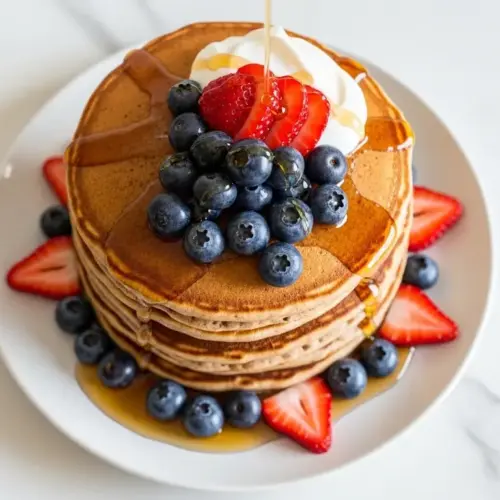
Copycat IHOP Protein Pancakes

Equipment
- Blender - high-powered (or food processor)
- Large mixing bowl
- Non-stick electric griddle - or large non-stick skillet
- Whisk
- Measuring cups and spoons
- Flexible silicone spatula - for flipping
- Ladle - or 1/4-cup measuring cup for portioning
- Small bowl - for melting butter
Ingredients
- 1 cup full-fat cottage cheese - 240ml, blended smooth
- 1 scoop vanilla protein powder - about 30g (1 oz), whey-based recommended
- 2 large eggs
- 2 large egg whites
- 1/2 cup all-purpose flour - 60g
- 1 tsp baking powder
- 1/4 tsp baking soda
- 1 tbsp granulated sugar
- 1/4 tsp salt
- 1 tsp vanilla extract
- 2 tbsp unsalted butter - melted, plus extra for the pan
- 1/4 cup milk - 60ml, whole or 2%
For Serving
- maple syrup - for serving
- fresh berries - for serving
- powdered sugar - for dusting (optional)
Instructions
- Blend the cottage cheese in a blender or food processor for 30-45 seconds until completely smooth.
- In a large bowl, whisk together the blended cottage cheese, eggs, egg whites, vanilla extract, melted butter, and milk until fully combined.
- In a separate bowl, whisk together the flour, protein powder, baking powder, baking soda, sugar, and salt.
- Pour the dry ingredients into the wet and gently stir until just combined. A few lumps are fine. Let the batter rest for 3-5 minutes.
- Preheat a non-stick skillet or griddle over medium heat and grease with butter.
- Pour 1/4 cup of batter for each pancake onto the hot surface. Cook until bubbles form on top and edges look set, about 2-3 minutes, then flip and cook for another 1-2 minutes until golden.
- Serve the pancakes immediately, stacked high with your favorite toppings like maple syrup and berries.
Notes
- For best results, blend the cottage cheese until completely smooth to avoid lumps.
- Do not overmix the batter; stir just until no dry flour streaks remain.
- Use medium heat to prevent the outside from burning before the inside cooks through.
- Flip only when bubbles appear on the surface and edges look matte, not shiny.
- For chocolate protein pancakes, swap vanilla protein powder for chocolate and add 1 tbsp unsweetened cocoa powder.
- Fold in fresh blueberries or mashed banana for a fruity variation.
- Store cooled pancakes in an airtight container in the fridge for up to 4 days or freeze for up to 2 months.
- Reheat in a toaster or skillet for the best texture; avoid microwaving to prevent rubberiness.
Final Thoughts
Making a copycat IHOP protein pancakes recipe at home is one of those kitchen wins that feels genuinely rewarding.
You’re getting a stack of fluffy, golden pancakes that tastes every bit as good as the restaurant version, but with more protein, less cost, and the satisfaction of having made it yourself.
Whether you’re fueling up for a busy day, trying to hit a protein goal, or just treating yourself to a special weekend breakfast, this recipe delivers every single time.
Give it a try, and when you do, leave a comment below sharing how they turned out. Sharing your stack on social media and tagging us is always appreciated too!
Recommended:
- IHOP Pancake Recipe
- Kodiak Pancake Recipe
- Old Fashioned Pancake Recipe
- Gluten Free Pancake Recipe
- German Pancake Recipe
- Pancake Recipe Without Milk
- Betty Crocker Pancake Recipe
- Air Fryer French Toast Recipe
- Classic French Toast Recipe
- Breakfast Casserole Recipe