
Nothing beats a steaming bowl of homemade beef bone broth soup when you’re craving something deeply nourishing and comforting. This beef bone broth soup recipe transforms simple beef bones into a rich, golden elixir packed with collagen, minerals, and incredible flavor.
Making this soup from scratch might seem intimidating, but the process is surprisingly straightforward. You’ll roast the bones to develop deep, savory flavors, then simmer them low and slow with aromatic vegetables and herbs.
The result is a soup that’s simultaneously healing and delicious. Each spoonful delivers warmth, nutrition, and that unmistakable umami richness that only comes from properly prepared bone broth.
This recipe gives you a versatile foundation that works beautifully on its own or as a base for countless other dishes. The gentle simmering process extracts every bit of goodness from the bones, creating a broth that gels when chilled and becomes silky when reheated.
You’ll love how the slow-cooking method fills your kitchen with the most amazing aroma. It’s the kind of recipe that makes your house smell like home.
This pairs wonderfully with crusty bread for a complete meal.

Why You’ll Love This Beef Bone Broth Soup Recipe
This beef bone broth soup stands out for all the right reasons. The homemade version tastes infinitely better than anything you’ll find in stores, with a depth of flavor that comes from patient simmering and quality ingredients.
Making your own bone broth is incredibly economical since you’re using bones that might otherwise go to waste. Plus, you have complete control over the ingredients, ensuring no unwanted additives or excessive sodium.
- Deeply nourishing and packed with collagen, gelatin, and essential minerals
- Remarkably versatile as a standalone soup or cooking base for other recipes
- Budget-friendly way to extract maximum nutrition from beef bones
- Naturally low-carb, keto-friendly, and fits most dietary restrictions
- Makes your home smell absolutely incredible while it cooks
- Stores beautifully in the fridge or freezer for convenient meal prep
Ingredients
The beauty of this beef bone broth soup recipe lies in its simplicity. You’ll need quality beef bones and a handful of aromatics to create something truly special.
- 3-4 lbs (1.4-1.8 kg) beef bones (mix of knuckle, marrow, and oxtail)
- 2 tablespoons olive oil
- 2 medium carrots, roughly chopped (about 1 cup/150g)
- 2 celery stalks, roughly chopped (about 1 cup/100g)
- 1 large onion, quartered (about 2 cups/200g)
- 1 whole head garlic, halved crosswise
- 2 tablespoons apple cider vinegar
- 2 bay leaves
- 1 tablespoon whole black peppercorns
- 4-5 sprigs fresh thyme
- 3-4 sprigs fresh parsley
- 1 tablespoon sea salt
- 4 quarts (3.8 liters) filtered water, plus more as needed
Optional additions for serving:
- Fresh chopped parsley
- Thinly sliced green onions
- Cooked vegetables (carrots, celery, mushrooms)
- Cooked egg noodles or rice
Kitchen Equipment Needed
Having the right equipment makes the bone broth process much easier and ensures the best results. Most of these are standard kitchen items you probably already own.
- Large roasting pan or rimmed baking sheet
- 8-10 quart stockpot or Dutch oven
- Fine-mesh strainer or cheesecloth
- Large mixing bowl
- Ladle
- Tongs or slotted spoon
- Storage containers (mason jars or airtight containers)
- Slow cooker or Instant Pot (optional)
Recommended Products for This Recipe
These carefully selected products will help you create the absolute best beef bone broth soup. Each one has been chosen for quality and performance.
1. Grass-Fed Beef Bones
Grass-fed beef bones provide superior nutrition and flavor compared to conventional options. They contain higher levels of omega-3 fatty acids and deliver a cleaner, richer taste to your broth. Look for a mix of marrow bones, knuckles, and oxtail for the best gelatin content.
2. Le Creuset Enameled Cast Iron Dutch Oven
This Dutch oven distributes heat evenly and maintains a consistent simmer for hours without scorching. The heavy lid traps moisture perfectly, and the enamel coating makes cleanup effortless even after long cooking sessions. It’s a lifetime investment that produces consistently excellent results.
3. Bragg Organic Apple Cider Vinegar
Apple cider vinegar is essential for extracting minerals from the bones into your broth. Bragg’s organic version with the mother provides the best quality and helps break down collagen effectively. Just two tablespoons makes a significant difference in the final nutrient content.
4. Fine Mesh Stainless Steel Strainer
A quality fine-mesh strainer ensures your finished broth is crystal clear without any sediment. Stainless steel won’t rust or retain odors, and the fine mesh catches even the smallest particles. This creates that professional, restaurant-quality clarity you want in bone broth.
Another comforting option to try is this hearty chicken noodle soup.
Step-by-Step Instructions
Follow these detailed steps to create the most flavorful and nutritious beef bone broth soup. Taking your time with each stage ensures optimal results.
1. Prepare and Roast the Bones
- Preheat your oven to 400°F (200°C) and position a rack in the center
- Rinse the beef bones thoroughly under cold running water to remove any bone fragments or debris
- Pat the bones completely dry with paper towels, as moisture will prevent proper browning
- Arrange the bones in a single layer on your roasting pan, making sure they’re not crowded or overlapping
- Drizzle 1 tablespoon of olive oil over the bones and rub to coat evenly
- Roast for 40-45 minutes, flipping the bones halfway through, until they’re deeply browned and caramelized
- The bones should develop a rich, golden-brown color and your kitchen will smell incredible
2. Prepare the Aromatics
- While the bones are roasting, roughly chop your carrots into 2-inch (5cm) pieces, no need for perfect cuts
- Chop the celery stalks into similar 2-inch (5cm) pieces
- Quarter the onion through the root end, leaving the peel on for extra color and nutrients
- Slice the head of garlic in half crosswise, exposing all the cloves
- Gather your fresh herbs and whole spices so they’re ready to add
- Have your apple cider vinegar measured and ready
3. Build the Broth Base
- Transfer the roasted bones to your large stockpot using tongs, being careful as they’ll be extremely hot
- Pour any rendered fat and drippings from the roasting pan into the stockpot for extra flavor
- Add the chopped carrots, celery, onion quarters, and halved garlic head to the pot
- Pour in the apple cider vinegar directly over the bones and let sit for 15-20 minutes
- This resting period allows the vinegar to start breaking down the bones and extracting minerals
- Add the bay leaves, black peppercorns, thyme sprigs, and parsley sprigs to the pot
- Sprinkle in the sea salt
4. Add Water and Bring to Simmer
- Pour in the filtered water, adding enough to cover the bones by about 2 inches (5cm)
- The bones should be completely submerged, add more water if needed
- Place the pot over high heat and bring to a boil, watching carefully
- As the liquid heats, foam and scum will rise to the surface
- Use a ladle or large spoon to skim off this foam every 10-15 minutes for the first hour
- This step is crucial for achieving a clear, clean-tasting broth
5. Reduce Heat and Simmer
- Once boiling, immediately reduce the heat to the lowest possible setting
- The broth should maintain a bare simmer with just a few bubbles breaking the surface occasionally
- If it’s bubbling vigorously, your heat is too high and will result in cloudy broth
- Partially cover the pot with the lid, leaving it slightly ajar to allow steam to escape
- Let the broth simmer undisturbed for 12-24 hours on the stovetop
- For deeper flavor and more gelatin, aim for the full 24 hours
6. Monitor and Maintain
- Check the pot every 2-3 hours to ensure the bones remain covered with liquid
- Add hot water as needed to maintain the level, usually 1-2 cups at a time
- The liquid will evaporate slowly over the long cooking time
- Continue skimming any foam that appears during the first few hours
- After the initial 8 hours, the broth should be clear and golden
- Resist the urge to stir vigorously, as this can cloud the broth
7. Strain and Store
- After 12-24 hours, turn off the heat and let the broth cool for 30 minutes
- Set a fine-mesh strainer over a large bowl and carefully ladle the broth through it
- Discard the solids, which will have given up all their flavor and nutrients
- For extra clarity, line the strainer with several layers of cheesecloth and strain again
- Let the broth cool to room temperature, then refrigerate for 4-6 hours or overnight
- A layer of fat will solidify on top, which you can remove or leave for added richness
Read Also: Vegetable Beef Soup Recipe
Tips for Success
These tips will help you achieve the clearest, most flavorful beef bone broth soup every single time. Small details make a big difference in the final result.
- Choose the right bones: Mix meaty bones like oxtail with marrow bones and knuckles for the best balance of flavor and gelatin
- Don’t skip roasting: This step develops deep caramelized flavors that make homemade broth taste infinitely better than store-bought
- Maintain a gentle simmer: High heat makes cloudy, greasy broth while low heat produces clear, clean-tasting results
- Add vinegar before water: Letting the vinegar sit on the bones first helps extract maximum minerals and nutrients
- Be patient with cooking time: Longer simmering extracts more collagen and creates that coveted gel-like consistency when chilled
- Save vegetable scraps: Keep a freezer bag of onion ends, carrot peels, and celery tops to add extra flavor without waste
- Taste and season at the end: The broth concentrates as it cooks, so wait to adjust salt until it’s finished
You might also enjoy: Crockpot Beef Stew Recipe
Serving Suggestions
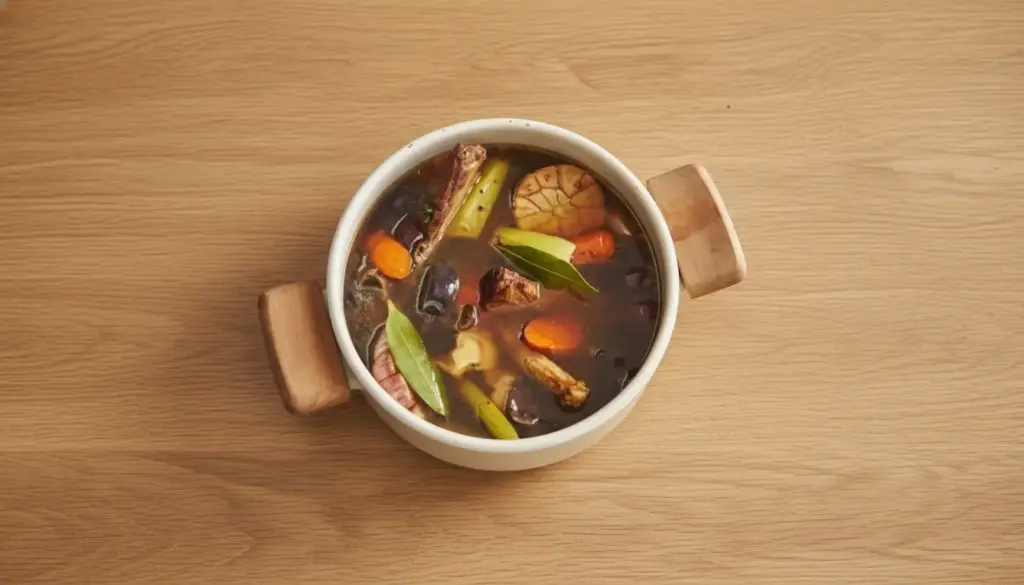
Beef bone broth soup shines in countless ways, from simple to elaborate presentations. Here are some of my favorite serving ideas.
This broth is absolutely delicious sipped straight from a mug with just a pinch of sea salt and fresh cracked pepper. It’s my go-to morning beverage during cold months when I need something warming and nourishing.
- Serve as a clear soup with sautéed mushrooms, fresh herbs, and a drizzle of high-quality olive oil
- Add cooked vegetables like carrots, celery, and potatoes for a heartier vegetable beef soup
- Use as the base for French onion soup topped with melted cheese
- Pour over cooked rice noodles with sliced green onions and chili oil for an Asian-inspired bowl
- Enrich with shredded beef and fresh vegetables for a complete meal
- Pair with garlic bread or crusty sourdough for dipping
Variations to Try
Once you master the basic beef bone broth soup, these variations add exciting new flavors and textures to keep things interesting.
- Asian-Style Broth: Add fresh ginger slices, star anise, cinnamon stick, and a splash of fish sauce for Vietnamese pho-inspired flavors
- Herb-Infused: Include fresh rosemary, sage, and oregano during the last hour of cooking for an Italian twist
- Spicy Version: Toss in dried chili peppers, jalapeños, or red pepper flakes for warming heat
- Mushroom-Enhanced: Add dried shiitake or porcini mushrooms for extra umami depth and earthy notes
- Tomato Beef Broth: Stir in tomato paste and diced tomatoes for a richer, more robust base
- Golden Turmeric Broth: Add fresh turmeric root and ginger for anti-inflammatory properties and beautiful color
- Vegetable-Loaded Soup: Finish the broth with diced carrots, celery, potatoes, and green beans for a hearty meal
For a lighter option, try: Vegetable Soup Recipe
Storage and Reheating
Proper storage keeps your beef bone broth soup fresh and ready to use whenever you need it. Follow these guidelines for best results.
Store cooled broth in airtight containers or mason jars in the refrigerator for up to 5-7 days. The broth will become gelatinous and jello-like when cold, which is a sign of high-quality, collagen-rich broth.
- Refrigerator: Pour into glass jars or containers, leaving 1 inch of headspace, and refrigerate for up to 7 days
- Freezer: Freeze in portions using freezer-safe containers, silicone molds, or ice cube trays for up to 6 months
- Fat cap: The solidified fat layer on top acts as a natural preservative, so leave it until ready to use
- Reheating from refrigerator: Pour desired amount into a saucepan and warm over medium-low heat until liquid and steaming
- Reheating from frozen: Thaw overnight in refrigerator, or place frozen block in pot with a splash of water and heat gently
- Portion control: Freeze in 1-2 cup portions so you can thaw only what you need
Another favorite: Lentil Soup Recipe
Nutritional Facts
Per serving (1 cup/240ml):
- Calories: 40-50
- Protein: 6g
- Fat: 2g
- Carbohydrates: 1g
- Fiber: 0g
- Sodium: 180mg
- Collagen: 3-5g
Note: Nutritional values vary based on cooking time, bone types used, and whether the fat layer is removed. These values are approximate and assume the fat has been skimmed.
Health Benefits of Key Ingredients
The ingredients in this beef bone broth soup work together to provide impressive nutritional benefits beyond basic nutrition. Each component contributes to making this a truly healing food.
Beef bones are the star here, releasing collagen that supports joint health, improves skin elasticity, and aids gut healing. The long simmering process breaks down collagen into gelatin, which is easier for your body to absorb and utilize.
- Beef Bones: Rich in collagen, gelatin, calcium, magnesium, and phosphorus that support bone density, joint health, and gut lining repair
- Apple Cider Vinegar: Helps extract minerals from bones and contains beneficial enzymes and probiotics for digestive health
- Garlic: Provides immune-boosting allicin compounds and has natural anti-inflammatory and antimicrobial properties
- Carrots: Supply beta-carotene for eye health and vitamin A for immune function
- Celery: Contains antioxidants and helps reduce inflammation throughout the body
- Onions: Rich in quercetin, an antioxidant that supports cardiovascular health and immune function
Read Also: Chicken Soup Recipe
Frequently Asked Questions
1. How long should I simmer beef bone broth for the best results?
Simmer your beef bone broth for at least 12 hours, but 24 hours is ideal for maximum flavor and nutrition. The extended cooking time allows collagen to fully break down into gelatin, creating that signature gel-like consistency when chilled. Some people simmer up to 48 hours for even more concentrated results.
2. Why isn’t my bone broth turning into gel when refrigerated?
Your broth may not gel if you didn’t use enough collagen-rich bones like knuckles, feet, or joints. Using only marrow bones won’t produce enough gelatin. The cooking time also matters; broth needs at least 12 hours of simmering to extract sufficient collagen. Adding more joint bones and extending cooking time will solve this.
3. Can I make beef bone broth in a slow cooker or Instant Pot?
Absolutely! For a slow cooker, roast bones first, then add all ingredients and cook on low for 24-48 hours. In an Instant Pot, pressure cook for 120 minutes, allow natural release, then simmer on sauté mode for additional depth if desired. Both methods work beautifully and offer convenience.
4. Do I need to skim the foam that appears during cooking?
Yes, skimming the foam during the first hour produces clearer, better-tasting broth. This foam contains impurities and excess proteins that can make your broth cloudy and slightly bitter. Use a ladle to remove it gently without disturbing the bones too much.
5. Can I reuse beef bones to make a second batch of broth?
You can reuse bones once for a lighter “second stock” that works well in sauces or for cooking grains. The second batch won’t have as much flavor or gelatin as the first, but it’s still useful and economical. Simmer the used bones for another 12-24 hours with fresh vegetables and water.
You might also enjoy: Slow Cooker Pot Roast Recipe
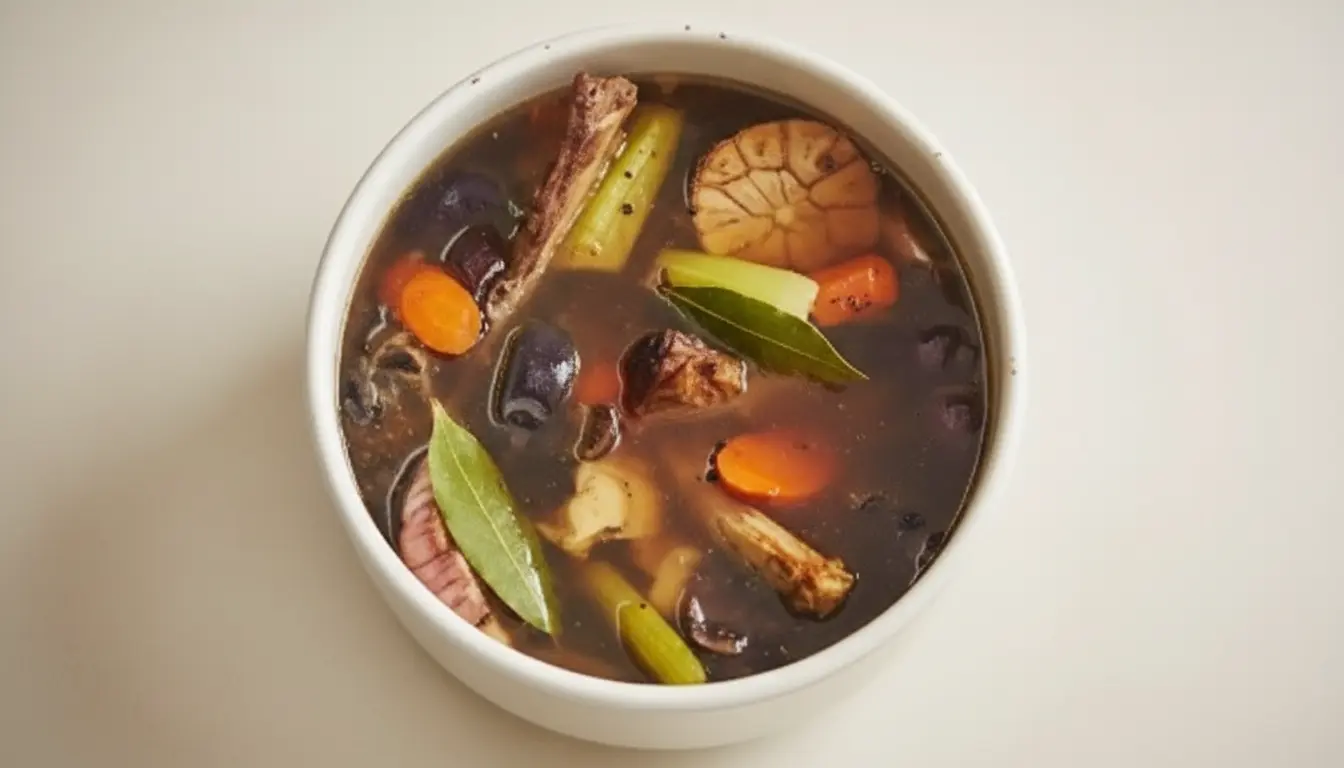
Homemade Beef Bone Broth Soup

Equipment
- Large roasting pan or rimmed baking sheet
- 8–10 quart stockpot or Dutch oven
- Fine-mesh strainer or cheesecloth
- Large mixing bowl
- Ladle
- Tongs or slotted spoon
- Storage containers (mason jars or airtight containers)
- Slow cooker - (optional)
- Instant Pot - (optional)
Ingredients
- 3-4 lbs beef bones - 1.4–1.8 kg; mix of knuckle, marrow, and oxtail for best gelatin content
- 2 tbsp olive oil - divided
- 2 medium carrots - about 1 cup or 150g, roughly chopped into 2-inch pieces
- 2 celery stalks - about 1 cup or 100g, roughly chopped into 2-inch pieces
- 1 large onion - about 2 cups or 200g, quartered (peel on)
- 1 whole head garlic - halved crosswise to expose cloves
- 2 tbsp apple cider vinegar - helps extract minerals from the bones
- 2 bay leaves
- 1 tbsp whole black peppercorns
- 4-5 sprigs fresh thyme
- 3-4 sprigs fresh parsley
- 1 tbsp sea salt - adjust to taste at end of cooking
- 4 quarts filtered water - 3.8 liters; plus more as needed to keep bones submerged
Optional For Serving
- fresh chopped parsley - garnish
- thinly sliced green onions - garnish
- cooked vegetables - such as carrots, celery, or mushrooms
- cooked egg noodles or rice - for a heartier bowl
Instructions
- Preheat oven to 400°F (200°C). Rinse beef bones under cold water, pat completely dry with paper towels, then arrange in a single layer on a roasting pan.
- Drizzle bones with 1 tablespoon olive oil, rub to coat evenly, and roast for 40–45 minutes, flipping halfway through, until deeply browned and caramelized.
- While bones roast, roughly chop carrots and celery into 2-inch pieces, quarter the onion (peel on), and halve the garlic head crosswise; gather herbs and spices.
- Transfer roasted bones and all pan drippings to a large stockpot; add carrots, celery, onion, and garlic, then pour apple cider vinegar over bones and let sit 15–20 minutes.
- Add bay leaves, peppercorns, thyme, parsley, and sea salt to the pot, then pour in filtered water until bones are submerged by about 2 inches (5 cm).
- Bring to a boil over high heat, then skim foam and scum from the surface every 10–15 minutes during the first hour for a clear, clean broth.
- Reduce heat to the lowest possible setting so only a few bubbles break the surface, then partially cover and simmer undisturbed for 12–24 hours.
- Check every 2–3 hours to ensure bones remain submerged, adding 1–2 cups of hot water as needed; avoid vigorous stirring to keep the broth clear.
- Turn off heat, let broth cool 30 minutes, then ladle through a fine-mesh strainer (optionally lined with cheesecloth) into a large bowl; discard solids.
- Cool broth to room temperature, then refrigerate 4–6 hours or overnight; remove or leave the solidified fat layer on top before reheating and serving.
Notes
- Choose the right bones: Mix meaty oxtail with knuckle and marrow bones for the best balance of flavor and gelatin — collagen-rich joint bones are essential for a broth that gels when chilled.
- Don’t skip roasting: Roasting develops deep caramelized flavor that makes homemade broth taste infinitely better than store-bought; this step is not optional.
- Vinegar tip: Let the apple cider vinegar sit on the bones for 15–20 minutes before adding water to maximize mineral extraction.
- Maintain a bare simmer: Vigorous boiling produces cloudy, greasy broth; keep heat low so only a few bubbles break the surface.
- Longer is better: Aim for the full 24 hours of simmering for maximum collagen, gelatin, and flavor — the broth should jiggle like jello when fully chilled.
- Slow cooker method: Roast bones first, then add all ingredients to a slow cooker and cook on low for 24–48 hours.
- Instant Pot shortcut: Pressure cook on high for 120 minutes with natural release, then sauté briefly for extra depth if desired.
- Storage — refrigerator: Store in airtight glass jars for up to 5–7 days; leave the fat cap on as a natural preservative until ready to use.
- Storage — freezer: Freeze in 1–2 cup portions in freezer-safe containers or silicone molds for up to 6 months; thaw overnight in the fridge or melt directly in a pot.
- Second batch: Bones can be reused once for a lighter second stock, great for cooking grains or sauces — simmer with fresh vegetables and water for another 12–24 hours.
Final Thoughts
This beef bone broth soup recipe is one of those timeless dishes that nourishes both body and soul. The slow-simmering process might require patience, but the rich, golden broth you’ll create is absolutely worth every minute.
I love how versatile this recipe is once you have the basic technique down. You can sip it plain, build elaborate soups around it, or use it to elevate countless other recipes in your cooking rotation.
Give this beef bone broth soup recipe a try and experience the difference homemade makes. I’d love to hear how yours turns out, so drop a comment below and let me know your favorite way to enjoy it!
Recommended:
- Vegetable Beef Soup Recipe
- Crockpot Beef Stew Recipe
- French Onion Soup Recipe
- Vegetable Soup Recipe
- Lentil Soup Recipe
- Chicken Noodle Soup Recipe
- Immune-Boosting Chicken Soup Recipe
- Slow Cooker Pot Roast Recipe
- Garlic Bread Recipe
- Crusty Bread Recipe