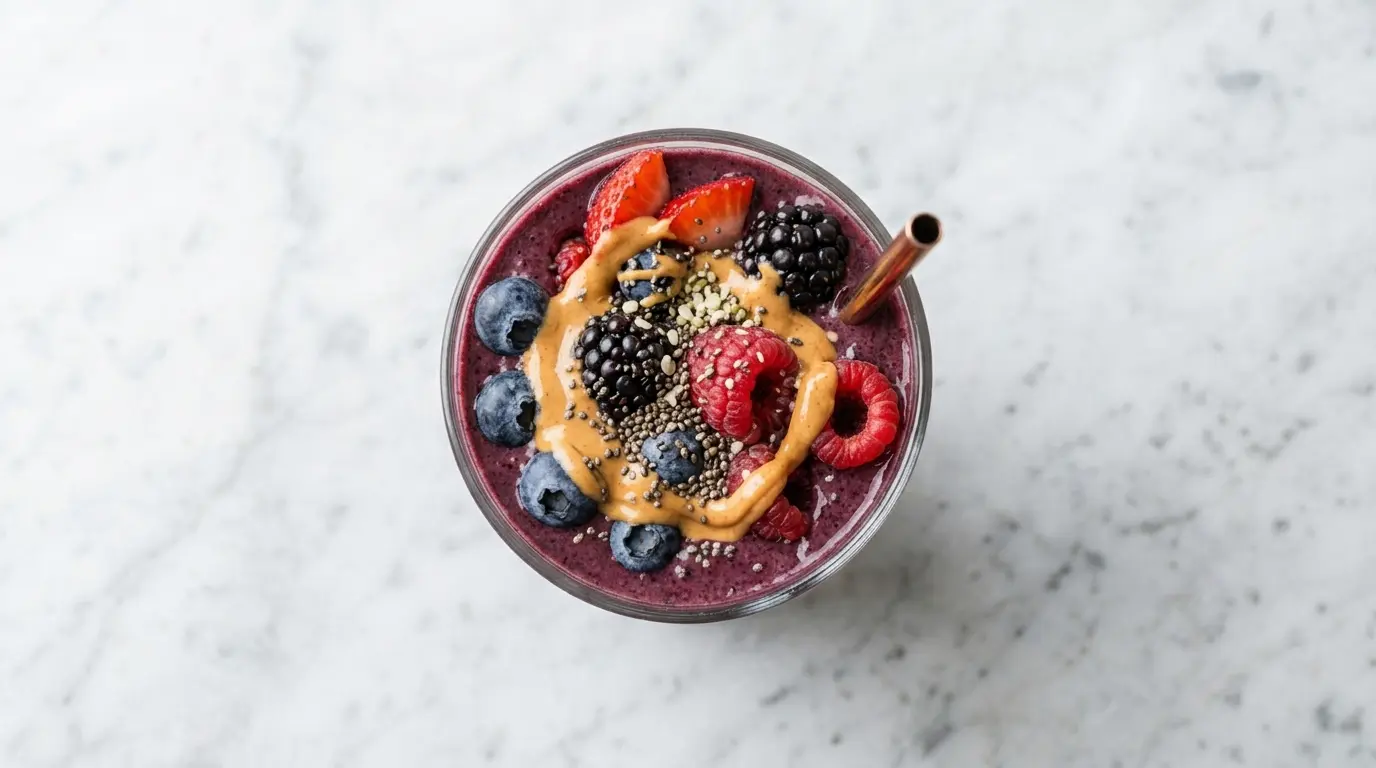
If you want a fast and filling breakfast or post-workout meal, a protein smoothie recipe is one of the smartest things you can make. Combining a high-quality protein source with frozen fruit, a liquid base, and a few add-ins turns a simple blender drink into something genuinely satisfying. This version is thick, creamy, naturally sweet, and delivers around 30 grams of protein per serving without any chalky aftertaste.
The key to a great protein smoothie is balance. Too much protein powder without enough fat or fiber leaves you with a gritty drink that doesn’t keep you full for long. Adding a banana for creaminess, nut butter for healthy fat, and a handful of spinach for extra nutrients takes this well beyond a basic shake.
Once you make it this way, you’ll wonder why you ever bought anything pre-made.
For more smoothie inspiration, this Banana Protein Smoothie is another reader favorite that uses the same simple approach.
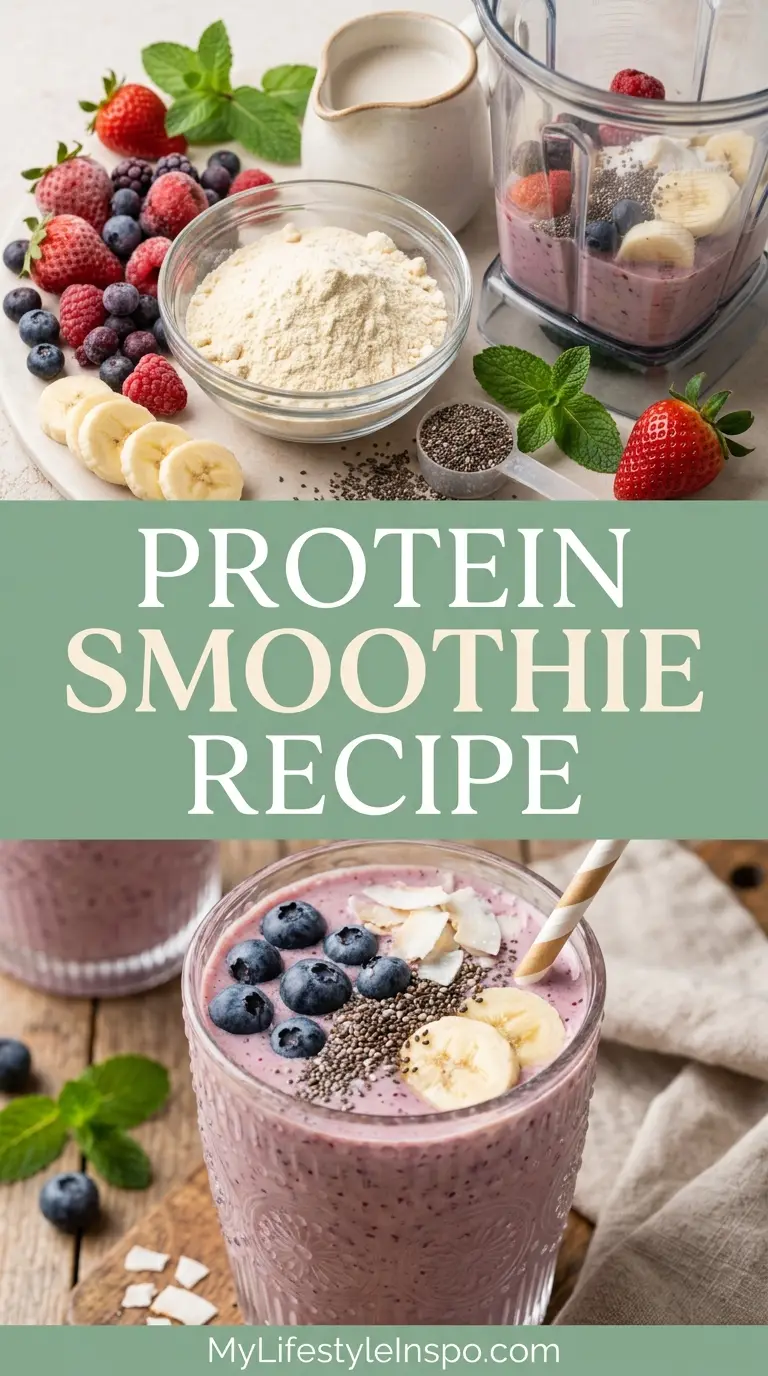
Why You’ll Love This Protein Smoothie Recipe
This recipe is designed for real life. It takes under five minutes from start to finish and requires almost no cleanup.
It’s genuinely filling, thanks to the combination of protein, fiber, and healthy fat working together. You won’t be hungry an hour later the way you might be after a juice or low-calorie smoothie.
The flavor is naturally sweet from the banana and frozen fruit, so it doesn’t taste like a supplement shake.
It’s easy to customize based on what you have on hand, your dietary needs, or your fitness goals.
Here’s what makes this recipe stand out:
- Uses whole food ingredients alongside the protein powder for better nutrition
- Thick and spoonable if you want, or thinner if you prefer to drink it quickly
- Works as a breakfast, a post-workout recovery meal, or a healthy snack
- Naturally gluten-free and easily made dairy-free with a simple swap
- Prep takes less than five minutes with minimal dishes
- Tastes like a real fruit smoothie, not a protein supplement
Read Also: Peanut Butter Banana Smoothie Recipe
Ingredients
This recipe uses a classic combination of ingredients that you’ll find in most popular versions of a protein smoothie. Each one serves a specific purpose in the texture and nutrition profile of the final drink.
- 1 scoop (approximately 30g / 1 oz) vanilla or unflavored whey protein powder (or plant-based protein powder for a vegan version)
- 1 medium ripe banana, frozen (about 120g / 4.2 oz)
- 1 cup (240ml / 8 fl oz) unsweetened almond milk or your preferred milk
- 1/2 cup (120g / 4.2 oz) frozen mixed berries or frozen mango chunks
- 2 tablespoons (32g / 1.1 oz) natural peanut butter or almond butter
- 1 cup (30g / 1 oz) fresh baby spinach (the flavor is completely hidden)
- 1 tablespoon (12g / 0.4 oz) chia seeds
- 1/2 teaspoon pure vanilla extract (optional, but rounds out the flavor)
- 4-5 ice cubes (omit if using all frozen fruit)
You might also enjoy: Green Smoothie Recipe
Kitchen Equipment Needed
You don’t need anything fancy for this recipe. A good blender is really the only essential piece of equipment, but a few extras make the process easier.
- High-speed blender (a powerful blender is the most important tool for a smooth, creamy result)
- Measuring cups and spoons
- Large smoothie glass or mason jar for serving
- Reusable smoothie straws (helpful for thicker smoothies)
- Kitchen scale (optional, for precise ingredient measurements)
- Freezer bags for pre-portioning smoothie packs in advance
Read Also: Peanut Butter Smoothie Recipe
Recommended Products for This Recipe
These are products I genuinely recommend based on quality and how much of a difference they make in the final result.
1. Vitamix 5200 Blender
A high-speed blender is the single most important factor in making a smooth protein smoothie. The Vitamix 5200 handles frozen fruit, nut butter, and chia seeds without leaving any lumps or chunks. It’s a long-term investment that transforms the quality of every smoothie you make.
2. Orgain Organic Protein Powder
Orgain’s plant-based protein powder blends exceptionally well without a chalky texture, which is one of the most common complaints about protein smoothies. It comes in a vanilla flavor that complements fruit perfectly and works for both dairy-based and dairy-free smoothies.
3. Navitas Organics Chia Seeds
Chia seeds add fiber, omega-3s, and a thicker consistency to the smoothie. Navitas is a trusted brand with consistently high quality and clean ingredients. A small bag lasts a long time and adds real nutritional value to every serving.
4. Justin’s Classic Almond Butter Squeeze Packs
If you want to add nut butter without measuring from a jar, Justin’s individual squeeze packs are a convenient option. Each pack contains the perfect amount for one smoothie and keeps your prep area clean.
This pairs really well with Easy Overnight Oats for a complete high-protein breakfast spread.
Step-by-Step Instructions
Step 1: Prepare Your Ingredients
- Remove your frozen banana from the freezer. If you don’t have a pre-frozen banana, peel a ripe banana, slice it into coins, and freeze it for at least two hours before making the smoothie. Frozen banana is what gives the smoothie its thick, creamy, ice cream-like texture.
- Measure out your frozen berries or mango. Keep them frozen, as this eliminates the need for as much ice and prevents your smoothie from becoming watered down.
- Portion out your chia seeds and set them aside with the rest of your measured ingredients.
- If you are using natural peanut butter from a jar, stir it well before measuring to make sure the oil is fully incorporated.
Step 2: Layer the Blender Correctly
- Add the almond milk to the blender first. Starting with the liquid at the bottom helps the blades move freely and pulls the other ingredients down toward them, resulting in a smoother blend.
- Add the fresh spinach directly on top of the milk. Adding leafy greens near the liquid ensures they blend completely and don’t leave any green flecks in the finished smoothie.
- Add the frozen banana pieces and the frozen fruit on top of the spinach.
- Spoon in the peanut butter or almond butter. Because nut butter is sticky and thick, placing it in the middle of the pile rather than directly against the blades prevents it from sticking and creating uneven blending.
- Add the protein powder on top of the fruit. Protein powder can clump when it comes into contact with liquid directly, so placing it above the fruit and letting the blending motion hydrate it gradually gives you a smoother result.
- Add the chia seeds last, right on the top of the pile.
- If you are using ice cubes, add them on top of everything else.
Step 3: Blend Until Smooth
- Secure the blender lid firmly. For high-speed blenders, place a folded kitchen towel over the lid and hold it down with your hand during blending to prevent spills.
- Start blending on the lowest speed setting and gradually increase to high. This gradual approach pulls the ingredients down into the blades evenly and prevents air pockets.
- Blend on high for 45 to 60 seconds until completely smooth. Stop and scrape down the sides with a spatula if needed, then blend for an additional 10 to 15 seconds.
- Check the consistency. The smoothie should be thick enough to coat the back of a spoon. If it’s too thick, add a splash more milk (a tablespoon at a time) and blend briefly. If it’s too thin, add more frozen fruit and blend again.
Step 4: Taste and Adjust
- Pour a small amount into a spoon and taste it. This step is important because protein powders vary widely in sweetness.
- If the smoothie needs more sweetness, add half a teaspoon of honey or a couple of Medjool dates and blend for another 10 seconds.
- If the vanilla flavor isn’t coming through, add the half teaspoon of vanilla extract now and blend briefly.
- If it tastes too thick or intense, add one to two more tablespoons of milk and blend for 5 seconds.
Step 5: Pour and Serve
- Pour the smoothie into a chilled glass or mason jar. A chilled glass keeps the smoothie cold longer, especially in warm weather.
- Add any toppings you like. Granola, a drizzle of nut butter, or fresh berries on top add texture and make the smoothie look more appealing.
- Drink immediately for the best texture and flavor. Protein smoothies tend to thicken as they sit because of the chia seeds absorbing moisture, so enjoy it right away.
You might also enjoy: Spinach Smoothie Recipe
Tips for Success
A few small adjustments can make the difference between a smoothie that’s just okay and one that you’ll make every single day.
- Freeze your banana in advance. A frozen banana is non-negotiable for achieving a thick, creamy result. Ripe bananas with brown spots are the sweetest and freeze beautifully. Peel and slice them before freezing so they’re blender-ready.
- Use liquid at the bottom. Always add your milk or liquid base to the blender before the solid ingredients. This simple habit protects your blender motor and ensures a lump-free result every time.
- Don’t overdo the protein powder. More than one scoop often makes a smoothie taste chalky and overly sweet. Stick to one scoop and let the whole food ingredients carry the nutritional load.
- Add nut butter for staying power. The fat in peanut or almond butter slows digestion and keeps you satisfied for hours. Skipping it makes the smoothie less filling.
- Make smoothie packs ahead of time. Portion out the frozen fruit, banana, spinach, and chia seeds into freezer bags on Sunday night. In the morning, empty one bag into the blender, add the liquid and protein powder, and blend. It genuinely takes 90 seconds.
- Let protein powder mix in last. Adding it on top of the other ingredients rather than directly into the liquid reduces clumping.
Another great option for a high-protein morning meal is this Easy Protein Pancakes Recipe.
Serving Suggestions
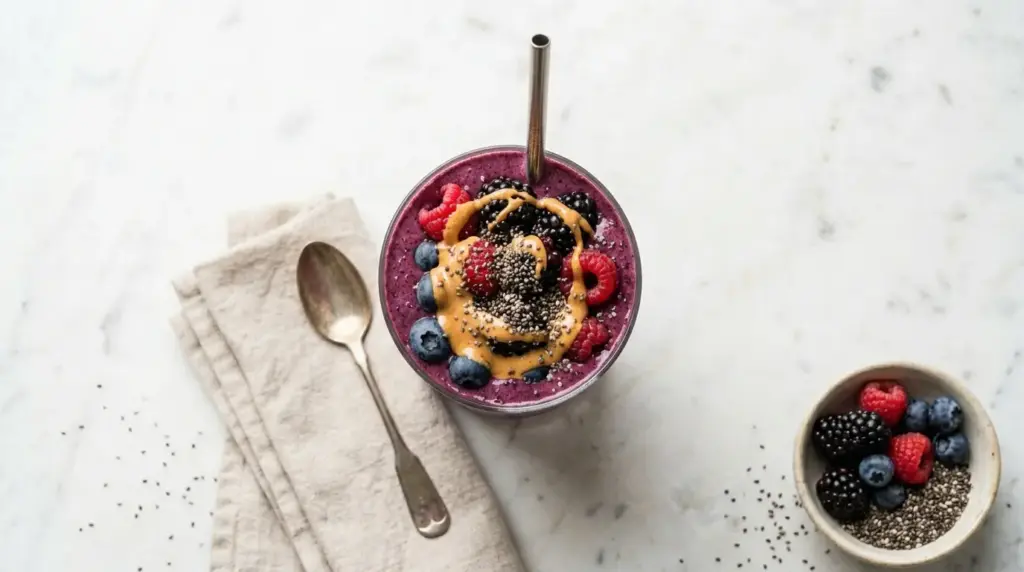
This protein smoothie is complete on its own, but pairing it with a small side makes it feel more like a full meal and can help you hit your nutrition targets for the morning.
Here are some great things to enjoy alongside it:
- A slice of whole grain toast with avocado, similar to this Avocado Toast
- Basic Overnight Oats for a double dose of fiber on especially active days
- A side of Baked Oatmeal if you’re meal prepping a full week of breakfasts
- Scrambled eggs on the side if you want even more protein without changing the smoothie
- A bowl of Easy Granola for a crunchy, satisfying contrast to the thick, creamy smoothie
This recipe also works beautifully as a post-workout recovery drink, especially when paired with a small bowl of Chia Seed Pudding made the night before.
Variations to Try
Once you have the base recipe down, there are so many directions you can take it depending on your taste preferences or nutritional goals.
- Chocolate Peanut Butter Version: Replace the vanilla protein powder with chocolate protein powder and swap the frozen berries for frozen banana. This version tastes like a dessert and is perfect as an afternoon snack.
- Tropical Protein Smoothie: Use frozen mango, pineapple, and coconut milk instead of almond milk. Add a scoop of vanilla protein powder and skip the peanut butter for a lighter, fruity option.
- Green Protein Smoothie: Double the spinach and add half an avocado for healthy fat. The flavor stays mild and the texture becomes extra silky.
- Berry Burst Version: Use frozen mixed berries, a scoop of vanilla protein, almond milk, and a tablespoon of flaxseed instead of chia seeds. This version is high in antioxidants and beautiful in color.
- Vegan Version: Swap whey protein for a plant-based protein powder and use any non-dairy milk. The texture difference is minimal with a good blender.
- Lower Calorie Version: Skip the peanut butter and reduce the banana to half. Use unsweetened almond milk and a scoop of plain protein powder for a lighter drink that still delivers solid protein content.
For a similar creamy drink with a completely different flavor, try this Avocado Smoothie.
Storage and Reheating
Protein smoothies are best consumed immediately, but there are a couple of ways to store them if you need to prep ahead.
- Refrigerator: Store a finished smoothie in a sealed jar or airtight container for up to 24 hours. Give it a good shake or stir before drinking, as separation is normal.
- Freezer (smoothie packs): Portion all the solid ingredients (frozen fruit, banana, spinach, chia seeds) into freezer bags without the milk or protein powder. Seal them tightly and store for up to three months. When ready, dump the pack into the blender, add liquid and protein powder, and blend.
- Pre-made and frozen: Pour a finished smoothie into a freezer-safe container, leaving an inch of headspace, and freeze for up to one month. Thaw overnight in the refrigerator and blend briefly to restore texture.
- What to avoid: Don’t store a finished smoothie with ice in it. The ice melts and waters down the flavor and texture. Always add fresh ice right before serving.
Read Also: Kale And Fruit Smoothie Recipe
Nutritional Facts
The following estimates are based on one serving of this recipe using vanilla whey protein powder, almond milk, a medium frozen banana, mixed berries, and natural peanut butter. Values will vary based on specific brands and substitutions.
| Nutrient | Amount Per Serving |
|---|---|
| Calories | 420 kcal |
| Total Fat | 14g |
| Saturated Fat | 2g |
| Cholesterol | 30mg |
| Sodium | 210mg |
| Total Carbohydrates | 44g |
| Dietary Fiber | 8g |
| Total Sugars | 22g |
| Protein | 31g |
| Calcium | 350mg |
| Iron | 3mg |
| Potassium | 640mg |
Note: These values are approximate and are calculated using standard nutritional databases. For precise tracking, input your specific ingredients into a nutrition calculator.
Another high-protein breakfast worth bookmarking: Banana Protein Pancakes Recipe
Health Benefits of Key Ingredients
Every ingredient in this smoothie was chosen with intention. Here’s a closer look at what each one contributes to your health.
Each of these ingredients pulls its weight nutritionally, making this smoothie a genuinely functional food rather than just a convenient one.
- Whey or plant-based protein powder: Supports muscle repair and recovery, keeps blood sugar stable after a workout, and promotes satiety by slowing gastric emptying. Protein is the most satiating macronutrient, meaning it helps you stay full longer than an equal number of calories from carbs or fat.
- Frozen banana: A natural source of potassium, which supports heart health and muscle function. Bananas also contain vitamin B6, which helps the body produce serotonin and dopamine, two neurotransmitters tied to mood and energy.
- Baby spinach: Provides iron, folate, vitamin K, and magnesium in a completely taste-neutral way. Adding even a small handful meaningfully increases the micronutrient density of the smoothie without affecting flavor.
- Peanut butter: A source of heart-healthy monounsaturated fat, plant-based protein, and vitamin E. The fat in peanut butter also aids in the absorption of fat-soluble vitamins like the vitamin K from the spinach.
- Chia seeds: Among the most fiber-dense foods you can add to a smoothie. They also contain omega-3 fatty acids, calcium, and phosphorus. They expand when they absorb liquid, which creates a thicker texture and contributes to a longer-lasting feeling of fullness.
- Frozen mixed berries: Rich in antioxidants including anthocyanins, which are linked to reduced inflammation and improved cognitive function. Berries also provide vitamin C and manganese with minimal added sugar.
- Almond milk: Low in calories and provides a creamy, neutral base. Fortified versions add calcium and vitamin D, making it a solid dairy-free option for people who are lactose intolerant.
For more inspiration on nutritious breakfast ideas, check out this Easy Acai Bowl Recipe.
Frequently Asked Questions
1. Can I make a protein smoothie without protein powder?
Yes, absolutely. You can boost the protein content with whole food ingredients instead. Greek yogurt (170g / 6 oz) adds about 17 grams of protein, cottage cheese adds a similar amount, and a couple of tablespoons of hemp seeds each add around 10 grams. Combining two or three of these will get you close to the protein content of a standard scoop of powder.
2. Why does my protein smoothie taste chalky?
Chalkiness usually comes from one of three things: using too much protein powder in one serving, not blending long enough to fully incorporate the powder, or using a low-quality protein powder with poor solubility. Stick to one scoop, blend for a full minute on high, and try switching to a whey isolate or a plant-based blend with a clean ingredient list.
3. How can I make my protein smoothie thicker?
The easiest way is to use more frozen fruit and less liquid. Frozen banana is especially effective because of its high starch content, which creates a creamy, gelato-like consistency. Chia seeds thicken the smoothie as they absorb moisture. You can also add a tablespoon of oats, a quarter of an avocado, or a small scoop of plain Greek yogurt for extra body.
4. Is it okay to drink a protein smoothie every day?
For most people, yes. A daily protein smoothie made with whole food ingredients is a nutritious and convenient way to meet your protein goals and get a serving of fruit and vegetables. Just make sure your overall diet is varied and that you’re not relying exclusively on the smoothie for all your nutrients. If you have specific health conditions or concerns, it’s worth checking with your doctor.
5. Can I prep protein smoothies the night before?
You can, with a few adjustments. The best approach is to make a smoothie pack by portioning the frozen solid ingredients into a freezer bag the night before, then blending in the morning with the milk and protein powder. If you blend the night before, store it in a sealed jar in the fridge and shake well before drinking. The texture won’t be quite as thick, but the flavor will still be good.
Read Also: Yogurt Smoothie Recipe
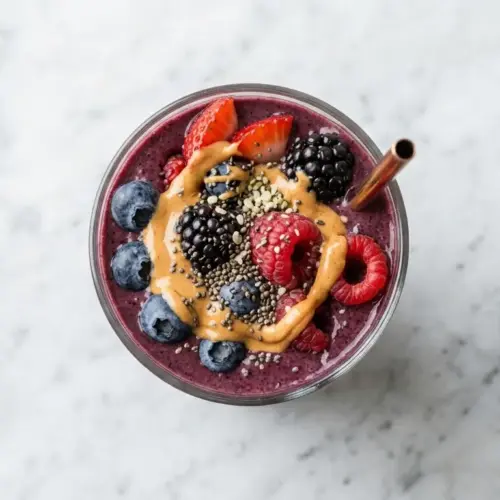
Protein Smoothie

Equipment
- High-speed blender - Essential for smooth, creamy results
- Measuring cups
- Measuring spoons
- Large smoothie glass or mason jar - For serving
- Reusable smoothie straws - Helpful for thicker smoothies (optional)
- Kitchen scale - Optional, for precise ingredient measurements
- Freezer bags - For pre-portioning smoothie packs in advance (optional)
Ingredients
- 1 scoop vanilla or unflavored whey protein powder - approximately 30g / 1 oz; or plant-based protein powder for vegan version
- 1 medium ripe banana - about 120g / 4.2 oz, frozen
- 1 cup unsweetened almond milk - 240ml / 8 fl oz, or your preferred milk
- 1/2 cup frozen mixed berries or frozen mango chunks - 120g / 4.2 oz
- 2 tablespoons natural peanut butter or almond butter - 32g / 1.1 oz
- 1 cup fresh baby spinach - 30g / 1 oz; flavor is completely hidden
- 1 tablespoon chia seeds - 12g / 0.4 oz
- 1/2 teaspoon pure vanilla extract - optional, but rounds out the flavor
- 4-5 ice cubes - omit if using all frozen fruit
For Serving (Optional)
- granola - for topping
- nut butter - drizzle on top
- fresh berries - for topping
Instructions
- Prepare your ingredients: remove frozen banana from freezer, measure out frozen berries, portion chia seeds, and stir nut butter well if using from a jar.
- Layer the blender correctly: add almond milk first, then spinach, frozen banana and fruit, peanut butter, protein powder, chia seeds, and ice cubes on top.
- Blend until smooth: start on lowest speed and gradually increase to high, blending for 45 to 60 seconds until completely smooth. Scrape down sides if needed.
- Taste and adjust: add honey, dates, or vanilla extract if desired for more sweetness or flavor. Add more milk if too thick, or more frozen fruit if too thin.
- Pour and serve immediately: pour into a chilled glass, add optional toppings like granola, nut butter, or fresh berries, and enjoy right away for best texture.
Notes
- Freeze your banana in advance: A frozen banana is essential for thick, creamy texture. Use ripe bananas with brown spots for maximum sweetness.
- Liquid at the bottom: Always add milk first to protect your blender motor and ensure a lump-free result.
- Don’t overdo protein powder: More than one scoop often makes smoothies chalky and overly sweet. Stick to one scoop.
- Add nut butter for staying power: The healthy fat slows digestion and keeps you satisfied for hours.
- Make smoothie packs ahead: Portion frozen fruit, banana, spinach, and chia seeds into freezer bags for 90-second morning prep.
- Let protein powder mix in last: Adding it on top of other ingredients rather than directly into liquid reduces clumping.
- Storage: Store finished smoothie in a sealed jar in the fridge for up to 24 hours. Shake well before drinking as separation is normal.
- Freezer packs: Portion solid ingredients (without milk or protein powder) into freezer bags and store for up to three months.
- Don’t freeze with ice: Ice melts and waters down the smoothie. Always add fresh ice right before serving.
Final Thoughts
A good protein smoothie recipe doesn’t need to be complicated. With a handful of everyday ingredients and a blender, you can build something that genuinely fuels your body and tastes great.
This smoothie works beautifully as a busy weekday breakfast or a post-workout recovery drink, and the combination of protein, fiber, healthy fat, and real fruit does exactly what it promises.
Give this recipe a try and let me know how it goes in the comments. Did you make any swaps or add your own twist? I’d love to hear what version you landed on.
Recommended:
- Mango Smoothie Without Yogurt
- Beet Smoothie Recipe
- Chocolate Peanut Butter Banana Smoothie
- Peanut Butter Jelly Smoothie
- Strawberry Banana Blueberry Smoothie
- Passion Fruit Smoothie
- Dragon Fruit Smoothie
- Peach Smoothie With Yogurt
- Watermelon Smoothie
- Chia Banana Boost Tropical Smoothie