
Few dinners come close to the cozy, satisfying feeling of a well-made Scalloped Potatoes and Ham Recipe. Thinly sliced potatoes layered with tender chunks of ham, all smothered in a rich, velvety cheese sauce and baked until golden and bubbling. It’s pure comfort food at its best.
This dish has been a staple of American home cooking for generations, and for good reason.
The combination of savory ham and starchy potatoes creates a hearty, filling meal that works equally well as a weeknight dinner or a holiday side dish.
What makes this version stand out is the homemade cream sauce. Rather than relying on canned soup, a simple roux-based sauce made from butter, flour, milk, and sharp cheddar gives the dish a depth of flavor that’s impossible to replicate any other way.
Stick around because every detail, from slicing technique to layering order, is covered in full to help you nail it on the very first try.
For another classic potato dish that pairs beautifully with baked ham, you’ll love this Au Gratin Potatoes Recipe, similar in spirit but with its own irresistible twist.
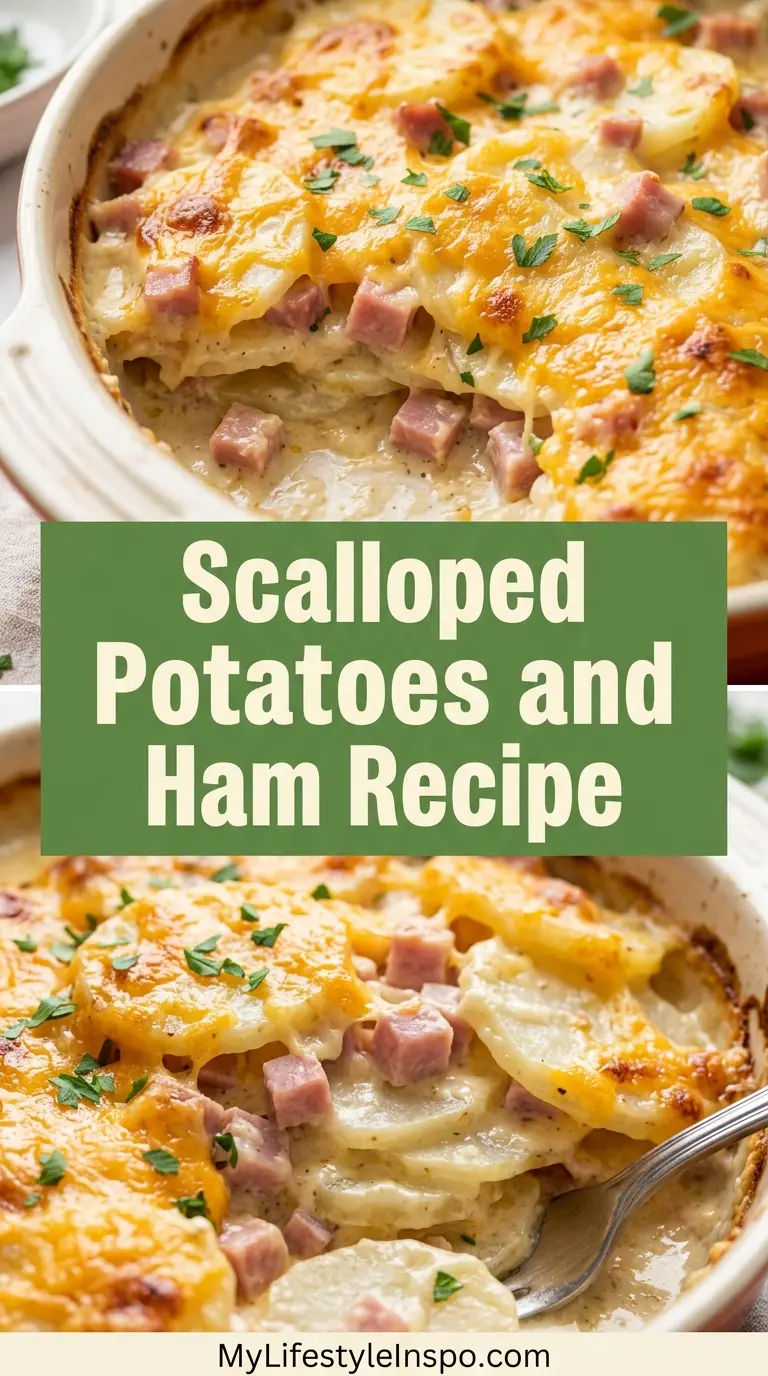
Why You’ll Love This Scalloped Potatoes and Ham Recipe
This dish is the definition of a crowd-pleaser.
The creamy sauce coats every layer of potato, and the ham adds a smoky, salty punch that keeps every bite interesting.
It’s also one of the best ways to use up leftover holiday ham.
After Thanksgiving or Easter, instead of eating the same ham sandwiches for a week, you can transform the leftovers into this stunning casserole in under an hour.
The recipe is incredibly forgiving.
Whether you prefer a thicker sauce or a saucier dish, small adjustments to the cream base let you customize the texture to your liking.
Here’s why home cooks keep coming back to it:
- Maximum comfort: The combination of melted cheese, creamy sauce, and tender potatoes hits every comfort food note perfectly.
- Great use of leftovers: Diced leftover baked ham or spiral ham works beautifully, meaning less food waste and more flavor.
- Make-ahead friendly: You can assemble the entire casserole the night before, refrigerate it, and bake it the next day without any loss of quality.
- Feeds a crowd: This recipe easily serves 6-8 people, making it perfect for family dinners, potlucks, or holiday gatherings.
- Budget-friendly: Potatoes and ham are both affordable ingredients, so you get a rich, impressive dish without a big grocery bill.
Another cheesy potato recipe worth bookmarking for your next gathering is this Funeral Potatoes Recipe, which is another beloved comfort food classic.
Ingredients
This recipe uses simple, easy-to-find ingredients that come together to create something truly special. Sharp cheddar is recommended because its bold flavor cuts through the richness of the cream sauce better than mild cheddar. Russet potatoes are the classic choice here because their high starch content helps thicken the sauce naturally as they bake.
- 2.5 lbs (1.1 kg) russet potatoes, peeled and thinly sliced (about 1/8 inch / 3 mm thick)
- 2 cups (300 g) cooked ham, diced or cut into small cubes
- 3 tablespoons (43 g) unsalted butter
- 3 tablespoons (24 g) all-purpose flour
- 2 cups (480 ml) whole milk, warmed
- 1 cup (240 ml) heavy cream
- 1.5 cups (170 g) sharp cheddar cheese, freshly shredded, divided
- 1/2 cup (57 g) gruyere cheese, freshly shredded (optional but highly recommended)
- 1 teaspoon (5 g) kosher salt
- 1/2 teaspoon (1 g) black pepper, freshly ground
- 1/2 teaspoon (1 g) garlic powder
- 1/4 teaspoon (0.5 g) onion powder
- 1/4 teaspoon (0.5 g) smoked paprika
- 1 tablespoon fresh thyme leaves (or 1/2 teaspoon dried thyme), optional
- 1 small yellow onion, thinly sliced (optional, adds extra savory depth)
- Fresh parsley, chopped, for garnish
This creamy casserole pairs wonderfully with Ham and Potato Soup, another satisfying recipe that uses the same key ingredients in a whole new way.
Kitchen Equipment Needed
Having the right tools on hand will make this recipe much smoother, especially when it comes to slicing the potatoes. Consistently thin, even slices are key to making sure the potatoes cook through evenly without some pieces being underdone and others mushy. A mandoline slicer is the best tool for the job and makes light work of what would otherwise be a tedious step with a knife.
- Mandoline slicer (for thin, even potato slices)
- 9×13 inch baking dish (ceramic or glass)
- Medium saucepan
- Wooden spoon or silicone spatula
- Whisk
- Box grater or stand mixer with shredding attachment
- Cutting board and sharp knife
- Measuring cups and spoons
- Aluminum foil
- Oven mitts
- Ladle or large spoon for spreading sauce
Read Also: Cheesy Potatoes Recipe
Recommended Products for This Recipe
Using quality tools and ingredients genuinely makes a difference with a dish like this. Here are a few products that will help you get the best results.
1. OXO Good Grips Mandoline Slicer
A good mandoline makes slicing two and a half pounds of potatoes feel effortless. This model has an adjustable blade and a non-slip base, making it both safe and precise. Consistent 1/8-inch slices mean your potatoes cook evenly throughout the casserole without any raw or mushy patches.
2. Le Creuset Stoneware Rectangular Baking Dish
Even heat distribution is crucial for a baking casserole, and this dish delivers beautifully. The thick stoneware walls prevent hot spots that can lead to unevenly cooked potatoes, and the enameled interior releases food cleanly and cleans up easily. It also goes straight from oven to table in style.
3. Microplane Premium Zester and Grater
Freshly shredded cheese melts far more smoothly than pre-shredded bagged cheese, which contains anti-caking agents that can make sauces grainy. This grater gives you fluffy, fine shreds that melt into the sauce without any clumping. A small investment that noticeably improves the final texture.
4. All-Clad Stainless Steel Saucepan
Making a smooth, lump-free roux requires consistent, even heat across the bottom of the pan. This saucepan heats evenly and its stainless interior lets you see the sauce clearly so you can monitor color and consistency. It’s the kind of pan that makes every sauce better.
5. Finlandia Swiss Gruyere Cheese
Adding gruyere to the sauce alongside sharp cheddar elevates the flavor significantly. Gruyere has a nutty, slightly earthy note that deepens the overall richness of the dish. This imported version has excellent melting properties and a clean, complex flavor that pairs perfectly with smoked ham.
You might also enjoy: Potato Casserole Recipe
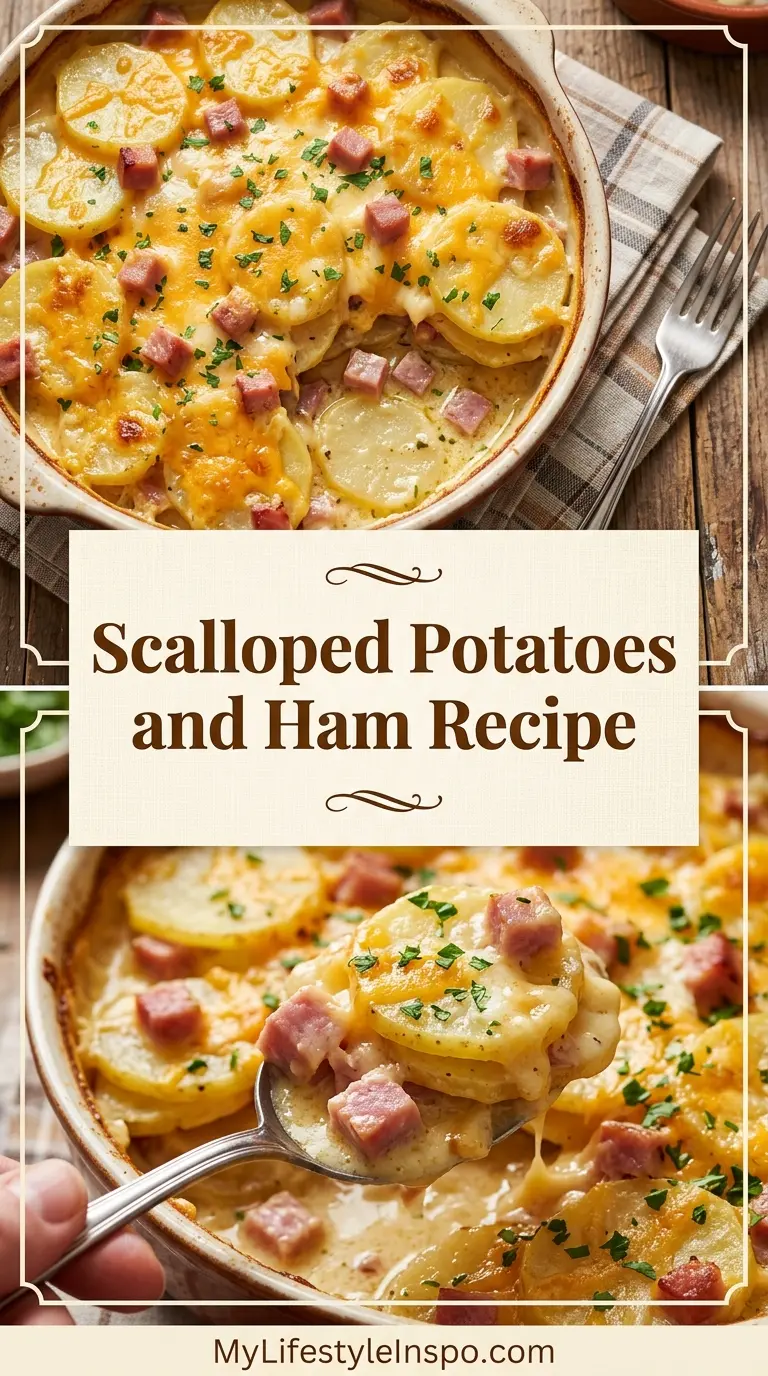
Step-by-Step Instructions
Step 1: Preheat the Oven and Prepare Your Baking Dish
- Preheat your oven to 375°F (190°C). Allow the oven a full 15 minutes to reach temperature before putting in the casserole.
- Grease a 9×13 inch (23×33 cm) baking dish with butter or non-stick cooking spray, making sure to coat the sides as well as the bottom.
- Set the prepared dish aside while you work on the potatoes and sauce.
Step 2: Slice the Potatoes
- Peel all the russet potatoes and rinse them under cold water.
- Using a mandoline slicer (or a very sharp knife and steady hand), slice each potato into rounds approximately 1/8 inch (3 mm) thick. Consistent thickness is critical here because thicker slices will still be firm while thinner slices have turned mushy.
- As you slice the potatoes, place them directly into a large bowl of cold water. This prevents browning and removes excess surface starch, which can make the layers stick together in an unpleasant way.
- After all potatoes are sliced, drain the water, pat the slices dry thoroughly with paper towels or a clean kitchen towel, and set aside. Removing excess moisture helps the sauce cling properly to each slice.
Step 3: Prepare the Ham and Onion
- If using leftover baked ham, cut it into small cubes or dice it into 1/2-inch (1.2 cm) pieces. If using deli ham, stack the slices and cut into bite-sized pieces.
- If using sliced onion, peel the onion, cut it in half, and slice each half into thin half-moons about 1/8 inch (3 mm) thick. These will layer between the potatoes for added depth of flavor.
- Set the ham and onion aside in separate small bowls.
Step 4: Make the Cheese Sauce
- Melt the butter in a medium saucepan over medium heat. Once melted and slightly foamy, add the flour all at once.
- Whisk the butter and flour together vigorously for 1-2 minutes. This step cooks out the raw flour taste. The mixture (called a roux) should look pale golden and smell faintly nutty.
- Slowly pour in the warmed milk, about 1/2 cup (120 ml) at a time, whisking constantly after each addition to prevent lumps. Adding cold milk to a hot roux is one of the most common reasons sauce turns lumpy, so warming the milk first makes a big difference.
- Once all the milk is incorporated, pour in the heavy cream and continue whisking over medium heat.
- Cook, stirring frequently, until the sauce thickens enough to coat the back of a spoon, about 5-7 minutes. When you draw a line across the back of a spoon with your finger, the line should hold without the sauce running back over it.
- Remove the pan from heat. Add 1 cup (113 g) of the shredded sharp cheddar and all of the gruyere (if using), stirring until fully melted and smooth.
- Season the sauce with salt, black pepper, garlic powder, onion powder, and smoked paprika. Taste the sauce and adjust seasoning as needed. It should taste boldly seasoned because the potatoes are unseasoned and will absorb some of that salt as they bake.
Step 5: Layer the Casserole
- Spread a thin layer of cheese sauce (about 1/4 cup / 60 ml) across the bottom of the prepared baking dish. This prevents the bottom layer of potatoes from sticking.
- Arrange one-third of the potato slices in an overlapping single layer over the sauce. Slight overlapping is fine and actually helps the layers hold together when serving.
- Scatter half of the diced ham evenly over the potatoes. If you’re using onion, layer half of the sliced onion over the ham.
- Pour roughly one-third of the remaining cheese sauce over the ham and potatoes, spreading it to the edges with a spatula or the back of a spoon.
- Repeat the layers: another third of the potatoes, the remaining ham and onion, and another third of the sauce.
- Finish with a final layer of the remaining potato slices, arranged neatly. Pour the last of the cheese sauce over the top, using a spatula to spread it to the edges and make sure all the potato slices are coated.
- Sprinkle the remaining 1/2 cup (57 g) of shredded sharp cheddar evenly over the top. This top layer will form a golden, slightly crispy crust as it bakes.
Step 6: Bake Covered
- Cover the baking dish tightly with aluminum foil. Press it firmly around the edges to seal in the steam, which is what helps the potatoes cook through completely.
- Place the casserole in the preheated oven and bake for 45 minutes.
- At this stage, the potatoes should be mostly tender when pierced through the foil with a sharp knife or skewer. If they still feel quite firm, re-cover and bake for an additional 10 minutes before proceeding.
Step 7: Bake Uncovered to Brown the Top
- Remove the foil and return the casserole to the oven.
- Bake uncovered for an additional 20-25 minutes, until the top is golden brown and bubbly and the sauce is thickened and slightly caramelized around the edges.
- For extra browning, switch the oven to broil on high for the last 2-3 minutes. Watch it closely during this step, because the cheese can go from perfectly golden to burnt very quickly.
- The potatoes are done when a sharp knife slides through all the layers with no resistance whatsoever.
Step 8: Rest and Serve
- Remove the casserole from the oven and let it rest on a wire rack or heat-safe surface for at least 10-15 minutes before cutting into it.
- This resting time is not optional. It allows the sauce to set and thicken slightly, which means clean, intact slices when you serve it. Cutting too soon results in the sauce running out and the layers collapsing.
- Garnish with freshly chopped parsley for a pop of color, then serve warm.
For a complete meal, pair this with a simple Green Beans Recipe on the side.
Tips for Success
Getting this dish right comes down to a few key techniques. The most important thing to keep in mind is slicing the potatoes evenly and making sure your cheese sauce is well-seasoned before it goes into the dish. Under-seasoned sauce leads to a flat-tasting casserole, so don’t be shy with the salt and pepper at that stage.
- Slice potatoes uniformly: An uneven thickness means some slices will be overcooked while others are still crunchy. A mandoline is the best investment you can make for this dish.
- Warm your milk before adding it to the roux: Cold milk hitting a hot roux is a recipe for lumpy sauce. Either microwave the milk for 60-90 seconds or heat it gently in a small saucepan before you start.
- Shred your own cheese: Pre-shredded cheese from bags contains potato starch and cellulose as anti-caking agents. These coatings prevent the cheese from melting smoothly and can leave the sauce with a slightly grainy texture.
- Don’t skip the resting time: A freshly baked casserole looks and feels incredibly liquid when it first comes out. Give it 10-15 minutes and the sauce will thicken beautifully.
- Make it ahead: Assemble the layered casserole, cover it tightly, and refrigerate overnight. Add an extra 15 minutes to the covered baking time if going straight from fridge to oven.
- Check for doneness with a knife: The classic test for scalloped potatoes is inserting a sharp paring knife through the center. If it slides through all the layers without resistance, the potatoes are done.
Read Also: Twice Baked Potato Recipe
Serving Suggestions

Scalloped Potatoes and Ham is a complete meal in itself, but it really shines when paired with simple, unfussy sides that let the casserole be the star. Fresh, bright flavors work especially well because they cut through the richness of the creamy cheese sauce.
Here are some delicious ways to serve it:
- Green Beans: Steamed or sauteed green beans with a little garlic butter are a classic partner that balances the richness perfectly.
- Broccoli Salad: The crunchy, slightly tangy dressing in a good broccoli salad is a fantastic counterpoint to the creamy, warm casserole.
- Dinner Rolls: Soft, fluffy dinner rolls are ideal for mopping up the extra cheese sauce from the bottom of your plate.
- Classic Deviled Eggs: If serving this for a holiday gathering or potluck, deviled eggs make a great starter while the casserole finishes baking.
- Fruit Salad: A light, refreshing fruit salad on the side adds brightness and a sweet note that rounds out the richness of the main dish.
- Corn on the Cob: In summer months, sweet fresh corn on the cob is a simple, crowd-pleasing pairing for this casserole.
Another favorite: Collard Greens Recipe
Variations to Try
Once you’ve mastered the classic version, there are plenty of fun ways to put your own spin on it. Each variation below keeps the same basic technique, so you won’t need to learn anything new to try them. The recipe is flexible enough that even significant changes to the flavor profile still work beautifully.
- Broccoli and Ham Scalloped Potatoes: Add two cups of small broccoli florets between the second and third potato layers. The broccoli absorbs the cheese sauce and becomes tender as it bakes.
- Bacon Version: Replace the ham with crispy crumbled bacon. Sprinkle half into the layers and reserve the rest to scatter over the top before serving for extra texture.
- Lighter Version: Substitute the heavy cream with additional whole milk. The sauce will be slightly thinner but still creamy and delicious.
- Caramelized Onion Variation: Cook two thinly sliced onions in butter over low heat for 30-40 minutes until deeply golden and sweet. Layer these between the potato layers for a more complex, savory flavor.
- Spicy Kick: Add 1/4 teaspoon of cayenne pepper and 1 teaspoon of Dijon mustard to the cheese sauce for a subtle heat and tang that cuts through the richness.
- Slow Cooker Method: Layer everything as directed in a 6-quart slow cooker and cook on low for 7-8 hours or high for 4-5 hours. The top won’t brown in the slow cooker, but a quick broil at the end solves that.
This technique is also similar to what you’ll find in Tartiflette Recipe, a French alpine dish that combines potatoes, bacon, and cheese in an equally comforting way.
Storage and Reheating
This casserole stores beautifully, and many people actually think it tastes even better the next day after the flavors have had time to meld. Proper storage ensures you can enjoy leftovers that are just as good as the original serving. Keep in mind that refrigerated portions will firm up considerably as the cheese sauce sets, but they’ll loosen back up perfectly during reheating.
- Refrigerator: Cover the baking dish tightly with plastic wrap or foil, or transfer leftovers to an airtight container. It will keep for up to 4 days in the refrigerator.
- Freezer: Scalloped potatoes can be frozen, though the texture of the potatoes will soften somewhat after thawing. Portion into freezer-safe containers and freeze for up to 2 months. Thaw overnight in the refrigerator before reheating.
- Reheat in the oven: For the best results, cover with foil and reheat at 350°F (175°C) for 20-25 minutes until warmed through. Remove the foil for the last 5 minutes to re-crisp the top.
- Reheat in the microwave: For single portions, microwave on medium power (50%) for 2-3 minutes, stirring once halfway through. Full power can cause the sauce to separate.
- Add a splash of milk: If the casserole looks dry or thick after refrigerating, drizzle 2-3 tablespoons of milk over the portion before reheating to restore the creamy consistency.
Read Also: Loaded Potato Soup Recipe
Nutritional Facts
The following nutritional information is based on 8 servings per recipe, with one serving being approximately 1.5 cups of the casserole.
| Nutrient | Per Serving |
|---|---|
| Calories | ~420 kcal |
| Total Fat | 24 g |
| Saturated Fat | 14 g |
| Cholesterol | 85 mg |
| Sodium | 780 mg |
| Total Carbohydrates | 32 g |
| Dietary Fiber | 2 g |
| Sugars | 4 g |
| Protein | 20 g |
| Calcium | 280 mg |
| Potassium | 720 mg |
Note: Nutritional values are estimates and will vary based on the specific brands and quantities of ingredients used. Using lower-fat milk instead of heavy cream will reduce the calorie and fat count per serving.
Another comforting potato dish with a different nutritional profile you might enjoy is Smashed Potatoes Recipe.
Health Benefits of Key Ingredients
While this is certainly an indulgent dish, the key ingredients each bring real nutritional value to the table. Enjoying it in moderation as part of a balanced diet means you’re not just getting great flavor, but some genuine nourishment as well.
Here’s a look at what the main ingredients contribute:
- Potatoes: Russet potatoes are an excellent source of potassium, which supports healthy blood pressure. They also provide vitamin C, B6, and a good amount of dietary fiber, especially when the skin is left on.
- Ham: Lean ham is a solid source of protein, providing all essential amino acids. It also contains B vitamins (particularly B1 and B12), zinc, and selenium, all of which support immune function and energy metabolism.
- Cheddar Cheese: Hard cheeses like cheddar are one of the most bioavailable sources of calcium, which is essential for bone density and muscle function. They also provide vitamin K2, a nutrient important for cardiovascular health.
- Whole Milk and Heavy Cream: These dairy components contribute fat-soluble vitamins A and D, along with calcium and phosphorus. The fat content also helps your body absorb other fat-soluble nutrients from the vegetables in the dish.
- Garlic Powder: Even in small quantities, garlic contains allicin, a sulfur compound that has been associated with immune support and anti-inflammatory properties in multiple studies.
- Thyme: Fresh or dried thyme contains antioxidants including vitamin C and vitamin A precursors. It’s also been used traditionally to support respiratory health.
You might also enjoy: Ham and Bean Soup Recipe
Frequently Asked Questions
1. Can I use pre-sliced deli ham instead of leftover baked ham?
Yes, deli ham works perfectly well in this recipe. Stack several slices together and cut them into bite-sized cubes or strips. The main difference is that deli ham tends to be saltier than home-cooked ham, so you may want to reduce the amount of salt you add to the cheese sauce. Taste the sauce before salting and adjust accordingly.
2. Why are my scalloped potatoes still crunchy after baking?
The most common reason is that the potatoes were sliced too thick, or the oven temperature was too low. Make sure your slices are no more than 1/8 inch (3 mm) thick. If your potatoes are still firm after the covered baking time, re-cover the dish and return it to the oven for 15 more minutes before removing the foil. Every oven varies slightly, so don’t hesitate to extend the baking time if needed.
3. Can I make scalloped potatoes and ham ahead of time?
Absolutely. You can fully assemble the casserole, cover it tightly with plastic wrap, and refrigerate it for up to 24 hours before baking. When ready to bake, remove it from the refrigerator 30 minutes before putting it in the oven to take the chill off, or add 15 extra minutes to the covered baking time if going straight from fridge to oven.
4. What is the difference between scalloped potatoes and au gratin potatoes?
Traditionally, scalloped potatoes use a cream-based sauce without cheese, while au gratin potatoes feature a cheese sauce and typically have a breadcrumb topping. In modern home cooking, the two terms are often used interchangeably, and many recipes (including this one) include cheese in the sauce. If you enjoy the cheesy version, the Au Gratin Potatoes Recipe on this site is worth checking out as well.
5. Can I use a different type of potato?
Russet potatoes are the best choice because their high starch content helps naturally thicken the cream sauce and gives a fluffy, tender texture inside each layer. Yukon Gold potatoes are a great second option because they have a naturally buttery flavor and hold their shape slightly better, giving a firmer, more structured casserole. Waxy red or new potatoes are not recommended because they don’t absorb the sauce as well and tend to stay firm even after long baking times.
Read Also: Garlic Mashed Potatoes Recipe

Scalloped Potatoes and Ham

Equipment
- Mandoline slicer - for thin, even potato slices
- 9×13-inch baking dish - ceramic or glass
- Medium saucepan
- Wooden spoon or silicone spatula
- Whisk
- Box grater or stand mixer with shredding attachment
- Cutting board and sharp knife
- Measuring cups and spoons
- Aluminum foil
- Oven mitts
- Ladle or large spoon - for spreading sauce
Ingredients
- 2.5 lbs russet potatoes - 1.1 kg, peeled and thinly sliced (about 1/8 inch / 3 mm thick)
- 2 cups cooked ham - 300g, diced or cut into small cubes
- 3 tablespoons unsalted butter - 43g
- 3 tablespoons all-purpose flour - 24g
- 2 cups whole milk - 480 ml, warmed
- 1 cup heavy cream - 240 ml
- 1.5 cups sharp cheddar cheese - 170g, freshly shredded, divided
- 0.5 cup gruyere cheese - 57g, freshly shredded (optional but highly recommended)
- 1 teaspoon kosher salt - 5g
- 0.5 teaspoon black pepper - 1g, freshly ground
- 0.5 teaspoon garlic powder - 1g
- 0.25 teaspoon onion powder - 0.5g
- 0.25 teaspoon smoked paprika - 0.5g
- 1 tablespoon fresh thyme leaves - or 1/2 teaspoon dried thyme, optional
- 1 small yellow onion - thinly sliced (optional, adds extra savory depth)
- fresh parsley - chopped, for garnish
Instructions
- Preheat oven to 375°F (190°C). Grease a 9×13 inch baking dish with butter or cooking spray.
- Peel potatoes and slice into 1/8 inch (3 mm) rounds using a mandoline slicer. Place slices in cold water to prevent browning, then drain and pat thoroughly dry.
- Dice ham into 1/2 inch (1.2 cm) pieces. If using onion, slice into thin half-moons.
- Melt butter in a medium saucepan over medium heat. Whisk in flour and cook for 1-2 minutes until golden and nutty. Slowly pour in warmed milk, whisking constantly, then add heavy cream.
- Cook sauce, stirring frequently, until thickened enough to coat the back of a spoon, about 5-7 minutes. Remove from heat and stir in 1 cup cheddar and all gruyere until melted and smooth.
- Season sauce with salt, pepper, garlic powder, onion powder, and smoked paprika. Taste and adjust seasoning as needed.
- Spread a thin layer of sauce in the baking dish. Layer one-third of potatoes, half the ham and onion (if using), and one-third of sauce. Repeat layers, then finish with remaining potatoes and sauce. Sprinkle remaining cheddar on top.
- Cover tightly with foil and bake for 45 minutes. Potatoes should be mostly tender when pierced with a knife.
- Remove foil and bake uncovered for 20-25 minutes until golden and bubbly. For extra browning, broil for 2-3 minutes, watching closely.
- Let the casserole rest for 10-15 minutes before serving. Garnish with fresh parsley and serve warm.
Notes
- Slice potatoes uniformly using a mandoline to ensure even cooking. Uneven slices lead to some potatoes being undercooked while others turn mushy.
- Warm the milk before adding it to the roux to prevent a lumpy sauce. Cold milk hitting a hot roux is the most common cause of sauce failure.
- Always shred your own cheese from a block. Pre-shredded cheese contains anti-caking agents that prevent smooth melting and can leave the sauce grainy.
- Do not skip the resting time after baking. Letting the casserole sit for 10-15 minutes allows the sauce to set so you get clean, intact slices when serving.
- This dish is make-ahead friendly. Assemble the casserole, cover tightly, and refrigerate for up to 24 hours. Add 15 minutes to the covered baking time if baking from cold.
- If your potatoes are still firm after the covered baking time, re-cover and bake for an additional 10 minutes before removing the foil.
- Store leftovers covered in the refrigerator for up to 4 days. Reheat covered with foil at 350°F (175°C) for 20-25 minutes.
- For a lighter version, substitute the heavy cream with additional whole milk. The sauce will be slightly thinner but still delicious.
- Add 1/4 teaspoon of cayenne pepper and 1 teaspoon of Dijon mustard to the sauce for a spicy, tangy variation that cuts through the richness.
- Leftover scalloped potatoes can be frozen for up to 2 months, though the potato texture will soften somewhat. Thaw overnight in the refrigerator before reheating.
Final Thoughts
This Scalloped Potatoes and Ham Recipe is exactly the kind of dish that makes people ask for the recipe before they’ve even finished their first serving.
It’s warm, creamy, satisfying, and deeply comforting in the way that only the best homemade casseroles can be.
Making it for a casual family dinner, bringing it to a potluck, or turning holiday ham leftovers into something special, this dish never fails to impress.
Give it a try this week, and don’t forget to let the casserole rest properly before serving for the cleanest, most impressive slices.
If you make it, leave a comment below and let me know how it went. Did you add any of your own twists? Sharing your version helps other readers, and your feedback is always welcome!
Recommended:
- Cheesy Potatoes Recipe
- Potato Casserole Recipe
- Hashbrown Casserole Recipe
- Baked Potato Soup Recipe
- Potato Leek Soup Recipe
- Roasted Potatoes Recipe
- Breakfast Potatoes Recipe
- Baked Beans Recipe
- Kielbasa with Peppers and Potatoes
- Baked Pork Chops with Cream of Mushroom Soup


