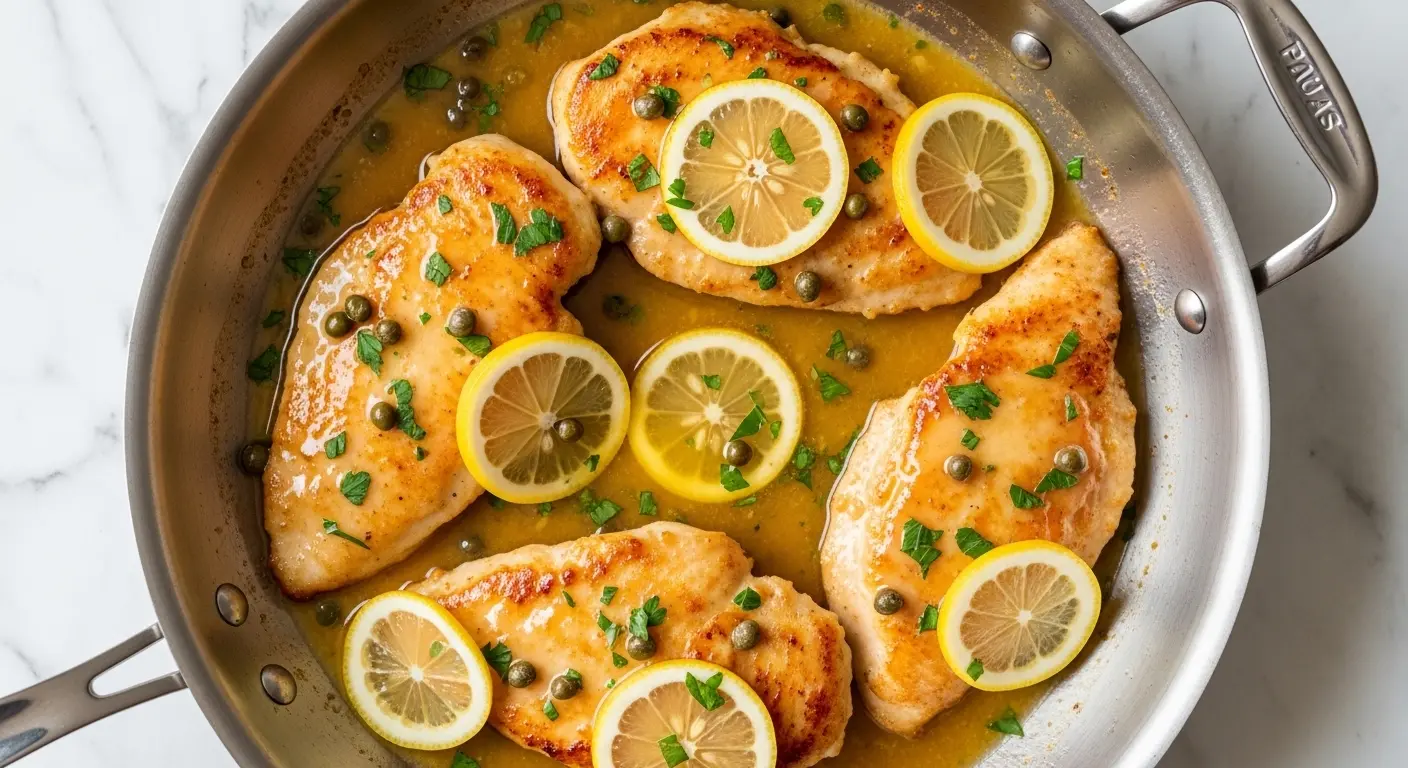
If you’re looking for a restaurant-worthy dinner that comes together in under 30 minutes, this white wine chicken piccata recipe is exactly what you need.
Tender pan-fried chicken cutlets are bathed in a bright, buttery sauce made with dry white wine, fresh lemon juice, and briny capers. It’s the kind of dish that feels fancy enough for a dinner party but easy enough for a regular Tuesday night.
The magic of this recipe is in the sauce. The white wine adds depth and complexity that you just don’t get from a simple lemon-butter version. It deglazes the pan, lifts all those golden browned bits, and creates a silky, tangy sauce that clings beautifully to every bite.
This is Italian-American cooking at its finest: simple, bold flavors built with quality ingredients and smart technique.
If you love easy chicken dinners, you’ll also want to check out this Creamy Chicken Piccata Recipe for a richer, more indulgent take on the classic.
Why You’ll Love This White Wine Chicken Piccata Recipe
This dish has everything going for it: quick prep, minimal ingredients, and a sauce so good you’ll want to eat it with a spoon.
The combination of white wine, lemon, butter, and capers creates a sauce that is simultaneously bright and savory, rich yet light. It’s a flavor profile that feels sophisticated without being complicated.
You don’t need any fancy kitchen skills to pull this off. If you can pound a chicken breast and whisk a pan sauce, you’ve got this.
It’s also incredibly versatile. Serve it over pasta, mashed potatoes, or simply with crusty bread to soak up every last drop of that gorgeous sauce.
- Weeknight-friendly: Ready in under 30 minutes from start to finish
- One pan sauce: Everything comes together in the same skillet for easy cleanup
- Big on flavor: The white wine transforms a simple pan sauce into something truly special
- Crowd-pleasing: Even picky eaters tend to love the bright, lemony flavors
- Easily scalable: Double or halve the recipe with no issues
Read Also: Authentic Italian Chicken Piccata Recipe
Ingredients
You only need a handful of pantry staples plus fresh chicken to make this dish shine. Using a good-quality dry white wine is one of the most important choices you can make here, as it directly impacts the flavor of the sauce.
- 2 large boneless, skinless chicken breasts (about 1.5 lbs / 680g total), halved horizontally and pounded to 1/4-inch thickness
- 1/2 cup (60g) all-purpose flour, for dredging
- 1 teaspoon kosher salt
- 1/2 teaspoon black pepper
- 3 tablespoons olive oil, divided
- 3 tablespoons unsalted butter, divided
- 4 cloves garlic, minced
- 1/2 cup (120ml) dry white wine (such as Pinot Grigio, Sauvignon Blanc, or dry Chardonnay)
- 1/2 cup (120ml) low-sodium chicken broth
- 1/4 cup (60ml) fresh lemon juice (about 2 lemons)
- 1 teaspoon lemon zest
- 3 tablespoons capers, drained and rinsed
- 2 tablespoons fresh flat-leaf parsley, finely chopped
- Lemon slices, for garnish
If you love this dish, you might also enjoy this Chicken Piccata Recipe with Pasta for a heartier, pasta-based version.
Kitchen Equipment Needed
Having the right tools on hand makes this recipe significantly easier. A wide skillet with straight sides is essential here because the sauce needs room to reduce properly.
- Large stainless steel or cast iron skillet (12-inch / 30cm recommended)
- Meat mallet or rolling pin (for pounding chicken)
- Shallow dish or plate (for dredging in flour)
- Sharp chef’s knife
- Cutting board
- Measuring cups and spoons
- Wooden spoon or silicone spatula
- Citrus juicer or reamer
- Microplane zester
- Tongs
- Paper towels
Read Also: The Best Easy Chicken Piccata Recipe
Recommended Products for This Recipe
These are a few products that can genuinely elevate your results when making this dish. Each one is recommended based on quality and how well it performs for this specific recipe.
1. All-Clad D3 Stainless Steel Skillet
A heavy-bottomed stainless steel skillet is critical for developing the golden fond that flavors the entire sauce. The All-Clad D3 Stainless Steel Skillet distributes heat beautifully and handles high-heat searing without warping. It’s an investment piece that will serve you for decades.
2. Pinot Grigio Dry White Wine
Using a proper dry white wine like Cavit Pinot Grigio makes a noticeable difference in this sauce. A good Pinot Grigio is crisp, dry, and bright, which translates into a clean, vibrant pan sauce. Avoid anything labeled “cooking wine” as they often contain added salt and off flavors.
3. OXO Good Grips Meat Tenderizer Mallet
Getting the chicken to an even thickness is non-negotiable for this recipe. The OXO Good Grips Meat Tenderizer has both a textured side for tenderizing and a flat side for pounding, making it versatile and easy to control. Evenly pounded cutlets cook at the same rate, ensuring nothing dries out.
4. Microplane Premium Zester
Lemon zest is one of the flavor boosters in this recipe that many home cooks skip. A Microplane Premium Zester makes it effortless, producing fine, fluffy zest without any of the bitter white pith. Once you start using lemon zest regularly, you won’t go back.
You might also enjoy: Copycat CPK Chicken Piccata Recipe
Step-by-Step Instructions
1. Prepare the Chicken Cutlets
- Place each chicken breast on a cutting board and use a sharp knife to slice horizontally through the thickest part, creating two thinner pieces (cutlets) from each breast. You should end up with 4 cutlets total.
- Place each cutlet between two sheets of plastic wrap or inside a zip-top bag.
- Using a meat mallet or the bottom of a heavy pan, pound each cutlet to an even 1/4-inch (6mm) thickness. This step is crucial: evenly thin cutlets cook quickly and uniformly, preventing dry edges or undercooked centers.
- Pat the cutlets completely dry with paper towels. Removing excess moisture is key to getting a golden sear rather than a steam.
2. Dredge the Chicken
- In a shallow dish or plate, combine the 1/2 cup (60g) all-purpose flour with 1 teaspoon salt and 1/2 teaspoon black pepper. Whisk them together briefly.
- Working one cutlet at a time, press each piece into the seasoned flour, coating both sides completely.
- Shake off any excess flour. The goal is a thin, even coating, not a thick crust. Too much flour will make the sauce gummy rather than silky.
- Set the dredged cutlets on a clean plate while you heat the pan.
3. Sear the Chicken
- Place your large (12-inch / 30cm) skillet over medium-high heat. Allow it to heat for about 1 minute until it is genuinely hot.
- Add 2 tablespoons of olive oil and 1 tablespoon of butter to the pan. Swirl to combine. The butter should melt immediately and begin to foam.
- Once the foam begins to subside, carefully add two of the dredged cutlets to the pan. Do not crowd the pan; cook in batches if needed.
- Sear for 3 to 4 minutes on the first side without moving them. You should see a deep golden-brown crust forming on the edges.
- Flip and cook for an additional 2 to 3 minutes on the second side, until cooked through and no longer pink in the center. The internal temperature should reach 165°F (74°C).
- Transfer the cooked cutlets to a plate and loosely tent with foil to keep warm.
- Add the remaining 1 tablespoon of olive oil to the pan and repeat with the remaining two cutlets.
4. Sauté the Garlic
- After removing the second batch of chicken, reduce the heat to medium. The pan should have some golden-brown fond (caramelized bits) on the bottom, which is exactly what you want for flavor.
- Add 1 tablespoon of butter to the pan. Once melted, add the 4 cloves of minced garlic.
- Sauté the garlic for about 30 to 45 seconds, stirring constantly with a wooden spoon. You want it fragrant and very lightly golden, but not browned or it will taste bitter.
5. Deglaze with White Wine
- Pour the 1/2 cup (120ml) of dry white wine into the skillet. It will sizzle loudly and release steam.
- Immediately use your wooden spoon or spatula to scrape up all the browned bits from the bottom of the pan. Those bits are pure flavor and should be incorporated into the sauce.
- Increase the heat to medium-high and let the wine simmer and reduce for about 2 to 3 minutes, until it has reduced by roughly half and the sharp alcohol smell has mellowed.
6. Build the Pan Sauce
- Add the 1/2 cup (120ml) chicken broth to the reduced wine. Stir to combine.
- Pour in the 1/4 cup (60ml) fresh lemon juice and add the 1 teaspoon of lemon zest.
- Add the 3 tablespoons of drained and rinsed capers to the sauce.
- Stir everything together and let the sauce simmer on medium heat for about 3 to 4 minutes, until it has reduced slightly and thickened just a touch. It should still be fairly loose and liquid, not thick like a gravy.
7. Finish the Sauce with Butter
- Reduce the heat to low. Add the remaining 1 tablespoon of cold butter to the pan.
- Swirl the pan gently or stir with a spoon until the butter melts completely into the sauce, creating a glossy, emulsified finish. This technique, called “mounting with butter,” gives the sauce its silky restaurant-quality texture. Do not let the sauce boil once the butter has been added or the emulsion will break.
8. Return the Chicken and Serve
- Nestle the seared chicken cutlets back into the pan, overlapping if necessary.
- Spoon the sauce generously over each cutlet. Let everything warm together in the sauce for 1 to 2 minutes over low heat.
- Sprinkle with 2 tablespoons of freshly chopped flat-leaf parsley.
- Garnish with thin lemon slices and serve immediately, making sure to pour the remaining pan sauce over each portion.
This recipe pairs wonderfully alongside Chicken Marsala on the dinner table if you’re cooking for a crowd and want to offer two Italian-American classics.
Tips for Success
Getting perfect piccata is all about a few key techniques. Once you’ve made this dish a couple of times, these tips will become second nature.
- Pound the chicken evenly: Uneven thickness means some parts cook before others. Take the extra two minutes to pound your cutlets properly.
- Dry the chicken thoroughly: Wet chicken steams instead of sears. Paper towels are your best friend before dredging.
- Use a dry white wine you’d drink: The wine’s flavor concentrates as it reduces. Poor-quality wine makes a poor-quality sauce. A Pinot Grigio or Sauvignon Blanc works perfectly.
- Don’t skip the fond: Those brown bits stuck to the pan after cooking the chicken are the base of your sauce. Deglaze carefully and scrape them all up.
- Cold butter for mounting: Adding cold (not warm) butter at the end creates a better emulsion. Cut a tablespoon off a cold stick right before you need it.
- Don’t boil after adding butter: Once the butter goes in, keep the heat low. Boiling will cause the sauce to separate and become greasy.
- Rinse the capers: Capers packed in brine can be very salty. A quick rinse under cold water gives you the flavor without overwhelming saltiness.
- Cook in batches: Resist the temptation to crowd the pan. Cooking in batches ensures proper searing rather than steaming.
For another Italian-American favorite, try this Classic Chicken Parmesan Recipe for your next dinner rotation.
Serving Suggestions
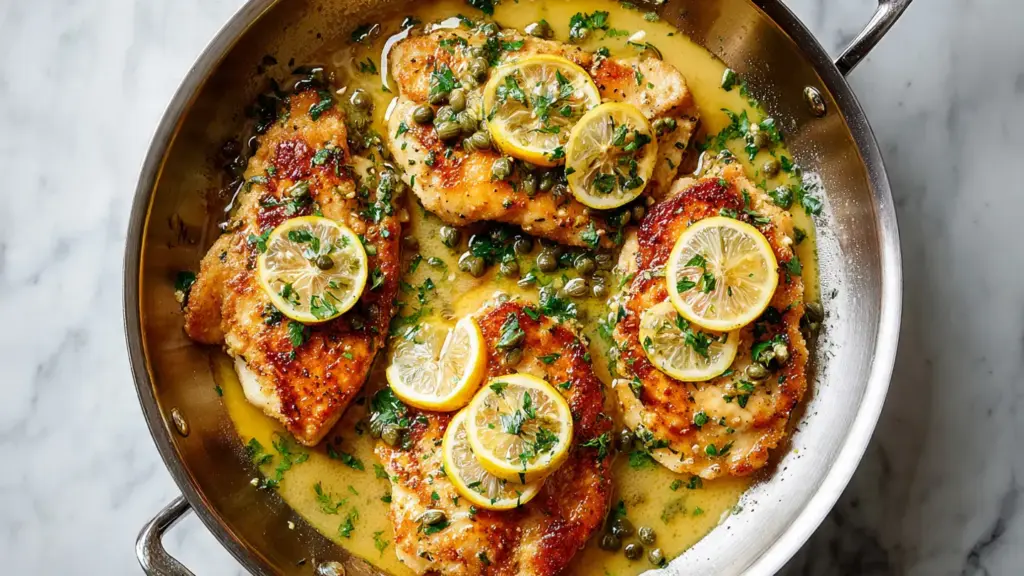
Chicken piccata is incredibly adaptable. The bright, lemony sauce pairs well with a range of sides from starchy to vegetable-based.
The sauce is the star, so you want something on the plate that will soak it up beautifully. Pasta, mashed potatoes, and polenta are all excellent choices for exactly this reason.
- Creamy Mashed Potatoes are a classic pairing and act like a sauce sponge in the best possible way
- Buttered angel hair or linguine pasta tossed with a little olive oil
- Roasted Broccoli for a simple, caramelized vegetable side
- Crusty Italian bread or a good sourdough to mop up the pan sauce
- A light arugula salad dressed with lemon vinaigrette to complement the citrus notes
- Steamed asparagus or green beans for a classic Italian-American pairing
- Garlic Bread as an appetizer or side to round out the meal
Another favorite: Lemon Chicken Recipe
Variations to Try
Once you’ve mastered the base recipe, there are plenty of ways to customize it to your taste or what’s in your pantry.
- Creamy piccata: Stir in 2 to 3 tablespoons of heavy cream just before adding the butter for a richer, creamy sauce. This is excellent over pasta.
- Piccata with artichokes: Add 1/2 cup of quartered marinated artichoke hearts along with the capers for a more substantial, Provençal-inspired variation.
- Piccata with mushrooms: Sauté 1 cup of sliced cremini mushrooms in the pan after removing the chicken, then build the sauce as usual. The mushrooms add an earthy, umami depth.
- Piccata with sun-dried tomatoes: Add 2 tablespoons of chopped sun-dried tomatoes along with the capers for a sweeter, more complex sauce.
- Gluten-free piccata: Substitute the all-purpose flour with a 1-to-1 gluten-free all-purpose flour blend for dredging. The sauce itself is naturally gluten-free.
- Turkey piccata: Swap the chicken for thin turkey breast cutlets. The cooking time will be similar, and the sauce works beautifully with turkey.
- No-wine version: Replace the white wine with an equal amount of additional chicken broth and a splash more lemon juice. The sauce will be slightly less complex but still delicious.
For a gluten-free take on the classic, see this Gluten Free Chicken Piccata Recipe.
Storage and Reheating
Chicken piccata is best eaten fresh, but leftovers store well and reheat nicely when done carefully. The sauce can separate slightly upon reheating, but a quick stir over low heat usually brings it back together.
- Refrigerator: Store leftover chicken and sauce together in an airtight container in the refrigerator for up to 3 days.
- Freezer: The cooked chicken can be frozen for up to 2 months, though the sauce texture may change slightly upon thawing. Freeze in airtight containers or freezer bags with as much air removed as possible.
- Reheating on the stovetop (preferred): Place the chicken and sauce in a skillet over low to medium-low heat. Add a splash of chicken broth or water to loosen the sauce if needed. Heat gently for 5 to 7 minutes, turning the chicken once, until warmed through.
- Reheating in the microwave: Place the chicken and sauce in a microwave-safe dish and cover loosely. Heat on 70% power in 60-second increments until heated through. Avoid full power, as it can dry out the chicken quickly.
- Do not reheat repeatedly: Reheat only the portion you plan to eat. Repeated heating degrades the texture of both the chicken and the sauce.
Read Also: Copycat Ina Garten Chicken Piccata Recipe
Nutritional Facts
The following values are approximate and based on one serving (one to two cutlets plus sauce), assuming the recipe serves 4 people. Actual values may vary depending on portion size and specific brands used.
| Nutrient | Amount Per Serving |
|---|---|
| Calories | ~380 kcal |
| Protein | ~38g |
| Total Fat | ~18g |
| Saturated Fat | ~6g |
| Carbohydrates | ~12g |
| Fiber | ~0.5g |
| Sugar | ~1g |
| Sodium | ~520mg |
| Cholesterol | ~115mg |
Note: Values are calculated without pasta, potatoes, or other side dishes. Adding a serving of angel hair pasta will add approximately 200 calories and 40g of carbohydrates.
This is a relatively lean dish given its richness of flavor, making it a satisfying option for those watching their caloric intake. The bulk of the fat comes from olive oil and butter, both of which provide beneficial fatty acids.
You might also enjoy: Healthy Chicken Piccata Recipe
Health Benefits of Key Ingredients
This dish isn’t just delicious. Several of its core ingredients bring meaningful nutritional benefits to the table.
The combination of lean protein from chicken, heart-healthy fats from olive oil, and the antioxidant-rich properties of lemon and garlic makes this one of the more nutritious choices in the Italian-American dinner repertoire.
- Chicken breast: An excellent source of lean protein, providing roughly 31g of protein per 3.5 oz (100g) serving. High-protein meals support muscle maintenance, satiety, and metabolic health.
- Lemon juice: Rich in vitamin C and citric acid. Vitamin C is a potent antioxidant that supports immune function and skin health. Citric acid also aids in mineral absorption.
- Garlic: Contains allicin, a sulfur compound associated with anti-inflammatory and antimicrobial properties. Regular consumption of garlic has been linked to improved cardiovascular health markers.
- Olive oil: A cornerstone of the Mediterranean diet, olive oil is rich in monounsaturated fatty acids (MUFAs) and polyphenols. These compounds are associated with reduced inflammation and improved heart health.
- Capers: A surprisingly nutrient-dense condiment, capers contain quercetin, a flavonoid with antioxidant and anti-inflammatory properties. They also provide small amounts of vitamins K and C.
- White wine (in moderation): When used in cooking, the alcohol largely evaporates, leaving behind flavor compounds and antioxidants including resveratrol found in wine.
Read Also: Copycat Geoffrey Zakarian Chicken Piccata Recipe
Frequently Asked Questions
1. What is the best white wine for chicken piccata?
A dry white wine is essential here. Pinot Grigio and Sauvignon Blanc are the top choices because they are crisp, dry, and have a clean flavor that doesn’t overpower the lemon and capers.
Avoid oaky Chardonnays, sweet Rieslings, or anything labeled “cooking wine,” as these can throw off the balance of the sauce. As a general rule, if you wouldn’t enjoy drinking it on its own, it’s probably not the right choice for this sauce.
2. Can I make this recipe without wine?
Yes, you can substitute the white wine with an equal amount of additional chicken broth plus an extra tablespoon of lemon juice. The sauce will still be flavorful, though it will have a slightly less complex, more straightforward lemon-butter profile.
Some people also use a splash of dry vermouth or dry sherry in place of white wine, and both work well as substitutes.
3. Why is my piccata sauce not thickening?
Piccata sauce is not meant to be thick like a gravy. It is a light, pan sauce by nature. If it seems too thin, simply continue simmering over medium heat for a few extra minutes to reduce it further.
If you want a slightly thicker sauce, you can whisk 1 teaspoon of cornstarch into 2 tablespoons of cold water and stir it into the simmering sauce before adding the butter. This is not traditional, but it works.
4. Can I use chicken thighs instead of chicken breasts?
Yes. Boneless, skinless chicken thighs work well in this recipe and are actually more forgiving because the higher fat content makes them harder to overcook.
Pound them to an even thickness of about 1/2 inch (12mm) before dredging. They may need an extra 1 to 2 minutes per side during searing due to their slightly thicker profile.
5. Can I make this dish ahead of time?
Chicken piccata is best made fresh, but you can do some prep work in advance. The chicken can be pounded, seasoned, and dredged in flour up to 2 hours ahead and kept covered in the refrigerator.
The sauce can also be made ahead and refrigerated separately for up to 2 days. Reheat it gently in a skillet, adding a splash of chicken broth to loosen it, then add freshly seared chicken to finish. Full assembly ahead of time is not recommended, as the flour coating on the chicken will soften as it sits in the sauce.
You might also enjoy: Copycat Cheesecake Factory Chicken Piccata Recipe
Final Thoughts
This white wine chicken piccata recipe is one of those dishes that punches well above its weight. Simple ingredients, straightforward technique, and a finished result that looks and tastes like you spent hours in the kitchen.
Whether you’re cooking for a weeknight family dinner or hosting friends for the first time, this recipe delivers every single time. The buttery, lemony, wine-kissed sauce is genuinely addictive.
Give it a try this week and let us know how it turned out in the comments below. Did you add any extra ingredients or put your own spin on it? We’d love to hear about it!
Recommended:
- Copycat Giada Chicken Piccata Recipe
- Chicken Cacciatore Recipe
- Chicken Marsala Recipe
- Classic Shrimp Scampi Recipe
- Easy Shrimp Scampi Recipe
- Baked Salmon Recipe
- Chicken Fajita Recipe
- Lemon Chicken Orzo Soup Recipe
- Chicken and Broccoli Recipe
- Chicken Stew Recipe