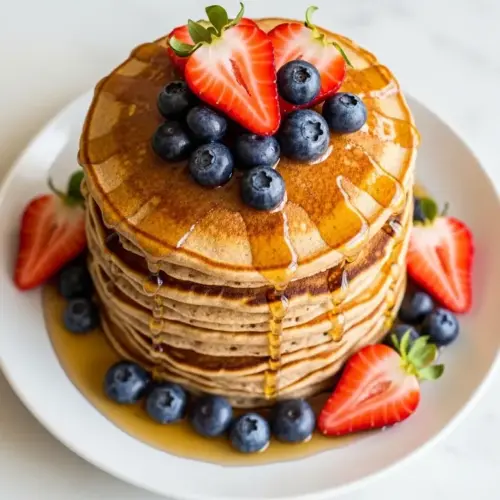
Gluten-Free Protein Pancakes

These gluten-free protein pancakes are thick, fluffy, and packed with real protein — made with certified gluten-free oat flour, vanilla protein powder, and eggs. They come together in just one bowl in about 20 minutes, delivering a satisfying breakfast that keeps you full for hours without sacrificing flavor or texture.
Equipment
- Large mixing bowl
- Medium mixing bowl or measuring jug - For wet ingredients
- Whisk
- Non-stick griddle or skillet - A flat griddle pan allows cooking multiple pancakes at once
- Silicone spatula or pancake flipper
- ¼ cup measuring cup - For portioning batter consistently
- Ladle - (optional) For easier pouring
- Wire cooling rack - (optional) If making a large batch
Ingredients
- 1 cup certified gluten-free oat flour - 100g
- 1 scoop vanilla protein powder - about 30g; whey or plant-based both work
- 1 tsp baking powder
- ¼ tsp fine sea salt
- 1 tbsp granulated sugar or coconut sugar
- 2 large eggs
- ¾ cup milk of choice - 180ml; dairy or non-dairy both work
- 1 tsp pure vanilla extract
- 1 tbsp melted coconut oil or avocado oil - Plus more for greasing the pan; slightly cooled before adding to batter
Instructions
- Add the oat flour, protein powder, baking powder, salt, and sugar to a large mixing bowl. Whisk together until evenly combined.
- In a separate bowl or measuring jug, whisk together the eggs, milk, vanilla extract, and melted (slightly cooled) oil until fully combined.
- Pour the wet ingredients into the dry and stir gently until just combined — a few lumps are fine. Let the batter rest for 3 to 5 minutes to hydrate the oat flour.
- Heat a non-stick skillet or griddle over medium heat for 2 to 3 minutes, then lightly grease with a thin layer of oil or cooking spray.
- Pour ¼ cup of batter per pancake onto the skillet and cook for 2 to 3 minutes until bubbles form across the surface and edges look set, then flip and cook for 1 to 2 minutes until golden.
- Transfer cooked pancakes to a wire rack or warm oven (200°F / 93°C) while finishing the batch, then stack and serve immediately with desired toppings.
Notes
- Rest the batter for at least 3 to 5 minutes — oat flour absorbs liquid slowly, and skipping this step can result in thin, dense pancakes.
- Use medium heat throughout. Too high burns the outside before the center cooks; too low causes spreading and dense texture.
- Do not overmix the batter. Stir just until combined — lumps are fine and actually desirable for fluffy pancakes.
- Flip each pancake only once, and never press down with the spatula; this deflates air bubbles and ruins the texture.
- Whey protein blends most smoothly. If using plant-based protein, add 1 to 2 extra tablespoons of milk to loosen the batter.
- For celiac disease or serious gluten sensitivity, ensure both the oat flour and protein powder are certified gluten-free to avoid cross-contamination.
- Store cooled pancakes in an airtight container in the fridge for up to 4 days, with parchment paper between layers to prevent sticking.
- Freeze in a single layer on a parchment-lined baking sheet, then transfer to a zip-lock freezer bag; they keep for up to 2 months and reheat well in the toaster.
- To make without protein powder, substitute an equal amount (about 30g / ¼ cup) of additional gluten-free oat flour, or add 1 tablespoon of nut butter for a protein boost.
- Prep the dry and wet ingredients separately the night before and refrigerate; combine and rest the batter fresh in the morning for best results.