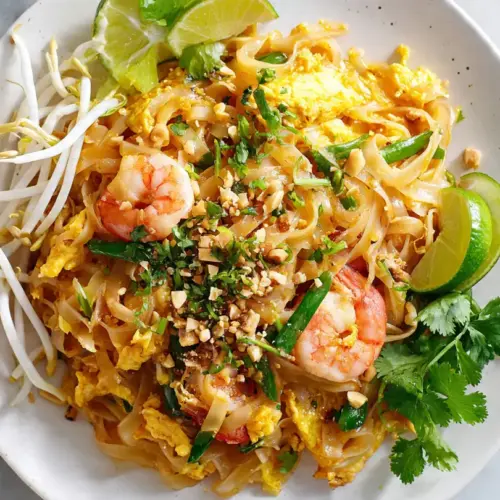
Easy Pad Thai

This easy pad thai recipe brings the vibrant flavors of Thailand straight to your kitchen with simple ingredients and straightforward techniques. The secret lies in the perfectly balanced sauce combining tamarind, fish sauce, and palm sugar for that signature sweet-sour-salty flavor profile.
Equipment
- Large wok or skillet - 12-14 inches
- Mixing bowls - At least 2-3
- Whisk
- Tongs or wooden spatula - Long-handled
- Sharp knife
- Cutting board
- Measuring cups and spoons
- Large pot or bowl - For soaking the rice noodles
Ingredients
For the Pad Thai Sauce
- 3 tablespoons tamarind paste - or 3 tablespoons rice vinegar plus 1/2 teaspoon extra brown sugar
- 3 tablespoons fish sauce
- 3 tablespoons brown sugar - or palm sugar for more authentic flavor
- 1 tablespoon soy sauce
- 1 tablespoon lime juice - about 1/2 lime
- 1/2 teaspoon sriracha or chili garlic sauce - optional, for heat
For the Pad Thai
- 8 ounces dried rice noodles - 225g, medium width, about 1/4 inch or 5-6mm
- 8 ounces protein of choice - 225g, shrimp (peeled and deveined), chicken breast (thinly sliced), or firm tofu (pressed and cubed)
- 3 tablespoons neutral oil - vegetable or canola, divided
- 3 cloves garlic - minced
- 2 large eggs - lightly beaten
- 2 cups fresh bean sprouts - 100g, divided
- 3 green onions - cut into 2-inch pieces, or garlic chives if available
- 1/3 cup roasted peanuts - 50g, roughly chopped
- lime wedges - for serving
- red pepper flakes - optional, for serving
- fresh cilantro - optional, for garnish
Instructions
- Soak the dried rice noodles in room-temperature water for 30-40 minutes until pliable but still slightly firm. Drain and set aside.
- Whisk together tamarind paste, fish sauce, brown sugar, soy sauce, lime juice, and sriracha until smooth. Set sauce aside.
- Prep all ingredients: slice protein, mince garlic, beat eggs, wash bean sprouts, chop green onions and peanuts. Arrange everything near the stove.
- Heat 1 tablespoon oil in a wok over medium-high heat. Cook protein until golden and cooked through, then remove and set aside.
- Add 1 tablespoon oil to the wok, pour in beaten eggs, and scramble until just set. Push eggs to one side of the wok.
- Add remaining 1 tablespoon oil and garlic to the wok over high heat. Stir-fry for 15-20 seconds until fragrant.
- Add drained noodles and toss with garlic. Let sit for 30 seconds to char slightly, then pour sauce over and toss for 1-2 minutes until coated.
- Return cooked protein and scrambled eggs to the wok. Toss for 1 minute to heat through, then add half the bean sprouts and green onions.
- Toss for another 30 seconds until bean sprouts just begin to soften but remain crunchy. Remove from heat.
- Serve immediately topped with remaining fresh bean sprouts, chopped peanuts, red pepper flakes, and lime wedges. Garnish with cilantro if desired.
Notes
- Don't oversoak the noodles: Room temperature water for 30-40 minutes is ideal. Test by bending - they should be pliable but still have a slight firmness. Hot water makes them too soft and they'll turn mushy when stir-fried.
- Prep everything before you cook: Pad thai comes together in minutes once you start cooking. Have your sauce mixed, ingredients chopped, and everything within arm's reach of the stove.
- Use high heat: A very hot wok or skillet is essential for that slightly charred, smoky flavor and proper texture. The high heat helps the noodles develop flavor without steaming.
- Work in batches for large quantities: If doubling the recipe, cook it in two separate batches. Overcrowding the wok lowers the temperature and creates steam instead of stir-frying, resulting in soggy noodles.
- Vegetarian/Vegan variation: Omit the eggs and fish sauce. Replace fish sauce with soy sauce or tamari (start with 2 tablespoons and add more to taste). Use firm tofu as your protein and add extra vegetables like julienned carrots or bell peppers.
- Storage and reheating: Store leftovers in an airtight container in the refrigerator for up to 3 days. Reheat on the stovetop with a splash of water or extra sauce to restore texture. Pad thai doesn't freeze well as the noodles become mushy.
- Sauce can be made ahead: Mix the sauce ingredients and store in an airtight container in the refrigerator for up to one week. The flavors will meld and develop over time, often tasting even better after a day or two.
- Gluten-free option: Replace regular soy sauce with tamari or certified gluten-free soy sauce. Rice noodles are naturally gluten-free, and most authentic fish sauce contains only anchovies and salt.