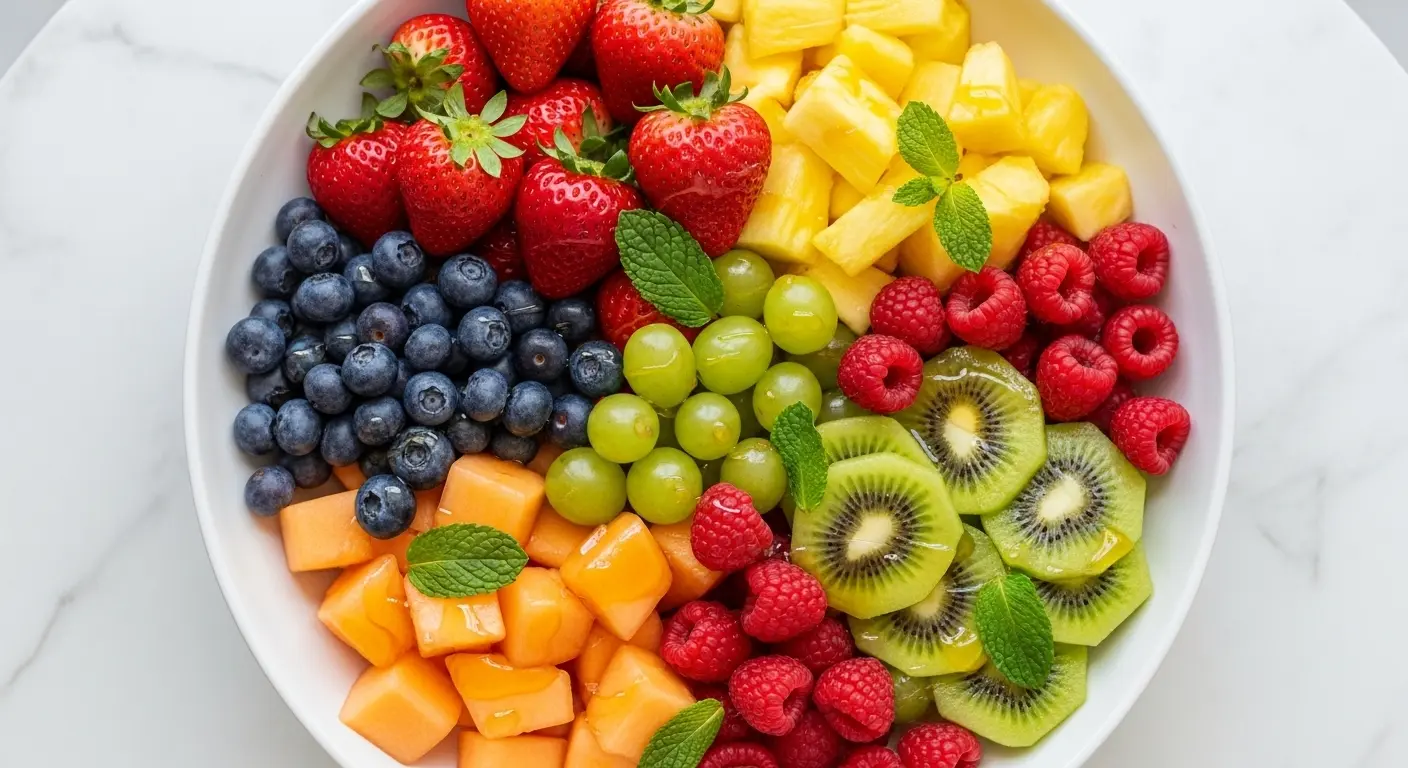
A great fruit salad recipe is one of those things that looks simple on the surface but makes a huge impression every single time you serve it.
The secret isn’t just throwing whatever fruit you have into a bowl. It’s about choosing the right combination of textures and flavors, cutting everything to the right size, and finishing it with a simple honey-lime dressing that ties everything together beautifully.
This version uses a classic mix of strawberries, grapes, pineapple, blueberries, and melon, which gives you a range of colors, sweetness, and bite in every forkful.
Whether you’re bringing it to a potluck, prepping it for a weekend brunch, or just making a healthy snack for the week, this recipe delivers every time.
You might also enjoy this Fruit Tart Recipe if you love showcasing fresh fruit in stunning ways.
Why You’ll Love This Fruit Salad Recipe
This fruit salad recipe is truly one of the easiest things you can make, and yet it always gets rave reviews.
The combination of sweet, juicy, and slightly tart fruits keeps every bite interesting. It’s also incredibly versatile — you can swap in whatever seasonal fruit you have on hand.
The honey-lime dressing is the detail that sets this recipe apart from a plain bowl of fruit. It gently enhances the natural sweetness without overpowering the fresh flavors.
It requires zero cooking, minimal cleanup, and can be prepped in about 15 minutes flat. That alone makes it a lifesaver for busy mornings and last-minute get-togethers.
Here’s why readers keep coming back to this recipe:
- No cooking required — just chop, toss, and serve
- Naturally gluten-free and dairy-free — works for almost every dietary restriction
- Kid-friendly — a guaranteed crowd-pleaser with even the pickiest eaters
- Meal-prep friendly — holds up well in the fridge for 2 to 3 days
- Endlessly customizable — swap fruits based on season or preference
- Beautiful presentation — the colors alone make it look like you spent hours on it
For another fresh and fruity snack idea, try pairing it with this Easy Acai Bowl Recipe.
Ingredients
This fruit salad uses a classic combination of colorful, widely available fruits, balanced by a simple citrus-honey dressing. Feel free to adjust portions based on what’s in season near you.
- 2 cups (300g) fresh strawberries, hulled and quartered
- 2 cups (290g) green or red seedless grapes, halved
- 2 cups (330g) fresh pineapple chunks (about 1-inch / 2.5cm pieces)
- 1½ cups (220g) fresh blueberries
- 1½ cups (225g) cantaloupe or honeydew melon, cubed
- 1 cup (150g) raspberries (optional, but adds a lovely tartness)
- 2 kiwi fruits, peeled and sliced into half-moons
- 2 tablespoons (30ml) fresh lime juice (about 1 large lime)
- 1 tablespoon (20g) honey (or to taste)
- 1 teaspoon lime zest (from the lime you’re already juicing)
- 2 tablespoons fresh mint leaves, finely chiffonaded (optional, but highly recommended)
This recipe makes 6 to 8 servings as a side dish, or about 4 servings as a main.
Read Also: Broccoli Salad Recipe
Kitchen Equipment Needed
You don’t need any specialty tools for this recipe. Just a few basic kitchen items will get the job done quickly and efficiently.
- Large mixing bowl (at least 4-quart / 3.8L capacity)
- Sharp chef’s knife or paring knife set
- Sturdy cutting board (a large bamboo cutting board works great here)
- Citrus juicer or reamer
- Microplane zester or box grater for lime zest
- Measuring cups and spoons
- Rubber spatula or large serving spoon for gentle tossing
- Airtight storage container or glass meal prep containers if storing for later
Another favorite light dish to prep alongside this one: Potato Salad Recipe
Recommended Products for This Recipe
These are the products that genuinely make a difference when preparing this fruit salad — selected based on quality, performance, and how much they simplify the process.
1. OXO Good Grips Large Salad Spinner
A salad spinner isn’t just for greens. Using it to rinse and dry your grapes, blueberries, and strawberries in one go saves time and keeps excess water from diluting your dressing. The large capacity means you can rinse nearly all your fruit in just two batches, and the non-slip base keeps it steady on your counter.
2. Raw Wildflower Honey
A good-quality raw honey makes a noticeable difference in the dressing. The floral, complex sweetness of a raw wildflower honey complements citrus beautifully and doesn’t overpower the natural fruit flavor the way processed honey sometimes can. Just a tablespoon goes a long way.
3. Premium Stainless Steel Mixing Bowls with Lids
A large mixing bowl with a tight-fitting lid means you can make the fruit salad, cover it, and slide it straight into the fridge without transferring to a separate storage container. Less mess, less waste, and the fruit stays fresh longer.
4. Citrus Juicer Press
Getting the maximum juice from your limes without the seeds or pulp is so much easier with a dedicated citrus press. It squeezes out every last drop of juice, which matters when lime is the backbone of your dressing.
This salad goes beautifully alongside a refreshing Watermelon Smoothie for the perfect summer pairing.
Step-by-Step Instructions
1. Prep Your Fruits
- Start by washing all of your fruits thoroughly under cold running water.
- Place them in a colander or salad spinner and let them drain completely — excess water will water down the dressing, so take a moment to pat them dry if needed.
- Hull and quarter the strawberries by slicing off the green tops and cutting each berry into four pieces lengthwise. If your strawberries are very large, cut them into sixths so every piece is roughly the same size as the other fruits.
- Halve the grapes by cutting each one down the middle lengthwise. This is a small step but makes the salad much easier to eat, especially for kids.
- If using fresh pineapple, slice off the top and bottom, stand it upright, and cut away the skin in downward strips. Slice out the core, then cut the flesh into roughly 1-inch (2.5cm) chunks. Canned pineapple in juice (drained well) works fine as a substitute.
- Peel the kiwi fruits using a paring knife or vegetable peeler, then slice each one into rounds and halve the rounds into half-moons.
- If using a whole cantaloupe or honeydew, halve it, scoop out the seeds, and cut the flesh from the rind. Cube into pieces roughly the same size as the pineapple chunks.
- Gently rinse the blueberries and raspberries and set aside in a separate bowl — you’ll add these at the end to prevent them from getting crushed during tossing.
2. Make the Honey-Lime Dressing
- Zest your lime first before cutting it in half — it’s much easier to zest a whole lime than a halved one. Use a microplane or the fine side of a box grater and run the lime lightly over it in short strokes to capture just the bright green outer layer. Avoid going too deep into the white pith, which is bitter. You need about 1 teaspoon of zest.
- Cut the lime in half and juice both halves using a citrus press or reamer. You need about 2 tablespoons (30ml) of fresh lime juice. Fresh lime juice has a brightness and slight bitterness that bottled juice simply doesn’t have, so it’s worth using the real thing here.
- In a small bowl or ramekin, whisk together the lime juice, lime zest, and honey until the honey is fully dissolved and the dressing is smooth and uniform. Taste it — it should be bright, sweet, and slightly tart. Adjust with a touch more honey if you prefer it sweeter.
3. Assemble the Fruit Salad
- Place all of your prepped fruits — strawberries, grapes, pineapple, kiwi, and melon — into a large mixing bowl.
- Pour the honey-lime dressing over the top of the fruit.
- Using a rubber spatula or large serving spoon, gently fold the fruit together rather than stirring aggressively. You want every piece coated in the dressing without crushing the more delicate fruits.
- Add the blueberries and raspberries last, and fold them in with one or two very gentle passes. These are soft fruits and will break apart if handled too roughly.
4. Add the Fresh Mint (Optional)
- Stack your fresh mint leaves on top of each other, roll them tightly like a cigar, and use a sharp knife to slice thin ribbons (this is called a chiffonade). These delicate strips distribute through the salad beautifully and release more aroma than torn or whole leaves.
- Scatter the mint ribbons over the assembled salad and give it one final, very gentle fold to incorporate.
5. Chill and Serve
- For the best flavor, cover the bowl with plastic wrap or a lid and refrigerate the salad for at least 15 to 30 minutes before serving. This resting time allows the fruits to release a little of their natural juices and the dressing to infuse more deeply into each piece.
- If serving immediately, that works too — it’ll still taste wonderful.
- Give the salad a gentle stir before serving to redistribute the dressing that settles at the bottom of the bowl.
- Serve in a large decorative bowl, individual cups, or alongside other brunch dishes.
This salad pairs wonderfully with a simple Easy Granola Recipe sprinkled on top for extra crunch.
Tips for Success
Getting a fruit salad just right comes down to a few small techniques that make a big difference in both flavor and texture.
- Cut everything to a similar size. This ensures you get a good mix of flavors in every bite, rather than one fruit dominating.
- Always add delicate berries last. Blueberries and raspberries crush easily. Fold them in right before serving rather than mixing early.
- Use fresh lime juice, not bottled. Bottled lime juice often has a flat, metallic taste. Fresh lime is brighter, more aromatic, and makes the dressing taste so much better.
- Drain your pineapple well if using canned. Canned pineapple in juice can add a lot of extra liquid to the bowl. Pat it dry before adding it.
- Zest the lime before juicing it. This small step order makes zesting so much easier since you have a whole firm lime to grip.
- Don’t overdress. Start with the full amount of dressing, toss, and see how it looks. The fruit will also release its own juices as it sits, so the bowl will have plenty of natural liquid.
- Make it ahead by prepping fruits separately. If you’re making this the night before, keep the fruits and dressing in separate containers and combine them the morning of serving.
Read Also: Easy Overnight Oats Recipe
Serving Suggestions
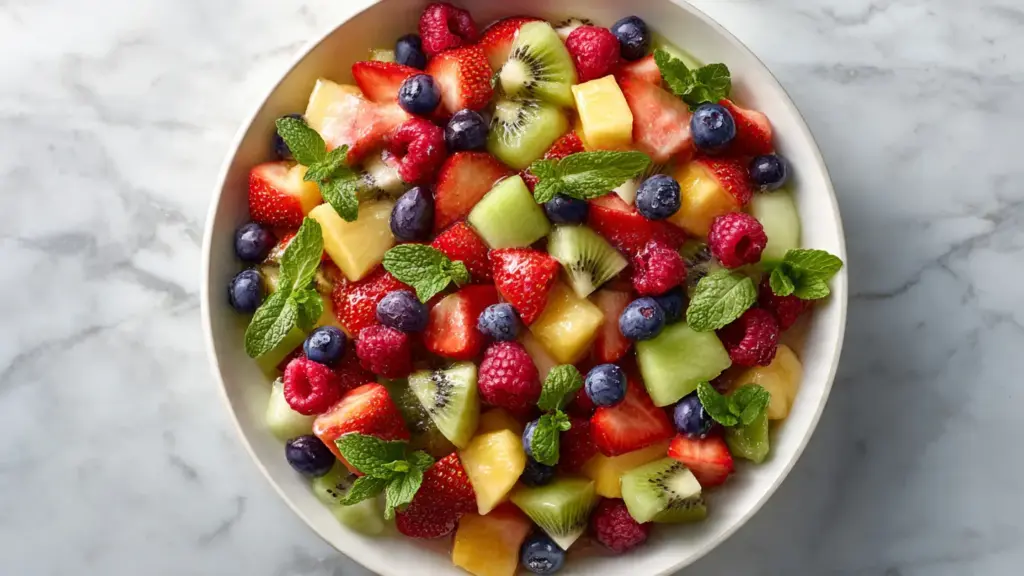
This fruit salad is incredibly versatile and fits naturally into almost any meal. It’s just as at home at a summer barbecue as it is on a holiday brunch table.
Here are some great ways to serve and enjoy it:
- Alongside Classic Deviled Eggs and other brunch staples for a colorful spread
- Spooned over a bowl of Chia Seed Pudding for a nourishing breakfast
- As a refreshing side dish at summer cookouts alongside grilled meats
- Served in individual cups as a light dessert with a dollop of whipped cream
- Layered into parfait glasses with yogurt and granola for a healthy and visually stunning brunch option
- Packed into containers as a meal-prep snack for the week
- Presented in a hollowed-out watermelon half for a show-stopping party centerpiece
For a fresh appetizer to start a brunch spread, try these Classic Deviled Eggs alongside it.
Variations to Try
Once you’ve got the base recipe down, this fruit salad is incredibly easy to customize. Here are some easy and delicious ways to make it your own.
- Tropical Fruit Salad: Swap the strawberries and blueberries for mango chunks, papaya, star fruit, and lychee. Use coconut milk instead of lime juice in the dressing for an island-inspired variation.
- Citrus Fruit Salad: Focus on grapefruit supremes, navel orange segments, blood orange slices, and mandarin pieces. Drizzle with a light agave and fresh ginger dressing.
- Berry Fruit Salad: Use only berries — strawberries, blueberries, raspberries, blackberries, and sliced cherries. Finish with a drizzle of strawberry sauce instead of the honey-lime dressing.
- Mint-Free Version: Simply leave the mint out. The salad is still delicious without it, and some people find the herb distracting in a sweet dish.
- Creamy Fruit Salad: Toss everything with a mixture of cream cheese, marshmallow cream, and a touch of vanilla extract for a richer, dessert-style version popular at potlucks.
- Autumn Fruit Salad: Swap the tropical fruits for sliced apples, pears, pomegranate seeds, and persimmon, dressed with a maple syrup and cinnamon vinaigrette.
- Savory-Sweet Version: Add a sprinkle of Tajin (a chili-lime seasoning) or a pinch of cayenne to the dressing for a subtle heat that contrasts beautifully with the sweet fruit — especially good with watermelon and mango.
Read Also: Pico de Gallo Recipe
Storage and Reheating
Fruit salad stores well for a few days if kept properly, making it a great option for meal prep — though it does taste best within the first 24 hours.
- Store the fruit salad in an airtight container in the refrigerator for up to 2 to 3 days.
- Keep the dressing separate if making ahead. Dress the salad only when you’re ready to serve to prevent the fruit from becoming overly soft and releasing too much liquid.
- Delicate berries (raspberries especially) will soften and break down more quickly than heartier fruits like grapes and melon. If making ahead, consider adding them fresh right before serving.
- Drain excess liquid that accumulates at the bottom of the bowl before serving leftovers. A quick stir and a squeeze of fresh lime juice will refresh the flavor.
- Do not freeze this fruit salad. Freezing and thawing changes the texture of fresh fruit completely, resulting in a mushy, watery dish.
- Revive leftovers with a squeeze of extra lime juice and a fresh drizzle of honey to brighten up the flavor.
You might also enjoy: Banana Pudding Recipe
Nutritional Facts
The following is an estimated breakdown for one serving (approximately 1 cup / 150g) of this fruit salad, including the honey-lime dressing. Values will vary slightly based on the exact fruits used.
- Calories: ~110 kcal
- Total Carbohydrates: 28g
- Sugars: 21g (all naturally occurring from the fruit and a small amount from honey)
- Dietary Fiber: 3g
- Total Fat: 0.5g
- Saturated Fat: 0g
- Protein: 1.5g
- Sodium: 5mg
- Vitamin C: ~80% of the Daily Value
- Vitamin A: ~15% of the Daily Value
- Potassium: ~350mg
This recipe is naturally low-calorie, fat-free, gluten-free, and dairy-free.
For another refreshing and nutritious drink option to pair with this, check out the Pineapple Smoothie Recipe.
Health Benefits of Key Ingredients
This fruit salad isn’t just delicious — every ingredient in it is doing something good for your body.
Fresh fruit is one of the most nutrient-dense, low-calorie foods you can eat, and combining a variety of them gives you a broad spectrum of vitamins, minerals, and antioxidants in every bowl.
Here’s a closer look at what makes each key ingredient so valuable:
- Strawberries are packed with vitamin C, folate, and anthocyanins, which are antioxidants linked to reduced inflammation and better heart health. One cup of strawberries contains more vitamin C than an orange.
- Blueberries are one of the most antioxidant-rich foods in the world. They’re high in flavonoids that support brain health, memory, and cognitive function, and have been studied extensively for their role in reducing oxidative stress.
- Pineapple contains bromelain, a natural enzyme with anti-inflammatory properties that also aids in digestion. It’s rich in manganese, vitamin C, and thiamine (vitamin B1).
- Grapes provide resveratrol (especially in red and black varieties), a polyphenol associated with cardiovascular health and longevity. They’re also a good source of vitamin K and natural hydration.
- Melon (cantaloupe/honeydew) is extraordinarily high in water content, making it excellent for hydration. Cantaloupe is also one of the best sources of beta-carotene, which the body converts to vitamin A.
- Kiwi is surprisingly high in both vitamin C and vitamin K. Studies have shown it may improve sleep quality and support respiratory health due to its antioxidant content.
- Lime juice and zest contain limonene and other phytochemicals with antioxidant and anti-inflammatory effects, and provide a small but meaningful boost of vitamin C and potassium to the dressing.
- Honey in small amounts is a natural source of trace minerals, enzymes, and antioxidants. Raw honey has a lower glycemic effect than refined sugar and contains beneficial compounds not found in processed sweeteners.
Read Also: Dragon Fruit Smoothie Recipe
Frequently Asked Questions
1. Can I make fruit salad ahead of time?
Yes, absolutely. For best results, prep and store all the fruits in a single airtight container in the refrigerator without the dressing for up to 24 hours. Mix the dressing separately and combine everything 15 to 30 minutes before serving. If you dress the salad too far in advance, the fruits release their juices and become soft, particularly the strawberries and raspberries.
2. What fruits should I avoid putting in a fruit salad?
Bananas are the classic ones to be careful about — they brown quickly once cut due to oxidation. If you want to include them, add them right before serving rather than mixing them in advance. Similarly, watermelon releases a lot of liquid as it sits, which can dilute the bowl significantly. If using it, add it just before serving.
3. How do I keep strawberries from getting soggy in a fruit salad?
Make sure your strawberries are completely dry before adding them — any surface moisture speeds up softening. Cut them just before mixing rather than hours in advance. The acid in the lime juice helps slow down oxidation somewhat, but fresh-cut strawberries are always best within the first few hours of being sliced.
4. Can I use frozen fruit?
Technically yes, but it’s not recommended as the primary fruit in this recipe. Frozen fruit, once thawed, has a much softer, mushier texture that doesn’t hold up well in a fresh salad. If you’re in a pinch, frozen mango or pineapple chunks thaw to a decent texture, but fresh fruit will always give you far better results here.
5. What can I substitute for honey in the dressing?
Maple syrup is the best substitute — it’s liquid, sweet, and has a mild flavor that doesn’t overpower the fruit. Agave nectar also works very well and has a neutral sweetness. If you prefer no sweetener at all, the lime juice and zest alone still make a light, refreshing dressing that works beautifully with naturally sweet fruit.
For another healthy and colorful fruit-forward treat, check out this Easy Acai Bowl Recipe.
Final Thoughts
This fruit salad recipe is one of those recipes you’ll find yourself coming back to all year long, not just in summer.
It’s the kind of dish that feels effortless but looks like you put real thought and care into it — because you did, even if it only took 15 minutes.
The honey-lime dressing is the little detail that makes it feel special rather than ordinary, and once you’ve had fruit salad this way, a plain bowl of fruit just won’t cut it anymore.
Give this recipe a try at your next gathering, pack it for a healthy lunch, or make a big batch on Sunday to snack on all week. You won’t regret it.
We’d love to hear how yours turned out! Drop a comment below with any fruit combinations you tried, or share a photo on social media and tag us. Your version might inspire someone else to try something new.
Recommended:
- Fruit Tart Recipe
- Fruit Cocktail Cake Recipe
- Watermelon Smoothie Recipe
- Papaya Smoothie Recipe
- Strawberry Bruschetta Recipe
- Chicken Salad Recipe with Grapes
- Caramel Sauce Recipe
- Homemade Granola Recipe
- Classic Bruschetta Recipe
- Strawberry Sauce Recipe