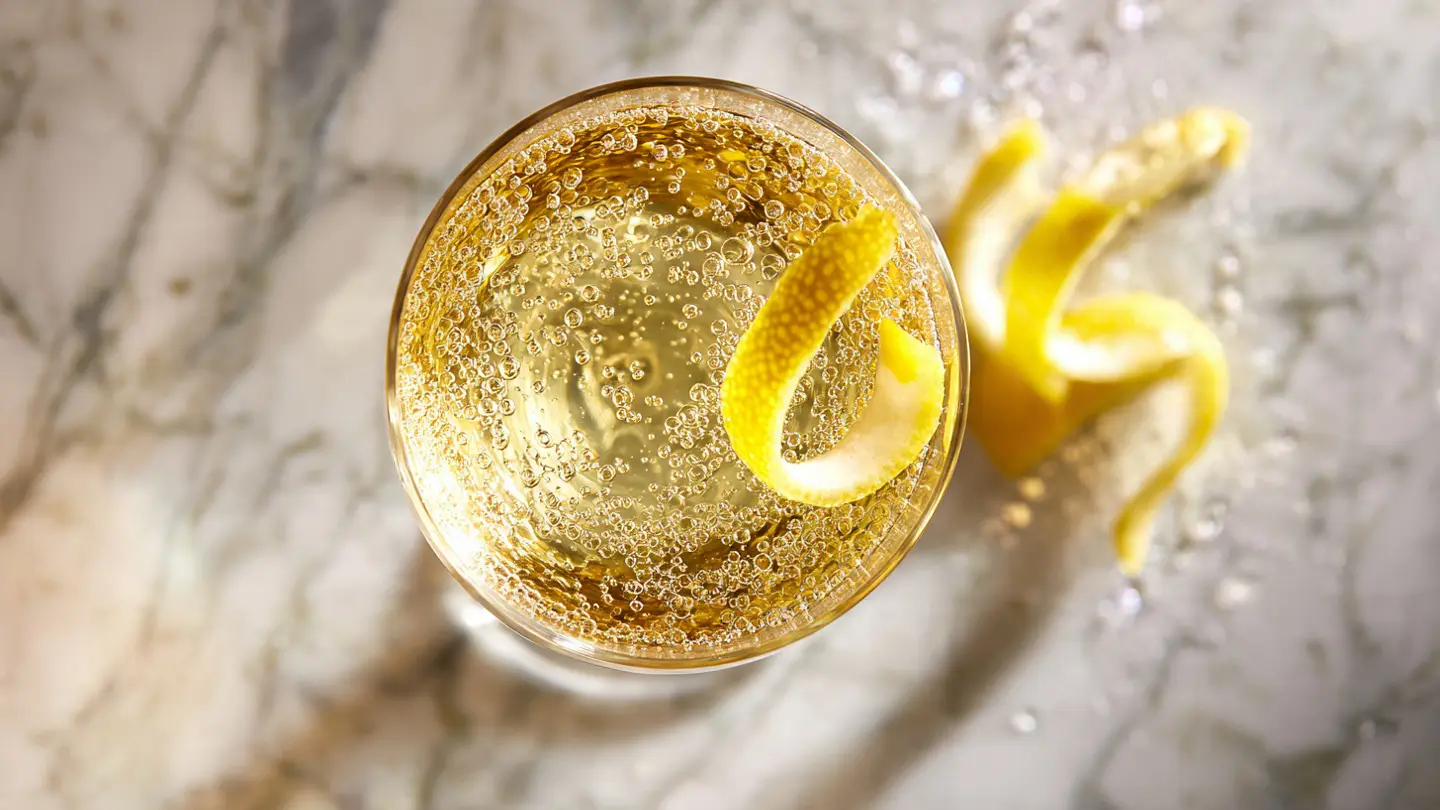
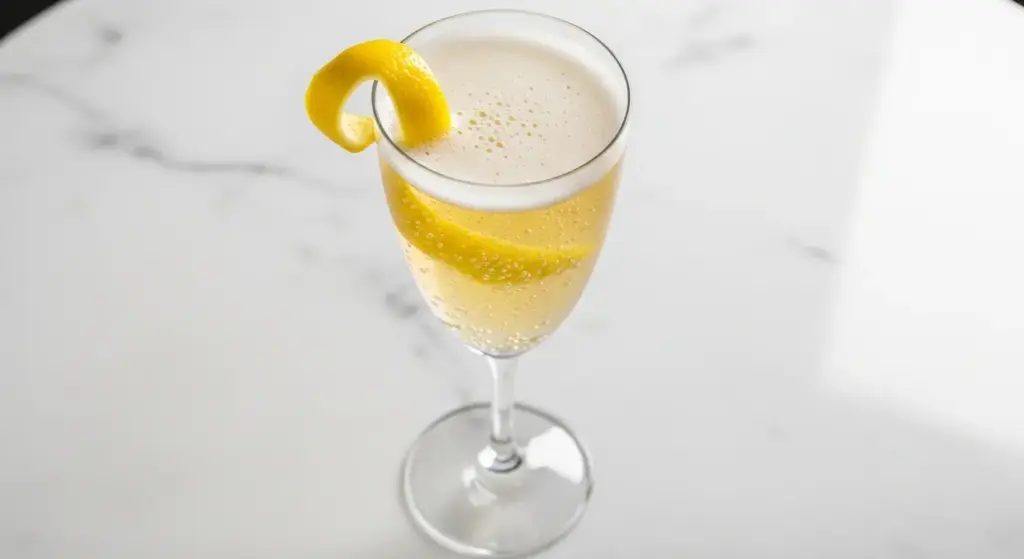
The French 75 recipe is one of the most elegant, celebratory drinks ever to come out of the classic cocktail era, and it is absolutely worth knowing by heart.
Made with gin, fresh lemon juice, simple syrup, and topped with Champagne, this cocktail is bright, citrusy, and gloriously bubbly all at once.
It has been a bar staple since the early 20th century, and for good reason. Once you taste that perfect balance of botanical gin and tart lemon lifted by sparkling wine, it is hard to drink anything else at a party.
The best part? It takes less than five minutes to make, uses just four ingredients, and looks incredibly sophisticated in a flute. This is the cocktail that makes guests feel like they are somewhere special.
You might also enjoy: Classic Mojito
Why You’ll Love This French 75 Recipe
This drink punches well above its weight in the elegance department. It looks like something you would order at a Michelin-starred restaurant, but it takes almost no effort to make at home.
The combination of gin and fresh lemon juice is surprisingly refreshing. Gin’s botanicals play beautifully off the bright acidity of citrus, and the Champagne bubbles carry all those flavors to your nose and palate at once.
It is perfect for special occasions but also easy enough for a casual Friday night. You do not need any bartending experience to nail this recipe.
The four-ingredient simplicity means there is nowhere to hide, which actually makes this an incredibly satisfying cocktail to master. Every ingredient earns its place in the glass.
- It comes together in under 5 minutes with minimal cleanup
- It scales up effortlessly for batches and parties
- The flavor is both sophisticated and crowd-pleasing
- It works for brunches, dinners, toasts, and celebrations of any kind
- Fresh lemon juice makes a noticeable difference compared to bottled
Another favorite: Cosmopolitan Cocktail
Ingredients
Only four ingredients stand between you and one of the world’s best cocktails. The key is using quality gin and fresh lemon juice, both of which make a dramatic difference in the final flavor.
- 1.5 oz (45 ml) London dry gin (such as Beefeater or Tanqueray)
- 0.75 oz (22 ml) fresh lemon juice (from about half a large lemon)
- 0.75 oz (22 ml) simple syrup
- 3 oz (90 ml) Champagne or dry sparkling wine (Brut or Extra Brut recommended)
- Lemon twist, for garnish
- Ice, for shaking
Read Also: Espresso Martini Recipe
Kitchen Equipment Needed
You do not need a fully stocked bar to make this cocktail. A handful of basic tools will get you there, and most are things you might already own.
- Cocktail shaker (a standard two-piece tin works great)
- Jigger or measuring tool for accurate pours
- Citrus juicer or reamer for fresh lemon juice
- Champagne flute or coupe glass
- Strainer (typically built into your cocktail shaker lid)
- Bar spoon or teaspoon for stirring
- Vegetable peeler or channel knife for lemon twist garnish
Read Also: Negroni Recipe
Recommended Products for This Recipe
These are products I genuinely recommend based on their quality and how much of a difference they make when mixing cocktails at home.
1. OXO Steel Cocktail Shaker
A well-built cocktail shaker with a leakproof lid and built-in strainer is the foundation of any good home bar. This shaker keeps your ice inside and your cocktail perfectly strained every single time. The built-in strainer means one less tool to clean.
2. Stainless Steel Double Jigger
Precise measurements are what separates a good cocktail from a great one. A double-sided jigger with 1 oz and 2 oz markings helps you nail the balance between lemon, syrup, and gin. These are inexpensive and make a real difference.
3. Crystal Champagne Flutes
Serving a French 75 in a beautiful flute elevates the entire experience from fun drink to elegant occasion. Thin-rimmed crystal flutes show off the bubbles beautifully and feel lovely to hold.
4. Handheld Citrus Press Juicer
Fresh lemon juice is non-negotiable for this cocktail. A handheld citrus press extracts maximum juice with minimum effort and no seeds or pulp making it into your drink.
5. Monin Pure Cane Simple Syrup
A high-quality simple syrup dissolves perfectly and adds clean sweetness without any aftertaste. Monin’s version is consistently balanced and widely used by professional bartenders.
For a lighter, equally elegant option, try: Gimlet Recipe
Step-by-Step Instructions
Step 1: Chill Your Glass
- Place your Champagne flute (or coupe glass) in the freezer for at least 5 minutes before mixing.
- Alternatively, fill the glass with ice water and let it sit while you prepare the cocktail.
- A cold glass keeps your drink colder longer and helps the bubbles stay lively.
- Pour out any ice water or remove from freezer just before pouring the finished cocktail.
Step 2: Juice the Lemon
- Cut a large lemon in half on a cutting board.
- Using your citrus juicer or reamer, squeeze the lemon firmly to extract the juice.
- You will need about 0.75 oz (22 ml), which is roughly the juice of half a large lemon.
- Strain the juice through a fine mesh strainer or use a juicer that catches seeds and pulp automatically.
- Do not use bottled lemon juice. Fresh juice is sharper, brighter, and more aromatic, and it makes a noticeable difference in this minimalist cocktail.
Step 3: Add Ice to the Cocktail Shaker
- Fill your cocktail shaker about two-thirds full with fresh ice.
- Use larger ice cubes if possible, as they melt more slowly and chill the drink without over-diluting it.
- The shaker should feel cold to the touch before you add ingredients.
Step 4: Measure and Add the Gin
- Using your jigger, measure out 1.5 oz (45 ml) of London dry gin.
- Pour it over the ice in the shaker.
- London dry gins like Beefeater, Tanqueray, or Bombay Sapphire work perfectly here because their clean, juniper-forward profile complements the lemon and Champagne without overwhelming them.
- If you prefer a more floral or citrus-forward cocktail, a New Western or American-style gin like St. George Terroir or Hendrick’s is a lovely option too.
Step 5: Add the Lemon Juice and Simple Syrup
- Pour 0.75 oz (22 ml) of your freshly squeezed lemon juice into the shaker.
- Immediately follow with 0.75 oz (22 ml) of simple syrup.
- The 1:1 ratio of lemon juice to simple syrup creates a perfectly balanced sour base, tart enough to cut through the gin but sweet enough to be smooth and approachable.
- If you prefer a slightly more tart cocktail, reduce the simple syrup to 0.5 oz (15 ml).
Step 6: Shake Vigorously
- Secure the lid on your cocktail shaker tightly.
- Shake hard for a full 10 to 15 seconds.
- You want to hear the ice clattering and feel the outside of the shaker becoming very cold and slightly frosty.
- Shaking properly chills the mixture, dilutes it slightly (which is desirable), and creates a slight froth from the lemon juice that looks beautiful in the glass.
Step 7: Strain into the Chilled Glass
- Hold the shaker over your chilled flute or coupe glass.
- Use the built-in strainer on the shaker lid to pour the cocktail smoothly into the glass, leaving all the ice behind.
- Fill the glass only about halfway, leaving plenty of room for the Champagne.
- The mixture should look golden and slightly cloudy from the shaken lemon.
Step 8: Top with Champagne
- Slowly pour 3 oz (90 ml) of well-chilled Brut Champagne or dry sparkling wine down the inside edge of the glass.
- Pouring slowly at an angle helps preserve the bubbles and prevents the drink from overflowing.
- Do not stir after adding the Champagne. The natural carbonation will gently mix everything together.
- Brut or Extra Brut Champagne works best because their dryness balances the simple syrup and lets the lemon shine.
Step 9: Garnish and Serve
- Use a vegetable peeler or channel knife to cut a thin strip of lemon peel about 2 to 3 inches long.
- Hold both ends and twist it over the glass to express the citrus oils onto the surface of the drink.
- Drape or curl the twist over the rim of the glass.
- Serve immediately while the Champagne is still actively fizzing.
This cocktail is its most magical in the first few minutes after pouring, so do not let it sit.
Tips for Success
These small details will take your French 75 from good to genuinely impressive. Most of them require no extra effort, just a little attention.
- Always use fresh lemon juice. This is the single most impactful change you can make. Bottled juice is flat and slightly bitter, while fresh is bright and aromatic.
- Chill everything. Warm Champagne goes flat quickly. Your glass, your gin, and your sparkling wine should all be cold before you start.
- Do not skimp on shaking. A full 10 to 15 seconds of vigorous shaking properly chills and dilutes the base. Under-shaking leaves the cocktail too sharp and warm.
- Taste your simple syrup. Commercial simple syrups vary in sweetness. Taste yours first and adjust the quantity slightly if it seems particularly sweet or mild.
- Use Brut Champagne. Sweeter sparkling wines like Prosecco can make the drink feel cloying. Dry is the way to go.
Read Also: Amaretto Sour Recipe
Serving Suggestions
The French 75 is one of the most versatile cocktails when it comes to food pairing. Its acidity and effervescence cut through rich flavors beautifully, making it a natural match for appetizers and seafood.
It is outstanding alongside anything creamy, briny, or buttery. Think oysters, smoked salmon, soft cheeses, and anything fried.
- Pair it with Classic Deviled Eggs for a retro-elegant party spread
- Serve alongside Classic Bruschetta for a bright, herby contrast
- It pairs stunningly with Lobster Bisque for a special dinner starter
- Try it next to Strawberry Bruschetta for a brunch or shower menu
- Serve with Easy Nachos for a fun, casual contrast to the cocktail’s elegance
The French 75 also works beautifully as a welcome drink at dinner parties, wedding showers, holiday gatherings, or any occasion where you want to set a celebratory tone from the first sip.
Another great pairing idea: Crab Cake Recipe
Variations to Try
The classic recipe is wonderful on its own, but there are a few well-loved variations worth knowing. Each tweak changes the character of the drink in interesting ways.
- French 76 (Vodka French 75): Substitute vodka for the gin if you prefer a cleaner, more neutral base. This version is lighter and lets the lemon and Champagne do more of the talking.
- Cognac French 75: The original pre-Prohibition version of this cocktail was actually made with Cognac, not gin. It produces a richer, oakier cocktail with warm fruit notes.
- Rosé French 75: Use rosé Champagne or rosé sparkling wine instead of white Champagne for a blush-colored, slightly fruitier drink that is stunning for Valentine’s Day or bridal events.
- Elderflower French 75: Add 0.25 oz (7 ml) of elderflower liqueur like St-Germain and reduce the simple syrup slightly. The floral sweetness pairs beautifully with the gin and lemon.
- Strawberry French 75: Muddle 2 to 3 fresh strawberries in the shaker before adding the other ingredients for a summery, fruited version.
Read Also: Dirty Martini Recipe
Storage and Reheating
Like all Champagne cocktails, the French 75 is strictly a make-and-drink-immediately situation. However, the base can be prepped ahead of time.
- The cocktail itself: Cannot be stored once mixed. Champagne goes flat quickly and the entire appeal of this drink is the freshness and effervescence.
- Batch the base: Combine the gin, lemon juice, and simple syrup in a sealed jar or bottle and refrigerate for up to 24 hours. When ready to serve, pour 3 oz (90 ml) of the base mixture over ice in the shaker, shake, strain into a flute, and top with Champagne.
- For parties: Pre-batch the base for 8 to 10 servings in a pitcher, keep it refrigerated, and top each glass individually with Champagne as guests arrive. This keeps the bubbles fresh and lively.
- Simple syrup: Homemade simple syrup will keep in the refrigerator in a sealed container for up to 2 weeks.
You might also enjoy: Hot Toddy Recipe
Nutritional Facts
The following values are based on one serving of the classic French 75 recipe as written above.
| Nutrient | Amount Per Serving |
|---|---|
| Calories | Approximately 200 kcal |
| Total Carbohydrates | 14 g |
| Sugars | 12 g |
| Protein | 0 g |
| Total Fat | 0 g |
| Sodium | 5 mg |
| Alcohol | Approximately 18 g |
Note: Calorie and carbohydrate counts will vary depending on the specific gin, sparkling wine, and whether you use homemade or commercial simple syrup. Using a sweeter sparkling wine like Prosecco will increase the sugar content slightly.
Read Also: White Russian Recipe
Health Benefits of Key Ingredients
This is an alcoholic beverage and should always be enjoyed in moderation. That said, some of the ingredients do carry genuine nutritional merits worth noting.
Lemon juice is genuinely one of the most nutrient-dense things in this glass. It is rich in Vitamin C and antioxidants, and its citric acid can support digestion and help your body absorb iron from other foods.
- Lemon juice is a good source of Vitamin C and has been studied for its potential anti-inflammatory and antimicrobial properties
- Gin is one of the lower-calorie spirits and is botanically distilled with juniper, coriander, and other herbs, some of which have traditional uses in herbal medicine
- Sparkling wine contains small amounts of polyphenols, particularly resveratrol from the grape skins, which have been associated with cardiovascular health in limited research
- Lemon peel (expressed as a garnish) releases limonene, a compound that has been studied for its antioxidant properties
Always drink responsibly and within recommended guidelines.
This pairs well with: Classic Pina Colada
Frequently Asked Questions
1. What is the difference between a French 75 and a French 76?
A French 75 is made with gin, while a French 76 substitutes vodka. The result with vodka is a cleaner, more neutral cocktail that lets the lemon and Champagne flavors lead. Both are delicious, but the original uses gin and has more complexity thanks to the botanical base.
2. Can I use Prosecco instead of Champagne?
You can, and many people do. Prosecco is slightly sweeter and fruitier than Champagne, so the drink will taste a bit less dry and a touch more fruity. If you use Prosecco, consider reducing the simple syrup by half to keep the balance from tipping too sweet.
3. What type of gin is best for a French 75?
London dry gins are the classic choice. Beefeater, Tanqueray, Bombay Sapphire, and Broker’s are all excellent. You want a gin that is clean and juniper-forward enough to hold its own against the citrus and Champagne. Avoid heavily flavored gins or those with a very dominant single botanical profile, as they can clash with the lemon.
4. Can I make a non-alcoholic version of the French 75?
Yes. Use a non-alcoholic botanical spirit (brands like Seedlip or Monday Gin work well) in place of the gin, and substitute non-alcoholic sparkling wine or sparkling water for the Champagne. The flavor will be lighter but still refreshing and festive.
5. Why is it called a French 75?
The cocktail was named after the French 75mm field gun used during World War I, reportedly because the drink packed a similarly powerful kick. It was popularized at Harry’s New York Bar in Paris in the 1910s and 1920s, though the exact origin story has a few competing versions.
Read Also: Manhattan Recipe
Final Thoughts
The French 75 recipe is one of those cocktails that rewards you immediately.
There is no complicated technique, no obscure ingredient to hunt down, and no equipment you do not already own. Four ingredients, a shaker, and five minutes is all it takes.
Once you make it the right way, with fresh lemon and a well-chilled glass, it becomes the cocktail you reach for whenever an occasion calls for something that feels a little special.
Try it this weekend, and do not be surprised when it becomes a permanent fixture in your entertaining rotation. If you make this recipe, leave a comment below to share how it turned out, or tag your photo and share it with friends!
Recommended:
- Easy Mojito
- Original Mai Tai
- Chocolate Martini
- Bloody Molly
- Bourbon Chicken
- Eggnog Recipe
- Hot Chocolate
- Easy Lemonade
- Classic Pumpkin Pie
- Fruit Tart Recipe