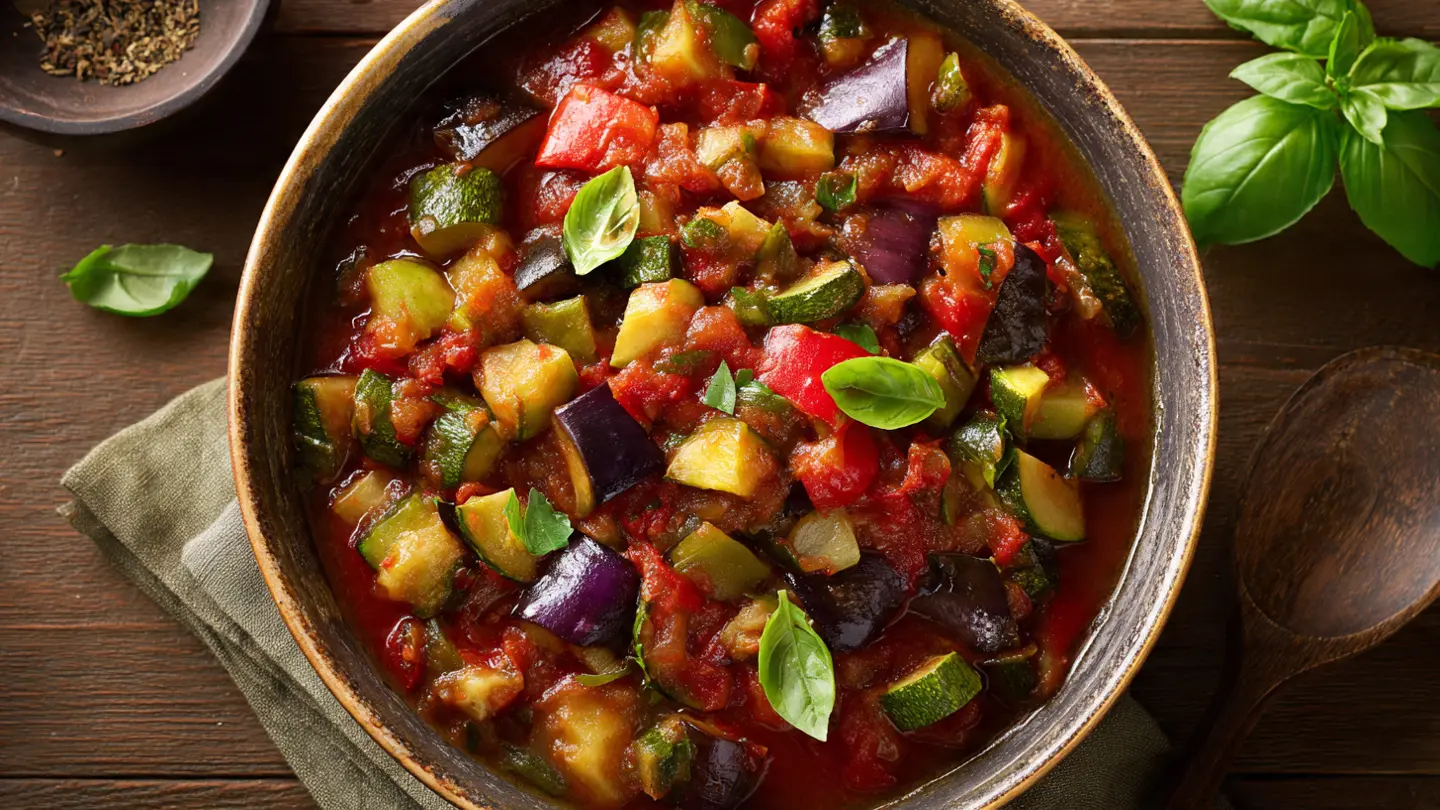
Ratatouille is one of those classic French dishes that makes you feel like a gourmet chef, even when you’re working with simple, everyday vegetables. This easy ratatouille recipe brings the vibrant flavors of Provence right to your kitchen with tender eggplant, zucchini, bell peppers, and tomatoes all simmered together in a fragrant herb-infused sauce.
I first fell in love with this dish during a trip to the south of France, where every small bistro seemed to have its own version on the menu. The beauty of ratatouille lies in its simplicity and the way each vegetable maintains its own character while contributing to the overall harmony of flavors.
This recipe takes about an hour from start to finish, making it perfect for weekend cooking or meal prep. The vegetables are lightly sautéed separately to develop their individual flavors before being combined, a technique that elevates the dish from good to absolutely spectacular.
Why You’ll Love This Easy Ratatouille Recipe
This easy ratatouille recipe delivers restaurant-quality results without requiring advanced cooking skills. The straightforward approach makes it accessible for beginners while still producing the rich, layered flavors that make this dish a French classic.
- Packed with nutrients: This vegetable-forward dish provides vitamins, minerals, and fiber while being naturally low in calories
- Incredibly versatile: Serve it hot as a main course, at room temperature as a side dish, or even cold the next day
- Make-ahead friendly: Ratatouille actually tastes better the next day as the flavors continue to develop and meld together
- Naturally vegan and gluten-free: Perfect for accommodating various dietary preferences without any modifications
- Budget-friendly: Uses affordable, seasonal vegetables that are easy to find year-round
- Freezer-friendly: Double the batch and freeze portions for quick weeknight meals
This pairs beautifully with garlic bread for soaking up all the delicious sauce.
Ingredients
The key to amazing ratatouille is using fresh, quality vegetables. Each ingredient plays a specific role in creating the signature flavor and texture of this classic French dish.
- 1 large eggplant (about 1 lb / 450g), cut into ¾-inch (2cm) cubes
- 2 medium zucchini (about 1 lb / 450g), cut into ¾-inch (2cm) cubes
- 1 yellow squash (about 8 oz / 225g), cut into ¾-inch (2cm) cubes
- 2 bell peppers (1 red, 1 yellow or orange), cut into ¾-inch (2cm) pieces
- 1 large yellow onion, diced
- 4 cloves garlic, minced
- 4 large ripe tomatoes (about 1.5 lbs / 680g), chopped, or 1 can (28 oz / 794g) crushed tomatoes
- ¼ cup (60ml) olive oil, divided
- 1 teaspoon kosher salt, plus more to taste
- ½ teaspoon black pepper
- 2 teaspoons herbes de Provence
- 1 teaspoon dried oregano
- ½ teaspoon dried thyme
- ¼ cup (60ml) fresh basil leaves, torn
- 2 tablespoons fresh parsley, chopped
- 1 bay leaf
Kitchen Equipment Needed
Having the right tools makes preparing ratatouille much easier and more enjoyable. While you don’t need fancy equipment, a few key pieces will help you achieve the best results.
- Large Dutch oven or heavy-bottomed pot with lid
- Large skillet or sauté pan
- Sharp chef’s knife
- Cutting board
- Wooden spoon or spatula
- Colander (for salting eggplant, optional)
- Measuring cups and spoons
- Slotted spoon
- Large serving bowl or platter
Recommended Products for This Recipe
To help you make the most authentic and delicious ratatouille, I’ve selected a few high-quality products that will truly elevate your cooking experience.
1. Le Creuset Enameled Cast Iron Dutch Oven
This Dutch oven distributes heat evenly and maintains consistent temperature throughout the cooking process, ensuring your vegetables cook perfectly without scorching. The heavy lid traps moisture and flavor, creating that signature silky texture ratatouille is known for.
2. Colavita Extra Virgin Olive Oil
Quality olive oil makes a noticeable difference in Mediterranean cooking. This premium Italian olive oil has a fruity, robust flavor that enhances the vegetables without overpowering them.
3. Cento San Marzano Peeled Tomatoes
When fresh tomatoes aren’t at their peak, these authentic Italian San Marzano tomatoes provide sweet, rich flavor with lower acidity. They’re hand-picked at peak ripeness and create a superior tomato base for your ratatouille.
4. Herbes de Provence Blend
This traditional French herb blend combines lavender, thyme, rosemary, and other aromatic herbs that are essential to authentic Provençal cooking. Using a quality blend saves time and ensures perfectly balanced seasoning.
Another favorite French-inspired dish is this classic French toast that works wonderfully for brunch.
Step-by-Step Instructions
Follow these detailed steps to create perfectly tender vegetables with rich, developed flavors. Taking the time to cook each vegetable separately is the secret to authentic ratatouille.
1. Prepare the Eggplant (Optional but Recommended)
- Cut the eggplant into ¾-inch (2cm) cubes, leaving the skin on for added texture and nutrients
- Place the eggplant cubes in a colander set over a bowl
- Sprinkle generously with salt (about 1 tablespoon) and toss to coat evenly
- Let sit for 30 minutes to draw out excess moisture and reduce bitterness
- After 30 minutes, rinse the eggplant under cold water and pat completely dry with paper towels or a clean kitchen towel
- This step prevents the eggplant from absorbing too much oil during cooking and improves its texture
2. Prep the Remaining Vegetables
- Cut the zucchini and yellow squash into ¾-inch (2cm) cubes, keeping the skin on
- Core and seed the bell peppers, then cut into ¾-inch (2cm) pieces
- Dice the onion into ½-inch (1.25cm) pieces for even cooking
- Mince the garlic cloves finely so they distribute evenly throughout the dish
- If using fresh tomatoes, core them, remove excess seeds, and chop into rough ¾-inch (2cm) chunks
- Keep each type of vegetable in separate bowls for organized cooking
3. Sauté the Eggplant
- Heat 2 tablespoons of olive oil in a large skillet or sauté pan over medium-high heat until it shimmers
- Add the dried eggplant cubes in a single layer (work in batches if necessary to avoid overcrowding)
- Season lightly with salt and pepper
- Cook for 4-5 minutes, stirring occasionally, until the eggplant is golden brown on at least two sides
- The eggplant should be tender but still hold its shape
- Transfer the cooked eggplant to a large bowl and set aside
4. Cook the Zucchini and Squash
- Add 1 tablespoon of olive oil to the same skillet
- Add the zucchini and yellow squash cubes
- Season with a pinch of salt and cook for 3-4 minutes, stirring occasionally
- The vegetables should be lightly browned but still slightly firm (they’ll continue cooking later)
- Transfer to the bowl with the eggplant
5. Sauté the Bell Peppers
- Add another tablespoon of olive oil to the skillet
- Add the bell pepper pieces and a pinch of salt
- Cook for 3-4 minutes, stirring occasionally, until the peppers begin to soften and develop some color
- The peppers should still have a slight bite to them
- Transfer to the bowl with the other cooked vegetables
6. Build the Tomato Base
- In the same large Dutch oven or pot, heat the remaining tablespoon of olive oil over medium heat
- Add the diced onion and cook for 5-6 minutes, stirring frequently, until softened and translucent
- Add the minced garlic and cook for 1 minute more, stirring constantly to prevent burning
- The garlic should be fragrant but not browned
- If using fresh tomatoes, add them now along with their juices and cook for 2-3 minutes
- If using canned crushed tomatoes, add them and stir to combine
7. Season the Tomato Sauce
- Add the herbes de Provence, dried oregano, dried thyme, and bay leaf to the tomato mixture
- Season with ½ teaspoon salt and ¼ teaspoon black pepper
- Stir well to distribute the herbs evenly
- Let the sauce simmer for 5-7 minutes, stirring occasionally, until it thickens slightly and the flavors begin to meld
- Taste and adjust seasoning if needed
8. Combine and Simmer
- Gently fold all the sautéed vegetables (eggplant, zucchini, squash, and peppers) into the tomato sauce
- Stir very gently to combine, being careful not to break up the vegetables
- Bring the mixture to a gentle simmer
- Reduce heat to low, cover the pot, and let simmer for 20-25 minutes
- Stir gently every 8-10 minutes to ensure even cooking and prevent sticking
- The vegetables should be very tender but not mushy
9. Finish with Fresh Herbs
- Remove the bay leaf and discard it
- Taste the ratatouille and adjust salt and pepper as needed
- Turn off the heat and gently stir in the torn fresh basil leaves
- Sprinkle the chopped fresh parsley over the top
- Let the ratatouille rest for 5-10 minutes before serving to allow the flavors to settle
- For the best flavor, drizzle with a little extra virgin olive oil just before serving
You might also enjoy this mediterranean fish soup which features similar bright, fresh flavors.
Tips for Success
These tried-and-tested tips will help you achieve the perfect texture and flavor balance every time you make this dish.
- Use uniform cuts: Cutting all vegetables to the same size ensures even cooking and a polished presentation
- Don’t skip salting the eggplant: While optional, this step dramatically improves the texture and prevents it from becoming soggy or greasy
- Cook vegetables separately: This extra step is crucial for maintaining individual vegetable textures and preventing mushiness
- Avoid overcrowding the pan: Cook vegetables in batches if needed to ensure proper browning rather than steaming
- Use quality olive oil: Since olive oil is a primary flavor component, using a good extra virgin variety makes a noticeable difference
- Fresh herbs at the end: Adding fresh basil and parsley after cooking preserves their bright, vibrant flavor
- Let it rest: Ratatouille tastes even better after resting or the next day when flavors have fully developed
Serving Suggestions
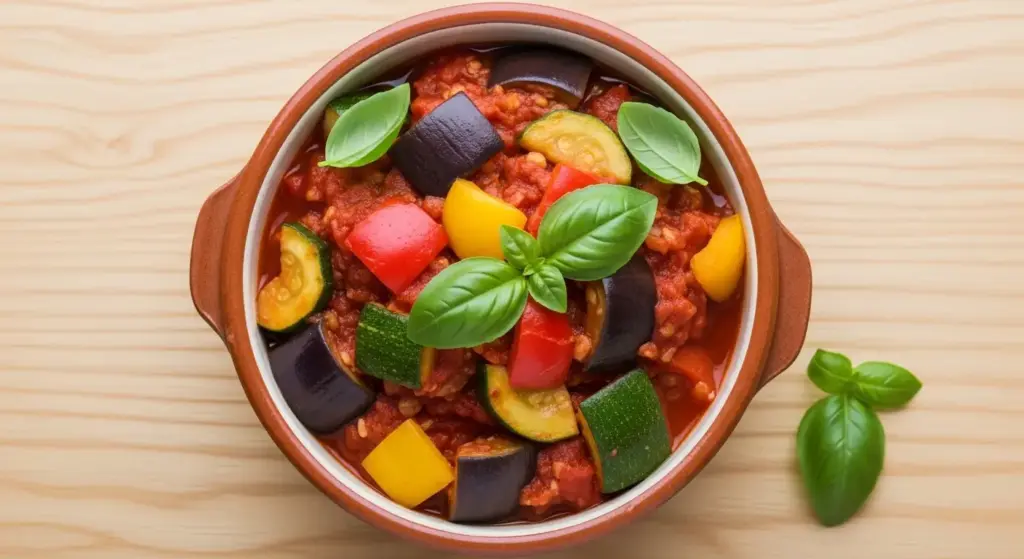
Ratatouille is incredibly versatile and can be served in countless delicious ways depending on the occasion and your preferences.
As a main course: Serve hot over creamy mashed potatoes, couscous, quinoa, or polenta for a satisfying vegetarian meal. Add a sprinkle of Parmesan cheese or crumbled feta for extra richness.
- Serve with crusty French bread for soaking up the flavorful sauce
- Spoon over grilled or baked fish fillets like salmon or cod
- Pair with roasted chicken thighs or grilled lamb chops
- Use as a topping for baked potatoes
- Serve alongside classic bruschetta as part of a Mediterranean spread
- Add to pasta with a drizzle of balsamic vinegar
- Serve at room temperature as part of a summer picnic spread
- Use as a filling for crepes topped with goat cheese
Read Also: Roasted Cauliflower Soup Recipe
Variations to Try
Once you’ve mastered the classic version, experiment with these delicious variations to keep things interesting.
- Ratatouille tian: Slice vegetables into thin rounds instead of cubes, arrange them in an overlapping pattern in a baking dish over tomato sauce, drizzle with olive oil and herbs, then bake at 375°F (190°C) for 45 minutes
- Spicy ratatouille: Add ½ teaspoon red pepper flakes or 1 diced jalapeño with the garlic for a subtle kick
- Protein-packed version: Stir in white beans, chickpeas, or cannellini beans during the last 10 minutes of cooking
- Cheesy ratatouille: Top with mozzarella or Gruyère cheese and broil for 2-3 minutes until melted and bubbly
- Balsamic ratatouille: Add 2 tablespoons balsamic vinegar during the final simmer for added depth and sweetness
- Smoky version: Include 1 teaspoon smoked paprika with the dried herbs for a Spanish twist
- With mushrooms: Add 8 ounces (225g) sliced mushrooms, sautéed separately, for extra umami flavor
Storage and Reheating
Ratatouille stores beautifully and often tastes even better as leftovers when the flavors have had more time to meld.
- Refrigerator: Store in an airtight container in the refrigerator for up to 5 days
- Freezer: Cool completely, then transfer to freezer-safe containers or bags, leaving ½-inch headspace for expansion; freeze for up to 3 months
- Reheating from refrigerator: Warm gently in a covered pot over medium-low heat, stirring occasionally, for 8-10 minutes; you can also microwave individual portions for 2-3 minutes
- Reheating from frozen: Thaw overnight in the refrigerator, then reheat as above; for quicker thawing, place the sealed container in a bowl of cold water for 1-2 hours
- Pro tip: Add a splash of water or vegetable broth when reheating to restore moisture
- Serving cold: Ratatouille is delicious served cold or at room temperature, making it perfect for lunch boxes or summer meals
For a lighter option, try this healthy chicken salad for your meal prep rotation.
Nutritional Facts
Per serving (1 cup / 240ml, serves 6):
- Calories: 135
- Total Fat: 9g
- Saturated Fat: 1g
- Cholesterol: 0mg
- Sodium: 420mg
- Total Carbohydrates: 14g
- Dietary Fiber: 5g
- Sugars: 8g
- Protein: 3g
- Vitamin A: 22% DV
- Vitamin C: 95% DV
- Calcium: 4% DV
- Iron: 8% DV
Health Benefits of Key Ingredients
Each vegetable in this recipe contributes important nutrients and health benefits that make ratatouille as nutritious as it is delicious.
Eggplant is rich in antioxidants, particularly nasunin found in the purple skin, which helps protect cell membranes from damage. It’s also a good source of fiber and contains minimal calories, making it excellent for weight management.
- Zucchini and squash: High in vitamin C and potassium, these vegetables support immune function and heart health while providing hydration due to their high water content
- Bell peppers: Packed with vitamin C (even more than oranges), vitamin A, and antioxidants that support eye health and reduce inflammation
- Tomatoes: Excellent source of lycopene, a powerful antioxidant linked to reduced risk of heart disease and certain cancers; cooking tomatoes actually increases lycopene bioavailability
- Garlic and onions: Contain sulfur compounds that support cardiovascular health, boost immunity, and have natural anti-inflammatory properties
- Olive oil: Rich in monounsaturated fats and polyphenols that support heart health and reduce inflammation
- Fresh herbs: Provide additional antioxidants, vitamins, and minerals while adding flavor without extra calories or sodium
Another favorite: sautéed cabbage offers similar health benefits with different flavors.
Frequently Asked Questions
1. Can I skip salting the eggplant?
Yes, you can skip this step if you’re short on time. Modern eggplant varieties are less bitter than older types, so salting is now more about texture than flavor. However, salting does help the eggplant absorb less oil during cooking and creates a firmer texture.
2. Can I use all one type of vegetable if I don’t have the full variety?
While traditional ratatouille includes eggplant, zucchini, and peppers, you can adjust based on what you have available. The dish will still be delicious, though the flavor profile will be slightly different. Just maintain roughly the same total quantity of vegetables.
3. Why do I need to cook the vegetables separately?
Cooking vegetables separately allows each type to cook at its ideal temperature and time. Eggplant needs higher heat and longer cooking, while zucchini cooks quickly. This technique prevents some vegetables from turning mushy while others remain undercooked.
4. Can I make ratatouille in a slow cooker?
Yes, but the texture will be different. For slow cooker ratatouille, still sauté the onions and garlic first, then add all vegetables and cook on low for 4-6 hours. The vegetables will be softer and more stew-like rather than maintaining distinct pieces.
5. Is ratatouille supposed to be chunky or smooth?
Traditional ratatouille should be chunky with distinct pieces of vegetables that are tender but still hold their shape. If the vegetables break down completely into a smooth sauce, they’ve been overcooked. Some French cooks blend a portion for a mixed texture, but this isn’t traditional.
Read Also: Cream Of Broccoli Soup Recipe
Final Thoughts
This easy ratatouille recipe captures all the rustic charm and vibrant flavors of southern France while being approachable enough for any home cook. The combination of tender vegetables, aromatic herbs, and quality olive oil creates a dish that’s both comforting and sophisticated.
What I love most about ratatouille is its flexibility. Serve it as a hearty vegetarian main, an elegant side dish, or even use it as a sauce for pasta or eggs. The flavors only improve with time, making it an ideal make-ahead option for meal prep or entertaining.
I encourage you to try this recipe and experience the magic of simple, well-prepared vegetables. Once you taste how each element contributes to the whole, you’ll understand why this humble peasant dish has become a cornerstone of French cuisine. Share your ratatouille creations in the comments below, and don’t hesitate to tell me about your favorite ways to serve it!
Recommended:
- Gazpacho Recipe
- Tomato Sauce Recipe
- Vodka Sauce Recipe
- Classic Bruschetta Recipe
- Baked Ziti Recipe
- Easy Pesto Recipe
- Classic Hummus Recipe
- Easy Guacamole Recipe
- Roasted Carrot Soup Recipe
- Spinach Soup Recipe