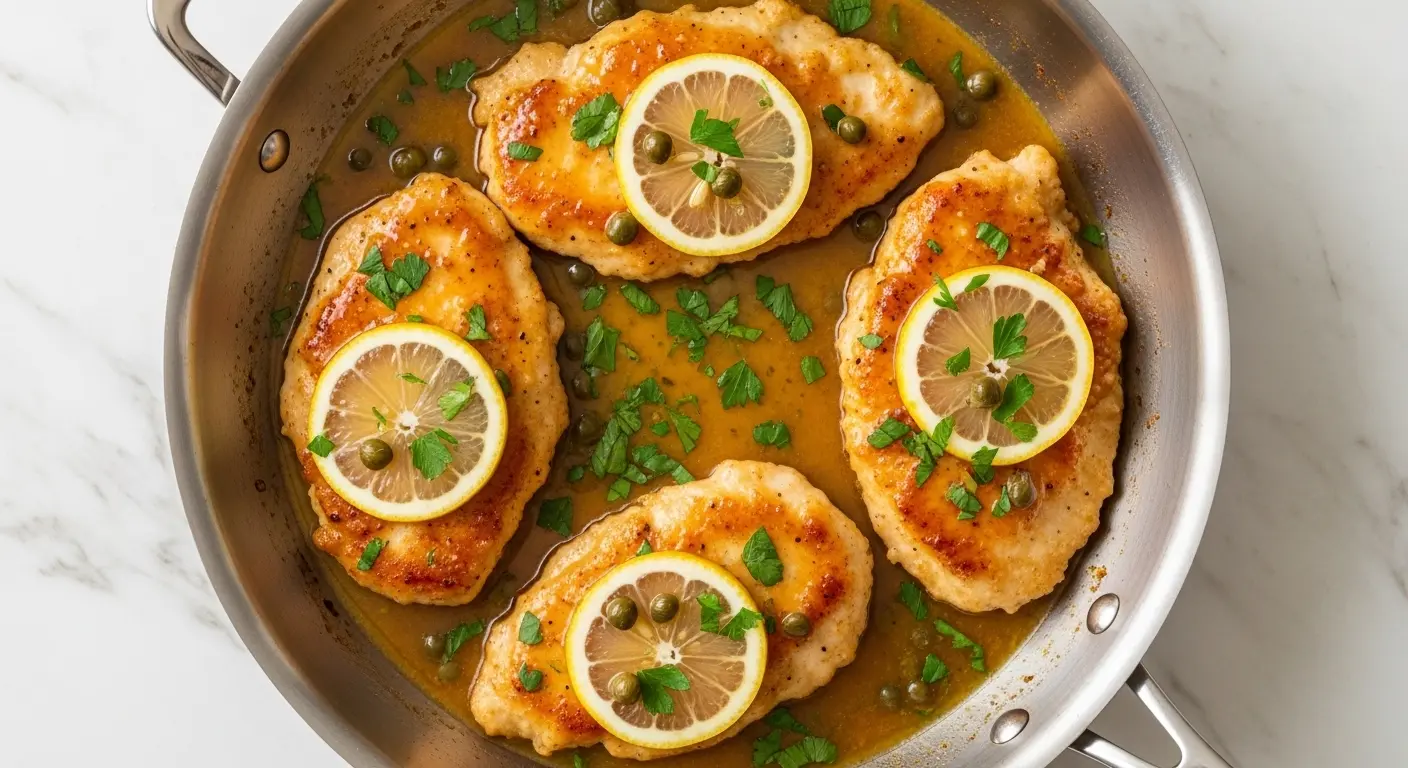
If you’ve ever made a copycat Ina Garten chicken piccata recipe, you already know why this dish has such a devoted following. Ina’s version of this Italian-American classic takes everything that’s already wonderful about chicken piccata, thin, golden-brown cutlets in a bright, buttery lemon-caper sauce, and elevates it with a few smart touches that make it truly unforgettable.
What makes Ina’s version stand out is her insistence on quality. She uses fresh lemon juice (never bottled), good white wine, and plenty of butter to create a sauce that’s simultaneously tangy, rich, and deeply savory.
The technique of pounding the chicken breasts thin isn’t just about tenderness. It also ensures the chicken cooks evenly and quickly, so the exterior gets beautifully golden without drying out the inside.
Best of all, this dish comes together in under 30 minutes, making it equally at home on a Wednesday night or at a weekend dinner party.
You might also enjoy this Copycat CPK Chicken Piccata for another restaurant-inspired take on this classic.
Why You’ll Love This Copycat Ina Garten Chicken Piccata Recipe
This dish is one of those rare recipes that feels fancy but is genuinely easy to pull off.
The sauce is made right in the same pan as the chicken, so you pick up every bit of flavor left behind from searing.
Fresh lemon juice is non-negotiable here. It gives the sauce a brightness that bottled juice simply cannot replicate.
Capers add a briny, salty pop that balances the richness of the butter beautifully.
The whole recipe uses just one pan, which means less cleanup and more time to enjoy your meal.
It’s endlessly versatile. Serve it over pasta, with crusty bread, or alongside roasted vegetables for a complete dinner.
- Ready in under 30 minutes from start to finish
- Uses simple, easy-to-find ingredients
- The lemon-butter-caper sauce is bright, tangy, and deeply satisfying
- Impressive enough for guests, simple enough for weeknights
- Works beautifully with pasta, rice, or crusty bread
Read Also: Classic Chicken Parmesan Recipe
Ingredients
Ina’s chicken piccata is all about high-quality, fresh ingredients. The sauce is so simple that every component matters, so don’t cut corners on the lemon juice or the butter.
- 4 boneless, skinless chicken breasts (about 6 oz / 170g each)
- 1 cup (125g) all-purpose flour, for dredging
- 1 teaspoon kosher salt
- 1/2 teaspoon freshly ground black pepper
- 4 tablespoons (60g) unsalted butter, divided
- 3 tablespoons (45ml) good-quality extra virgin olive oil
- 1/2 cup (120ml) dry white wine (such as Sauvignon Blanc or Pinot Grigio)
- 1/3 cup (80ml) freshly squeezed lemon juice (about 2-3 large lemons)
- 1/2 cup (120ml) low-sodium chicken stock
- 3 tablespoons (27g) brined capers, drained and rinsed
- 1/3 cup (20g) fresh flat-leaf parsley, finely chopped
- Lemon slices, for garnish (optional)
You might also love Copycat Giada Chicken Piccata for a slightly different Italian-inspired take.
Kitchen Equipment Needed
Having the right tools makes all the difference with this recipe. The most important piece of equipment is a heavy-bottomed skillet, since you need even, consistent heat to get that perfect golden crust on the chicken.
- Large heavy-bottomed skillet or stainless steel frying pan (12-inch / 30cm recommended)
- Meat mallet or rolling pin for pounding the chicken
- Plastic wrap or zip-top bags (for pounding)
- Shallow dish or plate (for dredging)
- Sharp chef’s knife
- Cutting board
- Tongs
- Measuring cups and spoons
- Citrus juicer for fresh lemon juice
Read Also: Chicken Marsala Recipe
Recommended Products for This Recipe
These products were selected based on quality and performance to help you get the best possible results from this recipe.
1. All-Clad Stainless Steel Skillet
A quality stainless steel skillet is the single most important tool for chicken piccata. It heats evenly, develops a beautiful fond (those caramelized bits that flavor the sauce), and handles deglazing with wine like a pro. Cheap pans with hot spots will burn the chicken before it cooks through.
2. OXO Good Grips Citrus Juicer
Fresh lemon juice is absolutely essential to this recipe, and a good handheld citrus juicer extracts far more juice than squeezing by hand while filtering out seeds effortlessly. It’s a small tool that makes a big difference in efficiency and yield.
3. Castelvetrano or Nonpareil Capers in Brine
Not all capers are created equal. Smaller nonpareil capers packed in brine have a more delicate flavor and firmer texture than the large kind, which is exactly what you want in this sauce. They pop with flavor without overwhelming the lemon-butter base.
4. OXO Good Grips Meat Mallet
Pounding the chicken to an even thickness is a step you should not skip. A quality dual-sided meat mallet does it quickly and cleanly without tearing the chicken. Even, thin cutlets mean faster cooking and better texture throughout.
For another Italian-inspired chicken dish, check out the Chicken Cacciatore Recipe for a hearty, rustic option.
Step-by-Step Instructions
Step 1: Pound the Chicken to an Even Thickness
- Place one chicken breast in a zip-top bag or between two sheets of plastic wrap on a cutting board.
- Using a meat mallet or a rolling pin, pound the chicken firmly but evenly, starting from the thickest part and working outward.
- Pound until the breast is uniformly about 1/4 inch (0.6cm) thick throughout. This is crucial for even, quick cooking.
- Repeat with the remaining three chicken breasts.
- Pat each pounded breast completely dry with paper towels. Moisture is the enemy of a good sear, so be thorough here.
Step 2: Season and Dredge the Chicken
- In a shallow dish or plate, combine the 1 cup (125g) of all-purpose flour with 1 teaspoon of kosher salt and 1/2 teaspoon of freshly ground black pepper.
- Whisk the flour and seasoning together briefly to distribute evenly.
- Working one at a time, press each chicken breast into the seasoned flour, making sure to coat both sides completely.
- Shake off any excess flour gently by holding the breast and tapping it lightly. You want a thin, even coating, not a thick crust.
- Set the dredged chicken breasts aside on a clean plate while you heat the pan.
Step 3: Heat the Pan and Sear the Chicken
- Place your large heavy-bottomed skillet over medium-high heat.
- Add 2 tablespoons (30g) of the unsalted butter and all 3 tablespoons (45ml) of olive oil to the pan.
- Let the butter melt and foam, then wait for the foam to subside. This tells you the pan is hot enough to sear without steaming.
- Carefully place 2 of the dredged chicken breasts into the hot pan. Do not crowd the pan, as this causes steaming instead of browning.
- Sear without moving the chicken for about 3 to 4 minutes, until the bottom is deeply golden brown.
- Flip carefully with tongs and cook the other side for another 3 minutes, until golden and cooked through. The chicken should reach an internal temperature of 165°F (74°C).
- Transfer the cooked chicken to a plate and tent loosely with foil to keep warm.
- Repeat the process with the remaining 2 chicken breasts, adding a little more olive oil if needed.
Step 4: Deglaze the Pan and Build the Sauce
- Reduce the heat to medium. The pan will have golden-brown bits (called fond) stuck to the bottom. These are packed with flavor.
- Pour in the 1/2 cup (120ml) of dry white wine. It will sizzle and steam immediately.
- Using a wooden spoon or silicone spatula, scrape up all those browned bits from the bottom of the pan. This step is the foundation of your sauce.
- Let the wine simmer and reduce for about 2 minutes, until it has reduced by about half and the raw alcohol smell has cooked off.
- Pour in the 1/3 cup (80ml) of freshly squeezed lemon juice and the 1/2 cup (120ml) of chicken stock.
- Stir everything together and let the sauce simmer over medium heat for another 2 to 3 minutes, until it has reduced slightly and thickened just a touch.
Step 5: Finish the Sauce with Butter and Capers
- Reduce the heat to low.
- Add the drained and rinsed 3 tablespoons (27g) of capers to the sauce and stir to incorporate.
- Add the remaining 2 tablespoons (30g) of cold unsalted butter to the pan. Cold butter emulsifies into the sauce, giving it a silky, glossy texture rather than a greasy one.
- Swirl the pan gently or stir slowly until the butter has fully melted and the sauce looks glossy and cohesive.
- Taste the sauce and adjust the seasoning. If it needs more brightness, add a small squeeze of lemon. If it’s too tart, a tiny pinch of sugar can balance it.
Step 6: Return the Chicken and Finish
- Slide the seared chicken breasts back into the pan with the sauce.
- Spoon the sauce over the chicken generously to coat each piece.
- Let everything heat together over low heat for about 1 to 2 minutes. This allows the chicken to absorb some of the sauce flavors without overcooking.
- Sprinkle the 1/3 cup (20g) of freshly chopped flat-leaf parsley over the top.
- Add lemon slices for garnish if desired.
- Serve immediately directly from the pan, or transfer to a warmed serving platter.
Another elegant Italian-American chicken dish worth trying is the Lemon Chicken Recipe, which shares a similar bright, citrusy profile.
Tips for Success
A few simple techniques will take your chicken piccata from good to genuinely restaurant-quality. Once you know these, you’ll never struggle with this dish again.
- Pound the chicken evenly. Uneven thickness means some parts overcook while others are still raw. Take the extra 5 minutes to get the breasts uniform at about 1/4 inch (0.6cm).
- Dry the chicken thoroughly. Pat each breast dry with paper towels before dredging. Excess moisture prevents the flour coating from adhering properly and inhibits browning.
- Don’t skip the fond. Those browned bits in the bottom of the pan after searing the chicken are loaded with flavor. Deglaze with wine and scrape them up completely. They’re the secret to a deeply savory sauce.
- Use cold butter to finish the sauce. Adding cold butter at the end (a technique called “mounting with butter”) creates a silky, emulsified sauce rather than a greasy, broken one. Cut your butter into small cubes and add off the heat or on very low heat.
- Use fresh lemon juice only. Bottled lemon juice is too sharp and metallic-tasting for a sauce this simple and prominent. Fresh lemon juice has a rounder, brighter flavor.
- Don’t crowd the pan. Sear the chicken in two batches to maintain high heat. Crowding drops the temperature and steams the chicken instead of searing it, which means you’ll miss out on that golden crust.
- Rinse your capers. Rinsing brined capers removes excess saltiness while keeping their distinctive briny pop.
For a similarly elegant skillet dinner, the Chicken Skillet Recipe is a great weeknight option.
Serving Suggestions
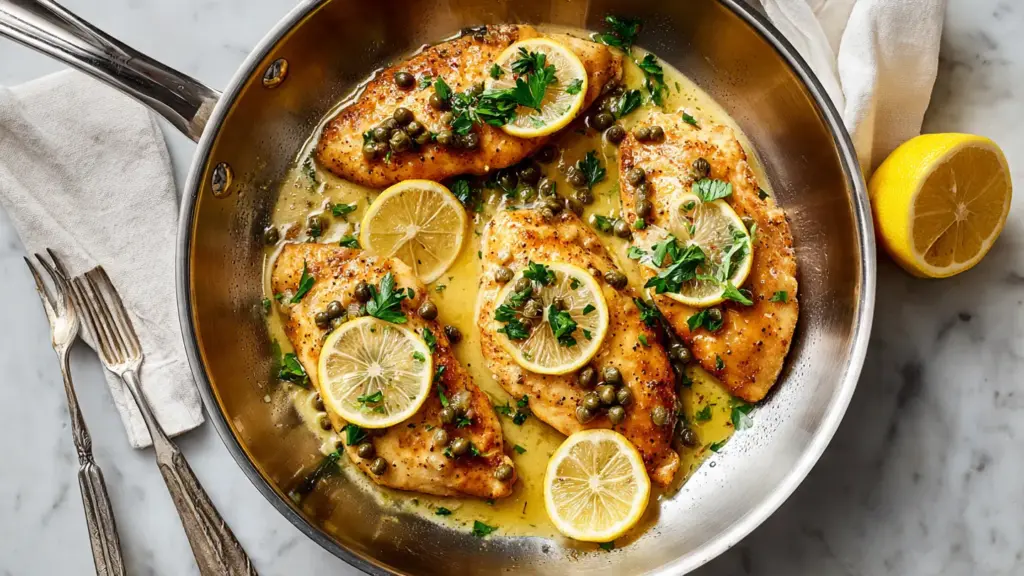
Chicken piccata is incredibly versatile and pairs beautifully with sides that can soak up that glorious lemon-butter-caper sauce.
The sauce is the star here, so choose accompaniments that will complement rather than compete with it. Starchy, neutral sides are ideal because they absorb the sauce and carry those bright, buttery flavors in every bite.
- Pasta: Linguine, angel hair, or spaghetti tossed in a little olive oil are the classic pairings. The thin noodles coat beautifully with the sauce.
- Creamy Mashed Potatoes: A generous spoonful of sauce over Creamy Mashed Potatoes is nothing short of spectacular.
- Crusty Bread: A simple baguette or sourdough for mopping up every drop of sauce at the table.
- Steamed or Roasted Asparagus: The slight bitterness of asparagus contrasts beautifully with the bright, rich sauce.
- Roasted Broccoli: Golden, caramelized broccoli is a crowd-pleasing side that pairs well with the lemony flavors.
- Simple green salad: A light, lightly dressed salad balances the richness of the dish.
- White rice or risotto: Both provide a neutral, starchy base that soaks up the sauce wonderfully.
Variations to Try
Once you’ve mastered the classic, there are plenty of ways to put your own spin on this dish. Each of these variations keeps the spirit of the recipe intact while adding a slightly different dimension.
- Creamy Piccata: Stir in 2 to 3 tablespoons of heavy cream after adding the chicken stock. This creates a luscious, velvety sauce that’s a little less sharp and more indulgent. For the full version, check out this Creamy Chicken Piccata Recipe.
- Gluten-Free Piccata: Substitute the all-purpose flour with a 1-to-1 gluten-free flour blend for dredging. The texture is nearly identical. See the full Gluten Free Chicken Piccata Recipe for detailed tips.
- Piccata with Pasta: Toss your favorite pasta in a bit of the sauce before plating for a truly restaurant-style presentation. The Chicken Piccata Recipe with Pasta walks you through it.
- White Wine Forward Version: Use a full 3/4 cup of white wine and reduce the chicken stock. The flavor becomes slightly more complex and winery, which is lovely with a crisp Sauvignon Blanc.
- Piccata with Artichokes: Add a handful of quartered marinated artichoke hearts to the sauce along with the capers. They add a lovely earthy, slightly tangy note.
- Veal Piccata: Substitute the chicken with thin-pounded veal cutlets for a more traditional Italian preparation. The cooking time and technique are identical.
Another favorite: Copycat Geoffrey Zakarian Chicken Piccata Recipe
Storage and Reheating
Chicken piccata is best enjoyed fresh from the pan, but it stores and reheats beautifully with a little care.
The key to reheating is low and slow. High heat will turn the chicken rubbery and cause the butter sauce to break and separate.
- Refrigerator: Store leftover chicken and sauce together in an airtight container. It will keep for up to 3 days.
- Freezer: This dish can be frozen for up to 2 months. Store the chicken and sauce in a freezer-safe container. The sauce may need to be re-emulsified after thawing, but a quick stir over low heat usually fixes it.
- Reheating on the stovetop (best method): Place the chicken and sauce in a skillet over low heat. Add a splash of chicken stock or water to loosen the sauce if needed. Warm gently for 5 to 8 minutes, turning the chicken once, until heated through. Stir the sauce as it warms.
- Reheating in the microwave: Place the chicken and sauce in a microwave-safe dish, cover loosely with a damp paper towel, and heat in 30-second intervals at 50% power until warmed through. This prevents the chicken from drying out.
- Do not boil when reheating. High heat will break the butter sauce. Keep it gentle.
For another dish that stores and reheats well, the Chicken Stew Recipe is a perfect make-ahead option.
Nutritional Facts
The following nutritional values are estimated per serving (1 chicken breast with sauce) based on 4 servings.
| Nutrient | Amount Per Serving |
|---|---|
| Calories | ~430 kcal |
| Total Fat | 24g |
| Saturated Fat | 9g |
| Cholesterol | 120mg |
| Sodium | 680mg |
| Total Carbohydrates | 18g |
| Dietary Fiber | 1g |
| Total Sugars | 1g |
| Protein | 36g |
| Vitamin C | 18mg |
| Calcium | 28mg |
| Iron | 2mg |
Please note: Nutritional values are estimates and can vary based on specific brands and ingredient measurements used.
You might also enjoy: Healthy Chicken Piccata Recipe
Health Benefits of Key Ingredients
This dish is not just delicious. Several of its core ingredients contribute meaningful nutritional benefits to your plate.
When you cook with whole, fresh ingredients like lemon juice, olive oil, and parsley, you’re adding nutritional value without relying on processed shortcuts.
- Chicken breast is one of the leanest sources of high-quality protein available, supporting muscle maintenance and keeping you full longer.
- Fresh lemon juice is rich in vitamin C, an antioxidant that supports immune function and iron absorption.
- Olive oil is a cornerstone of the Mediterranean diet. It’s rich in monounsaturated fats and polyphenols that support heart health.
- Capers are low in calories and surprisingly rich in antioxidants, particularly quercetin and rutin, which have anti-inflammatory properties.
- Flat-leaf parsley is more than a garnish. It’s packed with vitamins K, C, and A, and contains flavonoids that act as antioxidants in the body.
- White wine in small cooking quantities contributes flavor with minimal residual alcohol after cooking. The alcohol cooks off during the reduction process.
- Garlic (if added): Some versions of this dish include a clove or two of minced garlic in the sauce. Garlic has well-documented antimicrobial and cardiovascular benefits.
For another protein-packed, lemony chicken dish, the Lemon Chicken Orzo Soup Recipe is wonderfully nourishing.
Frequently Asked Questions
1. What cut of chicken does Ina Garten use for chicken piccata?
Ina Garten uses boneless, skinless chicken breasts that are pounded thin to about 1/4 inch (0.6cm) thickness. Pounding the breasts creates “cutlets” that cook quickly and evenly, giving you that beautiful golden sear without drying out the interior. Some cooks prefer to purchase pre-sliced chicken cutlets from the store, which works equally well and saves a step.
2. Can I substitute the white wine in this recipe?
Yes, absolutely. If you prefer not to cook with wine, you can substitute it with an equal amount of additional chicken stock plus an extra splash of lemon juice to replicate the acidity the wine contributes. The flavor will be slightly different but still very good. Dry vermouth is another excellent substitute that adds a slightly herbal, complex note.
3. Why does my piccata sauce taste too tart?
A sauce that’s too tart usually means the lemon juice is too dominant relative to the other components. First, make sure you’re using freshly squeezed lemon juice and not bottled. If the sauce still tastes too sharp, whisk in an extra tablespoon of cold butter to mellow the acidity. A small pinch of sugar can also balance the tartness without making the sauce noticeably sweet.
4. Can I make chicken piccata ahead of time?
You can prepare the sauce up to a day in advance and store it in the refrigerator. Reheat it gently in a skillet over low heat, whisking in a bit of chicken stock if it has thickened too much. However, the chicken is best cooked fresh just before serving, as previously cooked chicken tends to dry out on reheating. If you need to prepare everything ahead, cook the chicken, refrigerate it, and reheat it gently in the warm sauce.
5. What’s the difference between Ina Garten’s chicken piccata and the CPK version?
Ina’s version is a classic home-cook interpretation that focuses on simplicity and quality: thin pounded chicken, fresh lemon juice, capers, white wine, and a generous finish of butter. The CPK (California Pizza Kitchen) version often features a slightly creamier, restaurant-style sauce and is typically served over pasta as a full entree. Both are delicious, and you can explore the differences in the Copycat CPK Chicken Piccata version as well.
Final Thoughts
This copycat Ina Garten chicken piccata recipe really is one of those recipes that belongs in your permanent rotation. It’s quick, it’s bright, it’s deeply satisfying, and it manages to feel special every single time you make it.
Whether you’re cooking for yourself on a Tuesday night or impressing guests at a dinner party, this dish delivers. The combination of golden chicken, that tangy, buttery, caper-studded sauce, and a shower of fresh parsley is pure, effortless elegance.
Give this recipe a try, and we think you’ll understand exactly why Ina’s chicken piccata has won over so many home cooks. Drop a comment below to let us know how it turned out, or share a photo if you’re feeling proud of your results!
Recommended:
- Authentic Italian Chicken Piccata Recipe
- White Wine Chicken Piccata Recipe
- The Best Easy Chicken Piccata Recipe
- Copycat Cheesecake Factory Chicken Piccata Recipe
- Chicken Marsala Recipe
- Classic Shrimp Scampi Recipe
- Easy Shrimp Scampi Recipe
- Baked Chicken with Alfredo Sauce Recipe
- Chicken Fajita Recipe
- Chicken and Dumplings Recipe