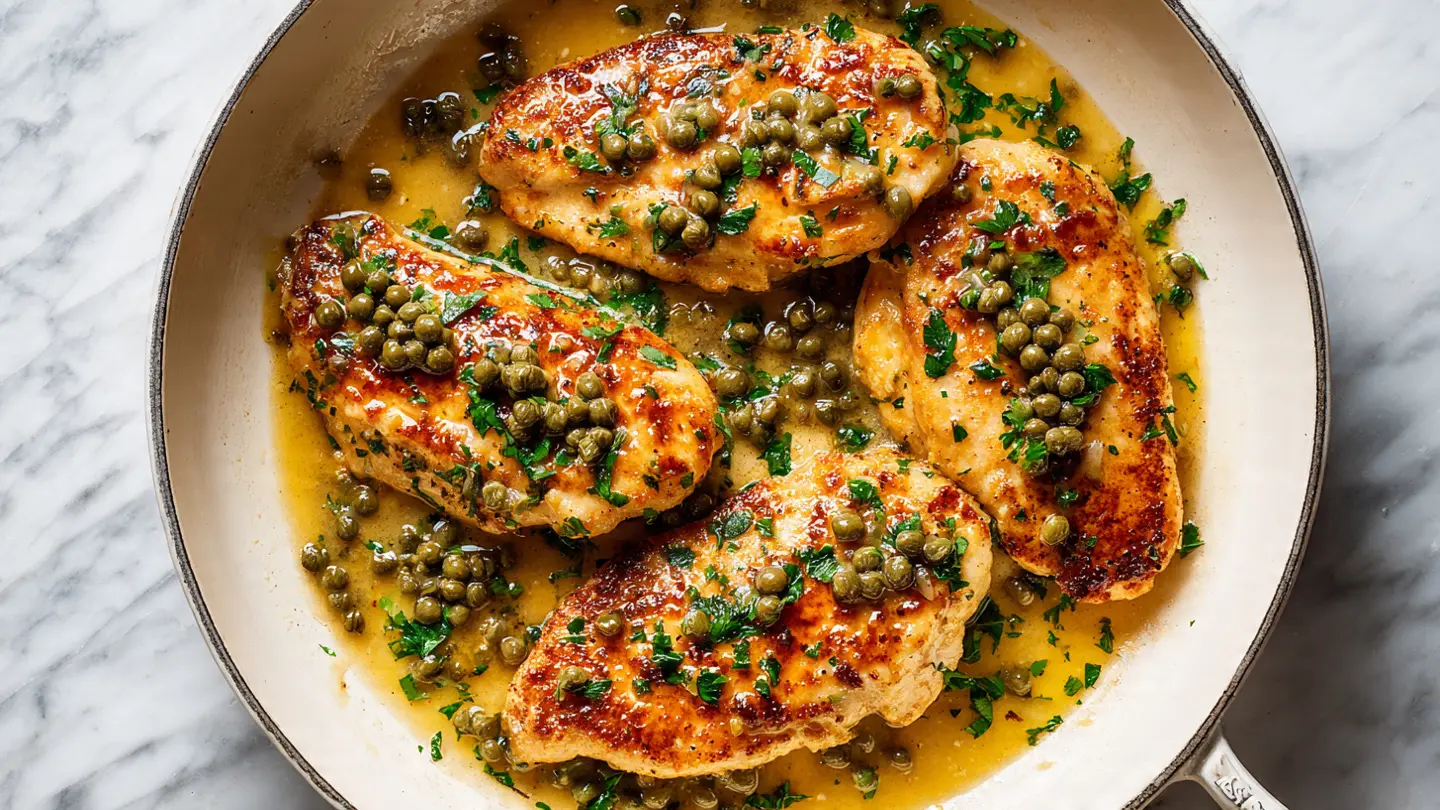
If you’ve ever watched Giada De Laurentiis make chicken piccata on TV and thought, “I need that in my life right now,” you are not alone. This copycat Giada chicken piccata recipe captures everything that makes her version so iconic: golden, pan-fried chicken cutlets bathed in a silky, butter-enriched lemon-caper sauce with just enough brightness to make your taste buds sing.
Giada’s take on this classic Italian-American dish leans into simplicity. She uses thin, dredged chicken cutlets, a good dry white wine, fresh lemon juice, briny capers, and a finishing swirl of cold butter to make the sauce glossy and rich.
What really sets her version apart from a basic chicken piccata is her attention to balance. The sauce is tangy without being sour, buttery without being heavy, and deeply savory thanks to a splash of chicken broth and the capers doing all the heavy lifting.
This recipe is weeknight-friendly but tastes like something you’d order at a nice Italian restaurant. It comes together in about 30 minutes and uses ingredients you probably already have on hand.
You might also enjoy this Copycat CPK Chicken Piccata Recipe if you love comparing different restaurant-style takes on this dish.
Why You’ll Love This Copycat Giada Chicken Piccata Recipe
Giada’s chicken piccata is one of those recipes that proves you don’t need a long ingredient list to make something genuinely impressive.
The whole dish is built on contrast: crispy, golden chicken against a silky, tangy sauce. Every bite delivers something satisfying.
It’s a one-pan recipe, which means minimal cleanup after dinner. That alone is reason enough to add it to your weekly rotation.
The lemon-caper sauce is incredibly versatile. It works just as well over pasta as it does spooned directly over the chicken.
Here’s what makes this recipe a keeper:
- Quick and easy: Ready in about 30 minutes from start to finish
- Restaurant-quality results: The butter-mounted sauce is the secret to that glossy, elegant finish
- Family-friendly: Even people who are skeptical of capers tend to love the sauce
- Pantry-friendly ingredients: Chicken, lemon, capers, white wine, and butter are all you need
- Great for meal prep: Leftovers reheat well and work beautifully over pasta the next day
Read Also: The Best Easy Chicken Piccata Recipe
Ingredients
To make the most authentic copycat version of Giada’s chicken piccata, you want to use quality ingredients. The lemon and capers are the stars of the sauce, so fresh is always better.
Here’s everything you’ll need:
- 2 large boneless, skinless chicken breasts (about 1.5 lbs / 680g), halved horizontally to make 4 thin cutlets
- Salt and freshly ground black pepper, to taste
- 1/2 cup (65g) all-purpose flour, for dredging
- 4 tablespoons (60ml) extra-virgin olive oil, divided
- 3 tablespoons (42g) unsalted butter, divided (2 tablespoons for cooking, 1 tablespoon for finishing the sauce)
- 3/4 cup (180ml) dry white wine (such as Pinot Grigio or Sauvignon Blanc)
- 1/2 cup (120ml) low-sodium chicken broth
- 1/3 cup (80ml) fresh lemon juice (from about 2 large lemons)
- 1/4 cup (60g) brined capers, drained
- 1/4 cup (15g) fresh flat-leaf parsley, finely chopped
- Lemon slices, for serving (optional)
Read Also: Authentic Italian Chicken Piccata Recipe
Kitchen Equipment Needed
You don’t need any special equipment to pull this off. A good skillet and basic kitchen tools are all it takes to get great results.
Here’s what to have ready:
- Large stainless steel or cast iron skillet (12-inch / 30cm recommended)
- Meat mallet or rolling pin (for pounding the cutlets evenly)
- Shallow dish or plate (for dredging in flour)
- Tongs or a thin spatula
- Cutting board and sharp knife
- Measuring cups and spoons
- Citrus juicer or reamer
- Zester or microplane (optional, for lemon zest garnish)
- Small ladle or wooden spoon for basting
You might also enjoy this Chicken Marsala Recipe which uses a very similar pan-sauce technique.
Recommended Products for This Recipe
These are products chosen for quality and performance that will genuinely help you make this dish shine.
1. All-Clad Stainless Steel Skillet
A high-quality stainless steel skillet is essential for getting the golden sear on your chicken and building those flavorful brown bits (fond) on the bottom of the pan, which form the base of Giada’s signature sauce. Stainless steel heats evenly and allows you to deglaze properly with white wine, which a non-stick pan cannot replicate. It’s the single most important tool for making this dish correctly.
2. Non-Pareil Capers in Brine
Non-pareil capers are the smallest and most tender variety, and they’re the type used in traditional chicken piccata. Their intense brininess and tiny size mean they distribute evenly throughout the sauce. Using a high-quality jarred caper makes a noticeable difference in the final flavor.
3. OXO Good Grips Citrus Juicer
Fresh lemon juice is non-negotiable in chicken piccata, and a good handheld citrus juicer makes the job effortless while catching all the seeds. Bottled lemon juice has a cooked, flat flavor that will noticeably dull your sauce. This juicer extracts maximum juice with minimal effort.
4. Pinot Grigio Dry White Wine for Cooking
Giada consistently reaches for Pinot Grigio when cooking Italian dishes. A light, dry white wine adds acidity and depth to the pan sauce without overpowering the lemon. Use a wine you’d actually drink for the best flavor.
This technique is very similar to what’s used in this Classic Shrimp Scampi Recipe if you want another elegant Italian-inspired dish using the same pan-sauce method.
Step-by-Step Instructions
Step 1: Prepare the Chicken Cutlets
- Place each chicken breast on a cutting board and hold it flat with your non-dominant hand.
- Using a sharp knife, slice horizontally through the thickest part of the breast to create two thin cutlets, each roughly 1/2 inch (1.25cm) thick.
- If any cutlet is thicker than 1/2 inch, place it between two sheets of plastic wrap or parchment paper and pound it gently with a meat mallet to an even thickness.
- Pat all four cutlets dry with paper towels. Drying the surface is critical because moisture is the enemy of a good sear.
- Season both sides of each cutlet generously with salt and freshly ground black pepper.
Step 2: Dredge the Chicken in Flour
- Pour the flour into a shallow dish or plate and spread it out evenly.
- Working one cutlet at a time, press each piece into the flour on both sides, coating it completely.
- Shake off any excess flour so only a thin, even coating remains. Too much flour will make the crust gummy rather than crispy.
- Set the dredged cutlets aside on a clean plate while you heat the pan.
Step 3: Sear the Chicken
- Heat a large skillet over medium-high heat until it is fully hot, about 2 minutes.
- Add 2 tablespoons of olive oil and 1 tablespoon of butter to the pan. The butter will begin to foam and sizzle.
- Once the foam from the butter begins to subside, carefully add 2 cutlets to the pan. Do not overcrowd the pan or the chicken will steam instead of sear.
- Cook undisturbed for 3 to 4 minutes until the bottom is deep golden brown. Resist the urge to move the chicken before it releases naturally from the pan.
- Flip the cutlets and cook the other side for 2 to 3 minutes until the chicken is cooked through (internal temperature of 165°F / 74°C).
- Transfer the cooked cutlets to a clean plate and cover loosely with foil to keep warm.
- Add the remaining 2 tablespoons of olive oil to the pan and repeat the process with the remaining 2 cutlets.
- Transfer the second batch to the plate with the first and set aside.
Step 4: Build the Piccata Sauce
- Reduce the heat to medium. The pan will have golden-brown bits (fond) stuck to the bottom. That is pure flavor.
- Pour the white wine into the hot skillet. It will sizzle and steam dramatically. Use a wooden spoon or spatula to scrape up all the browned bits from the bottom of the pan.
- Let the wine simmer and reduce for about 2 minutes, stirring occasionally.
- Add the chicken broth to the pan and stir to combine with the wine.
- Pour in the fresh lemon juice and stir again.
- Add the drained capers to the sauce and stir to distribute evenly.
- Allow the sauce to simmer and reduce for 3 to 4 minutes until it has slightly thickened and the raw alcohol taste has cooked off.
Step 5: Finish the Sauce with Butter
- Reduce the heat to low.
- Add the remaining 1 tablespoon of cold butter to the sauce. Swirl the pan gently or stir slowly with a spoon to incorporate the butter.
- The butter will emulsify into the sauce, making it silky, glossy, and slightly thickened. This is called “mounting with butter” and is the key to that restaurant-quality finish.
- Taste the sauce and adjust seasoning with salt and pepper as needed. If the sauce tastes too sharp, a pinch of sugar can balance it.
Step 6: Return the Chicken to the Pan and Serve
- Slide the seared chicken cutlets back into the skillet, overlapping slightly if necessary.
- Spoon the sauce over the chicken and let everything warm through together for about 1 minute.
- Sprinkle the freshly chopped parsley over the top.
- Serve immediately with lemon slices alongside for anyone who wants an extra squeeze of brightness.
Read Also: Copycat Ina Garten Chicken Piccata Recipe
Tips for Success
A few simple techniques make the difference between a good chicken piccata and a truly great one. These tips come from understanding how every element of the dish works.
Keep these pointers in mind:
- Dry your chicken thoroughly: Any moisture on the surface of the chicken will cause it to steam instead of sear. Pat each cutlet dry before dredging.
- Don’t skip the flour: The light coating of flour creates a golden crust that holds up to the sauce, and the starch also helps thicken the pan sauce slightly.
- Use a hot pan: If the pan isn’t properly preheated, the butter-oil mixture will be absorbed into the chicken instead of creating a sear. Medium-high heat is the sweet spot.
- Never crowd the pan: Cook in batches. Overcrowding drops the pan temperature and leads to steamed, pale chicken rather than golden, seared cutlets.
- Use cold butter to finish: Room-temperature or melted butter won’t emulsify into the sauce the same way. Cold butter added at the end creates that glossy, restaurant-quality texture.
- Taste before serving: Lemon juice varies in acidity. Always taste your sauce before plating and adjust with salt, pepper, or a tiny pinch of sugar to balance the flavors.
You might also love this Creamy Chicken Piccata Recipe if you want an even richer sauce with a cream-based twist.
Serving Suggestions
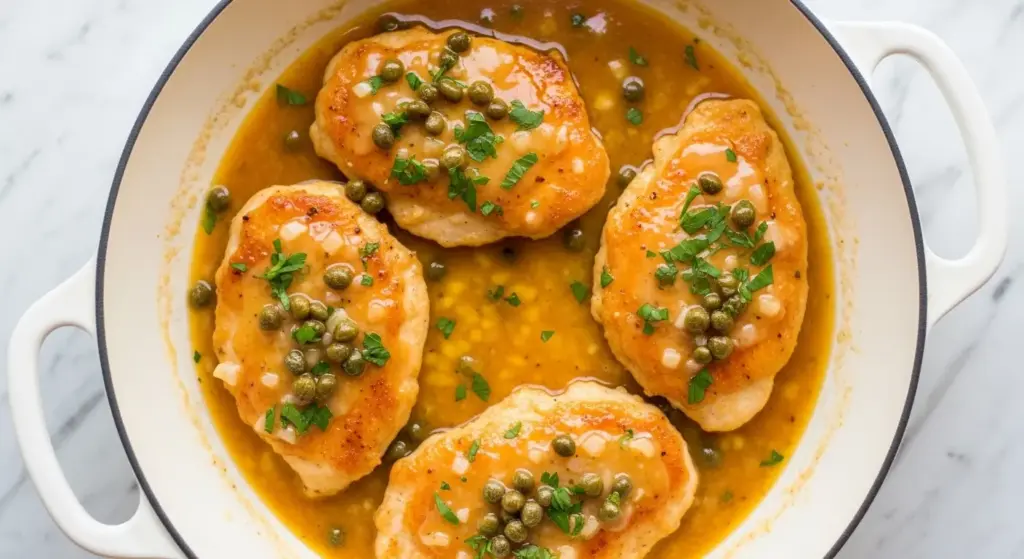
Chicken piccata is a wonderfully flexible main dish. The bright, buttery lemon-caper sauce pairs beautifully with so many sides, making it easy to customize depending on what you’re in the mood for.
Giada herself often serves her chicken piccata over a bed of angel hair pasta with some of the sauce spooned on top, which is the most popular way to enjoy it at Italian restaurants. The delicate pasta soaks up every drop of that silky sauce without competing with the chicken.
Here are some fantastic serving ideas:
- Pasta: Angel hair, linguine, or spaghetti are all classic pairings. Toss the pasta directly in the sauce before plating for maximum flavor.
- Crusty Bread: Serve with Cheesy Garlic Bread to mop up every last drop of the sauce.
- Roasted Vegetables: Roasted Broccoli or asparagus adds a nice savory contrast to the bright lemony sauce.
- Mashed Potatoes: Creamy Mashed Potatoes make a rich, comforting base that balances the tangy sauce beautifully.
- Rice or Orzo: Simple steamed rice or buttered orzo soaks up the sauce without overpowering the dish.
- Simple Salad: A light arugula or mixed greens salad dressed with lemon vinaigrette complements the meal without competing with the main flavors.
Variations to Try
Once you’ve mastered the base recipe, this dish lends itself beautifully to customization. Here are some fun directions to take it.
Try one of these variations the next time you make it:
- Creamy Piccata: Stir in 1/4 cup (60ml) of heavy cream after reducing the wine and broth. This makes the sauce richer and slightly milder in acidity.
- Piccata with Artichokes: Add 1/2 cup of drained, quartered canned artichoke hearts to the sauce along with the capers for an extra layer of savory, earthy flavor.
- Gluten-Free Version: Swap the all-purpose flour for a 1:1 gluten-free flour blend or rice flour. The texture is slightly different but still produces a good golden crust. See this Gluten Free Chicken Piccata Recipe for a fully tested version.
- Shrimp Piccata: Replace the chicken with large, peeled, and deveined shrimp. Cook the shrimp for just 1 to 2 minutes per side before setting aside and building the sauce the same way.
- Veal Piccata: Use thin veal cutlets in place of chicken for a more traditional Italian preparation. The cooking time will be slightly shorter given how thin veal scallops tend to be.
- Piccata with Pasta: Boil 8 oz of angel hair pasta while the chicken cooks and toss it directly in the finished sauce for a complete one-pan meal.
Storage and Reheating
Leftover chicken piccata stores well and reheats beautifully with just a little care to keep the sauce from breaking or the chicken from drying out.
Follow these guidelines to keep your leftovers tasting great:
- Refrigerator: Store leftover chicken and sauce together in an airtight container for up to 3 days.
- Freezer: The chicken can be frozen for up to 2 months, though the sauce may separate slightly upon thawing. Freeze in a freezer-safe container with as little air as possible.
- Reheating on the stovetop (recommended): Add the chicken and sauce to a skillet over low heat. Add a splash of chicken broth or water to loosen the sauce and gently warm through, about 5 minutes. Stir the sauce occasionally to re-emulsify it.
- Reheating in the microwave: Place the chicken and sauce in a microwave-safe dish, cover loosely with a damp paper towel, and heat in 30-second intervals at 70% power until warmed through.
- Do not boil: Reheating the sauce at a full boil will cause the butter emulsion to break and the sauce will turn greasy rather than silky.
Read Also: White Wine Chicken Piccata Recipe
Nutritional Facts
The following nutritional information is an estimate per serving, based on 4 servings from this recipe. Values may vary depending on exact ingredient brands and portion sizes.
| Nutrient | Amount Per Serving |
|---|---|
| Calories | approximately 390 kcal |
| Protein | 38g |
| Total Fat | 19g |
| Saturated Fat | 6g |
| Carbohydrates | 12g |
| Fiber | 0.5g |
| Sugar | 1g |
| Sodium | 520mg |
| Cholesterol | 110mg |
| Vitamin C | 18% DV |
These numbers do not include pasta or any side dishes. Adding a serving of angel hair pasta adds approximately 200 calories and 40g of carbohydrates.
This dish is naturally high in protein and relatively moderate in calories, making it a satisfying choice for a balanced dinner.
Another great high-protein chicken dinner to try is this Chicken Cacciatore Recipe which uses a similar Italian braising technique.
Health Benefits of Key Ingredients
Chicken piccata is more than just delicious. The core ingredients bring some real nutritional value to the table.
Here’s a closer look at what each key ingredient contributes:
- Chicken breast: One of the leanest, highest-protein animal proteins available. A single serving provides roughly 35 to 40 grams of complete protein, supporting muscle maintenance, satiety, and metabolic function.
- Fresh lemon juice: Rich in vitamin C and antioxidants. Lemon juice has also been studied for its potential to support digestion and improve iron absorption from plant-based foods eaten alongside the meal.
- Capers: Surprisingly high in antioxidants for such a small ingredient. Capers contain quercetin and kaempferol, two flavonoids associated with anti-inflammatory properties. They also add a punch of flavor with very few calories.
- Olive oil: A cornerstone of the Mediterranean diet, extra-virgin olive oil is rich in monounsaturated fats and polyphenols. Regular consumption has been linked to heart health and reduced inflammation.
- Garlic (if added): While not in Giada’s base recipe, garlic is a common addition and brings allicin, a compound with well-documented immune and cardiovascular benefits.
- Parsley: More than just a garnish, fresh parsley is a good source of vitamin K, vitamin C, and folate.
This Lemon Chicken Recipe is another bright and healthy chicken dinner that shares many of the same beneficial ingredients.
Frequently Asked Questions
1. Can I make copycat Giada chicken piccata without wine?
Yes, you can substitute the white wine with additional chicken broth at a 1:1 ratio. To replicate some of the acidity that wine adds to the sauce, add an extra teaspoon of fresh lemon juice or a small splash of white wine vinegar. The sauce will be slightly less complex but still delicious.
2. What kind of wine does Giada use in her chicken piccata?
Giada consistently uses a light, dry Italian white wine in her piccata recipe. Pinot Grigio is the most common choice. You can also use Sauvignon Blanc or any dry, unoaked white wine. Avoid sweet wines or heavily oaked wines like Chardonnay, as they will change the flavor profile significantly.
3. Why is my piccata sauce breaking or turning greasy?
A broken sauce usually happens for one of two reasons: the heat was too high when you added the butter, or the butter was added too quickly. Always reduce the heat to low before swirling in your finishing butter, and add it gradually. If your sauce does break, remove the pan from the heat and whisk in a small splash of cold water or broth to help re-emulsify it.
4. Can I make this recipe ahead of time?
You can prepare the components separately in advance. The chicken can be seared a few hours ahead and refrigerated. The sauce can also be made and refrigerated separately. When ready to serve, gently reheat the sauce over low heat, return the chicken to the pan, and warm through together for a few minutes. The dish is best served fresh, but advance prep makes weeknight cooking much more manageable.
5. What is the difference between chicken piccata and chicken francese?
Both dishes are Italian-American classics featuring thin chicken cutlets in a lemon-butter sauce. The key difference is in the coating: chicken piccata uses a flour dredge only, while chicken francese dips the floured chicken in egg before cooking. Chicken francese has a slightly thicker, egg-based crust and a creamier sauce, while piccata is lighter and tangier with the defining addition of capers.
Read Also: Copycat Geoffrey Zakarian Chicken Piccata Recipe
Final Thoughts
This copycat Giada chicken piccata recipe is one of those dishes that earns its place in your permanent dinner rotation.
It’s simple enough for a Tuesday night but elegant enough to serve at a dinner party. The silky lemon-caper sauce, golden chicken, and bright hit of parsley make it a dish that genuinely impresses without demanding hours of your time.
If you try this recipe, I’d love to hear how it turns out! Drop a comment below with your thoughts, share any variations you tried, or tag a photo on social media. Happy cooking!
Recommended:
- Chicken Piccata Recipe with Pasta
- Copycat Cheesecake Factory Chicken Piccata Recipe
- Healthy Chicken Piccata Recipe
- Classic Chicken Parmesan Recipe
- Chicken Marsala Recipe
- Lemon Chicken Orzo Soup Recipe
- Classic Shrimp Scampi Recipe
- Chicken Skillet Recipe
- Baked Salmon Recipe
- Homemade Alfredo Sauce Recipe