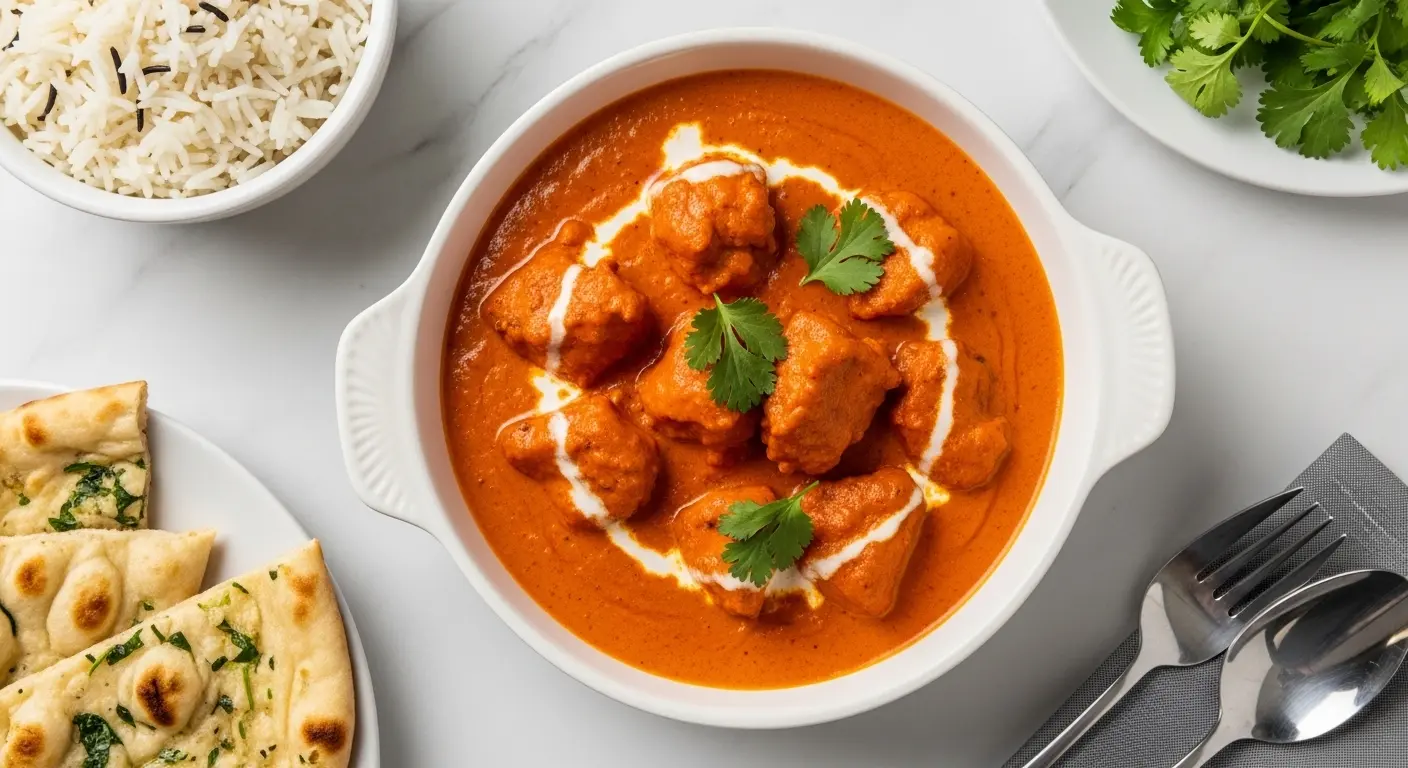
If you’ve ever craved the rich, creamy flavors of your favorite Indian restaurant at home, this authentic butter chicken recipe is exactly what you need. This classic North Indian dish combines tender, marinated chicken with a silky tomato-based sauce that’s infused with aromatic spices and finished with butter and cream.
The magic of butter chicken lies in its perfect balance of savory, slightly sweet, and subtly spiced flavors. Unlike some Indian curries that pack serious heat, this dish offers a milder experience that appeals to nearly everyone at the table.
What makes this recipe truly special is how it captures the essence of traditional Murgh Makhani while remaining completely achievable in your home kitchen. You’ll marinate chicken pieces in a yogurt-spice blend that tenderizes the meat and infuses it with flavor, then roast them until they develop a beautiful caramelized exterior.
The sauce comes together with canned tomatoes for that restaurant-quality consistency, cashews for richness and body, and a careful blend of spices that create depth without overwhelming heat. When you combine the roasted chicken with the velvety sauce and finish everything with a generous swirl of cream and butter, you’ll understand why this dish has become one of the most beloved curries worldwide.
This recipe guides you through each step with clear instructions so you can recreate authentic restaurant-style butter chicken in your own kitchen. Serve it over fluffy basmati rice with warm naan for scooping up every last bit of that incredible sauce.
Why You’ll Love This Authentic Butter Chicken Recipe
This butter chicken recipe delivers restaurant-quality results without requiring hard-to-find ingredients or complicated techniques. The marinade does most of the work for you, transforming ordinary chicken into tender, flavorful pieces that practically melt in your mouth.
The sauce achieves that signature velvety texture thanks to blended cashews and tomatoes, creating a luxurious base that coats every piece of chicken. You’ll appreciate how this recipe breaks down each step, from toasting whole spices to achieving the perfect consistency in your gravy, making the entire process manageable even if you’re new to Indian cooking.
- Restaurant flavors at home: This recipe captures the authentic taste you’d find in a high-quality Indian restaurant, with that characteristic bright orange-red color and silky smooth texture.
- Perfect spice balance: The dish offers warmth and depth without overwhelming heat, making it family-friendly while still satisfying spice lovers.
- Make-ahead friendly: You can marinate the chicken overnight and even prepare the sauce in advance, making this an excellent option for entertaining.
- Versatile and customizable: Adjust the heat level to your preference, swap proteins, or make it vegetarian with paneer.
- Impressive yet accessible: Despite its complex flavors, this dish comes together more easily than you might expect.
Another favorite that pairs beautifully with this is tandoori chicken, which shares similar spice profiles.
Ingredients
Creating authentic butter chicken requires two main components: the marinated chicken and the rich, creamy sauce. Each ingredient plays a specific role in building layers of flavor and achieving that signature restaurant-quality texture. Here’s everything you’ll need to bring this classic North Indian dish to life in your kitchen.
For the Chicken Marinade:
- 2 lbs (900g) boneless, skinless chicken thighs, cut into 2-inch pieces
- 1 cup (240g) plain full-fat yogurt
- 2 tablespoons lemon juice (about 1 lemon)
- 2 tablespoons ginger-garlic paste (or 1 tablespoon each minced ginger and garlic)
- 1 tablespoon garam masala
- 1 teaspoon turmeric powder
- 1 teaspoon ground cumin
- 1 teaspoon Kashmiri red chili powder (or paprika for less heat)
- 1 teaspoon salt
- 2 tablespoons vegetable oil
For the Butter Chicken Sauce:
- 4 tablespoons (60g) butter, divided
- 1 tablespoon vegetable oil
- 2 teaspoons cumin seeds
- 1 medium onion, finely chopped (optional, though traditional recipes omit it)
- 2 tablespoons ginger-garlic paste
- 1 can (28 oz/800g) crushed tomatoes or tomato puree
- 1 tablespoon tomato paste
- 1/3 cup (50g) raw cashews, soaked in hot water for 20 minutes
- 1 tablespoon garam masala
- 1 teaspoon ground coriander
- 1 teaspoon Kashmiri red chili powder
- 1/2 teaspoon cayenne pepper (adjust to taste)
- 1 teaspoon salt (or to taste)
- 1 teaspoon sugar
- 1 cup (240ml) heavy cream
- 2 tablespoons dried fenugreek leaves (kasuri methi), crushed
- Fresh cilantro for garnish
You might also enjoy making chicken tikka masala, which is similar but features a slightly different spice profile.
Kitchen Equipment Needed
Having the right tools makes preparing butter chicken significantly easier and helps you achieve that authentic restaurant-quality texture. While you don’t need specialized equipment, a few key items will streamline your cooking process and ensure the best results. Here’s what you’ll need to make this recipe successfully.
- Large mixing bowl: For marinating the chicken thoroughly
- Grill pan or large skillet: To sear and cook the marinated chicken pieces
- Large heavy-bottomed pot or Dutch oven: Essential for making the sauce and preventing scorching
- Blender or immersion blender: Critical for achieving that silky smooth sauce texture
- Fine mesh strainer: Optional but recommended for an ultra-smooth sauce
- Measuring cups and spoons: For accurate spice measurements
- Sharp knife and cutting board: For prep work
- Wooden spoon or silicone spatula: For stirring without scratching your cookware
- Tongs: For handling and turning chicken pieces while cooking
For side dishes to serve alongside, consider checking out this naan bread guide.
Recommended Products for This Recipe
These carefully selected products will help you achieve the most authentic butter chicken possible, from premium spices that deliver restaurant-quality flavor to kitchen tools that make the cooking process smoother. I’ve tested these items and found they make a genuine difference in both taste and ease of preparation.
1. Authentic Kashmiri Red Chili Powder
This specialty spice delivers the signature bright red-orange color of butter chicken without excessive heat. Regular chili powder won’t give you the same vibrant hue or balanced flavor that makes this dish so visually appealing and delicious.
2. Dried Fenugreek Leaves (Kasuri Methi)
These dried leaves provide an irreplaceable aromatic, slightly bitter note that’s essential to authentic butter chicken. No other herb can replicate this distinctive flavor that separates homemade versions from restaurant-quality dishes.
3. Premium Garam Masala Blend
A high-quality garam masala makes all the difference in achieving complex, layered flavors. This warming spice blend contains cardamom, cinnamon, cloves, and other aromatics that create the distinctive taste profile of North Indian cuisine.
4. Immersion Blender
This tool transforms your sauce from chunky to restaurant-smooth in seconds, right in the pot. It’s far more convenient than transferring hot liquid to a regular blender and eliminates the mess and safety concerns of working with hot sauce.
5. Heavy-Bottomed Dutch Oven
A quality Dutch oven distributes heat evenly, preventing hot spots that can scorch your delicate tomato-cream sauce. The thick bottom and tall sides make stirring easier and reduce splattering while maintaining consistent temperature throughout cooking.
This pairs wonderfully with chicken curry for an Indian feast.
Step-by-Step Instructions
Follow these detailed instructions to create authentic butter chicken with restaurant-quality results. Each step builds on the previous one, developing layers of flavor and achieving that signature creamy texture that makes this dish so beloved.
1. Marinate the Chicken
Start by preparing your chicken marinade, which tenderizes the meat and infuses it with aromatic spices.
- Combine the yogurt, lemon juice, ginger-garlic paste, garam masala, turmeric, cumin, Kashmiri chili powder, salt, and oil in a large mixing bowl, whisking until smooth and well incorporated
- Add the chicken pieces to the bowl and use your hands to massage the marinade into every piece, ensuring each one is thoroughly coated
- Cover the bowl with plastic wrap or transfer everything to a large zip-top bag, pressing out excess air
- Refrigerate for at least 1 hour, though marinating for 4-8 hours or overnight yields the most tender, flavorful results
- Remove the chicken from the refrigerator about 15-20 minutes before cooking to take the chill off
2. Soak the Cashews
While the chicken marinates, prepare the cashews that will give your sauce its luxurious body and richness.
- Place the raw cashews in a small bowl and cover them completely with very hot or boiling water
- Let them soak for at least 20 minutes to soften, which makes them easier to blend into a completely smooth paste
- Drain the cashews and set them aside, ready to add to your sauce later
3. Cook the Marinated Chicken
Achieving a nice sear on your chicken adds depth of flavor and creates appealing caramelized bits.
- Heat a large grill pan or skillet over medium-high heat and add 1 tablespoon of oil
- Working in batches to avoid crowding, remove chicken pieces from the marinade, letting excess drip off, and place them in the hot pan
- Cook for 3-4 minutes on each side until the chicken develops golden-brown char marks and is almost cooked through (it will finish cooking in the sauce)
- Transfer the cooked chicken to a plate and set it aside while you prepare the sauce
- Don’t worry if the chicken isn’t fully cooked at this stage; it will finish in the sauce and stay more tender this way
4. Toast the Cumin Seeds
Toasting whole spices releases their essential oils and creates a more complex, aromatic base for your sauce.
- In a large, heavy-bottomed pot or Dutch oven, melt 2 tablespoons of butter with 1 tablespoon of oil over medium heat
- Add the cumin seeds and let them sizzle for 30-45 seconds until they become fragrant and darken slightly
- Watch carefully during this step as cumin seeds can burn quickly, which would make your sauce bitter
- The oil should bubble gently around the seeds, releasing their warm, earthy aroma throughout your kitchen
5. Build the Sauce Base
Creating the sauce base requires patience and attention to develop deep, rich flavors.
- If using onions, add them now and cook for 8-10 minutes, stirring frequently, until they turn golden brown and soft
- Add the ginger-garlic paste and cook for 1-2 minutes, stirring constantly, until the raw smell disappears and the mixture becomes fragrant
- Stir in the tomato paste and cook for 2-3 minutes, allowing it to caramelize slightly and deepen in color
- Add the crushed tomatoes and stir everything together, scraping up any browned bits from the bottom of the pot
- Bring the mixture to a simmer, then reduce heat to medium-low and cook for 15-20 minutes, stirring occasionally, until the sauce thickens and the raw tomato taste mellows
6. Blend the Sauce
Blending transforms your chunky tomato mixture into the silky smooth sauce that defines butter chicken.
- Remove the pot from heat and let the sauce cool for 5 minutes to prevent dangerous splattering during blending
- Add the drained, softened cashews to the sauce
- Using an immersion blender directly in the pot, blend until the sauce is completely smooth and creamy, about 2-3 minutes
- Alternatively, carefully transfer the sauce in batches to a regular blender, blend until smooth, and return it to the pot
- For the smoothest possible texture, strain the blended sauce through a fine mesh strainer back into the pot, pressing on the solids with the back of a spoon
7. Season and Finish the Sauce
This final step adds the distinctive spices and cream that give butter chicken its characteristic flavor and color.
- Return the pot to medium heat and stir in the garam masala, ground coriander, Kashmiri chili powder, cayenne pepper, salt, and sugar
- Cook for 2-3 minutes, stirring constantly, to allow the spices to bloom and lose any raw taste
- Pour in the heavy cream, stirring continuously to incorporate it smoothly into the sauce
- Crush the dried fenugreek leaves between your palms to release their oils, then add them to the sauce and stir
- Add the remaining 2 tablespoons of butter, stirring until it melts completely into the sauce
- Taste and adjust seasoning with more salt, sugar, or cream as needed to achieve your preferred balance
8. Combine Chicken with Sauce
Bringing everything together allows the chicken to absorb the flavors of the sauce while finishing its cooking.
- Add the cooked chicken pieces to the sauce, along with any accumulated juices from the plate
- Gently fold the chicken into the sauce, ensuring each piece is well coated
- Bring the mixture to a gentle simmer over medium-low heat
- Let it cook for 8-10 minutes, stirring occasionally, until the chicken is fully cooked through and the flavors have melded together
- The sauce should be thick enough to coat the back of a spoon but still have a pourable consistency
- If the sauce becomes too thick, add a splash of water or cream to reach your desired consistency
9. Garnish and Serve
The final presentation enhances both the visual appeal and adds a fresh contrast to the rich sauce.
- Transfer the butter chicken to a serving bowl or platter
- Drizzle with a little extra cream in a decorative pattern across the top
- Garnish generously with fresh cilantro leaves
- Serve immediately while hot, accompanied by basmati rice, naan bread, or both for the full experience
This technique works beautifully in Indian chicken dishes across the board.
Tips for Success
These tried-and-true tips will help you avoid common pitfalls and achieve restaurant-quality butter chicken every single time. Pay special attention to these details for the best possible results.
- Don’t skip the marinade time: While you can technically cook the chicken after just 30 minutes, marinating for several hours or overnight produces significantly more tender, flavorful meat that truly absorbs the spices.
- Use canned tomatoes for consistency: Fresh tomatoes can vary wildly in flavor and acidity depending on the season, while canned crushed tomatoes or puree provide reliable, consistent results every time.
- Blend thoroughly for restaurant texture: The difference between good butter chicken and great butter chicken often comes down to sauce texture; blend until completely smooth with no grainy bits remaining.
- Adjust heat to your preference: This recipe creates a mild to medium heat level; increase cayenne for more kick, or reduce the chili powder and cayenne for a milder, kid-friendly version.
- Don’t let the sauce boil vigorously: Once you add the cream, keep the heat at a gentle simmer to prevent the cream from breaking or curdling, which would affect both texture and appearance.
- Crush fenugreek leaves properly: Rubbing kasuri methi between your palms before adding releases its essential oils and prevents large, chewy leaf pieces in your sauce.
- Cook in batches for best sear: Overcrowding the pan when cooking chicken creates steam instead of a sear, resulting in pale, less flavorful meat rather than beautifully browned pieces.
- Taste and adjust at the end: Every batch of tomatoes and cream varies slightly; always taste before serving and adjust salt, sugar, or acid to achieve perfect balance.
For more curry inspiration, try palak paneer, another North Indian classic.
Serving Suggestions
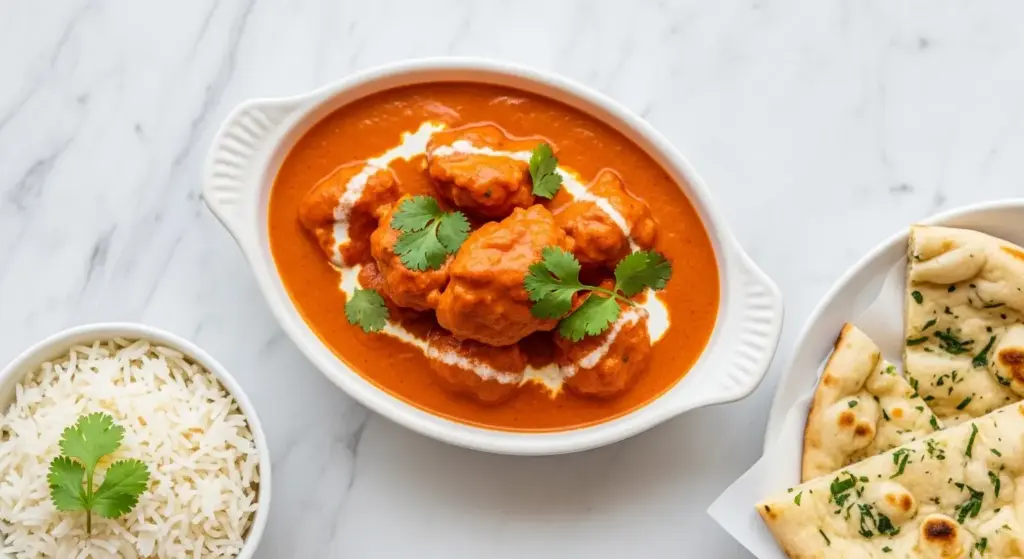
Butter chicken shines when paired with the right accompaniments that complement its rich, creamy sauce and help balance the meal. Here are the best ways to serve this classic dish for a complete Indian dining experience.
Traditional Indian meals balance rich curries with lighter sides and bread for scooping. The creamy sauce practically demands something to soak it up, while fresh vegetables and cooling yogurt-based dishes provide textural and flavor contrast.
- Basmati rice: The classic pairing, with its fluffy texture and subtle nutty flavor that doesn’t compete with the butter chicken
- Naan bread: Perfect for tearing and using to scoop up every bit of sauce from your plate
- Garlic naan: Adds an extra layer of flavor with roasted garlic butter brushed on top
- Cucumber raita: A cooling yogurt-based condiment that balances the richness of the curry
- Roasted vegetables: Adds nutritional balance and provides a lighter element to the meal
- Pickled onions: The tangy crunch cuts through the creamy sauce beautifully
- Mango chutney: Sweet and tangy, offering a fruity contrast to the savory curry
- Papadums: Crispy lentil crackers that add texture and are traditional in Indian meals
Read Also: Chicken Korma Recipe
Variations to Try
Once you’ve mastered the classic version, these creative variations let you customize butter chicken to suit different dietary needs and flavor preferences. Each adaptation maintains the essence of the original while offering something new to explore.
- Paneer butter masala: Substitute the chicken with cubed paneer cheese for a popular vegetarian version that’s equally rich and satisfying
- Butter shrimp: Replace chicken with large shrimp, reducing the cooking time since shrimp cook much faster than chicken pieces
- Instant Pot version: Prepare the entire dish in a pressure cooker by marinating chicken, using the sauté function for the sauce base, then pressure cooking everything together for 8 minutes
- Extra spicy butter chicken: Double the cayenne pepper and add sliced green chilies to the sauce for those who prefer serious heat
- Coconut cream version: Swap heavy cream for full-fat coconut milk to make the dish dairy-free while maintaining creaminess
- Smoky butter chicken: Add 1/2 teaspoon of smoked paprika or use the traditional “dhungar” method by briefly smoking the finished dish with a piece of charcoal
- Butter chicken pizza: Use leftover butter chicken as a topping for homemade or store-bought pizza dough with mozzarella cheese
- With vegetables: Add bell peppers, peas, or cauliflower florets during the final cooking stage for added nutrition and texture
You might also love butter chicken pasta, a fusion dish gaining popularity.
Storage and Reheating
Proper storage ensures your butter chicken tastes just as delicious the next day, while correct reheating methods preserve the sauce’s creamy texture. Follow these guidelines to maintain quality and food safety.
- Refrigerator storage: Transfer cooled butter chicken to an airtight container and refrigerate for up to 4 days, making sure it cools to room temperature first
- Freezer storage: Freeze in portion-sized containers for up to 3 months, leaving headspace for expansion as liquids freeze
- Thawing: Move frozen butter chicken to the refrigerator 24 hours before you plan to serve it for gradual, safe thawing
- Stovetop reheating: Warm gently in a saucepan over medium-low heat, stirring frequently and adding a splash of water or cream if the sauce has thickened too much
- Microwave reheating: Heat in 1-minute intervals, stirring between each, and add a tablespoon of water to prevent drying out
- Quality tip: The flavors often develop and deepen after a day in the refrigerator, making leftovers particularly delicious
- Separate storage consideration: Store rice separately from the butter chicken to prevent it from absorbing too much liquid and becoming mushy
- Garnish fresh: Add fresh cilantro and a drizzle of cream just before serving reheated butter chicken for the best presentation
Read Also: Chicken Biryani Recipe
Nutritional Facts
Serving Size: 1 cup (approximately 8 servings per recipe)
- Calories: 420
- Total Fat: 28g
- Saturated Fat: 14g
- Cholesterol: 135mg
- Sodium: 680mg
- Total Carbohydrates: 14g
- Dietary Fiber: 3g
- Sugars: 7g
- Protein: 32g
- Vitamin A: 25% DV
- Vitamin C: 15% DV
- Calcium: 12% DV
- Iron: 20% DV
Note: Nutritional values are approximate and will vary based on specific ingredients used and portion sizes. These calculations are based on the recipe as written with chicken thighs and full-fat dairy.
Another protein-rich option to try is chicken vindaloo.
Health Benefits of Key Ingredients
While butter chicken is undeniably rich and indulgent, several of its core ingredients offer notable nutritional benefits that contribute to a balanced diet when enjoyed in moderation.
The spices used in butter chicken aren’t just for flavor; they’ve been valued in Ayurvedic medicine for centuries. Turmeric contains curcumin, a powerful anti-inflammatory compound, while the ginger and garlic provide immune support and digestive benefits.
- Turmeric: Contains curcumin with potent anti-inflammatory and antioxidant properties that may support joint health and reduce inflammation
- Ginger: Aids digestion, helps reduce nausea, and has natural anti-inflammatory effects
- Garlic: Supports cardiovascular health, may help lower blood pressure, and contains compounds that boost immune function
- Tomatoes: Rich in lycopene, an antioxidant linked to reduced risk of heart disease and certain cancers
- Chicken thighs: Provide high-quality protein along with minerals like iron, zinc, and selenium essential for immune function
- Yogurt (in marinade): Contains probiotics that support gut health and provides calcium for bone strength
- Cashews: Offer heart-healthy monounsaturated fats, magnesium for muscle function, and plant-based protein
- Fenugreek: May help regulate blood sugar levels and has been traditionally used to support digestive health
- Cumin: Aids digestion and is rich in iron, which is essential for energy production
For a lighter option, consider chicken soup with similar aromatic spices.
Frequently Asked Questions
1. Can I use chicken breast instead of chicken thighs?
Yes, you can substitute chicken breast for thighs, though the result will be slightly less juicy and tender. Chicken thighs have more fat, which keeps them moist during cooking and adds richness to the dish. If using breast meat, cut it into slightly larger pieces and watch cooking times carefully to avoid drying it out.
2. What if I can’t find kasuri methi (dried fenugreek leaves)?
While kasuri methi provides an authentic, irreplaceable flavor, you can omit it if necessary or substitute with a mix of dried oregano and a tiny pinch of maple syrup to mimic the slightly bitter-sweet notes. Many well-stocked grocery stores carry it in their international aisle, or you can easily order it online for future use.
3. Can I make this recipe dairy-free?
Absolutely! Replace the yogurt in the marinade with dairy-free yogurt or additional lemon juice mixed with a little oil. Swap the heavy cream for full-fat coconut milk and use coconut oil instead of butter. The flavor profile will shift slightly toward coconut, but it will still be delicious and creamy.
4. How spicy is this butter chicken, and can I adjust the heat?
This recipe creates a mild to medium heat level that most people find comfortable. The Kashmiri chili powder provides color more than heat. To make it milder, reduce or omit the cayenne pepper entirely, or increase it up to 1 teaspoon for more kick without changing other ingredients.
5. Why does my sauce look orange instead of red?
The characteristic red-orange color comes primarily from Kashmiri red chili powder, which has a distinctive bright hue. Regular chili powder or paprika will produce a more orange or brown sauce. Using quality Kashmiri chili powder and cooking the tomatoes properly will give you that authentic restaurant color.
Read Also: Chicken Marsala Recipe
Final Thoughts
This authentic butter chicken recipe brings the beloved flavors of North Indian cuisine right into your home kitchen with surprisingly simple techniques and readily available ingredients. The combination of tender, spiced chicken swimming in that silky, aromatic tomato-cream sauce creates pure comfort food that satisfies every time.
Once you’ve made this recipe, you’ll realize that restaurant-quality butter chicken is completely achievable at home. The key lies in building layers of flavor through proper marinating, toasting spices, and blending the sauce until perfectly smooth. Give this recipe a try for your next dinner, and I promise it will become a regular request in your household. Share your results in the comments below, and let me know if you tried any of the variations!
Recommended:
- Chicken Tikka Masala Recipe
- Tandoori Chicken Recipe
- Chicken Curry Recipe
- Palak Paneer Recipe
- Chicken Korma Recipe
- Naan Bread Recipe
- Basmati Rice Recipe
- Chicken Biryani Recipe
- Garlic Naan Recipe
- Indian Chicken Recipe