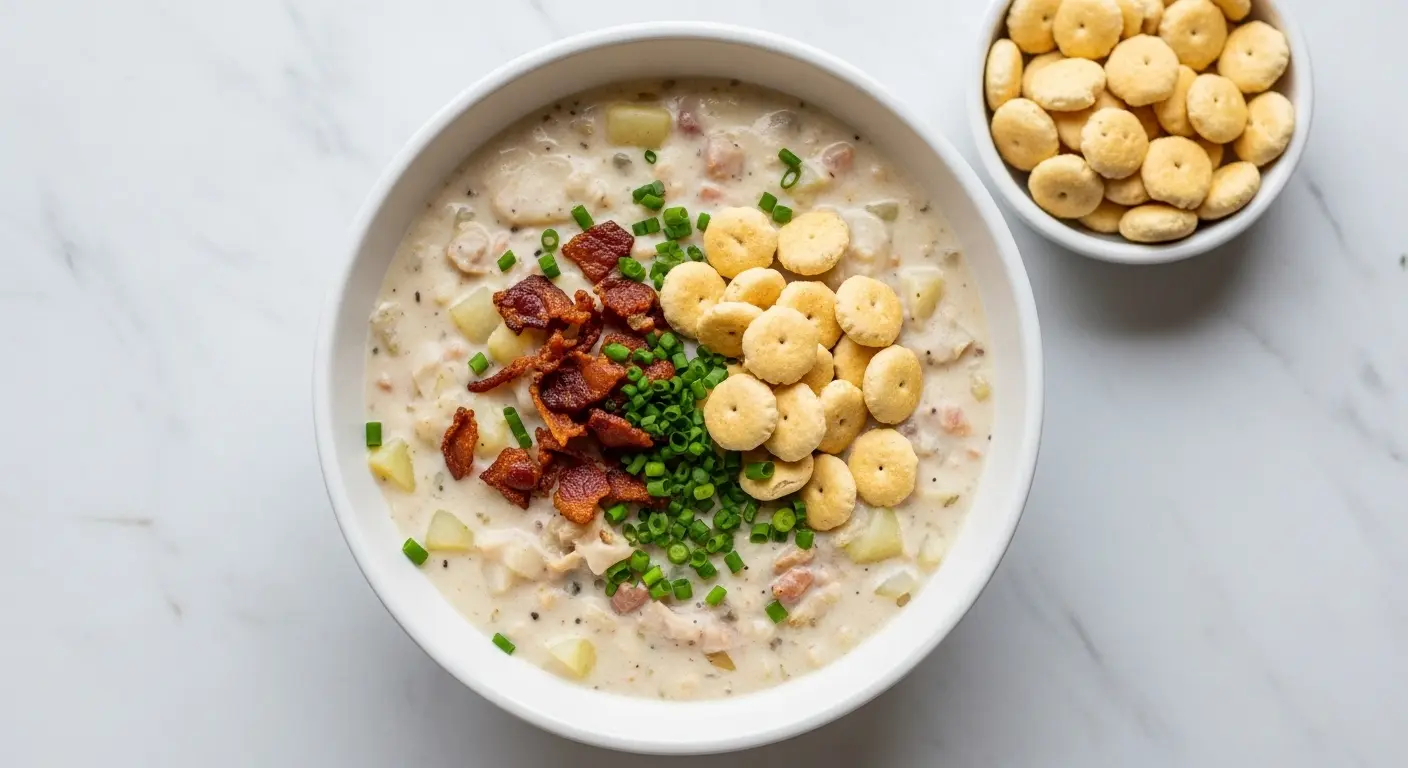
A great clam chowder recipe is one of those dishes that feels like a warm hug from the inside out.
Rich and creamy, packed with tender clams, smoky bacon, and perfectly cooked potatoes, this New England-style classic has earned its place as one of America’s most beloved soups.
This is the version people actually expect when they order clam chowder: a velvety, milk-based broth thickened with a simple butter-and-flour roux, loaded with briny chopped clams, and seasoned with thyme, garlic, and a touch of white pepper.
It is the kind of soup that works just as well on a chilly weeknight as it does when you are hosting guests who deserve something special.
What makes this recipe work so well is the layering of flavors. You start by rendering bacon slowly to build a smoky, savory base, then sweat the aromatics in the drippings, build a quick roux, and let everything simmer until the potatoes are fork-tender and the broth is silky and rich.
The canned clams and bottled clam juice used here are a smart, practical choice that keeps this recipe accessible without cutting any corners on flavor.
This pairs beautifully with a warm bowl of Lobster Bisque if you want to go all out on a seafood dinner night.
Why You’ll Love This Clam Chowder Recipe
This is the kind of recipe that wins people over on the very first spoonful.
The flavor is deep and layered, thanks to the combination of bacon drippings, clam juice, and aromatics that cook down together before any liquid is added.
It does not require any hard-to-find ingredients or special equipment.
Everything you need is available at a standard grocery store, and you can have a full pot ready in well under an hour.
It is endlessly forgiving, too.
Prefer a thicker chowder? Add a little more flour or stir in instant mashed potato flakes at the end. Like it brothier? Use a bit less flour and a splash more clam juice.
Here is a quick look at everything that makes this recipe a keeper:
- Deep, layered flavor built from the ground up with bacon fat, aromatics, and clam juice
- Perfectly creamy texture thanks to a classic butter-and-flour roux and a combination of heavy cream and whole milk
- Tender, flavorful potatoes that absorb all the savory broth without turning to mush
- Accessible ingredients using canned chopped clams and bottled clam juice for weeknight convenience
- Customizable thickness so you can make it exactly how you like it
- One-pot meal with minimal cleanup and maximum comfort
You might also enjoy: New England Clam Chowder Recipe
Ingredients
The secret to a really standout clam chowder is not a long ingredient list. It is about using the right ingredients in the right order.
Yukon Gold potatoes hold their shape beautifully in soups and have a naturally buttery flavor that complements the cream base, which is why they are called for here instead of a starchy russet.
- 6 slices thick-cut bacon, cut into small pieces
- 2 tablespoons (28g) unsalted butter
- 1 large yellow onion, finely diced (about 1 cup / 150g)
- 2 stalks celery, finely diced
- 3 cloves garlic, minced
- 1/4 cup (30g) all-purpose flour
- 2 cups (480ml) bottled clam juice (two 8-oz bottles)
- 1 cup (240ml) low-sodium chicken broth
- 1 pound (450g) Yukon Gold potatoes, peeled and diced into 1/2-inch cubes
- 2 cans (6.5 oz / 184g each) chopped clams, juice reserved separately
- 1 cup (240ml) heavy cream
- 1/2 cup (120ml) whole milk
- 1 bay leaf
- 1/2 teaspoon dried thyme
- 1/4 teaspoon white pepper (key for authentic flavor)
- Salt, to taste
- Fresh chives or parsley, chopped, for garnish
- Oyster crackers, for serving
Read Also: Seafood Chowder Recipe
Kitchen Equipment Needed
You do not need a specialty setup for this recipe, but having the right tools does make the process smoother and more enjoyable.
A heavy-bottomed pot is especially important here because the roux and cream base need even, gentle heat to develop properly without scorching.
- Large heavy-bottomed pot or Dutch oven (5 to 6 quarts)
- Wooden spoon or silicone spatula
- Sharp chef’s knife
- Cutting board
- Measuring cups and spoons
- Ladle
- Fine-mesh strainer (for straining reserved clam juice)
- Paper towels (for draining bacon)
- Soup bowls for serving
Another favorite: Fish Chowder Recipe
Recommended Products for This Recipe
These are a few products that genuinely make a difference in the quality and ease of this recipe, selected based on performance and how commonly home cooks run into trouble without them.
1. Bottled Clam Juice
Using good-quality bottled clam juice is one of the easiest ways to get that authentic oceanic depth into your chowder without having to steam fresh clams. Brands like Bar Harbor and Snow’s are widely available and make a noticeable difference in flavor compared to using only water or chicken broth. Look for low-sodium versions if you are watching salt levels.
2. Canned Chopped Clams
A good can of chopped clams is your best friend for weeknight chowder. Brands that pack clams in their own juice give you double value: the clam meat plus flavorful liquid to add to the broth. Choose clams packed in clam juice rather than water for more robust flavor.
3. Enameled Cast Iron Dutch Oven
A heavy, enameled Dutch oven conducts and holds heat evenly, which is exactly what you need to build a proper roux and simmer a creamy chowder without burning the bottom. It moves from stovetop to table beautifully and doubles as a serving vessel for dinner parties.
4. Oyster Crackers
No bowl of clam chowder is complete without a generous handful of oyster crackers. Their light, crunchy texture and mild salt contrast beautifully against the creamy broth. Keep a bag in the pantry whenever you plan to make chowder.
Read Also: Corn Chowder Recipe
Step-by-Step Instructions
Step 1: Prepare Your Ingredients
- Dice the bacon into small, roughly 1/2-inch pieces so they render evenly and become crispy throughout.
- Peel and dice the Yukon Gold potatoes into uniform 1/2-inch cubes, keeping them consistent in size so they cook at the same rate.
- Finely dice the onion and celery into small pieces, about the same size as each other for even softening.
- Mince the garlic cloves and set aside.
- Open both cans of chopped clams, draining the juice through a fine-mesh strainer into a measuring cup. Set the clam meat and strained juice aside separately.
- Add the two bottles of bottled clam juice to the reserved canned clam juice. You should have about 2 1/2 to 3 cups of total clam liquid.
Step 2: Render the Bacon
- Place your large Dutch oven or heavy pot over medium-low heat.
- Add the diced bacon and cook slowly, stirring occasionally, for 8 to 10 minutes until the fat has fully rendered out and the bacon pieces are crispy and golden brown.
- Cooking bacon over lower heat (rather than blasting it on high) gives the fat time to render out slowly, which produces crispier bacon and more flavorful drippings.
- Use a slotted spoon to remove the bacon pieces and transfer them to a paper towel-lined plate. Leave the rendered fat in the pot.
- You want to keep about 2 tablespoons of bacon fat in the pot. If there is significantly more, spoon some out.
Step 3: Sauté the Aromatics
- Add the 2 tablespoons of butter to the bacon fat already in the pot over medium heat.
- Once the butter has melted, add the diced onion and celery.
- Season lightly with a pinch of salt to help the vegetables release their moisture.
- Cook, stirring occasionally, for 5 to 6 minutes until the onion and celery have softened and the onion is translucent but not browned.
- Add the minced garlic and cook for 1 more minute, stirring constantly so the garlic does not burn. You should be able to smell the garlic becoming fragrant.
Step 4: Build the Roux
- Sprinkle the 1/4 cup of all-purpose flour evenly over the softened vegetables in the pot.
- Stir continuously with a wooden spoon or silicone spatula for about 1 to 2 minutes, making sure the flour coats all the vegetables and absorbs into the fat.
- This step cooks out the raw flour taste, which is important. The mixture should smell slightly nutty and look like a thick, pale paste coating the vegetables.
- Do not let the roux brown; keep stirring and keep the heat at medium.
Step 5: Add the Liquid and Potatoes
- While stirring constantly, slowly pour in the combined clam juice (canned plus bottled) a little at a time, scraping the bottom of the pot as you go to prevent lumps.
- Once all the clam juice is incorporated and the mixture is smooth, add the 1 cup of chicken broth and stir to combine.
- Add the diced Yukon Gold potatoes, the bay leaf, the dried thyme, the white pepper, and a light pinch of salt.
- Stir everything together, then bring the pot to a gentle boil over medium-high heat.
- Once boiling, reduce the heat to medium-low and simmer uncovered for 18 to 22 minutes, stirring occasionally, until the potatoes are completely fork-tender and the broth has slightly thickened.
Step 6: Add the Cream, Milk, and Clams
- Once the potatoes are tender, reduce the heat to low.
- Slowly pour in the 1 cup of heavy cream and 1/2 cup of whole milk, stirring gently to incorporate.
- Allow the chowder to return to a gentle simmer over low heat. Do not boil it hard at this stage or the cream may curdle or the soup may develop an uneven texture.
- Add the drained clam meat and stir gently to distribute it throughout the soup.
- Cook for 3 to 5 minutes more, just until the clams are heated through. Do not overcook the clams or they will become rubbery and tough.
- Remove and discard the bay leaf.
Step 7: Taste, Adjust, and Serve
- Taste the chowder and adjust the seasoning. Add more salt if needed, and a little extra white pepper if you like more warmth.
- If you prefer a thicker chowder, stir in 1 to 2 tablespoons of instant mashed potato flakes and let it simmer for another minute or two to absorb.
- Ladle the chowder into warm bowls.
- Top each bowl with the reserved crispy bacon pieces, a few chopped fresh chives or parsley, and a generous handful of oyster crackers.
- Serve immediately while hot.
This technique also works wonderfully in a batch of Shrimp Chowder if you want a delicious variation on the classic.
Tips for Success
Getting the details right is what separates a good clam chowder from a truly great one.
A few small adjustments in technique can make a big difference in both flavor and texture, and these are the ones that matter most.
- Use white pepper instead of black. White pepper is a traditional New England chowder seasoning. It gives a gentle, warming heat without the visual black specks in a white broth.
- Do not skip the roux. Cooking the flour with the fat before adding liquid is what gives this chowder its silky, stable body. Skipping this step leads to a thin, greasy broth.
- Add cream over low heat. Always reduce the heat before adding dairy to creamy soups. Adding cold cream to a vigorously boiling pot can cause it to break and look grainy.
- Do not overcook the clams. Canned clams are already cooked. They only need a few minutes in the hot broth to warm through. Overcooking makes them rubbery.
- Reserve the clam juice. The liquid in canned clam cans is full of briny, seafood flavor. Never discard it. Use it as part of your liquid base.
- Cook the bacon low and slow. Rendering bacon over medium-low heat builds more flavor than rushing it on high heat, and it produces crispier bits for garnishing.
Read Also: Chicken Chowder Recipe
Serving Suggestions
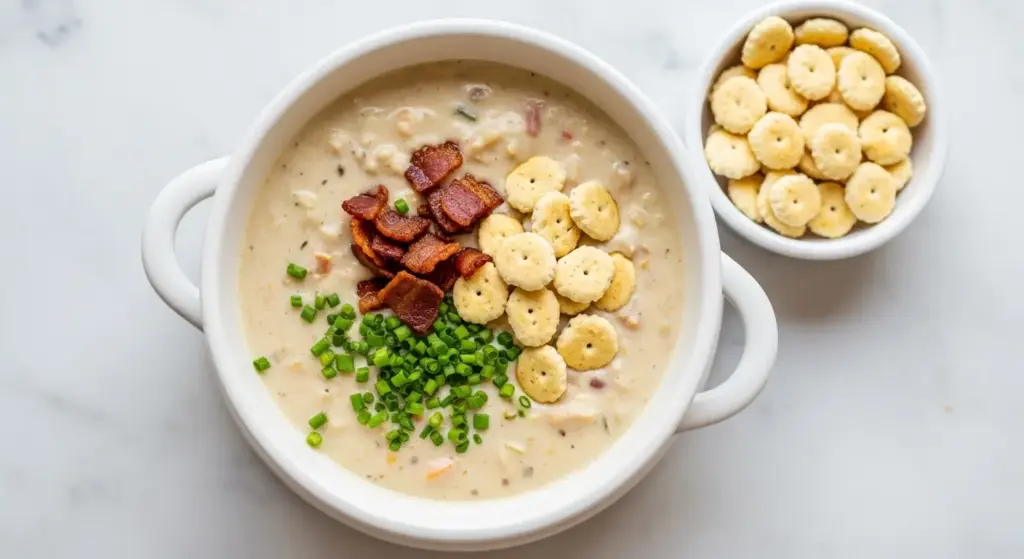
Clam chowder is satisfying all on its own, but pairing it thoughtfully takes the meal to the next level.
The richness of the creamy broth calls for something with a bit of texture or acidity alongside it, and a few classic pairings really do make the whole meal feel complete.
Here are the best ways to serve your clam chowder:
- Oyster crackers are the classic accompaniment and add a satisfying crunch to every bite
- Crusty sourdough bread or a warm dinner roll is perfect for soaking up every last drop of broth
- Sourdough bread bowls are a San Francisco tradition and make for a dramatic, fun presentation
- Pair with a crisp Broccoli Salad for a fresh, slightly acidic counterpoint to the rich soup
- Serve alongside Crab Cakes for a full seafood spread
- A glass of crisp white wine, such as Sauvignon Blanc or Pinot Grigio, complements the briny, creamy flavors beautifully
- Cornbread on the side adds a slightly sweet, hearty contrast that works especially well in fall and winter
Variations to Try
The beauty of clam chowder is how well it adapts to different preferences and pantry situations.
Once you have the base recipe down, these variations are easy and fun to explore.
- Manhattan Clam Chowder: Skip the cream and roux entirely. Instead, use crushed tomatoes, tomato paste, diced carrots, and a tomato-based broth for the classic red version. Try the full Manhattan Clam Chowder Recipe for a detailed guide.
- Corn and Clam Chowder: Add 1 cup of sweet corn kernels (fresh or frozen) along with the potatoes for a sweeter, heartier version.
- Smoked Salmon Chowder: Substitute the clams for smoked salmon for an equally rich and flavorful variation. Check out this Salmon Chowder Recipe for inspiration.
- Loaded Clam Chowder: Top with shredded cheddar, sour cream, and extra crispy bacon for a loaded-baked-potato-style twist.
- Dairy-Free Version: Use full-fat coconut cream in place of heavy cream and a splash of unsweetened almond milk in place of whole milk. The flavor will be slightly different but still rich and satisfying.
- Extra Clam Flavor: Replace the chicken broth with additional bottled clam juice for an even more intensely briny, oceanic chowder.
Read Also: Seafood Stew Recipe
Storage and Reheating
Clam chowder stores well and many people find it tastes even better the next day once the flavors have had more time to meld together.
That said, the dairy base requires a little care when reheating to keep it from breaking.
- Refrigerator: Store in an airtight container for up to 3 to 4 days.
- Freezer: Cream-based chowder does not freeze as well as other soups because the dairy can separate upon thawing. If you want to freeze it, consider making the base without the cream, freezing that, and adding the cream fresh when you reheat.
- Stovetop reheating: Reheat over low to medium-low heat, stirring frequently. Do not bring it to a rolling boil or the cream may break and the soup can look grainy.
- Microwave reheating: Reheat in 60-second intervals at 70% power, stirring between each interval, until warmed through.
- Thickening tip: If the chowder has thickened considerably overnight in the fridge, add a splash of chicken broth, clam juice, or whole milk when reheating and stir until it loosens to your preferred consistency.
This technique for creamy soups also works perfectly for a Loaded Potato Soup if you love this style of comforting, hearty bowl.
Nutritional Facts
The following nutritional information is an estimate for one serving of clam chowder, based on a recipe that yields 4 servings.
Values will vary slightly depending on brands and exact quantities used.
| Nutrient | Per Serving (Approx.) |
|---|---|
| Calories | 490 kcal |
| Total Fat | 32g |
| Saturated Fat | 16g |
| Cholesterol | 115mg |
| Sodium | 820mg |
| Total Carbohydrates | 30g |
| Dietary Fiber | 2g |
| Sugars | 4g |
| Protein | 20g |
| Calcium | 140mg |
| Iron | 6mg |
You might also enjoy: Chicken Corn Chowder Recipe
Health Benefits of Key Ingredients
While clam chowder is certainly a comfort food, several of its core ingredients offer genuine nutritional benefits.
It is far from a nutritional zero, especially when you look at what the clams and potatoes bring to the bowl.
Here is a closer look at what makes this dish more than just delicious:
- Clams are a nutritional powerhouse. They are one of the richest dietary sources of vitamin B12, which supports brain and nerve function, and they are also exceptionally high in iron and lean protein.
- Potatoes provide sustained energy from complex carbohydrates, plus a meaningful amount of potassium and vitamin C.
- Garlic contains allicin, an active compound with well-studied antimicrobial and anti-inflammatory properties.
- Celery is high in vitamin K and provides antioxidants along with natural electrolytes, making it more valuable than its mild flavor might suggest.
- Bacon provides zinc and B vitamins, though it is higher in sodium and saturated fat, so it is used here in moderate amounts for flavor rather than as a main component.
- Heavy cream provides fat-soluble vitamins like A, D, E, and K, which support immune function, vision, and bone health when consumed as part of a balanced diet.
Read Also: Corn Chowder Recipe
Frequently Asked Questions
1. Can I use fresh clams instead of canned?
Yes, absolutely. Fresh clams give an even more vibrant, briny flavor to the chowder.
For fresh clams, look for littleneck, cherrystone, or quahog clams. Steam them first in a pot with a small amount of water or white wine, discard any that do not open, then chop the meat and reserve the cooking broth to use in place of bottled clam juice.
2. What is the difference between New England and Manhattan clam chowder?
New England clam chowder, which is what this recipe is, uses a creamy, milk or cream-based broth thickened with a roux. It is white and rich.
Manhattan clam chowder has a tomato-based red broth with no cream at all, and it typically includes diced carrots. It is lighter and more broth-forward.
3. Why did my clam chowder turn out too thin?
If your chowder is thinner than you would like, there are a couple of easy fixes. You can simmer it uncovered for another 10 to 15 minutes to allow some liquid to reduce and concentrate.
Alternatively, stir in 1 to 2 tablespoons of instant mashed potato flakes gradually at the end until you reach your preferred consistency.
4. Can I make clam chowder ahead of time?
Yes, and many people actually prefer it made a day ahead. The flavors develop and deepen significantly after a night in the refrigerator.
Make the full recipe, let it cool to room temperature, then refrigerate. Reheat gently over low heat with a splash of extra milk or broth to loosen the consistency as needed.
5. How do I prevent the cream from curdling when I add it to the soup?
The key is temperature. Always reduce the heat to low before adding the cream and milk, and never let the chowder come to a hard boil once the dairy has been added.
Adding room-temperature cream to the pot (rather than cold cream straight from the fridge) also helps minimize the temperature shock that can cause curdling.
You might also enjoy: Baked Potato Soup Recipe
Final Thoughts
This clam chowder recipe delivers everything you want from a classic: a silky, flavorful broth, tender clams, smoky bacon, and buttery potatoes in every spoonful.
It is genuinely one of those recipes that feels special every single time you make it, whether you are cooking for two on a cold evening or ladling it into bowls for a crowd.
Give this recipe a try on your next soup night and see just how satisfying a homemade bowl of clam chowder can be.
If you make it, come back and leave a comment sharing how it turned out for you. And if you added your own twist or variation, we would love to hear about that too!
Recommended:
- Lobster Bisque Recipe
- Oyster Stew Recipe
- Potato Leek Soup Recipe
- Ham and Potato Soup Recipe
- Beer Cheese Soup Recipe
- Chicken Gnocchi Soup Recipe
- Zuppa Toscana Recipe
- Minestrone Soup Recipe
- Italian Wedding Soup Recipe
- Panera Broccoli Cheddar Soup Recipe