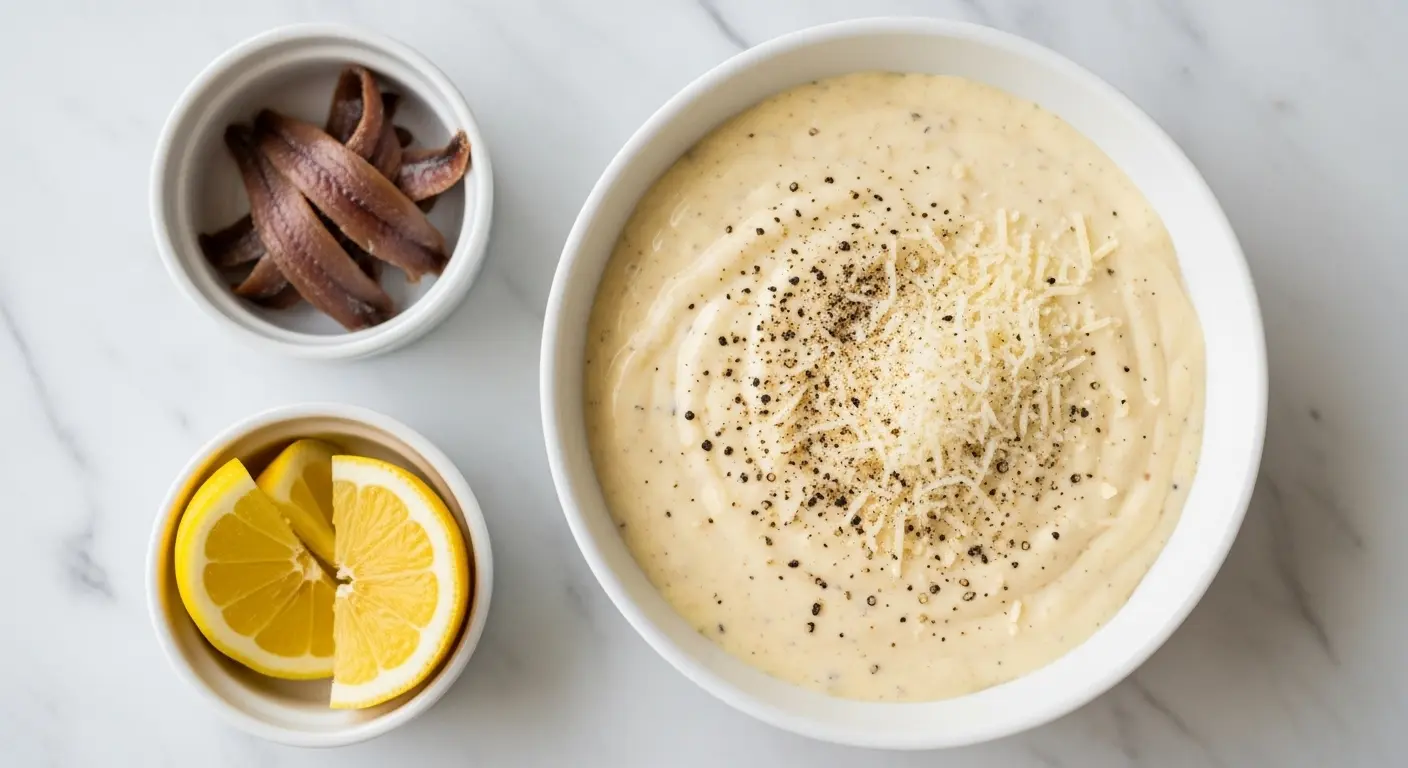
If you’ve never made a homemade Caesar salad dressing recipe from scratch, you’re in for a genuine revelation. That tangy, garlicky, umami-packed dressing you love at restaurants? It’s surprisingly simple to pull off in your own kitchen, and once you taste the difference, store-bought will never cut it again.
The classic version calls for a handful of pantry staples, a couple of minutes of whisking, and zero fancy equipment. What makes it extraordinary is the combination of bold ingredients working in harmony: briny anchovies lending depth, raw garlic delivering heat, lemon brightening everything up, Worcestershire sauce adding a savory backbone, and Parmesan cheese rounding it all out with salty richness.
This recipe is the traditional, creamy emulsified version made with egg yolk, the kind you’d find in a great Italian-American restaurant or in classic American cookbooks. It coats romaine leaves beautifully and has that thick, luxurious texture that clings to every crouton.
Toss it with a classic Caesar salad, use it as a dip, or drizzle it over grilled chicken – this dressing delivers every single time. Read on for the full recipe, tips, and everything you need to know to nail it.
For another classic, easy-to-make dressing you’ll want in your rotation, check out the Original Caesar Salad Dressing.
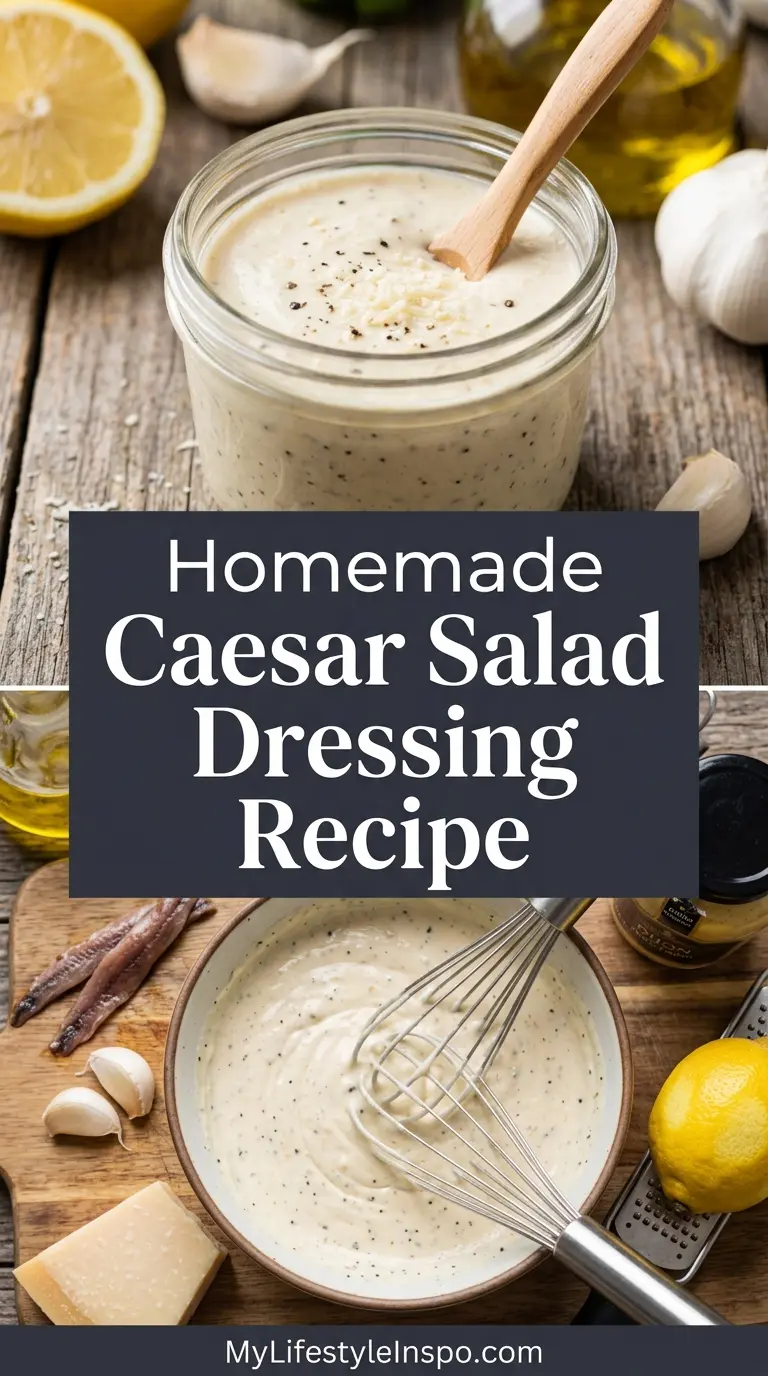
Why You’ll Love This Homemade Caesar Salad Dressing Recipe
You’ll find yourself making this dressing on repeat once you experience how much better it tastes than anything from a bottle.
Here’s what makes it so special:
- Restaurant-quality results at home – This dressing rivals anything you’d get at a steakhouse or Italian-American restaurant, all made with ingredients you likely already have.
- Ready in under 10 minutes – There’s no cooking involved, no blender required (though you can use one), and cleanup is minimal.
- Completely customizable – Adjust the garlic, lemon, or anchovy to suit your taste. You’re in full control of the flavor.
- No mystery ingredients – Unlike bottled dressings loaded with preservatives and artificial flavors, this one uses only real, whole ingredients you can pronounce.
- Perfect for meal prep – Make a batch on Sunday and have a flavorful dressing ready to go all week long.
- Versatile beyond salads – This dressing doubles as a sandwich spread, a dip for vegetables, or a marinade for grilled chicken.
You might also enjoy: Vegan Caesar Salad Dressing
Ingredients
You only need a short list of high-quality ingredients to make an exceptional Caesar dressing. The key is not skimping on the anchovies or the Parmesan – these are the flavor backbone of the whole dressing.
- 2 anchovy fillets packed in oil (or 1 teaspoon anchovy paste), plus more to taste
- 3 garlic cloves, minced or pressed
- 2 tablespoons (30 ml) fresh lemon juice (from about 1 lemon)
- 1 teaspoon Dijon mustard
- 1 teaspoon Worcestershire sauce
- 1 large egg yolk, at room temperature
- 1/2 cup (120 ml) extra-virgin olive oil
- 1/4 cup (25 g) freshly grated Parmesan cheese (Parmigiano-Reggiano preferred)
- 1/4 teaspoon kosher salt, plus more to taste
- 1/4 teaspoon freshly ground black pepper, plus more to taste
Read Also: Easy Pesto Recipe
Kitchen Equipment Needed
You don’t need anything fancy here. A basic whisk and a bowl will do the job beautifully. That said, a few good tools will make the process even smoother.
- A medium mixing bowl
- A balloon whisk or fork
- A fine grater or Microplane zester for the Parmesan
- A garlic press (optional, but handy)
- Measuring spoons and liquid measuring cup
- A glass jar with a lid for storage
Recommended Products for This Recipe
These are recommended based on quality and performance, chosen to help you get the absolute best results from this Caesar dressing recipe.
1. Parmigiano-Reggiano Cheese Wedge
True Parmigiano-Reggiano has a depth of flavor that domestic Parmesan simply can’t match – it’s nuttier, saltier, and more complex, which translates directly into a more flavorful dressing. Freshly grating it yourself rather than using pre-grated ensures it melts smoothly into the emulsion. Buying a wedge and grating it fresh makes a noticeable difference in the final result.
2. Anchovy Fillets in Olive Oil
The quality of your anchovies matters significantly in this dressing since they’re providing the core umami punch. Oil-packed anchovy fillets from reputable Italian or Spanish producers have a cleaner, more refined flavor compared to cheaper canned versions. They dissolve beautifully when mashed and blend seamlessly into the dressing without any “fishy” aftertaste.
3. Microplane Premium Classic Zester Grater
A Microplane grater makes grating Parmesan fast and effortless, producing fine, feathery shreds that dissolve instantly into the dressing without lumping. It also doubles as a lemon zester if you want to add a little zest to the dressing for extra citrus brightness. It’s one of those kitchen tools that truly earns its counter space.
4. Extra Virgin Olive Oil (High Quality)
Since olive oil makes up the bulk of this dressing, its quality directly affects the flavor of the finished product. A good-quality extra virgin olive oil with a fruity, slightly peppery finish produces a far more flavorful and balanced dressing than generic vegetable oil or low-quality olive oil. Look for cold-pressed, single-origin options.
5. OXO Good Grips Salad Dressing Shaker
If you want to store your Caesar dressing or quickly re-emulsify it before each use, a good dressing shaker is invaluable. It keeps everything in one container, allows for easy shaking to recombine the ingredients, and pours cleanly. This is especially useful if you’re making a larger batch.
Another great sauce to have in your kitchen repertoire: Homemade Alfredo Sauce
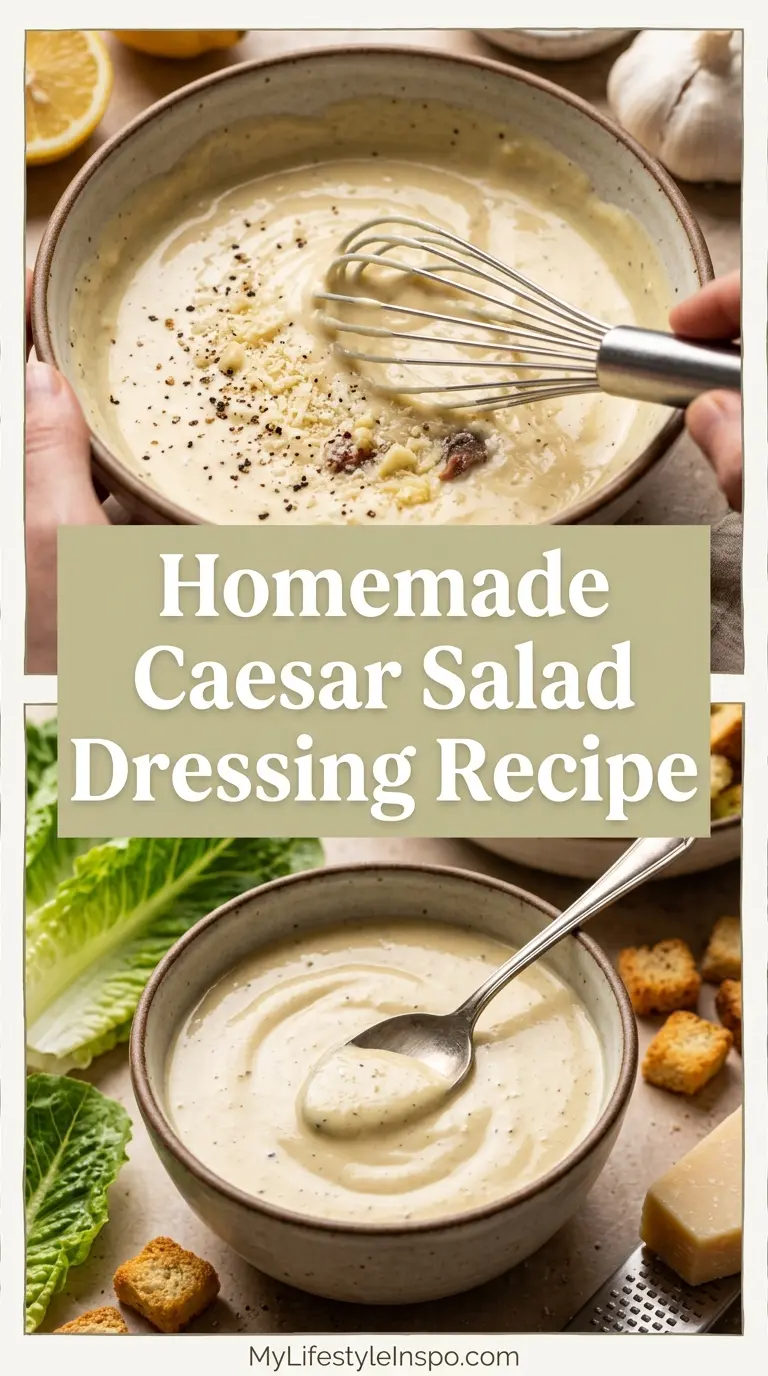
Step-by-Step Instructions
Step 1: Prepare the Anchovy-Garlic Paste
- Place 2 anchovy fillets on a cutting board along with your 3 minced garlic cloves.
- Using the side of a chef’s knife (or a fork), mash the anchovies and garlic together, pressing and dragging to form a smooth, uniform paste. The anchovies should almost dissolve into the garlic.
- This step is crucial – creating a paste rather than leaving the ingredients in chunks ensures even flavor distribution throughout the dressing. If you prefer, you can skip the cutting board step and do this mashing directly in your mixing bowl using a fork.
- Alternatively, if you’re using anchovy paste from a tube, simply measure out 1 teaspoon and add it to the bowl with the garlic.
Step 2: Build the Dressing Base
- Transfer the anchovy-garlic paste to a medium mixing bowl.
- Add 2 tablespoons (30 ml) fresh lemon juice, 1 teaspoon Dijon mustard, and 1 teaspoon Worcestershire sauce to the bowl.
- Whisk all of these together until well combined. This forms the flavor base of your dressing.
- The Dijon mustard serves double duty here – it adds flavor and acts as an emulsifier, helping the oil and lemon juice bind together rather than separate.
- Taste the base at this point. You should notice bright acidity from the lemon, savory depth from the Worcestershire, and that distinctive anchovy backbone.
Step 3: Add the Egg Yolk
- Separate 1 large egg, keeping only the yolk. The egg white can be saved for another use (like an omelette or meringue).
- Add the room-temperature egg yolk directly to the bowl with the anchovy-garlic-lemon base.
- Whisk vigorously until the yolk is completely incorporated and the mixture looks smooth and slightly thickened.
- Why egg yolk? The lecithin in egg yolk is what allows the dressing to emulsify properly, creating that creamy, cohesive texture. Using a room-temperature yolk makes it easier to emulsify than a cold one straight from the fridge.
- If you are concerned about raw eggs, you can substitute 2 tablespoons of mayonnaise for the egg yolk – this works as a great shortcut and still produces a creamy, emulsified dressing.
Step 4: Slowly Drizzle in the Olive Oil
- Measure out 1/2 cup (120 ml) of extra-virgin olive oil.
- While whisking constantly with your other hand (or have someone drizzle the oil while you whisk), begin adding the olive oil in a very slow, thin, steady stream. Start with just a few drops at a time.
- This is the most important technique step in the whole recipe. Adding the oil slowly, while continuously whisking, allows the fat to emulsify into the egg yolk, creating a thick, creamy dressing. If you pour the oil in too quickly, the dressing will break and become oily and separated.
- Once you’ve added about half the oil and the dressing looks noticeably thicker and more opaque, you can increase the flow to a thin, steady stream.
- Continue whisking and drizzling until all the olive oil has been incorporated and the dressing is thick and creamy.
Step 5: Stir in the Parmesan and Season
- Add 1/4 cup (25 g) of freshly grated Parmesan cheese to the emulsified dressing.
- Whisk or stir vigorously until the cheese is fully incorporated. The dressing will thicken slightly more at this stage.
- Season with 1/4 teaspoon kosher salt and 1/4 teaspoon freshly ground black pepper.
- Taste the dressing carefully. Caesar dressing should be bold and punchy – adjust as needed. Add more lemon for brightness, more garlic for heat, more anchovy for depth, or more salt and pepper to balance.
- Keep in mind that the dressing will taste slightly more intense before it’s tossed with romaine lettuce – it mellows when it coats the salad leaves.
Step 6: Rest and Serve
- Let the finished dressing sit for 5-10 minutes before using. This short resting period allows the flavors to meld and develop into a more cohesive, balanced dressing.
- Give it one final taste and adjust any seasonings as needed.
- The dressing is now ready to toss with romaine lettuce, croutons, and additional shaved Parmesan for a classic Caesar salad, or use it however you like.
- If you’re not using the dressing immediately, transfer it to a sealed glass jar and refrigerate. It will keep well for up to one week.
Read Also: Homemade Tartar Sauce
Tips for Success
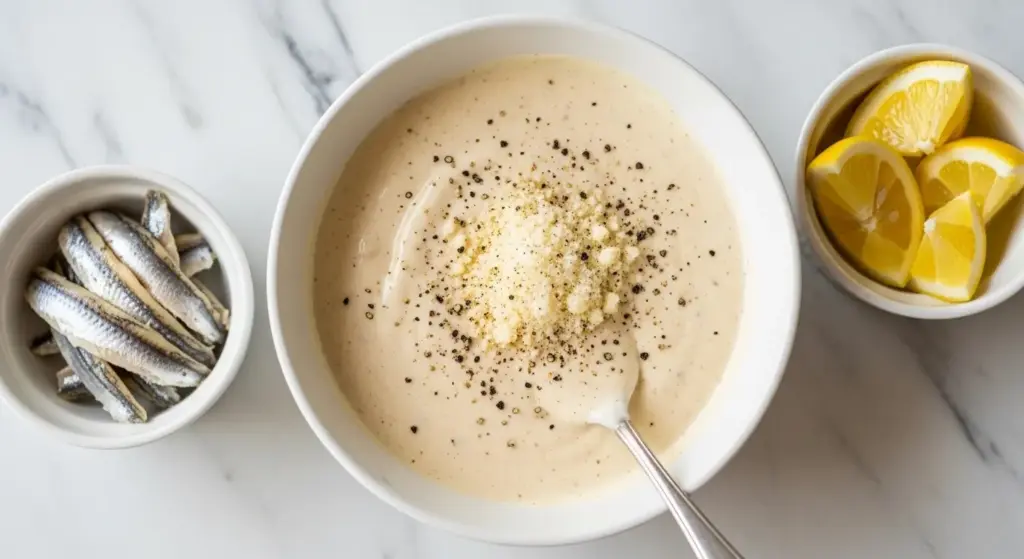
Even a recipe this simple has a few techniques worth noting to make sure you get perfect results every time.
- Use room-temperature ingredients – Cold egg yolk and cold lemon juice can prevent proper emulsification. Let your egg sit at room temperature for 15-20 minutes before starting.
- Don’t skip the anchovies – If you think you don’t like anchovies, think again. Mashed into a paste and whisked into the dressing, they provide savory, umami depth rather than any “fishy” flavor. They’re the secret to why Caesar dressing tastes so distinctive.
- Fresh lemon juice only – Bottled lemon juice tastes flat and slightly bitter. Fresh-squeezed makes a meaningful difference in a recipe this simple.
- Grate the Parmesan fresh – Pre-grated cheese from a bag contains anti-caking agents that prevent it from melting smoothly into the dressing. A Microplane grater makes fresh grating quick and effortless.
- Drizzle the oil SLOWLY – This single step determines whether your dressing emulsifies properly. Patience here pays off in a thick, restaurant-quality result.
- Taste and adjust – Caesar dressing should taste bold and slightly intense on its own – it’s designed to coat and season the salad, not be subtle.
For a bold, creamy sauce with a similar technique to this dressing, try this Hollandaise Sauce.
Serving Suggestions
This dressing is the heart of a classic Caesar salad, but its uses extend well beyond that.
- Classic Caesar Salad – Toss with crisp romaine hearts, house-made croutons, and a generous shower of shaved or grated Parmesan. This is the gold standard use for this dressing.
- Grilled Chicken Caesar Wrap – Spread the dressing on a flour tortilla, add sliced grilled chicken, shredded romaine, croutons, and Parmesan for a satisfying lunch.
- Caesar Pasta Salad – Toss with cooked rotini or penne, chopped romaine, croutons, and cherry tomatoes for a hearty pasta salad that travels well to potlucks.
- Dip for Vegetables – This dressing makes a seriously delicious dip for raw celery, broccoli, carrots, and bell pepper strips.
- Sandwich Spread – Slather it on toasted bread in place of mayo for a flavor-packed upgrade to any chicken or turkey sandwich.
- Pizza Base – Use the Caesar dressing as a white pizza sauce base under mozzarella, chicken, and bacon for a Caesar pizza twist.
Pair your Caesar salad with a comforting bowl of Classic Chicken Salad for a satisfying lunch spread.
Variations to Try
The classic recipe is excellent, but there are a few creative twists worth exploring once you’ve mastered the original.
- Anchovy-free version – Omit the anchovies and increase the Worcestershire sauce to 1.5 teaspoons. Add 1 tablespoon of capers, finely chopped, for a briny, umami-rich substitute that’s still deeply flavorful.
- Vegan Caesar dressing – Replace the egg yolk with 2 tablespoons of tahini or cashew cream, swap the Worcestershire for soy sauce or tamari, skip the anchovies, and use nutritional yeast in place of Parmesan.
- Lighter Caesar dressing – Substitute half the olive oil with plain Greek yogurt for a tangier, lower-fat version that still has great body and creaminess.
- Spicy Caesar – Add 1/4 teaspoon of cayenne pepper or a few dashes of hot sauce to the base for a kicked-up version that works especially well with grilled shrimp.
- Herb Caesar – Whisk in 2 tablespoons of freshly chopped basil or flat-leaf parsley for a herby, vibrant variation that pairs beautifully with grilled fish.
- Creamy blender version – Add all ingredients to a blender and blend until completely smooth for an ultra-thick, silky dressing with a lighter color from full emulsification.
Read Also: Easy Homemade Pesto
Storage and Reheating
Proper storage keeps your Caesar dressing fresh, safe, and flavorful for the whole week.
- Refrigerator – Store in a sealed glass jar or airtight container in the refrigerator for up to 5-7 days. Glass is preferred over plastic as it won’t absorb flavors or odors.
- Re-emulsifying – The dressing may separate slightly in the fridge as the oil and liquid components settle. Simply shake the jar vigorously or whisk it again briefly before each use to bring it back together.
- Freezing – Freezing is not recommended for this dressing. The emulsion will break during freezing and thawing, resulting in a separated, oily texture that can’t be easily fixed.
- Room temperature – Because this dressing contains a raw egg yolk, do not leave it at room temperature for more than 2 hours. Keep it refrigerated when not in use.
- Spoilage signs – Discard the dressing if it develops an off smell, unusual discoloration, or any mold growth.
You might also enjoy: Easy Tartar Sauce
Nutritional Facts
The following is an approximate estimate per 2-tablespoon serving of homemade Caesar dressing (based on the full recipe yielding approximately 8 servings):
- Calories: 145 kcal
- Total Fat: 15 g
- Saturated Fat: 2.5 g
- Cholesterol: 28 mg
- Sodium: 160 mg
- Total Carbohydrates: 1 g
- Sugars: 0 g
- Protein: 2 g
- Calcium: 55 mg
Note: Nutritional values are estimates and may vary depending on specific ingredient brands and quantities used.
For another nutrient-dense classic, take a look at this Broccoli Salad.
Health Benefits of Key Ingredients
This dressing isn’t just delicious – several of its core ingredients carry meaningful nutritional benefits worth knowing about.
Olive oil, which makes up the bulk of this dressing, is rich in monounsaturated fatty acids, particularly oleic acid, which is associated with heart health, reduced inflammation, and improved cholesterol levels. It also contains antioxidants like vitamin E and polyphenols.
Key health benefits by ingredient:
- Garlic – Contains allicin and other sulfur compounds that have well-documented antimicrobial and cardiovascular benefits. Regular consumption has been linked to lower blood pressure and improved immune function.
- Lemon juice – An excellent source of vitamin C, which supports immune health, skin collagen production, and iron absorption. The citric acid also supports digestive health.
- Anchovies – Surprisingly high in omega-3 fatty acids, calcium, and selenium, despite being used in small quantities. Omega-3s support brain health, heart health, and reducing systemic inflammation.
- Parmesan cheese – Rich in calcium, protein, and phosphorus, which support bone density and muscle health. Being an aged cheese, it also contains probiotics that can support gut health.
- Egg yolk – Contains fat-soluble vitamins A, D, E, and K, as well as choline, which is important for brain and liver health. Despite the historical concern about egg yolks and cholesterol, modern nutrition research has largely exonerated moderate egg consumption for healthy adults.
Read Also: Fruit Salad Recipe
Frequently Asked Questions
1. Can I make Caesar dressing without anchovies?
Yes, you can make a tasty Caesar-inspired dressing without anchovies, though it will taste somewhat different. The anchovies provide an important savory, umami depth that is hard to fully replicate. For the best anchovy-free version, increase the Worcestershire sauce to 1.5 teaspoons, add 1 tablespoon of finely chopped capers, and consider a small splash of soy sauce to compensate for the missing umami.
2. Is it safe to eat raw egg yolk in this dressing?
For most healthy adults, using a raw egg yolk in homemade Caesar dressing is considered safe, especially when using fresh, high-quality eggs. If you are pregnant, immunocompromised, elderly, or cooking for young children, consider using a pasteurized egg yolk or substitute the yolk with 2 tablespoons of mayonnaise, which is already made with pasteurized eggs.
3. Why did my Caesar dressing break and turn oily?
A broken, oily dressing almost always means the oil was added too quickly and the emulsion couldn’t form. The good news is you can often fix it. Pour your broken dressing out of the bowl, add a fresh egg yolk to the clean bowl, and very slowly whisk the broken dressing back into the new yolk, treating it like the oil in the original recipe.
4. Can I use a food processor or blender instead of whisking by hand?
Absolutely, and it’s actually easier. Add all ingredients except the olive oil to a blender or food processor and blend until smooth. Then, with the machine running, drizzle in the olive oil through the feed tube in a very thin stream. This method consistently produces a smooth, thick, fully emulsified dressing and is especially useful if you’re making a larger batch.
5. How long does homemade Caesar dressing last in the fridge?
Homemade Caesar dressing will keep well in a sealed glass jar in the refrigerator for up to 5-7 days. Because it contains a raw egg yolk, it should always be kept refrigerated and never left at room temperature for more than 2 hours. Give it a good shake or whisk before each use to re-emulsify, since the components may separate slightly over time.
Read Also: Healthy Chicken Salad
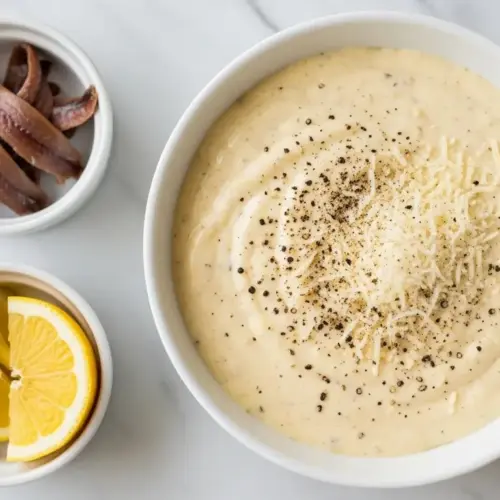
Homemade Caesar Salad Dressing

Equipment
- Medium mixing bowl
- Balloon whisk - or a fork
- Microplane zester - or fine grater for Parmesan
- Garlic press - (optional)
- Measuring spoons
- Liquid measuring cup
- Glass jar with lid - for storage
Ingredients
- 2 fillet anchovy fillets packed in oil - or 1 teaspoon anchovy paste, plus more to taste
- 3 cloves garlic - minced or pressed
- 2 tablespoons fresh lemon juice - 30 ml, from about 1 lemon
- 1 teaspoon Dijon mustard
- 1 teaspoon Worcestershire sauce
- 1 large egg yolk - at room temperature
- 1/2 cup extra-virgin olive oil - 120 ml
- 1/4 cup Parmesan cheese - 25 g, freshly grated (Parmigiano-Reggiano preferred)
- 1/4 teaspoon kosher salt - plus more to taste
- 1/4 teaspoon black pepper - freshly ground, plus more to taste
Instructions
- Mash the anchovy fillets and minced garlic together on a cutting board using the side of a chef’s knife to form a smooth, uniform paste.
- Transfer the paste to a medium bowl and whisk in the lemon juice, Dijon mustard, and Worcestershire sauce until well combined.
- Add the room-temperature egg yolk to the mixture and whisk vigorously until smooth and slightly thickened.
- While whisking constantly, slowly drizzle in the olive oil in a thin, steady stream until the dressing is thick and creamy and all the oil is incorporated.
- Stir in the freshly grated Parmesan cheese, then season with kosher salt and black pepper. Taste and adjust to your preference.
- Let the dressing rest for 5-10 minutes to allow the flavors to meld, then use immediately or store in a sealed jar in the refrigerator.
Notes
- Use room-temperature ingredients: Cold egg yolk and lemon juice can prevent proper emulsification. Let your egg sit out for 15-20 minutes before starting.
- Don’t skip the anchovies: They provide savory, umami depth without any “fishy” flavor when mashed into a paste.
- Fresh lemon juice is a must: Bottled juice tastes flat and slightly bitter. Freshly squeezed makes a meaningful difference.
- Grate the Parmesan fresh: Pre-grated cheese contains anti-caking agents that prevent it from melting smoothly into the dressing.
- Drizzle the oil SLOWLY: This is the most critical step for a thick, creamy, emulsified dressing. Patience pays off.
- Substitute for raw egg yolk: If you are concerned about raw eggs, substitute the egg yolk with 2 tablespoons of mayonnaise.
- Storage: Store in a sealed glass jar in the refrigerator for up to 5-7 days. Shake or whisk before each use as it may separate.
- Freezing not recommended: The emulsion will break during freezing and thawing, resulting in an oily, separated texture.
- Taste and adjust: The dressing should taste bold and intense on its own. Adjust with more lemon, garlic, or anchovy to your liking.
- Anchovy-free version: Omit anchovies, increase Worcestershire sauce to 1.5 teaspoons, and add 1 tablespoon of finely chopped capers for a briny substitute.
Final Thoughts
Making a homemade Caesar salad dressing recipe from scratch is one of those kitchen skills that immediately elevates everything you cook.
Once you taste how fresh, bold, and perfectly balanced this dressing is compared to anything in a bottle, there’s really no going back.
The ingredients are simple, the technique is approachable even for beginners, and the result is truly restaurant-worthy.
Give this recipe a try the next time a Caesar salad craving hits – you’ll be amazed at what a difference fresh, real ingredients make.
If you try this recipe, leave a comment below and let me know how it went! Did you make any tweaks or try any of the variations? Share this post with a friend who loves a great homemade dressing.
Recommended:
- Original Caesar Salad Dressing
- Vegan Caesar Salad Dressing
- Easy Pesto
- Classic Chicken Salad
- Broccoli Salad
- Potato Salad
- Easy Tuna Salad
- Tzatziki Sauce
- Bang Bang Sauce
- Burger Sauce