If you’ve been looking for a kale and fruit smoothie recipe that doesn’t taste like lawn clippings, you’re in the right place.
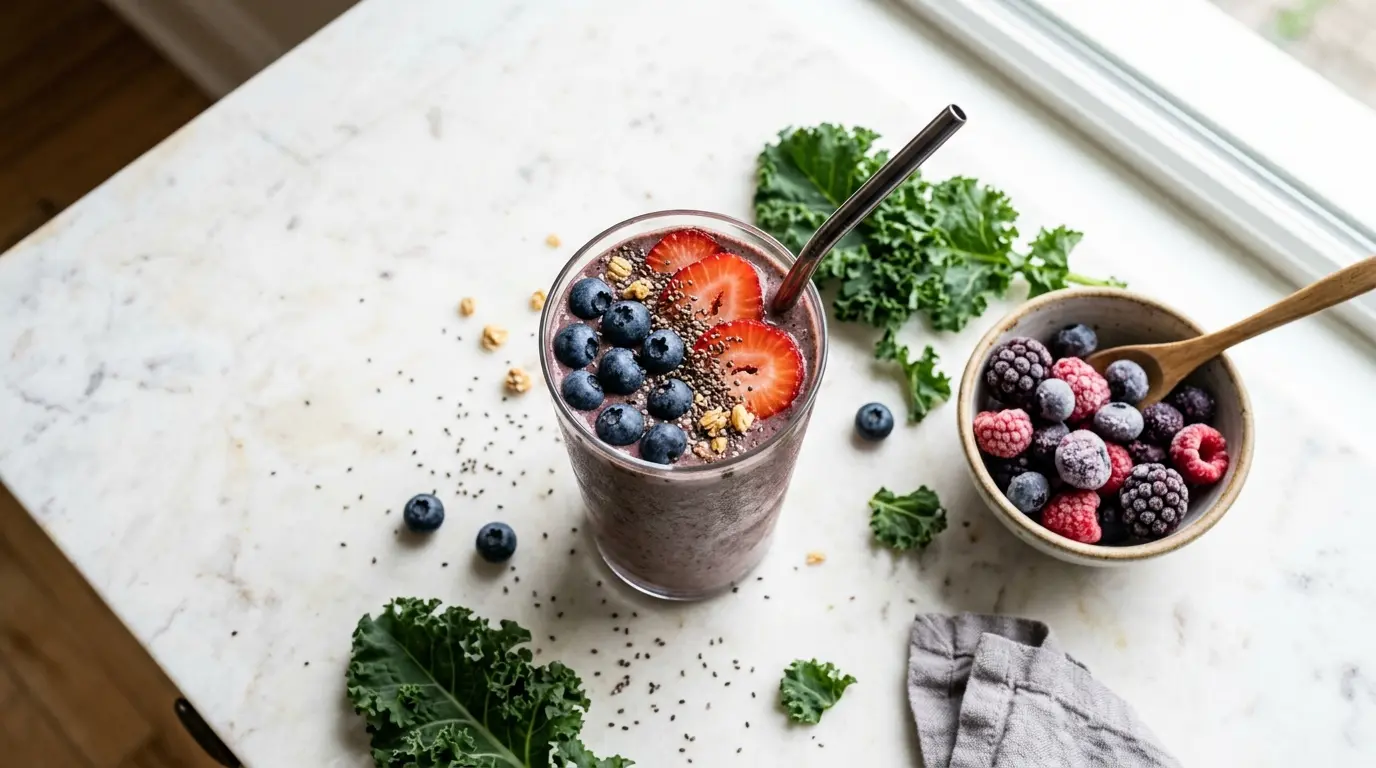
This smoothie blends fresh kale with frozen banana, mixed berries, and almond milk into something genuinely delicious. The frozen banana is the secret weapon here. It adds natural sweetness and a creamy, thick texture that makes every sip feel more like a treat than a health obligation.
Kale has a reputation for being bitter and hard to enjoy raw, but when you pair it with the right fruits, it completely disappears into the background. You get all the nutritional benefits without any of the unpleasant edge.
This recipe comes together in about five minutes with no cooking required. It’s the kind of breakfast or snack you can make on a busy morning without skipping a beat.
If you love green smoothies, you’ll definitely want to check out this Green Smoothie Recipe for more inspiration.
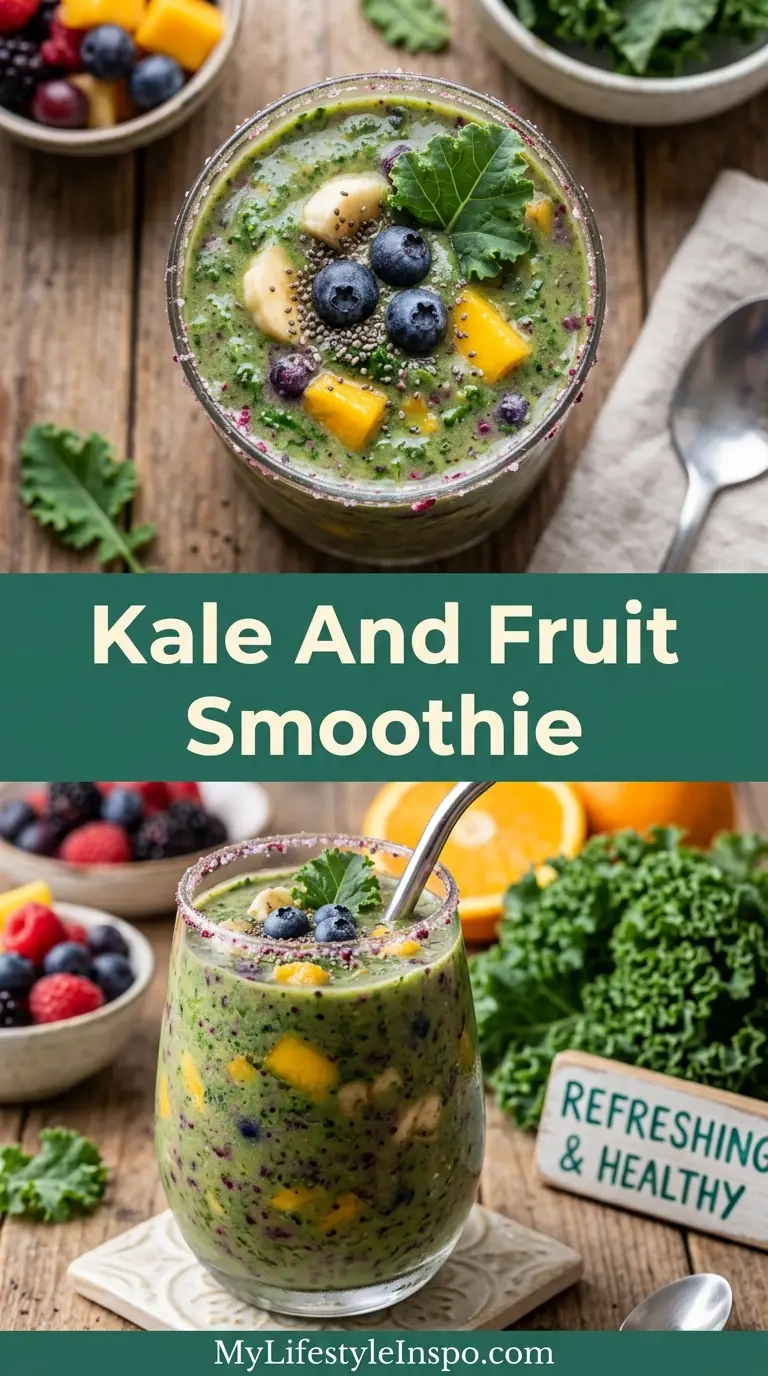
Why You’ll Love This Kale And Fruit Smoothie Recipe
This smoothie is one of the easiest things you can make, and it checks every box you need from a quick, healthy drink.
It requires no special cooking skills and comes together in minutes with just a blender and a handful of ingredients.
The flavor is genuinely good. The berries and banana carry the sweetness while the kale adds a mild earthiness that balances everything out beautifully.
It’s also incredibly flexible. You can swap the fruit, change the milk, or add boosters like protein powder or Greek yogurt depending on what you have on hand.
Here is what makes this recipe stand out:
- Quick and easy: Ready in under 5 minutes with minimal cleanup.
- Naturally sweetened: No added sugar needed thanks to the ripe banana and sweet berries.
- Packed with nutrients: Kale, berries, and banana together offer an impressive range of vitamins, minerals, and antioxidants.
- Customizable: Works beautifully with different fruits, milks, and add-ins.
- Beginner-friendly: No blending experience needed, just toss everything in and blend.
- Great for meal prep: You can pre-portion and freeze the ingredients in bags for fast weekday mornings.
Another morning favorite you might enjoy is this Spinach Smoothie Recipe for a milder green base option.
Ingredients
The ingredient list is short and easy to source. Everything in this recipe works together to deliver a thick, sweet, nutrient-rich smoothie that you will actually look forward to drinking.
- 2 cups (60g) fresh kale leaves, stems removed and roughly torn
- 1 medium frozen banana (about 120g), sliced before freezing
- 1 cup (150g) frozen mixed berries (blueberries, strawberries, raspberries)
- 1 cup (240ml) unsweetened almond milk (or any milk of your choice)
- 1/2 cup (120g) plain Greek yogurt (optional, for added protein and creaminess)
- 1 tablespoon (12g) chia seeds (optional, for added fiber and omega-3s)
- 1 teaspoon (7g) honey or maple syrup (optional, for extra sweetness)
- 1/2 cup (120ml) water or extra almond milk, to thin if needed
You might also enjoy the creamy, wholesome Peanut Butter Banana Smoothie Recipe as another filling breakfast option.
Kitchen Equipment Needed
You don’t need much to make this smoothie. Most of these tools are probably already in your kitchen.
- High-powered blender: Essential for breaking down the fibrous kale leaves into a smooth, lump-free drink. A regular blender can work but may leave small flecks of kale.
- Cutting board: For removing kale stems and roughly tearing the leaves.
- Sharp knife: To slice and prep the banana before freezing.
- Measuring cups and spoons: For accurate ingredient portions.
- Tall glass or mason jar: For serving your finished smoothie.
- Reusable straw: Optional, but makes sipping thick smoothies easier.
Read Also: Banana Protein Smoothie Recipe
Recommended Products for This Recipe
These are products that can genuinely make your smoothie experience better, selected for quality and performance.
1. Vitamix 5200 Blender
A high-powered blender like the Vitamix makes all the difference when blending fibrous leafy greens like kale. It pulverizes even the toughest leaves into a completely smooth, silky texture with zero gritty bits. This is one appliance that will transform how you make smoothies every single day.
2. Organic Frozen Mixed Berries
Using a quality bag of organic frozen mixed berries means your smoothie is packed with bright, concentrated fruit flavor without any artificial additives. Frozen berries also eliminate the need for extra ice, helping you maintain a thick, creamy consistency naturally.
3. Organic Chia Seeds
Chia seeds are a simple add-in that boosts fiber, omega-3 fatty acids, and protein in your smoothie without changing the flavor at all. A quality organic variety ensures you are getting the cleanest, most nutritious option.
4. Unsweetened Almond Milk
A carton of good-quality unsweetened almond milk keeps the smoothie dairy-free and light while adding a subtle nutty flavor that pairs beautifully with kale and berries. It also keeps the calorie count lower than dairy milk without sacrificing creaminess.
5. Glass Mason Jars for Smoothies
Serving your smoothie in a wide-mouth glass mason jar keeps it cool longer and makes drinking thick smoothies much more enjoyable. It also makes this smoothie feel a little more special without any extra effort.
You might also love this Chia Banana Boost Tropical Smoothie Recipe for another nutrient-rich morning blend.
Step-by-Step Instructions
Step 1: Prep the Kale
- Rinse your kale leaves thoroughly under cold running water to remove any dirt or debris.
- Lay each leaf flat on a cutting board and grip the stem firmly with one hand while pulling the leafy part away with the other. Discard all stems, as they are tough and bitter and will negatively affect the smoothie’s texture and taste.
- Roughly tear the kale leaves into smaller, palm-sized pieces. This helps your blender process them more efficiently and reduces strain on the motor.
- Measure out approximately 2 cups (60g) of loosely packed torn kale leaves and set aside.
Step 2: Prepare the Frozen Banana
- If you haven’t already frozen your banana, peel it, slice it into 1-inch (2.5cm) rounds, and place the slices in a zip-lock bag or airtight container. Freeze for at least 2 hours or overnight.
- A frozen banana is essential for this recipe. It gives the smoothie a thick, milkshake-like consistency and provides natural sweetness without any added sugar.
- If you only have a fresh banana, you can use it and add 1/2 cup (75g) of ice instead, but the texture won’t be quite as creamy.
- Remove the frozen banana slices from the freezer and set them aside while you gather the remaining ingredients.
Step 3: Measure Out All Remaining Ingredients
- Measure out 1 cup (150g) of frozen mixed berries directly from the freezer. Do not thaw them beforehand, as they help keep the smoothie cold and thick.
- Measure 1 cup (240ml) of unsweetened almond milk and pour it into a small jug or measuring cup.
- If using Greek yogurt, measure out 1/2 cup (120g) and set aside. Greek yogurt adds a creamy tang and a significant protein boost to the smoothie.
- If using chia seeds, measure out 1 tablespoon (12g). These are optional but add excellent fiber and omega-3 fatty acid content.
- If you prefer a sweeter smoothie, measure out 1 teaspoon (7g) of honey or maple syrup and set it aside for tasting at the end.
Step 4: Add Ingredients to the Blender in the Right Order
- Pour the almond milk into the blender first. This is a critical step. Adding the liquid at the bottom helps the blades engage immediately and prevents the frozen ingredients from jamming the motor.
- Next, add the prepared kale leaves. Placing the kale near the liquid helps it get pulled down into the blades faster for a smoother result.
- Add the frozen banana slices on top of the kale.
- Pour the frozen mixed berries over the banana.
- Add the Greek yogurt and chia seeds if using.
Step 5: Blend Until Completely Smooth
- Secure the blender lid firmly and start blending on low speed for about 10 seconds to begin breaking down the larger chunks.
- Increase the blender to high speed and blend for 45 to 60 seconds, or until the mixture is completely smooth with no visible kale flecks or fruit chunks.
- If the blender struggles or the mixture is too thick, add 1/4 cup (60ml) of extra almond milk or water at a time through the blender lid opening and blend again until smooth.
- If you notice the blender is just spinning without catching the ingredients, stop it, use a spatula to push everything down toward the blades, and try again.
Step 6: Taste and Adjust
- Open the blender lid and taste a small spoonful of the smoothie.
- If it tastes too earthy, add a few more berries or a splash of orange juice and blend briefly again.
- If it needs more sweetness, drizzle in the honey or maple syrup and blend for another 10 seconds.
- If it is too thick for your preference, add more almond milk a little at a time until you reach your desired consistency.
- If it is too thin, add a few more frozen fruit pieces and blend again.
Step 7: Pour and Serve Immediately
- Pour the finished smoothie into a tall glass or wide-mouth mason jar.
- Serve immediately for the best taste, texture, and nutritional value. Smoothies begin to separate and lose some of their vibrancy once they sit.
- Top with a few fresh berries, a sprinkle of chia seeds, or a drizzle of honey if desired for a beautiful presentation.
- Add a reusable straw and enjoy!
For another fruity and filling breakfast idea, try this Banana Mango Smoothie Recipe.
Tips for Success
A few simple adjustments make the difference between a good smoothie and a great one. Keep these in mind every time you blend.
- Freeze your banana in advance: Slicing and freezing bananas ahead of time is the single biggest tip for achieving a thick, creamy smoothie. Keep a bag of frozen banana slices in your freezer at all times.
- Add liquid first: Always add the almond milk or other liquid before the solid ingredients. This protects the blender motor and ensures everything blends smoothly without jamming.
- Remove kale stems completely: The stems are fibrous, bitter, and tough. Even a small amount left in can create a stringy texture and a harsh flavor in the final smoothie.
- Use frozen fruit instead of ice: Frozen berries and banana replace ice and add flavor at the same time, whereas ice just dilutes the smoothie as it melts.
- Blend on high: Kale is a tough leafy green that needs full blending power to break down completely. Always finish on the highest blender setting for a smooth, uniform texture.
- Pre-bag ingredients for easy mornings: Measure and freeze individual smoothie packs in zip-lock bags. On busy days, just dump a bag into the blender, add milk, and blend.
Read Also: Peach Smoothie Recipe With Yogurt
Serving Suggestions
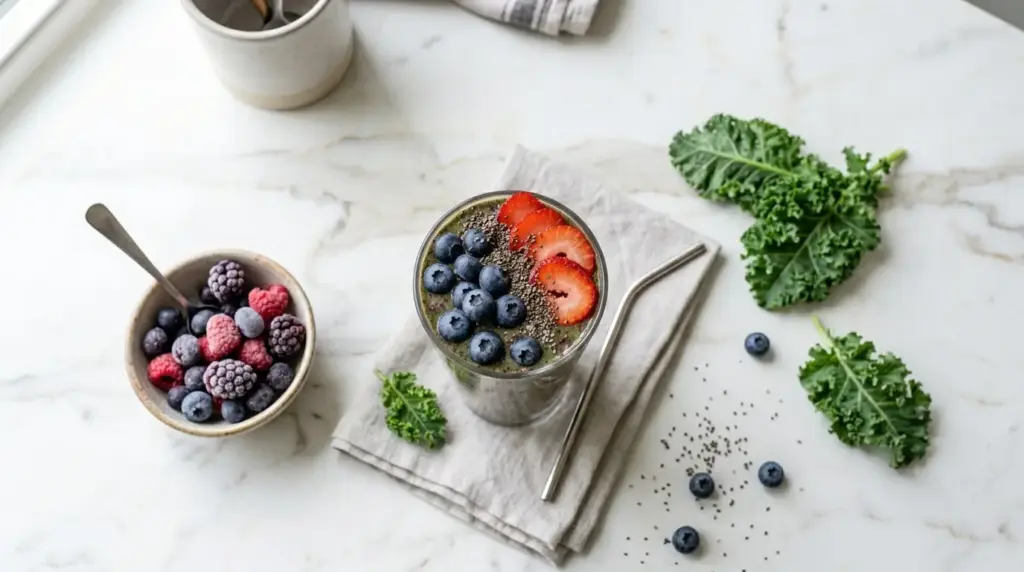
This smoothie is wonderfully versatile and pairs well with a variety of light, balanced breakfast foods that keep you energized through the morning.
It works especially well alongside a piece of whole grain toast with avocado for a well-rounded, satisfying start to the day. For a protein-packed morning, serve it next to a couple of soft scrambled eggs or a batch of fluffy protein pancakes.
Here are some great ways to enjoy and serve this smoothie:
- Pair with Easy Overnight Oats for a filling, fiber-rich breakfast combination.
- Serve alongside Avocado Toast for a balanced, energizing morning meal.
- Pour into two smaller glasses and serve as a light, refreshing mid-morning snack for two people.
- Serve it in a bowl, topped with granola, sliced banana, and a drizzle of honey for an acai bowl-style presentation.
- Pack it in an insulated tumbler for an easy, on-the-go breakfast during busy weekday mornings.
- Serve chilled alongside a slice of Baked Oatmeal for a complete, nutrient-dense brunch.
Variations to Try
Once you’ve made the base recipe, there are so many fun ways to switch it up depending on your mood, available ingredients, or nutritional goals.
Try these delicious variations the next time you blend up a batch:
- Tropical Kale Smoothie: Replace the mixed berries with 1 cup of frozen mango and 1/2 cup of frozen pineapple for a bright, tropical flavor that completely hides the kale.
- Kale Protein Smoothie: Add 1 scoop of vanilla or unflavored protein powder along with 2 tablespoons of almond butter for a post-workout recovery drink.
- Kale and Pineapple Smoothie: Use pineapple chunks instead of berries. The acidity of the pineapple cuts through the earthiness of the kale beautifully and keeps the smoothie bright green.
- Kale Peach Smoothie: Swap the mixed berries for 1 cup of frozen peach slices for a gentler, summer-inspired flavor profile.
- Kale Citrus Smoothie: Add the juice of 1/2 an orange or lemon to the blender for a bright, zesty lift that balances the kale’s natural earthiness perfectly.
- Kale and Avocado Smoothie: Add 1/4 of a ripe avocado for an extra-thick, ultra-creamy texture and a boost of healthy fats that keeps you full longer.
- Dairy-Free Kale Smoothie: Use coconut milk or oat milk instead of almond milk for a richer, slightly sweeter base that pairs well with tropical fruits.
For a completely different fruit-forward blend, the Strawberry Banana Blueberry Smoothie Recipe is a fantastic choice.
Storage and Reheating
Smoothies are always best enjoyed immediately after blending, but if you need to make one ahead, here is how to do it well.
- Refrigerator storage: Pour leftover smoothie into an airtight glass jar or container, filling it all the way to the top to minimize air exposure. Store in the refrigerator for up to 24 hours. Before drinking, give it a good shake or stir, as separation is normal.
- Freezer storage: Pour the smoothie into a freezer-safe container or silicone ice cube tray and freeze for up to 1 month. To drink, thaw in the refrigerator overnight or blend the frozen cubes with a splash of almond milk.
- Smoothie packs: The best way to meal prep smoothies is to pre-portion the solid ingredients (kale, frozen banana, frozen berries) into individual zip-lock bags and freeze them. When ready to drink, empty one bag into the blender, add milk, and blend fresh.
- Avoid reheating: This smoothie is designed to be served cold. Do not attempt to warm or reheat it.
For a similarly easy, prep-friendly option, check out this Pineapple Smoothie Recipe.
Nutritional Facts
The following values are based on one serving of the full recipe (without optional add-ins like Greek yogurt or chia seeds).
| Nutrient | Per Serving |
|---|---|
| Calories | 210 kcal |
| Carbohydrates | 44g |
| Protein | 4g |
| Fat | 4g |
| Saturated Fat | 0.3g |
| Fiber | 7g |
| Sugar | 24g (all natural) |
| Vitamin C | 90% DV |
| Vitamin K | 180% DV |
| Potassium | 580mg |
| Calcium | 20% DV |
| Iron | 8% DV |
Note: These values are estimates and will vary depending on the specific brands, ripeness of fruit, and add-ins used. Adding Greek yogurt increases protein to approximately 14g per serving.
Another great option for a nutrient-dense drink is the Blueberry Smoothie Recipe Without Yogurt.
Health Benefits of Key Ingredients
Each ingredient in this smoothie was chosen not just for flavor but for genuine nutritional value that supports your body in meaningful ways.
You don’t have to take a supplement when your morning drink is already doing this much good work for you.
Here is a closer look at what each key ingredient brings to the table:
- Kale: One of the most nutrient-dense foods on the planet, kale is loaded with vitamins K, A, and C, plus calcium, iron, and powerful antioxidants like quercetin and kaempferol that help reduce inflammation and support heart health.
- Frozen banana: A natural source of potassium, vitamin B6, and resistant starch, which feeds healthy gut bacteria and supports digestive health. It also provides quick, natural energy without a blood sugar crash.
- Mixed berries (blueberries, strawberries, raspberries): Rich in anthocyanins and other antioxidants that protect cells from oxidative stress, support brain health, and may reduce the risk of chronic disease. Berries are also high in fiber and low in calories.
- Almond milk: Provides a dairy-free source of calcium and vitamin E, which plays an important role in skin health and immune function. The unsweetened version keeps added sugar to zero.
- Greek yogurt (optional): A powerful source of protein, probiotics, and calcium. Adding it to this smoothie transforms it into a more filling, gut-friendly meal.
- Chia seeds (optional): Tiny but mighty, chia seeds provide plant-based omega-3 fatty acids, soluble fiber that promotes fullness, and a complete amino acid profile that supports muscle recovery.
For another antioxidant-rich green drink, try the Dragon Fruit Smoothie Recipe.
Frequently Asked Questions
1. Can I use frozen kale instead of fresh kale?
Yes, frozen kale works very well in this smoothie. It actually produces a thicker, frostier texture than fresh kale since it is already cold. Just measure out the same quantity (2 cups/60g) and add it directly to the blender without thawing. The flavor and nutritional value are virtually identical to fresh kale.
2. Does this smoothie really not taste like kale?
It genuinely doesn’t, as long as you use the right ratio of fruit. The frozen banana and mixed berries are sweet and flavorful enough to completely mask the earthy bitterness of the kale. This is especially true if you remove all of the stems before blending, since the stems carry most of the harsh flavor.
3. What can I use instead of almond milk?
You can use any liquid you like. Oat milk adds a slightly sweet, creamy flavor. Coconut milk adds richness and tropical notes. Regular dairy milk works well for a more traditional smoothie. Orange juice is another popular option that adds a citrusy brightness and helps cut through the kale flavor. Water works in a pinch but produces a thinner, less creamy result.
4. Can I make this smoothie without a banana?
Yes, but the texture and natural sweetness will be noticeably different. To replace the banana, add 1/2 a ripe avocado for creaminess, plus 1 extra tablespoon of honey or maple syrup for sweetness. You can also add an extra 1/2 cup of frozen mango, which provides similar thickness and sweetness without the banana flavor.
5. How do I make this smoothie higher in protein?
The easiest way is to add 1/2 cup (120g) of plain Greek yogurt, which adds about 10g of protein per serving. You can also blend in 1 scoop of vanilla or unflavored protein powder, or add 2 tablespoons of almond butter or hemp seeds. All of these options pair well with the fruit and kale flavors without overpowering the smoothie.
For more creative smoothie ideas, don’t miss this Yogurt Smoothie Recipe for a protein-packed variation.
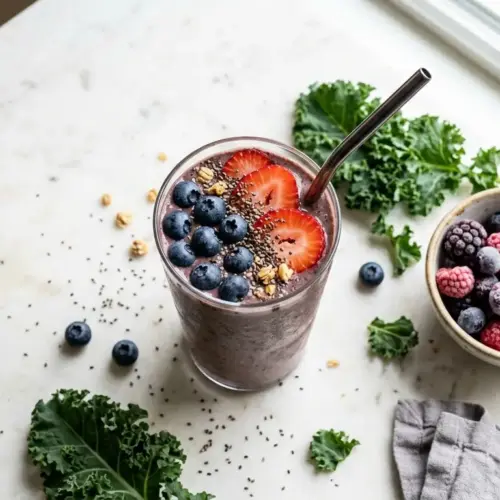
Kale And Fruit Smoothie

Equipment
- High-powered blender - Essential for breaking down fibrous kale leaves into a smooth, lump-free drink
- Cutting board - For removing kale stems and roughly tearing the leaves
- Sharp knife - For slicing and prepping the banana before freezing
- Measuring cups and spoons - For accurate ingredient portions
- Tall glass or mason jar - For serving your finished smoothie
- Reusable straw - Optional, but makes sipping thick smoothies easier
Ingredients
- 2 cups fresh kale leaves - 60g, stems removed and roughly torn
- 1 medium frozen banana - about 120g, sliced before freezing
- 1 cup frozen mixed berries - 150g, blueberries, strawberries, raspberries
- 1 cup unsweetened almond milk - 240ml, or any milk of your choice
Optional Add-ins
- 1/2 cup plain Greek yogurt - 120g, for added protein and creaminess
- 1 tablespoon chia seeds - 12g, for added fiber and omega-3s
- 1 teaspoon honey - 7g, or maple syrup, for extra sweetness
- 1/2 cup water - 120ml, or extra almond milk, to thin if needed
For Serving
- Fresh berries - optional, for topping
- Chia seeds - optional, for garnish
Instructions
- Rinse kale leaves thoroughly and remove all tough stems by pulling the leafy part away from the stem. Tear into palm-sized pieces and measure 2 cups.
- Ensure banana is frozen solid. If using fresh, freeze slices for at least 2 hours. Frozen banana is essential for thick, creamy texture.
- Measure all remaining ingredients: frozen mixed berries, almond milk, Greek yogurt, chia seeds, and honey if using.
- Add almond milk to the blender first, then kale leaves, frozen banana, frozen berries, Greek yogurt, and chia seeds in that order.
- Blend on low for 10 seconds to break up chunks, then increase to high and blend for 45-60 seconds until completely smooth with no visible kale flecks.
- Taste the smoothie and adjust sweetness with honey or maple syrup if needed. Thin with extra almond milk or water if too thick.
- Pour into a tall glass or mason jar and serve immediately. Top with fresh berries or a sprinkle of chia seeds if desired.
Notes
- Freeze your banana in advance: Slicing and freezing bananas ahead of time is the single biggest tip for achieving a thick, creamy smoothie. Keep a bag of frozen banana slices in your freezer at all times.
- Add liquid first: Always add the almond milk or other liquid before the solid ingredients. This protects the blender motor and ensures everything blends smoothly without jamming.
- Remove kale stems completely: The stems are fibrous, bitter, and tough. Even a small amount left in can create a stringy texture and a harsh flavor in the final smoothie.
- Use frozen fruit instead of ice: Frozen berries and banana replace ice and add flavor at the same time, whereas ice just dilutes the smoothie as it melts.
- Pre-bag ingredients for easy mornings: Measure and freeze individual smoothie packs in zip-lock bags. On busy days, just dump a bag into the blender, add milk, and blend.
- Substitution for almond milk: Oat milk adds a slightly sweet, creamy flavor. Coconut milk adds richness and tropical notes. Regular dairy milk works well for a more traditional smoothie. Orange juice adds a citrusy brightness that cuts through the kale flavor.
- Banana-free variation: Replace banana with 1/2 a ripe avocado for creaminess plus 1 extra tablespoon of honey or maple syrup. You can also add an extra 1/2 cup of frozen mango for similar thickness and sweetness.
- Higher protein option: Add 1/2 cup (120g) of plain Greek yogurt (adds about 10g protein) or blend in 1 scoop of vanilla or unflavored protein powder.
- Storage tip: Store leftover smoothie in an airtight container in the refrigerator for up to 24 hours. Shake or stir before drinking as separation is normal. For longer storage, freeze in a freezer-safe container for up to 1 month.
Final Thoughts
This kale and fruit smoothie recipe proves that healthy eating doesn’t have to be a compromise.
You get an incredibly nutrient-dense drink that genuinely tastes like a fruit smoothie, not a salad. Once you get into the habit of making it, you’ll wonder how you ever started your mornings any other way.
Give it a try this week and see for yourself how good it can be. If you love it, leave a comment below sharing how you made it your own, or share it with a friend who needs an easy, healthy breakfast idea!
Recommended:
- Green Smoothie Recipe
- Banana Smoothie Recipe Without Yogurt
- Mango Smoothie Recipe Without Yogurt
- Passion Fruit Smoothie Recipe
- Watermelon Smoothie Recipe
- Papaya Smoothie Recipe
- Strawberry And Blackberry Smoothie Recipe
- Strawberry Smoothie Recipe Without Milk
- Peanut Butter Jelly Smoothie Recipe
- Avocado Smoothie Recipe