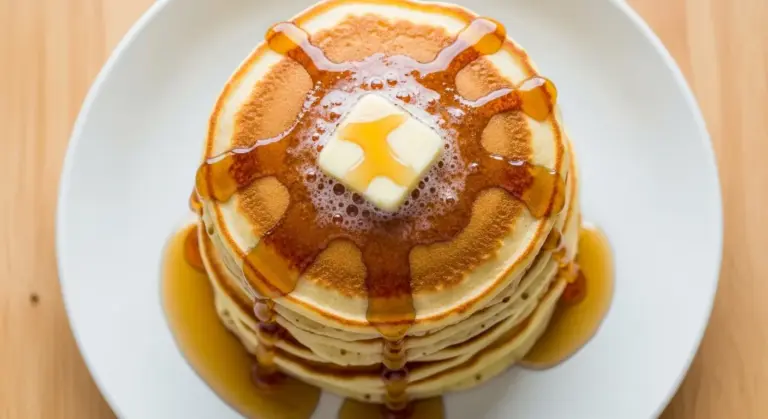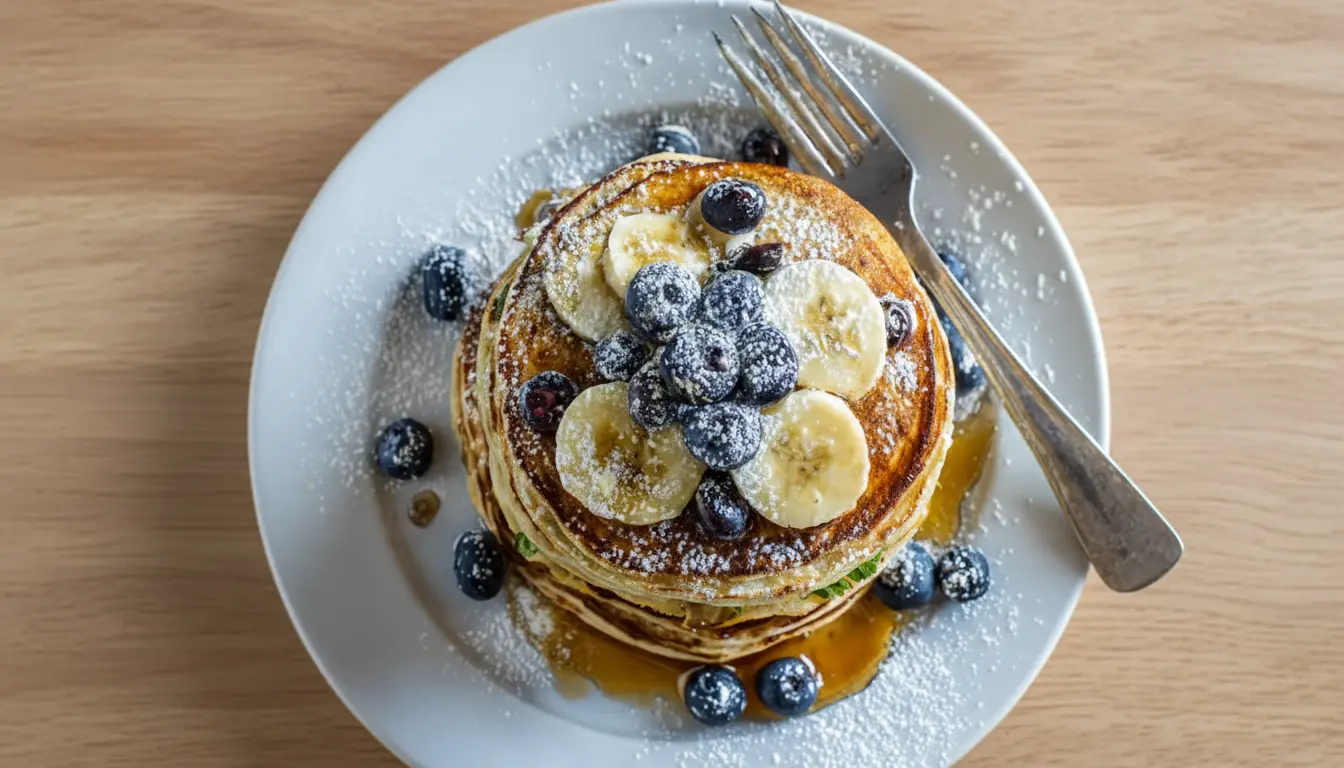
If you’ve been searching for the perfect vegan protein pancakes recipe, your Sunday mornings are about to get a serious upgrade.
These pancakes are fluffy, golden, and absolutely packed with plant-based protein, so you won’t find yourself hungry again an hour later.
Unlike regular pancakes that are mostly starch and air, this recipe leans on a combination of protein powder, oat flour, and flaxseed to create a stack that actually keeps you full.
The batter comes together in about 5 minutes, the cook time is quick, and the results are consistently impressive, even on a groggy morning.
What makes this version stand out is the balance between macros and flavor. We’re talking about pancakes that taste like a treat but fuel you like a proper meal.
If you love protein-packed breakfasts, you’ll also want to check out this Easy Protein Pancakes Recipe for a non-vegan version to compare notes.
Why You’ll Love This Vegan Protein Pancakes Recipe
These pancakes check off every box you want in a morning meal.
They’re high in protein, free from animal products, naturally sweetened, and seriously delicious without tasting “healthy” in a cardboard kind of way.
The oat flour base gives them a heartier texture than all-purpose flour, and the protein powder adds a subtle vanilla or chocolate note depending on which kind you use.
The flax egg binds everything together beautifully, so there’s no rubbery texture or falling-apart situation on the griddle.
They’re also incredibly versatile. You can prep the dry ingredients ahead of time, use different protein powder flavors, and swap toppings endlessly.
Here’s why readers keep coming back to this recipe:
- High protein content — up to 20+ grams per serving depending on your protein powder
- No eggs or dairy — 100% plant-based and suitable for vegans
- Naturally sweetened — banana or maple syrup adds sweetness without refined sugar
- Quick and easy — ready in under 20 minutes from start to finish
- Freezer-friendly — make a big batch and reheat all week long
- Kid-approved — fluffy, golden, and delicious even for non-vegans
Another great high-protein breakfast you might love is this Chocolate Protein Pancakes Recipe if you’re a chocolate fan.
Ingredients
Making these pancakes requires a short list of wholesome, pantry-friendly ingredients. The key players are the vegan protein powder and oat flour, which work together to create a thick, scoopable batter that holds its shape on the griddle without any eggs.
Here’s everything you’ll need for 2 servings (about 6 medium pancakes):
- 1 cup (90g) oat flour (or blend rolled oats into a fine powder)
- 2 scoops (60g) vegan vanilla protein powder
- 1 tbsp (7g) ground flaxseed + 3 tbsp (45ml) water (this is your flax egg)
- 1 tsp baking powder
- ½ tsp baking soda
- ¼ tsp salt
- ½ tsp cinnamon
- 1 medium ripe banana, mashed (about ½ cup / 120g)
- ¾ cup (180ml) unsweetened plant-based milk (oat milk, almond milk, or soy milk all work great)
- 1 tsp pure vanilla extract
- 1 tbsp maple syrup (optional, for extra sweetness)
- 1 tsp coconut oil or neutral cooking oil (for the pan)
Read Also: Protein Pancakes Recipe Without Protein Powder
Kitchen Equipment Needed
You don’t need any specialty gadgets to pull this recipe off. A standard non-stick skillet or griddle is the most important piece of equipment, as it ensures the pancakes cook evenly and release cleanly without sticking.
Here’s what to have ready:
- Large mixing bowl
- Small bowl (for the flax egg)
- Non-stick skillet or electric griddle
- Whisk
- Rubber spatula or flat pancake turner
- Measuring cups and spoons
- Blender or food processor (if making oat flour from scratch)
- Ladle or ¼ cup measure (for portioning batter)
- Pastry brush or paper towel (for oiling the pan)
You might also enjoy: Gluten-Free Protein Pancakes Recipe
Recommended Products for This Recipe
These are products I genuinely recommend based on quality and performance. They make a real difference in your results.
1. Vegan Vanilla Protein Powder
A high-quality vegan protein powder is the backbone of this recipe. Look for one that’s made with pea protein or a pea/rice blend, as these dissolve well into batter without becoming gummy. A good vanilla-flavored powder adds natural sweetness and enhances the overall flavor without needing extra sugar. Avoid brands with a chalky aftertaste, as that will carry through into your pancakes.
2. Non-Stick Electric Griddle
An electric griddle gives you a large, flat, evenly heated surface that’s perfect for cooking multiple pancakes at once. Unlike a stovetop skillet, a griddle maintains a consistent temperature across the whole surface, which means no hot spots and no unevenly browned pancakes. This is the single upgrade that makes the biggest difference in results.
3. Certified Gluten-Free Oat Flour
If you’re making this recipe for someone with gluten sensitivity, certified gluten-free oat flour is a must. Regular oats can be cross-contaminated during processing, so look for a brand that explicitly labels its oat flour as certified gluten-free. The texture and flavor are identical, and it blends perfectly in this batter.
4. Organic Ground Flaxseed
Flaxseed is the secret egg replacer in this recipe. When mixed with water, it forms a gel that mimics the binding power of eggs. Look for pre-ground (milled) flaxseed rather than whole seeds, as the gel only forms properly when the seed is ground. Store it in the fridge after opening to keep it fresh.
5. Silicone Pancake Spatula
A wide, thin silicone spatula makes flipping these pancakes clean and confident. A spatula that’s too narrow or too thick can deflate the pancakes when you slide it underneath. A flat silicone turner slides easily under the pancake without tearing it, which is especially important for protein pancakes that can be slightly more delicate than traditional ones.
Read Also: Banana Protein Pancakes Recipe
Step-by-Step Instructions
1. Make the Flax Egg
- In a small bowl, combine 1 tablespoon (7g) of ground flaxseed with 3 tablespoons (45ml) of water.
- Stir the mixture well with a fork until fully combined.
- Set it aside for 5 minutes. During this time, the flaxseed will absorb the water and form a thick, gel-like consistency.
- This gel acts as your egg substitute and is what holds the batter together. Don’t skip the resting time, as an under-gelled flax egg won’t bind the batter properly.
2. Mash the Banana
- Peel the ripe banana and place it in your large mixing bowl.
- Using a fork, mash it thoroughly until it’s smooth with only a few small lumps remaining.
- A riper banana (one with brown spots on the skin) is ideal here, as it’s sweeter and mashes more easily.
- The banana adds natural sweetness, moisture, and a subtle flavor that complements the vanilla protein powder beautifully.
3. Combine the Wet Ingredients
- To the mashed banana, add ¾ cup (180ml) of plant-based milk, 1 teaspoon of vanilla extract, and 1 tablespoon of maple syrup if using.
- Pour in the flax egg (which should now be thick and gel-like).
- Whisk all the wet ingredients together until fully combined and smooth.
- The mixture should look like a loose, slightly yellow batter at this stage.
4. Mix the Dry Ingredients
- In a separate bowl or directly into the wet ingredients, measure out 1 cup (90g) of oat flour, 2 scoops (60g) of vegan protein powder, 1 teaspoon of baking powder, ½ teaspoon of baking soda, ¼ teaspoon of salt, and ½ teaspoon of cinnamon.
- Whisk the dry ingredients together briefly before adding them to the wet mixture to ensure even distribution of the leavening agents.
5. Make the Batter
- Pour the dry ingredients into the bowl with the wet ingredients.
- Gently fold everything together using a rubber spatula or whisk just until combined.
- Do not overmix. A few small lumps in the batter are completely fine and actually preferred. Overmixing develops the oat flour’s starch and can make the pancakes dense and chewy instead of light and fluffy.
- If the batter looks too thick (like cookie dough), add 1-2 tablespoons of extra plant milk and stir gently.
- If it looks too thin (runny like crepe batter), add 1 tablespoon of oat flour and stir gently. The ideal batter is thick and scoopable, like muffin batter.
- Let the batter rest for 2-3 minutes. This allows the oat flour to fully hydrate and gives you fluffier results.
6. Heat the Pan
- Place your non-stick skillet or griddle over medium heat.
- Allow it to heat up for 1-2 full minutes before adding any oil. A properly preheated pan is the key to golden, non-sticky pancakes.
- Add ½ teaspoon of coconut oil to the pan and use a pastry brush or folded paper towel to spread it lightly and evenly across the surface.
- To test if the pan is ready, flick a few drops of water onto the surface. If they sizzle and evaporate immediately, the pan is at the right temperature.
7. Cook the Pancakes
- Use a ladle or ¼ cup (60ml) measure to scoop the batter and pour it onto the hot pan.
- Leave a few inches of space between each pancake to allow for spreading.
- Cook the first side for 2-3 minutes, or until you see bubbles forming on the surface of the pancake and the edges look set and dry.
- This is the signal that the pancake is ready to flip. Don’t rush this step by flipping too early, as the pancake won’t hold together properly.
- Carefully slide your spatula fully underneath the pancake and flip it in one confident, smooth motion.
- Cook the second side for 1-2 minutes, until it’s golden brown on the bottom.
- Transfer the cooked pancakes to a plate and tent loosely with foil to keep them warm while you cook the remaining batches.
- Lightly re-oil the pan between each batch to prevent sticking.
8. Serve
- Stack your vegan protein pancakes on a plate and add your desired toppings.
- Serve immediately while they’re warm and fluffy for the best texture.
- See the “Serving Suggestions” section below for topping ideas and pairing options.
This recipe is similar in technique to the popular Copycat Kodiak Protein Pancakes Recipe, which is worth checking out if you love that brand’s style.
Tips for Success
Even a straightforward recipe like this one has a few small tricks that separate good pancakes from great ones. Here’s what makes the biggest difference when making this vegan protein pancakes recipe:
- Use ripe bananas. The riper the banana, the sweeter and more flavorful your pancakes will be. Brown-spotted bananas mash more easily and give the batter a naturally sweet flavor that reduces the need for added sweeteners.
- Don’t skip the batter rest. Letting the batter sit for 2-3 minutes after mixing allows the oat flour to hydrate fully, which gives you a thicker, more stable batter and fluffier pancakes.
- Choose the right protein powder. Not all vegan protein powders behave the same in batter. A pea protein or pea/rice blend powder typically gives the best texture. Avoid proteins with thickeners like guar gum or xanthan gum in high amounts, as they can make the batter gluey.
- Medium heat is non-negotiable. Too high and the outsides burn before the inside cooks. Too low and the pancakes spread too flat and turn pale. Medium heat consistently gives you that golden crust with a fluffy center.
- Look for bubbles before flipping. Bubbles breaking through the top surface of the pancake and edges that look set are your signal to flip. Don’t peek by lifting the edge too early.
- Keep cooked pancakes warm. Place finished pancakes on an oven-safe plate in an oven set to 200°F (93°C) while you cook the rest. This keeps them warm without letting them steam and go soft.
- For extra fluffiness, separate the batter into smaller pancakes (3-inch diameter) rather than large ones. Smaller pancakes flip more easily and tend to rise more uniformly.
Another helpful tip: if you want to reduce the banana flavor, replace the mashed banana with ¼ cup (60g) of unsweetened applesauce and it works just as well.
For more breakfast inspiration, you might love this Protein Pancakes Recipe Without Yogurt as an alternative.
Serving Suggestions
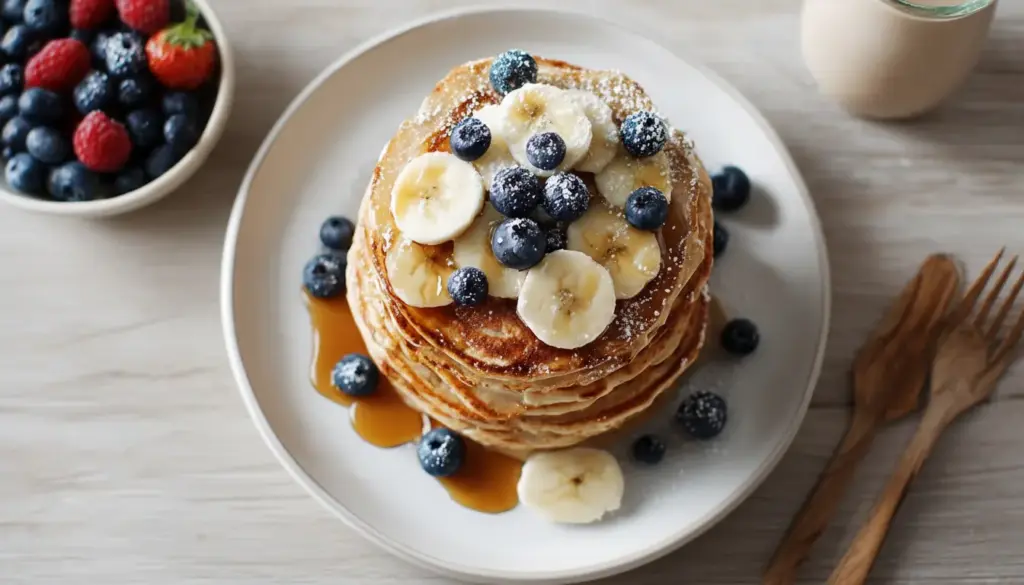
Vegan protein pancakes are incredibly versatile, and what you put on top can completely change the experience.
Classic toppings include pure maple syrup and sliced fresh fruit, which keep things simple and naturally sweet.
But there are so many other wonderful ways to serve them, from nut butters to coconut whipped cream to warm berry compote.
Here are some of our favorite serving ideas:
- Fresh berries and maple syrup — the classic combo that never gets old; blueberries, raspberries, or sliced strawberries all work
- Almond butter or peanut butter drizzle — adds more protein and healthy fat for a filling, satisfying meal
- Sliced banana and chia seeds — doubles down on plant-based nutrition and looks gorgeous on the plate
- Coconut whipped cream — light, dairy-free, and absolutely delicious piled high on a stack
- Warm berry compote — heat frozen berries with a teaspoon of maple syrup until jammy, then spoon over the top
- Granola sprinkle — adds crunch and texture; try this alongside Easy Granola for a double-crunch effect
- Shredded coconut and mango slices — a tropical-inspired stack that feels like a vacation in a bite
Variations to Try
Once you’ve mastered the base recipe, you can mix things up in all kinds of delicious ways. The oat flour and flax egg base is adaptable to almost any flavor direction you want to take it.
Here are some fun variations to experiment with:
- Chocolate vegan protein pancakes — swap vanilla protein powder for chocolate protein powder and add 1 tablespoon of cocoa powder to the dry ingredients for an even deeper chocolate flavor
- Blueberry protein pancakes — fold ½ cup (75g) of fresh or frozen blueberries into the batter just before cooking for bursts of fruit in every bite
- Pumpkin protein pancakes — replace the mashed banana with ½ cup (120g) of pumpkin puree and add ½ teaspoon of pumpkin pie spice to the dry ingredients; this also pairs beautifully with the Pumpkin Pancake Recipe for comparison
- PB&J protein pancakes — swirl 1 tablespoon of peanut butter into the batter and top with a spoonful of jam for a nostalgic twist
- Banana foster-style pancakes — cook sliced bananas in a little coconut oil and maple syrup until caramelized, then spoon over the stack
- Cinnamon roll pancakes — add an extra teaspoon of cinnamon and a pinch of cardamom to the batter, then swirl a mixture of coconut sugar and vegan butter on top while cooking
- Protein pancake muffin bites — pour the batter into a greased mini muffin tin and bake at 375°F (190°C) for 12-14 minutes for a grab-and-go breakfast option
Storage and Reheating
One of the best things about this recipe is how well the pancakes store, making them ideal for meal prep. Cooked pancakes keep their flavor and texture surprisingly well when stored and reheated properly.
Here’s how to store and reheat them:
- Refrigerator: Stack cooled pancakes with a small piece of parchment paper between each one to prevent sticking. Store in an airtight container in the fridge for up to 4 days.
- Freezer: Lay cooled pancakes in a single layer on a baking sheet and freeze for 1 hour until solid. Then transfer to a zip-lock freezer bag or airtight container and freeze for up to 3 months.
- Reheat in the microwave: Place 2-3 pancakes on a microwave-safe plate, cover loosely with a damp paper towel, and microwave on high for 45-60 seconds, or until heated through.
- Reheat in the toaster: For a slightly crispier exterior, pop the frozen or refrigerated pancakes directly in the toaster on a medium setting. This is the best method for restoring that freshly-cooked texture.
- Reheat in the oven: Arrange pancakes on a baking sheet, cover with foil, and warm at 325°F (160°C) for about 10 minutes. This is the best method when reheating a large batch.
You might also enjoy: Easy Overnight Oats Recipe
Nutritional Facts
The following nutrition information is an estimate per serving (3 pancakes), based on using vanilla pea protein powder, oat milk, and one medium banana. Actual values will vary based on the specific protein powder and plant milk you use.
| Nutrient | Per Serving (3 pancakes) |
|---|---|
| Calories | ~320 kcal |
| Protein | ~22g |
| Carbohydrates | ~38g |
| Dietary Fiber | ~5g |
| Total Fat | ~7g |
| Saturated Fat | ~1.5g |
| Sugar | ~10g |
| Sodium | ~280mg |
| Calcium | ~15% DV |
| Iron | ~20% DV |
These pancakes deliver a solid macro profile for a plant-based breakfast. The combination of oat flour and protein powder provides both slow-digesting complex carbohydrates and fast-absorbing protein, making them ideal before or after a workout.
Read Also: Protein Pancakes Recipe No Eggs
Health Benefits of Key Ingredients
This recipe is built around ingredients that don’t just taste great — they actively support your health and wellbeing.
Every ingredient in this vegan protein pancakes recipe was chosen with both flavor and nutrition in mind.
Here’s a closer look at the star ingredients and what they bring to the table:
- Oat flour — rich in soluble fiber (specifically beta-glucan), which helps lower cholesterol, stabilize blood sugar, and keep you feeling full longer; oats are also a great source of manganese, phosphorus, and B vitamins
- Vegan protein powder (pea or pea/rice blend) — provides a complete amino acid profile that supports muscle repair and recovery; pea protein is also easier to digest for many people compared to whey protein
- Ground flaxseed — one of the best plant-based sources of omega-3 fatty acids (ALA), plus it’s high in lignans (antioxidants) and soluble fiber that supports gut health
- Banana — supplies natural sugars for quick energy, potassium for heart and muscle function, and vitamin B6 for mood regulation and energy metabolism
- Plant-based milk (oat or almond) — typically fortified with calcium and vitamin D, making it a strong dairy-free alternative; oat milk in particular adds a creaminess that works beautifully in pancake batter
- Cinnamon — contains cinnamaldehyde, a compound shown in research to help improve insulin sensitivity and reduce inflammation; even a small amount adds real nutritional value, not just flavor
For another protein-rich, plant-forward breakfast idea, this Banana Protein Smoothie pairs wonderfully with a smaller stack of these pancakes.
Frequently Asked Questions
1. Can I make vegan protein pancakes without banana?
Yes, absolutely. If you’re not a fan of banana or want a more neutral flavor, replace the mashed banana with ½ cup (120g) of unsweetened applesauce or ¼ cup (60g) of pumpkin puree. Both options provide the same moisture and binding function without the banana flavor. Your pancakes will be slightly less sweet, so you may want to add an extra tablespoon of maple syrup to compensate.
2. What type of vegan protein powder works best in pancakes?
Pea protein powder and pea/rice blend powders consistently give the best results in pancake batter. They dissolve well, have a neutral flavor, and don’t create a gummy or chalky texture. Hemp protein is also a good option but can add a slightly earthy taste. Soy protein isolate works but can sometimes make the pancakes a bit denser. Always choose a protein powder with vanilla or unflavored varieties for the most versatile base, and avoid any powder with a strong artificial sweetener taste.
3. Why are my vegan protein pancakes dense and flat?
Dense, flat pancakes are almost always caused by one of three things: overmixing the batter, using too much protein powder, or cooking on too low a heat. Overmixing deflates the air in the batter and overdevelops the flour starches. Using more than the recommended amount of protein powder can absorb too much moisture and weigh the batter down. Low heat causes the pancakes to spread before the outside sets. Stick to the ratios in the recipe, mix gently, and use a properly preheated medium-heat pan for best results.
4. Can I make the batter the night before?
You can prep it halfway the night before by mixing together all the dry ingredients and storing them in a sealed container or bag. In the morning, mix the wet ingredients, combine with the dry, and cook. Storing the fully mixed batter overnight is not recommended, as the oat flour will continue absorbing liquid and the batter can become too thick and the leavening agents will lose some of their potency. Freshly mixed batter gives the fluffiest results.
5. Are these pancakes gluten-free?
This recipe is naturally gluten-free as written, as long as you use certified gluten-free oat flour. Regular oats and oat flour can be processed in facilities that also handle wheat, which introduces cross-contamination. If you or someone you’re cooking for has celiac disease or a serious gluten sensitivity, look specifically for oat flour that is labeled “certified gluten-free.” Your protein powder should also be checked for gluten-containing ingredients.
For a full deep-dive on gluten-free pancake options, check out the Gluten-Free Pancake Recipe for more tips and techniques.
Final Thoughts
This vegan protein pancakes recipe is proof that eating plant-based doesn’t mean sacrificing any of the things you love about a classic breakfast.
These pancakes are fluffy, satisfying, naturally sweetened, and genuinely delicious, whether you’re vegan or just looking to cut back on animal products a few mornings a week.
The ingredient list is simple, the process is beginner-friendly, and the results are consistently impressive.
Give this recipe a try this weekend and see for yourself how good a protein-packed, 100% plant-based breakfast can be.
If you make them, drop a comment below and let us know how they turned out, what toppings you used, and any fun variations you tried. We’d love to hear from you, and sharing this post helps other readers find this recipe too!
Recommended:
- Cottage Cheese Protein Pancakes Recipe
- Copycat IHOP Protein Pancakes Recipe
- Buttermilk Pancake Recipe
- Old Fashioned Pancake Recipe
- Pancake Recipe Without Milk
- Cracker Barrel Pancake Recipe
- German Pancake Recipe
- Avocado Toast Recipe
- Green Smoothie Recipe
- Fruit Salad Recipe