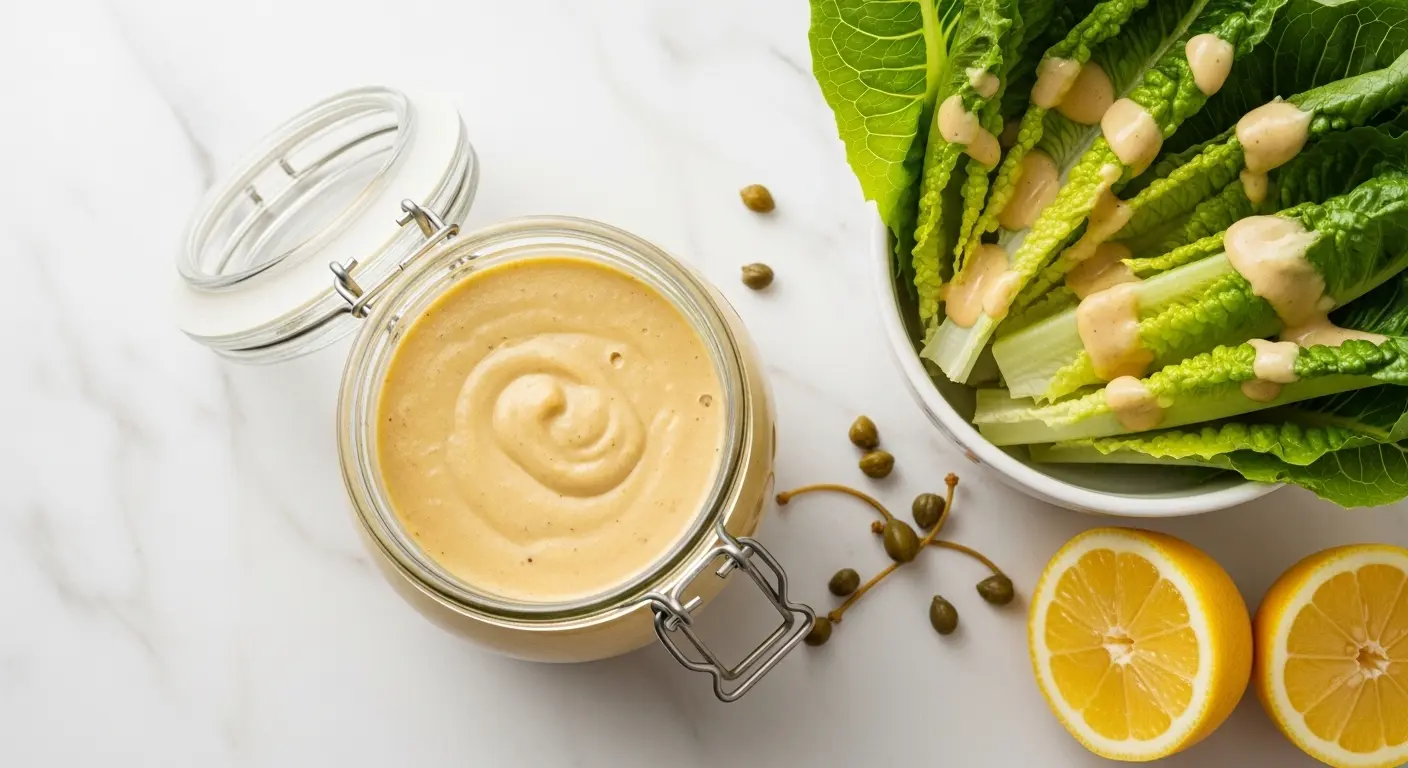
This vegan Caesar salad dressing recipe proves that you absolutely do not need anchovies, egg yolks, or Parmesan to nail that bold, creamy, umami-packed flavor everyone loves.
Made with a base of raw cashews or silken tofu, this plant-based version delivers the same briny depth and rich texture as the classic, and it comes together in under 10 minutes with just a blender.
What makes this dressing work so well is the combination of capers (which stand in for anchovies and provide that essential brininess), nutritional yeast (for a cheesy, savory quality), and Dijon mustard (for emulsification and sharpness). These three ingredients are the secret to a vegan Caesar that actually tastes like Caesar.
If you’ve tried store-bought vegan Caesar dressings and been disappointed, this homemade version will change your mind completely. The flavor is brighter, richer, and far more satisfying.
You might also enjoy: Original Caesar Salad Dressing Recipe
Why You’ll Love This Vegan Caesar Salad Dressing Recipe
This dressing is one of those recipes that disappears fast, and people always ask for the recipe.
It checks every box: creamy, tangy, garlicky, and deeply savory, all without a single animal product.
It’s also incredibly versatile. Beyond salads, you can use it as a sandwich spread, a dipping sauce for veggies, or a drizzle over roasted vegetables.
The prep is minimal, and the blender does all the heavy lifting. Even if you’ve never made a homemade dressing from scratch, this one is completely approachable.
Here’s what makes this vegan Caesar dressing a must-try:
- No anchovies needed: Capers and a splash of their brine deliver the same salty, briny punch that anchovies traditionally provide.
- Dairy-free and egg-free: Cashews or silken tofu create the creamy base without any dairy or raw egg yolks.
- Ready in under 10 minutes: Blend everything together and it’s done. No cooking required.
- Customizable consistency: Add more water or lemon juice to thin it, or let it chill to thicken up.
- Stays fresh in the fridge: This dressing keeps well for up to a week, so you can make a batch and enjoy it all week long.
- Whole food ingredients: No preservatives, no mystery additives, just real, recognizable ingredients.
Read Also: Homemade Caesar Salad Dressing Recipe
Ingredients
The key to this dressing is using high-quality cashews and a good-quality Dijon mustard. Soaking the cashews ahead of time is what gives the dressing its ultra-smooth, creamy texture, so don’t skip that step.
- Raw cashews – 1 cup (140 g), soaked in water for at least 2 hours (or overnight); this is the creamy base of the dressing
- Water – 3 to 4 tablespoons (45 to 60 ml), plus more to adjust consistency
- Fresh lemon juice – 3 tablespoons (45 ml), from about 1.5 lemons
- Capers – 2 tablespoons (17 g), drained, plus 1 teaspoon of caper brine
- Dijon mustard – 1 tablespoon (15 g), for sharpness and emulsification
- Nutritional yeast – 3 tablespoons (18 g), for a cheesy, umami flavor
- Garlic – 2 medium cloves, minced (or 1 large clove)
- Soy sauce – 1 teaspoon (5 ml), or tamari for gluten-free (adds depth and umami)
- Worcestershire sauce (vegan) – 1 teaspoon (5 ml), optional but recommended for extra depth
- Olive oil – 2 tablespoons (30 ml), extra virgin olive oil for richness and body
- Black pepper – ¼ teaspoon (0.5 g), freshly ground
- Salt – to taste
This recipe makes approximately ¾ cup (180 ml) of dressing, enough for 4 generous salad servings.
This dressing also pairs beautifully as a sauce over a crisp broccoli salad.
Kitchen Equipment Needed
You don’t need much to pull this recipe together. The most important tool is a high-powered blender, which is what gives this dressing its signature silky-smooth finish.
- High-speed blender – essential for achieving a perfectly smooth, creamy texture
- Measuring cups and spoons – for accurate ingredient amounts
- Mixing bowl – for soaking the cashews
- Small strainer or colander – for draining the soaked cashews
- Citrus juicer or reamer – for squeezing fresh lemon juice easily
- Airtight glass jar or storage container – for storing the finished dressing in the fridge
- Chef’s knife and cutting board – for mincing the garlic
Recommended Products for This Recipe
These are a few products that genuinely make a difference when preparing this dressing, based on quality, performance, and convenience.
1. Vitamix 5200 Blender
A high-powered blender like the Vitamix transforms raw soaked cashews into an incredibly silky, smooth dressing with no grainy bits. A regular blender may leave the texture slightly rough, which is why investing in a powerful blender makes a noticeable difference. It’s one of the most-used tools in any plant-based kitchen.
2. Anthony’s Nutritional Yeast Flakes
Nutritional yeast is the backbone of the cheesy, savory flavor in this vegan Caesar. Anthony’s is a popular choice among plant-based cooks because it’s non-fortified, tested for purity, and has a robust, almost nutty flavor that works beautifully in dressings, sauces, and cheesy toppings. Using a high-quality nutritional yeast makes a real difference in the final flavor.
3. Raw Organic Cashews (Bulk)
The quality of your cashews directly affects the creaminess and flavor of the dressing. Raw, organic cashews blend much smoother than roasted ones and have a neutral flavor that lets the other ingredients shine. Buying in bulk is also cost-effective if you use cashews regularly in plant-based cooking.
4. Maille Dijon Originale Mustard
Dijon mustard is critical for emulsifying this dressing and adding that classic sharp, tangy flavor. Maille is widely considered one of the best Dijon mustards available, with a clean, punchy flavor that doesn’t taste overly vinegary or watered down. A good Dijon makes the dressing taste more complex and restaurant-quality.
5. Leak-Proof Glass Salad Dressing Bottle
A dedicated dressing bottle makes it easy to store, shake, and pour this Caesar dressing all week long. Glass is preferred over plastic because it doesn’t absorb odors or flavors, and a leak-proof lid makes it refrigerator-safe and mess-free. It’s a small upgrade that makes the whole experience more enjoyable.
For another great plant-based condiment idea, try this easy pesto recipe as a spread or pasta sauce.
Step-by-Step Instructions
Step 1: Soak the Cashews
- Place 1 cup (140 g) of raw cashews into a bowl and cover them completely with cold water.
- Allow the cashews to soak for a minimum of 2 hours at room temperature. For the creamiest result, soak them overnight in the refrigerator.
- If you’re short on time, you can use the quick-soak method: cover the cashews with boiling water and let them soak for 30 to 45 minutes.
- Once soaked, drain the cashews completely using a strainer and rinse them under cold running water. This removes the soaking water, which can be slightly bitter.
Step 2: Prepare the Remaining Ingredients
- Peel 2 medium garlic cloves and mince them finely, or simply leave them whole if your blender is powerful enough to break them down completely.
- Measure out 2 tablespoons (17 g) of capers and drain them, reserving 1 teaspoon of caper brine separately. The brine adds extra salty, briny flavor to the dressing.
- Juice 1.5 fresh lemons to get approximately 3 tablespoons (45 ml) of lemon juice. Freshly squeezed lemon juice is strongly preferred over bottled, as it gives a brighter, cleaner flavor.
- Measure out the Dijon mustard, nutritional yeast, soy sauce, vegan Worcestershire sauce, olive oil, and black pepper, and have them ready beside the blender.
Step 3: Blend the Base
- Add the drained, rinsed cashews to the blender first.
- Pour in 3 tablespoons (45 ml) of water and the fresh lemon juice.
- Blend on high speed for about 30 to 45 seconds until the cashews are broken down and the mixture looks creamy and mostly smooth.
- Scrape down the sides of the blender with a spatula if needed, then blend again for another 15 to 20 seconds. Getting the cashews fully smooth at this stage is key to the final texture of the dressing.
Step 4: Add the Flavoring Ingredients
- Add the minced garlic, drained capers, and 1 teaspoon of caper brine to the blender.
- Add the 1 tablespoon (15 g) of Dijon mustard, 3 tablespoons (18 g) of nutritional yeast, 1 teaspoon (5 ml) of soy sauce, and 1 teaspoon (5 ml) of vegan Worcestershire sauce (if using).
- Add the 2 tablespoons (30 ml) of olive oil and ¼ teaspoon of freshly ground black pepper.
- Place the lid on the blender securely and blend everything on high speed for 60 to 90 seconds until completely smooth, creamy, and emulsified. The dressing should have no visible cashew chunks and should look like a pale, creamy yellow sauce.
Step 5: Adjust the Consistency and Seasoning
- After blending, check the consistency of the dressing. If it feels too thick, add water one tablespoon at a time and blend for another 10 to 15 seconds, until you reach your desired pourable consistency.
- Taste the dressing carefully. If it needs more brininess, add a tiny splash more of caper brine. If it needs more tang, add a small squeeze of extra lemon juice. If it tastes flat, a tiny pinch more of salt will bring all the flavors forward.
- For a cheesier, nuttier flavor, add an extra tablespoon of nutritional yeast and blend again briefly.
- Keep in mind that the dressing will thicken slightly in the refrigerator, so if you plan to chill it before using, make it a touch thinner than you want the final result to be.
Step 6: Store and Serve
- Pour the finished dressing into an airtight glass jar or storage container with a tight-fitting lid.
- If using immediately, drizzle it over chopped romaine lettuce, add your toppings of choice, and toss to coat.
- For best flavor development, refrigerate the dressing for at least 30 minutes before serving. The garlic and lemon mellow slightly and the flavors meld together beautifully after a short rest.
- Shake or stir the dressing well before each use, as it may naturally separate slightly after sitting in the fridge.
Read Also: Easy Pesto Recipe
Tips for Success
These small adjustments can make a noticeable difference in the final quality of your dressing, especially if it’s your first time making a cashew-based sauce.
- Soak your cashews fully: Under-soaked cashews will produce a slightly grainy texture even in a high-powered blender. If you want the smoothest possible result, an overnight soak is always the best option.
- Use a high-powered blender: A standard blender may struggle with cashews. If you only have a regular blender, soak the cashews longer and blend in shorter bursts, stopping to scrape down the sides frequently.
- Balance the brininess carefully: The combination of capers and caper brine can vary in saltiness depending on the brand. Taste as you go and add the brine gradually, starting with just half a teaspoon before deciding if you need more.
- Let the flavors develop: This dressing genuinely tastes better after at least 30 minutes in the fridge. The garlic softens, the lemon brightens, and everything comes into balance.
- Adjust garlic to taste: If you’re sensitive to raw garlic, start with just 1 small clove. The raw garlic flavor is quite strong in a blended dressing, and some people prefer a more subtle garlic presence.
- Don’t skip the soy sauce: It adds a background umami depth that makes the dressing taste richer and more complex without tasting like soy sauce on its own.
Another great plant-based condiment to try is this easy guacamole, which is just as quick to make and equally versatile.
Serving Suggestions
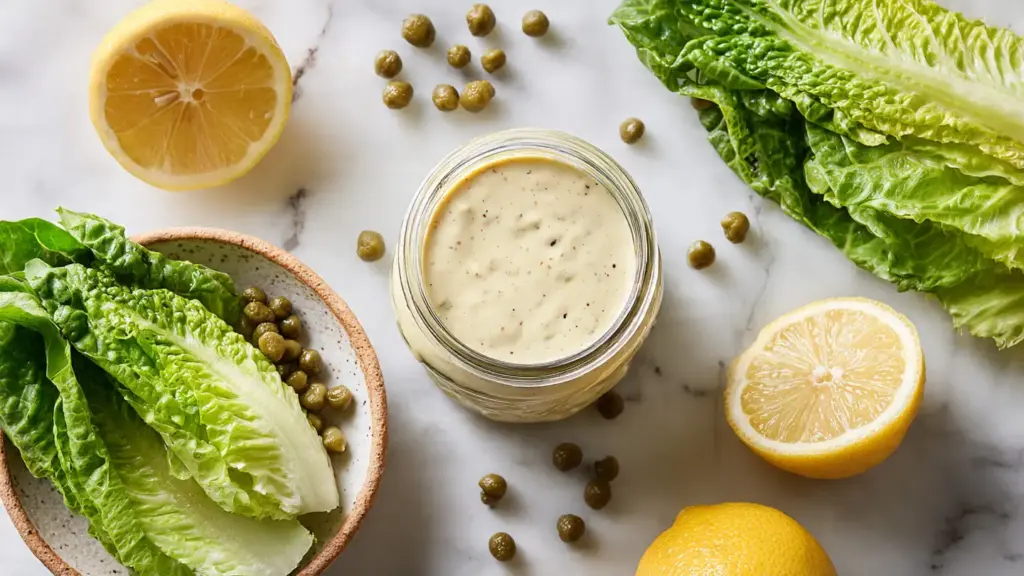
This vegan Caesar dressing is incredibly versatile beyond the classic salad. Once you have a jar of it in the fridge, you’ll find yourself reaching for it constantly throughout the week.
The most classic use is tossed over crisp romaine lettuce with vegan Parmesan, crunchy croutons, and a squeeze of extra lemon. But the serving possibilities go well beyond that.
Here are some of the best ways to use this dressing:
- Classic Caesar salad: Toss with chopped romaine lettuce, croutons, and a sprinkle of nutritional yeast or vegan Parmesan. Finish with cracked black pepper and a wedge of lemon.
- Grain bowls: Drizzle generously over a warm or cold grain bowl made with farro, quinoa, or brown rice, topped with roasted vegetables and crispy chickpeas.
- Sandwich and wrap spread: Use it as a thick, flavorful spread on a sandwich or veggie wrap in place of mayo or hummus. It pairs especially well with avocado toast.
- Roasted vegetable dip: Serve as a dipping sauce alongside roasted broccoli, cauliflower, or asparagus spears for a savory, satisfying snack.
- Kale Caesar salad: Massage the dressing into raw, de-stemmed kale leaves for a heartier, more nutrient-dense salad that holds up well even after dressing.
- Pasta salad dressing: Toss with cooked and cooled pasta, cherry tomatoes, olives, and cucumber for a creamy vegan pasta salad that’s perfect for meal prep.
- Pizza drizzle: Use a thin drizzle on top of a baked vegan pizza just before serving for a creamy, tangy finishing sauce.
Variations to Try
Once you have the base recipe down, there are plenty of fun ways to customize this dressing to suit different dietary needs or flavor preferences.
- Silken tofu base: Replace the cashews with ½ cup (125 g) of firm silken tofu for a lower-fat, higher-protein version that is also nut-free. The texture is slightly lighter but still wonderfully creamy.
- Sunflower seed Caesar: For a nut-free version that is also budget-friendly, substitute the cashews with raw, hulled sunflower seeds. Soak them the same way and blend thoroughly.
- Tahini Caesar: Replace half the cashews with 3 tablespoons of tahini for a sesame-forward, Middle Eastern-inspired spin. This works particularly well in grain bowls.
- Smoky Caesar: Add ½ teaspoon of smoked paprika and a few drops of liquid smoke to the blender for a deeper, more complex flavor that is especially good on kale or hearty lettuces.
- Spicy Caesar: Blend in ½ teaspoon of sriracha or a pinch of cayenne pepper for a dressing with a little heat. This version is great as a dip for fried or roasted vegetables.
- Avocado Caesar: Add half a ripe avocado to the blender along with the other ingredients for an even creamier, richer dressing with a subtle green hue and buttery flavor.
You might also enjoy this vegan pho recipe for another plant-based dish that’s rich in umami flavor without any animal products.
Storage and Reheating
This dressing stores well and actually improves in flavor after a day in the refrigerator as the ingredients meld together.
- Refrigerator: Store in an airtight glass jar or sealed container in the fridge for up to 5 to 7 days. The dressing will thicken as it chills due to the cashew fat setting up.
- Before using from the fridge: Give the jar a good shake or stir before each use. If it has thickened too much, add a teaspoon of water at a time and shake or stir to loosen it back to your preferred consistency.
- Freezer: This dressing can be frozen in an ice cube tray, then transferred to a sealed freezer bag, for up to 1 month. Thaw overnight in the fridge and blend or whisk again briefly to restore the emulsion.
- Do not microwave: This dressing is best served cold or at room temperature. It is not designed to be heated and the texture can break down with heat.
- Fresh is best: For maximum brightness and flavor, the dressing is at its peak within the first 3 days of making it.
For another plant-based recipe with great make-ahead potential, check out this easy hummus recipe.
Nutritional Facts
Based on a serving size of 2 tablespoons (approximately 30 ml). Recipe makes about 6 servings.
| Nutrient | Amount Per Serving |
|---|---|
| Calories | 110 kcal |
| Total Fat | 8 g |
| Saturated Fat | 1.5 g |
| Carbohydrates | 6 g |
| Dietary Fiber | 1 g |
| Sugars | 1 g |
| Protein | 3 g |
| Sodium | 210 mg |
| Vitamin C | 4% DV |
| Iron | 8% DV |
| Calcium | 2% DV |
These values are approximate and will vary based on specific brands used and any ingredient substitutions made.
Read Also: Basil Pesto Recipe
Health Benefits of Key Ingredients
Beyond tasting great, this dressing is made with ingredients that offer real nutritional value. It is a dressing you can feel good about pouring generously over your salad.
Here is a closer look at what the key ingredients bring to the table:
- Raw cashews: Cashews are an excellent source of heart-healthy monounsaturated fats, plant-based protein, and important minerals including magnesium, zinc, and copper. They also contain antioxidants and have been associated with improved heart health and blood sugar regulation.
- Nutritional yeast: This ingredient is a nutritional powerhouse for vegans. It is naturally rich in B vitamins (including B12 in most fortified versions), protein, and trace minerals. It also provides beta-glucans, which support immune function and gut health.
- Lemon juice: Fresh lemon juice is an excellent source of vitamin C, which is a potent antioxidant that supports immune function, collagen production, and iron absorption. It also aids digestion and gives the dressing its essential brightness.
- Garlic: Fresh garlic contains allicin, a compound with well-documented anti-inflammatory and antimicrobial properties. Regular consumption of garlic has been associated with cardiovascular benefits and immune support.
- Olive oil: Extra virgin olive oil is one of the most widely studied healthy fats in the world. It is rich in oleocanthal, a natural anti-inflammatory compound, as well as antioxidants that support heart and brain health.
- Capers: Small but mighty, capers are a good source of quercetin and rutin, both of which are powerful antioxidants. They also contribute flavonoids and have anti-inflammatory properties, all in a very low-calorie package.
- Dijon mustard: Beyond flavor, mustard contains glucosinolates, which are compounds that have been studied for their potential anti-cancer properties. It also adds selenium and omega-3 fatty acids in small amounts.
Another great way to enjoy the health benefits of plant-based ingredients is in this tzatziki sauce, which is light, fresh, and packed with probiotics.
Frequently Asked Questions
1. Can I make this dressing without a high-powered blender?
Yes, you can, though the texture may be slightly less smooth. The key is to soak the cashews for a longer period, ideally overnight, to soften them as much as possible before blending. A regular blender will also benefit from being paused frequently to scrape down the sides and blend in short, powerful bursts. Alternatively, switching to silken tofu as the base requires much less blending power and produces a very smooth result even in a standard blender.
2. What can I use instead of capers for the briny flavor?
Finely chopped green olives or Kalamata olives are the best substitutes for capers. They provide a similar salty, briny quality without the need for anchovy paste. You could also use a small amount of miso paste (about 1 teaspoon) combined with a squeeze of extra lemon juice to mimic the depth of flavor that capers provide.
3. Is this dressing gluten-free?
The base recipe is gluten-free as long as you use tamari instead of soy sauce and verify that your vegan Worcestershire sauce is labeled gluten-free. Most brands of Worcestershire sauce contain malt vinegar derived from barley, which is not gluten-free. There are several certified gluten-free versions available that work perfectly in this recipe.
4. How do I make the dressing thicker or thinner?
To thicken the dressing, simply use less water during blending, or refrigerate it for an hour, as it naturally thickens when chilled. To thin the dressing for drizzling, add water one tablespoon at a time after blending until you reach your desired consistency. A very thin version also works wonderfully as a light dressing for shaved fennel or arugula salads.
5. Can I make this dressing nut-free?
Absolutely. Replace the cashews with an equal amount of firm silken tofu or use ½ cup of raw, hulled sunflower seeds that have been soaked for 2 to 4 hours. Hemp seeds are another excellent nut-free option: use ½ cup of hulled hemp seeds without any soaking required, as they blend smoothly on their own. The flavor and texture will be slightly different but equally delicious.
For more plant-based recipe inspiration, try this vegan pozole for a hearty, comforting bowl that is entirely dairy-free.
Final Thoughts
This vegan Caesar salad dressing recipe is proof that you don’t have to give up any of the bold, rich, creamy flavor you love just because you’re eating plant-based.
With simple, whole-food ingredients and about 10 minutes of your time, you get a dressing that is deeply savory, beautifully tangy, and incredibly versatile.
Once you try it, it’s very hard to go back to store-bought. The freshness is on a completely different level.
Give this recipe a go, and let us know how it turns out in the comments below. We’d love to hear if you tried any of the variations or used it in a creative new way!
Recommended:
- Original Caesar Salad Dressing Recipe
- Fruit Salad Recipe
- Classic Hummus Recipe
- Healthy Chicken Salad
- Vegan Belgian Waffle Recipe
- Vegan Protein Pancakes Recipe
- Easy Ratatouille Recipe
- Pico de Gallo Recipe
- Easy Tomato Soup Recipe
- Broccoli Salad Recipe