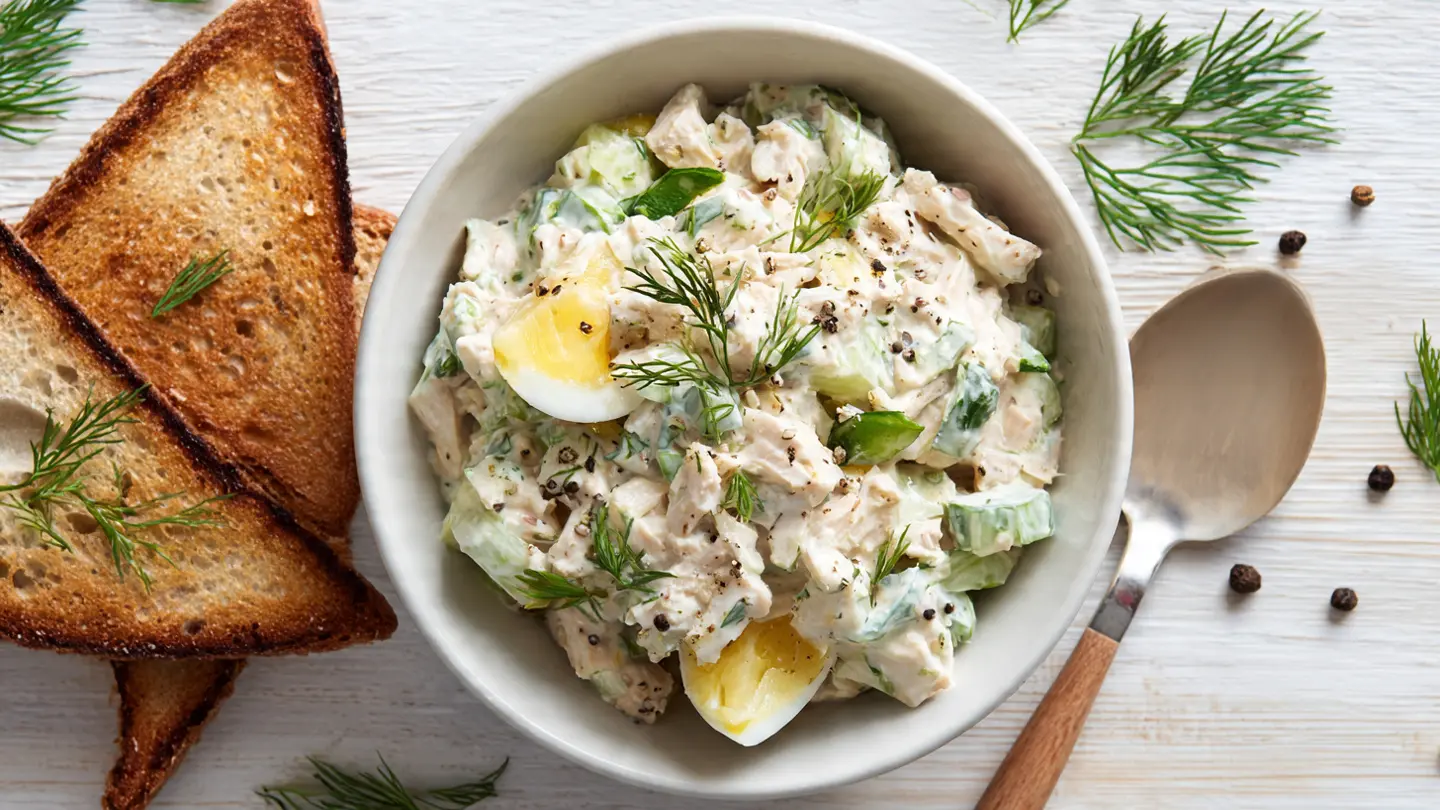
If you’ve been searching for a tuna salad recipe with egg that actually delivers on flavor and texture, this is the one. It’s creamy, satisfying, and packed with protein, making it the kind of lunch you genuinely look forward to.
This isn’t just tuna mixed with mayo. The addition of hard-boiled eggs gives the salad a rich, velvety body that takes it far beyond the basic canned tuna situation most of us grew up with.
It comes together in about 15 minutes, uses pantry staples you likely already have, and works beautifully as a sandwich filling, a topping for crackers, or scooped straight into lettuce cups.
The secret to an outstanding result lies in a few key details: draining your tuna thoroughly (wet tuna = watery salad), using real mayonnaise for richness, and adding just enough mustard and celery to give it depth and crunch without overwhelming the star of the show.
This recipe is one of those reliable, feel-good classics that earns a permanent spot in your weekly rotation. If you love easy, egg-forward dishes, you might also enjoy this Classic Egg Salad for another protein-packed lunch idea.
Why You’ll Love This Tuna Salad Recipe with Egg
This recipe checks every box for an easy, satisfying meal that you can pull together on a weeknight or prep ahead for the week.
It’s incredibly versatile: serve it on toasted bread, stuff it into a wrap, pile it onto crackers, or eat it straight from the bowl with a fork. No cooking required beyond boiling the eggs.
The hard-boiled eggs don’t just add protein. They add a creamy, almost buttery texture that makes the salad feel indulgent even though it’s genuinely wholesome.
It keeps well in the fridge for several days, making it ideal for meal prep. One batch gives you lunch covered for a few days without any extra effort.
Here’s a quick summary of why this recipe stands out:
- Ready in just 15 minutes from start to finish
- Made with pantry and fridge staples you already have on hand
- High in protein from both tuna and eggs
- Naturally gluten-free (just serve it in a GF vessel of your choice)
- Completely customizable with easy mix-ins and swaps
- Perfect for meal prep since it stores beautifully for up to 3 days
- Great for all ages, kid-friendly, and universally crowd-pleasing
Another favorite for protein-packed lunches: Easy Tuna Salad Recipe
Ingredients
Here’s what you’ll need to make this recipe exactly as it’s meant to be. Every ingredient plays a role, so don’t skip anything on the list.
- 2 cans (5 oz / 142 g each) tuna in water, well drained
- 3 large hard-boiled eggs, peeled and chopped
- 1/3 cup (80 g) real mayonnaise (Hellmann’s or Duke’s recommended)
- 1 tablespoon (15 ml) yellow mustard or Dijon mustard
- 2 stalks celery, finely diced (about 1/3 cup / 50 g)
- 2 tablespoons (20 g) red onion, very finely minced
- 1 tablespoon (15 ml) sweet pickle relish (or dill relish if you prefer less sweet)
- 1 teaspoon (5 ml) lemon juice, freshly squeezed
- Salt and black pepper, to taste
- Optional: 1 teaspoon fresh dill or chives, chopped (for garnish or stirred in)
- Optional: 1/4 teaspoon paprika or garlic powder for a deeper flavor
The celery is non-negotiable for texture. It provides that satisfying crunch that keeps every bite interesting. The lemon juice is a small but mighty addition. A squeeze of fresh citrus brightens the entire salad and balances the richness of the mayo and egg yolks beautifully.
Read Also: Classic Tuna Salad Recipe
Kitchen Equipment Needed
You don’t need anything fancy to make this recipe. Most of what you need is already in your kitchen.
- Medium saucepan (for boiling the eggs)
- Large mixing bowl
- Fine mesh strainer or colander (for draining tuna)
- Fork (for flaking tuna)
- Sharp knife and cutting board
- Measuring spoons and cups
- Rubber spatula or large spoon for mixing
- Egg slicer or egg cutter (optional but helpful for uniform chopping)
- Airtight container for storage
You might also enjoy: Easy Egg Salad Recipe
Recommended Products for This Recipe
These are recommended products based on quality and performance that can genuinely make this recipe better and easier to prepare.
1. Starkist Solid White Albacore Tuna in Water
Solid white albacore tuna has a firmer texture and milder flavor than chunk light tuna, which makes it ideal for salads where you want recognizable flakes rather than a mushy texture. It blends seamlessly with egg and mayo without falling apart or turning watery. It’s worth keeping several cans stocked at all times.
2. Electric Egg Cooker
Getting perfectly hard-boiled eggs is one of the most important steps in this recipe, and an electric egg cooker takes all the guesswork out of it. No more greenish yolks or rubbery whites. You get consistent, perfectly cooked eggs every single time with zero effort.
3. OXO Good Grips Large Mixing Bowl
A large, wide mixing bowl gives you the room to fold everything together without spillage, which matters more than it sounds when you’re working with chunky ingredients like egg pieces and celery. The OXO version has a non-slip base and a pour spout that makes transferring the salad into a storage container much neater.
4. Dijon Mustard
Using a quality Dijon mustard instead of plain yellow mustard elevates the flavor noticeably. Dijon has a smoother, more complex tang that complements the richness of the mayo and egg yolks without making the salad taste sharp or acidic. A small jar goes a long way and keeps for months in the fridge.
5. Glass Airtight Storage Containers
Tuna salad absorbs flavors easily, and glass containers keep the smell contained and the freshness locked in far better than plastic. They’re also easier to clean and don’t stain. A set of different sizes means you can store individual servings for grab-and-go lunches throughout the week.
This recipe uses similar protein-forward techniques found in Healthy Chicken Salad Recipe
Step-by-Step Instructions
Step 1: Hard-Boil the Eggs
- Place your eggs in a single layer in a medium saucepan and cover them completely with cold water by about an inch (2.5 cm).
- Set the pan over medium-high heat and bring the water to a full, rolling boil.
- Once boiling, remove the pan from heat immediately, cover it with a lid, and let the eggs sit undisturbed for exactly 12 minutes. This timing gives you firm but not over-cooked yolks with no gray ring.
- While the eggs sit, prepare a large bowl filled with ice water (equal parts ice and water).
- After 12 minutes, use a slotted spoon to transfer the eggs directly into the ice bath and let them cool for at least 5 minutes. This stops the cooking process immediately and makes peeling significantly easier.
- Gently tap each egg on the counter to crack the shell all over, then peel under cool running water for the easiest removal.
- Pat the peeled eggs dry with a paper towel, then place them on your cutting board and chop them into rough 1/2-inch (1.25 cm) pieces. You want some larger chunks for texture and some smaller bits that will blend into the dressing.
Step 2: Drain the Tuna Thoroughly
- Open both cans of tuna and pour them into your fine mesh strainer or colander set over the sink.
- Press down firmly on the tuna with the back of a spoon or with your fingers (wearing food-safe gloves if preferred) to squeeze out as much liquid as possible.
- This step is critical. Excess moisture from the can will make your salad watery and dilute the dressing, so take a full 1 to 2 minutes to really press out the liquid.
- Transfer the drained tuna to your large mixing bowl and use a fork to break it up into small, even flakes. You don’t want any large clumps, but you also don’t want a paste. Aim for medium-fine flakes with some texture.
Step 3: Prepare the Vegetables
- Rinse your celery stalks under cold water and pat them dry.
- Trim the ends of the celery and slice each stalk down the center lengthwise, then dice the pieces into small pieces, about 1/4-inch (6 mm) pieces. Finer dicing means the celery distributes evenly throughout the salad without overpowering any single bite.
- Peel the red onion and cut it in half. Working with one half, slice it thinly and then mince it as finely as you possibly can. Red onion has a sharp, pungent bite when raw. Very fine mincing distributes the flavor without leaving you with big, biting chunks.
- If you find raw onion too sharp, soak the minced onion in cold water for 5 minutes, then drain and pat it dry before adding. This takes the edge off significantly.
Step 4: Make the Dressing
- In a small bowl or directly in the large mixing bowl with the tuna, combine the mayonnaise, mustard, sweet pickle relish, and lemon juice.
- Stir these together first before adding the other ingredients. This ensures the dressing is smooth and evenly mixed before it coats everything else.
- Taste the dressing on its own at this point. It should be creamy, slightly tangy, and well-balanced. If you want more tang, add a tiny splash more lemon juice. If you prefer a sharper mustard note, add another small squeeze of mustard now.
Step 5: Combine Everything
- Add the flaked tuna, chopped celery, and minced red onion to the dressing mixture and fold everything together with a rubber spatula or large spoon.
- Stir gently but thoroughly until every piece of tuna is evenly coated in the dressing.
- Now add the chopped hard-boiled eggs last. Fold them in very gently using a light hand. You want to keep some egg chunks intact rather than mashing them into the dressing. This is what gives the salad its signature texture.
- If you’re using optional fresh dill, chives, garlic powder, or paprika, fold those in now.
Step 6: Season and Taste
- Season generously with salt and fresh cracked black pepper, tasting as you go.
- Remember that canned tuna already contains some sodium, so taste before you salt. You may need less than you think.
- If the salad seems too thick, add a tiny splash of lemon juice or a very small additional spoonful of mayo to loosen it slightly.
- If it tastes flat, it almost always needs more salt or a touch more lemon juice. These two elements are the key to making the flavors pop.
Step 7: Chill Before Serving (Recommended)
- While this salad can be eaten immediately, covering it and refrigerating it for at least 20 to 30 minutes before serving is highly recommended.
- Chilling allows all the flavors to meld together and gives the celery time to slightly soften without losing its crunch. The result is a noticeably more cohesive, flavorful salad.
- When ready to serve, give it a quick stir and taste one more time for seasoning, adjusting with salt, pepper, or lemon juice as needed.
The same gentle folding technique works wonderfully in a Southern Chicken Salad if you want to apply these skills to another protein salad.
Tips for Success
A few simple tricks can make the difference between a good tuna salad and a truly great one. Keep these in mind every time you make this recipe.
- Use solid white albacore tuna packed in water rather than chunk light for a firmer texture and cleaner flavor.
- Drain obsessively. Press that tuna as dry as possible. Watery salad is the number one reason this dish disappoints people.
- Chill your eggs in ice water immediately after cooking for perfectly set yolks and easy peeling every single time.
- Add eggs last and fold gently to preserve their chunky texture.
- Taste before you salt. Canned tuna, mayo, and relish all contain sodium, so season at the end after tasting.
- Rest in the fridge for at least 20 to 30 minutes before serving for deeper, more cohesive flavor.
- Use full-fat mayonnaise for the creamiest result. Light mayo works but gives a slightly thinner, less rich dressing.
- Mince the onion very fine or soak it in cold water first to take away the sharpness without losing the flavor.
Read Also: Classic Deviled Eggs Recipe
Serving Suggestions
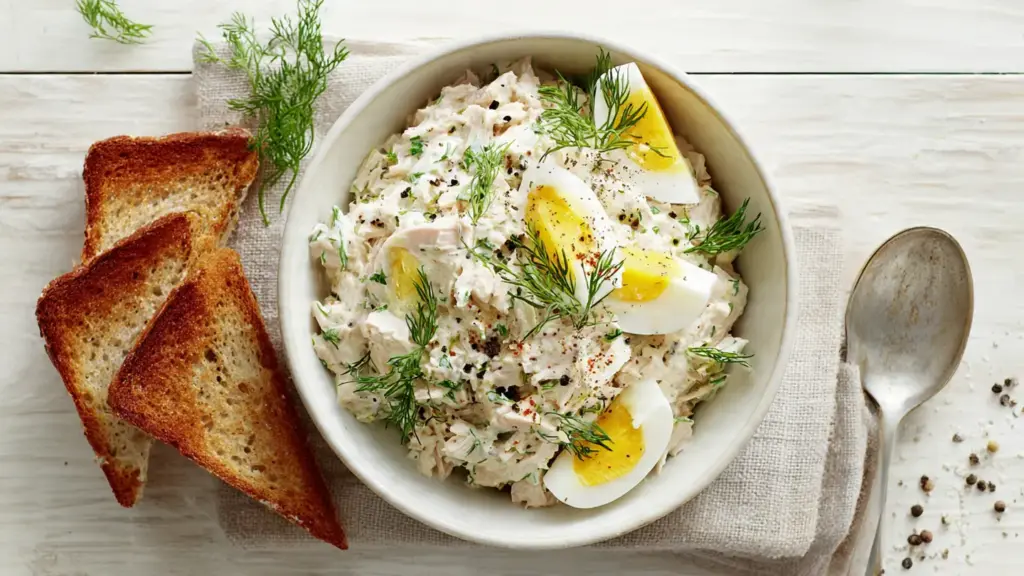
This tuna salad recipe with egg is endlessly versatile and works beautifully in so many different presentations.
The most classic way to serve it is piled high on toasted white or whole wheat bread with crisp lettuce and a slice of ripe tomato. The toasted bread holds up to the creamy filling without getting soggy if you eat it right away.
Here are some other great ways to serve this tuna salad:
- Classic sandwich on toasted sourdough, white, or whole wheat bread with lettuce and tomato
- Lettuce cups using butter lettuce or romaine leaves for a low-carb option
- Stuffed avocado halves for a protein-packed, healthy bowl
- On top of crackers like Ritz or whole grain crackers as an appetizer or snack
- Stuffed into a warm croissant for a bakery-style lunch experience
- Over mixed greens with cucumber and cherry tomatoes as a full salad
- As a dip with sliced cucumbers, celery sticks, or bell pepper strips
- Alongside Potato Salad for a classic picnic plate
Variations to Try
Once you’ve nailed the base recipe, it’s easy to customize this tuna salad to suit your preferences or whatever you have on hand.
These variations are all tested and delicious, each one bringing its own unique spin to the classic formula.
- Spicy version: Add 1 to 2 teaspoons of hot sauce, a pinch of cayenne, or finely diced jalapeño for heat lovers
- Avocado tuna salad: Replace half the mayo with mashed ripe avocado for a healthier, creamier twist
- No mayo version: Use plain Greek yogurt in place of all the mayonnaise for a tangier, lighter salad
- Dill pickle tuna salad: Swap sweet relish for finely chopped dill pickles and a splash of pickle brine
- Mediterranean style: Add chopped Kalamata olives, sun-dried tomatoes, and a squeeze of lemon zest
- Protein boost: Add a handful of canned chickpeas or white beans for extra staying power
- Sweet and crunchy: Stir in a handful of halved grapes or a small amount of diced apple for sweetness
- Herby version: Mix in fresh chopped dill, parsley, and chives for a bright, garden-fresh flavor
For even more tuna-based inspiration, check out this hearty Tuna Casserole Recipe
Storage and Reheating
Tuna salad is one of the best make-ahead lunches you can keep in the fridge, and proper storage makes all the difference.
Follow these guidelines to keep your salad fresh, safe, and delicious:
- Refrigerator storage: Store in an airtight container in the coldest part of the fridge for up to 3 days. Glass containers work best to prevent odor absorption.
- Do not freeze: Mayonnaise-based salads do not freeze well. The mayo separates when thawed and the eggs become rubbery, resulting in an unpleasant texture.
- Keep it cold: Never leave tuna salad at room temperature for more than 2 hours, or 1 hour in warm weather above 90°F (32°C). Food safety is important here.
- Stir before serving: After refrigerating, give the salad a good stir. If it seems a bit thick or dry, add a tiny splash of lemon juice or a small spoonful of mayo and mix it in.
- Pack smart for lunches: If packing this in a lunchbox, use an ice pack to keep it chilled until you’re ready to eat.
- Make ahead tip: This salad is actually better the next day once the flavors have melded, making it perfect for Sunday prep.
You might also enjoy: Tuna Noodle Casserole Recipe
Nutritional Facts
The following nutrition information is estimated per serving (about 1/2 cup or 120 g) based on the full recipe divided into 4 servings.
| Nutrient | Per Serving (approx.) |
|---|---|
| Calories | 280 kcal |
| Total Fat | 18 g |
| Saturated Fat | 3.5 g |
| Cholesterol | 175 mg |
| Sodium | 420 mg |
| Total Carbohydrates | 4 g |
| Dietary Fiber | 0.5 g |
| Total Sugars | 2 g |
| Protein | 26 g |
| Omega-3 Fatty Acids | ~700 mg |
Note: Nutritional values are estimates and will vary based on specific brands and any modifications made to the recipe.
Read Also: Broccoli Salad Recipe
Health Benefits of Key Ingredients
This isn’t just a delicious recipe. Every main ingredient brings meaningful nutritional value to your plate.
The combination of tuna and eggs makes this one of the most protein-dense, nutrient-rich lunches you can make in under 15 minutes.
Here’s a look at what makes each key ingredient worth including:
- Canned tuna is an outstanding source of lean protein, providing all essential amino acids. It’s also rich in omega-3 fatty acids, which support heart health, brain function, and reducing inflammation. A single can delivers around 20 to 25 grams of protein.
- Hard-boiled eggs contribute choline, a critical nutrient for brain health and liver function that many people don’t get enough of. The egg yolks provide vitamins D, B12, and selenium, while the whites add more complete protein.
- Celery is a very low-calorie source of fiber, vitamin K, and folate. Its high water content contributes to hydration, and it provides antioxidants that support immune health.
- Red onion contains quercetin, a powerful antioxidant with anti-inflammatory properties. It also provides small amounts of vitamin C and chromium, which helps regulate blood sugar.
- Lemon juice contributes vitamin C and acts as a natural preservative. The acidity also helps balance the richness of the mayo without adding significant calories.
- Mayonnaise (in moderation) provides vitamin E and healthy fats from the egg yolks and oil. Using full-fat versions means you’re getting actual nutritional value rather than highly processed additives found in reduced-fat versions.
Another protein-rich option worth trying: Willow Tree Chicken Salad Recipe
Frequently Asked Questions
1. Can I use tuna in oil instead of tuna in water?
Yes, you can use tuna packed in olive oil for a richer flavor. If you do, drain it very thoroughly and you may want to reduce the amount of mayo slightly since the oil adds its own fat. Tuna in oil tends to have a more buttery texture, which some people prefer. Just be aware that it will add more calories per serving than water-packed tuna.
2. How many hard-boiled eggs should I add to tuna salad?
This recipe uses 3 large eggs for 2 cans of tuna, which gives a great balance of creamy egg texture and chunky tuna flakes. You can increase to 4 eggs if you want a heavier egg flavor and a thicker, more egg-salad-like result. Using fewer than 2 eggs will make the egg presence pretty subtle, which is fine if you’re going for a more traditional tuna-forward salad.
3. How long does tuna salad with egg last in the fridge?
Properly stored in an airtight container, this tuna egg salad keeps well in the refrigerator for up to 3 days. Beyond that, the quality starts to decline, the celery softens excessively, and the flavors become less fresh. Always smell it before eating if you’re on day 3. Because eggs are included, it’s important not to push the storage window past 3 days.
4. Why does my tuna salad get watery after a day in the fridge?
This happens when the tuna isn’t drained well enough before mixing. The moisture that was left in the tuna slowly releases into the dressing overnight. To fix this going forward, press the tuna extremely dry in the strainer before using. If your already-made salad is a bit watery, drain off the liquid and stir in a fresh spoonful of mayo to rebind everything.
5. Can I make this tuna salad without mayonnaise?
Absolutely. Plain Greek yogurt makes an excellent 1:1 substitute for mayo in this recipe. It gives the salad a slightly tangier, lighter flavor profile while still delivering creaminess. You can also use mashed avocado in place of some or all of the mayo for a dairy-free, healthy-fat alternative. Both options work beautifully with the eggs and tuna without compromising the overall texture.
Read Also: Easy Deviled Eggs Recipe
Final Thoughts
This tuna salad recipe with egg is one of those truly reliable, everyday recipes that earns its place in your permanent lunch lineup.
It’s fast, filling, and genuinely satisfying in a way that only a well-made, protein-rich meal can be.
Whether you pile it on toasted bread, scoop it into lettuce cups, or eat it straight from the bowl, this recipe delivers consistently great results every single time.
We’d love to hear how yours turns out. Drop a comment below and let us know what variations you tried or what you served it with. If you loved this recipe, share it with a friend who’s always looking for quick and easy lunch ideas!
Recommended:
- Air Fryer Egg Bites
- Cloud Eggs Recipe
- Scrambled Eggs
- Avocado Toast
- Fruit Salad
- Healthy Broccoli Soup
- Chicken Salad Recipe with Grapes
- Air Fryer Egg Cups
- Quiche Lorraine
- Breakfast Burrito