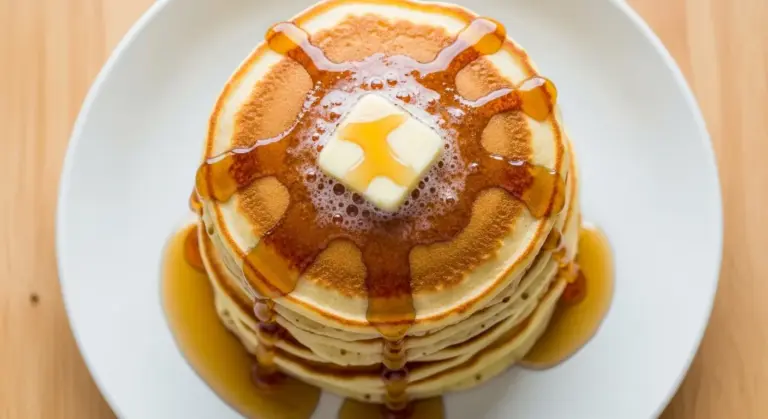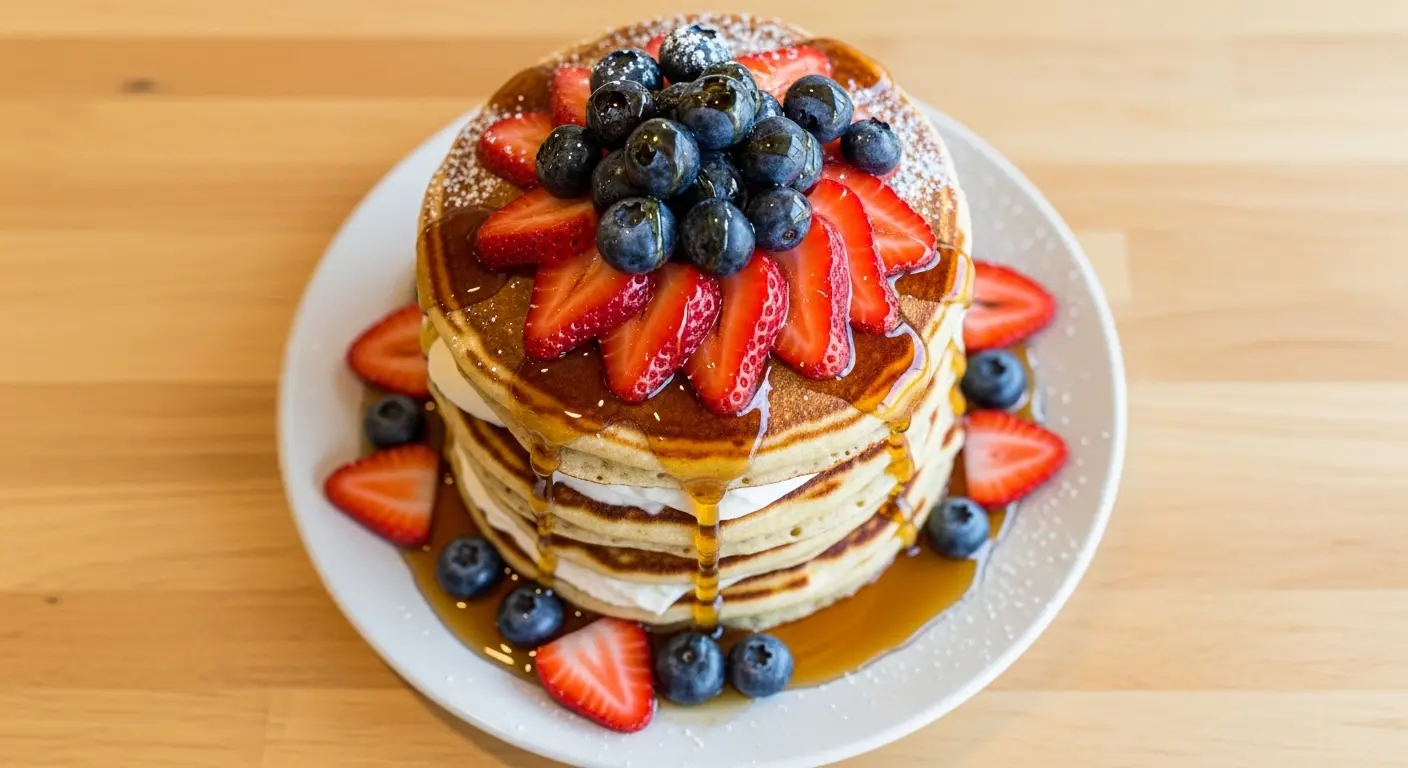
If you’ve been searching for a protein pancakes recipe without protein powder, you are in the right place. These pancakes are soft, fluffy, and packed with natural protein from simple everyday ingredients like eggs, cottage cheese, and oats. No scoops of chalky powder needed, and no complicated steps.
The secret to getting a great protein boost without supplements is layering multiple whole-food protein sources. Eggs bring the structure and richness, cottage cheese melts right into the batter for a creamy texture, and oats add fiber alongside slow-digesting complex carbs. Together, they create a stack that keeps you full for hours without any artificial flavors.
This is the kind of breakfast that feels indulgent but actually fuels your morning the right way. Whether you are meal prepping for the week or making a fresh batch on a lazy Sunday, this recipe delivers every single time.
For another crowd-pleasing morning stack, you might also love this Easy Protein Pancakes Recipe for quick variations and tips.
Why You’ll Love This Protein Pancakes Recipe Without Protein Powder
This recipe works because it relies on real, whole-food ingredients that most people already have in their kitchen.
You do not need to spend money on specialty supplements or protein powders that can sometimes taste artificial or overpowering. Every ingredient here has a nutritional purpose and a flavor purpose.
The cottage cheese in particular is a total star. It blends seamlessly into the batter, and you would never guess it was there, but it adds a creamy richness and a solid dose of protein per serving.
These pancakes are also very beginner-friendly. The batter comes together in a blender in under two minutes, making them faster to prep than most traditional pancake recipes.
- High protein without supplements: Each serving delivers around 20 grams of protein from eggs, cottage cheese, and oats.
- Naturally gluten-free friendly: Swap rolled oats for certified gluten-free oats and the recipe works beautifully.
- Meal prep approved: These pancakes reheat perfectly from the fridge or freezer.
- Kid-friendly: The texture and flavor are mild enough for picky eaters.
- Minimal cleanup: One blender, one pan. That is it.
- Customizable: Easy to add blueberries, bananas, or chocolate chips to the batter.
You might also enjoy these Cottage Cheese Protein Pancakes for a variation that leans even heavier on the cottage cheese for extra protein.
Ingredients
You only need a handful of staple ingredients to make this recipe. The cottage cheese is the key player here because it provides both moisture and protein, replacing the need for protein powder entirely. Use full-fat or low-fat cottage cheese; both work, but full-fat yields a slightly richer pancake.
- 1 cup (90g) old-fashioned rolled oats
- 1 cup (225g) cottage cheese (full-fat or low-fat)
- 2 large eggs
- 1 teaspoon vanilla extract
- 1 teaspoon baking powder
- 1 tablespoon honey or maple syrup (optional, for a touch of sweetness)
- Pinch of salt
- Cooking spray or 1 teaspoon butter (for the pan)
- Optional add-ins: 1/2 cup fresh blueberries, sliced banana, or a handful of chocolate chips
For a fun twist on the base recipe, check out these Banana Protein Pancakes which use ripe bananas as a natural sweetener and binding agent.
Kitchen Equipment Needed
The good news is that you do not need any special equipment for this recipe. A blender is the most important tool because it turns the rolled oats into a fine oat flour and blends the cottage cheese smooth so you never get lumpy batter. If you do not have a blender, a food processor will work just as well.
- Blender or food processor
- Non-stick skillet or griddle
- Spatula
- Measuring cups and spoons
- Mixing bowl (optional, for add-ins)
- Ladle or large spoon for portioning batter
Read Also: Gluten Free Protein Pancakes Recipe
Recommended Products for This Recipe
These are products I genuinely recommend based on performance and quality. They will make this recipe easier and deliver better results.
1. High-Powered Blender
A powerful blender is the backbone of this recipe. It pulverizes the oats into a fine flour in seconds and ensures the cottage cheese blends completely smooth, giving you a lump-free batter with the perfect consistency. A lower-powered blender can leave the batter grainy or unevenly mixed.
2. Non-Stick Griddle Pan
A flat, wide non-stick griddle lets you cook 3-4 pancakes at once without crowding. The even heat distribution means your pancakes cook uniformly without burning the edges before the centers are set.
3. Small-Curd Cottage Cheese
The quality of your cottage cheese matters more than you would think. A small-curd, full-fat variety blends smoother and has a higher protein content per serving, giving your pancakes that creamy interior with no detectable curds.
4. Pure Maple Syrup
If you plan to drizzle syrup on top, a high-quality pure maple syrup (not pancake syrup) elevates the whole stack. The real thing adds depth and natural sweetness that pairs beautifully with the mild oat flavor.
Another great high-protein morning option is these Vegan Protein Pancakes if you want a plant-based version of the same concept.
Step-by-Step Instructions
1. Blend the Oats
- Add 1 cup (90g) of old-fashioned rolled oats to your blender.
- Blend on high for 20-30 seconds until the oats are ground into a fine flour consistency.
- Check the texture: it should look like a coarse flour, similar to whole wheat flour. If there are still large flakes, blend for another 10 seconds.
- Do not skip this step. Grinding the oats first gives the pancakes a smooth, even texture instead of a chunky one.
2. Add the Remaining Batter Ingredients
- Add 1 cup (225g) of cottage cheese directly to the blender with the oat flour.
- Crack in 2 large eggs.
- Add 1 teaspoon of vanilla extract, 1 teaspoon of baking powder, a pinch of salt, and 1 tablespoon of honey or maple syrup if using.
- Baking powder is essential here because these pancakes do not have the gluten network that traditional flour pancakes do. The baking powder provides the lift.
3. Blend Until Smooth
- Blend everything together on high for 30-45 seconds until the batter is completely smooth and creamy.
- Pause the blender and scrape down the sides with a spatula if needed, then blend again for 10 seconds.
- The batter should be pourable but slightly thicker than traditional pancake batter. It will look similar to a thin smoothie consistency.
- If the batter looks too thick, add 1-2 tablespoons of water and blend briefly. If it looks too thin, let it rest for 5 minutes and it will thicken as the oats absorb liquid.
4. Rest the Batter
- Pour the blended batter into a bowl or leave it in the blender jar.
- Let the batter rest for 5 minutes before cooking. This resting period allows the oats to fully absorb the moisture and the baking powder to activate, which results in fluffier pancakes.
- While the batter rests, heat your non-stick skillet over medium-low heat.
5. Fold in Add-Ins (Optional)
- If you are adding blueberries, chocolate chips, or banana slices, gently fold them into the batter now using a spoon or spatula.
- Do not blend the add-ins; just stir them in by hand so they stay whole.
- About 1/2 cup (75g) of add-ins per batch is a good ratio without overwhelming the batter.
6. Grease the Pan
- Lightly coat your heated skillet with cooking spray or a small knob of butter (about 1/2 teaspoon).
- Tilt the pan to spread the butter evenly across the surface.
- Test the heat by flicking a drop of water onto the pan. If it sizzles and evaporates immediately, the pan is ready. If it spatters wildly, the heat is too high.
- Medium-low heat is key for these pancakes. Because they contain cottage cheese and eggs without traditional flour, they can brown too quickly on the outside if the heat is too high before the inside cooks through.
7. Cook the Pancakes
- Pour approximately 1/4 cup (60ml) of batter per pancake onto the skillet.
- Leave at least 1 inch (2.5cm) of space between each pancake.
- Cook for 2-3 minutes on the first side. You will know they are ready to flip when the edges look set and matte (not glossy), and small bubbles begin to form and pop on the surface of the batter.
- Do not press down on the pancakes with the spatula. Let them rise naturally.
8. Flip and Finish Cooking
- Slide a thin spatula gently under each pancake and flip in one confident motion.
- Cook for 1-2 minutes on the second side until the pancake is cooked through.
- To check for doneness, press the center lightly with your finger. It should spring back rather than leave an indentation.
- Transfer finished pancakes to a plate and repeat with the remaining batter, re-greasing the pan as needed between batches.
9. Serve and Enjoy
- Stack your pancakes and top them with pure maple syrup, fresh fruit, a dollop of Greek yogurt, or nut butter.
- Serve immediately for the best texture, or keep warm in a 200°F (93°C) oven on a baking sheet while you finish the batch.
For a delicious savory breakfast to serve alongside, these Scrambled Eggs are a perfect pairing.
Tips for Success
Getting consistently good results with this recipe comes down to a few key habits. The most common mistake people make is cooking on too high of heat, which browns the outside before the center is cooked. Medium-low is your best friend here.
- Do not rush the flip. Wait until bubbles form and edges look set. Flipping too early results in batter spilling and broken pancakes.
- Use a thin, wide spatula. A thicker spatula can tear the pancakes. A fish spatula or crepe spatula works extremely well.
- Let the batter rest. Even 5 minutes makes a noticeable difference in fluffiness.
- Keep pancakes warm in the oven. Set your oven to 200°F (93°C) and place cooked pancakes on a baking sheet in a single layer while you finish cooking the batch.
- Blend the oats first, then add wet ingredients. This order matters for a smooth batter.
- Wipe the pan between batches. Any burnt residue in the pan can stick to the next set of pancakes.
- Use room temperature eggs. Cold eggs can cause the cottage cheese to seize slightly. Set your eggs out 15 minutes before cooking.
Read Also: Protein Pancakes Recipe Without Yogurt
Serving Suggestions
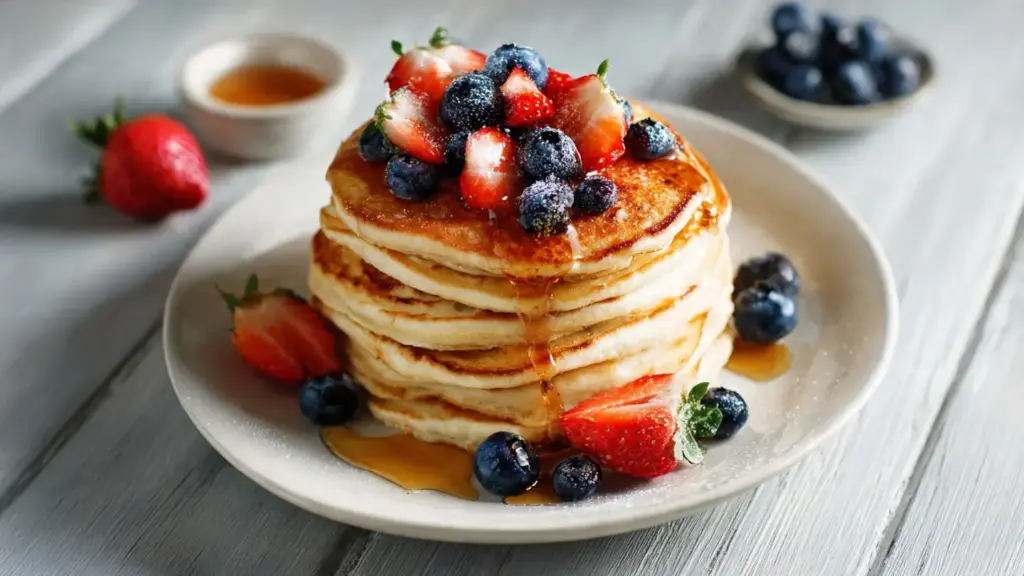
These protein pancakes are versatile enough to dress up or keep simple depending on your mood. The mild oat and vanilla flavor makes them an excellent base for all kinds of toppings.
For a high-protein breakfast spread, top the pancakes with a generous spoonful of almond butter or peanut butter, add a handful of fresh berries, and drizzle with a little honey. The combination of protein from the pancakes and healthy fats from the nut butter makes this a seriously satisfying meal.
- Fresh berry compote: Simmer strawberries, blueberries, or mixed berries in a small saucepan with a splash of water and a teaspoon of honey for 5-10 minutes for a warm topping.
- Greek yogurt and honey: A dollop of plain Greek yogurt with a honey drizzle adds even more protein to the stack.
- Nut butter drizzle: Almond butter, peanut butter, or sunflower seed butter all work beautifully.
- Sliced banana and cinnamon: Simple, sweet, and naturally delicious.
- Egg on the side: A fried or scrambled egg on the side rounds out the protein even further.
- Savory option: Skip the syrup and top with a poached egg, avocado slices, and a pinch of everything bagel seasoning.
For another nourishing morning option, Avocado Toast is a great side dish to serve alongside a smaller stack.
Variations to Try
Once you have mastered the base recipe, this batter is incredibly easy to customize. The neutral oat-and-egg base absorbs add-ins and flavorings beautifully, so you can take these in virtually any direction.
- Chocolate protein pancakes: Add 1 tablespoon of unsweetened cocoa powder to the blender for a rich, fudgy variation. For the full version, check out these Chocolate Protein Pancakes.
- Banana oat pancakes: Add one ripe mashed banana to the batter for natural sweetness. This also makes the batter slightly thicker, so thin it with a tablespoon of water if needed.
- Blueberry lemon: Fold in 1/2 cup blueberries and add 1 teaspoon of lemon zest for a bright, fresh flavor.
- Pumpkin spice: Add 1/4 cup pumpkin puree and 1/2 teaspoon pumpkin spice blend to the batter in fall for a seasonal treat.
- Cinnamon apple: Stir in 1/2 teaspoon cinnamon and 1/4 cup finely diced apple for a cozy variation.
- No-egg version: For an egg-free option, replace the 2 eggs with 2 flax eggs (2 tablespoons ground flaxseed mixed with 6 tablespoons water, rested for 5 minutes). See the full guide: Protein Pancakes Recipe No Eggs.
Storage and Reheating
These pancakes store exceptionally well, making them a great option for weekly meal prep. Cooked pancakes hold their texture much better than raw batter, so always cook the full batch before storing.
- Refrigerator: Store cooled pancakes in an airtight container or zip-lock bag for up to 4 days.
- Freezer: Lay pancakes flat on a baking sheet and freeze for 1-2 hours until solid, then transfer to a freezer-safe bag. Freeze for up to 3 months. Separate layers with parchment paper to prevent sticking.
- Microwave reheating: Place 2-3 pancakes on a microwave-safe plate and heat for 45-60 seconds until warmed through.
- Toaster reheating: Pop a frozen pancake directly in the toaster for 1-2 minutes for crispy edges and a warm center. This is the best method for texture.
- Oven reheating: Arrange pancakes on a baking sheet and warm at 300°F (150°C) for 8-10 minutes. This method works great when reheating a large batch.
- Do not refrigerate raw batter: The batter does not store well because the oats continue absorbing moisture, resulting in very thick batter. Always cook first.
For another make-ahead breakfast idea, this Baked Oatmeal Recipe is a great option to prep on Sunday and eat throughout the week.
Nutritional Facts
The following nutrition information is an estimate for one serving (approximately 2-3 medium pancakes), based on the recipe as written without optional toppings or add-ins.
| Nutrient | Per Serving (2-3 pancakes) |
|---|---|
| Calories | ~250 kcal |
| Protein | ~20g |
| Carbohydrates | ~25g |
| Dietary Fiber | ~3g |
| Sugars | ~5g |
| Total Fat | ~7g |
| Saturated Fat | ~2g |
| Sodium | ~320mg |
| Calcium | ~130mg |
Note: Nutritional values vary depending on the specific brands and types of cottage cheese and oats used. Using full-fat cottage cheese will increase the fat and calorie count slightly. Adding honey increases carbohydrates by approximately 5g per tablespoon.
This recipe yields approximately 8-10 pancakes (serves 3-4 people). Each serving is 2-3 pancakes depending on appetite and portion size.
For another nutritious breakfast option, these Easy Overnight Oats are another low-effort, high-protein morning staple.
Health Benefits of Key Ingredients
This recipe is built around ingredients that offer real, measurable health benefits. It is not just about hitting a protein target; every ingredient here contributes to a well-rounded, nourishing breakfast.
The combination of protein and fiber from oats and cottage cheese helps stabilize blood sugar levels after eating, which means you are less likely to experience a mid-morning energy crash compared to eating a carb-heavy traditional pancake.
- Rolled oats: Oats are rich in a soluble fiber called beta-glucan, which has been shown to lower LDL cholesterol and support digestive health. They also provide steady, slow-releasing energy because of their low glycemic index.
- Cottage cheese: An excellent source of casein protein, which digests slowly and provides a sustained amino acid release to muscles over several hours. Also high in calcium and phosphorus for bone health.
- Eggs: One of the most bioavailable protein sources available, meaning your body absorbs and uses egg protein with exceptional efficiency. Eggs also provide choline, which supports brain function and liver health.
- Vanilla extract: While mostly a flavor component, real vanilla extract contains antioxidants including vanillin, which has been studied for its anti-inflammatory properties.
- Honey (optional): A natural sweetener that contains trace amounts of antioxidants and enzymes. Unlike refined sugar, raw honey has a slightly lower glycemic impact.
For a nutritious morning drink to pair with your pancakes, this Banana Protein Smoothie is a fantastic complement to boost your protein intake even further.
Frequently Asked Questions
1. Can I use quick oats instead of old-fashioned rolled oats?
Yes, you can use quick oats, and the recipe will still work. However, old-fashioned rolled oats blend into a slightly finer, more even flour texture because they are thicker and denser than quick oats.
Quick oats are already partially processed and tend to create a stickier batter. The pancakes will still taste great, just slightly denser in texture.
2. What can I use instead of cottage cheese?
The closest substitute is Greek yogurt, which provides a similar protein content and creamy texture. Use the same 1-cup measurement.
Ricotta cheese is another excellent option and creates an even fluffier pancake with a slightly milder flavor. Avoid using regular plain yogurt because the higher water content will make the batter too thin.
3. Why are my pancakes falling apart when I flip them?
The most common cause is flipping too early. These pancakes need to be completely set on the edges and have visible bubbles on the surface before you flip.
They are more delicate than traditional flour pancakes because they lack gluten, so using a wide, thin spatula and flipping gently and confidently is essential. Also make sure your pan is properly greased before each batch.
4. Can I make the batter the night before?
It is not recommended to store the raw batter overnight because the oats absorb moisture and the batter becomes very thick and dense by morning.
Instead, you can blend the oats into flour and store that separately, then blend the full batter fresh in the morning, which only takes 60 seconds. Alternatively, cook the full batch the night before and refrigerate or freeze the cooked pancakes.
5. Are these pancakes suitable for a low-carb diet?
These pancakes are not specifically low-carb because oats are a carbohydrate-rich food. Each serving contains approximately 25 grams of carbohydrates.
They are, however, much lower in refined carbs and higher in protein and fiber than traditional pancakes, making them a much better option for blood sugar management. If you need a lower-carb version, replacing oats with almond flour is a common modification, though the texture and binding will change significantly.
For more protein-packed pancake inspiration, check out this Copycat IHOP Protein Pancakes Recipe for a restaurant-style take on high-protein flapjacks.
Final Thoughts
This protein pancakes recipe without protein powder is proof that eating a high-protein breakfast does not require supplements, complicated ingredients, or a lot of time.
With just oats, cottage cheese, eggs, and a handful of pantry staples, you can have a fluffy, satisfying stack on the table in under 20 minutes. The whole-food approach means every ingredient is doing real nutritional work.
Give this recipe a try on your next weekend morning or batch-cook it for the week ahead. If you make it, leave a comment below to share how it turned out or what toppings you loved most. Sharing this post with a friend who loves high-protein breakfasts would mean the world!
Recommended:
- Easy Protein Pancakes Recipe
- Chocolate Protein Pancakes
- Vegan Protein Pancakes
- Copycat Kodiak Protein Pancakes
- Pumpkin Pancake Recipe
- Buttermilk Pancake Recipe
- Gluten Free Pancake Recipe
- Old Fashioned Pancake Recipe
- Pancake Recipe Without Milk
- Easy French Toast Recipe