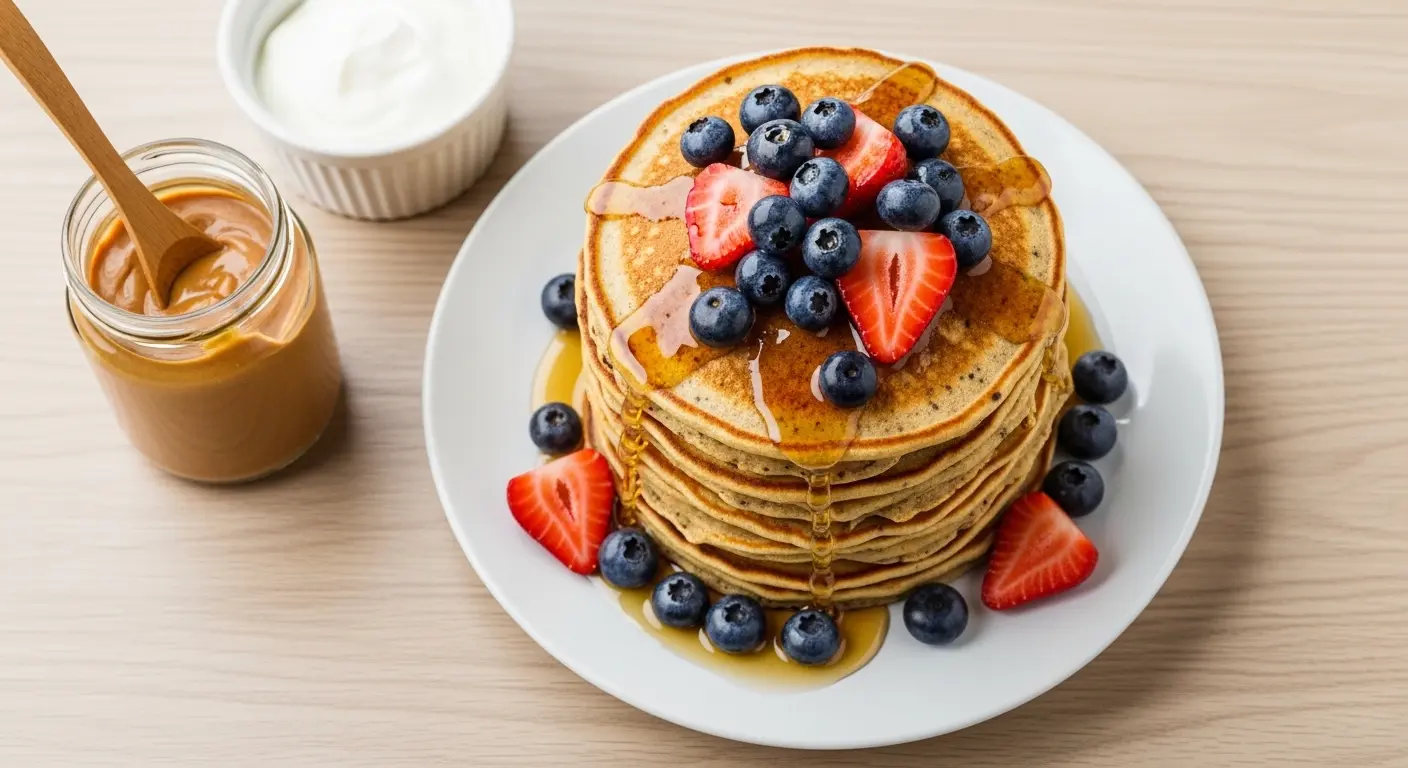
If you’ve been searching for a protein pancakes recipe no eggs version that actually delivers on fluffiness, flavor, and nutrition, you’ve landed in the right place.
These pancakes are soft, thick, and stack up beautifully, making them look like something straight from a café menu.
The secret is in the combination of protein powder, all-purpose flour, and a splash of apple cider vinegar that reacts with baking powder to give you serious lift — no eggs required.
Each serving packs around 20 grams of protein, which makes these a smart choice for a post-workout breakfast, a weekend brunch, or any morning you want to stay full well past noon.
Whether you’re dairy-free, egg-free, or just ran out of eggs in the middle of pancake cravings, this recipe has you covered — and it comes together in under 20 minutes from start to finish.
Read Also: Protein Waffle Recipe

Why You’ll Love This Protein Pancakes Recipe (No Eggs)
These pancakes are honestly one of the most satisfying breakfasts you can make without eggs.
They prove that skipping eggs doesn’t mean sacrificing texture, flavor, or staying power.
- High protein without the eggs — Over 20g of protein per serving, thanks to quality protein powder and Greek-style yogurt
- Fluffy and thick — The apple cider vinegar and baking powder combo creates incredible rise
- Quick and easy — Ready in 20 minutes with one bowl and minimal cleanup
- Customizable — Works with vanilla, chocolate, or unflavored protein powder
- Freezer-friendly — Make a double batch and freeze extras for busy weekday mornings
- Allergy-friendly — Naturally egg-free and easily made dairy-free with simple swaps
You might also enjoy: Fluffy Oat Flour Pancakes
Ingredients
You’ll need a mix of dry and wet pantry staples for these pancakes. Using vanilla protein powder adds natural sweetness, which means you can go lighter on added sugar.
- 1 cup (125g) all-purpose flour
- ½ cup (50g) vanilla protein powder (whey or plant-based both work)
- 1½ tsp baking powder
- ¼ tsp baking soda
- 1 tbsp (12g) granulated sugar (reduce or skip if your protein powder is sweetened)
- Pinch of salt
- ¾ cup (180ml) milk of choice (dairy or non-dairy)
- ½ cup (120g) plain Greek yogurt or dairy-free yogurt
- 1 tsp apple cider vinegar
- 1 tsp vanilla extract
- 1–2 tbsp (15–30ml) milk, extra, to adjust batter consistency
- 1 tsp neutral oil or butter, for greasing the pan
Read Also: High Protein Smoothie Bowl Recipe
Kitchen Equipment Needed
This recipe is a true one-bowl wonder — minimal dishes, minimal fuss. A non-stick pan is the single most important piece of equipment here, as it prevents sticking without needing excessive oil.
- Large mixing bowl
- Whisk
- Measuring cups and spoons
- Non-stick skillet or griddle (10–12 inches recommended)
- Heat-resistant spatula
- ¼ cup measuring cup or ladle (for portioning batter)
- Small bowl or cup (for mixing wet ingredients separately if preferred)
- Cooling rack (optional, for resting cooked pancakes)
This recipe is simple and straightforward — classic pancake breakfast ideas pair perfectly with these high-protein stacks.
Recommended Products for This Recipe
These are hand-picked products based on quality, performance, and genuine usefulness for making this recipe as good as it can be.
1. Optimum Nutrition Gold Standard 100% Whey Protein Powder
This is one of the most widely used protein powders for baking and cooking. It mixes smoothly into pancake batter without creating a chalky or gummy texture, and the vanilla flavor adds a pleasant sweetness that reduces the need for added sugar. It dissolves easily and consistently, which is exactly what you need for a smooth batter.
2. Lodge Pre-Seasoned Cast Iron Griddle
A flat cast iron griddle distributes heat more evenly than a standard pan, which means more uniformly cooked pancakes every time. It retains heat well between pours, so you don’t get that first-pancake-is-always-weird phenomenon. Pre-seasoned versions require minimal maintenance and last a lifetime.
3. OXO Good Grips Silicone Flexible Turner Spatula
Flipping protein pancakes is a delicate moment — the batter is thicker than regular pancakes and needs a wide, flexible spatula to support the whole surface without tearing. This spatula is thin enough to slide under cleanly and wide enough to flip with confidence.
4. Siggi’s Plain Full-Fat Icelandic Yogurt
Siggi’s skyr has significantly more protein than regular yogurt, which means every tablespoon is doing double duty in this recipe — adding moisture, structure, and extra protein. The thick consistency holds the batter together in place of eggs and creates that tender, moist interior.
Another great breakfast to try: Greek Yogurt Parfait

Step-by-Step Instructions
1. Combine the Dry Ingredients
- In a large mixing bowl, add 1 cup (125g) of all-purpose flour.
- Add ½ cup (50g) of vanilla protein powder on top of the flour.
- Add 1½ tsp of baking powder and ¼ tsp of baking soda.
- Add 1 tbsp of granulated sugar (if using) and a pinch of salt.
- Whisk all the dry ingredients together thoroughly until they are fully combined with no visible pockets of protein powder. This step ensures even distribution of leavening agents, which is what creates those fluffy layers.
2. Mix the Wet Ingredients
- In a separate small bowl or measuring jug, add ¾ cup (180ml) of milk.
- Add ½ cup (120g) of plain Greek yogurt and stir to loosen it slightly.
- Add 1 tsp of apple cider vinegar and 1 tsp of vanilla extract.
- Stir the wet mixture gently until combined. The apple cider vinegar will start to react with the yogurt slightly — this is normal and desirable, as it helps activate the baking soda and powder for maximum rise.
3. Combine Wet and Dry Mixtures
- Pour the wet ingredient mixture into the bowl of dry ingredients.
- Using a whisk or fork, stir the batter gently using circular motions from the center outward.
- Mix only until the flour is just incorporated — the batter will be thick and you will likely see a few small lumps. This is perfect.
- Do not overmix the batter. Overmixing develops the gluten in the flour, which makes pancakes dense and tough instead of light and tender.
- Check the consistency: the batter should be thick enough to hold a shape when scooped but still pourable. If it seems too thick to pour at all, add 1 tablespoon of milk at a time and stir gently until you reach a thick but pourable consistency.
- Let the batter rest for 3–5 minutes. This allows the baking powder to fully activate and the flour to hydrate, which results in fluffier pancakes.
4. Heat the Pan
- Place your non-stick skillet or griddle over medium heat on the stovetop.
- Allow the pan to heat up for 2–3 minutes. The pan needs to be properly hot before you add batter — if the pan is too cold, the pancakes will spread too much and won’t develop their characteristic fluffy rise.
- To test if the pan is ready, flick a few drops of water onto the surface. If they sizzle and evaporate immediately, the pan is ready.
- Add 1 tsp of neutral oil or butter to the pan and spread it thinly across the surface using a paper towel or pastry brush. This light greasing prevents sticking without making the pancakes greasy.
5. Cook the First Side
- Use a ¼ cup measuring cup or a ladle to scoop the batter and pour it directly onto the center of the heated pan.
- For larger pancakes, use a ⅓ cup portion.
- Leave enough space between pancakes if cooking multiple at once — each will spread slightly.
- Cook the pancakes undisturbed for 2–3 minutes on the first side. You’ll know it’s time to flip when:
- The edges of the pancake look set and dry (not shiny or wet)
- Several bubbles have formed across the surface of the batter and a few have popped
- The bottom is golden brown when you carefully peek underneath with a spatula
6. Flip and Cook the Second Side
- Slide your spatula firmly and gently under the full base of the pancake to support it fully before flipping.
- Flip the pancake in one confident, smooth motion — hesitation leads to folded or torn pancakes.
- Cook the second side for 1–2 minutes. The second side cooks faster than the first because the batter has already started to set from the heat.
- The second side will be slightly less golden than the first — this is completely normal.
- Remove the pancake from the pan and set it on a plate or a wire rack while you cook the remaining batter.
- Repeat with the remaining batter, adding a light regreasing of the pan between each batch as needed.
7. Serve and Top
- Stack the pancakes and add your favorite toppings immediately while they’re warm.
- Drizzle with maple syrup, fresh berries, a dollop of nut butter, or a spoonful of Greek yogurt for extra protein.
- Serve immediately for the fluffiest results.
This recipe makes approximately 8–10 medium pancakes (about 2–3 servings).
For another high-protein breakfast idea, this banana oat breakfast cookie recipe uses a similar no-egg approach.
Tips for Success
Getting protein pancakes right without eggs comes down to a few key techniques. Follow these and you’ll have a perfect stack every time.
- Don’t overmix the batter. A few lumps are fine and actually desirable — overmixing is the most common reason pancakes turn out flat and rubbery.
- Rest the batter. Letting the batter sit for 3–5 minutes before cooking activates the leavening agents fully and makes a real difference in fluffiness.
- Use room temperature ingredients. Cold yogurt straight from the fridge can seize up the batter. Let it sit out for 10 minutes before using.
- Keep the heat at medium, not high. High heat browns the outside quickly but leaves the inside raw. Medium heat gives time for the pancake to cook all the way through.
- Don’t press down on the pancakes. This is tempting, but pressing with your spatula deflates the air bubbles that create fluffiness.
- Check your protein powder. Some protein powders absorb more liquid than others. If the batter looks too thick after mixing, add milk one tablespoon at a time.
- The first pancake is a test. Adjust your heat and greasing technique after the first one — the rest will be more consistent.
Read Also: Best Meal Prep Breakfast Ideas
Serving Suggestions
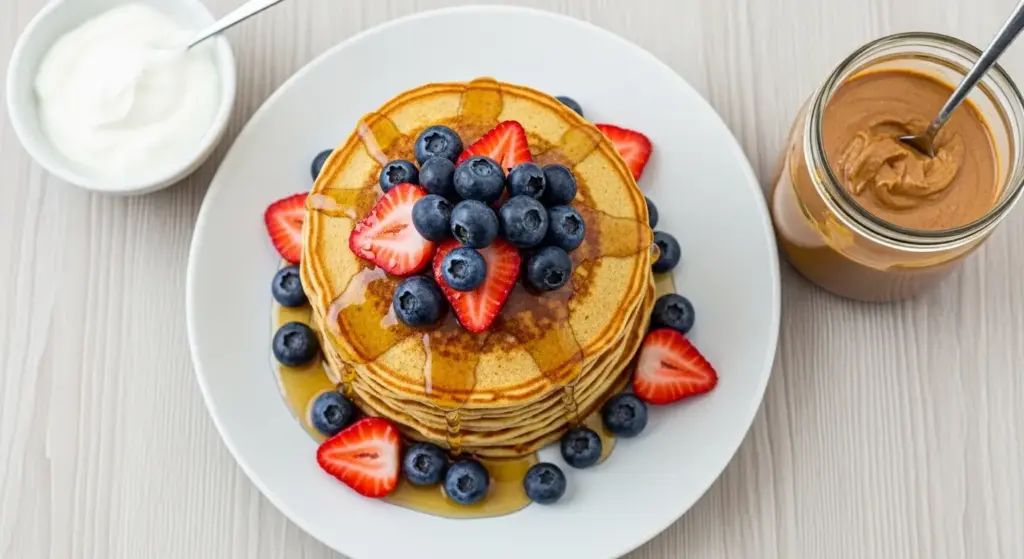
These protein pancakes are filling on their own, but the right toppings can take them from a great breakfast to a truly satisfying meal.
They work just as well for a leisurely weekend brunch as they do for a quick post-gym refuel.
- Fresh fruit — Sliced strawberries, blueberries, or banana add natural sweetness and a boost of vitamins
- Nut butter drizzle — A spoonful of almond or peanut butter adds healthy fats and extra protein
- Maple syrup or honey — A light drizzle is all you need, especially if your protein powder is already sweetened
- Greek yogurt dollop — Adds creaminess and even more protein to the plate
- Chocolate chips — Stir into the batter or sprinkle on top for a more indulgent version
- Granola crumble — Adds crunch and makes the plate look impressive
- Cottage cheese — Scoop alongside the stack for a savory-sweet contrast that’s incredibly filling
Pair these pancakes with a glass of chia seed pudding for a full macro-balanced breakfast.
Variations to Try
Once you’ve mastered the base recipe, there are so many ways to customize these protein pancakes. Try these popular variations to keep breakfast interesting.
- Chocolate protein pancakes — Swap the vanilla protein powder for chocolate protein powder and add 1 tbsp of cocoa powder to the dry mix
- Blueberry protein pancakes — Fold ½ cup of fresh or frozen blueberries gently into the batter just before cooking
- Banana protein pancakes — Mash one ripe banana and stir it into the wet ingredients for natural sweetness and moisture
- Peanut butter protein pancakes — Add 2 tbsp of natural peanut butter to the wet mixture and use chocolate protein powder
- Cinnamon spice pancakes — Add 1 tsp of ground cinnamon and a pinch of nutmeg to the dry ingredients
- Gluten-free version — Substitute the all-purpose flour with a 1:1 gluten-free flour blend
- Dairy-free version — Use plant-based milk (oat, almond, or soy) and dairy-free coconut or cashew yogurt
- Oat flour pancakes — Replace half the flour with oat flour for a heartier, nuttier flavor
You might also love: Chocolate Banana Smoothie
Storage and Reheating
These pancakes store incredibly well, making them an excellent meal prep option for the week ahead. Cook a double batch on Sunday and breakfast is sorted for days.
- Room temperature: These pancakes are best eaten fresh. If you have leftovers, don’t leave them out for more than 2 hours.
- Refrigerator: Store cooled pancakes in an airtight container or zip-lock bag in the fridge for up to 4 days.
- Freezer: Let the pancakes cool completely, then layer them between sheets of parchment paper in a freezer-safe bag or container. Freeze for up to 2 months.
- Microwave reheating: Wrap a pancake in a slightly damp paper towel and microwave on medium power for 30–45 seconds, flipping halfway through.
- Toaster reheating: Pop refrigerated or thawed frozen pancakes directly into the toaster on a medium setting for 1–2 cycles until warmed through and slightly crisped at the edges.
- Oven reheating: Arrange pancakes on a baking sheet and cover loosely with foil. Reheat in a 325°F (165°C) oven for 8–10 minutes.
Read Also: Easy High Protein Meal Prep Ideas
Nutritional Facts
The following estimates are based on one serving (approximately 3 medium pancakes) made with whey protein powder, whole milk, and full-fat Greek yogurt. Values will vary depending on the specific protein powder and milk used.
| Nutrient | Per Serving (3 pancakes) |
|---|---|
| Calories | ~320 kcal |
| Protein | ~22g |
| Carbohydrates | ~40g |
| Fiber | ~1.5g |
| Sugar | ~8g |
| Fat | ~5g |
| Saturated Fat | ~1.5g |
| Sodium | ~420mg |
| Calcium | ~300mg |
Note: These are estimated values. Use a nutrition calculator with your specific ingredients for accurate results.
Another protein-rich recipe worth bookmarking: Cottage Cheese Scramble
Health Benefits of Key Ingredients
Every ingredient in this recipe was chosen for a reason — and most of them are doing more than one job.
Beyond taste and texture, these ingredients bring real nutritional value to your breakfast plate.
- Protein powder — The obvious one: protein supports muscle repair, reduces hunger, and helps stabilize blood sugar after meals. Whey protein is highly bioavailable, meaning your body absorbs and uses it efficiently.
- Greek yogurt — A natural source of protein, calcium, and probiotics. The live cultures in Greek yogurt support gut health and digestion, and its thick consistency helps bind the batter in place of eggs.
- All-purpose flour — Provides carbohydrates for sustained energy, and the gluten structure helps the pancakes hold their shape and give them that satisfying chew.
- Apple cider vinegar — Activates the baking soda and powder for lift, but also may support blood sugar regulation and digestion when consumed regularly in small amounts.
- Milk (dairy or fortified plant-based) — Contributes calcium, vitamin D (in fortified versions), and additional protein, especially if you use soy milk which rivals dairy in protein content.
- Vanilla extract — More than just flavor, pure vanilla contains small amounts of antioxidants and has been studied for its calming aromatic properties.
This recipe is a great companion to a morning routine that includes: Overnight Oats with Protein Powder
Frequently Asked Questions
1. Can I use plant-based protein powder instead of whey?
Yes, absolutely. Plant-based protein powders — such as pea protein, hemp, or rice protein — all work in this recipe.
Keep in mind that plant-based powders tend to absorb more liquid than whey, so you may need to add an extra tablespoon or two of milk to get the right batter consistency. Pea protein gives the smoothest texture of the plant-based options.
2. Why are my protein pancakes turning out dense and flat?
The most likely culprit is overmixing the batter, which develops gluten and knocks out air bubbles.
Stir gently until the dry ingredients are just incorporated, leave a few lumps, and let the batter rest for 3–5 minutes before cooking. Also check that your baking powder is fresh — expired baking powder won’t create enough rise.
3. Can I make the batter the night before?
This is not ideal. The baking soda and vinegar start reacting the moment they meet, so a batter that sits overnight will have lost most of its leavening power by morning.
For the fluffiest results, mix the batter fresh just before cooking. If you want to save time in the morning, measure out your dry ingredients the night before and store them in a bowl covered with plastic wrap.
4. How do I make these pancakes dairy-free?
The swap is very simple. Replace the regular milk with any plant-based milk (oat milk works particularly well for its creamy texture), and use a dairy-free yogurt in place of Greek yogurt.
Coconut yogurt, cashew yogurt, and soy yogurt all work well. Soy milk adds the most protein of the non-dairy options, so it’s a great choice if maximizing protein is your goal.
5. Can I add mix-ins directly to the batter?
Yes, and it’s one of the best ways to customize this recipe. Blueberries, chocolate chips, diced banana, and shredded coconut all work beautifully.
Fold mix-ins in gently at the very end, just before cooking, using a spatula rather than a whisk to avoid breaking up the fruit or deflating the batter. Use about ¼ to ½ cup of mix-ins per batch.
Read Also: Easy Healthy Breakfast Recipes

Protein Pancakes (No Eggs)

Equipment
- Large mixing bowl
- Whisk
- Measuring cups and spoons
- Non-stick skillet or griddle - 10-12 inches recommended
- Heat-resistant spatula
- ¼ cup measuring cup or ladle - For portioning batter
- Small bowl or cup - For mixing wet ingredients (optional)
- Cooling rack - Optional, for resting cooked pancakes
Ingredients
- 1 cup all-purpose flour - 125g
- ½ cup vanilla protein powder - 50g, whey or plant-based
- 1½ tsp baking powder
- ¼ tsp baking soda
- 1 tbsp granulated sugar - 12g, reduce or skip if protein powder is sweetened
- salt - Pinch
- ¾ cup milk - 180ml, dairy or non-dairy of choice
- ½ cup Greek yogurt - 120g, plain full-fat or dairy-free alternative
- 1 tsp apple cider vinegar
- 1 tsp vanilla extract
- 1-2 tbsp milk - 15-30ml, extra, to adjust batter consistency
- 1 tsp neutral oil or butter - For greasing the pan
Optional Toppings
- Fresh fruit - Sliced strawberries, blueberries, or banana
- Nut butter - Almond or peanut butter
- Maple syrup or honey
- Greek yogurt - For extra creaminess and protein
- Chocolate chips - Stir into batter or sprinkle on top
- Granola - For crunch
- Cottage cheese - For a savory-sweet contrast
Instructions
- Whisk together all dry ingredients in a large bowl until fully combined.
- In a separate bowl, mix milk, yogurt, apple cider vinegar, and vanilla until combined.
- Pour wet mixture into dry ingredients and stir gently until just combined. A few small lumps are perfect. Add extra milk if batter is too thick.
- Let the batter rest for 3-5 minutes to activate the leavening agents.
- Heat a non-stick skillet over medium heat and lightly grease with oil or butter.
- Pour ¼ cup batter onto the pan and cook until bubbles form on the surface and edges look set, about 2-3 minutes.
- Flip gently with a wide spatula and cook the second side for 1-2 minutes until golden brown.
- Repeat with remaining batter, regreasing the pan between batches. Serve warm with your favorite toppings.
Notes
- Don’t overmix the batter — a few lumps are fine and actually desirable for fluffiness.
- Let the batter rest for 3-5 minutes before cooking to activate the leavening agents fully.
- Use room temperature ingredients for the best consistency — cold yogurt straight from the fridge can seize up the batter.
- Keep the heat at medium, not high. High heat browns the outside but leaves the inside raw.
- Don’t press down on the pancakes while cooking — this deflates the air bubbles that create fluffiness.
- For dairy-free pancakes, use plant-based milk (oat milk works well) and dairy-free yogurt.
- Make a double batch and freeze extras — layer between parchment paper in a freezer bag for up to 2 months.
- Reheat refrigerated or frozen pancakes in the toaster, microwave, or a 325°F oven for 8-10 minutes.
Final Thoughts
This protein pancakes recipe no eggs version proves that you don’t need to compromise on texture or flavor to make a high-protein breakfast.
With a fluffy stack, simple pantry ingredients, and 20+ grams of protein per serving, these are the kind of pancakes you’ll find yourself making on repeat.
Give them a try this weekend and see for yourself how satisfying a nourishing breakfast can be.
If you make these, leave a comment below letting us know your favorite topping combination — and tag us if you share your stack on social media!
Recommended:
- Avocado Toast with Poached Eggs
- Whole Wheat Waffles
- Banana Oatmeal Muffins
- Egg White Omelette
- Peanut Butter Overnight Oats
- Berry Smoothie Bowl
- Healthy French Toast
- Almond Flour Pancakes
- Zucchini Oat Waffles
- Post-Workout Breakfast Bowl