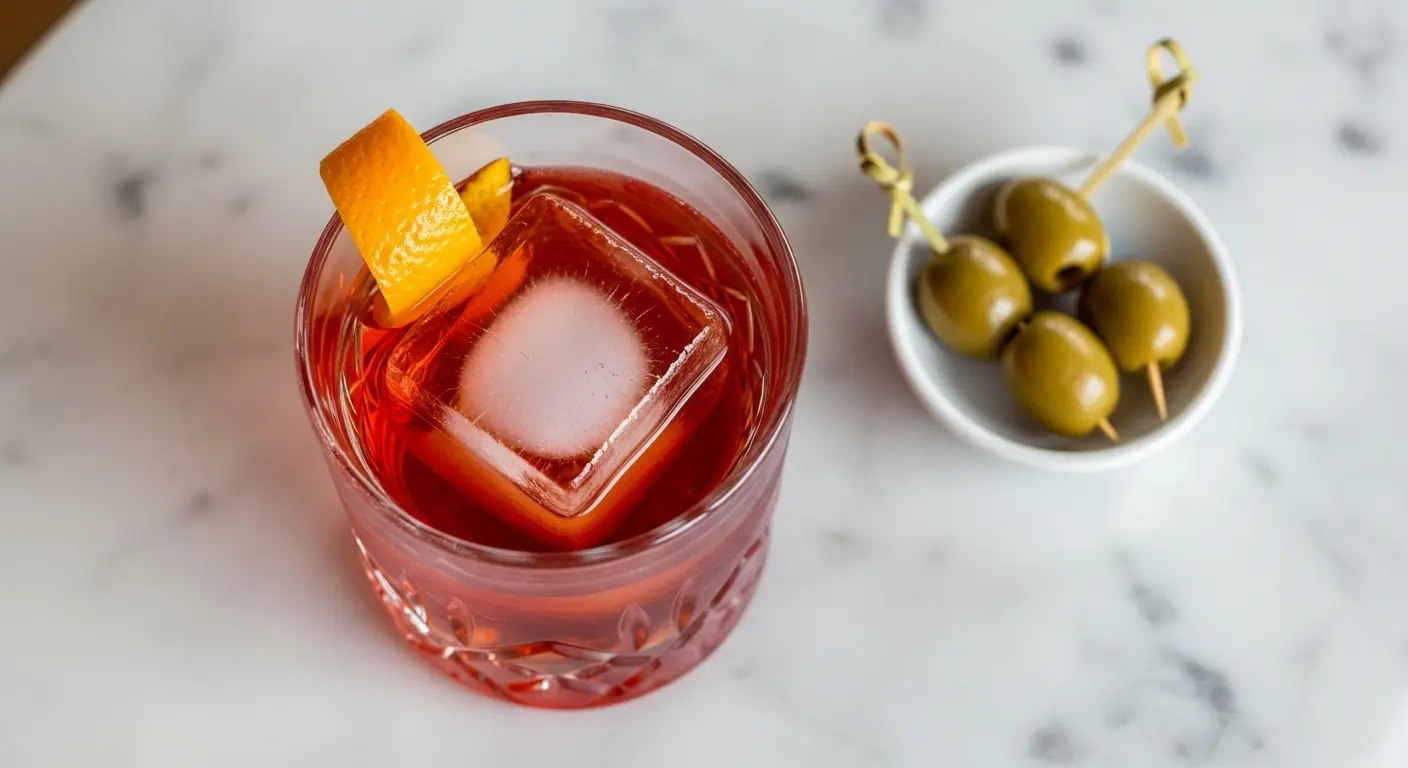
Few cocktails have earned a permanent place in the bartending canon quite like the negroni recipe. Bold, bittersweet, and impossibly elegant, this three-ingredient Italian drink has been captivating cocktail lovers for over a century.
It only takes one sip to understand why.
The magic of a negroni lies in its balance. Equal parts gin, sweet vermouth, and Campari come together to create something far greater than the sum of its parts. The herbal bite of gin, the rich sweetness of vermouth, and the distinctive bitter citrus of Campari play off each other perfectly.
What makes this drink particularly special is its simplicity. No shaking, no muddling, no exotic ingredients that require a trip to a specialty store. Just a few quality spirits, some ice, and about two minutes of your time.
This is the classic negroni recipe that bartenders around the world have been making for decades. Once you learn it, it becomes one of those drinks you can pour with confidence every single time.
For another iconic Italian-inspired classic, you might also enjoy this Espresso Martini for a post-dinner treat.
Why You’ll Love This Negroni Recipe
The classic negroni is one of those rare cocktails that appeals to a wide range of palates.
If you love complex, layered drinks, this one delivers in spades. Every sip reveals a new nuance, from the herbal juniper notes at the start to the lingering bitter finish.
It’s also incredibly easy to memorize. The 1:1:1 ratio means you never have to second-guess yourself, whether you’re making one drink or a batch for a crowd.
The negroni is also one of the most adaptable cocktails in existence. The classic version is perfect on its own, but it also forms the base for dozens of beloved variations, like the negroni sbagliato (made with prosecco instead of gin) or the boulevardier (made with bourbon).
It pairs beautifully with food, too. The bitter notes cut through rich, fatty dishes and complement savory appetizers with ease.
- It’s a true classic with over a century of history behind it
- Only 3 ingredients make it accessible for home bartenders at any skill level
- The equal-parts ratio is easy to scale up for batch cocktails
- It’s endlessly customizable with gin, vermouth, and bitter liqueur variations
- Beautiful presentation with a striking deep red color and an elegant orange garnish
- The perfect aperitivo that stimulates the appetite before a meal
Another classic worth exploring: Manhattan Recipe
Ingredients
Making a negroni requires just three main ingredients, so quality really does matter here. Using a decent gin, a fresh bottle of sweet vermouth, and good Campari will produce a drink that is noticeably better than one made with budget spirits.
- 1 oz (30 ml) gin
- 1 oz (30 ml) Campari
- 1 oz (30 ml) sweet vermouth
- 1 large ice cube or regular ice cubes for stirring and serving
- 1 orange peel or half-wheel orange slice for garnish
Read Also: Dirty Martini Recipe
Kitchen Equipment Needed
You don’t need a professional bar setup to make a great negroni. A few key tools will make the process much smoother and produce a better-quality cocktail.
- Cocktail mixing glass or a standard pint glass
- Bar spoon for stirring
- Cocktail strainer (Hawthorne or julep style)
- Jigger or cocktail measuring tool for accurate pours
- Rocks glass or lowball glass for serving
- Vegetable peeler or sharp paring knife for the orange peel garnish
- Large ice cube tray (optional, but highly recommended for presentation)
You might also enjoy: Amaretto Sour Recipe
Recommended Products for This Recipe
These are products recommended based on quality and performance. Using the right tools and spirits will make a noticeable difference in your finished negroni.
1. Tanqueray London Dry Gin
Tanqueray is one of the most widely recommended gins for a classic negroni because its clean, juniper-forward profile stands up beautifully to the bold flavors of Campari and vermouth. It has enough character to be noticed without overwhelming the balance of the drink. It is consistently available, affordable, and trusted by bartenders worldwide.
2. Campari Aperitivo Liqueur
There is really no substitute for Campari in a classic negroni. Its distinctive bittersweet profile, derived from a proprietary blend of herbs and fruits, is what defines the drink’s flavor. Using authentic Campari ensures you get that iconic deep red color and complex bitter-citrus finish every time.
3. Cocchi Storico Vermouth di Torino
Sweet vermouth is often overlooked, but it plays a critical role in a negroni. Cocchi Storico is a top choice among cocktail enthusiasts for its rich, slightly fruity profile with notes of citrus peel and spice. A high-quality vermouth like this elevates the entire cocktail significantly compared to a lower-grade alternative.
4. Cocktail Kingdom Mixing Glass
A proper mixing glass allows you to stir your negroni efficiently, chilling and diluting it to exactly the right degree without introducing air bubbles from shaking. Cocktail Kingdom makes well-regarded, durable mixing glasses that are used in professional bar programs across the country. The weight and size make stirring easy and controlled.
5. Large Ice Cube Tray
A single large ice cube melts more slowly than smaller cubes, which means less dilution and a colder drink that stays that way longer. Using a 2-inch ice cube tray produces the elegant, crystal-clear cubes you see at upscale cocktail bars. It is one of the simplest upgrades you can make for home cocktails.
For a fruity cocktail alternative, check out the Classic Pina Colada Recipe.
Step-by-Step Instructions
1. Gather and Measure Your Ingredients
- Lay out your gin, Campari, and sweet vermouth on your work surface so everything is within easy reach.
- Using a jigger or measuring tool, carefully measure 1 oz (30 ml) of gin. Precision matters here because the negroni’s power comes from its exact equal-parts balance.
- Measure 1 oz (30 ml) of Campari and set it aside.
- Measure 1 oz (30 ml) of sweet vermouth. If your vermouth has been open for a while, give it a quick sniff. Sweet vermouth is wine-based and should be stored in the refrigerator after opening. If it smells flat or vinegary, it is time for a fresh bottle.
2. Fill Your Mixing Glass with Ice
- Add a generous amount of ice to your mixing glass. You want the glass to be about two-thirds full of ice.
- Use large ice cubes if available, as they melt more slowly during stirring. Smaller ice cubes work too but will dilute the drink slightly faster.
- The purpose of this step is not just to chill the drink but to achieve the right level of dilution. A properly stirred negroni should be about 20-25% diluted water by volume. This is what softens the edges of the spirits and makes the drink silky and smooth.
3. Add the Ingredients Over the Ice
- Pour the measured gin directly over the ice in the mixing glass.
- Pour the Campari over the gin.
- Pour the sweet vermouth in last.
- The order does not dramatically affect the outcome, but adding spirits before bitters and vermouth is a common bartending practice.
4. Stir Until Properly Chilled and Diluted
- Insert your bar spoon into the mixing glass, placing the back of the spoon against the inside of the glass.
- Stir in smooth, circular motions. The goal is a gentle, controlled rotation that chills the liquid without agitating it. Unlike shaking, stirring keeps the cocktail clear and velvety.
- Stir for about 25 to 30 seconds. This sounds like a long time, but it is what brings the cocktail to the proper temperature (around 23°F / -5°C) and achieves the right dilution.
- The outside of the mixing glass should feel very cold to the touch when the drink is ready.
5. Prepare Your Serving Glass
- Place a large ice cube (or a few regular ice cubes) into a rocks glass or lowball glass.
- If you want to go the extra mile, chill the glass in the freezer for about 5 minutes beforehand. A cold glass keeps the drink colder for longer.
- The negroni is always served on the rocks (over ice), not straight up in a cocktail glass, in its classic form.
6. Strain the Cocktail Into the Glass
- Place your cocktail strainer over the top of the mixing glass.
- Hold the strainer firmly in place and pour the stirred cocktail over the ice in your serving glass in a smooth, steady motion.
- The strainer will catch any small ice chips or diluted water, keeping your finished drink clean and properly balanced.
7. Prepare and Add the Orange Garnish
- Using a vegetable peeler or a sharp paring knife, cut a wide strip of orange peel about 2 to 3 inches long. You want to get mostly the orange outer skin (the zest) and as little of the white pith as possible.
- Hold the peel skin-side down over the glass and give it a firm twist or squeeze. This releases the essential oils from the peel, which spritz over the surface of the drink and add a bright citrus aroma.
- Run the peel around the rim of the glass for additional aroma, then drop it into the drink or drape it over the rim.
- Alternatively, use a half-wheel orange slice as a more casual garnish.
8. Serve and Enjoy
- Serve the negroni immediately while it is perfectly chilled.
- The drink is best enjoyed slowly, as a pre-dinner aperitivo or with light appetizers.
- Give it a brief, gentle stir in the glass before each sip if the ice has begun to melt significantly.
Read Also: French 75 Recipe
Tips for Success
Even a three-ingredient cocktail has a few nuances that separate a good negroni from a great one. Keep these tips in mind the next time you mix one up.
- Use quality ingredients. Because there are only three components, there is nowhere to hide a cheap spirit. This is not the cocktail to use the bottom shelf for.
- Keep your sweet vermouth refrigerated. Vermouth is a fortified wine and will oxidize and go stale within a few weeks if left at room temperature. Store it in the fridge and use it within 2 to 3 months of opening for the best flavor.
- Don’t rush the stir. 25 to 30 seconds of stirring is the sweet spot. Under-stirring leaves the drink too cold and harsh, while over-stirring can dilute it too much.
- Choose the right gin. A London dry gin with a classic juniper profile (like Tanqueray or Beefeater) works best for a traditional negroni. Avoid heavily floral or citrus-forward gins for your first attempt, as they can make the drink feel unbalanced.
- Express the orange peel properly. Skipping this step means missing one of the drink’s most important aromatic elements. Take the extra 10 seconds to give that peel a good squeeze over the glass.
- Serve on a large ice cube. A single large cube looks beautiful and melts slowly, giving you more time to enjoy the cocktail at its intended concentration.
For a warming cocktail alternative, try this Hot Toddy Recipe.
Serving Suggestions

The negroni is a classic aperitivo, which means it is traditionally enjoyed before a meal to stimulate the appetite. Its bitter notes prime the palate beautifully for food.
The most natural pairing for a negroni is a selection of light Italian-style appetizers. Salty, savory, and rich bites balance the drink’s bitterness wonderfully.
- Olives and charcuterie boards with cured meats and aged cheeses
- Bruschetta for a fresh, herby contrast; try this Classic Bruschetta as a simple pairing
- Classic Deviled Eggs as a rich, creamy companion
- Cheese balls or savory dips with crackers for casual entertaining
- Smoked salmon or seafood appetizers, which echo the botanical notes of the gin
- Dark chocolate for an after-dinner pairing that leans into the bitter elements of the drink
- Spiced nuts or marinated olives for a no-fuss bar snack
Read Also: Cosmopolitan Cocktail Recipe
Variations to Try
The classic negroni is the foundation for a whole family of beloved cocktails. Once you have mastered the original, these riffs are well worth exploring.
The negroni’s equal-parts format is endlessly adaptable, and each substitution produces a dramatically different but equally delicious cocktail.
- Boulevardier: Replace the gin with bourbon or rye whiskey for a richer, warmer version. This is a perfect cold-weather variation.
- Negroni Sbagliato: Replace the gin with prosecco or sparkling wine for a lighter, bubblier take. “Sbagliato” means “mistaken” in Italian, and the story goes that it was invented when a bartender accidentally grabbed a bottle of prosecco instead of gin.
- White Negroni: Use Suze (a French gentian liqueur) instead of Campari and dry vermouth or Lillet Blanc instead of sweet vermouth for a paler, slightly less bitter version.
- Mezcal Negroni: Swap the gin for a smoky mezcal. The smokiness pairs remarkably well with the bitter Campari in a completely unexpected way.
- Rosita: Use tequila instead of gin, add a splash of dry vermouth alongside the sweet vermouth, and use Aperol or Campari as the bitter component.
- Cynar Negroni: Replace Campari with Cynar, an artichoke-based Italian bitter, for an earthier, more savory version.
- Batch Negroni: Scale the recipe up by multiplying each ingredient equally and store in a bottle in the freezer. Pre-dilute slightly (about 20% added water) for a party-ready version you can pour directly over ice.
Another festive sip to explore: Original Mai Tai Recipe
Storage and Reheating
The negroni is a spirit-forward cocktail, which means it keeps very well and can easily be made in advance.
Unlike cocktails with citrus juice or dairy, a negroni does not break down or separate over time. This makes it ideal for batching.
- Batch preparation: Combine equal parts gin, Campari, and sweet vermouth in a clean glass bottle or airtight container. Store in the refrigerator or freezer.
- Refrigerator storage: A batched, pre-diluted negroni will keep well in the refrigerator for up to 2 weeks. Keep it sealed to prevent oxidation.
- Freezer storage: Store the undiluted batch in the freezer for up to 3 months. The high alcohol content prevents it from freezing solid.
- Pre-dilution for batch serving: Add approximately 20% water by volume (e.g., 2 oz water for every 10 oz of cocktail) to your batch before refrigerating. This accounts for the dilution you would normally achieve through stirring.
- Serving from a batch: Pour directly from the cold bottle over a large ice cube in a rocks glass. Garnish with a fresh orange peel as usual.
- Avoid leaving a mixed negroni sitting at room temperature. Once poured and garnished, it is best enjoyed within about 30 minutes before significant ice melt changes the balance of the drink.
You might also enjoy: White Russian Recipe
Nutritional Facts
The following nutritional information is approximate and based on one classic negroni made with 1 oz each of gin, Campari, and sweet vermouth.
| Nutrient | Amount Per Serving |
|---|---|
| Calories | ~195 kcal |
| Carbohydrates | ~14 g |
| Sugar | ~12 g |
| Fat | 0 g |
| Protein | 0 g |
| Sodium | ~5 mg |
| Alcohol | ~22 g (~2.5 standard drinks) |
Note: Nutritional values can vary depending on the specific brands used. Campari and sweet vermouth both contain sugar, which accounts for most of the carbohydrates in this cocktail.
Another classic cocktail for your repertoire: Gimlet Recipe
Health Benefits of Key Ingredients
It is worth noting that the negroni, consumed in moderation, contains some ingredients with historically recognized properties.
This does not mean a negroni is a health drink, but the botanical-rich ingredients have an interesting nutritional story.
- Gin is distilled with botanicals like juniper berries, coriander, and angelica root. Juniper berries have traditionally been used for their antioxidant properties and as a digestive aid.
- Campari is made from a proprietary blend of herbs, spices, and citrus fruit peels. Bitter herbal liqueurs like Campari have a long tradition in European medicine as digestive tonics.
- Sweet vermouth is a fortified wine infused with a blend of botanicals, herbs, and spices. Vermouth’s bitter herbal components (wormwood, gentian, and others) have historically been consumed as appetite stimulants and digestive aids.
- The aperitivo tradition: Drinking a bitter, botanical cocktail before a meal is an Italian tradition with genuine physiological backing. Bitter compounds stimulate digestive enzyme production and gastric acid secretion, which can improve digestion of the meal that follows.
- Orange peel garnish: The essential oils expressed from fresh orange peel contain flavonoids and terpenes with antioxidant properties. They also add beneficial aromatics that enhance the sensory experience of the drink.
Please drink responsibly. These potential benefits apply only when consumed in moderate amounts.
Read Also: Bourbon Chicken Recipe
Frequently Asked Questions
1. What kind of gin is best for a negroni?
A classic London dry gin is the most recommended choice for a traditional negroni. Brands like Tanqueray, Beefeater, or Bombay Sapphire work extremely well because their clean juniper-forward flavor provides a strong backbone without competing with the Campari and vermouth.
Highly floral or aggressively flavored craft gins can work, but they tend to shift the balance of the drink. For your first negroni, stick with a London dry to understand the classic flavor before experimenting.
2. Can I shake a negroni instead of stirring it?
Technically, yes, but it is not recommended for the classic version. Shaking aerates the cocktail and gives it a frothy, slightly cloudy appearance, which alters both the texture and the visual appeal.
Stirring keeps the negroni crystal clear and gives it a silky, smooth texture that suits its spirit-forward nature. If you prefer a slightly lighter, frothier drink, a short shake is acceptable, but most bartenders and purists will tell you to always stir a negroni.
3. What if I don’t like the bitter taste?
The bitterness of Campari is what defines a negroni, so there is no way to completely remove it. However, you can dial it back by using slightly less Campari (try 0.75 oz instead of 1 oz) and slightly more sweet vermouth to compensate.
Alternatively, try substituting Aperol for Campari. Aperol is a lighter, less bitter orange liqueur that produces a significantly gentler, sweeter version of the drink. It is not a true negroni at that point, but it is a great entry-level option for those new to bitter cocktails.
4. How do I make a batch negroni for a party?
A batch negroni is one of the easiest party cocktails to prepare. Simply multiply the 1:1:1 ratio by the number of servings you want (for example, 8 oz of each spirit for 8 servings), combine in a large bottle, and add about 20% water by volume to account for the dilution that would normally happen during stirring.
Store the bottle in the freezer until ready to serve, then pour directly over ice in individual glasses. Add a fresh orange peel garnish to each glass as you pour. The freezer keeps it cold and the high alcohol content prevents it from fully freezing.
5. What is the difference between a negroni and a boulevardier?
A boulevardier is made with the same structure as a negroni (1:1:1 ratio with Campari and sweet vermouth) but uses bourbon or rye whiskey instead of gin. The result is a richer, warmer, and slightly sweeter cocktail with the caramel and vanilla notes of the whiskey playing off the bitter Campari beautifully.
The negroni tends to be more herbal and crisp, making it a better aperitivo. The boulevardier, with its whiskey base, feels cozier and more suited to sipping in cooler weather or after dinner.
For another bold, spirit-forward cocktail, try the Chocolate Martini Recipe.
Final Thoughts
The classic negroni is one of those timeless cocktails that rewards you every time you make it.
Once you have mixed your first one using this simple 1:1:1 ratio, it becomes second nature. You will find yourself returning to it again and again, whether you are hosting guests, unwinding after work, or simply craving something sophisticated.
Do not be intimidated by its bold, bitter flavor profile if you are new to it. The negroni has a way of growing on you quickly, and most people who try it once find themselves hooked before long.
Give this classic negroni recipe a try and let us know what you think in the comments below. Did you make any fun variations? Share your experience and tag a friend who needs a good cocktail in their life.
Recommended:
- Cosmopolitan Cocktail Recipe
- Hot Toddy Recipe
- French 75
- Amaretto Sour Recipe
- Classic Mojito Recipe
- Easy Mojito Recipe
- Easy Pina Colada Recipe
- Bourbon Balls Recipe
- Bloody Molly Recipe
- Classic Tiramisu Recipe