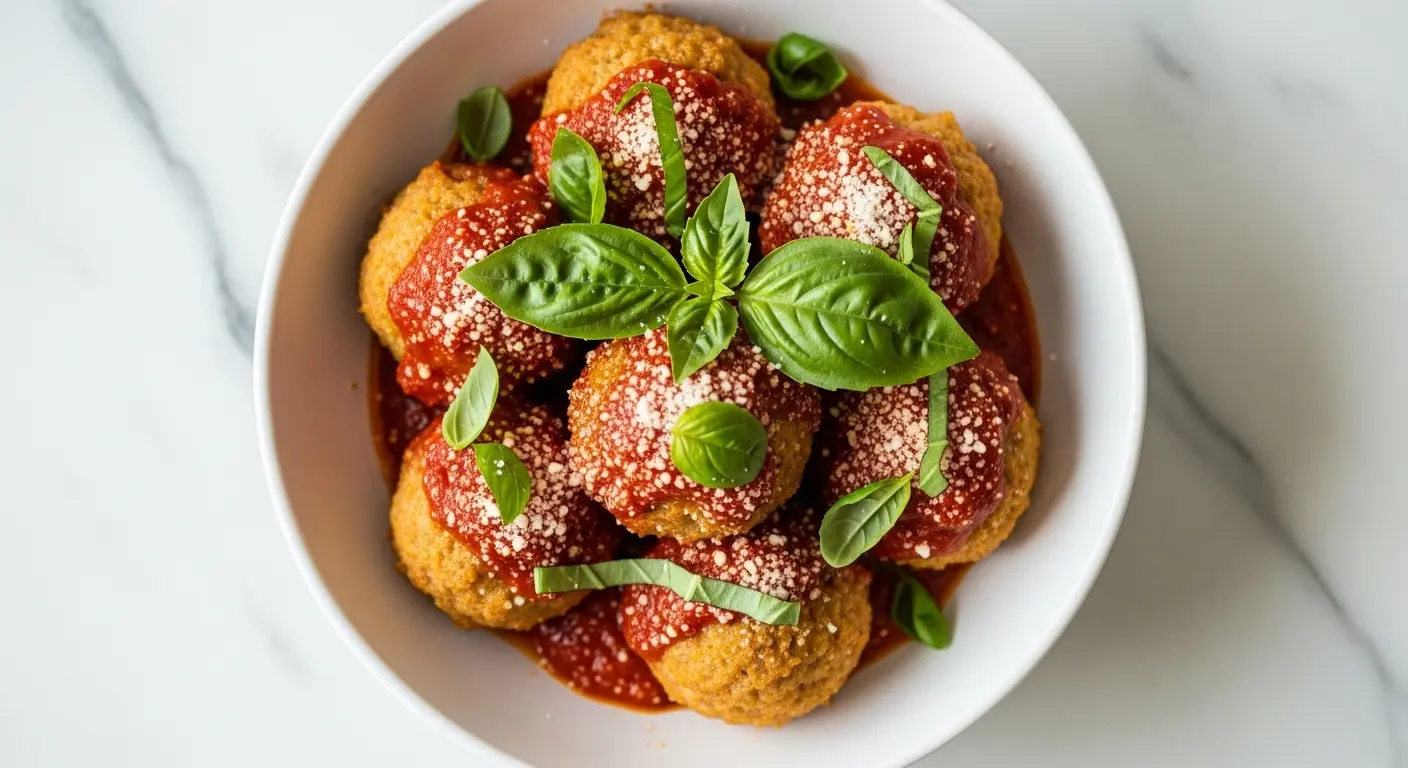
If you’ve been searching for a gluten free turkey meatball recipe that actually holds together, has real flavor, and doesn’t taste like a compromise, this is it.
Most people think going gluten free means giving up texture and taste. But with the right binder, the right seasonings, and a simple baking method, these meatballs come out tender on the inside with a lightly golden outside every single time.
They’re made with ground turkey, almond flour (instead of breadcrumbs), Parmesan, egg, and a handful of pantry-staple seasonings. No complicated steps, no hard-to-find ingredients, and no sacrifice on flavor.
Make a double batch on Sunday, and you’ll have a protein-packed base ready to go for pasta night, meal prep bowls, or soup by midweek.
Looking for more turkey meatball inspiration? Check out this easy turkey meatball recipe for another simple spin.
Why You’ll Love This Gluten Free Turkey Meatball Recipe
This recipe earns a permanent spot in your dinner rotation for all the right reasons.
Ground turkey is naturally lean, but this recipe keeps the meatballs moist and flavorful by using just the right ratio of egg and Parmesan. Almond flour acts as the binder without adding gluten, and it gives the finished meatballs a subtle, nutty depth that plain breadcrumbs never could.
They bake in the oven instead of frying, which means less hands-on time and no greasy cleanup.
Here’s what makes this recipe stand out:
- Genuinely gluten free using almond flour as the binder, not substituted breadcrumbs
- Stays moist thanks to Parmesan and egg, which lock in moisture without adding fat
- Ready in 30 minutes from start to finish, baking included
- Meal prep friendly because they freeze beautifully and reheat without drying out
- Versatile and work over pasta, in soup, sliced into grain bowls, or straight off the pan
- Kid-friendly with mild Italian seasonings that aren’t too bold for picky eaters
- High protein, lower carb compared to traditional meatball recipes
You might also enjoy: Baked Turkey Meatball Recipe
Ingredients
This recipe uses straightforward ingredients that come together quickly. Be sure to use a fine almond flour (not almond meal) for the best texture. Almond meal is coarser and can make the meatballs crumbly.
- 1 lb (450g) ground turkey (93% lean recommended)
- ½ cup (50g) almond flour, finely ground
- ¼ cup (25g) freshly grated Parmesan cheese
- 1 large egg
- 2 cloves garlic, minced (about 1 teaspoon)
- 2 tablespoons fresh parsley, finely chopped (or 1 teaspoon dried)
- 1 teaspoon dried Italian seasoning
- ½ teaspoon onion powder
- ½ teaspoon garlic powder
- ½ teaspoon salt
- ¼ teaspoon black pepper
- ¼ teaspoon red pepper flakes (optional, for a mild heat)
- 1 tablespoon olive oil (for brushing the baking sheet)
Read Also: Italian Turkey Meatball Recipe
Kitchen Equipment Needed
Having the right tools makes forming and baking these meatballs simple and consistent. A cookie scoop is especially helpful for getting evenly-sized meatballs that all finish cooking at the same time.
- Rimmed baking sheet
- Parchment paper or aluminum foil
- Large mixing bowl
- Cookie scoop or ice cream scoop (1.5 tablespoon size recommended)
- Measuring cups and spoons
- Box grater (for freshly grating Parmesan)
- Instant-read meat thermometer
Another favorite: Air Fryer Turkey Meatball Recipe
Recommended Products for This Recipe
These are products I genuinely recommend based on quality and performance for this recipe.
1. Almond Flour (Blanched, Super Fine)
Blanched almond flour (not almond meal) is the secret to meatballs that hold together without being gritty. Super fine ground varieties mimic the texture of breadcrumbs much more closely.
2. OXO Good Grips Medium Cookie Scoop
Evenly sized meatballs cook at the same rate and look more polished. A 1.5 tablespoon cookie scoop makes forming them fast and mess-free, and you’ll use it constantly for cookies, energy balls, and more.
3. Nordic Ware Rimmed Baking Sheet
A sturdy, warp-resistant baking sheet ensures your meatballs don’t roll around or cook unevenly. Nordic Ware’s commercial-grade pans heat beautifully for perfectly golden bottoms.
4. ThermoPop Instant-Read Meat Thermometer
Ground turkey must reach an internal temperature of 165°F (74°C) to be safe to eat. An instant-read thermometer removes all guesswork and prevents both under-cooking and over-cooking, which dries out the meatballs.
Read Also: Healthy Turkey Meatball Recipe
Step-by-Step Instructions
1. Preheat the Oven and Prepare Your Baking Sheet
- Preheat your oven to 400°F (200°C). This high temperature helps the meatballs develop a light golden crust on the outside while staying juicy inside.
- Line a rimmed baking sheet with parchment paper.
- Lightly brush the parchment with olive oil or spray it with nonstick cooking spray. This prevents sticking and helps the bottoms brown slightly.
- Set the prepared pan aside while you make the meatball mixture.
2. Combine the Dry Ingredients and Seasonings
- In a large mixing bowl, add ½ cup (50g) of fine almond flour.
- Add ¼ cup (25g) of freshly grated Parmesan. Freshly grated Parmesan melts into the mixture more evenly than the pre-grated variety in canisters, which often contains anti-caking agents.
- Add 1 teaspoon dried Italian seasoning, ½ teaspoon onion powder, ½ teaspoon garlic powder, ½ teaspoon salt, and ¼ teaspoon black pepper.
- If using, add ¼ teaspoon red pepper flakes for a mild background heat.
- Stir all of the dry ingredients together with a fork until evenly combined. This helps distribute the seasonings throughout the meat more uniformly.
3. Add the Wet Ingredients
- Add the egg directly into the mixing bowl with the dry ingredients.
- Add the 2 cloves of minced garlic. Freshly minced garlic has a more vibrant, pungent flavor than garlic powder, and using both (one fresh, one powdered) adds layers of garlic flavor.
- Add 2 tablespoons of finely chopped fresh parsley. Fresh parsley brightens the flavor and adds a subtle freshness that dried parsley can’t quite replicate, though dried works in a pinch.
- Use a fork to lightly beat the egg and stir everything together before adding the meat.
4. Add the Ground Turkey and Mix
- Add 1 pound (450g) of ground turkey to the bowl.
- Use your hands (slightly dampened with cold water to prevent sticking) or a large fork to mix everything together.
- Mix just until all ingredients are evenly incorporated. Overmixing compacts the protein strands in the meat, which leads to dense, tough meatballs. Stop as soon as you no longer see streaks of egg or clumps of almond flour.
- The mixture should be slightly tacky but manageable. If it feels too wet, refrigerate it for 10 to 15 minutes to firm up before scooping.
5. Portion and Shape the Meatballs
- Use a 1.5-tablespoon cookie scoop to portion the mixture onto the prepared baking sheet.
- Space the meatballs at least 1 inch (2.5 cm) apart to ensure even airflow and browning. Crowding them causes steaming rather than roasting.
- Once portioned, use lightly dampened hands to gently roll each mound into a smooth, round ball. Wetting your hands prevents the mixture from sticking and makes this step faster.
- You should get approximately 20 to 22 meatballs from this batch, depending on exact scoop size.
6. Bake the Meatballs
- Place the baking sheet on the center rack of the preheated oven.
- Bake for 18 to 22 minutes, depending on the size of your meatballs and your oven. Oven temperatures can vary, so start checking at the 18-minute mark.
- The meatballs are done when the exterior is lightly golden and firm to the touch.
- Use an instant-read thermometer to check the internal temperature. It should read 165°F (74°C) at the thickest point. Do not rely on color alone, as turkey can look cooked before it has reached a safe internal temperature.
- Remove from the oven and let them rest for 3 to 5 minutes before serving or adding to sauce. Resting allows the juices to redistribute so they don’t all run out when you cut into them.
7. Add to Sauce or Serve
- If adding to marinara or another sauce, transfer the baked meatballs to a skillet with your simmering sauce and let them heat together over medium-low heat for 5 to 10 minutes. This lets the meatballs absorb some of the sauce flavor.
- For pasta bowls, serve immediately over gluten free pasta or zucchini noodles with your sauce of choice.
- For meal prep, let the meatballs cool completely on a wire rack before storing.
This recipe pairs perfectly with a classic tomato sauce for an easy weeknight dinner.
Tips for Success
A few small details make a big difference in getting perfectly tender, flavorful meatballs every single time.
- Use 93% lean ground turkey. The extra fat content compared to 99% lean keeps the meatballs moist. Leaner turkey tends to dry out quickly in the oven.
- Chill the mixture if it’s too sticky. If the mixture is so sticky it’s hard to roll, refrigerate it for 10 to 15 minutes. Cold meat firms up and becomes much easier to work with.
- Don’t skip the Parmesan. It adds both moisture and a savory depth that turkey needs since it’s a milder meat than beef or pork.
- Dampen your hands. Rolling the meatballs with lightly wet hands prevents sticking and results in smoother, rounder shapes.
- Use a thermometer every time. Ground turkey looks done before it actually is. An instant-read thermometer is the only reliable way to confirm safe doneness without drying out the meat by overcooking it out of caution.
- Bake on parchment, not bare foil. Bare foil can cause the bottoms to brown too quickly and stick. Parchment gives the right amount of nonstick surface without scorching.
- Grate your own Parmesan. Pre-shredded or canister Parmesan has a different texture and melts less evenly into the mixture. Freshly grating it takes 30 seconds and makes a noticeable difference.
You might also enjoy: Turkey Meatball Recipe Without Breadcrumbs
Serving Suggestions
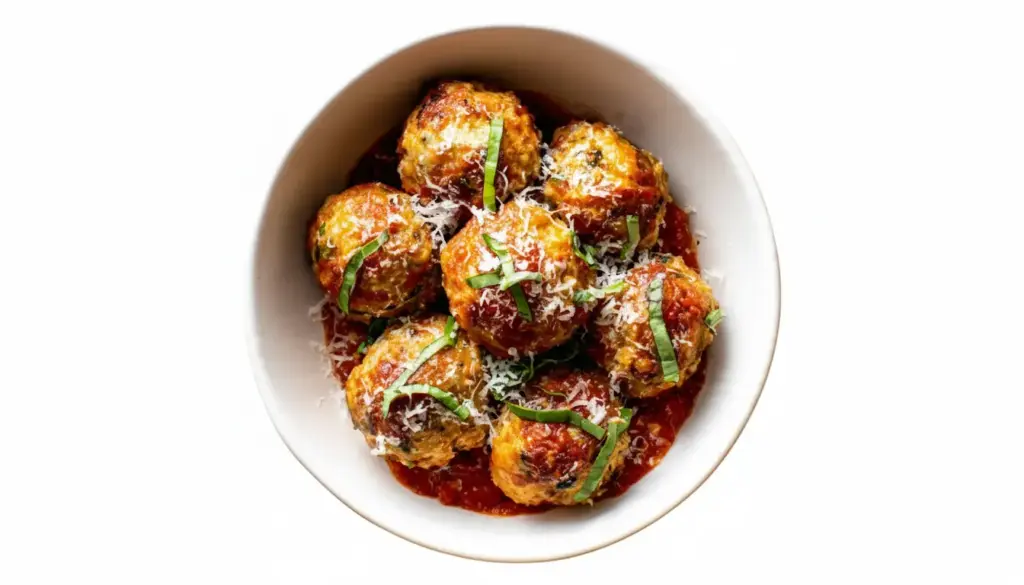
These gluten free turkey meatballs are incredibly versatile. Here are some of the best ways to serve them:
They work beautifully tossed with your favorite marinara sauce and spooned over a bowl of gluten free spaghetti for a classic dinner.
- Over gluten free pasta with marinara or vodka sauce for a classic spaghetti and meatball dinner
- In Italian Wedding Soup as the protein element in a hearty, comforting broth
- Over zucchini noodles for a lighter, lower-carb option that still feels satisfying
- In meal prep bowls alongside roasted vegetables and a grain like quinoa or rice
- As an appetizer with toothpicks and a dipping sauce like tzatziki or marinara
- In stuffed bell peppers as a filling base mixed with rice and sauce
- On a sub roll (gluten free, of course) with melted mozzarella for a meatball sandwich
Variations to Try
Once you’ve nailed the base recipe, it’s easy to adapt these meatballs to different flavor profiles with just a few ingredient swaps.
- Mediterranean turkey meatballs: Swap Italian seasoning for dried oregano, add crumbled feta, and mix in finely chopped kalamata olives. Serve with tzatziki and cucumber.
- Asian turkey meatballs: Replace Italian seasoning with ginger powder, add a tablespoon of gluten free soy sauce or tamari, and mix in a teaspoon of sesame oil. Serve with a sweet chili dipping sauce.
- Greek turkey meatballs: Add dried mint, lemon zest, and extra garlic. Serve with warm pita and hummus.
- Spicy turkey meatballs: Double the red pepper flakes and add a pinch of cayenne for extra heat.
- Dairy-free version: Omit the Parmesan and replace it with 2 tablespoons of nutritional yeast for a similar savory, umami depth.
- Slow cooker method: Place baked meatballs in a slow cooker with 2 cups of your favorite tomato sauce and cook on low for 2 to 3 hours for extra tender results.
Check out this Mediterranean Turkey Meatball Recipe for a full version of that variation.
Storage and Reheating
These meatballs store and reheat exceptionally well, making them ideal for meal prep throughout the week.
- Refrigerator: Store fully cooked, cooled meatballs in an airtight container for up to 4 days.
- Freezer: Freeze in a single layer on a baking sheet until solid (about 1 to 2 hours), then transfer to a zip-top freezer bag or airtight container for up to 3 months.
- To thaw: Transfer frozen meatballs to the refrigerator the night before you plan to use them.
- Reheating on the stovetop (best method): Add meatballs to a skillet with a splash of water or broth and warm over medium-low heat, covered, for 5 to 7 minutes.
- Reheating in the oven: Place on a baking sheet at 350°F (175°C) for 10 to 12 minutes until heated through.
- Reheating in the microwave: Place in a microwave-safe dish with a splash of water, cover loosely, and heat in 30-second intervals until warm. The microwave works fine for quick reheating but can slightly change the texture.
- In sauce: Add directly from the fridge or freezer (no thawing needed) to simmering sauce and let warm through over low heat.
Read Also: Keto Turkey Meatball Recipe
Nutritional Facts
Approximate values per serving (4 meatballs). Actual values may vary based on specific brands and ingredients used.
| Nutrient | Amount |
|---|---|
| Calories | 210 |
| Total Fat | 12g |
| Saturated Fat | 3g |
| Cholesterol | 90mg |
| Sodium | 380mg |
| Total Carbohydrates | 3g |
| Dietary Fiber | 1g |
| Sugars | 0g |
| Protein | 23g |
This recipe yields approximately 20 to 22 meatballs. A serving of 4 meatballs provides a high-protein, low-carb meal component that fits well into many dietary approaches including gluten free, paleo, and low-carb diets.
Another favorite: Greek Turkey Meatball Recipe
Health Benefits of Key Ingredients
The ingredients in this recipe aren’t just convenient; each one brings something meaningful to the nutritional profile of the dish.
These meatballs are genuinely wholesome, built around ingredients that support health while still tasting like real comfort food.
- Ground turkey: An excellent source of lean protein, ground turkey supports muscle maintenance, keeps you full longer, and is lower in saturated fat than ground beef. It’s also a good source of B vitamins, including B6 and B12, which support energy metabolism and nervous system function.
- Almond flour: Unlike traditional white flour, almond flour provides healthy monounsaturated fats, vitamin E, and magnesium. It has a much lower glycemic impact than refined flour, making it a better option for blood sugar management.
- Parmesan cheese: Despite being used in a small amount, Parmesan contributes calcium for bone health and additional protein. Its intense, salty flavor means a little goes a long way.
- Garlic: Fresh garlic contains allicin, a compound associated with anti-inflammatory and immune-supporting properties. It’s a simple way to add functional value to an everyday recipe.
- Parsley: Often underestimated, parsley is rich in vitamin K, vitamin C, and folate. Adding fresh herbs to recipes is a simple, zero-calorie way to increase the nutritional density of a meal.
- Olive oil: Used just to prep the pan, olive oil adds a small amount of heart-healthy monounsaturated fats and helps with browning without adding excess calories.
Read Also: Asian Turkey Meatball Recipe
Frequently Asked Questions
1. Can I use ground turkey breast instead of regular ground turkey?
You can, but ground turkey breast (99% lean) is very low in fat, which can make the meatballs dry and crumbly. If you use it, consider adding 1 tablespoon of olive oil directly into the meat mixture to compensate for the reduced fat content. The 93% lean variety gives much better results for this recipe without any modification.
2. Do I have to use almond flour, or can I substitute something else?
Almond flour is the recommended binder for this recipe, but other gluten free options can work. Gluten free oat flour or gluten free breadcrumbs can be substituted in the same quantity. Coconut flour is very absorbent and should only be used at about half the amount (¼ cup instead of ½ cup) if you try it. Note that each substitute will slightly change the texture and flavor of the finished meatballs.
3. My meatballs are falling apart. What did I go wrong?
There are a few common culprits. The most likely issue is undermixing, which means the binding ingredients (egg and almond flour) didn’t fully distribute through the meat. Another cause is using turkey that’s too lean, which leaves the mixture without enough fat to hold together. Make sure to chill the mixture for 10 minutes before rolling if it feels too wet, and handle the meatballs gently while shaping.
4. Can I make these meatballs ahead of time?
Absolutely. You can mix and shape the meatballs up to 24 hours ahead and refrigerate them on a parchment-lined baking sheet (covered with plastic wrap) until ready to bake. Alternatively, bake them fully, cool, and refrigerate for up to 4 days. They reheat beautifully in sauce, in the oven, or on the stovetop.
5. Can I cook these in a skillet instead of the oven?
Yes. Heat a tablespoon of olive oil in a large nonstick or stainless skillet over medium heat. Add the meatballs and cook for about 12 to 15 minutes, turning them every few minutes to brown on all sides. The stovetop method gives you more color on the outside, though the oven method is more hands-off and produces more even cooking. Use a thermometer to confirm they reach 165°F (74°C) regardless of cooking method.
This recipe also pairs beautifully with a warm bowl of turkey soup for a cozy, complete meal.
Final Thoughts
This gluten free turkey meatball recipe proves that eating gluten free doesn’t mean settling for less.
With almond flour as the binder and a simple oven-bake method, these meatballs come out tender, flavorful, and incredibly versatile every time you make them.
They’re the kind of recipe that quietly becomes a household staple because they’re fast, adaptable, and genuinely satisfying.
Give them a try this week, and let me know in the comments how you served them! Whether you went classic marinara or tried a fun variation, I’d love to hear about it. Don’t forget to share this recipe with a friend who’s navigating gluten free cooking.
Recommended:
- Turkey Meatball Recipe
- Porcupine Meatballs Tomato Soup Recipe
- Easy Meatballs Recipe
- Italian Meatballs Recipe
- Swedish Meatball Recipe
- Meatloaf Recipe Without Breadcrumbs
- Turkey Chili Recipe
- Turkey Barley Soup Recipe
- Turkey Wild Rice Soup Recipe
- Gluten Free Pancake Recipe