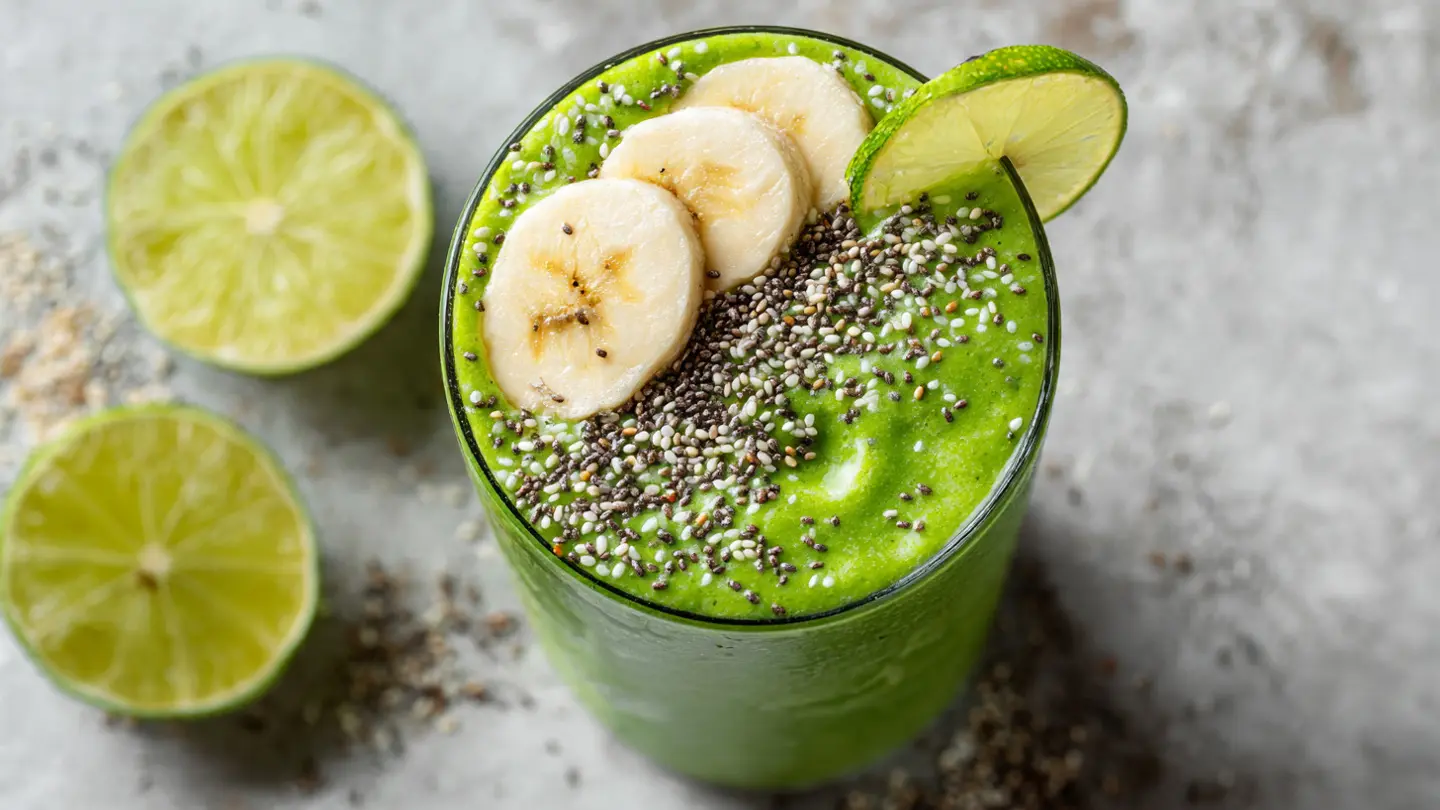
If you’ve ever wanted to pack a serious dose of greens into your morning without actually tasting like you’re chewing on a lawn, this green smoothie recipe is exactly what you need.
This blend is bright, slightly sweet, and beautifully creamy, thanks to a combination of fresh spinach, frozen banana, and a splash of coconut water that ties everything together.
It’s the kind of drink that leaves you feeling energized rather than weighed down, and once you make it a couple of times, it becomes one of those recipes you can do on autopilot.
The trick to a green smoothie that actually tastes good? It’s all about the fruit-to-greens ratio and using frozen banana as your base. It gives the smoothie a thick, milkshake-like consistency without any added sugar or dairy.
If you already love fruit-forward blends, you might also enjoy this Avocado Smoothie Recipe for another creamy, nutrient-dense option.

Why You’ll Love This Green Smoothie Recipe
This smoothie is the kind of thing you can make in under five minutes, and it actually keeps you full.
The combination of banana, spinach, and mango delivers a natural sweetness that doesn’t need any sweetener at all.
It’s dairy-free, vegan-friendly, and easily customizable depending on what you have on hand.
The frozen banana is the secret weapon here. It creates that thick, frosty texture that makes this feel indulgent rather than virtuous.
You get iron, potassium, vitamin C, and fiber all in one glass, making it a genuinely nourishing way to start your day.
It’s also a great option for kids who are reluctant about vegetables, since the green color is the only real giveaway.
Why you’ll love it at a glance:
- Ready in under 5 minutes with minimal cleanup
- Naturally sweet with no added sugar needed
- Vegan, dairy-free, and gluten-free
- Packed with vitamins, minerals, and antioxidants
- Thick and creamy thanks to frozen banana
- Easy to customize with whatever fruit or greens you have
You might also enjoy this Yogurt Smoothie Recipe if you prefer a protein-rich, creamy variation.
Ingredients
This recipe keeps things simple and uses ingredients you can easily find at any grocery store. The spinach is mild enough that it blends right in, and the frozen banana handles the creaminess while the mango brings a tropical brightness that makes this smoothie genuinely enjoyable to drink.
- 2 cups (60 g) fresh baby spinach, loosely packed
- 1 medium frozen banana (about 120 g), pre-sliced before freezing
- 1 cup (165 g) frozen mango chunks
- 1/2 cup (75 g) frozen pineapple chunks
- 1 cup (240 ml) coconut water (or plain water for a lighter flavor)
- 1/2 cup (120 ml) unsweetened almond milk (or oat milk)
- 1 tablespoon chia seeds (optional, for added fiber and omega-3s)
- 1/2 teaspoon freshly grated ginger (optional, for a gentle kick)
- Juice of 1/2 lime (optional, for brightness)
Read Also: Watermelon Smoothie Recipe
Kitchen Equipment Needed
You don’t need much to make this smoothie, but having a high-powered blender makes a noticeable difference in texture, especially when blending raw spinach and frozen fruit. A standard blender will work in a pinch, but you may need to add a bit more liquid and blend longer to get a smooth result.
- High-powered blender (such as a Vitamix or Ninja)
- Measuring cups and spoons
- Reusable smoothie cups with lids (for on-the-go)
- Cutting board and knife (for fresh ginger and lime)
- Reusable smoothie straws
Another favorite morning option: Easy Acai Bowl Recipe
Recommended Products for This Recipe
These are products that make a genuine difference in the quality and ease of making this smoothie. Each one was selected based on performance and value.
1. Vitamix E310 Explorian Blender
This is the gold standard when it comes to smoothie blending. The Vitamix E310 completely obliterates spinach and frozen fruit in seconds, leaving you with a perfectly smooth, lump-free texture every single time. Its variable speed control also lets you dial in exactly the consistency you want, from thick and spoonable to drinkable.
2. Anthony’s Organic Chia Seeds
Chia seeds are one of the easiest ways to add fiber, protein, and omega-3 fatty acids to your smoothie without changing the flavor at all. Anthony’s Organic Chia Seeds are cold-pressed and certified organic, so you’re getting maximum nutritional value in every tablespoon.
3. Califia Farms Unsweetened Almond Milk
This almond milk blends seamlessly into green smoothies, adding a subtle creaminess without dairy or excessive calories. It’s free from carrageenan and artificial ingredients, which makes it a cleaner choice than many grocery store brands.
4. Souper Cubes Freezer Trays
If you like to meal prep your smoothies in advance, these silicone freezer trays are ideal for freezing pre-portioned smoothie packs. Just blend everything in bulk, freeze in the trays, and pop one into the blender each morning for an effortless routine.
5. OXO Good Grips Produce Keeper
Keeping your spinach fresh for longer is key when you’re making green smoothies daily. The OXO Good Grips Produce Keeper uses a raised basket and adjustable vent to regulate moisture and airflow, which significantly extends the life of leafy greens.
For another refreshing, fruit-forward blend, try this Pineapple Smoothie Recipe.
Step-by-Step Instructions
Step 1: Prep Your Ingredients
- Measure out your 2 cups (60 g) of fresh baby spinach and place it into the blender first. Adding the spinach at the bottom closest to the blades ensures it gets fully broken down before the other ingredients are incorporated.
- If you’re using fresh ginger, peel a small knob and grate approximately 1/2 teaspoon using a fine microplane grater. Set it aside.
- Cut your lime in half if using, and set it near the blender so you can squeeze it in at the right moment.
- If your frozen banana was frozen whole, break it into 3 to 4 chunks so your blender doesn’t have to work as hard. Pre-slicing before freezing (about 1-inch / 2.5 cm pieces) is the best habit for smooth blending.
Step 2: Add the Liquids
- Pour 1 cup (240 ml) of coconut water directly over the spinach in the blender. This helps create a liquid base that starts moving the spinach toward the blades immediately.
- Add 1/2 cup (120 ml) of unsweetened almond milk on top of the coconut water. This combination of liquids gives the smoothie enough body to blend well while keeping the flavor clean and lightly tropical.
- If you prefer a thinner smoothie, you can increase the coconut water to 1.5 cups (360 ml) total at this stage.
Step 3: Add the Frozen Fruit
- Add the 1 medium frozen banana (about 120 g) into the blender on top of the liquid.
- Add 1 cup (165 g) of frozen mango chunks directly on top of the banana.
- Add 1/2 cup (75 g) of frozen pineapple chunks last. The layering order here matters: putting the heaviest and coldest items on top helps weigh the mixture down toward the blades for more efficient blending.
- If you are adding chia seeds, sprinkle 1 tablespoon on top of the frozen fruit now. They will hydrate and blend into the smoothie during processing.
Step 4: Add Optional Flavor Boosters
- If using, add the 1/2 teaspoon of freshly grated ginger on top of the fruit. Ginger adds a subtle warmth and has anti-inflammatory properties that complement the tropical fruits beautifully.
- Squeeze in the juice of 1/2 lime if using. The acidity from the lime brightens all the other flavors and reduces any grassiness from the spinach, especially important if you’re using a more robust green like kale instead.
Step 5: Blend Until Completely Smooth
- Secure the lid on your blender tightly. If your blender has a tamper (like a Vitamix), have it ready in case the mixture gets stuck.
- Start blending on low speed for about 15 seconds to break down the larger frozen fruit pieces, then gradually increase to high speed.
- Blend on high for 45 to 60 seconds, or until the mixture is completely smooth with no visible green flecks or chunks. If you see the blender struggling or hear it straining, stop the motor, use a spoon or tamper to push the contents toward the blades, then resume blending.
- For an ultra-smooth result with a standard blender, you may need to blend for an additional 30 to 60 seconds.
Step 6: Taste and Adjust
- Remove the blender lid and taste the smoothie. This is important before you pour and serve.
- If the smoothie isn’t sweet enough, add a small piece of frozen banana (about 1/4 of a banana) or a couple of fresh dates and blend again for 20 seconds.
- If it tastes too thick, add a splash more coconut water and blend for 10 seconds.
- If the flavor feels flat, squeeze in a bit more lime juice and pulse twice to incorporate.
Step 7: Pour and Serve
- Pour the blended smoothie into one large (16 oz / 480 ml) glass or two smaller (8 oz / 240 ml) glasses.
- Serve immediately for the best flavor and texture, as frozen smoothies can separate and lose their thick consistency if left sitting.
- Optional toppings: a sprinkle of hemp seeds, a few slices of fresh banana, or a drizzle of honey on top for presentation.
This smoothie pairs wonderfully with Avocado Toast as part of a complete, energizing breakfast.
Tips for Success
Getting a perfectly smooth, vibrant green smoothie is mostly about technique and ingredient quality. A few small adjustments can take your smoothie from “fine” to genuinely great every single time.
- Freeze your banana before it goes fully ripe. The ideal banana for smoothies has just started to show small brown spots. At this point, the natural sugars are at their peak, and the flavor is sweeter and less starchy than an unripe banana.
- Always blend the spinach with liquid first before adding frozen fruit. This “pre-blending” technique ensures the greens are fully broken down and prevents any fibrous strands from ending up in your finished smoothie.
- Use frozen fruit rather than fresh. Frozen fruit chills the smoothie and creates a thick, frosty texture without needing ice, which dilutes flavor.
- Don’t over-add liquid at the start. It’s easier to thin a smoothie down than to thicken it back up. Start with the amounts listed and add more only if needed.
- Blend longer than you think necessary. Most home blenders need a full 60 seconds on high speed to fully break down spinach and frozen fruit. Under-blending is the most common reason for a grainy or chunky smoothie.
- Clean your blender immediately after use. Fill it halfway with warm water, add a drop of dish soap, and blend for 20 seconds. This makes cleanup effortless and prevents the spinach from drying and sticking to the blades.
Read Also: Dragon Fruit Smoothie Recipe
Serving Suggestions
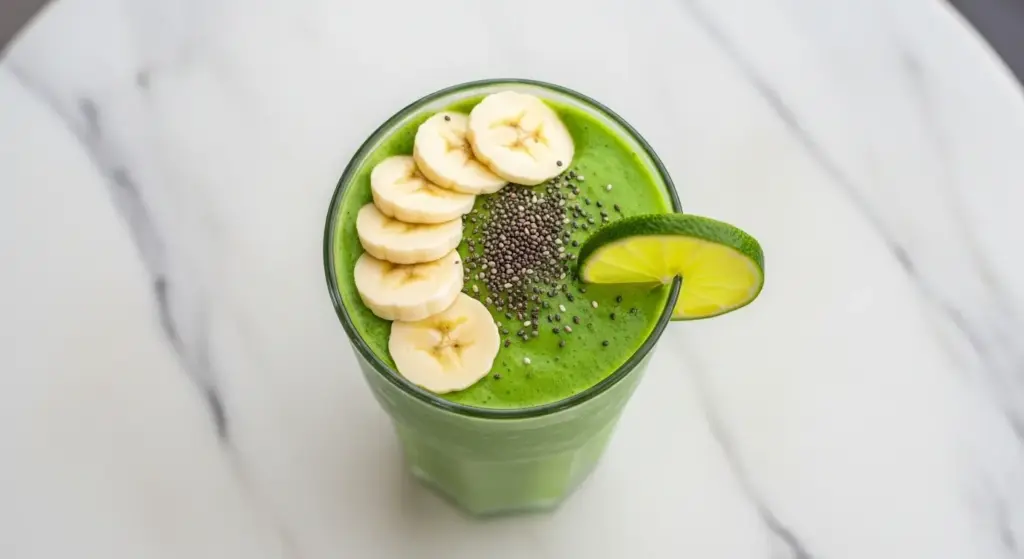
This green smoothie is completely satisfying on its own, but it also pairs beautifully with a few simple additions that round out a full morning meal.
Serve it alongside a small bowl of Easy Granola for a crunchy contrast and extra staying power.
Some great ways to serve this green smoothie:
- Pair with a slice of Banana Bread Recipe with Walnuts and Chocolate Chips for a heartier breakfast
- Pour into a bowl and top with granola, fresh berries, and sliced kiwi for a smoothie bowl variation
- Serve alongside Baked Oatmeal for a filling combination that keeps you full until lunch
- Enjoy with a couple of boiled eggs or a simple egg dish for added protein
- Pack into a sealed mason jar for an easy desk breakfast or post-workout recovery drink
Variations to Try
Once you’ve nailed the base recipe, this smoothie is incredibly easy to customize based on your taste preferences, nutritional goals, or what’s available in your freezer. Each variation below changes the character of the smoothie in a distinct way while keeping it delicious.
- Kale version: Swap the spinach for 1.5 cups (45 g) of de-stemmed curly or lacinato kale. Kale has a stronger, more bitter flavor, so increase the mango to 1.5 cups (248 g) to balance it out.
- Tropical version: Replace the almond milk with full-fat coconut milk for a richer, more indulgent smoothie with a pronounced coconut flavor.
- Protein-packed version: Add one scoop of vanilla protein powder or 2 tablespoons of hemp seeds for an extra 15 to 20 grams of protein, making it more suitable as a post-workout meal.
- Cucumber mint version: Add 1/2 cup (75 g) of roughly chopped cucumber and 4 to 5 fresh mint leaves for a cooling, spa-like variation that’s especially refreshing in summer.
- Berry green version: Replace the mango and pineapple with 1.5 cups (225 g) of mixed frozen berries (blueberries, strawberries, raspberries) for a darker purple-green smoothie that’s packed with antioxidants.
- Apple ginger version: Swap the frozen mango for 1 cup (130 g) of peeled, frozen apple chunks and double the ginger to 1 teaspoon for a crisp, zingy flavor that works especially well in colder months.
You might also enjoy this Papaya Smoothie Recipe for another tropical, nutrient-rich blended drink.
Storage and Reheating
This smoothie is best consumed immediately after blending, as the frozen fruit starts to melt quickly and the texture changes within the first 15 to 20 minutes. That said, there are a few practical ways to store and prep this smoothie in advance.
- Refrigerator: Store leftover smoothie in a sealed mason jar or airtight container for up to 24 hours. Shake or stir well before drinking, as some separation will occur. The color may darken slightly due to oxidation, but the flavor remains largely unchanged.
- Freezer (smoothie packs): Portion the spinach, frozen banana, mango, and pineapple into zip-lock bags or silicone bags before freezing. In the morning, simply dump the bag into the blender with the liquids and blend. These packs last up to 3 months in the freezer.
- Smoothie cubes: Pour leftover blended smoothie into an ice cube tray and freeze. Drop a few frozen smoothie cubes into your next batch for an extra-cold, thick result without diluting the flavor.
- Do not heat: This smoothie should never be reheated. It is designed to be served cold, and heat would destroy both the texture and many of the heat-sensitive nutrients like vitamin C.
Read Also: Passion Fruit Smoothie Recipe
Nutritional Facts
The values below are approximate and based on the base recipe as written, using unsweetened almond milk and coconut water, with chia seeds included. Exact values will vary based on the size of your banana and specific brands used.
Per serving (makes 1 large serving, approximately 16 oz / 480 ml):
| Nutrient | Amount |
|---|---|
| Calories | 285 kcal |
| Total Fat | 4 g |
| Saturated Fat | 0.5 g |
| Cholesterol | 0 mg |
| Sodium | 180 mg |
| Total Carbohydrates | 62 g |
| Dietary Fiber | 8 g |
| Total Sugars | 40 g (all natural) |
| Protein | 5 g |
| Vitamin A | 80% DV |
| Vitamin C | 110% DV |
| Calcium | 15% DV |
| Iron | 18% DV |
| Potassium | 850 mg |
Note: Nutritional information is an estimate and may vary depending on the specific brands and quantities of ingredients used.
This smoothie also complements a light, clean diet beautifully alongside something like this Fruit Salad Recipe.
Health Benefits of Key Ingredients
Every ingredient in this green smoothie earns its place, and together they create one of the most nutritionally complete single-glass meals you can make at home.
The combination of spinach, banana, mango, pineapple, coconut water, and chia seeds covers a wide range of essential nutrients, each working in synergy with the others to support your body from morning through to midday.
Key health benefits by ingredient:
- Spinach: One of the most nutrient-dense leafy greens available, spinach is rich in iron, magnesium, folate, and vitamins A and K. It supports bone health, healthy red blood cell production, and contains powerful antioxidants like lutein and zeaxanthin that support eye health.
- Frozen banana: A natural source of potassium, vitamin B6, and resistant starch (especially when slightly underripe), banana supports heart health, helps regulate blood pressure, and provides quick, sustained energy without a dramatic blood sugar spike.
- Frozen mango: Rich in vitamin C and beta-carotene, mango supports immune function and healthy skin. It also contains digestive enzymes like amylases that help break down starches, supporting gut health.
- Pineapple: Contains bromelain, a powerful anti-inflammatory enzyme that aids digestion and has been studied for its potential role in reducing muscle soreness and joint inflammation. It’s also an excellent source of vitamin C and manganese.
- Coconut water: A natural electrolyte drink that provides potassium, magnesium, and sodium in their most bioavailable forms. It hydrates more effectively than plain water after exercise or on hot days.
- Chia seeds: Each tablespoon delivers fiber, omega-3 fatty acids, protein, and calcium. They support digestive regularity, help maintain satiety, and contribute to healthy cholesterol levels over time.
For another filling and nourishing breakfast option, check out this Easy Overnight Oats Recipe.
Frequently Asked Questions
1. Can I use fresh fruit instead of frozen fruit?
You can use fresh fruit, but the texture will be noticeably different. Frozen fruit is what gives this green smoothie its thick, frosty, milkshake-like consistency.
If you only have fresh fruit, add 1 cup (about 150 g) of ice cubes to compensate. Just be aware that ice cubes can dilute the flavor slightly compared to frozen fruit.
2. Can I make this smoothie without a high-powered blender?
Yes, a standard blender will work, though you may need to blend longer and add slightly more liquid to get a smooth result. The key tip for standard blenders is to blend the spinach with the liquid for a full 30 to 45 seconds before adding the frozen fruit.
This two-stage blending method significantly reduces the workload on the motor and helps avoid the chunky texture that standard blenders sometimes produce.
3. Why is my green smoothie turning brown?
Browning happens due to oxidation, the same process that turns cut apples brown. It’s a completely natural reaction when the smoothie is exposed to air.
To slow this down, add the lime juice (which contains antioxidants) and consume the smoothie within 15 to 20 minutes of blending. Storing in a sealed jar filled to the brim (to minimize air contact) also helps preserve the color if you’re prepping ahead.
4. Can I add protein powder to this smoothie?
Absolutely, and it’s a great addition if you’re using this as a post-workout meal or want more staying power. Vanilla or unflavored protein powder works best, as it won’t overpower the natural fruity flavor.
Add one scoop (typically 25 to 30 g) along with the other ingredients and blend as normal. Hemp protein powder, pea protein, and collagen peptides all blend smoothly into this recipe.
5. Is this green smoothie good for weight loss?
This smoothie is a nutrient-dense, relatively low-calorie meal option that can absolutely fit into a weight-loss plan. It provides fiber, natural sugars, and some protein, which helps you feel fuller longer compared to low-fiber options.
The most important factor is portion control and making sure it fits within your overall daily calorie needs. Because the natural sugars from fruit are still sugars, it’s best consumed in the morning as a meal rather than as an additional snack.
Read Also: Strawberry Banana Blueberry Smoothie Recipe

Green Smoothie

Equipment
- High-powered blender (such as a Vitamix or Ninja) - or standard blender; will need to blend longer
- Measuring cups and spoons
- Reusable smoothie cups with lids - for on-the-go
- Cutting board and knife - for fresh ginger and lime
- Reusable smoothie straws - optional
Ingredients
- 2 cups fresh baby spinach - 60g, loosely packed
- 1 medium frozen banana - about 120g, pre-sliced before freezing
- 1 cup frozen mango chunks - 165g
- 1/2 cup frozen pineapple chunks - 75g
- 1 cup coconut water - 240ml, or plain water for a lighter flavor
- 1/2 cup unsweetened almond milk - 120ml, or oat milk
- 1 tablespoon chia seeds - optional, for added fiber and omega-3s
- 1/2 teaspoon freshly grated ginger - optional, for a gentle kick
- lime - juice of 1/2, optional, for brightness
Optional Toppings
- hemp seeds - for garnish
- fresh banana slices - for garnish
- honey - drizzle, for garnish
Instructions
- Place the fresh baby spinach into the blender first. Peel and grate ginger (if using) with a microplane, and cut lime in half. If banana was frozen whole, break it into 3-4 chunks.
- Pour the coconut water and almond milk over the spinach in the blender. This creates a liquid base that helps move the spinach toward the blades.
- Add the frozen banana, frozen mango chunks, and frozen pineapple chunks on top of the liquid. If adding chia seeds, sprinkle them on top of the frozen fruit now.
- Add the grated ginger and squeeze in the lime juice (if using) on top of the fruit.
- Secure lid tightly. Blend on low speed for 15 seconds to break down larger frozen pieces, then gradually increase to high speed. Blend on high for 45-60 seconds, or until completely smooth with no visible green flecks or chunks. If blender struggles, stop and push contents toward blades with a tamper or spoon.
- Remove the lid and taste the smoothie. If not sweet enough, add a small piece of frozen banana or a couple of fresh dates and blend again. If too thick, add a splash more coconut water. If flavor is flat, add more lime juice.
- Pour into one large (16 oz / 480 ml) glass or two smaller (8 oz / 240 ml) glasses. Add optional toppings like hemp seeds, fresh banana slices, or a drizzle of honey. Serve immediately for best flavor and texture.
Notes
- Fruit-to-Greens Ratio: The trick to a great green smoothie is balancing fruit and greens. Use 2 parts frozen fruit to 1 part greens and about 1.5 cups of liquid for the perfect consistency.
- Frozen Banana Secret: Always use a frozen banana as your base. It creates a thick, milkshake-like consistency without needing ice, which can dilute the flavor.
- Spinach Pre-Blending: For the smoothest texture, blend the spinach with the liquid first before adding frozen fruit. This ensures greens are fully broken down and prevents fibrous strands.
- Storage: This smoothie is best consumed immediately. If you need to store it, keep in a sealed mason jar in the refrigerator for up to 24 hours and shake well before drinking, as separation will occur.
- Smoothie Freezer Packs: For easy mornings, portion the spinach, frozen banana, mango, and pineapple into zip-lock bags before freezing. Dump the bag into the blender with liquids and blend directly from frozen. These packs last up to 3 months.
- Sweetness: If you prefer a sweeter smoothie, add a small piece of frozen banana or a couple of fresh dates. The natural sweetness from ripe banana and mango is usually enough without any added sweetener.
- Thickness Adjustment: Start with less liquid than you think you need, as it’s easier to thin a smoothie down than to thicken it back up. Add more coconut water if needed after blending.
- Blender Cleanup: Clean your blender immediately after use by filling it halfway with warm water, adding a drop of dish soap, and blending for 20 seconds for effortless cleanup.
- Oxidation: To prevent browning from oxidation, add the lime juice (which contains antioxidants) and consume within 15-20 minutes of blending. Storing in a sealed jar filled to the brim also helps preserve color.
Final Thoughts
This green smoothie recipe is one of those truly reliable morning staples that earns a permanent place in your routine once you try it.
It’s fast, genuinely delicious, and it makes you feel good in a way that carries through the rest of your day.
The best part is how flexible it is. Once you understand the basic ratios (2 parts frozen fruit to 1 part greens to 1.5 cups liquid), you can riff on it endlessly with whatever you have on hand.
Give this recipe a try tomorrow morning and see how your body responds to starting the day with a full serving of greens before you’ve even had breakfast.
If you make this smoothie, leave a comment below and let me know what variation you tried or what you’d like to see next!
Recommended:
- Avocado Smoothie Recipe
- Banana Protein Smoothie Recipe
- Mango Smoothie Recipe Without Yogurt
- Blueberry Smoothie Recipe Without Yogurt
- Peach Smoothie Recipe with Yogurt
- Strawberry Smoothie Recipe Without Milk
- Banana Mango Smoothie Recipe
- Strawberry and Blackberry Smoothie Recipe
- Easy Baked Oatmeal Recipe
- Homemade Granola Recipe