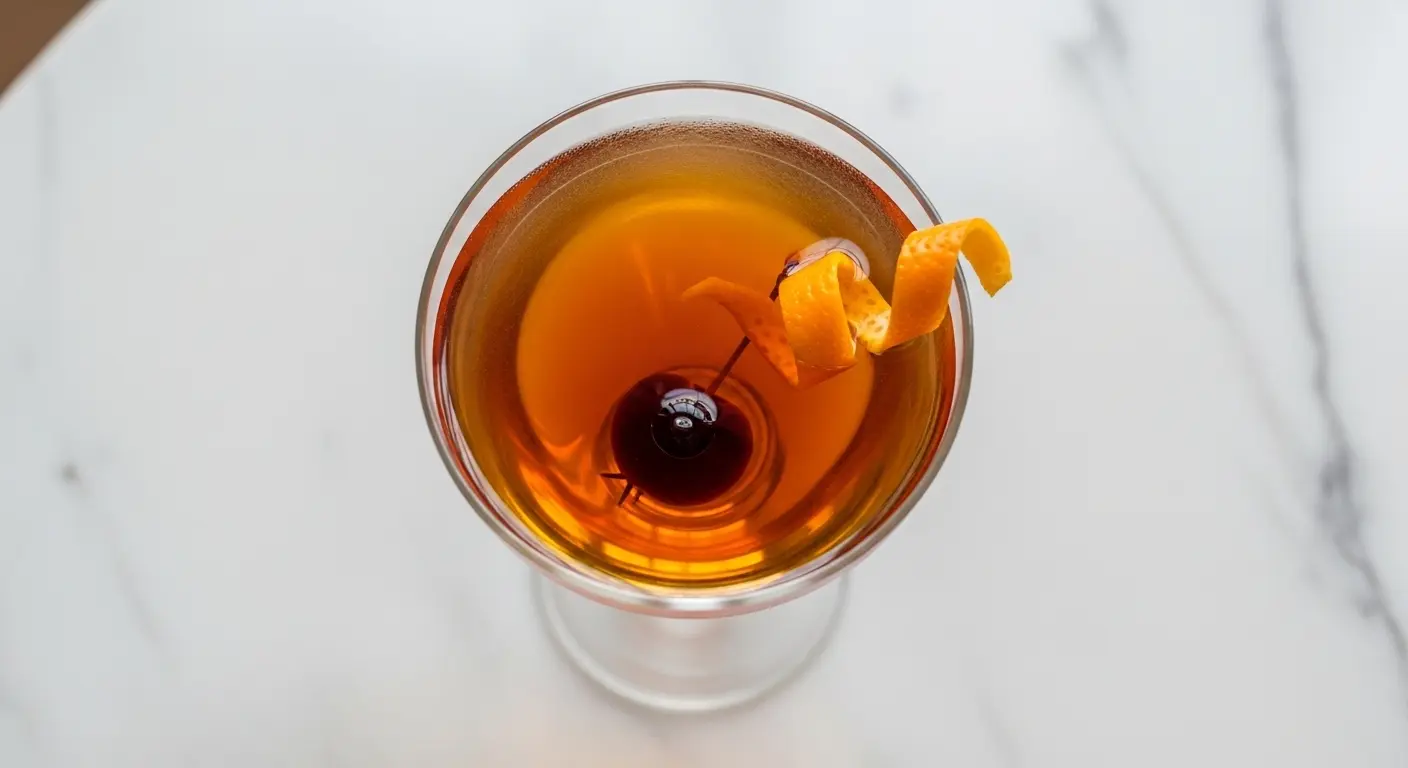
The Manhattan recipe has earned its place as one of the most enduring cocktails in American bartending history, and one sip tells you exactly why. This elegant whiskey-forward drink strikes the ideal balance between spirit, sweetness, and bitters, delivering a sophisticated complexity that feels both bold and refined.
Made with just three core ingredients, the Manhattan is deceivingly simple to put together. But the quality of what you use, and the small details in how you prepare it, make all the difference between a decent drink and a truly memorable one.
For entertaining guests or winding down at home after a long day, the Manhattan is the kind of cocktail that always feels appropriate. It’s the drink that turns an ordinary evening into something a little more special.
If you’ve ever wondered why bartenders look so reverent when they stir one of these, you’re about to find out. This guide walks you through everything: ingredients, technique, tips, and the history behind one of the greats.
You might also enjoy: Negroni Recipe

Why You’ll Love This Manhattan Recipe
This cocktail is the definition of timeless. It has been a staple behind every serious bar since the 1870s, and its staying power is a testament to how perfectly balanced it is.
It requires no blending, no shaking (depending on how you make it), and no exotic tools. Just a mixing glass, ice, a bar spoon, and a strainer.
The Manhattan is made with rye or bourbon, sweet vermouth, and Angostura bitters. That combination produces layers of flavor: caramel and vanilla from the whiskey, herbal and fruity notes from the vermouth, and warm spice from the bitters.
It’s an ideal cocktail for whiskey lovers who want to expand beyond drinking it neat, and it’s equally great for introducing friends to spirit-forward drinks.
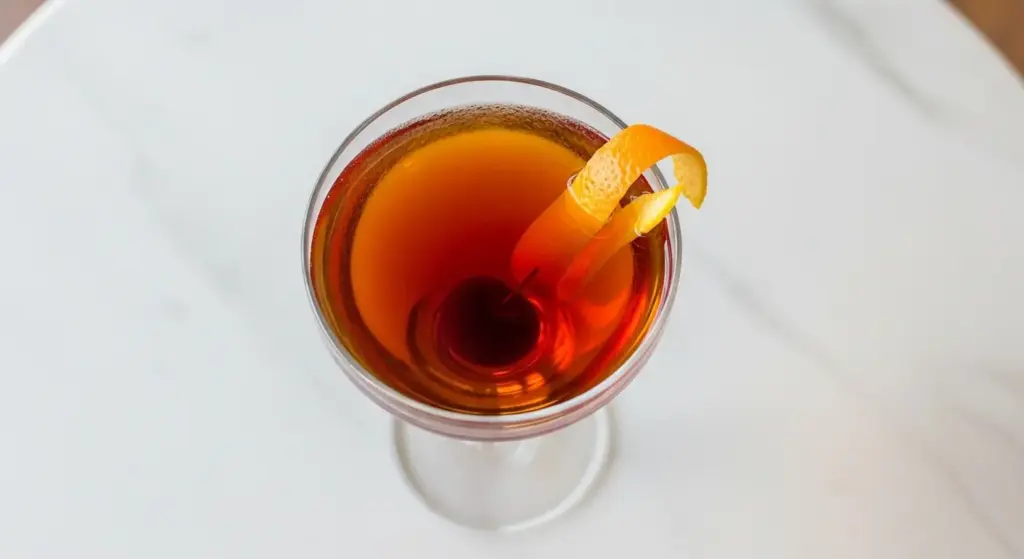
The garnish of a Luxardo maraschino cherry is the perfect finishing touch, adding a subtle sweetness and an unmistakably classic presentation.
Here’s why this recipe stands out:
- It uses rye whiskey for a spicier, more traditional profile (or bourbon if you prefer something rounder and sweeter)
- Sweet vermouth adds complexity without being cloying
- Angostura bitters tie everything together with depth and warmth
- Stirring (not shaking) keeps the drink silky and clear
- Ready in under 5 minutes with zero cooking involved
- Easily scaled up for a group or batch-prepared for a party
- Impressive enough to serve to guests, easy enough for a quiet night in
For another spirit-forward classic, try the White Russian Recipe as a creamy contrast to this stirred classic.
Ingredients
A great Manhattan comes down to three core ingredients, all of which deserve attention. The better the quality, the better the drink. Here’s exactly what you’ll need:
For a single serving, gather the following:
- 2 oz (60 ml) rye whiskey (such as Rittenhouse or Bulleit Rye) or bourbon for a sweeter version
- 1 oz (30 ml) sweet vermouth (Carpano Antica Formula or Dolin Rouge are excellent choices)
- 2 dashes Angostura bitters
- 1 Luxardo maraschino cherry for garnish (not the neon red kind)
- Large ice cubes for stirring
- Orange peel (optional, for an aromatic twist as garnish)
A note on vermouth: always use a fresh bottle that has been refrigerated after opening. Vermouth is a wine-based product and will go stale if left at room temperature for weeks. This single factor is responsible for more mediocre Manhattans than any other.
Also, if the recipe calls for sweet vermouth, this is sometimes labeled “rosso” on Italian bottles. Look for brands like Carpano Antica Formula Vermouth or Cocchi Storico Vermouth di Torino for the best results.
For a complementary drink that also leans on bourbon, check out the Bourbon Balls Recipe as a fun party treat to serve alongside your cocktails.
Kitchen Equipment Needed
You don’t need much to make a Manhattan, but having the right tools makes the process cleaner and the result far more professional.
Here’s what to have on hand:
- Mixing glass (at least 16 oz / 475 ml capacity) for stirring
- Bar spoon (the long-handled spiral kind) for stirring without agitating the drink
- Hawthorne strainer to strain the drink cleanly into the glass
- Jigger for accurate measurements (a double-sided 1 oz/2 oz jigger is ideal)
- Cocktail or coupe glass (a chilled Nick and Nora or coupe glass is traditional)
- Large ice cubes for stirring (larger cubes melt more slowly)
- Peeler or channel knife (optional, for an orange peel garnish)
- Cocktail pick or toothpick for skewering the cherry garnish
Read Also: Espresso Martini Recipe
Recommended Products for This Recipe
These are products that will genuinely elevate your Manhattan-making experience, chosen based on quality and how much they improve the final result.
1. Luxardo Maraschino Cherries
The difference between a Luxardo cherry and a neon-red cocktail cherry is enormous. Luxardo cherries are dark, firm, and richly flavored with a subtle almond-like sweetness that complements whiskey beautifully.
2. Carpano Antica Formula Vermouth
This is widely considered the gold standard of sweet vermouths for a Manhattan. It’s rich, vanilla-forward, and full-bodied in a way that cheap vermouths simply aren’t. One bottle will transform your cocktail game immediately.
3. Crystal Cocktail Mixing Glass
A proper mixing glass lets you stir the cocktail with control, see what you’re doing, and pour cleanly. Thin-walled crystal mixing glasses look beautiful on a bar cart and keep the drink cold while you work.
4. Rittenhouse Rye Whiskey
Rittenhouse 100 Proof Rye is the go-to choice for many bartenders making a classic Manhattan. Its bold, spicy rye character holds up beautifully against vermouth and bitters without getting lost.
5. OXO Bar Jigger
Precise measurements matter more in cocktails than in many other recipes. A well-designed jigger with clear interior markings makes it easy to measure quickly and accurately, which leads to a more consistent drink every time.
For another cocktail that benefits from great tools and quality spirits, try the Gimlet Recipe next time you’re in a mixing mood.

Step-by-Step Instructions
1. Chill Your Glass
- Place your coupe glass, Nick and Nora glass, or cocktail glass in the freezer for at least 5 minutes before you start mixing.
- Alternatively, fill the glass with ice and cold water and let it sit while you prepare the drink.
- A cold glass keeps the Manhattan at the right serving temperature longer and prevents the drink from warming too quickly when poured.
- When you’re ready to pour, discard the ice and water and dry the glass briefly with a clean towel, or just pour directly.
2. Measure and Add Your Ingredients to the Mixing Glass
- Fill your mixing glass about two-thirds full with large ice cubes. Larger ice dilutes the drink more slowly, which gives you more control.
- Using your jigger, measure out 2 oz (60 ml) of rye whiskey (or bourbon) and pour it over the ice.
- Next, measure 1 oz (30 ml) of sweet vermouth and add it to the mixing glass.
- Add 2 dashes of Angostura bitters directly into the mixing glass. To dash accurately, hold the bottle horizontally over the glass and give it one sharp flick of the wrist for each dash.
- Do not add any additional ingredients at this point. The Manhattan is a three-ingredient cocktail, and its beauty lies in that simplicity.
3. Stir the Cocktail
- Insert a long bar spoon into the mixing glass so the back of the spoon rests against the inside of the glass.
- Stir in smooth, even circular motions for about 25 to 30 seconds. The goal is to chill and dilute the drink without adding air bubbles or cloudiness.
- Stirring (rather than shaking) is essential for a Manhattan. Shaking would create a foamy, diluted, and slightly opaque drink, which is not what you want here. Shaking breaks up ice and introduces tiny air bubbles, while stirring keeps the drink silky and clear.
- The drink is ready when the outside of the mixing glass feels very cold to the touch and the ice has slightly decreased in size.
- Aim for about 20 to 25% dilution, which is what you get from proper stirring. This softens the alcohol, integrates the flavors, and brings the drink to the ideal serving temperature of around 23°F (-5°C).
4. Strain Into the Chilled Glass
- Hold the Hawthorne strainer firmly over the top of the mixing glass, fitting the coil spring flush against the lip.
- Pour the drink steadily into the chilled glass, using the strainer to catch any ice chips or small fragments.
- Pour in one smooth motion, holding the mixing glass high enough that you can see the drink flowing cleanly.
- Stop pouring once the glass is about three-quarters full, which is the standard fill level for a coupe glass.
5. Garnish and Serve
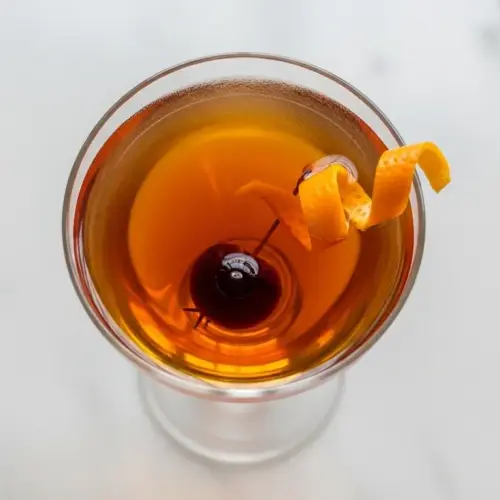
- Skewer one or two Luxardo maraschino cherries onto a cocktail pick and rest it across the rim of the glass, or drop the cherry directly into the drink.
- If you’d like an aromatic garnish, use a vegetable peeler to cut a 2-inch strip of orange peel, hold it skin-side down over the glass, and give it a sharp pinch to express the oils onto the surface of the drink. Run the peel around the rim of the glass, then drop it in or discard it, depending on your preference.
- Serve immediately. The Manhattan is best enjoyed fresh, without any additional ice in the serving glass.
This stirred technique works beautifully in other spirit-forward cocktails too. Try the Dirty Martini Recipe for another classic worth mastering.
Tips for Success
Making a perfect Manhattan takes attention to detail. A few small adjustments can take your drink from good to genuinely great.
Keep these tips in mind:
- Always use fresh, refrigerated vermouth. Open vermouth oxidizes within a few weeks at room temperature. Store it in the refrigerator and use it within 3 to 4 weeks for the best flavor.
- Use large ice cubes for stirring. Standard cocktail ice or bar ice is usually too small and melts too quickly, over-diluting the drink before you finish stirring.
- Don’t skip the chill on the glass. A warm glass will warm the drink within 60 seconds. That extra minute of chilling makes a noticeable difference.
- Count your stirs. 25 to 30 rotations with a bar spoon is about right for proper dilution. Less and the drink is too strong; more and it becomes watery.
- Choose whiskey you’d drink on its own. The vermouth and bitters enhance the whiskey; they don’t mask it. A whiskey you wouldn’t drink neat will still taste mediocre in a Manhattan.
- Taste and adjust. After stirring, if you prefer a sweeter drink, add a small extra splash of vermouth. If you want it drier, pull back next time.
- Skip the neon cherries. They taste like sugar syrup and artificial flavoring. Luxardo or Amarena cherries are worth every penny.
Another cocktail: Amaretto Sour Recipe
Serving Suggestions
The Manhattan is a stand-alone experience, but pairing it thoughtfully makes for an even more memorable occasion.
It pairs exceptionally well with rich, savory flavors. The whiskey and bitters complement umami-forward foods, cured meats, and aged cheeses beautifully.
Try serving your Manhattan alongside these:
- Classic Deviled Eggs as a creamy, savory appetizer that contrasts the cocktail’s boldness
- A cheese board with aged cheddar, gouda, or blue cheese
- Smoked meats or charcuterie
- Beef Wellington for a luxurious dinner pairing
- Dark chocolate or a chocolate-forward dessert (the bitters and vermouth play beautifully against cacao)
- Oysters or smoked salmon on blinis
- Roasted nuts like pecans or walnuts, lightly salted
- A Filet Mignon for a special occasion dinner
For another festive drink option that pairs well at dinner parties, try the French 75 Recipe.
Variations to Try
The classic Manhattan is perfect as written, but once you’ve mastered the original, experimenting with variations is half the fun.
Here are some well-known takes on the cocktail to explore:
- Dry Manhattan: Replace sweet vermouth with dry vermouth for a more austere, wine-forward cocktail. Garnish with a lemon twist instead of a cherry.
- Perfect Manhattan: Use equal parts sweet and dry vermouth (0.5 oz each) for a drink that sits between the two styles.
- Rob Roy: Substitute Scotch whisky for the rye or bourbon. The Scotch gives it a smoky, peaty character that’s completely distinct.
- Black Manhattan: Use Averna amaro instead of sweet vermouth for a more bitter, herbal, intensely flavored variation.
- Reverse Manhattan: Flip the proportions so that vermouth is the dominant spirit and whiskey plays the supporting role. Great for lower-alcohol drinking.
- Mezcal Manhattan: Use mezcal in place of whiskey for a smoky, complex twist. Pairs especially well with Carpano Antica.
- Brandy Manhattan: Classic in certain parts of the Midwest, particularly Wisconsin. Substitute brandy for whiskey and sometimes use a splash of soda.
For another classic cocktail that loves a good variation, the Cosmopolitan Cocktail Recipe is worth exploring.
Storage and Reheating
The Manhattan is a cocktail meant to be made fresh, but if you’re batch-preparing for a party or want to prep in advance, here’s how to handle it properly.
Follow these storage guidelines:
- Batch Manhattans: Combine whiskey, sweet vermouth, and bitters in a sealed glass bottle or jar in the correct proportions (without ice). Store in the refrigerator for up to 2 weeks.
- When serving from a batch: Pour the pre-mixed cocktail over a large ice cube in the mixing glass and stir briefly (about 10 seconds) to chill and dilute before straining.
- Do not freeze: Freezing the batch can dull the flavor of the vermouth and alter the texture slightly.
- Label with the date: Since vermouth is wine-based, the batch will slowly oxidize even in the fridge. Drink within 10 to 14 days for the best flavor.
- Serve in individual glasses: Always strain into a fresh, chilled glass. Don’t store the finished, diluted cocktail, as it won’t hold its quality.
- Vermouth separately: If you’re not batch-mixing, store your open vermouth bottle in the refrigerator with a tight cap.
You might also enjoy: Hot Toddy Recipe
Nutritional Facts
Here is the approximate nutritional information for one standard Manhattan cocktail (3 oz / 90 ml total volume):
| Nutrient | Amount |
|---|---|
| Calories | 155 to 165 kcal |
| Carbohydrates | 4 to 6 g |
| Sugar | 3 to 5 g |
| Fat | 0 g |
| Protein | 0 g |
| Sodium | ~5 mg |
| Alcohol | ~14 g |
The calorie count comes almost entirely from the alcohol content. Sweet vermouth contributes a small amount of sugar, while rye whiskey and Angostura bitters contribute negligible sugar. There are no significant vitamins, minerals, or fiber in this cocktail.
Compared to many other classic cocktails, the Manhattan is actually on the lower end of the calorie spectrum, especially when compared to cream-based drinks or those with sugary mixers.
Read Also: Original Mai Tai Recipe
Health Benefits of Key Ingredients
A Manhattan is first and foremost a drink to be enjoyed in moderation. That said, a few of its ingredients do have some interesting properties worth knowing about.
Enjoy this drink responsibly, and be mindful that alcohol consumption has both potential benefits and significant health risks depending on quantity and individual factors.
Here’s a look at some of the key ingredients:
- Rye whiskey: Rye contains small amounts of antioxidants from the grain distillation process. Some studies have loosely associated moderate whiskey consumption with cardiovascular benefits, though these findings are not strong enough to be used as health guidance.
- Angostura bitters: Traditionally used as a digestive aid, bitters were first developed in the 19th century as a medicinal tincture. Gentian root, one of the primary botanicals in Angostura, is still used in herbal medicine for digestive complaints. The very small quantities in a Manhattan mean the effects are minimal, but it’s a fun piece of history.
- Sweet vermouth: Vermouth is wine-based and fortified, and contains a blend of herbs and botanicals. Some of these, like wormwood, have long histories in herbal and digestive medicine.
- Maraschino cherries (Luxardo): Luxardo cherries are made from Marasca cherries, which contain anthocyanins, the same antioxidant compounds found in other dark-colored fruits like blueberries and blackberries.
- Moderate alcohol consumption: Some research suggests that very moderate alcohol intake may have cardiovascular benefits, though current public health guidance emphasizes that no amount of alcohol is risk-free.
For more drinks to explore, the Classic Pina Colada Recipe is a lighter, fruity option.
Frequently Asked Questions
1. What’s the difference between a Manhattan and an Old Fashioned?
Both are whiskey cocktails, but they’re distinct drinks. A Manhattan uses sweet vermouth as a major ingredient, which adds herbal, fruity, and sweet notes alongside the whiskey. An Old Fashioned uses only a small amount of simple syrup (or a sugar cube) and bitters, letting the whiskey take full center stage.
The Manhattan is generally considered more complex and herbal, while the Old Fashioned is considered more spirit-forward and straightforward.
2. Should a Manhattan be shaken or stirred?
A Manhattan should always be stirred, not shaken. This is one of the most important rules of cocktail technique for spirit-forward drinks.
Shaking introduces air and tiny ice particles that make the drink cloudy and slightly watery. Stirring produces a silky, clear, properly diluted cocktail with the right texture and temperature.
3. What is the best whiskey for a Manhattan?
Rye whiskey is the traditional choice, and for good reason. Rye’s natural spiciness and dryness balance beautifully against the sweetness of the vermouth.
Bourbon is a very popular alternative and produces a slightly sweeter, rounder Manhattan. High-rye bourbons like Bulleit or Four Roses Single Barrel bridge the gap nicely. Avoid very sweet wheated bourbons unless you specifically prefer a very sweet cocktail.
4. Can I make a Manhattan without vermouth?
You can substitute vermouth with other fortified wines or amari, but a Manhattan without any vermouth isn’t really a Manhattan. It would essentially be a Whiskey Old Fashioned.
If you dislike vermouth, try using a high-quality amaro like Averna or Cynar in place of the vermouth. That variation is known as a Black Manhattan and it’s genuinely excellent.
5. What glass is a Manhattan served in?
The most traditional glass for a Manhattan is a coupe glass, which is the shallow, rounded bowl on a stem. A Nick and Nora glass is another classic choice, offering a slightly smaller, more elegant profile.
Martini glasses can also be used, though they’re less traditional. A rocks glass with a large ice cube (called a Manhattan “on the rocks”) is a popular variation for those who prefer their drink slightly more diluted and cold throughout.
Read Also: Chocolate Martini Recipe
Classic Manhattan Cocktail

Equipment
- Mixing glass - at least 16 oz / 475 ml capacity
- Bar spoon - long-handled spiral kind for stirring without agitating
- Hawthorne strainer - to strain the drink cleanly
- Jigger - double-sided 1 oz/2 oz for accurate measurements
- Coupe glass - or Nick and Nora glass
- Large ice cubes - for stirring – larger cubes melt more slowly
- Vegetable peeler - optional, for orange peel garnish
- Cocktail pick - optional, for skewering cherry garnish
Ingredients
- 2 oz rye whiskey - 60ml, such as Rittenhouse or Bulleit Rye; or bourbon for a sweeter version
- 1 oz sweet vermouth - 30ml, Carpano Antica Formula or Dolin Rouge recommended
- 2 dashes Angostura bitters
- large ice cubes - for stirring
- 1 Luxardo maraschino cherry - for garnish, not the neon red kind
- orange peel - optional, 2-inch strip for aromatic garnish
- ice - for chilling glass, optional
Instructions
- Chill your coupe or Nick and Nora glass in the freezer for 5 minutes, or fill with ice and cold water while you prepare the drink.
- Fill your mixing glass about two-thirds full with large ice cubes. Measure 2 oz rye whiskey, 1 oz sweet vermouth, and add 2 dashes Angostura bitters over the ice.
- Stir with a bar spoon in smooth, even circular motions for 25 to 30 seconds until the mixing glass feels very cold to the touch and the ice has slightly decreased in size.
- Discard ice from chilled glass if using. Hold Hawthorne strainer over the mixing glass and strain the drink into the chilled glass in one smooth motion.
- Skewer a Luxardo cherry on a cocktail pick and rest across the rim or drop directly in. For an aromatic twist, express orange peel oils over the drink and run the peel around the rim.
Notes
- Vermouth matters: Always use fresh, refrigerated vermouth. Store opened bottles in the refrigerator and use within 3-4 weeks for the best flavor.
- Ice size: Use large ice cubes for stirring. Standard ice melts too quickly and can over-dilute the drink.
- Stir, don’t shake: Stirring keeps the drink silky and clear. Shaking would create a foamy, diluted, and slightly opaque drink.
- Chill the glass: A warm glass will warm the drink within 60 seconds. Chilling makes a noticeable difference.
- Cherry quality: Skip the neon-red cocktail cherries. Luxardo or Amarena cherries are worth the investment for authentic flavor.
- Whiskey choice: Rye is traditional for its spiciness. Bourbon creates a sweeter, rounder profile. Use a whiskey you’d drink neat.
- Batch preparation: Combine whiskey, vermouth, and bitters in correct proportions (without ice) and store in fridge for up to 2 weeks. Stir over ice before serving.
- Perfect dilution: Aim for about 20-25% dilution from proper stirring. This softens the alcohol and integrates flavors.
- Variation: For a Black Manhattan, substitute Averna amaro for the sweet vermouth. For a Rob Roy, use Scotch whisky instead of rye.
- Adjust to taste: After stirring, if you prefer a sweeter drink, add a small extra splash of vermouth. If you want it drier, pull back next time.
Final Thoughts
The Manhattan recipe is one of those rare cocktails that has survived over a century of trends, fads, and reinventions, and it has done so because it is genuinely, enduringly perfect.
Once you make your first proper stirred Manhattan with quality rye, fresh vermouth, and a real Luxardo cherry, you’ll understand exactly why bartenders treat this drink with such reverence.
Take your time with it. Use good ingredients, chill your glass, and stir patiently. The two minutes of effort will pay off with every single sip.
If you try this recipe, share your thoughts in the comments below. Did you go classic rye, or did you try a variation? We’d love to hear how it turned out.
Recommended:
- Easy Mojito Recipe
- Classic Mojito Recipe
- Pumpkin Spice Latte Recipe
- Bourbon Chicken Recipe
- Bloody Molly Recipe
- Eggnog Recipe
- Cold Brew Coffee Recipe
- Mulled Apple Cider Recipe
- Hot Chocolate Recipe