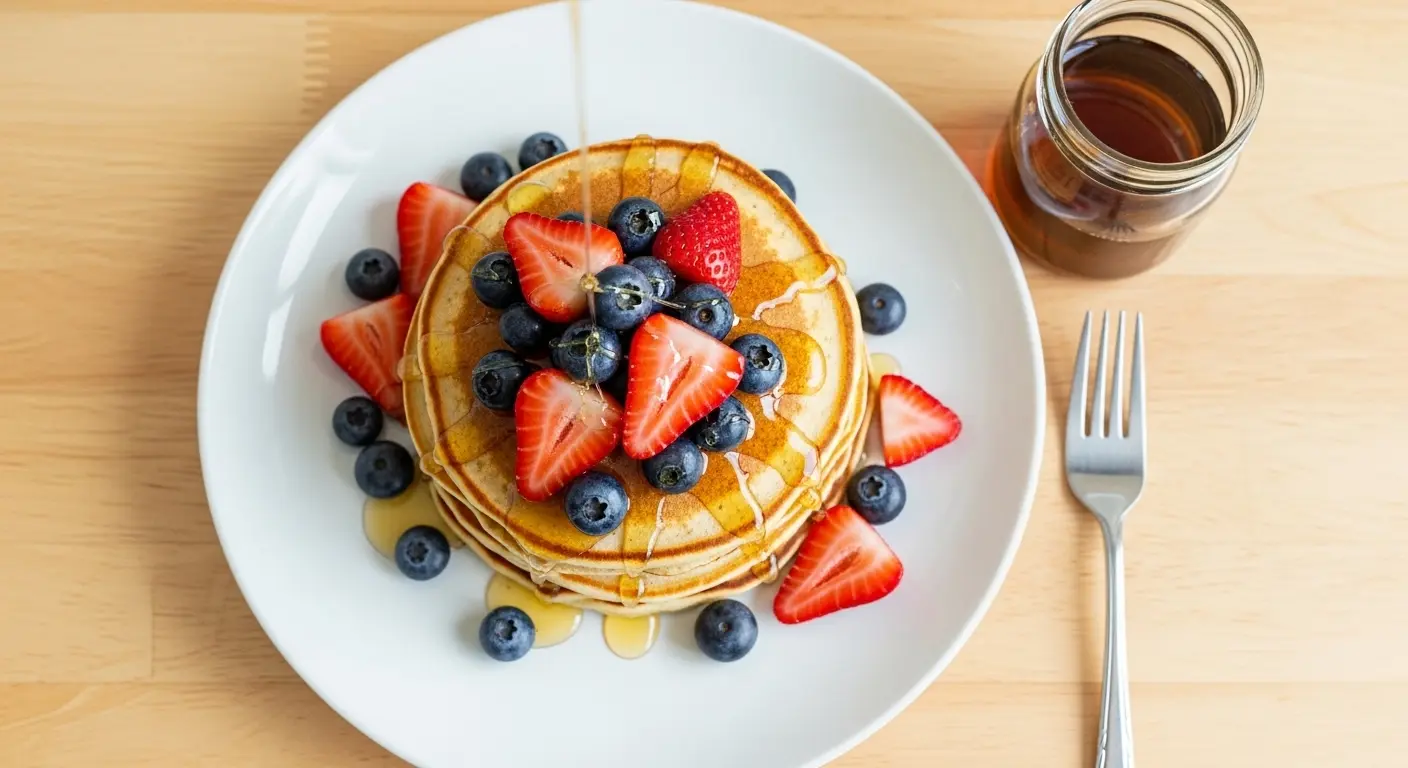
If you’ve been searching for a reliable protein pancakes recipe without yogurt, you’re in the right place. These pancakes are thick, fluffy, and packed with protein without relying on yogurt as a base.
Whether you’re out of yogurt, avoiding dairy, or simply prefer a different texture, this recipe delivers everything you want in a high-protein breakfast.
The secret is a combination of protein powder, eggs, oats, and a few simple pantry staples that work together to create pancakes that actually hold their shape and taste like real pancakes. No gummy texture, no weird aftertaste.
This is the kind of breakfast that keeps you full for hours without feeling heavy. It’s quick to pull together on busy mornings, and the ingredients are ones you likely already have on hand.
You might also enjoy: Easy Protein Pancakes
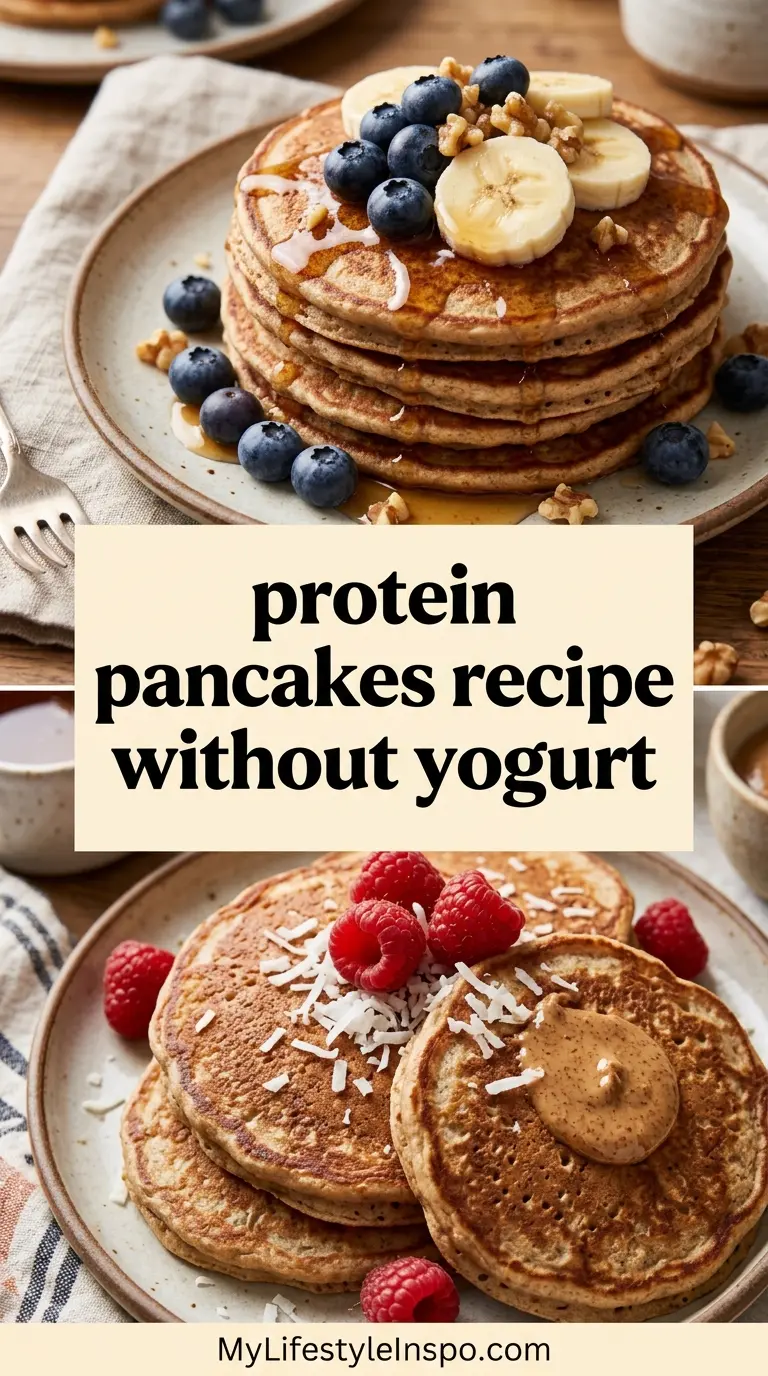
Why You’ll Love This Protein Pancakes Recipe Without Yogurt
These pancakes check every box for a satisfying, nourishing breakfast.
They come together in about 20 minutes from start to finish, which means you can have a proper sit-down breakfast even on weekday mornings.
Each serving delivers around 25-30 grams of protein, making this one of the most efficient high-protein breakfasts you can make without a lot of effort.
The batter is incredibly versatile. You can add blueberries, banana slices, chocolate chips, or nut butter swirls without the recipe falling apart.
Unlike many protein pancake recipes, this one doesn’t taste like a protein shake poured into a pan. The oats and eggs add real body and flavor.
They freeze beautifully, so you can make a double batch and reheat all week for quick breakfasts.
- High-protein: 25-30g protein per serving
- Ready in under 20 minutes
- No yogurt or dairy required (easily made dairy-free)
- Fluffy texture with no gummy or rubbery consistency
- Great for meal prep and freezing
- Kid-friendly and customizable with mix-ins
- Works with vanilla, chocolate, or unflavored protein powder
Read Also: Chocolate Protein Pancakes Recipe
Ingredients
This recipe uses a straightforward list of whole-food ingredients that blend into a smooth, pourable batter. The protein powder does the heavy lifting for protein content, while oats add fiber and body.
- 1 cup (90g) rolled oats (old-fashioned oats, not instant)
- 1 scoop (approximately 30g) vanilla protein powder (whey or plant-based both work)
- 2 large eggs
- 1/2 cup (120ml) milk of choice (dairy, almond, oat, or soy milk)
- 1 teaspoon baking powder
- 1/2 teaspoon baking soda
- 1/2 teaspoon pure vanilla extract
- 1 tablespoon honey or maple syrup (optional, for sweetness)
- Pinch of salt
- Cooking spray or 1 teaspoon coconut oil, for the pan
For serving (optional):
- Fresh berries, sliced banana, maple syrup, nut butter, or granola
Another favorite for high-protein mornings: Banana Protein Pancakes
Kitchen Equipment Needed
You don’t need any special equipment to make these pancakes. A standard kitchen setup is all that’s required.
- Blender or food processor (for blending oats into a fine flour)
- Large mixing bowl
- Whisk
- Measuring cups and spoons
- Non-stick skillet or griddle (a 10 to 12-inch pan works perfectly)
- Spatula (wide and flexible for easy flipping)
- Ladle or 1/4-cup measuring cup (for portioning batter)
- Cooling rack (optional, for resting cooked pancakes)
Read Also: Protein Pancakes Recipe No Eggs
Recommended Products for This Recipe
These are products recommended based on quality and performance for making the best protein pancakes at home.
1. Vanilla Whey Protein Powder
A high-quality vanilla protein powder makes a huge difference in both flavor and texture. Look for one with a clean ingredient list and at least 20 grams of protein per scoop. A good whey protein blends smoothly into the batter without clumping and gives the pancakes a light, slightly sweet flavor that doesn’t need extra sugar.
2. Non-Stick Electric Griddle
An electric griddle with adjustable temperature control takes the guesswork out of cooking pancakes. It maintains consistent heat across the entire surface, so every pancake cooks evenly without hot spots that lead to burning. It’s especially useful when making a large batch for meal prep.
3. High-Speed Personal Blender
A compact high-speed personal blender makes it easy to grind oats into a fine flour and blend the batter all in one container. This means less cleanup and a smoother, lump-free batter every time. It’s a practical tool for anyone who makes oat-based recipes regularly.
4. Organic Rolled Oats
Using high-quality organic rolled oats (rather than instant oats) gives these pancakes better texture and more fiber. Organic rolled oats are less processed and have a heartier, nuttier flavor that comes through even after blending.
For another great high-protein breakfast idea, check out this Cottage Cheese Protein Pancakes Recipe
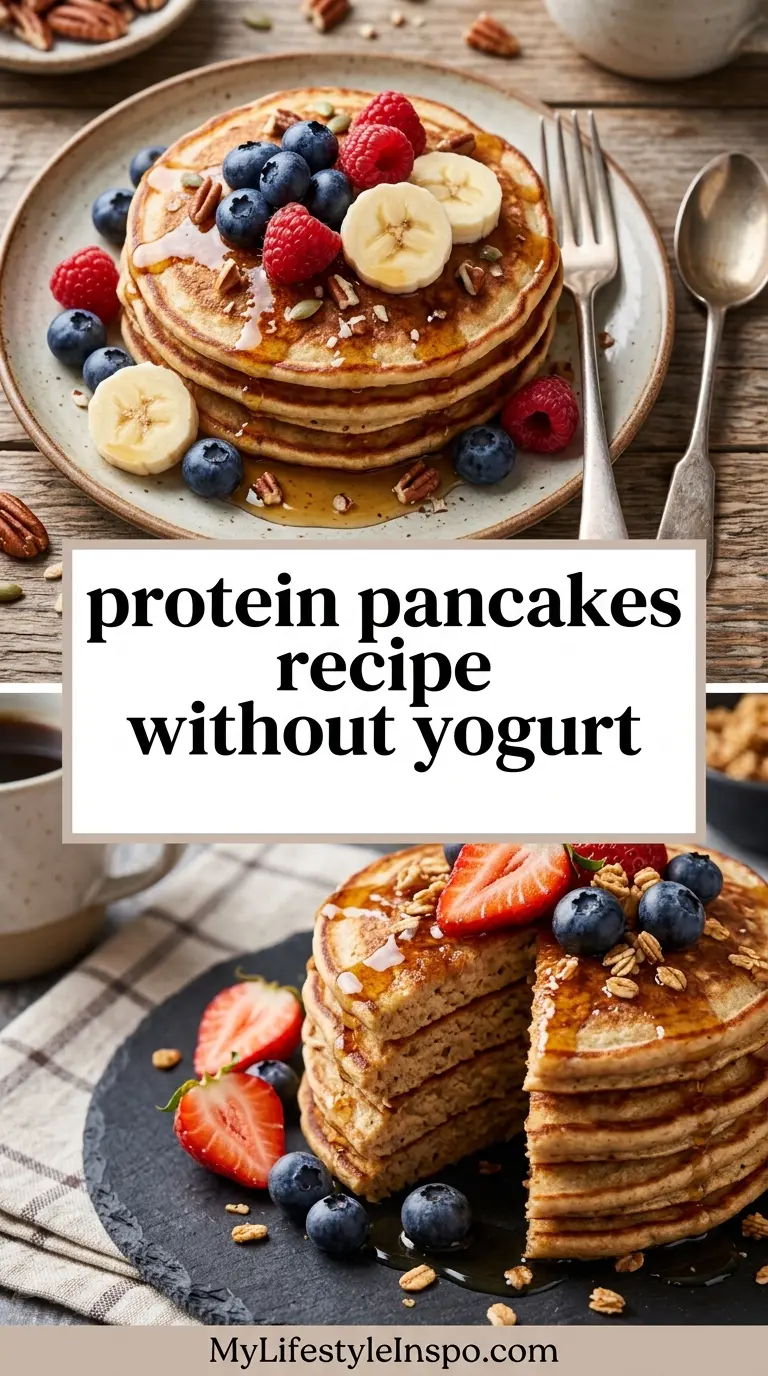
Step-by-Step Instructions
Step 1: Blend the Oats Into Oat Flour
- Add 1 cup (90g) of rolled oats to a blender or food processor.
- Blend on high for 20-30 seconds until the oats become a fine, flour-like powder. You want the texture to be as smooth as possible so the pancakes don’t have a grainy bite.
- Pause and check the consistency. If there are still large oat pieces, blend for another 10-15 seconds.
- Transfer the oat flour to a large mixing bowl and set aside.
Step 2: Combine the Dry Ingredients
- Add 1 scoop (approximately 30g) of vanilla protein powder to the bowl with the oat flour.
- Add 1 teaspoon of baking powder, 1/2 teaspoon of baking soda, and a pinch of salt.
- Whisk the dry ingredients together until well combined. This ensures the leavening agents are evenly distributed throughout the batter, which is key for getting fluffy pancakes rather than flat, dense ones.
Step 3: Whisk the Wet Ingredients
- In a separate small bowl or measuring cup, crack 2 large eggs and whisk them lightly.
- Pour in 1/2 cup (120ml) of your milk of choice.
- Add 1/2 teaspoon of pure vanilla extract and 1 tablespoon of honey or maple syrup if you’re using it.
- Whisk everything together until the eggs are fully incorporated and the mixture is uniform.
Step 4: Make the Batter
- Pour the wet ingredient mixture into the bowl of dry ingredients.
- Gently whisk or stir together until just combined. A few small lumps are completely fine and actually preferred. Overmixing can make the pancakes dense and tough.
- Let the batter rest for 3-5 minutes. This rest time is important: it allows the oat flour to absorb the liquid, which thickens the batter and makes it easier to work with. The batter should be thick but still pourable, similar to the consistency of a classic pancake batter.
- If the batter seems too thick to pour, add 1-2 tablespoons of additional milk and stir gently.
Step 5: Heat the Pan
- Place your non-stick skillet or griddle on the stove over medium heat (around 325-350°F / 160-175°C if using an electric griddle).
- Let the pan heat for 2-3 minutes before adding any batter. A properly preheated pan is what gives pancakes their even golden color.
- Add a light coating of cooking spray or about 1/2 teaspoon of coconut oil. Spread it around the pan with a paper towel or brush to coat evenly.
- To test if the pan is ready, flick a few drops of water onto the surface. If they sizzle and evaporate quickly, the pan is at the right temperature.
Step 6: Cook the Pancakes
- Use a 1/4-cup measuring cup or a ladle to scoop batter onto the pan. Pour slowly to let the batter spread naturally into a round shape. Leave at least 2 inches of space between each pancake.
- Cook for 2-3 minutes on the first side. You’ll know it’s ready to flip when bubbles start forming across the surface and the edges look set and matte (no longer glossy or wet-looking).
- Flip the pancake gently with a wide spatula in one smooth motion. Press down very lightly to ensure even contact with the pan.
- Cook on the second side for 1-2 minutes. The second side will cook faster than the first.
- Remove from the pan and place on a plate. Repeat with remaining batter, adding a little more cooking spray or oil between each batch as needed.
Step 7: Serve Immediately
- Stack the pancakes and serve right away for the best texture.
- Top with your choice of fresh berries, sliced banana, a drizzle of maple syrup, a spoonful of nut butter, or a sprinkle of granola.
- For extra protein, serve alongside scrambled eggs or a protein-rich smoothie.
This recipe pairs wonderfully with a Banana Protein Smoothie for a complete, energizing breakfast.
Tips for Success
A few key techniques make the difference between great protein pancakes and good ones.
- Weigh your protein powder. Protein powder varies significantly by brand. One scoop can weigh anywhere from 25g to 50g. Weighing out 28-30g ensures consistent results every time.
- Don’t skip resting the batter. The 3-5 minute rest allows the oat flour to hydrate fully. Pouring the batter immediately after mixing often results in thinner, denser pancakes.
- Keep the heat at medium, not medium-high. Protein pancakes are more delicate than regular pancakes and can overbrown quickly. Lower, consistent heat gives them time to cook through before the outside gets too dark.
- Avoid pressing down on the pancakes while they cook. It might be tempting to flatten them with the spatula, but pressing squeezes out the air bubbles that create fluffy layers.
- Flip only once. Flipping multiple times leads to denser pancakes. Wait until the edges are fully set before flipping, and only flip one time.
- Use a light hand with oil. Too much oil makes the pancakes greasy. A very thin, even layer of cooking spray or coconut oil is all you need.
These same tips work great for Gluten-Free Protein Pancakes too!
Serving Suggestions
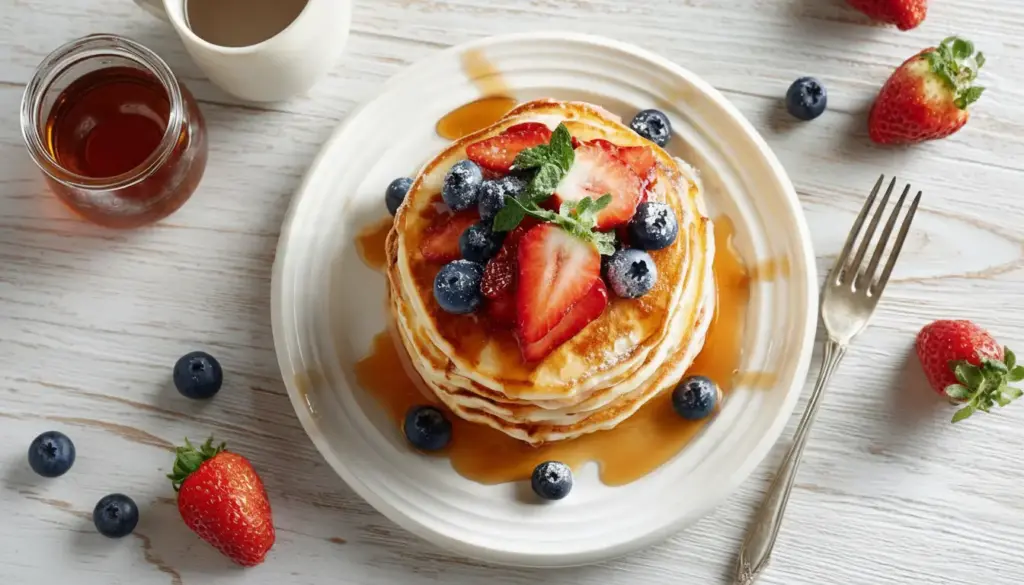
These protein pancakes are delicious on their own, but a few well-chosen toppings take them to the next level.
A drizzle of natural almond butter or peanut butter adds healthy fats and even more protein, turning this into a genuinely complete macro-balanced meal.
Fresh berries like blueberries, raspberries, or sliced strawberries add natural sweetness and antioxidants without spiking blood sugar.
For a more substantial breakfast spread, pair these with scrambled eggs, a side of fruit, or a warm cup of coffee.
- Almond butter or peanut butter drizzle
- Fresh berries or sliced banana
- A small drizzle of pure maple syrup or honey
- Easy Overnight Oats on the side for extra fiber
- Chopped walnuts or pecans for crunch
- A dollop of unsweetened coconut cream for dairy-free richness
- Chia seeds or hemp seeds for an extra protein boost
Variations to Try
Once you’ve made the base recipe, it’s easy to customize these pancakes to match your cravings or dietary needs.
The core batter is a reliable canvas, so feel free to experiment with different flavors and add-ins.
- Chocolate version: Swap vanilla protein powder for chocolate protein powder and add 1 tablespoon of unsweetened cocoa powder to the dry ingredients. See the full version: Chocolate Protein Pancakes
- Banana protein pancakes: Mash 1 ripe banana and mix it into the wet ingredients. Reduce the milk by 2 tablespoons to compensate for the added moisture.
- Blueberry protein pancakes: Fold 1/3 cup of fresh or frozen blueberries into the batter just before cooking.
- Peanut butter protein pancakes: Add 2 tablespoons of natural peanut butter to the wet ingredients and whisk until smooth.
- Cinnamon spice version: Add 1 teaspoon of cinnamon and a pinch of nutmeg to the dry ingredients for warm, cozy flavor.
- Vegan version: Replace the eggs with 2 flax eggs (2 tablespoons ground flaxseed + 6 tablespoons water, rested for 5 minutes) and use plant-based milk. Full recipe: Vegan Protein Pancakes
- Kodiak-style: For an even heartier, whole-grain version, try the Copycat Kodiak Protein Pancakes Recipe
You might also enjoy making this Pumpkin Pancake Recipe for a seasonal twist.
Storage and Reheating
These protein pancakes store and reheat beautifully, making them an ideal choice for weekly meal prep.
Cook a full batch and let the pancakes cool completely on a wire rack before storing to prevent sogginess.
- Refrigerator: Stack cooled pancakes with a small piece of parchment paper between each one to prevent sticking. Store in an airtight container for up to 4 days.
- Freezer: Arrange cooled pancakes in a single layer on a baking sheet and freeze for 1 hour until solid. Transfer to a freezer-safe zip bag or container. They keep well for up to 2 months.
- Reheating from the fridge: Pop them in the toaster for 1-2 minutes for the best texture, or microwave for 30-45 seconds.
- Reheating from frozen: Toast directly from frozen for 2-3 minutes, or microwave for 60-90 seconds. The toaster method gives crispier edges.
- Avoid reheating in a skillet with oil: It tends to make them greasy rather than restoring their original texture.
If you love batch-cooking breakfasts, you’ll also enjoy this Baked Oatmeal Recipe for another great meal-prep option.
Nutritional Facts
The following values are approximate and based on the full recipe divided into 2 servings (approximately 3 pancakes per serving). Values will vary depending on the protein powder and milk used.
Per serving (approximately 3 pancakes):
| Nutrient | Amount |
|---|---|
| Calories | ~320 kcal |
| Protein | ~28g |
| Carbohydrates | ~32g |
| Fiber | ~4g |
| Fat | ~8g |
| Saturated Fat | ~2g |
| Sugar | ~7g |
| Sodium | ~350mg |
Note: Using a plant-based protein powder and unsweetened almond milk will reduce the calorie count slightly and make this recipe fully dairy-free.
For another high-protein breakfast idea, check out this Copycat IHOP Protein Pancakes Recipe
Health Benefits of Key Ingredients
Every ingredient in this recipe was chosen with both flavor and nutrition in mind.
These aren’t just pancakes that happen to have protein in them. Each component contributes something meaningful to the overall nutritional profile.
Protein Powder is the most concentrated source of protein in this recipe. Whey protein is a complete protein containing all nine essential amino acids. It supports muscle repair, satiety, and metabolic function. Plant-based options like pea or brown rice protein work just as well if you’re dairy-free.
Rolled Oats are one of the most nutrient-dense whole grains available. They’re rich in beta-glucan, a soluble fiber that supports healthy cholesterol levels and helps keep blood sugar stable after eating. Blending oats into flour retains all of that nutritional value while creating a much smoother batter.
Eggs contribute an additional 12 grams of complete protein across two eggs, plus choline (essential for brain health), fat-soluble vitamins, and healthy fats. Eggs also provide structure and richness that gives these pancakes their satisfying texture.
Milk adds calcium, vitamin D, and additional protein even in modest amounts. Plant-based milks like soy milk or oat milk also provide meaningful nutrients in a dairy-free form.
- Protein powder: supports muscle repair and long-lasting fullness
- Rolled oats: rich in beta-glucan fiber for stable blood sugar and heart health
- Eggs: complete protein plus choline, vitamins, and healthy fats
- Milk: calcium, vitamin D, and additional protein
- Honey or maple syrup: natural sweetener with trace minerals (when used in moderation)
This recipe is also a great complement to Protein Pancakes Recipe Without Protein Powder if you prefer a whole-food approach to protein.
Frequently Asked Questions
1. Can I make protein pancakes without yogurt and without protein powder?
Yes, absolutely. You can boost the protein content using other ingredients like cottage cheese, eggs, hemp seeds, or almond flour. The texture will be slightly different but still delicious. For a dedicated recipe using whole-food protein sources, check out the Protein Pancakes Recipe Without Protein Powder.
2. Why are my protein pancakes rubbery?
Rubbery texture in protein pancakes almost always comes from one of two things: overmixing the batter or cooking at too high a temperature. Overmixing develops the structure in oat flour and toughens the pancakes. High heat can also cause protein to seize up, creating that tough, chewy bite. Stir the batter until just combined and keep the heat at a steady medium setting.
3. Can I use plant-based protein powder?
Yes. Pea protein, brown rice protein, and hemp protein all work well in this recipe. Keep in mind that some plant-based protein powders have a slightly stronger earthy flavor than whey, so a vanilla-flavored option tends to blend in most seamlessly. You may also need to add 1-2 extra tablespoons of milk since plant-based proteins sometimes absorb more liquid.
4. How do I know when to flip the pancakes?
The right time to flip is when bubbles appear across the entire surface of the pancake and the edges look set and no longer wet or glossy. This usually takes about 2-3 minutes on the first side. If you flip too early, the pancake won’t hold its shape and may fall apart or stick to the spatula.
5. Can I make the batter the night before?
You can mix the batter the night before and store it covered in the refrigerator. The oat flour will absorb more liquid overnight, so the batter will be thicker by morning. Simply stir in 1-2 tablespoons of milk to loosen it back to a pourable consistency before cooking. The leavening agents will lose some potency overnight, so the pancakes may be slightly less fluffy than freshly made batter.
Read Also: Gluten-Free Pancake Recipe
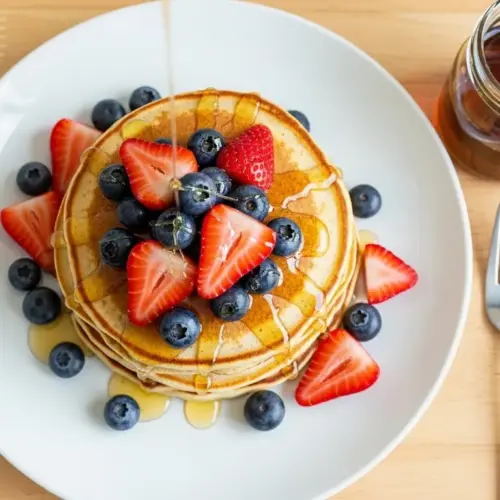
Protein Pancakes Without Yogurt

Equipment
- Blender or Food Processor - For blending oats into fine flour
- Large mixing bowl
- Whisk
- Measuring cups and spoons
- Non-stick skillet or griddle - 10 to 12-inch pan works perfectly
- Spatula - Wide and flexible for easy flipping
- Ladle or 1/4 cup measuring cup - For portioning batter
- Cooling rack - Optional, for resting cooked pancakes
Ingredients
- 1 cup rolled oats - 90g, old-fashioned oats (not instant)
- 1 scoop vanilla protein powder - approximately 30g, whey or plant-based
- 2 large eggs
- 1/2 cup milk - 120ml, dairy, almond, oat, or soy
- 1 teaspoon baking powder
- 1/2 teaspoon baking soda
- 1/2 teaspoon pure vanilla extract
- 1 tablespoon honey or maple syrup - optional, for sweetness
- 1 pinch salt
- cooking spray or coconut oil - for the pan (1 teaspoon coconut oil)
For Serving (Optional)
- fresh berries - blueberries, raspberries, or sliced strawberries
- banana - sliced
- maple syrup
- nut butter - almond or peanut butter
- granola
- chopped nuts - walnuts or pecans for crunch
- unsweetened coconut cream - for dairy-free richness
- chia seeds or hemp seeds - for an extra protein boost
Instructions
- Add rolled oats to a blender and blend on high for 20-30 seconds until they become a fine, flour-like powder. Transfer to a large mixing bowl.
- Add protein powder, baking powder, baking soda, and salt to the oat flour. Whisk together until well combined.
- In a separate bowl, whisk eggs, milk, vanilla extract, and honey or maple syrup until fully combined and uniform.
- Pour wet ingredients into dry ingredients and gently whisk until just combined (a few lumps are fine). Let the batter rest for 3-5 minutes to thicken.
- Heat a non-stick skillet over medium heat (325-350°F). Add a light coating of cooking spray or coconut oil. Test readiness by flicking water droplets on the surface.
- Pour 1/4-cup portions of batter onto the pan, leaving space between each. Cook for 2-3 minutes until bubbles form and edges look set. Flip and cook for 1-2 minutes on the other side.
- Stack pancakes and serve immediately with fresh berries, sliced banana, maple syrup, nut butter, or your favorite toppings.
Notes
- Weigh your protein powder for consistent results (one scoop can vary from 25-50g depending on brand).
- Don’t skip resting the batter for 3-5 minutes; this allows oat flour to hydrate fully for better texture.
- Keep heat at medium, not medium-high, to prevent overbrowning while cooking through.
- Avoid pressing down on pancakes while cooking; this squeezes out air bubbles and reduces fluffiness.
- Flip only once for the best texture; wait until edges are fully set before flipping.
- Use a light hand with oil; too much makes pancakes greasy. A very thin even layer is all you need.
- For chocolate version: swap vanilla protein for chocolate and add 1 tablespoon unsweetened cocoa powder to dry ingredients.
- For banana version: mash 1 ripe banana into wet ingredients and reduce milk by 2 tablespoons.
- Store cooled pancakes in the refrigerator for up to 4 days or freeze for up to 2 months. Reheat in a toaster or microwave.
- Vegan version: replace eggs with 2 flax eggs (2 tablespoons ground flaxseed + 6 tablespoons water, rested 5 minutes).
Final Thoughts
This protein pancakes recipe without yogurt proves that you don’t need a long ingredient list or a specialty grocery run to make a genuinely satisfying, high-protein breakfast.
The combination of oat flour, protein powder, and eggs creates pancakes with real substance. They’re fluffy enough to feel like a treat and filling enough to power you through a busy morning.
Once you make these a couple of times, the process becomes second nature. It’s the kind of recipe that quietly becomes a weekly staple.
Give these protein pancakes a try this weekend and see how they hold up. If you make them, drop a comment below to share how they turned out, and let me know what toppings or mix-ins you tried!
Recommended:
- Easy Protein Pancakes Recipe
- Banana Protein Pancakes
- Cottage Cheese Protein Pancakes
- Vegan Protein Pancakes
- Gluten-Free Protein Pancakes
- Old Fashioned Pancake Recipe
- Buttermilk Pancake Recipe
- Pancake Recipe Without Milk
- Kodiak Pancake Recipe
- Easy French Toast Recipe